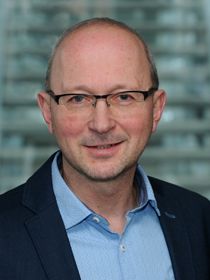
Dipl.-Ing. Martin Stejskal-Ripka is a Researcher affiliated with the Research Lab Sustainable Cultural Heritage at the University for Continuing Education Krems. His work focuses on cultural heritage sustainability, utilization of historic monuments, and strategies for integrating heritage sites into modern urban development. He contributes to projects such as monumentum ad usum (2018–2023) and Cool*Buildings (2021–2023), exploring the potential of cultural heritage for non-profit use and sustainable cooling strategies in residential buildings. Key research themes include heritage conservation, urban renewal, and the intersection of cultural preservation with environmental sustainability. His publications address the practical utilization of monuments and the potential of UNESCO World Heritage designation for landscapes like Teichlandschaft (pond systems). Collaborations involve interdisciplinary teams across architecture, urban planning, and environmental science. His projects are funded by regional Austrian institutions, emphasizing community-driven heritage management and climate-responsive building strategies.
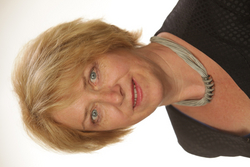
Brittany Anne Chozinski is an Associate Professor of Sociology and Criminal Justice at Our Lady of the Lake University, and serves as Honors Program Director. She holds a PhD in Sociology from The New School for Social Research, an MPH from the University of Texas Health Science Center at Houston, and additional advanced degrees including a Master of Philosophy from The New School and a Master of Arts in Sociology. She has also audited courses at The National War College of the National Defense University. Her research focuses on violence, gender/sexuality, LGBTQ studies, critical criminology, sociology of medicine, and qualitative research methods. She emphasizes community-based research and classical social theory integration in her work. Dr. Chozinski is committed to transformative education through student-centered approaches, fostering autonomy and social responsibility. Her teaching philosophy includes transparent methodologies, skill-building through intentional sequencing, and collaborative learning environments that position her as a co-learner. Awards: Recipient of the Flashman Foundation Grant Grants/Professional Development: Utilizes the Rating System for Teaching Excellence framework to enhance pedagogical practices Outside academia, she engages in non-profit work supporting survivors of intimate partner violence and sexual assault. Her personal interests include martial arts (Muay Thai and Krav Maga), tattoo artistry, and gym training.
Daniel Hess is a Professor in the Department of Urban and Regional Planning at the University at Buffalo (UB), where he has been a faculty member since 2002 and served as Department Chair from 2017-2022. He holds a PhD in Urban Planning from UCLA, an M.U.P. from UB, and a B.S. in Civil and Environmental Engineering from Clarkson University. His research examines the intersection of housing, transportation, and spatial inequality, with particular focus on LGBTQ+ communities, sustainable urban transformation, and post-socialist urbanism in Eastern Europe. PhD, Urban Planning, University of California, Los Angeles M.U.P., University at Buffalo B.S., Civil and Environmental Engineering, Clarkson University Research interests center on: Equitable public transportation systems and fare-free transit impacts Walkability and multi-modal transportation planning Socio-economic and ethnic spatial disparities Sustainable renewal of Soviet-era housing estates Urban community responses to pandemics Historical influences on current urban development His recent publications analyze the green transformation of socialist housing estates , pedestrian safety in zoning reforms , and LGBTQ+ neighborhood resilience during crises . He has received major fellowships including a Fulbright and Marie Skłodowska-Curie Research Fellowship , demonstrating international recognition of his work. SUNY Chancellor’s Award for Excellence in Teaching National Endowment for the Humanities Visiting Scholar UB Presidential Commission on Academic Excellence and Equity Federal Highway Administration Eisenhower Fellowship As a dedicated educator, he teaches environmental design, urban planning studios, and study abroad programs in Europe. His community engagement spans transit-oriented development along Buffalo’s Metro Rail, barrier analysis for older adult transit access, and alternative transportation financing strategies. He emphasizes student participation in field data collection and analytical methodology development.
Isabelle Bourgeois is a Full Professor at the Faculty of Education, University of Ottawa, specializing in organizational evaluation capacity (EC) in public and non-profit sectors. Her work includes developing a conceptual framework for EC and a measurement instrument, with a focus on data-driven decision-making and policy implementation. PhD in Education (Measurement and Evaluation), University of Ottawa (2008) M.Ed. in Measurement and Evaluation, University of Ottawa (2001) B.A. in Psychology, University of Ottawa (1998) Her research explores participatory evaluation, EC development over time, and systemic evaluation utilization in organizations. She leads LaboÉval, a five-year SSHRC-funded initiative supporting small non-profits in building sustainable EC. Recent publications emphasize contribution analysis, policy evaluation, and EC frameworks. Awards include the 2024 Contribution to Evaluation in Canada Award and the 2025 KMb Excellence Award. 2024-2025: Principal Investigator, LaboÉval 2017-2022: Editor-in-Chief, Canadian Journal of Program Evaluation 2019-2024: Member, CASE Collaborative 2012-2019: Professor, École nationale d'administration publique (ENAP)
Prof. Bartosz Deszczyński is a Professor at the Department of Business Relationships and International Marketing, University of Economics in Poznan. His research focuses on customer relationship management (CRM), corporate theory, business process efficiency, and ICT integration in business processes. He holds administrative roles including Rector's Delegate for Open Courses and membership in the University's Electoral College. Key research interests include strategic alignment of businesses with Sustainable Development Goals (SDGs), relationship capital in internationalization, and value co-creation through storytelling. His work bridges theoretical frameworks like Resource-Based View (RBV) and Dynamic Capabilities with practical applications in CRM technology and global account management. Publications emphasize sustainable competitive advantage through relationship management, psychological empowerment in healthcare systems, and the role of social media in export strategies. He has contributed to conceptual frameworks such as the Integrated Relationship Management Model and explores informal networks in international business expansion. Prof. Deszczyński advises on Open Course initiatives and collaborates in interdisciplinary teams studying non-profit organizations and social entrepreneurship. His research integrates empirical analysis with strategic management principles, addressing both theoretical and practical challenges in modern business environments.
Amanda Stahlke is an Assistant Professor of Biology at Colorado Mesa University in Grand Junction, CO, where she teaches courses such as General Human Biology (BIOL101), Attributes of Living Systems (BIOL105), and Principles of Genetics (BIOL301). She is affiliated with the Department of Biology within the College of Science and Technology and leads the Stahlke Lab, which focuses on genome biology with direct applications to ecological management and conservation. Education: PhD in Bioinformatics and Computational Biology, University of Idaho BSc in Biology, Colorado Mesa University Her research integrates wet lab experiments, field sampling, bioinformatics, and statistical modeling to investigate rapid evolution in managed populations, particularly in the context of invasive species control and conservation. She actively incorporates Course-Based Undergraduate Research Experiences (CUREs) into her teaching, partnering with the Genomics Education Partnership to engage students in genome annotation projects. The recent publications in her portfolio reflect a strong trend in evolutionary genomics, with applications in pest resistance, biological control, transmissible cancers, and ecosystem restoration. These works demonstrate expertise in high-quality genome assembly, population genomics, and interdisciplinary collaboration across academic, governmental, and non-profit sectors. Scientific Contributions and Service: Scientific Advisor, RiversEdge West – a non-profit focused on riparian restoration and invasive plant management Active collaborator with R1 universities, federal and state scientists, and ecological organizations Dr. Stahlke advises undergraduate researchers and is committed to building technical and social skills in the next generation of scientists. Although no formal grants are listed in the provided text, her collaborative research model suggests involvement in externally funded projects. She is currently on leave during summer and fall semesters following the birth of her daughter, Maeve. The Stahlke Lab operates at the intersection of genomics and applied ecology, combining molecular tools with real-world decision-making frameworks. The lab maintains strong partnerships with agencies and NGOs, particularly through work on tamarisk biocontrol and riparian ecosystem health, and utilizes a multidisciplinary approach that includes field monitoring, genomic sequencing, and data science.
Donald Wargo is an Associate Professor of Instruction in the Department of Economics, College of Liberal Arts, Temple University, where he has been teaching for nearly two decades. Prior to academia, he spent thirty years in executive roles within Philadelphia-area real-estate firms—including serving as Vice President of Finance and President—and fifteen years running his own development company, Wargo Properties, Inc. Education B.A., Philosophy M.A., Philosophy M.A., Economics Ph.D., Economics Research Interests Wargo’s scholarship integrates behavioral economics, neuroeconomics, and real-estate economics with a strong emphasis on ethical decision making and financial literacy. His work explores how neurobiological mechanisms such as dopamine signaling influence utility maximization in firms, how moral emotions like greed and overconfidence precipitate global financial crises, and how sustainability concerns can be reconciled with profitability in urban land-use decisions. He also investigates the science of learning—why students quickly forget economic concepts—and how real-world financial literacy can be embedded into university curricula. His research frequently intersects with public policy, corporate governance, and the ethical culture of business organizations. Publication Trends Across more than a dozen peer-reviewed articles, book chapters, and technical reports published between 2008 and 2021, Wargo’s output reflects a consistent focus on interdisciplinary approaches that blend economics with neuroscience, ethics, and environmental sustainability. Notable venues include Sustainability , Landscape and Urban Planning , Journal of Business Ethics Education , and multiple edited volumes on neuroeconomics and the firm. Scientific Awards & Honors No specific awards or honors are mentioned in the provided materials. Advising & Grants While no individual PhD advisees are listed, Wargo has co-authored research with colleagues such as John A. Sorrentino (Temple Economics) and Mahbubur R. Meenar (Rowan Geography & Planning). He has served on advisory boards of both for-profit companies and non-profit organizations, indicating ongoing engagement with external stakeholders and potential sources of research funding. Labs, Teams & External Roles Wargo maintains active ties to industry and policy circles through advisory-board memberships, and his prior leadership of Wargo Properties, Inc. provides a practical laboratory for testing real-estate and behavioral-economic theories. These experiences inform his classroom instruction and collaborative research projects.
Christiana Bratiotis is an Associate Professor and PhD Program Chair at the School of Social Work, University of British Columbia (UBC). She specializes in Health and Mental Health Social Work and the Scholarship of Teaching and Learning. Her research focuses on hoarding interventions, particularly in affordable housing and community-based settings. She pioneered multi-disciplinary community hoarding task forces and developed the HOMES Risk Assessment tool. Dr. Bratiotis holds a BA in Social Psychology and MSW from the University of Nevada, Reno, and completed a post-MSW fellowship at Yale School of Medicine. She teaches across undergraduate and graduate programs, emphasizing cognitive behavioral therapy and evidence-based practices. Notable awards include the 2014 Tenancy Assistance Program Award and 2010 Excellence in Teaching Award. Her work bridges academic research and practical intervention, addressing hoarding through policy, clinical training, and community education. She collaborates with UBC’s Centre for Collaborative Research on Hoarding and has presented globally on hoarding behavior. Her publications span hoarding assessment, animal hoarding case studies, and community-based interventions. Dr. Bratiotis advocates for social justice and has led non-profits, contributing to diverse communities’ capacity-building efforts.
Prof. Dr.-Ing. Angelika Banghard is a Professor at Beuth University of Applied Sciences Berlin, leading the Facility Management (FM) programs. She specializes in FM strategies, sustainable real estate, workplace design, and scoring models for operational efficiency. Her work integrates technical expertise with health protection, historic preservation, and resource management. Her academic career spans over four decades, including roles at BEWAG and HBA Neukölln (1986–1999) and construction projects in Dortmund (1971–1985). She co-developed the FM Bachelor's and Master's programs at Beuth, emphasizing practical collaboration with industry partners like Siemens, BMW, and the Stephanus Foundation. Research interests include FM-compliant building renovation, cradle-to-cradle principles, and workplace health. She has published on maintenance guidelines, scoring models, and FM in historic buildings. Awards include an Honorary Professorship from TU Berlin (2015) and jury roles in church real estate competitions. Teaching focuses on FM theory, portfolio management, and applied projects with firms like Arburg GmbH and Gruner+Jahr. She advises over 50 students annually, supervising theses on topics like predictive maintenance, office mobility, and FM in non-profits. Collaborations extend to international institutions like Zurich University of Applied Sciences. Key projects include the 'Scoring Model for Workplace Management' (with Bauakademie) and FM strategies for Berlin's Congress Center. She advocates for FM's role in urban development and employer branding, addressing challenges like demographic shifts and energy efficiency.
Dipl.-Ing. Manfred Sonnleithner, MSc is a Scientific Staff member at the Research Lab Sustainable Cultural Heritage , part of the University for Continuing Education Krems . His work focuses on sustainable utilization of architectural heritage, energy efficiency in historic buildings, and adaptation strategies to climate change. He leads the monumentum ad usum project (2018–2023), funded by Lower Austria, exploring non-profit uses of monuments. His research addresses urban sprawl mitigation through heritage preservation and ecological/economic balancing of historical structures. Key activities include publishing on heritage management strategies and presenting at international conferences like EEHB 2024. His interdisciplinary approach bridges engineering, architecture, and policy to promote cohesive societies through sustainable heritage practices.
Ramon Granell is a Senior Researcher at the Oxford e-Research Centre (University of Oxford), specializing in data analytics and machine learning applied to energy systems, computational linguistics, and data management. He leads the Data Readiness Group under Prof. Susanna-Assunta Sansone, focusing on FAIRsharing platform enhancements. With a PhD in energy analytics from Brunel University London and degrees from the Universidad Politécnica de Valencia, Granell has been at Oxford since 2010, contributing to projects like the EPSRC-funded ADEPT and WICKED initiatives. His work bridges energy informatics and data science, with notable achievements including best poster awards at energy workshops and contributions to FAIR data principles through the FAIR Cookbook. He also investigates green leasing impacts and anaerobic digestion efficiency, demonstrating cross-disciplinary research strengths. Education: BSc in Computer Science, Universidad Politécnica de Valencia MSc in Machine Learning, Universidad Politécnica de Valencia PhD in Energy Analytics, Brunel University London Key Research Areas: Granell's work focuses on data-driven solutions for energy demand prediction in retail environments, leveraging machine learning techniques such as Dirichlet process mixtures and feature extraction. His computational linguistics research explores morphological productivity and lexical analysis. He actively promotes FAIR data principles through collaborative projects like the FAIR Cookbook, which supports standardization and interoperability in scientific data ecosystems. Grants & Awards: EPSRC Impact Acceleration Account (2017-2018) Best poster awards (2017, Manchester and 2018 Brussels) He has secured funding from EU Companions, EPSRC WICKED, and ADEPT projects. Labs/Teams: Core member of the Data Readiness Group at Oxford e-Research Centre, collaborating with Prof. Sansone’s team on FAIR data initiatives and energy analytics.
Dr. Paul Claes is an Assistant Professor at the School of Business and Economics, Vrije Universiteit Amsterdam, since 1999. His roles encompass teaching and research in Value-based Management (VBM) and Management Control Systems (MCS). He has conducted extensive case studies on VBM adaptation in Dutch companies and explores MCS design in SMEs, family firms, housing associations, and the evolving role of controllers. He holds a PhD (2008) analyzing VBM control systems and has presented research globally. Teaching responsibilities include Accounting courses, Performance Management, and Management Control at both bachelor's and master's levels, including part-time programs. His research investigates how funding sources (e.g., crowdfunding, venture capital) influence MCS in SMEs' lifecycle stages, regulatory impacts on housing associations, and human resource aspects of controller roles. Key contributions include white papers on business control effectiveness and editorial roles in journals like Management Control & Accounting . His work bridges academic theory with practical applications, emphasizing alignment between strategic goals and operational controls.