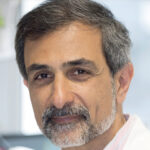
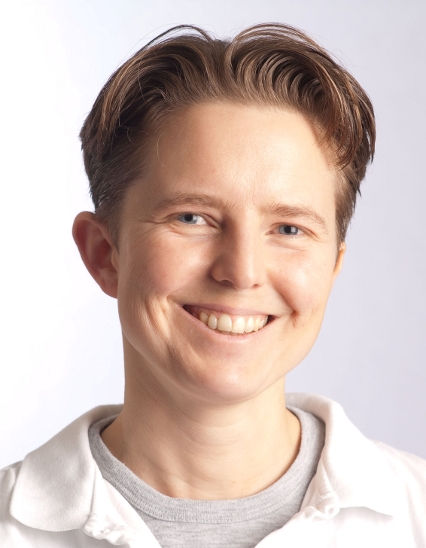
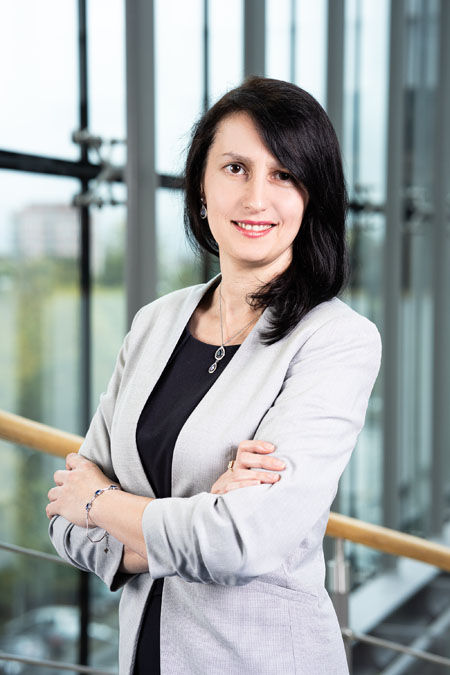
Julien Joseph Pierre Javaloyes is an Associate Professor in Photonics at the Universitat de les Illes Balears (UIB), specializing in laser dynamics, pattern formation, and bifurcation analysis. He leads the Optics and Nonlinear Science (ONL) research group and has contributed to modeling semiconductor lasers and time-delayed systems. Education: M.Sc. in Physics from Ecole Normale de Lyon, PhD in Physics (cum laude) from Institut Non Linéaire de Nice. Research Interests: Focuses on laser dynamics, nonlinear wave systems, polarization effects in VCSELs, and numerical bifurcation analysis. His work bridges theoretical and applied physics, with applications in quantum computing and Soft Matter. Scientific Awards: cum laude PhD Juan de La Cierva Research Fellowship Ramón y Cajal Fellowship Teaching: Courses include Optics, Photonics: Lasers and Applications, and Laser Physics for advanced degrees. He also teaches Electromagnetism, Experimental Physics, and Dynamic Systems.
Shahragim Tajbakhsh is a Professor and Head of the Stem Cells & Development laboratory within the Department of Developmental & Stem Cell Biology at the Institut Pasteur in Paris, France. He leads a dynamic research group investigating the molecular and cellular mechanisms of skeletal muscle stem cells during embryonic and postnatal development, regeneration, and aging. His work integrates advanced genetic models, live imaging, and genomic approaches to understand stem cell fate decisions. His research focuses on stem cell biology , developmental biology , and regenerative medicine , with specific interests in asymmetric vs. symmetric cell divisions, stem cell quiescence, the stem cell niche, gene regulatory networks, Notch signaling, and metabolic regulation in muscle stem cells. He employs genetically modified mouse models to dissect the roles of transcription factors such as Pax7, Myf5, and Tbx1 in myogenesis. Recent publications highlight ongoing research in muscle stem cell dynamics, extraocular muscle development, and vertebrate evolution. His work shows a strong trend toward understanding cellular heterogeneity, temporal regulation of gene expression, and the interplay between genetics and physiology in tissue regeneration. Scientific Awards: ERC Advanced Grant 2022 (STENIPATH: Stem and niche cell dynamics in normal and pathological conditions) ERC Advanced Grant 2012 (StemDNAFate: Genetic and Epigenetic Regulation of Stem Cell Fate) He actively mentors a team of PhD students, postdoctoral researchers, and permanent scientists, contributing to training the next generation of scientists. His lab has secured continuous funding through competitive grants, indicating sustained research productivity. He is also involved in teaching, co-organizing advanced courses such as the Pasteur Course on Advances in Stem Cell Biology. The laboratory operates within the Stem Cells & Development team, utilizing cutting-edge technologies including single-cell assays, ChIP-seq, confocal microscopy, and mouse genetics, contributing to the broader mission of the Institut Pasteur in fundamental biological research and regenerative medicine.
Nicole Schweikardt is a full Professor at the Department of Computer Science, Humboldt-Universität zu Berlin, since 2014. She previously held positions at Goethe-Universität Frankfurt (W2/W3 Professor for Theory of Complex Systems, 2007-2014) and served as Junior-Professor for Logic and Database Theory at HU Berlin (2005-2007). Her research focuses on logic in computer science, particularly database theory and complexity theory. Key contributions include algorithmic meta-theorems for bounded degree structures, efficient query evaluation techniques, and analysis of first-order logic extensions with counting quantifiers. She explores query languages' expressivity, document spanners, and locality properties in logic. Recent work (2025) covers event stream query discovery, color refinement for relational structures, and learning aggregate queries via first-order logic. Earlier studies (2018-2022) address FO+MOD queries under updates, Hanf normal forms, and enumeration algorithms over sparse graphs. GI-Dissertationspreis (2002) Emmy-Noether Fellowship (2005) Heinz Maier-Leibnitz-Prize (2007) Teaching Award (2015) She has supervised 6 PhD theses and contributed to database conferences (PODS, ICDT, LICS) as PC member and workshop organizer. Her affiliations include DFG Fachkollegium Informatik (since 2024) and editorial boards of Acta Informatica and ACM SIGLOG Education Committee.
Kari Bachmann is an Associate Professor in Management in Health- and Social Services at Molde University College, Faculty of Business Administration and Social Sciences. She has a long-standing research career focused on curriculum implementation, educational inclusion, bullying prevention, and social services in schools and municipalities. Her work spans both academic journals and applied research reports, often in collaboration with institutions like Møreforsking AS. Her research interests include educational management, curriculum studies, inclusion, vulnerable youth, and school leadership. She has contributed extensively to understanding how curricula are communicated and implemented in practice, particularly in the Norwegian context. Her recent publications explore relative age effects in education, self-efficacy development, and inclusion in sports and educational settings. The trends in her recent articles indicate a strong focus on equity in education, implementation of social and educational policies, and the lived experiences of students and educators. Her work bridges theoretical analysis with practical application in schools and public services. She has collaborated with researchers such as Guri Skrove, Tonje Hungnes, Kirsten Sivesind, and Gøril Groven across numerous publications. While no formal awards are listed, her sustained scholarly output and leadership in research projects reflect significant academic contribution. Kari Bachmann advises on research projects and contributes to public policy discussions through applied research. She has led and participated in multiple studies evaluating educational interventions and municipal service implementations. She is involved in research groups focused on children, youth, and social collaboration. She is part of active research teams working on inclusion in sports, preventive work in schools, and coordination of health and social services. Her recent projects include studies on economic exclusion in football, refugee inclusion, and support for students with Asperger’s syndrome in the workforce.
Manoj M Pillai is an Associate Professor of Medicine in the Hematology section at Yale School of Medicine. He holds primary and secondary appointments in Internal Medicine and Pathology, respectively, and is affiliated with the Yale Cancer Center, Center for RNA Science and Medicine, Yale Stem Cell Center, and the Yale Combined Program in Biological and Biomedical Sciences (BBS). His work bridges clinical hematology and molecular research, focusing on RNA mechanisms in blood disorders. MBBS, All India Institute of Medical Sciences (1998) Residency, Baylor College of Medicine (2002) Fellowship, Fred Hutchinson Cancer Research Center/University of Washington (2005) Instructor and Research Associate, Fred Hutchinson Cancer Research Center (2008) Dr. Pillai's research centers on the role of RNA-binding proteins, non-coding RNAs, and spliceosome mutations in normal hematopoiesis and myeloid malignancies such as myelodysplastic syndromes (MDS) and acute myeloid leukemia (AML). His lab employs cutting-edge techniques like HITS-CLIP and RNA-Seq to dissect gene regulation in the bone marrow microenvironment and to uncover oncogenic mechanisms driven by mutations in SF3B1, SRSF2, and Musashi2. His work has revealed how splicing defects lead to transcriptional and epigenetic dysregulation, offering new therapeutic avenues. His recent publications highlight a strong focus on RNA splicing defects, chromatin remodeling, immune evasion in AML, and translational control in leukemia. These studies demonstrate a consistent trend toward understanding molecular pathogenesis and identifying targetable vulnerabilities in myeloid cancers. His work has been published in high-impact journals such as Molecular Cell , Journal of Clinical Investigation , and Blood . Cancer Research Fellow of the Ladies Auxiliary to the Veterans of Foreign Wars of the United States Travel Grant, American Society of Hematology NIH/NCI Training Grant, Fred Hutchinson Cancer Research Center Sir Dorabji Tata Prize for Best Undergraduate in Biochemistry 8th position nationwide in All India Pre-Medical Examination Dr. Pillai actively mentors students and researchers through the BBS program and leads the Pillai Lab, which investigates RNA biology in hematopoiesis and cancer. He receives research funding from NIH and other sources to support his work on splicing factors and leukemia. His lab collaborates extensively with experts in genomics, immunology, and cancer biology across Yale. He also provides clinical care to patients with leukemia and those undergoing stem cell transplantation at Yale New Haven Hospital. His research team, the Pillai Lab, is located at 300 George Street, New Haven, and focuses on integrating systems biology approaches to understand and treat myeloid malignancies. The lab is part of a vibrant interdisciplinary ecosystem at Yale, including the Center for Biomedical Data Science and the Yale Cancer Center.
Joanna Dyczkowska is an Associate Professor and Head of the Department of Cost Accounting, Tax Management and Controlling at Wrocław University of Economics and Business. She specializes in non-financial reporting, integrated reporting frameworks, and stakeholder capitalism. Her research focuses on sustainability disclosures, SME sector challenges, and post-pandemic business strategies. She led the INTEREST project (2019-2022) on SME integrated reporting transparency. Her work includes over 50 publications in top journals and monographs like Human versus Machine: Accounting in the AI Era . Awards include grants from ACCA Global and Poland's National Science Center. She teaches courses on strategic management accounting and non-financial reporting. Research interests span sustainability reporting harmonization, double materiality in construction, and ESG strategy authenticity. Her recent studies analyze pandemic impacts on European economies and SME adoption of integrated reporting. She collaborates internationally, authoring comparative analyses of GRI and IR frameworks. Key themes include stakeholder engagement practices in biopharmaceutical companies and crisis management methodologies. Scientific leadership: Polish coordinator for EU-funded INTEREST project Editor of international monographs on post-COVID accounting and SME sustainability Recipient of grants supporting research on pragmatic constructivist IR modeling Her advising focuses on doctoral research in sustainability and management accounting systems. She actively participates in policy discussions on EU SME reporting standards and ESG implementation challenges.
Dr. Thanos Avramidis is a Lecturer in Operational Research at the School of Mathematical Sciences, University of Southampton. His research focuses on Markov Decision Processes , stochastic simulation , and financial derivatives pricing , with applications in dynamic pricing under demand uncertainty. He has held academic roles at Cornell University and research positions at the University of Montreal, collaborating with Prof. Pierre L'Ecuyer. Education & Career: PhD in Industrial Engineering, Purdue University Assistant Professor, Cornell University (1997–2001) Researcher at University of Montreal (2002–2006) Joined University of Southampton in 2007 Research Themes: Current work develops algorithms for pricing in unknown demand environments. Past contributions include variance reduction methods, call-center optimization models, and Monte Carlo analysis in finance. Awards: Recipient of the INFORMS Simulation Society Award (2009) and George Nicholson Prize (1993). Teaching: Courses include Introduction to Operational Research and Stochastic OR Methods . Lab/Teams: Member of the CORMSIS research group.
Dr. Alfonso Caiazzo is a researcher at the Weierstrass Institute for Applied Analysis and Stochastics (WIAS) in Berlin, leading the Numerical Mathematics and Scientific Computing group. Since 2010, he has held a postdoctoral researcher position at WIAS, focusing on computational methods for biomedical and engineering applications. His work integrates mathematical modeling, numerical analysis, and scientific computing to address challenges in fluid dynamics, tissue mechanics, and multiscale systems. Caiazzo holds a joint PhD from Scuola Normale Superiore di Pisa and TU Kaiserslautern (2006-2007), with prior postdoctoral experiences at institutions including the University of Trento, INRIA, and the University of Amsterdam. His research interests span mathematical modeling of biological flows, finite element methods, agent-based modeling, and lattice Boltzmann techniques. He has contributed to projects such as the MATH+ initiative (Berlin Mathematics Research Center) and the EuroHPC-funded dealii-X framework, focusing on exascale computing for biomedical applications. Key collaborations include work with Prof. D. Peterseim (University of Augsburg) on poroelasticity and multiscale methods, and Prof. I. Sack on magnetic resonance elastography. Caiazzo has taught courses at Freie Universität Berlin, including Linear Algebra for Physicists and Mathematics for Geosciences. His funded projects emphasize data-driven reduced-order models, computational hemodynamics, and cancer growth modeling. Current research includes inverse estimation in poroelastic tissues, multiscale coupling of vascularized tissues, and exascale framework development for digital twins of the human body.
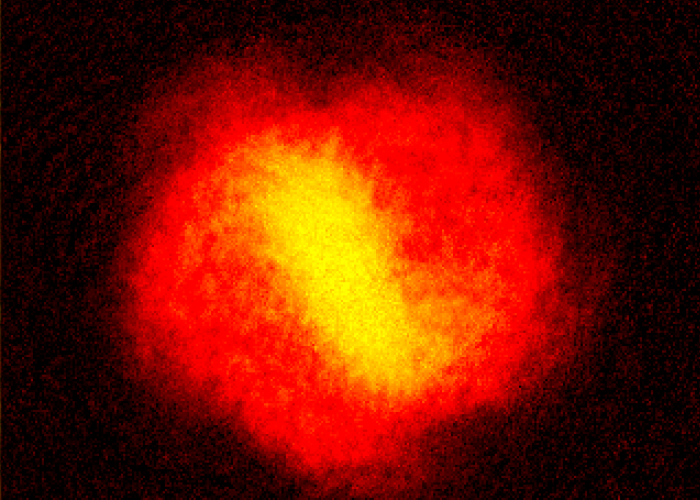
Martin W. Zwierlein is the Thomas A. Frank Professor of Physics at MIT, affiliated with the Department of Physics. His research focuses on ultracold atomic and molecular gases, exploring their quantum behavior in contexts like superfluidity, strongly correlated systems, and quantum simulation. He earned his doctorate from MIT under Wolfgang Ketterle and has held positions at MIT since 2007. Education: Studied physics at the University of Bonn and the École Normale Supérieure in Paris. Doctoral work at MIT (Ketterle group) on ultracold fermionic gases. Research interests include quantum many-body systems, fermionic superfluids, Bose-Einstein condensates, and applications to neutron star physics and high-temperature superconductivity. Key contributions involve observing Fermi polarons, quantifying superfluid transitions, and developing quantum gas microscopes. Awards include the Packard Fellowship (2010), PECASE (2010), and the 2021 BEC Junior Award. His group operates the MIT-Harvard Center for Ultracold Atoms and explores topics like chiral edge transport and geometric squeezing in quantum gases. Labs/Teams: Atomic Quantum Gases Group Grants: Young Investigator Awards from AFOSR, ONR, DARPA (2010)
Marie-Paule Cani is a Professor of Computer Science at École Polytechnique (Institut Polytechnique de Paris), where she serves as Dean of the Master of Science and Technology program and leads the STREAM research team at LIX Laboratory (CNRS/IP Paris). Her research bridges computer graphics, HCI, and AI, focusing on expressive 3D modeling, animation, and virtual environments. Education: 1987: M.Sc. in Computer Science, École Normale Supérieure & University Paris XI 1990: Ph.D. in Computer Graphics, University Paris XI 1995: Habilitation in Computer Science, Institut National Polytechnique de Grenoble Research Interests: She pioneers user-centered tools for 3D content creation, combining gesture-based interfaces (sketching, sculpting) with knowledge-enhanced procedural models. Key areas include implicit surfaces, physical simulation, AI-driven animation, and accessible tools for non-experts. Her work enables intuitive design of complex shapes, terrains, and dynamic scenes. Publication Trends: Recent work (2023–2025) emphasizes AI-integrated graphics, including controllable natural phenomena (volcanoes, erosion), sketch-based bio-visualization, reinforcement learning for animation, and real-time character control. Cross-disciplinary applications span geology, biology, and cinematography. Awards & Honors: ACM Steven A. Coons Award (2023) French Academy of Sciences (2020) ACM SIGGRAPH Academy (2019) ERC Advanced Grant EXPRESSIVE (2012–2017) CNRS Silver Medal (2012) Leadership & Grants: She founded research teams (STREAM, Imagine, Evasion) and secured major funding: ERC Advanced Grant, Google-École Polytechnique AI Chair (2018–2021), Horizon 2020 project CLIPE (2020–2024), and Hi!Paris Creative AI Fellowship (2021–2024). She mentors researchers in geometric modeling, animation, and AI. Labs & Teams: Directs the Modeling, Simulation & Learning pole at LIX (2019–2023). Founded STREAM (Structure Representation for Animation/Modeling) and Imagine (Inria/Grenoble teams), advancing real-time graphics and procedural content.
Dr. Raid Amin is a Distinguished University Professor in the Department of Mathematics and Statistics at the University of West Florida, part of the Hal Marcus College of Science and Engineering. He has been a faculty member since 1987 and is recognized for his contributions to statistical research and education. His work bridges academia and real-world applications through collaborations with healthcare institutions and environmental agencies. Education: B.S. in Statistics, Baghdad University, Iraq M.S. in Statistics, Virginia Polytechnic Institute and State University Ph.D. in Statistics, Virginia Polytechnic Institute and State University Dr. Amin's research focuses on statistical process control , geospatial cluster analysis , and applied statistics in public health and environmental science . His work applies advanced statistical methods to critical societal issues such as crime pattern detection, cancer cluster identification, and human-shark interactions. He also contributes to medical education by providing statistical consulting for clinical residency projects at Sacred Heart Hospital and West Florida Hospital. His recent publications reflect a strong trend in using SaTScan and spatial statistics for identifying clusters in environmental, health, and criminological data. Articles span journals like Technometrics , Journal of Quality Technology , and Animal Cognition , demonstrating interdisciplinary reach across engineering, ecology, and public policy. Scientific Awards: UWF Faculty Catalyst Initiative Award Dr. Amin has secured grants and institutional partnerships, most notably winning a proposal that led to UWF becoming an official partner in the EPA’s Toxic Release Inventory University Challenge Program. He actively involves undergraduate and graduate students in research, particularly in analyzing EPA datasets. He also serves as a reviewer for top-tier journals including Technometrics and Journal of Quality Technology , contributing to the scholarly community. His work in statistical consulting supports both academic and clinical training programs. He is affiliated with research initiatives involving the EPA and leads student-focused research courses in environmental data analysis. His lab or research group emphasizes hands-on learning and real-world data applications, fostering statistical literacy and analytical skills among students.
Achraf Cohen is an Associate Professor in the Department of Mathematics and Statistics at the University of West Florida, part of the Hal Marcus College of Science and Engineering. He has been with UWF since 2016, progressing from Postdoctoral Teaching Associate to Assistant Professor in 2018 and Associate Professor in 2023. Education: Ph.D. in Applied Mathematics-Statistics, University of Angers, France M.S. in Telecommunication Engineering, ENSAT School of Engineering, Morocco Dr. Cohen's research centers on statistical process monitoring , data-driven methods , quality control , and wavelets analysis . He has pioneered the use of wavelet coefficients in developing novel control chart statistics, enhancing process monitoring efficiency. His work bridges theoretical statistics and industrial applications, particularly in forecasting and process capability. The recent publications reflect a strong focus on integrating wavelet transforms into statistical process control frameworks, emphasizing nonparametric and data-adaptive techniques. His research contributes to both academic and industrial domains, especially in improving monitoring systems through multiscale data analysis. Scientific Awards: No specific awards mentioned in the text. Dr. Cohen actively mentors students and teaches advanced courses such as Time Series Analysis, Multivariate Methods, and Nonparametric Statistics. He is involved in collaborative research and grant development. He leads the CSDA Lab (Computational and Statistical Data Analysis Laboratory), which supports data science research and education at UWF. His GitHub presence indicates engagement in open educational resources and software tools for statistics.
Mohamad Nayebpour serves as Clinical Faculty in Management at the Marilyn Davies College of Business, University of Houston-Downtown, holding the rank of Visiting Assistant Professor since 2014. With over 35 years of combined industry and academic experience, he specializes in operations management, quality control, and statistical decision-making methodologies. His educational background includes: Ph.D. in Statistics from University of Louisiana at Lafayette (dissertation: Economic Design of On-line Quality Control for Attribute Characteristics) M.S. in Engineering Management from University of Southwestern Louisiana B.S. in Petroleum Engineering from Louisiana State University Research focuses intensely on Statistical Quality Control and Quality Management , extending into healthcare quality assessment, supply chain resilience, and machine learning applications for process monitoring. His work bridges theoretical statistics with practical industrial solutions, particularly in high-stakes sectors like healthcare and energy infrastructure where precision monitoring is critical. Publication trends reveal consistent evolution from traditional control chart methodologies (2003-2017) toward pandemic-responsive supply chain research and AI-integrated quality systems (2021-2025), demonstrating adaptability to emerging global challenges while maintaining statistical rigor. Professional recognition includes: Certified Quality Engineer credential from American Society for Quality (2015-2024) Academic service encompasses MGT 3332 course coordination, strategic planning committee membership, and extensive departmental curriculum development. Industry engagement spans continuous consulting for Revenew International since 2000, plus specialized quality control projects for DASH Spirits, Shell Services International, and healthcare institutions, translating academic research into operational improvements. Collaborative research networks include long-term partnerships with R. Noorossana on quality engineering projects and editorial contributions to AIMS International Journal of Management, reflecting commitment to advancing methodological standards in the field.
Sebastian Weichwald is an Associate Professor at the Department of Mathematical Sciences , University of Copenhagen. He leads the Copenhagen Causality Lab (CoCaLa) and co-leads the Causality and Explainability (CX) collaboratory at the Pioneer Centre for AI. His academic journey includes a PhD at ETH Zurich (2019) and postdoctoral work at the University of Copenhagen. Research Interests: Causal Modelling, Causal Discovery, Structural Equation Models, Time Series Analysis, Neuroimaging, Biomedical Data Analysis. Awards: Best student paper at CIP 2014, Winner of Causality 4 Climate NeurIPS 2019 competition. Collaborations: Active in interdisciplinary projects with applications in cardiology, neuroscience, and biomedical imaging. Software Tools: Developed open-source libraries including CausalDisco , coroICA , tidybench , and Pymanopt for causal discovery, signal processing, and manifold optimization.
James Brian Byrd is an Assistant Professor at the University of Michigan Medical School, where he serves as Principal Investigator of the Byrd Lab. His research focuses on improving the diagnosis and treatment of hypertension, which is the leading risk factor for death and disability worldwide. Dr. Byrd completed his Internal Medicine Residency at Vanderbilt University, where he also earned a Master of Science degree in clinical investigation while working in Dr. Nancy Brown's laboratory. His academic journey has been focused on understanding the mechanisms of high blood pressure and developing better approaches for its management. Dr. Byrd's research interests center on hypertension, particularly treatment-resistant high blood pressure. His laboratory investigates the role of the mineralocorticoid receptor in blood pressure regulation, with a specific focus on primary aldosteronism - a condition involving inappropriate activation of this receptor. His innovative work explores the use of urinary mRNA biomarkers as a non-invasive method to measure mineralocorticoid receptor activation in patients, which could significantly improve treatment decisions for hypertension. His research also encompasses extracellular vesicles, drug safety (particularly regarding angiotensin receptor blockers), and healthcare policy related to blood pressure monitoring. Analysis of Dr. Byrd's recent publications reveals a strong focus on translational hypertension research spanning basic science investigations of molecular mechanisms, clinical studies of blood pressure management, and health policy analyses. A recurring theme is the application of innovative methodologies, such as the use of urinary mRNA and extracellular vesicles as biomarkers, and privacy-preserving data sharing techniques using deep neural networks. His work demonstrates a commitment to addressing both fundamental scientific questions and practical clinical challenges in hypertension management. Dr. Byrd leads a research team that includes technicians, coordinators, and students. Current lab members include undergraduate students Ainslie Johnson and Dawson Myers, technician Pradeep Moon Gunasekaran, and research coordinator Andrea Berrido. His former students and collaborators include Alex Zheutlin, Brian Bazzell, Feehan Sultan, Jennifer Du, Jonathan Williams, Megan Munger, and Morsi Rayyan. His NIH-funded research has significant implications for personalized medicine approaches in hypertension treatment, potentially enabling clinicians to determine which patients would benefit most from mineralocorticoid receptor blocker therapy.