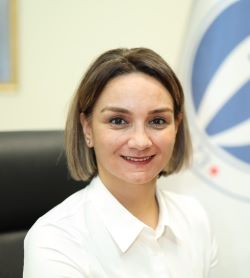
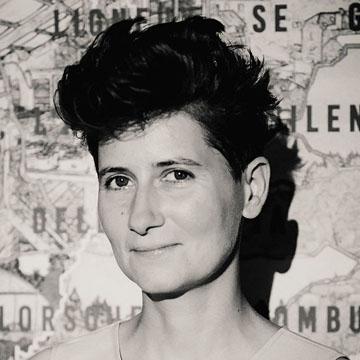
Varouchakis Emmanuel is an Assistant Professor at the Department of Mining Technology within the School of Mineral Resources Engineering at the Technical University of Crete . His research focuses on Geostatistics , Environmental Mining , and Sustainable Development , with expertise in Risk Analysis , Stochastic Processes , and Machine Learning . He contributes to the Research Units of Geostatistics and Environmental Mining and Sustainable Development ( https://www.envi-stat.tuc.gr/en/home ). Research Trends: His recent publications address critical challenges in hydrogeological modeling, environmental risk assessment, and sustainable mining practices. Key themes include groundwater level analysis , geostatistical inversion , pit lake hazard frameworks , and multi-criteria decision-making for SDG implementation in mining contexts. Grants & Projects: He leads the HFRI-funded project "Advanced geostatistical modeling for natural resources evaluation" (2023-2025) and participates in EU initiatives like IMMERSE (2023-2025) for critical mineral education and REECOL (2023-2026) focused on ecological rehabilitation of post-mining areas, employing machine learning and remote sensing. Teaching: He teaches undergraduate courses in Statistics and Probability for Engineers and Applied Geostatistics , as well as postgraduate courses on Time Series Analysis and Geostatistical Simulation Methods .
Dr. Truong Vinh Hoang is a Researcher at the RWTH Aachen University , affiliated with the Chair of Mathematics for Uncertainty Quantification . His work focuses on integrating machine learning with data assimilation techniques for nonlinear dynamical systems . He has presented at multiple international conferences and seminars on these topics. Specializes in Bayesian methods and stochastic numerics Developed ML-EnCMF (Machine Learning-Ensemble Conditional Mean Filter) for non-linear data assimilation Applied techniques to Lorenz-63 and Lorenz-96 systems under chaotic regimes Contributed to localized neural network architectures for high-dimensional state tracking His research trends from 2020-2022 show increasing emphasis on deep learning-based filtering and Bayesian optimization for systems with non-Gaussian dynamics . Notably, he implemented variance reduction techniques to improve filter stability with small ensemble sizes. All publications demonstrate practical applications in computational science and stochastic modeling . Dr. Hoang is part of the MATH4UQ team at RWTH Aachen University, contributing to cutting-edge research in uncertainty quantification and nonlinear data assimilation .
Pedro Alexandre Simões dos Santos is an Associate Professor at Instituto Superior Técnico, with dual appointments in the Mathematics Department and Computer Science and Engineering Department. His work spans Machine Learning, Social Artificial Intelligence, and Game Design, focusing on convergence analysis of ML algorithms, Social AI, and AI for Games. He actively contributes to game design, both digital and analogic, with a special interest in historical themes. Affiliations: Mathematics Department, Instituto Superior Técnico Computer Science and Engineering Department, Instituto Superior Técnico INESC-ID Research Unit GAIPS - Group of AI for People and Society His research integrates theoretical and applied aspects, including reinforcement learning in non-stationary environments, neural network optimization, and socially intelligent agent authoring tools. He explores AI applications in games, mental health support systems, and legal domains. His recent publications highlight trends in NFT-based game ecosystems, dialogue systems for mental health, and multi-agent reinforcement learning frameworks. Pedro teaches subjects such as Mathematics for Machine Learning and the 1st Cycle Integrative Project in Applied Mathematics and Computing, bridging mathematical foundations with computational applications.
Ryan Grady is an Associate Professor in the Department of Mathematical Sciences at Montana State University. His research and teaching focus span advanced mathematical disciplines. Education: Ph.D. and M.S. (2012, 2009) from University of Notre Dame B.S. (2007) from Colorado School of Mines Ryan's research lies at the intersection of geometry, topology , and quantum field theory (QFT) , with a focus on rigorous mathematical frameworks. He explores connections between QFT, derived geometry , and higher Lie theory , aiming to bridge physical intuition with formal mathematical structures. His recent publications highlight trends in topological data analysis , homotopy theory , and quantization . Key areas include factorization algebras , K-theory , and non-linear sigma models , reflecting a synthesis of abstract mathematics and physical applications. Ryan has advised multiple graduate students, including Eric Berry, Adam Howard, Garrett Oren, and Bryce Morrow, whose work spans cohomology of Grassmanians , surface immersions , algebraic structures , and infinite-dimensional linear algebra .
Jordan Bryan is an Assistant Professor of Data Science at the University of Virginia's School of Data Science, specializing in multivariate statistical methods with applications spanning environmental monitoring, high-energy physics, and cancer genomics. He earned his Ph.D. in Statistics from Duke University in 2023 and a B.S. in Mathematics from Stanford University, and currently serves as Secretary of the junior section of the International Society for Bayesian Analysis. Education: Ph.D. in Statistics, Duke University B.S. in Mathematics, Stanford University Research Interests: Dr. Bryan develops advanced methodologies in Bayesian statistics , robust estimation , and information-assisted hypothesis testing , with particular emphasis on integrating auxiliary data sources to enhance statistical power. His work bridges theoretical rigor with real-world applications in genomics, environmental systems, and physics, recently expanding to incorporate large language model-derived information for genomic analysis. Publication Trends: Analysis of his 15 most recent publications (2020-2025) reveals a dual trajectory: foundational contributions to statistical methodology (e.g., multirank likelihood frameworks, subscedastic estimation) and high-impact applications in cancer genomics (functional screens, drug repurposing) and environmental science (source apportionment). A notable 2025 publication pioneers LLM integration for genomic hypothesis testing, signaling a strategic expansion into AI-augmented statistics. Scientific Awards: No specific awards, prizes, or fellowships were documented in the source materials. Advising and Grants: Supported by National Institute of Environmental Health Sciences (NIEHS) and National Heart Lung and Blood Institute (NHLBI) training grants during his UNC Chapel Hill postdoctoral fellowship, Dr. Bryan now leads independent research at UVA. While formal student advising isn't detailed in current records, his extensive publication record suggests active mentorship in collaborative projects.
Dr. QUAN Chen is an Associate Professor at the School of Microelectronics, Southern University of Science and Technology (SUSTech), holding this position since May 2025 after serving as Assistant Professor (2019-2025) and Research Assistant Professor at the University of Hong Kong (2012-2018). A Shenzhen high-level overseas talent, he earned his PhD from the University of Hong Kong and conducts cutting-edge research in electronic design automation. His academic credentials include: Ph.D. from The University of Hong Kong (2010) Master's degree from The University of Hong Kong (2007) Bachelor's degree from Sun Yat-Sen University (2005) Dr. Chen's research pioneers advanced EDA algorithms for large-scale analog/RF circuit simulation, post-Moore multi-physics analysis, and AI-assisted design technologies. His work addresses critical challenges in nanodevice modeling and quantum computing circuits, resulting in over 50 publications in top venues like IEEE TCAD and DAC, plus four Chinese patents. Analysis of his recent publications reveals dominant trends in exponential integrator methods for transient simulation, model order reduction techniques, and physics-informed machine learning for reliability analysis. His work bridges numerical mathematics with practical EDA applications across analog circuits, quantum hardware, and emerging memory technologies. Key recognitions include: Wu Wenjun Artificial Intelligence Science and Technology Award, Second Prize (2020) ICCAD Best Paper Award Nomination (2012) Dr. Chen actively recruits Postdoctoral Fellows, Research Assistants, and Graduate Students while leading major funded projects including NSFC key/general programs and Guangdong Provincial R&D initiatives. His industry partnerships with Huawei, Empyrean, and Guowei Group translate theoretical advances into real-world EDA solutions. He directs a specialized research group at SUSTech focused on computational methods for next-generation circuit design, fostering innovation in simulation algorithms and multi-physics analysis through academic-industry collaboration.
Brady Thomas West is a Research Professor at the University of Michigan with joint appointments in the Department of Biostatistics at the School of Public Health and the Survey Research Center at the Institute for Social Research. His work bridges survey methodology, applied statistics, and public health research, providing technical expertise globally on research design and statistical analysis. Education: PhD in Survey Methodology, University of Michigan-Ann Arbor, 2011 MA in Applied Statistics, University of Michigan-Ann Arbor, 2002 BS in Statistics, University of Michigan-Ann Arbor, 2001 West's research focuses on critical challenges in survey methodology including measurement error in auxiliary variables and survey paradata, selection bias in non-probability samples, responsive/adaptive survey design, interviewer effects, and multilevel regression models for complex clustered and longitudinal data. His work directly addresses data quality issues in public health and social science research. His publication record (2016-2022) demonstrates sustained contributions to methodological advancements through influential textbooks on linear mixed models and survey data analysis, alongside high-impact journal articles. Key themes include improving survey estimation techniques, developing frameworks for assessing analytic errors, and synthesizing evidence on interviewer effects. His research consistently bridges theoretical innovation with practical applications in aging studies, public health surveillance, and social epidemiology. Scientific Awards: No specific awards mentioned in the provided information. West actively leads and contributes to major funded research initiatives including the Health and Retirement Study (as Associate Director), the Network for Innovative Methods in Longitudinal Aging Studies (as MPI), and the MAPS Center for SUD/HIV research. He also develops educational resources through Coursera specializations in Statistics with Python and Total Data Quality, demonstrating commitment to training the next generation of data scientists. He collaborates extensively through the Survey Research Center and Department of Biostatistics, contributing to teams focused on longitudinal aging studies, public health data infrastructure, and methodological innovation. His leadership in the Health and Retirement Study and NIMLAS network positions him at the forefront of aging research methodology.
Salar Fattahi is an Assistant Professor at the University of Michigan, affiliated with the College of Engineering’s Department of Industrial and Operations Engineering. He holds additional appointments with the Michigan Institute for Computational Discovery and Engineering (MICDE), Michigan Institute for Data Science (MIDAS), and the Michigan Center for Applied and Interdisciplinary Mathematics (MCAIM). PhD in Industrial Engineering and Operations Research from UC Berkeley M.Sc. in Electrical Engineering from Columbia University B.Sc. in Electrical Engineering from Sharif University of Technology Research Focus: Developing scalable computational methods for structured optimization and machine learning problems by exploiting sparsity, low-rankness, and benign landscape properties. Applications span gene regulatory networks, power systems, and brain connectivity modeling. 2025: Parametric algorithms for MIQPs over trees 2024: Triple Component Matrix Factorization for global/local/noise separation 2023: Robust subspace recovery and dictionary learning Scientific Recognition: NSF CAREER Award (2023) INFORMS Best Paper Awards (2023, 2024) Dean’s MLK Spirit Award (2024) MICDE Catalyst Grant (2021) Academic Service: Associate Editor for INFORMS Journal on Data Science; Area Chair for NeurIPS, ICML, and ICLR. Mentored students including Jianhao Ma (now Tsinghua University), Geyu Liang (Amazon), and Aaresh Bhathena. Research supported by NSF, ONR, MICDE, MIDAS, START, and DEI Faculty grants.
Herke van Hoof serves as Associate Professor at the University of Amsterdam within the Informatics Institute, where he leads research in the AMLab at Science Park (Lab 42, L4.05). His academic journey spans from AI degrees at Groningen University through doctoral studies at TU Darmstadt under Professor Jan Peters to postdoctoral research at McGill University with Professors Joelle Pineau, Dave Meger, and Gregory Dudek. PhD: TU Darmstadt (2016), supervised by Prof. Jan Peters Postdoc: McGill University, Montreal AI Bachelor & Master: University of Groningen Van Hoof's research focuses on overcoming data inefficiency in reinforcement learning through modular and hierarchical approaches. His work explores how structured representations can enable knowledge transfer between tasks, improve learning efficiency, and facilitate applications in domains with complex state and action spaces. The lab investigates symmetry exploitation in multi-agent systems, gradient estimation techniques for discrete variables, and applications to combinatorial problem solving. His publication record shows consistent contributions to top AI venues including ICML, ICLR, NeurIPS, and JMLR over the past seven years. The research trajectory demonstrates evolution from foundational policy search methods toward increasingly sophisticated modular architectures, with recent emphasis on knowledge-assisted AI for critical infrastructure applications through the AI4REALNET project. Third place in ARC prize (Paper award) Van Hoof actively supervises PhD candidates and postdoctoral researchers, with current projects including human-robot collaboration using brain-computer interfaces (with Maryam Alimardani at VU) and interactive robot learning with flexible human input (through The Hybrid Intelligence Centre). His research receives support from multiple funding initiatives including the AI4REALNET project which focuses on applying AI to critical infrastructure systems. As co-organizer of the BeNeRL 2024 workshop and participant in the AI4REALNET consortium, van Hoof maintains strong connections with the broader European AI research community while directing the AMLab's research on modular reinforcement learning approaches.
Andrzej Nowak is a Professor at the Institute of Mathematics, University of Zielona Gora, specializing in game theory, mathematical economics, and applied mathematics with significant applications in economics and finance. His academic profile includes: Research on Nash equilibria in non-zero-sum stochastic games with constraints on player strategies Work on Recursive Utilities in Dynamic Economic Models and General Equilibrium Theory Investigations of Risk Measures in Dynamic Programming and Markovian Decision Processes Analysis of multivariate linear models and Inclusions and multivalued stochastic equations Studies of Preference models using graded and interval relations for decision support systems Professor Nowak teaches fundamental courses in game theory, mathematical economics, and mathematical foundations of economics in finance (including portfolio analysis, capital market lines, and time series). He also covers probability theory and stochastic processes with applications to economics and finance, particularly Markov chain theory and discrete-time martingales. His broader research encompasses: Approximation theory using Fourier series and summability methods Combinatorial geometry including partitions of n-dimensional space Mathematical means and their invariance properties Applications of computer science to secure data transmission and privacy standards
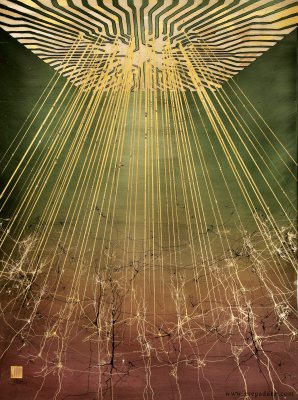
Marlene Cohen is a Professor in the Department of Neurobiology at the University of Chicago, where she leads the Cohen Lab as part of the Neuroscience Institute. Her research focuses on understanding how visual information is encoded in the brain and how cognitive processes like attention influence perception and decision-making. She employs a multidisciplinary approach combining electrophysiology, psychophysics, and computational modeling to investigate neural population coding across different stages of the visual pathway. Dr. Cohen's research interests center on visual neuroscience, particularly how the brain uses visual information to guide decisions. Her work examines how attention modulates neural activity to prioritize relevant information, how cognitive states affect perceptual abilities, and how populations of neurons collectively represent visual stimuli. She investigates these questions using single and multi-electrode recordings in non-human primates performing visual tasks, providing insights into the neural mechanisms underlying flexible behavior and perception. A key aspect of her research involves understanding how correlated variability among neurons affects information processing and behavioral performance. Analysis of Dr. Cohen's recent publications reveals a strong focus on neural population coding, attention mechanisms, and the relationship between neural activity and behavior. Her work increasingly incorporates topological and mathematical approaches to understand neural representations, while maintaining a strong foundation in experimental neuroscience. A consistent theme across her research is how cognitive processes like attention reshape neural representations to support flexible behavior, with particular emphasis on how information is multiplexed and processed across different cortical areas. Scientific Awards: Eppendorf winner (2012) Dr. Cohen has secured significant research funding as Principal Investigator on multiple NIH grants, including R01EY034723 (2022-2025), R01NS121913 (2021-2026), R01EY022930 (2013-2024), R00EY020844 (2010-2015), and K99EY020844 (2010-2011). These grants support her research on neuronal population coding, attention mechanisms, and the neural basis of flexible behavior. Her work demonstrates how attention improves performance by reshaping stimulus representations and reducing interneuronal correlations. The Cohen Lab at the University of Chicago employs a combination of electrophysiological recordings, behavioral experiments, and computational modeling to investigate how visual information is processed in the brain. The lab's work has been recognized through artistic representations such as "Deciphering Spikes" by Greg Dunn, which visually interprets the lab's research on neural coding and attention, depicting how attention affects neuronal firing patterns with higher fidelity on the attended side of the visual field.
Mine Menekse Yilmaz is an Associate Professor at Gaziantep University , Faculty of Arts and Sciences , Department of Mathematics , with a career spanning over two decades. She holds a PhD in Mathematics from Ankara University (2011) and has been actively researching approximation theory, singular integral operators, and functional analysis.
Dr. Anna Colin is Programme Director of the MFA Curating program at Goldsmiths, University of London, where she serves as a Lecturer in the Department of Art. With over twenty years of experience as a curator working both freelance and institutionally, her practice spans curatorial, pedagogical, social, and ecological fields. She has held significant positions including associate curator at Lafayette Anticipations in Paris (2014-2020), associate director of Bétonsalon – Centre for art and research in Paris (2011-2012), and curator at Gasworks, London (2007-2010). She co-curated British Art Show 8 (2015-2016) and has worked with numerous international institutions including CA2M in Madrid, Whitechapel Gallery in London, and Contemporary Image Collective in Cairo. PhD, School of Geography, University of Nottingham (2022) Permaculture Design Certificate, Permaculture Association UK (2024) Level 2 Practical Horticulture Certificate, Royal Horticultural Society (2022) MA Curating Contemporary Art, Royal College of Art (2005) BA Arts Management, London Southbank University (2003) Dr. Colin's research interests focus on the intersection of art, ecology, and alternative educational models. Her work explores how cultural practitioners can engage with human and non-human ecosystems, examining holistic and intersectional organizational models that resist chrononormativity. She investigates sustainability as a dynamic, cyclical process rather than a product-oriented goal, drawing inspiration from ecology, agroecology, and arboriculture to reconceptualize art institutions' relationship to waiting, slowness, rest, and longevity. Her current research examines regenerative artistic, curatorial, and institutional practices that serve ecosystems, with particular attention to the Black Atlantic, agricultural and digital commons, and colonialism's impact on the natural environment. Analysis of Dr. Colin's recent publications reveals a consistent thematic focus on ecological approaches to art and institutions, with increasing emphasis on practical applications of ecological principles. Her work demonstrates a clear trajectory from examining alternative educational spaces (as in her PhD research on multi-public educational and cultural spaces) toward developing concrete ecological frameworks for cultural institutions. The publications show growing integration of horticultural knowledge with curatorial practice, particularly evident in projects like 'Chaleur Humaine' and 'ĝardeno paradizo' which combine energy studies with landscape design and community engagement. Dr. Colin welcomes doctoral applicants seeking to work in cultural production at the service of ecosystems, regenerative artistic practices, alternative institutional models, and critical pedagogies. She has supervised numerous curatorial projects and community-based initiatives through Open School East, which she co-founded in 2013 as an alternative art school and community space in London and later Margate. Her collaborative approach extends to working with artists, horticulturalists, and community groups on projects that integrate art with practical ecological interventions. Dr. Colin has established several significant collaborative spaces and research groups, most notably Open School East which operated for eight years under her directorship. Her work with the Centre for Art and Ecology at Goldsmiths demonstrates her commitment to developing institutional frameworks that support ecological thinking in the arts. Current projects include 'The Ecosystemic Clock' research initiative exploring non-linear time in ecological contexts and 'ĝardeno paradizo,' a pedagogical and landscaping project in Sète, France that rehabilitates outdoor spaces to accommodate biodiversity and community needs.
Samantha Pinto is Professor of English at the University of Texas at Austin, with affiliations in African & African Diaspora Studies and the Center for Women's & Gender Studies. She directed the UT Humanities Institute (2022-2025) and co-edits the Black Feminism on the Edge book series. Her work bridges feminist theory, African diaspora studies, and the history of science. Education: PhD from UCLA Previous Affiliation: Georgetown University (Associate Professor of English and African American Studies) Pinto's research interrogates how African diasporic women reconfigure race, gender, and human rights through cultural production. Her scholarship spans Difficult Diasporas (2013 William Sanders Scarborough Prize) and Infamous Bodies (2020 Duke UP, shortlisted for ASAP book prize), with current work on Inside the Body of Black Feminism (2026) and mobile reproductive health projects. Recent publications analyze antebellum sexual violence, Black celebrity aesthetics, and intersectional science. Articles appear in Signs , Meridians , and Early American Literature . She has received NEH and NHC fellowships and co-edited special journal issues on topics like 'Feminism's Bad Objects.' Scientific Awards: MLA William Sanders Scarborough Prize (2013) ASAP Book Prize Shortlist (2021) Choice Book Selection (2021) Her teaching includes courses on Race/Gender/Science, 19th/20th Century US Literature, and Women's & Gender Studies. Pinto's methodological approach combines transnational feminism, literary analysis, and interdisciplinary humanities.
Benedikt Ehinger is a Tenure-Track Professor for Computational Cognitive Science at the Stuttgart Center for Simulation Science (SC SimTech) and the Institute for Visualization and Interactive Systems (VIS) at the University of Stuttgart. His research bridges cognitive neuroscience, computational modeling, and visualization techniques to understand visual perception and decision-making processes. Education 2018: PhD in Cognitive Science from University of Osnabrück with thesis "Predictions, Decisions and Learning in the visual sense" 2013: Master of Science in Cognitive Science from University of Osnabrück with thesis "Filling in Blind-Spots: A psychophysical and an EEG study" 2011: Bachelor of Science in Cognitive Science from University of Osnabrück with thesis "Electrophysiological Correlates of Category Learning" Research Interests Ehinger's research focuses on the intersection of visual cognitive science, computational modeling, and neuroimaging techniques. His work primarily investigates predictive coding mechanisms in visual perception, statistical learning in visual scenes, eye movement control, method development for combined EEG and eye-tracking analyses, visual completion phenomena like the blind spot, and category learning and neural plasticity. His approach combines behavioral experiments, EEG recordings, eye-tracking, and advanced statistical modeling to uncover the computational principles underlying human visual cognition. Publication Trends Ehinger's publication record shows a clear evolution from foundational work on visual perception and category learning toward methodological innovations in neuroimaging analysis. His early work focused on visual completion phenomena, category learning, and melanopsin modeling. More recently, he has pioneered techniques for analyzing combined EEG and eye-tracking data, developing toolboxes like "unfold" that address critical challenges in temporal overlap correction and regression-based analysis. His research demonstrates a consistent thread of applying computational approaches to understand visual cognition while simultaneously advancing the methodological toolkit of cognitive neuroscience. Scientific Contributions Development of the "unfold" toolbox for overlap correction and regression-based EEG analysis Creation of the EEGVIS toolbox for EEG visualization Establishment of comprehensive eye-tracking test batteries for validating mobile eye-tracking devices Innovative approaches to modeling fixation durations and eye movement patterns Research Environment Ehinger leads the Computational Cognitive Science group within the Institute for Visualization and Interactive Systems at the University of Stuttgart. His work is situated at the intersection of cognitive science, neuroscience, and computer science, collaborating with researchers across these disciplines. His lab utilizes behavioral experiments, EEG, eye-tracking, and computational modeling to investigate visual cognition, with emphasis on open science practices and methodological transparency.