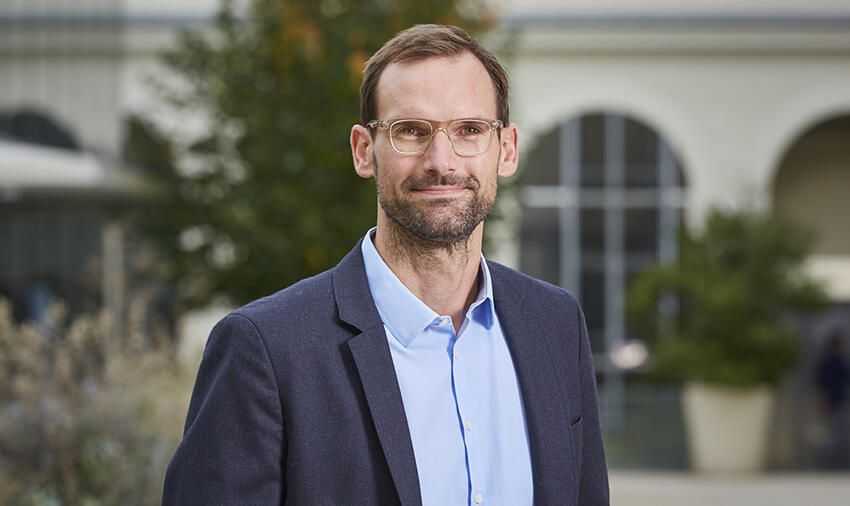
Peter Nilsson is a Professor of Economics at the Institute for International Economic Studies (IIES) , Stockholm University. He also holds a guest professorship at Linnaeus University and serves as a research fellow at IFAU , Uppsala Center for Labor Studies , CESifo , and CEPR . Previously, he was a postdoctoral fellow at Stanford University and obtained his PhD from Uppsala University (2010). Research Focus: His work bridges Labor Economics , Health Economics , and Environmental Economics , analyzing how early-life exposures (alcohol, lead), workplace dynamics, and policy interventions (unemployment insurance, congestion pricing) shape long-term socioeconomic outcomes. Key themes include Environmental Health Impacts on Cognition and Crime Labor Market Responses to Insurance Policies Peer Effects in Workplace Behavior Policy Design for Social Equity Scientific Awards: Nilsson has been recognized through research fellowships at leading institutions and editorial roles, including Associate Editor at The Economic Journal since 2021. His work has been featured in American Economic Review , Journal of Political Economy , and NBER platforms. Key Contributions: He provided testimony for Connecticut’s HB-5045 to reduce childhood lead exposure and contributed to Sweden’s Corona Commission report on pandemic responses. His empirical methods combine natural experiments with administrative datasets to identify causal relationships in health, labor, and environmental economics.
Ashli Owen-Smith is a behavioral scientist affiliated with the School of Public Health at Georgia State University , where her research focuses on mental health disparities, suicide prevention, and integrative/complementary approaches for complex mental-physical health conditions. She works with underserved populations including refugees/immigrants, incarcerated individuals, and LGBTQ+ communities through community-based participatory research and mixed-methods frameworks. Her current projects are funded by CDC , DBHDD , and DPH . Education: Ph.D. in Behavioral Sciences (Emory, 2009), S.M. in Public Health (Harvard, 2005), B.A. in Psychology (Smith College, 2001) Her research spans mental health , trauma , suicide prevention , and mindfulness-based interventions . Recent work examines telehealth adaptations for chronic pain and mental health, vaccine hesitancy in refugee communities, and social determinants of suicide . She leads studies on gender-affirming care and health disparities in LGBTQ+ populations. Key article trends include epidemiological analysis of suicide risk factors, COVID-19 impacts on mental health, ICD-10 coding for autism, and complementary medicine in trauma recovery. Subfields span telehealth , health equity , mental-physical comorbidity , and community engagement . Students she has mentored include C.A. Scarlett , T. Griner , and M.M. Sesay . Her work integrates public health policy , clinical research , and health systems analysis .
Gerald Pruckner is a Professor at the Department of Economics, Johannes Kepler University Linz (JKU), where he serves as Head of the Institute of Health Economics and Dean of the Kurt Rothschild School of Economics and Statistics (RoSES). His academic career spans over three decades with significant leadership roles including heading the Christian Doppler Laboratory for Aging, Health, and the Labor Market (2014-2021), and serving on the board of the Austrian Health Economics Association (ATHEA). He teaches multiple courses including Introductory Microeconomics, Empirical Economics, and Health Economics for the 2025W semester. Pruckner earned his PhD in Economics from the University of Linz in 1993. His academic journey began as an Assistant Professor at JKU (1989-2002), followed by a Professorship at the University of Innsbruck (2002-2006), then returning to JKU as Associate Professor (2006-2010) before his current Professorship (since 2011). He has held visiting positions at the University of Adelaide and UC Berkeley. His research focuses at the intersection of health economics, behavioral economics, and aging, examining healthcare systems, physician behavior, and the relationship between labor markets and health outcomes. Recent work investigates hospital crowding effects, gender differences in medical practice, chronic disease screening effectiveness, and child health services. His research consistently applies economic principles to understand healthcare delivery with emphasis on the Austrian context, often utilizing register data for evidence-based policy insights. Analysis of Pruckner's publication trends shows a sustained focus on practical healthcare issues with policy relevance. His work spans hospital management challenges, gender differences in medical practice, chronic disease screening effectiveness, and child health services. The research consistently bridges academic inquiry with practical health policy applications, with increasing attention to pandemic impacts and digital transformation in healthcare. Board member of Austrian Health Economics Association (ATHEA) since 2015 Member of Health Economics Committee (Verein für Socialpolitik) since 2013 Deputy head of national research network 'The Austrian Center for Labor Economics and the Analysis of the Welfare State' (2008-2013) Head of Christian Doppler Laboratory for Aging, Health, and the Labor Market (2014-2021) Pruckner actively mentors graduate students through dissertation colloquia and master's thesis supervision. His research portfolio includes 23 projects with significant funding, including current work on health services research in Upper Austria and empirical analysis of Linz healthcare provision. As Dean of RoSES and Head of the Health Economics Institute, he provides institutional leadership while maintaining an active research agenda with over 100 publications. He leads multiple research teams focused on health services research, with current projects examining healthcare provision in Linz, health indicators for the region, and broader health system analysis. His work bridges academic research and practical health policy applications through collaborations with regional health authorities and participation in professional associations.
Steven D. Levitt is a Professor at the University of Chicago 's Booth School of Business and director of the Becker Center on Chicago Price Theory . His work spans economics, criminology, education, and behavioral science, with a focus on empirical analysis of real-world issues. Education: BA from Harvard (1989), PhD from MIT (1994) Key Research Areas: Crime economics, educational incentives, behavioral economics, and market dynamics Scientific Awards: 2004 John Bates Clark Medal, Time Magazine's 100 Most Influential People (2006) Levitt's article portfolio includes groundbreaking studies on topics like early childhood education (CogX program), abortion's impact on crime , cheating detection algorithms , and behavioral economics in education . His work often challenges conventional wisdom through unconventional data analysis. Prior research collaborations with Roland Fryer , John List , and Chad Syverson have produced influential papers on racial disparities , real estate markets , and juvenile crime . His NBER working papers demonstrate consistent methodological rigor and innovation.
Bastian Betthäuser is an Assistant Professor at Sciences Po, Paris, affiliated with the Centre for Research on Social Inequalities (CRIS) and the Laboratory for Interdisciplinary Evaluation of Public Policies (LIEPP). He is also an Associate Member at Nuffield College, University of Oxford, and the Department of Social Policy and Intervention. His research focuses on social inequality, intergenerational mobility, educational policy, and life course dynamics . He investigates how socio-economic background influences early development, education, labor market outcomes, and life chances, and how policies can mitigate structural disadvantages. His work combines quantitative methods with comparative and longitudinal analyses across Europe. The recent publications show a strong trend in analyzing educational disruptions (e.g., during the pandemic) , parental employment instability , and regional and historical variations in educational opportunity . His research often leverages large-scale datasets and meta-analytic techniques to assess policy impacts and inequality mechanisms. Scientific Awards: ERC Starting Grant 2024 for the LEARN project on health crises and education He has taught courses on Educational Inequality & Education Policy and Social Inequality across the Life Course at both bachelor’s and master’s levels at Sciences Po. His research is supported by competitive grants and involves collaborations with leading scholars in sociology and public policy. He actively contributes to public discourse through media appearances and academic seminars. He is affiliated with key research units including CRIS and LIEPP, which focus on interdisciplinary evaluation of public policies and social inequalities. These labs support his work on policy-relevant sociological research using advanced empirical methods.
Catherine Legrand serves as Professor of Biostatistics at UCLouvain (Louvain-la-Neuve, Belgium), affiliated with the Institute of Statistics, Biostatistics and Actuarial Sciences (ISBA) and the Louvain School of Statistics, Biostatistics and Actuarial Sciences (LSBA) within the Faculty of Science. She chaired ISBA from 2019-2022 and currently presides over the Louvain Institute for Data Analysis and Modeling (LIDAM). Her academic foundation includes: Master Degree in Mathematics from Université Libre de Bruxelles (1998) PhD in Statistics from Hasselt University (2005) supervised by Prof. Paul Janssen and Prof. Luc Duchateau, specializing in survival analysis and frailty models Her research program centers on Survival Data Analysis with emphasis on frailty models, cure models, and Joint Models for Longitudinal and Survival Data. She develops methodologies for clinical trial design and analysis with direct applications in oncology data, bridging theoretical statistics and clinical practice through collaborations with medical researchers. Analysis of her recent publications (2023-2025) reveals three dominant trends: 1) Advanced survival modeling techniques (semi-Markov, cure rate models) for disease progression; 2) Validation frameworks for surrogate endpoints in clinical trials using joint modeling; 3) Emerging applications in health insurance analytics and public health systems. Her work increasingly addresses real-world healthcare challenges while maintaining methodological rigor. No scientific awards were documented in the available sources. Information regarding student supervision and research grant funding was not provided in the current materials. She leads research within LIDAM and ISBA, building on her prior role as primary statistician for the EORTC Lung Cancer Group where she contributed to multiple Phase II/III trials in lung cancer and mesothelioma. Her current work integrates biostatistical methodology development with practical applications across oncology, public health, and actuarial science domains.
Prof. Francesca Biagini is a Full Professor of Applied Mathematics at the University of Munich (LMU), leading the Department of Mathematics within the Faculty of Mathematics, Computer Science, and Statistics. She holds additional roles as Vice President for International Affairs and Diversity at LMU since 2019, and served as President of the Bachelier Finance Society (2022–2023). Her academic career includes professorships at LMU (since 2009) and prior roles at the University of Bologna and Leibniz University Hannover. She specializes in financial and insurance mathematics, focusing on asset pricing, systemic risk, and model uncertainty. Education: PhD in Mathematical Finance (Scuola Normale Superiore, 2001), Laurea in Mathematics (University of Pisa, 1997). She has advised over 14 PhD students and 180+ master/bachelor students, collaborating with institutions like Allianz, MunichRe, and SwissRe. Research: Biagini’s work bridges financial and actuarial mathematics, including stochastic processes, systemic risk modeling, and insurance frameworks. Notable contributions include modeling asset bubbles, xVA calculations, and liquidity-based frameworks. She has published extensively in journals like *Finance and Stochastics* and *Mathematical Finance*. Awards and Activities: Recipient of the Prinzessin Therese von Bayern Preis (2019) and Zonta Clubpreis (2015). She organizes international conferences, serves on editorial boards (e.g., *Mathematical Finance*), and chairs the Munich Risk and Insurance Center. Her research is funded by grants from BayernLB and LMU Excellence programs.
Hans-Peter Kohler is the Frederick J. Warren Professor of Demography and Professor of Sociology at the University of Pennsylvania. He co-directs the Population Aging Research Center (PARC) and chairs Penn’s Ph.D. Program in Demography. Ph.D. in Economics, University of California, Berkeley (1997) PI of multiple NIH and NSF grants (e.g., R01 HD044228, R21 AG053763, SES 172 9185) His research integrates demography, economics, sociology, and biology to study aging, health disparities, HIV/AIDS, and fertility in low- and high-income countries. Key projects include the Malawi Longitudinal Study of Families and Health (MLSFH) and Global Family Change (GFC) Project , which explore life-course health determinants, intergenerational support, and family structure transformations. Recent collaborative publications analyze cognitive aging in SSA (Journal of Alzheimer’s Disease 2023), mortality risk perception (PNAS 2024), and intergenerational transfers (Population and Development Review 2019). He has mentored students into faculty roles at institutions like NYU, University of Wisconsin, and University of Glasgow. His honors include the Clifford C. Clogg Award (PAA) and Otis Dudley Duncan Award (ASA), alongside leadership roles in the Society of Biodemography and Social Biology .
Stephanie Rennane is a Senior Economist at RAND and Professor of Policy Analysis at the RAND School of Public Policy. Her work bridges labor and health economics with a focus on disability policy, social insurance, and military compensation. She leads major research initiatives funded by the National Institute on Minority Health and Health Disparities (NIMHD) and contributes to critical policy evaluations for the Department of Defense and Veterans Affairs. Her research interests center on the economic and social impacts of disability programs, including Social Security Disability Insurance (SSDI), workers’ compensation, and Medicaid. She specializes in analyzing how these programs affect vulnerable populations, particularly children with special health care needs, low-SES families, and military personnel. Her work explores disparities in caregiver burden, insurance coverage, and access to workplace accommodations. The trends in her recent publications reveal a consistent focus on health and labor policy, with increasing attention to military compensation, food insecurity in military families, and systemic reform in disability evaluation. Her research combines rigorous econometric analysis with policy-relevant insights, often using administrative and survey data to assess program effectiveness and equity. Scientific Awards: None listed in the provided text. As a principal investigator on multiple NIMHD and DoD-related grants, Rennane plays a leading role in advising on public policy. Her research has informed congressional inquiries and federal program evaluations. She has not disclosed any formal students or advisees in the material provided. She is involved in research teams at RAND focused on disability policy, military health, and social safety nets. Her work often involves collaboration with interdisciplinary teams analyzing large-scale datasets and evaluating the cost and impact of public programs.
Tony Cookson is a Professor of Finance and the Michael A. Klump Endowed Professor at the Leeds School of Business , University of Colorado Boulder, where he has served since 2013. His research spans empirical finance , household and corporate financial decision-making , and the impact of social media and legal institutions on financial behavior. He has published in top journals like the Journal of Finance , Journal of Financial Economics , and Management Science , focusing on topics from investor disagreement to fracking-induced debt repayment . Education : Ph.D. in Economics (University of Chicago), M.S. in Statistics and Applied Economics (Montana State University), B.S. in Economics (Montana State University) His research interests include: How social media shapes investor sentiment and trading patterns The economic consequences of fracking and casino policy Legal institutions and their role in credit market development Behavioral finance through LLM-driven investor personas His scientific awards include the Best Paper in Investments and Asset Pricing (MFA 2023) , NASDAQ Best Paper in Asset Pricing (WFA 2021) , and Finalist for TIAA Paul A. Samuelson Award (2021) . He serves as Editor at the Review of Corporate Finance Studies and Associate Editor at multiple top journals.
Markus Jäntti serves as Professor at Stockholm University's Institute for Social Research (SOFI), where his research centers on income and wealth distribution, poverty dynamics, and socio-economic mobility through comparative international lenses. He specializes in quantifying family background's influence on economic outcomes and leads pivotal projects including MapIneq (life-course inequality trends), PrecaNord (Nordic precarious work analysis), and TITA (austerity-era inequality assessment). His research portfolio spans income distribution , wealth inequality , intergenerational mobility , and comparative social policy , employing advanced econometric techniques and cross-national datasets like the Luxembourg Income Study. Work within SOFI's Labor Market Economics (AME) group extends to education, health, taxation, and gender equality, reflecting labor economics' interdisciplinary nature. Analysis of his 2020-2025 publications reveals dual emphases: methodological innovation (e.g., grouped-data inequality measurement) and empirical exploration of family-background effects, labor policies, and social transfers. His influential 2020 framework synthesizing four mobility approaches underscores conceptual rigor, while recent Nordic-focused studies address contemporary challenges like migrant labor exploitation. Scientific awards: No awards were documented in source materials. Major grant-funded projects include: MapIneq : Tracking intergenerational, educational, labor market, and health inequality drivers across lifespans PrecaNord : Multi-level analysis of precarious/informal work in Finland, Norway, and Sweden TITA : Consortium study of austerity's impacts on financial, health, and opportunity inequalities As core faculty in SOFI's AME group, he contributes to research spanning labor market outcomes (wages, employment), social transfers, crime, and political economy—operating within Stockholm University's broader social policy ecosystem while maintaining independent research leadership.
Prof. Dr. Francesca Biagini is a full Professor at the Department of Mathematics, University of Munich (LMU Munich) , leading the Stochastics and Financial Mathematics working group. She serves as Vice President for International Affairs and Diversity at LMU Munich since October 1, 2019, and as President of the Bachelier Finance Society (2022–2023). She is also a Correspondent of the Deutsche Aktuarvereinigung (DAV) and a member of the Executive Board of the Munich Risk and Insurance Center (MRIC) since 2017. Her research focuses on stochastic processes in financial markets , particularly asset price bubbles , default risk modeling , and robust hedging under model uncertainty. Recent work includes deep learning applications to bubble detection and non-linear affine processes for market dynamics. She actively contributes to academic leadership through teaching and publications, including 15+ recent articles on topics like liquidity-induced bubbles, machine learning calibration, and systemic risk transfer equilibrium. Her workgroup collaborates on quantLab initiatives and DAV certificate programs .
Prof. Dr. Wolfgang Greiner, born in 1965, is the Chair of Health Economics and Health Management at Bielefeld University's Faculty of Health Sciences. He has held this position since April 2005 and leads Working Group 5 (Health Economics and Health Management). Current roles: Dean of Faculty, Chairman of Structure and Budget Commission, Habilitation Committee member. Affiliated with Bielefeld Center for Data Science (BiCDaS). His research focuses on health technology assessment , economic evaluation of health services , quality of life metrics , and disease management frameworks . Recent projects include AI-driven clinical decision support systems for sepsis, financial burden analysis for cancer patients, and smart home emergency call system effectiveness. Key awards include the Austrian Prize for Health Economics, Hannover University Science Prize, and Medvantis Research Prize. He serves as Managing Editor of the European Journal of Health Economics and sits on scientific advisory boards for health insurers. His 2025 articles address dengue burden, AI in critical care, and dyslipidemia epidemiology. Earlier works span meningococcal vaccines, HPV disease costs, and chronic disease management in Germany.
Matthias Wächter is a Lecturer at the Lucerne School of Business (HSLU) within the Institute of Business and Regional Economics (IBR PNM), focusing on Public and Nonprofit Management. He holds a Dr. sc. nat. (PhD) and Dipl.-Chem. (Diploma in Chemistry) from ETH Zürich. His career includes roles as a research assistant at EAWAG, program manager at Collegium Helveticum, and leadership positions in Swiss social policy organizations. His research emphasizes healthcare financing, long-term care systems, and public health management. Key research interests include the economic analysis of healthcare systems, home care coordination, palliative care models, and policy reforms for integrated health services. Notable projects include studies on home care agency frameworks, cost structures of non-profit healthcare providers, and simulation models for disease management. He has contributed to policy reports on healthcare financing and palliative care accessibility in Switzerland. Publications highlight his work on regulatory impacts in home care, healthcare resource allocation challenges, and economic sustainability of long-term care systems. He actively participates in policy discussions, such as debates on potential long-term care insurance models and aging population strategies. He serves as a board member of the Swiss Association for Social Policy, furthering interdisciplinary dialogue on social and healthcare policies. His advisory work spans strategic planning for municipalities, health infrastructure projects, and nonprofit organizational development. Key projects include the «SPOTnat» study on home care coordination and the analysis of palliative care needs in cantons Luzern and Basel-Stadt.
Jonathan S. Skinner is a Professor at Dartmouth College, Department of Economics, and a professor at the Dartmouth Institute for Health Policy and Clinical Practice within the Geisel School of Medicine. He serves as the Aging Program Director at the National Bureau of Economic Research (NBER) and has contributed extensively to understanding healthcare productivity, technology adoption, and policy implications for aging populations. Key research areas: Health Economics, Economics of Aging, Public Policy Current projects focus on Medicare/Medicaid spending, geographic healthcare disparities, and pandemic impacts on vulnerable populations. Publications (2023–2010) reveal trends in healthcare fraud networks , racial segregation in hospital admissions , and end-of-life expenditures . His work often integrates Medicare claims data and network analysis to assess systemic inefficiencies. Recent scientific collaborations include partnerships with institutions such as the NBER and JAMA Network Open. He has analyzed regional mortality disparities and technology diffusion in clinical settings, with implications for public health strategy.