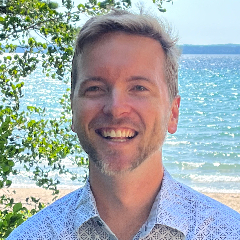
Gilbert Fridgen is Full Professor in Digital Financial Services and holder of the PayPal-FNR PEARL Chair at the University of Luxembourg's Interdisciplinary Centre for Security, Reliability and Trust (SnT). He leads the FINATRAX research group focusing on blockchain, digital identity, and sustainable digital solutions. His research explores decentralized technologies in finance, energy systems, and public administration. Current projects investigate blockchain applications in industrial demand response, NFT markets, EU digital identity wallets, and DeFi institutional adoption. Prof. Fridgen examines the intersection of technology with regulatory frameworks and user behavior in energy and financial systems. He collaborates extensively with industry partners including PayPal and Spuerkeess. Prof. Fridgen actively contributes to EU digital policy discussions, particularly regarding the European Digital Identity Wallet framework and decentralized finance governance.
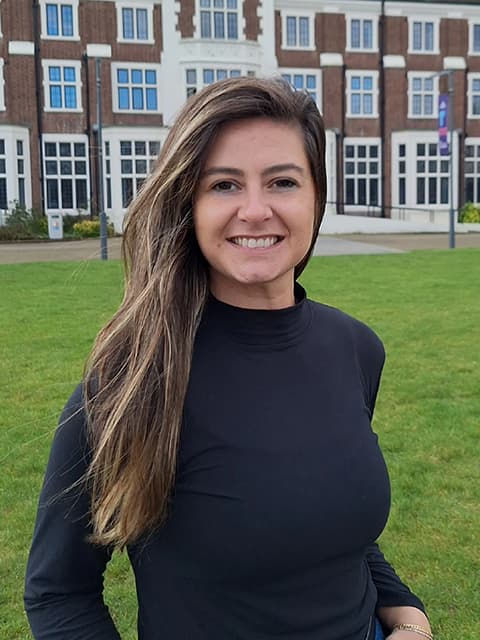
Sabrina Furtado is a Lecturer in Sport Management and Dean’s Associate Fellow at Loughborough University’s School of Sport, Exercise and Health Sciences. She holds a BSc, MSc, and PhD. Previously, she taught at the Federal University of Paraná and State University of Santa Catarina in Brazil, focusing on sport management, sports law, and entrepreneurship in the sports sector. Her research focuses on sports governance, strategic planning, and policy development in public and private sports entities. Key areas include Olympic and Paralympic federations, sports financing, and the impact of media representation on disability inclusion. She contributes to the Sport, Business and Society and Lifestyle for Health and Wellbeing research groups, as well as the Inteligência Esportiva Research Institute . Recent work analyzes governance structures in Santa Catarina municipalities, business intelligence applications in sports management, and modernization processes in Brazilian Olympic federations. Her publications span topics like Paralympic organizational roles, media stigma in disability sports reporting, and funding mechanisms for sports initiatives. No scientific awards are mentioned. Sabrina advises master’s students on sport management and policy but no grant details are provided. Her current projects aim to strengthen sports policies and enhance stakeholders’ engagement in the sport system.
Professor Anne JENY is a Full Professor at IÉSEG School of Management, France, specializing in accounting and auditing. She holds a Ph.D. in Accounting from HEC Paris Business School (2003) and Master's degrees in Audit, Finance, and Economics from the University of Paris Dauphine (1995-1996). Her academic career includes professorships at IÉSEG (2021–present) and ESSEC Business School (2002–2020). Her research focuses on intangible assets valuation , fair value measurement , IFRS adoption dynamics , and transparency in financial reporting . She has published widely on topics such as non-audit services' impact on debt costs, innovation's interplay with accounting systems, and gender disparities in accounting professions. Her work integrates empirical analysis with policy implications, particularly in digital economy contexts and public-private partnerships. A member of the LEM (Laboratory of Economy and Management), she has authored books like Les 12 travaux de l'analyste financier (2021) and contributed to international journals such as Accounting in Europe and European Accounting Review . Her research bridges theoretical frameworks with practical insights into corporate governance and regulatory challenges.
Professor Shaun Larkin is a part-time academic at the School of Public Health , University of Sydney, specializing in Health Policy and Financing . He is affiliated with the Leeder Centre for Health Policy, Economics and Data and a member of the Charles Perkins Centre . With a career spanning executive roles at HCF and non-executive directorships in health startups, his work bridges academia and industry. Education : Harvard Business School alumnus with a HlthScD, MBA, MHSc, and BHA. His research focuses on health economics , health policy , and health services management , emphasizing: Translational research in healthcare financing Trends in private-public healthcare partnerships Price transparency in private health insurance Leadership in health systems Chronic disease management Quality use of medicines His publications reveal a trajectory from foundational work in: Psychiatric services data standardization (2000) Heart disease and diabetes management (2013-2015) Telehealth interventions (2017-2018) Private sector policy frameworks (2019-2020) Saudi Arabian health reforms (2022-present) Private equity in healthcare (2025) As an advisor, he currently supervises research students on topics including: Quality use of medicines in Saudi Arabia Sustainable financial models for private hospitals Patient-reported outcome measures in Australia He also contributes to the Leeder Centre and engages with global health startups as an investor and advisor.
Ana Marques is a Visiting Professor at Norwich Business School (University of East Anglia), specializing in accounting and quantitative methods. She previously served as head of research at the Nova School of Business and Economics in Lisbon and held visiting roles at the Indian Institute of Management Bangalore. Her academic background includes a PhD in Accounting from the University of Texas at Austin, a Master's in Management from Instituto Superior de Gestão (Portugal), and a 5-year Licenciatura in Management from the same institution. Her research focuses on non-GAAP earnings disclosures, corporate governance, ESG/CSR, and voluntary disclosures. Key funding includes a €80,000 Marie Curie grant and over €120,000 from Portugal's Foundation for Science and Technology. She has published in top journals like Review of Accounting Studies and European Accounting Review . Marques holds editorial roles at European Accounting Review and Accounting in Europe , and serves as Editor-in-Chief of the EAA's Accounting Research Center. She has organized major conferences like JIAR 2023 and the Lisbon Accounting Conference, and contributes to professional bodies such as the American Accounting Association (AAA) and European Accounting Association (EAA). Her work addresses disclosure strategies, sustainability assurance, and regulatory impacts, with recent focus on gender diversity policies and ESG-investment linkages. Research outputs emphasize global accounting practices and regulatory effectiveness across diverse sectors.
Professor Helen Kennedy is a leading scholar in digital society at the School of Sociological Studies, Politics and International Relations , University of Sheffield . She holds the title of Professor of Digital Society and is Director of the £4 million ESRC Digital Good Network. A Fellow of the British Academy (FBA) and the Academy of Social Sciences (FacSS), her work bridges academia and public policy through collaborations with the BBC, DWP, and international media organizations. Her educational background includes a BA in English and American Studies from the University of Birmingham, an MA in Cultural Studies from the Birmingham Centre for Contemporary Cultural Studies (CCCS), and a PhD from the University of East London (2002) on digital identity and multimedia. Helen's research centers on digital inequality, datafication, algorithmic culture, data ethics, and public engagement with data . She investigates how non-expert publics experience and interpret data, visualizations, and AI, with a focus on fairness, transparency, and resistance. Her work also examines data visualization in society , particularly in news media, and the emotional and cultural dimensions of data engagement. Her recent publications reveal a consistent trend in exploring public perceptions of data practices , the politics of data visualization , and ethical dimensions of data use across journalism, public services, and digital platforms. Themes include trust, fairness, emotion, and the socio-political shaping of data systems. Fellow of the British Academy (FBA) Fellow of the Academy of Social Sciences (FacSS) Helen has led numerous major grants from the ESRC, AHRC, Nuffield Foundation, and EPSRC , including projects like Living With Data , Generic Visuals in the News , and Seeing Data . She supervises PhD students on topics ranging from algorithmic bias to digital self-tracking and has completed 13 PhD supervisions. She actively collaborates with policy makers (DWP, BBC, DCMS) , media organizations (Financial Times, Reach PLC) , and NGOs to translate research into impact, particularly in web accessibility and data governance. She leads the Living With Data research programme and is involved in the Everyday Life and Critical Diversities and Science, Technology and Medicine in Society research groups. Her work with the ESRC Digital Good Network brings together academics, practitioners, and civil society to envision equitable digital futures.
Patricia Wellmeyer is an Associate Professor of Teaching and Academic Director of the Master of Professional Accountancy (MPAc) program at the Paul Merage School of Business, University of California, Irvine. She plays a key leadership role in shaping accounting education and curriculum innovation. Her educational background includes: PhD in Management, Accounting – NHH School of Economics, 2016 Master of Science in Accounting – CSU Fullerton, 2002 BS in Business – UC Riverside, 1996 Her research focuses on audit quality, financial reporting standards, and the evolving role of accounting in the digital age. She has pioneered the integration of data analytics and ESG (Environmental, Social, and Governance) topics into the accounting curriculum, reflecting current industry transformations. Her work bridges academic rigor with practical application, informed by over a decade of experience as a practicing CPA. She is actively engaged in professional service, founding the annual UCI Audit Committee Summit and maintaining membership in prominent organizations including the American Accounting Association (AAA), American Institute of CPAs (AICPA), California Society of CPAs (CalCPA), and National Association of Corporate Directors (NACD). As a dedicated educator and program leader, she has developed numerous courses across undergraduate and graduate levels, significantly contributing to the academic mission of the Merage School. Patricia has no listed scientific awards in the provided text. She advises and leads academic programs, notably serving as the academic director of the MPAc program, which she helped co-found. She has developed key electives including the accounting data analytics and ESG curriculum tracks. There is no mention of grant funding in the provided material. She founded and chairs the UCI Audit Committee Summit, an initiative that brings together professionals and academics to discuss governance and audit practices, serving as a platform for knowledge exchange and industry engagement.
Rahul Sarkar is a Postdoctoral Fellow at the University of California, Berkeley, affiliated with the Department of Mathematics . He was previously a Ph.D. student in the Institute for Computational and Mathematical Engineering (ICME) at Stanford University, graduating in 2022 under the advisement of Biondo Biondi and András Vasy. Research Interests : Quantum information theory, inverse problems, machine learning, microlocal analysis, and numerical methods for PDEs. Scientific Contributions : Developed novel quantum computing algorithms and numerical schemes for geophysical imaging, with applications in seismic tomography and quantum signal processing. Teaching : Taught courses at Stanford including Introduction to Quantum Computing and 3D Seismic Imaging , with roles as instructor and course assistant. Awards : Schlumberger Innovation Fellowship (2019-2020). His work bridges mathematical analysis and quantum computation , with a focus on solving real-world problems through interdisciplinary approaches. He has collaborated with institutions like IBM and Schlumberger to apply quantum algorithms to geoscience and financial optimization.
Dr. Paola Madini serves as Senior Lecturer in Accounting within the Department for Accounting and Finance at Kent Business School, University of Kent. Holding a PhD from Bocconi University and PGCHE from Kent, she specializes in management control systems with prior academic appointments at ESADE and SDA Bocconi School of Management. Education: PhD in Business Administration and Management (Accounting and Control specialization), Bocconi University PGCHE, University of Kent Fellow of the Higher Education Academy Her research examines management control systems (MCS) design and behavioral implications, focusing on budgeting processes, performance measurement, and inter-organizational relationships. Using field-based case studies and surveys with finance professionals, she bridges academic theory with practical applications in accounting management. Recent work investigates pandemic impacts on UK healthcare organizations' MCS and explores management accounting education through participative teaching methodologies and flipped learning approaches. Publication analysis reveals consistent contributions to management accounting literature, with recurring themes in MCS configurations (coercive, enabling, diagnostic, interactive), budgetary design, and industry-specific applications in fashion/retail sectors. Her work demonstrates evolving focus from traditional budgeting processes toward contemporary challenges like emerging market dividend policies and pandemic-driven organizational adaptations. Scientific Awards: Distinguished Reviewer Award 2017 (Journal of Management Control) Runner up reviewer 2015 (Journal of Management Control) She actively supervises postgraduate research including six Master's theses on managerial reporting systems in retail, fashion company accounting implementations, and neo-colonial accounting education frameworks. Industry collaborations include IBM Italy (integrative finance organizations), DocFlow (document management systems), and CIMA (fashion company accounting systems), with current projects examining pandemic impacts on UK healthcare management control systems. As member of the McGraw Hill Higher Education Advisory Board and conference committees (Socialising Business Research, AAA Annual Meeting), she contributes to academic community development while advising publishers on management accounting textbook development and portfolio strategies.
Sarah E. Light is the Mitchell J. Blutt and Margo Krody Blutt Presidential Professor and Professor of Legal Studies & Business Ethics at the University of Pennsylvania's Wharton School. She serves as Faculty Co-Director of Wharton’s Climate Center and holds primary appointments in the Legal Studies & Business Ethics department. Her educational background includes a JD from Yale Law School (2000), an M. Phil in Politics from Oxford University as a Rhodes Scholar (1997), and an AB in Social Studies, Magna Cum Laude, from Harvard University (1995). Professor Light's research examines the intersection of environmental law, corporate sustainability, and business innovation. Her work addresses how corporate law structures function as environmental law, private environmental governance through business actions (including carbon fees and financial sector decisions), and First Amendment implications of regulating greenwashing. She employs interdisciplinary approaches connecting legal doctrine with business strategy and environmental science. Her publications reveal strong trends in private environmental governance mechanisms, climate risk management in financial systems, and the evolving regulatory landscape for corporate sustainability claims. Recent work focuses on greenwashing regulation, banking sector climate action, and non-extractive corporate relationships with public lands. Penn Fellows Program (2023-2024) Multiple Wharton Teaching Excellence Awards (2018-2021) ARCS Emerging Sustainability Scholar Award (2018) Haub Environmental Law Distinguished Junior Scholar (2015) Top 20 Article in Environmental Law & Policy Annual Review (2020) Professor Light has advised numerous student groups and projects, particularly through experiential courses like 'Wharton in the Wild' where she leads field-based environmental management education. Her grant activities include leadership roles at the Wharton Climate Center and Penn Program on Regulation, with research supported by interdisciplinary initiatives focused on climate governance and business innovation. She maintains active pro bono mediation work with federal courts and community organizations. As Faculty Co-Director of the Wharton Climate Center, she leads interdisciplinary research initiatives connecting business strategy with climate solutions, fostering collaboration between academia, industry, and policymakers through conferences, publications, and executive education programs.
Catherine Anne Brown is a Professor at the Faculty of Law, University of Calgary with extensive international experience, having held visiting professorships at Stanford University (as a Fulbright Fellow), University of Toronto, UCLA, McGeorge School of Law, and Whittier Law School. Her expertise spans taxation, international trade law, and estate planning across multiple jurisdictions. Her research focuses on the critical intersection of tax and trade agreements, particularly how non-discrimination principles operate within services trade frameworks. Current work examines tax treaty mechanisms for addressing discriminatory practices in cross-border commerce, building on her 2017 monograph "Tax Discrimination and Trade in Services". She actively explores evolving regulatory challenges in digital services taxation and international compliance. Professor Brown's scholarship demonstrates consistent engagement with practical legal applications, bridging academic theory and professional practice through textbooks, treatises, and policy-oriented analyses. Her publications reveal progressive specialization in tax-trade interfaces while maintaining foundational contributions to estate planning education. Her distinguished career has been recognized through: Lifetime Achievement Award (Canadian Tax Foundation, 2017) Doug Sherbaniuk Award for Distinguished Writing (Canadian Tax Foundation, 2014) Award for Distinguished Service in Legal Scholarship (Law Society of Alberta/Canadian Bar Association, 2011) Widdifield Award for estate planning scholarship (2006, 2012) Induction into the International Academy of Estate and Trust Law (2012) As an educator, she directed the Business Clinical program until 2014, providing practical training in business law applications. She maintains active professional engagement through appointments to the NAFTA Chapter 19 roster (2018), STEP Canada's Public Policy Committee (2016), and the Canada Revenue Agency's Offshore Compliance Advisory Committee (2016), while serving on the Legal Education Society of Alberta's Board of Directors.
Tommy Sveen is Professor of Economics at BI Norwegian Business School and serves as Head of the Department of Economics. He also holds an adjunct professorship at the Norwegian School of Economics (NHH) and directs the Centre for Monetary Economics. His career includes extensive experience at Norges Bank in roles including Assistant Director and Senior Advisor across Research and Monetary Policy departments. Education: PhD (Dr.Oecon) in Economics from Norwegian School of Economics (NHH), 2001 Master Cand. Oecon from Norwegian School of Economics (NHH), 1995 Master of Science in Business from BI Norwegian Business School, 1988 Research Focus: Professor Sveen specializes in Monetary Economics, Macroeconomics, and Open Economy Macroeconomics. His work examines monetary-fiscal policy interactions, investment dynamics under nominal rigidities, labor market adjustments to technological shocks, and exchange rate mechanisms. He frequently employs New Keynesian frameworks to analyze policy transmission and economic stabilization. Publication Trends: Recent research (2020-2025) focuses on optimal policy coordination in small open economies, monetary responses to export shocks, and labor market margins. Earlier work (2013-2018) established foundational insights into lumpy investment behaviors, Taylor rule applications, and real exchange rate determinants. His articles consistently integrate microeconomic foundations with macroeconomic policy analysis. Leadership: Directs the Centre for Monetary Economics and authors the independent evaluation report Norges Bank Watch , critically assessing Norwegian monetary policy.
Zac Wiebe is an Assistant Professor at the William Dillard Department of Accounting within the Walton College of Business at the University of Arkansas. He also serves as the Director of Master's Programs for the Accounting Department. Dr. Wiebe joined the faculty in 2018 after completing his Ph.D. in Business at the University of Kansas. His position combines teaching responsibilities with research focused on financial reporting in public capital markets. Education: PhD in Business, University of Kansas Master of Accounting, University of Kansas Bachelor of Commerce, University of Saskatchewan Dr. Wiebe's research primarily focuses on the intersection of financial reporting and capital markets. His work examines how accounting information influences investor decision-making and market efficiency. Key areas include Financial Reporting and Capital Markets , Non-GAAP Financial Measures , Investor Information Processing , Accounting Standard Setting , and Mergers, Acquisitions, and Divestitures . His research investigates how financial disclosures affect market participants' understanding of firm performance and value, with particular attention to non-GAAP metrics, segment reporting, and the impact of temporal factors on information processing. Dr. Wiebe's publication record demonstrates a consistent focus on how financial reporting practices influence capital market participants. His most recent work examines the impact of daylight saving time on investor information processing, revealing behavioral aspects of financial decision-making. Earlier research investigates the determinants and usefulness of non-GAAP revenue disclosures and segment profit/loss reporting. His work spans top accounting journals including The Accounting Review , Management Science , and Contemporary Accounting Research , indicating strong methodological rigor and relevance to both academic and practitioner audiences. Professional Recognition: Research published in top-tier accounting journals: The Accounting Review, Management Science, and Contemporary Accounting Research Research cited by major media outlets including Forbes, Fox Business News, and Bloomberg Active CPA license with the Colorado Society of CPAs As Director of Master's Programs for the William Dillard Department of Accounting, Dr. Wiebe oversees the Accounting Master's program curriculum and administration. He teaches Financial Accounting Research and Theory to Master's students, bridging his research expertise with classroom instruction. While specific grant information isn't provided in the available materials, his publication record in premier journals suggests successful research funding support. His role as program director indicates leadership responsibilities within the department beyond traditional teaching and research duties. Dr. Wiebe maintains an active research agenda focused on financial reporting's role in capital markets. His work suggests collaboration with other accounting scholars across multiple institutions, though specific research teams or labs aren't explicitly mentioned in the available information. His focus on practical implications of accounting standards indicates engagement with both academic and professional accounting communities.
Christopher Conway serves as Associate Professor of Psychology at Fordham University's College of Arts and Sciences, where he directs the Bronx Personality (B-PER) Lab. His research investigates borderline personality disorder, anxiety, depression, and distress tolerance using experience sampling methods and longitudinal designs. The lab examines personality development across key transitions such as romantic breakups and financial strain. 2007 BS in Psychology and Spanish, Duke University 2009 MA in Clinical Psychology, University of California, Los Angeles 2013 PhD in Clinical Psychology, University of California, Los Angeles Conway's work centers on distress tolerance as a protective factor against self-injurious behaviors, momentary personality processes using ecological assessment, and the HiTOP consortium 's dimensional classification of psychopathology. His lab develops quantitative models linking personality dimensions to clinical outcomes, with emphasis on how stressors trigger symptom changes. Recent publications reveal neuroticism's specific association with broadband internalizing symptoms rather than narrowband anxiety or anhedonia. His publications demonstrate consistent focus on transdiagnostic mechanisms and dimensional classification systems . Key trends include validating the HiTOP framework across cultures, examining distress tolerance in substance use contexts across four continents, and developing within-person models of self-injury using registered report methodology. Professional affiliations include: Society for Research on Psychopathology Association for Psychological Science Association for Behavioral and Cognitive Therapies Association for Research in Personality Conway advises multiple graduate students in the B-PER Lab and leads several active studies including MOMENT (Measuring Our Momentary Emotions and Negative Thoughts), DENEM (Daily Experiences of Negative Emotions), and READI (Responses to Emotions And Daily Interactions). His lab participates in the multinational Cross-cultural Addictive Behaviors Study examining distress tolerance across seven countries. All research materials follow open science principles through his OSF repository. The B-PER Lab maintains active research programs examining personality development through: 3-year longitudinal Multiyear Adult Personality Project (MAPP) Cross-cultural Addictive Behaviors Study (CABS) Daily emotion regulation projects using smartphone-based assessments
Univ.-Prof. Dr. Claus Staringer is Professor of Tax Law with a special focus on Corporate Tax at the Vienna University of Economics and Business Administration (WU Wien). He has served as Head of the Corporate Tax Group and Deputy Chairman of the Department of Austrian and International Tax Law since 2003, and as Director for legal Doctoral Studies since 2005. Additionally, he has been a Principal Consultant at Freshfields Bruckhaus Deringer since 2001, maintaining a strong connection between academic research and professional practice in international tax law. Staringer earned his Mag.iur. in Economics and Law from the Vienna University of Economics and Business Administration and University of Vienna, followed by a Dr. iur. with excellence (thesis: "Einlagen und Umgründungen") and habilitation in Tax Law (thesis: "Besteuerung doppelt ansässiger Kapitalgesellschaften"). His academic journey includes assistant positions at both WU Wien and the University of Vienna, blending academic rigor with practical insights from his work at Deloitte and Freshfields. His research focuses on international tax law, particularly corporate taxation, double taxation agreements, and European tax coordination. Staringer has made significant contributions to understanding dual resident corporations, cross-border reorganizations, and the interaction between EU law and tax treaties. His work bridges theoretical frameworks with practical applications in multinational tax planning and compliance. Staringer's publication record shows consistent scholarly output with emphasis on European tax developments, treaty interpretation, and corporate restructuring. His recent work addresses emerging challenges including digital economy taxation, minimum global taxation, and sustainability reporting implications for tax systems. The publications demonstrate methodological rigor with thorough analysis of case law from the European Court of Justice and international tax tribunals. Rudolf Sallinger Award (1994) for Doctoral Thesis Mitchell B. Carroll Prize of the International Fiscal Association (1999) Albert Hensel Prize of Deutsche Steuerjuristische Gesellschaft (1999) Gerhard Thoma Prize of German Institute of Tax Consultants (1999) Award for academic achievements from IFA National Committee (2000) Award for "Innovative Teaching" at WU Wien (2006) Staringer has been instrumental in developing the European Tax Moot Court program and has supervised numerous doctoral candidates through his role as Director of legal Doctoral Studies. His professional engagements include significant contributions to EU tax policy discussions, particularly regarding the Common Consolidated Corporate Tax Base (CCCTB) and the implementation of the OECD's BEPS recommendations in European jurisdictions. He leads the Corporate Tax Group at WU Wien, which has established itself as a leading research center for Austrian and international tax law. The group regularly organizes the Vienna Symposium on International Tax Law and contributes to major research projects on international tax coordination, including EU-funded initiatives examining cross-border tax challenges in the single market.