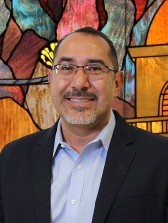
David Jauregui is a Professor of Civil Engineering at New Mexico State University (NMSU), where he also serves as Associate Dean of Academics in the College of Engineering since 2023. He previously held roles as Department Head of Civil Engineering (2022) and has been continuously employed at NMSU since 1992, progressing from Graduate Research Assistant to Professor (since 2012). Education: Ph.D. in Structural Engineering (1999) from The University of Texas at Austin M.S. in Structural Engineering (1994) from NMSU B.S. in Civil Engineering (1992) from NMSU Research Focus: Specializing in bridge engineering, his work addresses critical infrastructure challenges through innovative technologies. Key areas include proof load testing , non-destructive evaluation using acoustic emission and ultrasonic methods, finite element modeling , and virtual reality applications for structural assessment. Publication Trends: His 15 most recent works (2008-2019) emphasize advanced measurement techniques (terrestrial laser scanning, photogrammetry), structural diagnostics for bridges without original plans, and collapse analysis during construction/removal phases. Studies often integrate computational modeling with field testing.
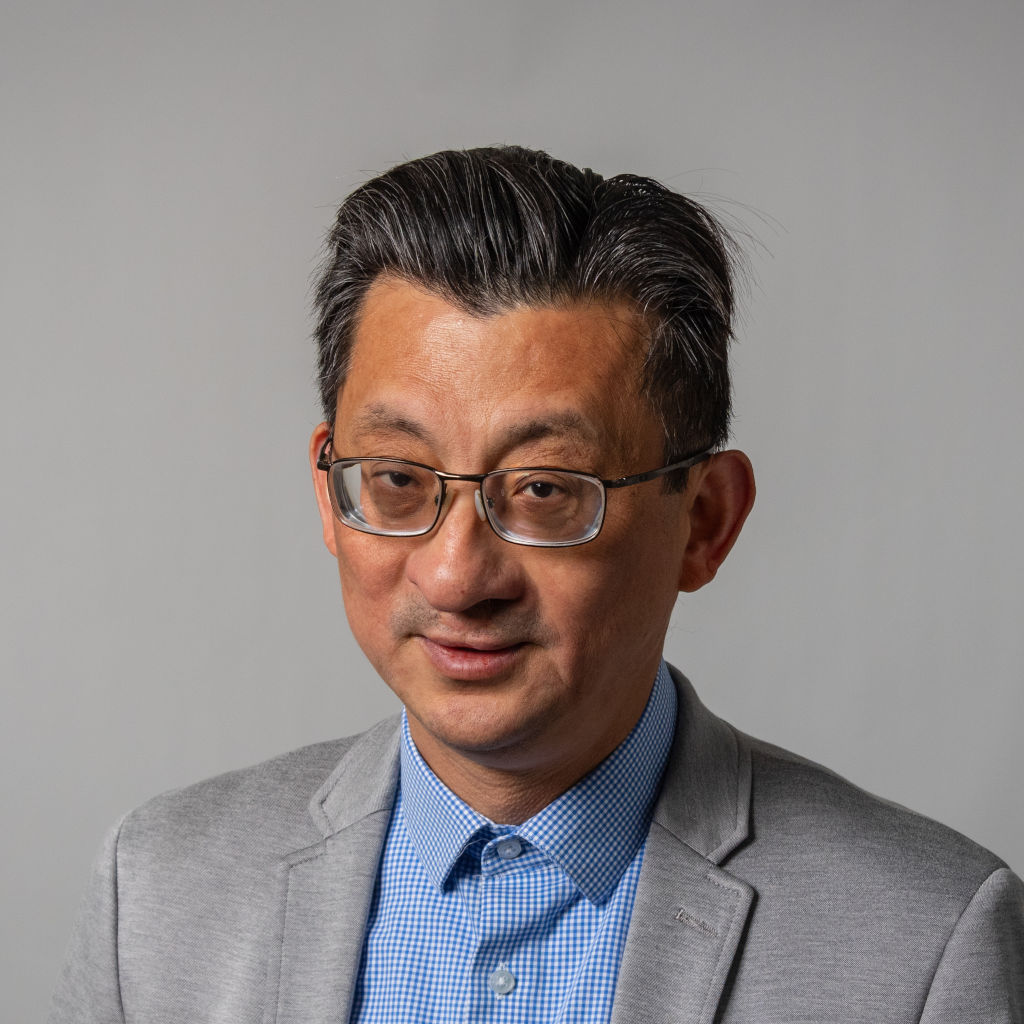
Professor Sang-Heon Lee is a faculty member at the University of South Australia, affiliated with the UniSA STEM division. His research spans interdisciplinary domains including machine vision, supply chain optimization, and material science. His research interests focus on developing advanced imaging systems for food safety (e.g., aflatoxin detection in almonds), optimizing reverse supply chains for electronic waste and solar panels, and engineering nanocomposites for construction materials. He also investigates biomedical imaging techniques for mucociliary transit assessment and clinical coding methodologies. The 15 most recent publications highlight his work in multispectral/hyperspectral imaging, fuzzy logic optimization, and nanomaterials. Key trends include non-destructive food testing, sustainable e-waste management, and biomedical imaging analysis. As a research degree supervisor, he contributes to academic training in these areas. No scientific awards or lab affiliations were explicitly mentioned in the provided text.
Alessandra Martucci is a Fixed-term Assistant Professor at the Department of Applied Science and Technology (DISAT) at Politecnico di Torino, affiliated with the College of Chemical and Materials Engineering. Her research focuses on materials science, additive manufacturing, and microstructural analysis of alloys. Scientific Branch: IMAT-01/A - Materials Science and Technology (Area 0009 - Industrial and information engineering) Email: alessandra.martucci@polito.it Research Interests: Martucci’s work centers on additive manufacturing technologies (e.g., laser powder bed fusion), alloy development (Aluminum, Titanium), corrosion behavior, and process optimization for aerospace and industrial applications. She investigates microstructural evolution, heat treatment effects, and sustainability in manufacturing. Recent Publications Trends: Her studies address challenges in additive manufacturing, including cracking sensitivity, powder reuse, support structure optimization, and mechanical properties of Ti-6Al-2Sn-4Zr-6Mo and Al-based alloys. Key themes include sustainability, defect analysis, and phase characterization. Teaching Roles: Martucci collaborates in courses such as Materials & Design, Materials Engineering for Industry 4.0, Design and Additive Manufacturing for Aerospace Applications, and Materials for Additive Manufacturing at Politecnico di Torino.
Dr Richard Collins is a Senior Lecturer in Water Engineering at the University of Sheffield , affiliated with the School of Mechanical, Aerospace and Civil Engineering. His research focuses on hydraulic transients , pipeline integrity , and smart water infrastructure . Graduated with an Aerospace Engineering degree (2005) and PhD in Materials and Mechanical Engineering (2009) Current research explores pressure transients , leak detection , and autonomous robotic systems for pipeline inspection Projects include fatigue analysis , biofilm mobilisation , and ultrasound-based pipe assessment His publications emphasize cast iron pipe fatigue , acoustic leak detection , and transient-induced contamination . Funded by RCUK and Datatecnics , his work bridges mechanical engineering and civil infrastructure challenges.
Professor Kirill V Horoshenkov (FREng) is a leading academic at the University of Sheffield , holding a Personal Chair in Acoustics within the School of Mechanical, Aerospace and Civil Engineering . With a MEng in Electro-Acoustics and Ultrasonic Engineering from Moscow University and a PhD in Computational and Experimental Acoustics from the University of Bradford, he transitioned to Sheffield in 2013 after a distinguished career at Bradford. Acoustic sensors for water infrastructure Physical acoustics and wave propagation Acoustic material characterization Pipe condition monitoring systems Research Focus : Horoshenkov's work bridges acoustic engineering with water industry applications , developing innovative solutions for pipeline diagnostics and monitoring. His team has pioneered acoustic vector receivers , MEMS hydrophones , and Bayesian acoustic models for material analysis. Notable projects include the Pipebots Programme Grant and EPSRC Acoustics Network . Scientific Leadership : A Fellow of the Royal Academy of Engineering, he serves as Editor-in-Chief of the Nature Portfolio Journal npj Acoustics . His research has yielded 12 patents and over 200 publications , including commercialization through spin-offs like Acoutechs Limited (licensed to Armacell) and Acoustic Sensing Technology Limited .
Prof. Jan De Beenhouwer is a faculty member at the University of Antwerp, affiliated with the Department of Physics and the imec Vision Lab. His research focuses on advanced computational imaging techniques, particularly in X-ray tomography, phase contrast imaging, and reconstruction algorithms for medical and industrial applications. His primary research interests include: Development of novel X-ray imaging methodologies like edge illumination phase contrast Advanced CT reconstruction algorithms for sparse-view and dynamic systems Integration of deep learning with tomographic reconstruction Industrial applications including defect detection and material characterization Biomedical imaging such as bone structure analysis and tissue modeling Analysis of recent publications (2024-2025) reveals strong emphasis on: Innovations in phase contrast imaging hardware and simulation tools Advanced reconstruction techniques for motion compensation and sparse data AI-powered approaches for industrial inspection and biomedical research Development of open-source tools (CAD-ASTRA) for the tomography community He leads research at imec Vision Lab, focusing on both fundamental imaging physics and practical applications. The lab collaborates extensively with industrial partners on non-destructive testing solutions.
Kafayat Hazzan is a Researcher specializing in laser-based manufacturing and materials science. Their work focuses on advanced techniques for tool repair, surface engineering, and defect detection in hard materials. They are affiliated with an institution housing the Wolfson Building (office TW.2.09). Research interests include laser machining strategies, surface integrity analysis of tungsten carbide, and micro-machining applications. Their studies explore innovative methods for remanufacturing cutting tools and improving material durability through laser processing. Recent publications (2021-2023) highlight trends in laser surface treatment for hard materials, predictive defect detection algorithms, and micro-scale machining innovations. Articles emphasize interdisciplinary approaches combining materials science with advanced manufacturing technologies.
Professor Dirk Lars Engelberg is a Professor in Materials Performance & Corrosion at the Department of Materials, University of Manchester. He holds multiple affiliations including the Dalton Nuclear Institute and the Sellafield Effluent & Decontamination Centre of Expertise (SEDCoE). As Corrosion@Manchester lead and SEDCoE Decontamination Lead, he plays a pivotal role in advancing corrosion science with applications in nuclear energy, net zero engineering, and materials performance. Professor Engelberg's educational background includes a PhD in Metallurgy & Materials Science, an MSc in Corrosion Science & Engineering from UMIST, and a Diplom-Ingenieur (FH) in Surface Engineering & Materials Science from Aalen University in Germany. His industry experience as an electroplater (1991-1994) provided foundational knowledge that has informed his academic career. His research spans carbon steels, stainless steels, aluminum alloys, and nickel alloys, with particular emphasis on their performance in nuclear applications and hydrogen-related environments. Professor Engelberg's expertise covers metallurgy & processing, grain boundary engineering, hydrogen effects, bipolar electrochemistry, in-situ imaging techniques, and cementitious materials for nuclear waste disposal. Professor Engelberg's recent publications demonstrate a strong focus on advanced corrosion testing methodologies, hydrogen effects on material performance, and innovative imaging techniques for corrosion monitoring. His work increasingly addresses challenges related to net zero engineering and sustainable materials solutions, reflecting the growing importance of these areas in materials science. Best Paper Award 2018 - Welding in the World (2019) Henri Coriou Award 2024 (2024) As an educator and mentor, Professor Engelberg has supervised numerous PhD and Master's students. He leads several major research projects funded by EPSRC, NNL, and other organizations. Currently, he serves as Vice Chair of the European Federation of Corrosion Working Party 5 on Environment Sensitive Fracture and as Section Editor for Shreir's Corrosion Handbook, highlighting his standing as a leading expert in the international corrosion science community.
Jiong Tang is a Pratt & Whitney Chair Professor in Design and Manufacturing at the University of Connecticut , where he also serves as Co-Director of the Management and Engineering for Manufacturing Program . He received his B.S. and M.S. in Applied Mechanics from Fudan University, China (1989 and 1992), and his Ph.D. in Mechanical Engineering from Pennsylvania State University (2001). Prior to joining UConn, he worked at the GE Research Center as a research engineer. Research Interests : System dynamics, control theory, smart materials, vibration suppression, uncertainty propagation, computational intelligence, and multi-physics system modeling. Current Projects : Digital twin development for aerospace materials, physics-informed machine learning in manufacturing, adaptive metasurface design, and optimization of cooperative robotics. Methodological Focus : Combines Bayesian deep learning , Gaussian process metamodeling , transformer-based architectures , and multi-fidelity data fusion for industrial applications. His work emphasizes smart sensing , electromechanical integration , and uncertainty-robust inverse analysis . Collaboration : Research funded by federal agencies and industrial partners , with particular emphasis on aerospace and manufacturing technologies. His recent publications highlight generative adversarial networks for defect detection , piezoelectric metamaterials , and physics-guided neural network architectures across mechanical, structural, and composite systems.
Michal Kalkowski is an Associate Professor at the University of Southampton's Institute of Sound and Vibration Research (ISVR). His research focuses on structural wave and vibration analysis for non-destructive testing, material characterization, and infrastructure monitoring. He develops advanced modeling tools and signal processing techniques for applications in nuclear energy, aerospace, and water industries. Current projects include weld inspection through ultrasound-based 'weld map tomography' and leak detection in buried pipes using distributed acoustic sensing. He is Editor of the Journal of Sound and Vibration and Co-chair of the UK Acoustics Network UKAN+. Education: MEng in Control Engineering & Robotics (AGH University, Krakow), PhD in Structural Wave Applications (ISVR, 2010). Postdoctoral work included EPSRC projects on active vibration control and underground structure interrogation. Served as H2020 ADVISE project researcher at Imperial College London before returning to Southampton in 2021 as Lecturer in Dynamics. Teaching responsibilities include coordinating the Mechanics, Machines & Vibration module (joint with Harbin Engineering University), and teaching Statics/Dynamics (FEEG1002) and Fundamentals of Vibration (ISVR6141). Actively supervises four PhD students in engineering disciplines. Research highlights include: Developing numerical models for wave propagation in complex materials Pioneering weld map tomography for grain orientation analysis Advancing distributed acoustic sensing for infrastructure monitoring AI integration for coarse-grained metal characterization Current active projects: Horizon Europe iWeld intelligent Weld inspection and EPSRC Core Equipment grants.
Dr. David Belton is a Senior Lecturer in the School of Earth and Planetary Sciences at Curtin University, within the Faculty of Science and Engineering. He also holds a portfolio role in the Office of the Provost. His expertise lies in laser scanning (both terrestrial and mobile) and photogrammetry, with a focus on automated processing, feature extraction, and applications in mining, heritage conservation, and structural monitoring. Dr. Belton holds a BCSc, BSc (First Class Honours), and a PhD from Curtin University. His teaching responsibilities include coordinating and lecturing in Cartographical Statistics and Integrated Surveying, alongside previous roles in Mine Surveying and Mine Survey Project courses. He actively supervises PhD, MPhil, and Honours students, fostering research excellence in spatial sciences. His research emphasizes practical applications of geospatial technologies, including underwater photogrammetry, pipeline monitoring, and coral reef analysis. Key areas include robust statistical methods for point cloud processing, sensor calibration, and open-source device development for marine surveys. His work bridges theoretical advancements with real-world challenges in environmental monitoring, infrastructure assessment, and cultural heritage preservation. Publications span high-impact journals like Corall Reefs , ISPRS Journal of Photogrammetry , and IEEE Transactions , reflecting contributions to geomatics, remote sensing, and computer vision. His research often addresses interdisciplinary challenges, such as UAV-based ecological monitoring and automated 3D model reconstruction from laser scanning data. Dr. Belton collaborates widely, contributing to projects like the Sydney-Kormoran wreck analysis and heritage documentation of Pilbara rock art. His work underscores innovative solutions for spatial data challenges across environmental, engineering, and archaeological domains.
Günther Mayr is a Professor at the University of Applied Sciences Wels, leading the Thermography and Non Destructive Testing Research Center. His research focuses on advanced thermal imaging techniques such as pulsed thermography and virtual wave concepts, applied to composite materials and automotive/mobility components. He has pioneered methods for defect detection in carbon fiber-reinforced plastics and fluid injection systems, emphasizing industrial quality assurance. Key projects include the EXCITE initiative for thermo-tomographic sensor technologies and the FLARE project integrating AI into non-destructive evaluation. He has collaborated internationally on topics like photothermal interface analysis and hybrid fiber metal laminate inspection. His work has earned the E. Grinzato Award (2018) for contributions to thermal NDE. Recent research highlights include 3D defect reconstruction in composites and efficient defect localization using virtual wave algorithms. He actively participates in conferences presenting innovations in thermal wave modeling and combined laser ultrasonics-thermography techniques.
Tamás Lovas serves as Associate Professor at the Department of Photogrammetry and Geoinformatics, Faculty of Civil Engineering, Budapest University of Technology and Economics. He teaches advanced courses in Building Information Modeling, Laser Scanning, Remote Sensing, and Intelligent Transportation Systems while supervising diploma theses in Surveying and Geoinformatics Engineering. Education: 1994: High school graduation, Városmajor High School, Budapest 1999: Certified Surveyor and Geoinformatics Engineer, Budapest University of Technology, Faculty of Civil Engineering 2005: PhD (Earth Sciences), Budapest University of Technology and Economics, Faculty of Civil Engineering Research Interests: Dr. Lovas specializes in laser scanning technologies and geospatial data processing with emphasis on airborne and terrestrial point cloud analysis. His work bridges civil engineering applications and computational methods, particularly in infrastructure monitoring and digital representation. Processing, classification, and modeling of airborne laser scanned data Accuracy testing of terrestrial laser scanning Processing and modeling of terrestrial laser scanned data Comparative study of spatial data acquisition technologies His 2022-2025 publications demonstrate accelerating integration of artificial intelligence in point cloud processing, with significant contributions to road surface extraction, urban land cover classification, and BIM automation. Current research trends show strong focus on digital twin development for autonomous vehicles and infrastructure management. Scientific Awards: Republic Scholarship (1998-1999) Karlsruhe Chancellor's Scholarship (1999) ERASMUS scholarship (2000) Korányi Fellowship (2001-2002) János Bolyai Research Scholarship (2008-2011) OHV 1st place (2008) Dean's commendation for ERASMUS committee work (2014) For Students Award - Teaching Department (2017) Advising and Grants: Dr. Lovas mentors students through diploma theses and TDK research projects on topics including object survey with amateur sensors and hull modeling. His research funding includes the prestigious János Bolyai Research Scholarship and international fellowships supporting collaborations with institutions like The Ohio State University. Labs and Teams: As founding member and supervisory board member of the Hungarian BIM Association, he drives industry-academia collaboration. His leadership roles include Deputy Dean of Education at the Faculty of Civil Engineering and responsibility for English language training programs, facilitating international academic exchange.
Dr. David Jack is a Professor in the Department of Mechanical Engineering at Baylor University’s School of Engineering & Computer Science. He leads the Scientific Innovations in Complex Engineering Materials (Sic'em) research group, focusing on advanced composite materials, numerical modeling, and non-destructive evaluation (NDE). His teaching includes core mechanical engineering courses such as Dynamics, Strength of Materials, and Finite Element Methods at both undergraduate and graduate levels. PhD, Mechanical and Aerospace Engineering, University of Missouri-Columbia (2006) MS, Applied Mathematics, University of Missouri-Columbia (2006) MS, Mechanical and Aerospace Engineering, University of Missouri-Columbia (2003) BS, Mechanical Engineering, Colorado School of Mines (2001) BS, Engineering Physics, Colorado School of Mines (2001) Dr. Jack’s research centers on constitutive modeling of composites, fiber orientation in polymer systems, non-destructive evaluation using ultrasonic and imaging techniques, and multifunctional materials including carbon nanotube networks. His work spans from micro-scale modeling to full-scale structural performance, with applications in aerospace, automotive, and energy sectors. He specializes in predictive modeling of composite processing and performance, and in developing novel NDE methods such as quantitative ultrasound and phased array inspection. His recent publications highlight advancements in finite element modeling of woven composites, fiber orientation prediction in injection molding, electrical conductivity of nanotube networks, and cure-induced deformation in laminates. These works reflect a strong trend in computational mechanics, multiscale modeling, and experimental validation of advanced materials. FAA 8100-9 Statement of Compliance with Airworthiness Standards (6 completed) 6 issued patents in NDE technology 18 pending patents in NDE and composite inspection Dr. Jack advises multiple PhD and master’s students and leads a large research team within the Sic'em lab. His group has secured significant research outcomes, including technology transfer through Verifi Technologies and the establishment of the ISO 17025-accredited MTAC (Materials Testing and Characterization) facility. The lab operates within the 12,000 sq. ft. BRIC facility, with plans to expand by 7,000 sq. ft., and is equipped with advanced imaging, structural testing, and materials fabrication systems. The Sic'em research group maintains dedicated facilities for materials synthesis, manufacturing, NDE/NDI, and high-resolution imaging. It hosts Baylor’s MTAC facility and supports industry collaboration through shared prototyping and testing infrastructure. The lab employs advanced equipment including micro-CT systems, scanning electron microscopes, robotic ultrasonic inspection, rheometers, and large-scale additive manufacturing systems.
Dr. Ip-Shing Fan is a Senior Lecturer in Enterprise Systems at Cranfield University's IVHM Centre, with academic career spanning over three decades. His work bridges technology implementation, organizational behavior, and complex system interactions across aerospace, manufacturing, and healthcare domains. Dr. Fan leads the Digital MRO and Hangar laboratories at Cranfield's DARTeC Initiative and serves as Course Director for the MSc in Aviation Digital Technology Management. PhD in Computer Integrated Manufacturing from Cranfield University BSc in Industrial Engineering (First Class Honours) from Hong Kong Commonwealth Scholarship recipient His research focuses on socio-technical systems in technology implementation, with specialization in Digital Twin applications for aircraft health management, Industrial Automation in aerospace contexts, and Human Factors in maintenance operations. He established the European BEST research consortium for enterprise system implementation knowledge and develops solutions for Predictive Maintenance , Robotic Inspection systems, and Agile Manufacturing frameworks. Key publication trends show expertise in Aerospace Informatics (2022-2025), Enterprise System Implementation (1995-2010), and Supply Chain Knowledge Modeling (2008-2010). Recent work addresses AI Document Reconciliation , Autonomous Inspection Systems , and 3D Printing Applications in aviation maintenance. Dr. Fan chairs the BCS Beds Bucks Northants Branch and has consulted for industry leaders including Boeing, BAE Systems, and SAP. His career combines academic research with practical implementation across Digital Transformation in aviation, Operational Optimization in healthcare, and Knowledge Engineering standards development.