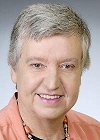
Cynthia Vinzant is an Associate Professor in the Department of Mathematics at the University of Washington. Her research focuses on real algebraic geometry, combinatorics, and convex optimization, with applications to hyperbolic polynomials, determinantal representations, and convex algebraic geometry. She collaborates extensively on projects involving numerical ranges, quasicrystals, and geometric optimization problems. Research Interests: Real algebraic geometry and its connections to combinatorics and optimization Hyperbolic and log-concave polynomials Convex geometry and spectrahedra Applications in matrix analysis and statistical mechanics Her work spans theoretical advances in algebraic geometry and computational methods, including contributions to the study of principal minors, tropical geometry, and phase retrieval problems. Recent publications highlight her focus on Fourier quasicrystals, higher-rank numerical ranges, and combinatorial structures in matroids. Publications: Over 30 peer-reviewed articles, including influential works on quartic curves, determinantal representations, and log-concave polynomials. Grants & Collaborations: Active in interdisciplinary research, with projects supported by NSF and collaborations in algebraic combinatorics and geometric optimization.
Mary Lee Wheat Gray is a Professor of Mathematics at American University, where she has served since 1968. She holds a Ph.D. in Mathematics from the University of Kansas (1964) and a J.D. from the Washington College of Law (1979). Her academic roles include Department Chair of Mathematics and Statistics, Director of the Women's Studies Program (1988-1989), and President of the Faculty Senate. A pioneering advocate for women in mathematics, she co-founded the Association for Women in Mathematics (AWM) and served as its first president (1971-1973). She was also the second woman to become Vice President of the American Mathematical Society (1976). Her research interests span applied statistics, computer law, and gender issues in mathematics education. She has authored works in mathematics, computer science, and academic freedom. Notable publications include her foundational 1967 paper on Radical Subcategories and her contributions to AWM's history. Gray's awards include the AAAS Mentor Award (1994) and the Presidential Excellence Award (2001). She led a NSF-funded initiative (1996) to engage women in STEM and has held leadership roles in Amnesty International, AAUP, and the ACLU. Her interdisciplinary work bridges mathematics with social justice, particularly in addressing equity in education and legal systems.
Professor Robert G. Leigh holds a position in the Department of Physics at the University of Illinois at Urbana-Champaign, where he has been a faculty member since 1996. His research spans theoretical high energy physics, quantum gravity, and quantum information science, with significant contributions to string theory and its applications. Leigh received his bachelor's degree in theoretical physics from the University of Guelph in 1986 and completed his Ph.D. in theoretical particle physics at the University of Texas at Austin in 1991. Following postdoctoral appointments at the Institute for Particle Physics at the University of California, Santa Cruz and at Rutgers University, he joined the University of Illinois faculty. Professor Leigh's work lies at the heart of current efforts to build a fundamental theory of matter, including quantum gravity effects. His research primarily focuses on using gauge/gravity dualities (or holography) to study the physics of strongly coupled gauge theories and the strong coupling dynamics in condensed matter systems. His most notable contributions include the discovery of D-branes and orientifolds in string theory, the first example of superstring duality, and the derivation of the Dirac-Born-Infeld action describing the dynamics of D-branes. D-branes correspond to non-perturbative states unique to string theory and are analogous to magnetic monopoles in field theory. The study of D-branes is fundamental to modern string theory and its applications to particle physics, mathematics and condensed matter physics. His most recent publications demonstrate a continued focus on quantum entanglement, Chern-Simons theory, and the intersection of quantum information with gravitational physics. His work shows an evolution from fundamental string theory discoveries toward applications in condensed matter physics and quantum information through holographic methods. Fellow, American Physical Society (2007) Arnold O. Beckman Award, UIUC (December 2004) Outstanding Junior Investigator, DOE (1997-2000) Professor Leigh has taught advanced courses including Quantum Mechanics I & II, General Field Theory, Advanced Field Theory, and specialized topics in AdS/QFT Correspondence. His research program has been supported by various grants from the Department of Energy and other funding agencies. He has mentored numerous graduate students and postdoctoral researchers, contributing significantly to the next generation of theoretical physicists. His work continues to bridge multiple areas of theoretical physics, connecting string theory with quantum information science, condensed matter physics, and gravitational physics through the powerful framework of holography and gauge/gravity dualities.
Alexandre Thomas Guillaume Quesney is an Assistant Professor in the Mathematics Applied to Information and Communication Technologies department at the Technical University of Madrid's School of Computer Engineering. He is actively affiliated with the Geometry and its Applications research group and maintains academic operations at the Montegancedo Campus in Boadilla del Monte, Madrid. His research focuses on advanced mathematical structures with primary expertise in homotopy theory, particularly operad theory. His work extends into combinatorial algebras and non-commutative geometry, exploring foundational connections between algebraic systems and topological spaces. Key research themes include: Algebraic structures in homotopy theory Operadic compositions and deformations Non-commutative geometric models Combinatorial methods in algebra Quesney contributes to academic discourse through the UPM seminar series and collaborates within the Geometry and its Applications research framework. His scholarly presence is marked by consistent engagement in mathematical publications as evidenced by Mendeley readership metrics across multiple works. Professional activities include: Active research group membership since November 2022 Faculty appointment since March 2022 Regular seminar participation
Junjie Qin is an Assistant Professor of Electrical and Computer Engineering at Purdue University’s Elmore Family School of Electrical and Computer Engineering. His research focuses on control systems, optimization, market design, and data analytics applied to power systems and the energy-transportation nexus. He explores challenges in distributed energy resource management, smart grid technologies, and the integration of renewable energy sources. His work addresses issues such as scheduling under limited observability, neural risk-limiting dispatch, and joint optimization of transportation-energy systems through electric vehicle charging strategies. Key research areas include power system stability, inverter-dominated grid dynamics, and machine learning applications in energy systems. He investigates topics like real-time charging control for electric roadways, loss function selection in learning-based optimal power flow, and pricing mechanisms for workplace EV charging. His contributions span theoretical frameworks and practical algorithms, emphasizing data-driven solutions and system-level optimization. While no awards or grants are explicitly listed, his publications reflect a strong focus on advancing smart grid technologies and sustainable energy systems. His advising activities are not detailed here, but his research group likely engages in cutting-edge projects at the intersection of control theory and energy infrastructure.
Chris Monico is an Associate Professor in the Department of Mathematics & Statistics at Texas Tech University . He has been a faculty member there since 2003, following post-doctoral research at the University of Notre Dame. Education B.S. in Mathematics – Monmouth University M.S. in Mathematics – University of Notre Dame Ph.D. in Mathematics – University of Notre Dame Research Focus Monico’s scholarship centers on the intersection of cryptology , computational algebra , and number theory . A significant recent thrust has been the application of machine-learning techniques to mathematical finance , evidenced by work on random-forest models for option pricing and high-frequency trading risk metrics. Parallel lines of inquiry include post-quantum cryptographic schemes built on tropical algebra and semigroup actions, as well as classical problems in Ramsey theory and combinatorial semigroups . Publication Trends Between 2015 and 2025 Monico has published prolifically, with a clear shift around 2020 toward mathematical finance and machine-learning applications , alongside continued output in algebraic cryptanalysis and combinatorics . His 2024–2025 articles emphasize data-driven models in trading, whereas 2020–2021 works concentrate on cryptanalyses of tropical and group-based key-exchange systems. Earlier contributions focus on computational number theory and semigroup-based cryptography. Contact Information Email: c.monico@ttu.edu Phone: 806-834-4144 Office: Department of Mathematics & Statistics, Texas Tech University, 1108 Memorial Circle, Lubbock, TX 79409-1042 Advising & Grants No specific doctoral or master’s students, funded grants, or named awards are detailed in the provided text. Laboratory or Research Group The text does not mention any dedicated laboratory or research group.
Lars Davidson is a Professor in the Department of Fluid Dynamics at Chalmers University of Technology. His research focuses on numerical simulations of fluid flow and heat transfer, with an emphasis on turbulence modeling for Large Eddy Simulation (LES) and hybrid LES/RANS methods. He has developed computational codes CALC-BFC and CALC-LES based on finite-volume techniques, and recently integrated machine learning to enhance wall functions and turbulence models. Key projects include Hybrid LES/RANS for wall-bounded flows Machine learning applications in fluid dynamics Aeroacoustic noise reduction in automotive and aerospace systems Wind turbine load analysis in forested regions . His publications span 302 articles in journals and conferences, with recent work on Neural networks for turbulence closure Plasma actuators for drag reduction Lattice Boltzmann wall-modeled LES . Collaborations include teams at Volvo, Siemens, and international research groups.
Alp Bassa is a Professor of Mathematics at Boğaziçi University, affiliated with the Department of Mathematics. He holds a Ph.D. in Mathematics from Universität Duisburg-Essen (2007) and dual bachelor's degrees in Computer Engineering and Mathematics from Middle East Technical University (2004). His research focuses on Number Theory, Algebraic Geometry, and their applications in Cryptography and Finite Fields. Education: Ph.D. in Mathematics, Universität Duisburg-Essen, 2007 Bachelor of Science in Computer Engineering & Mathematics, Middle East Technical University, 2004 Research Interests: Professor Bassa investigates algebraic structures over finite fields, including Drinfeld modules, function fields, and their cryptographic applications. His work bridges Number Theory and Geometry, with contributions to coding theory and the construction of algebraic curves with optimal properties. Recent Projects: TÜBİTAK 2509: Curves over Finite Fields, Jacobian Varieties, and Abelian Varieties (2018–2020) BAP-10540: Curves over Finite Fields and Irreducible Polynomials (2015–2017) Teaching: Recent courses include foundational mathematics (Math 101, Math 102), advanced topics (Math 344, Math 525), and specialized courses in cryptography and algebraic geometry.
Mario Berta is a Professor of Physics at RWTH Aachen University’s Institute for Quantum Information, with an honorary Visiting Reader position at Imperial College London’s Department of Computing. His research focuses on mathematical aspects of quantum information science, including quantum communication theory, cryptography, and algorithms. He leads a group funded by the ERC Starting Grant QEntropy, exploring entropy’s role in quantum information. He actively recruits PhD/postdoc researchers and organizes workshops like the Mathematics of Quantum Information conference at RWTH Aachen and Beyond IID 13 in Munich. Education: PhD in Theoretical Physics from ETH Zurich. Prior roles include Senior Research Scientist at Amazon Web Services’ quantum computing division and Postdoctoral Researcher at Caltech’s IQIM. He has pioneered quantum Gibbs sampling algorithms for the Fermi-Hubbard model and contributed to quantum error correction and complexity theory. His work bridges theoretical foundations with practical implementations, emphasizing resource analysis and algorithm optimization. Research interests span quantum algorithms’ computational complexity, entanglement theory, and information-theoretic security. He explores topics like quantum channel coding, hypothesis testing, and distributed quantum protocols under communication constraints. His group’s activities include organizing international workshops and collaborations with institutions like ML4Q and EPSRC. Funding sources include the European Research Council, RWTH’s Exploratory Research Space, and the EPSRC. He advocates for open-access science, as seen in his German-language article Algorithmen für neue Hardware . His work aims to advance quantum technologies through rigorous mathematical frameworks and experimental feasibility analysis.
Sergei Chmutov is a Professor of Mathematics at The Ohio State University, holding positions at both the Mansfield Campus and the Columbus Campus. He earned his PhD from Moscow State University in 1985. His primary research interests include Algebraic Geometry, Knot Theory, Graph Theory, and Topology, with a focus on Vassiliev invariants, low-dimensional topology, and combinatorial methods in algebraic geometry. Chmutov has taught a wide range of courses, including Partial Differential Equations, Abstract Algebra II, Linear Algebra, and Honors Differential Geometry. He has led working groups on Knots and Graphs for over a decade, fostering collaborative research among students and colleagues. His publications span foundational work in knot theory, topology, and algebraic geometry, including a book on Vassiliev knot invariants and numerous preprints exploring topics like virtual links, ribbon graphs, and topological diagrams. His research frequently bridges algebraic and geometric approaches to solving problems in these fields. Chmutov actively participates in academic seminars, including an online knot theory seminar series led by Roger Fenn and Louis Kauffman, where he presented on Thompson's group links and other advanced topics.
Kuldip SINGH is an Associate Professor (Educator Track) in the Department of Physics at the National University of Singapore's Faculty of Science. He concurrently serves as Admin Director of the Centre for Quantum Technologies and Master of King Edward VII Hall, reflecting his dual commitment to academic research and institutional leadership. His academic credentials include: PhD in Physics, National University of Singapore (1995) Professor Singh's research centers on mathematical physics with emphasis on foundational gravity theories. He critically examines the Teleparallel Equivalent of General Relativity (TEGR) as a gauge theory of the translation group, analyzing its structural relationship with Riemannian geometry in General Relativity. His work further explores deformed algebras and their implications for quantum gravity, investigating how quantum mechanical deformations may illuminate gravitational phenomena at fundamental scales. His publication trajectory spans 24 years (1988-2012), evolving from Kaluza-Klein unification theories to quantum information science. Early work focused on torsion and bundle metrics in higher-dimensional gravity, while the 1990s featured breakthroughs in q-deformed algebras and conformal field theory. Recent publications (2012) address topological phases in multiqubit systems and robustness of quantum gates, demonstrating sustained relevance in quantum computing. Information regarding student advising and research grants was not provided in the available text. As Admin Director of the Centre for Quantum Technologies, Professor Singh leads NUS's flagship hub for quantum research, coordinating theoretical and experimental initiatives in quantum computation, communication, and sensing across interdisciplinary teams.
Soledad Villar is an Assistant Professor in the Department of Applied Mathematics and Statistics and a member of the Mathematical Institute for Data Science at Johns Hopkins University. She also contributes to the Data Science and AI Institute . Her research focuses on computational methods for extracting information from data, emphasizing optimization for data science, machine learning, equivariant representation learning, and graph neural networks. Dr. Villar holds a PhD in Mathematics from the University of Texas at Austin and has been a research fellow at New York University and the Simons Institute at UC Berkeley. Her work bridges theoretical foundations with practical applications in fields like scientific computing and political analysis. Awards include the National Science Foundation CAREER Award (2024). Her research has addressed topics such as gerrymandering detection, fluid dynamics modeling, and graph representation learning. She collaborates on interdisciplinary projects and organizes academic events like the One World MINDS Seminar and the Cibercoloquio Latinoamericano de Matemáticas . Her research interests span computational methods, equivariant machine learning frameworks, and graph neural networks, with applications in physics, engineering, and data-driven decision-making. She actively engages in advancing machine learning techniques for scientific and engineering challenges.
Travis B. Thompson, Ph.D. is an Assistant Professor in the Department of Mathematics and Statistics at Texas Tech University, leading the TM4 (Texas Tech Translational and Theoretical Mathematical Modeling and Machine Learning in Medicine) research group. His academic journey includes postdoctoral work at Rice University, Simula Research Laboratory, and the University of Oxford, focusing on mathematics applied to neurodegenerative diseases. Education: Ph.D. in Mathematics from Texas A&M University (2013) Dr. Thompson develops theoretical mathematical models and applies scientific computing and machine learning to study neurological pathologies, particularly Alzheimer’s disease. His work explores complex biological processes on networks, translational healthcare applications, and nutritional security implications. Current research trends integrate neuroimaging data with finite element simulations to model tau progression , amyloid beta dynamics , and glymphatic clearance in age-related diseases. Scientific awards and honors were not explicitly mentioned in the provided materials. Dr. Thompson’s interdisciplinary approach connects computational neuroscience with biomedical engineering , utilizing techniques like diffusion tensor imaging and level set methods to analyze pathological protein spread and brain tissue mechanics . The TM4 research group focuses on network neurodegeneration , personalized medicine , and machine learning diagnostics . Their work spans from microfluidic cancer detection to computational modeling of brain clearance mechanisms , addressing challenges in both neurodegenerative diseases and biomedical engineering through rigorous mathematical frameworks.
Gerhard Pfister is a professor of Mathematics at the University of Kaiserslautern. He holds the academic rank of Professor and specializes in Singularity Theory, Computer Algebra, Algebraic Geometry, and Complex Analysis. His career includes positions at Humboldt-Universität zu Berlin and University of Kaiserslautern, where he served as a professor from 1993 until his retirement in 2012, followed by a Senior Professorship until 2016. He has supervised numerous Ph.D. students, many of whom contributed to areas like computational algebra and singularity theory. Education: Gerhard Pfister earned his Diplom in Mathematics (1970) and Dr. rer. nat. (1971) from Humboldt-Universität zu Berlin. He habilitated in 1976 and became a professor there in 1983 before moving to Kaiserslautern in 1993. Research Interests: Pfister's work focuses on singularity theory, computational algebra, and the development of the SINGULAR computer algebra system. His research bridges theoretical and algorithmic aspects of algebraic geometry and commutative algebra, with contributions to Gröbner bases, standard bases, and modular computation techniques. He has co-authored foundational textbooks and over 140 publications. Key Contributions: Pfister is a co-developer of the SINGULAR software, a leading system for polynomial computations in algebraic geometry and singularity theory. His work includes algorithmic approaches to primary decomposition, normalization of rings, and classification of singularities. He has also contributed to the theoretical underpinnings of Neron desingularization and semicontinuity in algebraic geometry. Grants & Awards: While no specific awards are listed, his sustained contributions to computational algebra and singularity theory have had significant impact. He has supervised over 25 Ph.D. students and co-authored multiple influential books. Labs/Teams: He is a core contributor to the SINGULAR project and collaborates actively with researchers in computational commutative algebra and algebraic geometry.
Jordi Guàrdia Rúbies is a Professor in the Department of Mathematics at the Universitat Politècnica de Catalunya (UPC), affiliated with the Faculty of Mathematics and Statistics (FME). He is a member of the UPC's STNB research group (Seminari de Teoria de Nombres de Barcelona), specializing in Number Theory and Algebraic Geometry. His work bridges theoretical research with educational innovation, particularly in Open Educational Resources (OER) for STEM fields. Affiliations: UPC, STNB Group, FME. Research Interests: Computational Algebra, Valuation Theory, Modular Forms, Mathematics Education. Recent research focuses on OER development, with contributions to collaborative platforms like Gate2Math. He has published extensively in journals like Journal of Algebra and Foundations of Computational Mathematics , addressing topics such as polynomial factorization over Henselian fields and valuation theory applications. Key awards include the Distinció Vicens Vives and UPC Quality Teaching Prize. He leads projects on OER quality assessment and has collaborated on EU-funded initiatives like the Erasmus+ Gate2Math program. His teaching contributions include innovative projects like Aprenentatge de l’Estadística basat en casos pràctics transversals , emphasizing practical case studies in statistics education.