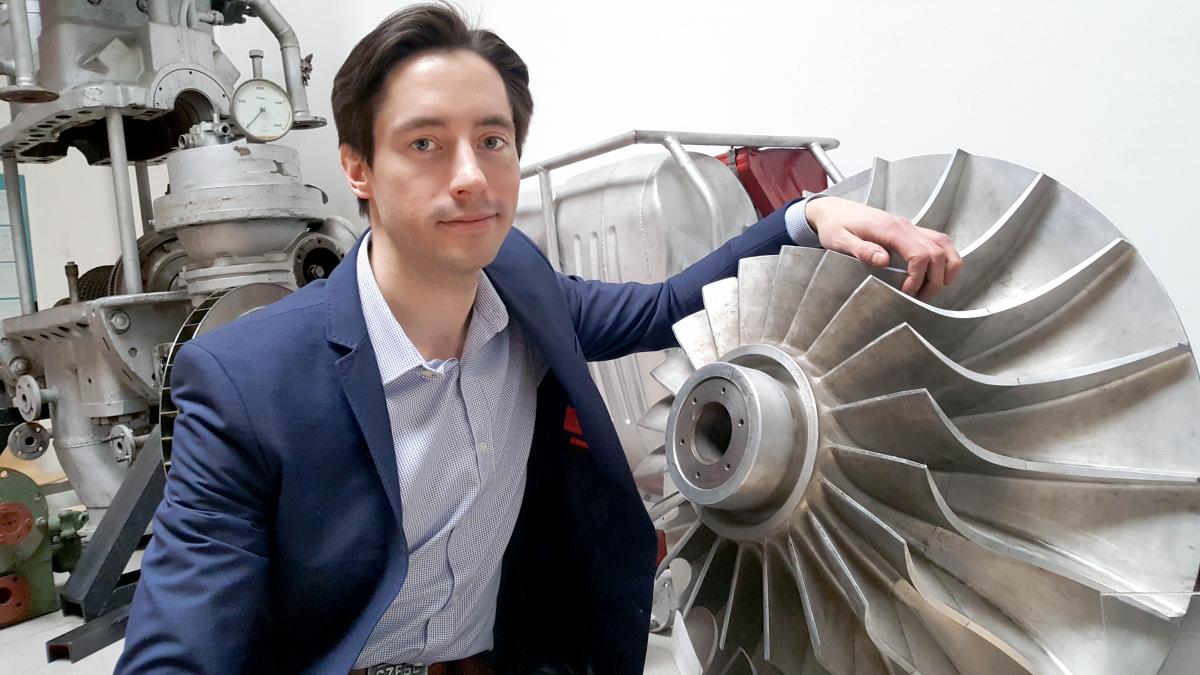
Grzegorz Liśkiewicz serves as Professor and Rector's Representative for Academic Entrepreneurship at Lodz University of Technology's Institute of Fluid-Flow Machinery. His work bridges academic research with industrial applications in turbomachinery, compressor systems, and Industry 4.0 implementations. Active since at least 2013, he maintains significant research output while holding university leadership roles. Liśkiewicz's research centers on fluid dynamics phenomena in rotating machinery, particularly surge inception, rotating stall, and inlet recirculation in centrifugal compressors. Recent work expands into nanofluid heat transfer, magnetohydrodynamics, and machine learning applications for predictive maintenance. His interdisciplinary approach connects mechanical engineering fundamentals with sustainability initiatives including circular economy frameworks and microalgae biotechnology. Current publication trends (2021-2025) reveal three dominant threads: 1) Advanced compressor stability analysis using empirical mode decomposition and image recognition ML models; 2) Nanofluid/MHD investigations for thermal systems; 3) Renewable energy applications like vertical-axis wind turbine aerodynamics. This evolution demonstrates increasing methodological sophistication while maintaining core focus on fluid machinery reliability. As a key researcher at Lodz University of Technology's Institute of Fluid-Flow Machinery, Liśkiewicz collaborates with international institutions including General Electric, Oxford, and Cambridge. His work environment integrates experimental facilities like PIV measurement systems with computational modeling for comprehensive turbomachinery analysis, supporting both academic inquiry and industrial problem-solving.
Professor Marios Nestoros is an academic at the University of Nicosia, where he serves as an Associate Dean of the School of Sciences and Engineering and holds a Professor position in the Department of Engineering. He earned his BSc in Physics from the National and Kapodestrian University of Athens (1994) and his PhD in Physics from the University of Cyprus (2000). Education: BSc (Athens), PhD (Cyprus) Research Interests: Photothermal physics, semiconductor diagnostics, RFID antenna design, and biomedical applications Teaching: General Physics, Biophysics, Semiconductor Devices, Renewable Energy His recent research explores machine learning applications for skin cancer detection and photothermal analysis of semiconductors. He has published 27 peer-reviewed works and maintains professional affiliations with the American Institute of Physics (AIP) and European Physical Society (EPS).
Terence Tao is an Australian-American mathematician and professor of mathematics at the University of California, Los Angeles (UCLA), where he holds the James and Carol Collins Chair in the College of Letters and Sciences. Widely regarded as one of the greatest living mathematicians, Tao has received numerous prestigious awards including the Fields Medal, the Breakthrough Prize in Mathematics, and the MacArthur Fellowship. Dr. Tao's educational background includes: Bachelor's and Master's degrees from Flinders University (1991) Ph.D. from Princeton University (1996) under Elias M. Stein Tao's research spans an extraordinary breadth of mathematical fields. He is particularly known for his work in harmonic analysis, partial differential equations, combinatorics, and analytic number theory. His research has included groundbreaking contributions to compressed sensing, the Green-Tao theorem on arithmetic progressions in prime numbers, and progress on the Navier-Stokes equations. Tao is renowned for his collaborative approach, having worked with over 60 co-authors throughout his career. Tao's publications demonstrate remarkable diversity across mathematical disciplines. His work shows strong trends in connecting seemingly disparate areas of mathematics, often bringing techniques from one field to solve problems in another. He has made significant contributions to both theoretical and applied mathematics, with applications ranging from signal processing to number theory. Among his numerous scientific achievements, Tao has received: Fields Medal (2006) Breakthrough Prize in Mathematics (2014) Royal Medal (2014) MacArthur Fellowship (2006) Crafoord Prize (2012) Princess of Asturias Award (2020) Tao has mentored numerous students throughout his career, with Monica Vișan among his doctoral students. He has secured significant research funding through prestigious awards including the Packard Fellowship, Sloan Fellowship, and Simons Investigator award. His collaborative research has been supported by multiple National Science Foundation grants. Tao maintains an active research group at UCLA and frequently collaborates with mathematicians worldwide. His blog and public lectures have made advanced mathematical concepts accessible to broader audiences, demonstrating his commitment to mathematical education and outreach.
Dr. Chad V. Pecot is a Professor in the Division of Oncology at the University of North Carolina (UNC) School of Medicine and a member of the UNC Lineberger Comprehensive Cancer Center. He serves as Co-Leader of the UNC Lineberger Molecular Therapeutics Research Program and Director of the UNC RNA Discovery Center. Dr. Pecot specializes in solid tumor malignancies, with a particular focus on thoracic medical oncology and clinical research. Since August 2013, he has been an independent investigator at UNC-Chapel Hill, leading innovative research in cancer biology and therapeutic development. Dr. Pecot's educational background includes: Biomedical Engineering, University of Miami (1999-2002), Cum Laude Medical School, University of Miami (2002-2006), Alpha Omega Alpha Honor Society Internal Medicine Residency, Vanderbilt University Medical Center (2006-2009) Hematology and Oncology Fellowship, MD Anderson Cancer Center (2009-2012), Chief Fellow Thoracic Medical Oncology Fellowship, MD Anderson Cancer Center (2012-2013) Dr. Pecot's research is characterized by a harmonization of therapeutic RNA interference, sophisticated modeling of cancer metastasis and the tumor microenvironment, and the integrative use of complex bioinformatic and systems biology approaches. As a cancer survivor himself, he has a passion for translating important findings in cancer biology to the clinic as rapidly as possible. His laboratory focuses on several key areas including the role of lymphatics in metastasis, non-coding RNAs in metastasis, inflammatory monocytes in metastasis, tumor angiogenesis in metastasis, and the development of therapeutic RNA interference to target metastasis. His work primarily uses lung and triple-negative breast cancers as disease models, with the goal of impacting treatment paradigms for other aggressive malignancies. Analysis of Dr. Pecot's recent publications reveals a strong focus on RNA-based therapeutics, particularly targeting "undruggable" cancer genes like KRAS and MYC. His research group has developed innovative approaches including inverted chimeric RNAi molecules that can co-target multiple oncogenes simultaneously. There is also significant work on understanding the role of non-coding RNAs (particularly snoRNAs) in cancer metastasis through mechanisms like RNA modification and alternative splicing. His team is advancing delivery systems for RNA therapeutics, including B7H3-targeting macrocyclic peptide conjugates, to improve tumor-specific delivery. Additionally, his research spans cancer immunology, with investigations into how lifestyle factors like alcohol use affect immunotherapy efficacy and how to overcome resistance to immune checkpoint inhibitors. Dr. Pecot has received numerous prestigious awards and honors, including: Lung Cancer Initiative Alumni Supplemental Grant (2023) University of North Carolina UCRF Innovator Award (2019) Susan G. Komen Career Catalyst Award (2017) Free to Breathe Metastasis Research Award (2016) Stuart Scott V Foundation/Lung Cancer Initiative Award for Clinical Research (2016) William Rippe Award for Distinguished Research in Lung Cancer (2016) Multiple ASCO Conquer Cancer Foundation awards He has also secured significant grant funding, including a $1.8 million National Cancer Institute grant in 2023 for lung cancer research and a $100,000 Lung Cancer Initiative grant in 2023. Dr. Pecot has a strong commitment to mentoring the next generation of scientists at both doctoral and postdoctoral levels. He founded EnFuego Therapeutics, a company focused on developing RNA-interference drugs that silence cancer-related gene mutations. His laboratory, the Pecot Lab, fosters "critically creative" ideas to tackle cancer metastasis, which is responsible for the majority of cancer-related deaths. The lab's work is centered on understanding the complex processes involved in metastasis and developing therapeutic strategies that attack its "Achilles' heels."
Markus Puschenreiter serves as Associate Professor at the Institute of Soil Research within the Department of Natural Sciences and Sustainable Resources at the University of Natural Resources and Life Sciences, Vienna (BOKU). His research program integrates soil science, plant physiology, and analytical chemistry to develop sustainable remediation strategies for contaminated environments. His scientific focus encompasses: Phytomining of valuable metals using hyperaccumulator plants Rhizosphere biogeochemistry of trace element mobilization Advanced analytical techniques for root exudate characterization Silicon cycling in agricultural systems Development of decision support tools for contaminated land management Recent publication trends reveal a strategic shift toward high-resolution analytical approaches, particularly dual-column chromatography coupled with mass spectrometry, enabling unprecedented insights into plant chemical communication and metal-biomolecule interactions in the rhizosphere. His work bridges fundamental rhizosphere science with practical applications in circular economy initiatives. Dr. Puschenreiter's scientific recognition includes the APA OTS press release award (2004) and the venia docendi for soil ecology (2011). His research program has secured substantial funding from Austrian Science Fund (FWF), European Commission, and Austrian Research Promotion Agency (FFG) for projects including 'Mobilisation of Nickel by hyperaccumulating plants' and 'LooPi - the self-sufficient unisex plant-based urinal.' He actively supervises graduate theses while maintaining extensive collaborations across BOKU's interdisciplinary network, particularly with Institutes of Analytical Chemistry, Sanitary Engineering, and Zoology. His knowledge transfer activities include media engagements on phytomining applications and sustainable soil management solutions for contaminated sites.
Daniel Wigger is a theoretical physicist at the Institute of Solid-State Theory & Dean’s Office, Department of Physics, University of Münster, Germany. He investigates solid-state quantum optics, quantum acoustics and ultrafast spectroscopy of semiconductor nanostructures, with emphasis on phonon-mediated control of quantum dots, 2-D materials and colour centres. Education & Career: 2012 – Diploma thesis “Squeezed phonon states in optically excited semiconductors”, University of Münster 2017 – PhD thesis “Interplay between acoustic phonons and excitons in optically driven semiconductor quantum dots”, University of Münster 2017-2020 – Post-doc with Prof. T. Kuhn, University of Münster 2020-2022 – ULAM post-doc fellow with Prof. P. Machnikowski, Wrocław University of Science & Technology 2022-2023 – Research Fellow & SFI-IRC Pathway Group Leader with Prof. O. Hess, Trinity College Dublin since 2024 – Research & teaching staff, Institute of Solid-State Theory, University of Münster Research interests: Solid-state theory, quantum optics, quantum acoustics, ultrafast non-linear spectroscopy, light-matter interaction, hybrid quantum technology, single-photon emitters and 2-D semiconductors. Scientific output: His 2021-2025 articles reveal a focus on coherent phonon effects, four-wave mixing spectroscopy, strain engineering of excitons, room-temperature nanoplasmonics, and high-harmonic probing of lattice dynamics—merging advanced spectroscopy with microscopic modelling. Teaching (summer 2025): Theoretical Basics and Modern Applications of Quantum Nanophotonics Scientific Writing and Presenting in Physics Integrated Seminar on Current Topics in the Physics of Solid-State Nanosystems He advises graduate students and is active in public scholarly communication (Google Scholar, ORCID).
Distinguished Professor Huu Hao Ngo is a world-leading environmental engineering researcher at the University of Technology Sydney , serving as Deputy Director of the Centre for Technology in Water and Wastewater and co-director of the Joint Research Centre for Protective Infrastructure Technology and Environmental Green Bioprocess with Tianjin Chengjian University. His work focuses on sustainable water treatment technologies, bioprocessing innovations, and zero-emission systems. Key research themes: Wastewater treatment, environmental biotechnology, membrane processes, resource recovery As a prolific scholar with over 750 publications and 62,000 citations, Ngo leads in membrane bioreactor development (notably the patented GemFloc bioflocculant) and sustainable bioprocessing. His recent work explores biochar-assisted systems, advanced oxidation processes, and microbial community engineering for wastewater treatment. 2025 article highlights: Enhanced membrane fouling mitigation, novel biochar catalysts for antibiotic removal, sulfate reduction optimization, and hydrogen production analysis Scientific recognition includes: Clarivate Highly Cited Researcher (Environment/Ecology, Biology/Biochemistry) SciVal World #1 ranking in Waste Management Scholar GPS™ Top 2 Environmental Scientist Research Magazine Field Leader awards He supervises PhD students globally, delivers keynote lectures worldwide, and serves as Editor-in-Chief of Chemical Engineering Journal and several other top-tier publications.
Professor Vassilios Tsikaris is a distinguished academic in the Department of Chemistry at the University of Ioannina, Greece, where he has served as a faculty member since 1989. He progressed from Lecturer (1989-1994) to Assistant Professor (1994-1999), Associate Professor (1999-2006), and finally to Professor (2006-present). He has also held significant administrative roles including Head of the Department of Chemistry (2010-2014), President of the Hellenic PASTEUR INSTITUTE (2015-2017), and Hospital Manager of the University Hospital of Ioannina (2017-2020). Dr. Tsikaris earned his Diploma in Chemical Engineering with "excellent" distinction from the Institut Polytechnic "Gh. Ashaki" in Roumania (1977-1982). He completed his doctoral thesis entitled "Arginine Sequential Polypeptides as Histone models. Studies on their Synthesis, Conformation and Interactions with DNA. Circular Dichroism Spectroscopy" at the University of Ioannina (1985-1988). He also completed multiple short-term postdoctoral research fellowships in NMR, CD, and IR spectroscopy at the Institut National Polytechnique de Lorraine, ENSIC-INPL, CNRS UA 494, Nancy, France, supported by EC, EMBO and FEBS. Professor Tsikaris specializes in peptide chemistry, with research spanning the design and synthesis of biologically active peptides for applications in autoimmune diseases, vaccine development, and antithrombotic therapy. His laboratory has made significant contributions to understanding the structure-function relationships of peptides, particularly in the context of platelet aggregation inhibition and autoimmune disease mechanisms. His work on Sequential Oligopeptide Carriers (SOCs) has provided innovative platforms for antigen presentation and vaccine design. His publication record demonstrates a strong focus on translating basic peptide chemistry into therapeutic applications, particularly in cardiovascular medicine. Over the past 15 years, his research has increasingly focused on developing peptide-based inhibitors of platelet aggregation that work through non-RGD mechanisms, which may offer advantages over traditional antiplatelet therapies by avoiding certain side effects. His work bridges fundamental biochemistry with translational medical applications, particularly in thrombosis and autoimmune disorders. Professor Tsikaris has supervised 13 concluded and 1 ongoing PhD theses, as well as 23 concluded Master's theses. He has participated in 34 European and Greek funded research projects with significant contributions to peptide-based therapeutic development. His laboratory has received funding from various sources including the Greek General Secretariat for Research and Technology (GSRT), the Greek Ministry of Education, and industry partners. His research group has developed innovative artificial carriers X-(Lys-Aib-Gly)4-NH2 and X-(Lys-Aib-Cys)4-NH2 as scaffolds for reconstituting biomolecular mimics. These carriers have been applied to autoimmune diseases including Sjogren Syndrome, Systemic Lupus Erythematosus, Rheumatoid Arthritis, and Systemic Sclerosis, as well as Myasthenia gravis. The group has also developed potent cyclic (S,S)-CDC- containing peptide inhibitors of platelet aggregation that have shown efficacy in animal models of thrombosis.
Vamshi Vangoor is an Assistant Professor affiliated with Utrecht University, focusing on the intersection of neuroscience, neurology, and RNA biology. His work primarily investigates neurological disorders such as epilepsy and neurodevelopmental diseases through molecular and genetic mechanisms. Key research areas include: Neurological disorders (e.g., epilepsy, ALS) RNA biology (microRNA signaling, circular RNA, nucleolar dysfunction) Neurodevelopmental processes Neuroinflammation and axon regeneration Recent publications highlight his contributions to understanding RNA regulatory networks in brain pathology and development, with a focus on small non-coding RNAs and their roles in disease mechanisms. Contact: vvangoor@umcutrecht.nl
Dr. Kwang Poo Chang is a Professor of Microbiology and Immunology at Chicago Medical School, Rosalind Franklin University of Medicine and Science, where he has maintained an active research program since 1983. His work focuses on molecular mechanisms of microbial virulence using Leishmania as a model system to dissect invasive/evasive determinants and pathoantigenic determinants responsible for disease manifestation. Dr. Chang earned his BS in Entomology from National Taiwan University (1965), followed by MA and PhD in cell biology/endosymbiosis from the University of Guelph, Canada (1968, 1972). After postdoctoral training at Rockefeller University (1972-1974), he served on their faculty as Research Associate (1974-1976), Assistant Professor (1976-1979), and Associate Professor (1979-1983) before joining Rosalind Franklin University. His research spans molecular biology of virulence genes, biochemical characterization of Leishmania enzymes (gp63, nucleoside diphosphate kinase), host-parasite cellular interactions, and photodynamic approaches for vaccination and therapy. Current projects include genetic dissection of heme biosynthesis defects in trypanosomatids and development of photo-medicines for infectious diseases and cancer. Analysis of Dr. Chang's publication record reveals sustained contributions to parasitology with recent emphasis on photodynamic vaccination (2018), vector control (2016), and disease epidemiology (2015). His work bridges fundamental molecular mechanisms with translational applications, particularly in neglected tropical diseases. Dr. Chang's NIH-funded research demonstrates significant scholarly impact, with over 50 peer-reviewed publications spanning five decades. His laboratory within the Center for Cancer Cell Biology, Immunology, and Infection provides interdisciplinary training in molecular parasitology and therapeutic development. Students in Dr. Chang's laboratory gain expertise in gene transfection systems, protein purification techniques, host-pathogen interaction assays, and photodynamic therapy applications. His international collaborations with researchers in Brazil, China, and other countries provide additional opportunities for global health engagement.
Dr. Ketan Pancholi is a Lecturer in Mechanical Engineering within the School of Engineering at Robert Gordon University (RGU). He serves as Course Leader for the MSc Biomedical Technology program and Module Coordinator for Mechanical Design II. His academic profile demonstrates strong integration between teaching responsibilities and research activities. Dr. Pancholi's research focuses on soft matter physics and interface science, specifically investigating how to manipulate and control interfaces between various phases to achieve faster reactions and modify material properties. His work examines soft condensed matter under various stimuli including optical, magnetic, and mechanical forces. Key research themes include interface manipulations for enhanced reactions, nanoscale phenomena for improved interactions, membrane-enhanced bio reactions, and interfacial control for managing properties like agglomeration and patterning. His recent publications (2023-2024) demonstrate significant activity across multiple domains including nanomaterials, composite materials, polymer science, and magnetic field applications. The research shows strong interdisciplinary connections between fundamental materials science and practical engineering applications, particularly in energy, biomedical, and structural engineering contexts. Dr. Pancholi actively supervises PhD students, with at least one completed thesis (O.P. Okpozo, 2022) and ongoing supervision. He has secured research funding for multiple projects including membrane processing, cryogenic hydrogen storage, particle damping solutions, and elastomer extrusion characterization. As a member of the Composite Materials Manufacturing Research Group, Dr. Pancholi contributes to RGU's research strengths in advanced materials. His work bridges fundamental interface science with practical engineering applications, creating opportunities for innovation in multiple sectors including energy, biomedical technology, and structural engineering.
Mariel Alfaro-Ponce serves as an Assistant Professor in the Biomedical Engineering Program at Tecnológico de Monterrey's Campus Ciudad de México, where she leads the Manufacturing Processes for Advanced Materials research unit since 2022. Her academic journey spans biomedical engineering, microelectronics, and computer science, creating a unique interdisciplinary profile that bridges engineering disciplines with practical healthcare applications. Dr. Alfaro-Ponce earned her Bio-medical Engineering degree, Master of Science in Microelectronics Engineering, and PhD in Computer Science from Instituto Politécnico Nacional in Coyoacán, Mexico. This educational foundation has enabled her to develop innovative approaches at the intersection of multiple engineering disciplines. Her research program demonstrates remarkable breadth across several interconnected domains. She applies artificial intelligence techniques to develop rehabilitation devices and intelligent bioinstrumentation systems, with particular focus on neural network applications for medical diagnostics and prosthetics. Her work extends into sustainable manufacturing processes, including advanced 3D printing applications for both medical devices and food systems. The integration of machine learning with traditional engineering problems represents a consistent thread throughout her research portfolio, demonstrating how computational approaches can solve practical engineering challenges in healthcare and manufacturing. Analysis of her recent publications reveals a clear trajectory toward increasingly sophisticated applications of AI in biomedical contexts, with growing emphasis on sustainable manufacturing solutions. Her work spans from fundamental neural network research to practical implementations in medical devices, food engineering, and environmental applications. The interdisciplinary nature of her research connects computer science, electrical engineering, mechanical engineering, and biomedical applications through the unifying framework of machine learning and intelligent systems. National System of Researchers of Mexico (SNI-Level I) Mexican Researcher Certification - Level 1 Dr. Alfaro-Ponce's academic leadership extends beyond her research publications to include significant educational contributions. She teaches advanced courses including Design of Digital Bioinstrumentation Systems and supervises doctoral research across multiple disciplines. Her expertise aligns with multiple UN Sustainable Development Goals, particularly in areas of good health and well-being, industry innovation, responsible consumption, and clean energy. The practical orientation of her research suggests strong potential for technology transfer and real-world implementation of her innovations in medical devices and sustainable manufacturing systems. As leader of the Manufacturing Processes for Advanced Materials research unit in Mexico City, Dr. Alfaro-Ponce oversees a multidisciplinary team working at the cutting edge of sustainable manufacturing technologies. Her research group focuses on integrating artificial intelligence with advanced materials processing, particularly in medical device development and sustainable food production systems. The team's work demonstrates strong connections between theoretical machine learning approaches and practical engineering implementations across multiple application domains.
Jorge Isaac Chairez-Oria is an Associate Professor in the Department of Biomedical Engineering at Tecnológico de Monterrey's School of Engineering, Campus Guadalajara. He maintains an active research program bridging biomedical engineering, neural networks, and robotic control systems with significant contributions to rehabilitation technology and sustainable manufacturing. His research focuses on neural network applications for system identification and control , particularly in constrained dynamical systems. His work spans medical rehabilitation robotics (including exoskeletons and orthotic devices), bioprinting and tissue engineering , and sustainable environmental technologies utilizing neural network approaches. Recent publications demonstrate strong interdisciplinary work connecting engineering principles with biological and medical applications. Analysis of his 2024-2025 publications reveals consistent focus on barrier Lyapunov functions, constrained state systems, and neural network identification methods applied across diverse domains from wastewater treatment to surgical robotics. His work shows particular strength in translating theoretical control concepts into practical biomedical applications. Scientific Recognition: Mexican Researcher Certification - Level 2 Dr. Chairez-Oria teaches courses in Biofluid Mechanics, Clinical Engineering, and Bioinstrumentation Systems design, integrating his research expertise into the classroom. His work aligns with multiple UN Sustainable Development Goals including Good Health and Well-being, Industry Innovation, and Clean Water and Sanitation.
Michael Mayle is a Research Professor for Applied Computational Physics at Nuremberg University of Applied Sciences. He serves as a member of the Doctoral Center for Physical and Biomedical Engineering (CPaB) and holds a deputy position on the CPaB doctoral committee. His office is located at space KA.434, with contact details including phone +49 (0)911 5880-1309 and email michael.mayle@th-nuernberg.de. His research centers on Computational Physics with specialized focus in Sensor Technologies , Ultracold Quantum Gases , and Acoustics . He leads the Computational Physics for Sensor Technologies research group, developing advanced computational models for physical systems with direct applications in sensor design and analysis. His work bridges theoretical physics with practical engineering solutions. Analysis of his publication trajectory (2006-2025) reveals a distinct evolution from fundamental quantum research to applied sensor technology. Early work (2006-2013) established expertise in ultracold molecules and Rydberg atom physics, while recent publications (2019-2025) demonstrate a strategic pivot toward industrial applications including piezoelectric material analysis, ultrasonic flow metering, and water consumption pattern recognition. Professor Mayle actively contributes to doctoral education through the CPaB framework and teaches core courses including Simulation of Physical Systems (Continuum Mechanics) for M-AMP, Physics (Oscillations and Waves) for B-MED, and Building Physics for B-EGT/B-BI programs. His research group maintains strong industry connections through sensor technology development and applied computational modeling projects.