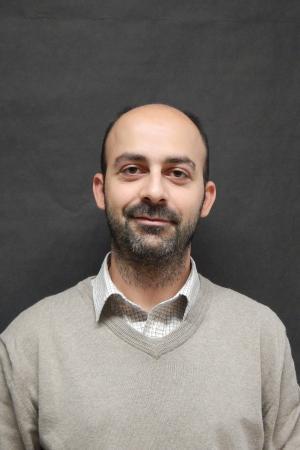
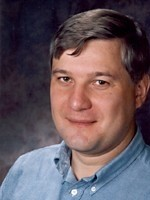
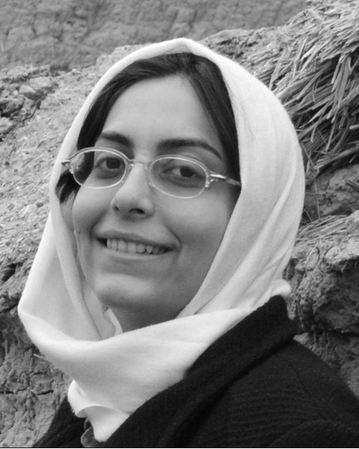
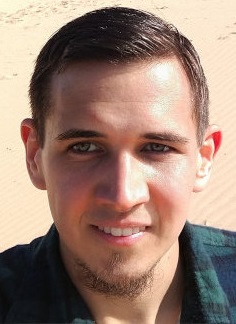
Nicolò Zagni is a Postdoc Researcher at the University of Modena and Reggio Emilia (UNIMORE) , focusing on Gallium Nitride (GaN) and Ferroelectric device reliability. He earned a PhD in Information and Communication Technologies (ICT) in 2021 with a thesis on Simulation and Modeling of GaN Electronics . His research spans power electronics , dynamic on-resistance (RON) instabilities , phase-transition logic switches , and negative capacitance transistors . He has explored GaN device degradation under OFF-state stress , hole emission from carbon traps , and ferroelectric endurance . Key article trends include device simulation (TCAD) , trap dynamics in GaN , and novel materials for RF/millimeter-wave amplifiers . Collaborations include institutions like Purdue University and studies on SiC and MoS₂ applications.
S. Akshay is a Professor in the Department of Computer Science and Engineering at the Indian Institute of Technology Bombay . He is affiliated with the IITB Trust Lab , the Ashank Desai Centre for Policy Studies , and the Centre for Formal Design and Verification of Software Systems . His academic background includes a joint PhD from École Normale Supérieure de Cachan and Chennai Mathematical Institute (2010), postdoctoral work at IRISA/ENS Cachan Bretagne (2012) and National University of Singapore (2011), and earlier degrees from ÉNS-Cachan (2006) and Chennai Mathematical Institute (2004). Research interests focus on formal methods , particularly verification of timed, recursive, and distributed systems; automated functional synthesis; formal modeling of probabilistic and dynamical systems; and trust certification in AI models. Applications span systems biology , cyber-physical systems , and artificial intelligence . His recent publications emphasize verification techniques for Markov chains, timed automata, and Boolean functional synthesis, with algorithmic advancements in probabilistic inference, quantifier elimination, and robustness analysis. Professional activities include serving as Treasurer and Council Member of the Indian Association for Research in Computer Science (IARCS). He has co-chaired FSTTCS 2016 and ATVA 2024, and participated in program committees for major conferences like AAAI, CAV, and LICS. Teaching roles at IIT Bombay include courses on Discrete Structures , Formal Models of Concurrent Systems , and Quantitative Verification . Collaborative projects involve institutions such as University of Waterloo, IIT Delhi, and IRISA, Rennes.
MALAK Derya is an Assistant Professor at EURECOM's Communication Systems department, specializing in networked distributed computing systems. Her research focuses on optimizing communication and computation trade-offs in networks, with a strong emphasis on network coding, information theory, and wireless communication systems. She holds a dual role in advancing theoretical foundations and practical implementations of distributed computing frameworks. Dr. Malak has received prestigious recognitions, including the Best Paper Awards at WiOpt 2023 and WIOPT 2022 for her work on content distribution optimization and random access protocols. Her research explores cutting-edge topics such as non-linear function computation, structured coding for matrix operations, and congestion-aware job scheduling in real-time systems. Key Research Areas: Distributed Algorithms, Network Coding, Machine Learning Systems, Wireless HetNets, and Multi-Server Architectures Awards: WiOpt 2023 Best Paper, WIOPT 2022 Best Paper Professional Activities: Invited speaker at major conferences and workshops, including the National Center on Networks and Systems for Digital Transformation Her work bridges theoretical insights with practical engineering solutions, addressing critical challenges in modern distributed and networked systems.
Dr. Jan van den Hurk serves as Professor and Deputy Head of the Department of Electronic Devices at RWTH Aachen University, Germany, with his office located in room B2.02 at Campus Boulevard 53, 52074 Aachen. His research focuses on resistive memory technologies , particularly Resistive Random-Access Memory (ReRAM) and Electrochemical Metallization Memory (ECM), investigating fundamental switching mechanisms in materials like germanium sulphide. His work spans atomic-scale interface interactions , filament dynamics , and device physics for next-generation non-volatile memory. Key contributions include understanding redox reactions in Ta 2 O 5 interfaces, volatile resistance states for non-destructive readout, and nanobatteries requiring memristor theory extensions. His research bridges fundamental electrochemistry and practical circuit design for hybrid CMOS/nanoelectronic architectures. Analysis of his 15 most recent publications (2012-2018) reveals consistent focus on germanium sulphide-based systems , complementary resistive switching , and in situ characterization techniques . The work demonstrates strong integration of materials synthesis , device fabrication , and theoretical modeling to address reliability challenges in memristive devices. Scientific awards: No scientific awards mentioned in source materials Advising and grants: No student advisees or grant funding details provided Dr. van den Hurk operates within the eLab facility of the Department of Electronic Devices, which specializes in thin-film deposition (including custom sputtering units for synchrotron radiation studies) and nanoscale device characterization. His team develops experimental setups for in situ analysis of memory cell formation processes and explores material systems for neuromorphic computing applications.
Graeme Best is a Lecturer in robotics at the University of Technology Sydney's School of Mechanical and Mechatronic Engineering within the Faculty of Engineering and Information Technology. He joined UTS in April 2022 after working as a Postdoctoral Scholar at Oregon State University from 2018 to 2022, where he collaborated with Carnegie Mellon University and University of Washington on projects funded by DARPA, ONR, NSF, and NAVFAC. Dr. Best completed his PhD titled "Planning Algorithms for Multi-Robot Active Perception" at the University of Sydney's Australian Centre for Field Robotics. His educational background includes a BE (Electrical and Computer Systems) and BSc (Computer Science) from Monash University, both completed in 2014. His research focuses on developing fundamental algorithms for multi-robot systems, with particular emphasis on active perception, where robots plan their motion to obtain high-value observations. His work spans from theoretical algorithm development to full-scale system demonstrations across diverse environments including subterranean spaces, marine settings, precision agriculture, and planetary exploration. He has pioneered approaches such as decentralized Monte Carlo tree search, self-organizing maps for active perception, and spatiotemporal optimal stopping to address challenges like online planning, decentralized coordination, long planning horizons, and unreliable communication. Dr. Best's publication record shows a consistent trajectory of high-impact research in top robotics venues, with recent work focusing on behavior trees for intent communication, multi-room exploration, and resilient multi-sensor systems. His publications demonstrate strong interdisciplinary connections between theoretical computer science, control theory, and practical field robotics applications. Google Research Scholar Program Award (2023) DARPA Subterranean Challenge: Winner for the Tunnel Circuit (2019) DARPA Subterranean Challenge: Second Place for the Urban Circuit (2022) IEEE ICRA Best Paper Award on Multi-Robot Systems (2021) RSS Best Systems Paper Award, Finalist (2022) Dr. Best actively contributes to the robotics community through editorial roles at major conferences including IEEE ICRA, IROS, and MRS. He currently serves as Program Director for UTS's undergraduate Mechatronics major and teaches courses related to robotics software and algorithms. His funded research includes projects like the Multi-Robot Mission Control System for Maritime Autonomous Systems and the Online Behaviour Tree Synthesis for Adaptive Multi-Agent Coordination project funded by Google. He leads the UTS Motorsports Autonomous Vehicle team and supervises capstone projects, demonstrating his commitment to translating research into practical student experiences. His work on the DARPA Subterranean Challenge, where his team won the "Most Sectors Explored" award, exemplifies his ability to bridge theoretical research with real-world field applications.
Petros Valettas is an Associate Professor at the University of Missouri, holding dual appointments in the Department of Mathematics and the Department of Electrical Engineering and Computer Science. His research focuses on Asymptotic Convex Geometry, Geometric Functional Analysis, High-Dimensional Probability, and Probabilistic Methods in Analysis and Geometry. He has taught advanced courses such as High-Dimensional Probability, Analysis of Boolean Functions, and Advanced Calculus I, alongside foundational courses like Discrete Mathematical Structures and Calculus I/II. Dr. Valettas’ work explores the interplay between probability, geometry, and functional analysis, with contributions to topics like concentration inequalities, convex body properties, and stochastic processes. His recent publications address areas such as Gaussian convex bodies, hypercontractivity in normed spaces, and decomposition methods for high-dimensional random arrays. He has authored a monograph, Geometry of Isotropic Convex Bodies , and maintains an active role in academic seminars and curriculum development. His teaching spans undergraduate and graduate levels, emphasizing rigorous mathematical foundations and modern applications. Collaborations with co-authors like Paouris and Giannopoulos highlight his engagement with leading figures in geometric analysis. No scientific awards are explicitly mentioned, though his prolific publication record underscores sustained academic excellence.
Dr. Kaveh Shamshi is an Assistant Professor in the Electrical and Computer Engineering Department at the University of Texas at Dallas (UTD), affiliated with the Erik Jonsson School of Engineering and Computer Science. He joined UTD in 2020 after completing his Ph.D. at the University of Florida under Dr. Yier Jin. His research focuses on formal methods, hardware security (e.g., circuit obfuscation, side-channel resilience), and CAD tools for trustworthy hardware. He has received best paper awards at HOST’17 and GLSVLSI’18, and was a best paper candidate at DATE’19. Education: B.S., Sharif University of Technology (2014); M.S., University of Central Florida (2017); Ph.D., University of Florida (2020) Key Research Areas: IP protection via circuit obfuscation, side-channel-resistant designs, and beyond-CMOS circuit security His work integrates formal verification and machine learning to combat hardware threats like reverse engineering and supply chain attacks. Recent projects include SAT-based deobfuscation techniques and machine-learning attacks on logic locking schemes. Shamshi teaches courses in applied cryptography and computer architecture, mentoring Ph.D. students in hardware security. He leads a research group developing tools like IcySAT and AppSAT for circuit analysis, and contributes to open-source repositories (e.g., Bitbucket/GitHub projects like scadec and neosat). Current students include Dipali Jain, Guangwei Zhao, and Rajesh Datta.
Petr Lisonek is a Professor in the Department of Mathematics at Simon Fraser University (SFU), part of the Faculty of Science. His research focuses on applications of algebraic and combinatorial methods in cryptography, error-correcting codes, steganography, and computer algebra. Education: Ph.D. in Computer Science from Johannes Kepler University (1994). Research Interests: Non-linear functions in symmetric cryptography and their algebraic/combinatorial constructions. Design of error-control codes for classical and quantum channels using finite fields and finite geometries. Steganographic schemes leveraging linear codes for secure information hiding. Algorithmic aspects of cryptography and coding theory in computer algebra systems. Recent Research Trends: Recent work emphasizes quantum code construction, cryptographic APN permutations, and foundational results in quantum contextuality (Kochen-Specker sets). Publications span topics like twisted codes, maximal nonassociative quasigroups, and minimal magic sets in quantum mechanics. Affiliations: Editor for Advances in Mathematics of Communications . Maintains a research website at CECM .
Yuliya Lierler is a full Professor of Computer Science at the University of Nebraska Omaha (UNO), affiliated with the College of Information Science & Technology (IS&T). She holds the Cheryl Prewett Diamond Professorship since 2020 and received the Mentor of the Year Award in 2025. Her research focuses on artificial intelligence, particularly knowledge representation, automated reasoning, declarative problem solving, and natural language understanding. She co-directs the NLPKR lab and has authored over 70 peer-reviewed articles in top AI venues. Her books include Discrete Mathematics in a Nutshell and Digital Minimalism for Teens . Education: Ph.D. in Computer Science from the University of Texas at Austin (2010). Professional development includes training in AI-driven teaching methodologies and online education. Research Interests: She explores formal methods in AI, including logic programming semantics (e.g., Answer Set Programming), automated reasoning techniques, and applications in natural language processing. Her work bridges theoretical foundations with practical tools, such as the text2ALM information extraction system. Service & Leadership: Co-Chair of the 38th International Conference on Logic Programming (2022), Executive Committee member of the Association for Logic Programming (since 2020), and former Graduate Program Committee Chair (2018–2020). She has organized multiple international conferences and contributed to AI education initiatives. Awards: Recipient of the 2025 Mentor of the Year Award (Nebraska Women in Tech), 2024 Outstanding Research Award (IS&T College), and 2016 Best Student Paper Award (with Amelia Harrison). Labs & Teams: Co-director of the NLPKR lab, focusing on natural language processing and knowledge representation. Collaborates on projects integrating declarative programming with semantic understanding.
Professor Fakhteh Ghanbarnejad serves as Professor of Computer Science and Program Director for B.Sc. and M.Sc. Computer Science programs at SRH University of Applied Sciences' School of Technology and Architecture in Leipzig. Her career spans prestigious institutions including Sharif University of Technology, Technical Universities of Berlin and Dresden, Max Planck Institute for Physics of Complex Systems, and public health research centers like Robert Koch Institute. Her academic foundation includes: B.Sc. and M.Sc. in Physics from Sharif University of Technology Ph.D. in Bioinformatics from Leipzig University Her research integrates Complex Systems & Networks , Statistical Physics , and Data Science to model contagious phenomena across epidemiology, socio-economics, and language evolution. She employs computational frameworks to analyze epidemic spreading patterns, human mobility dynamics, and cooperative contagion mechanisms, bridging theoretical physics with real-world public health challenges through rigorous mathematical modeling. Recent publications (2024-2025) demonstrate evolving focus on metapopulation epidemic modeling and pandemic mobility analysis, extending her foundational work on cooperative contagions and phase transitions in complex systems. This trajectory reveals consistent application of statistical physics to interdisciplinary problems with increasing emphasis on data-driven public health solutions. Key scientific recognitions include: DFG Eigene Stelle grant at TU Dresden (2020) DFG Eigene Stelle grant at TU Berlin (2017) Government of Ireland Postdoctoral Fellowship (2015) As Principal Investigator for major German and Irish research grants, she directs projects applying complex systems theory to epidemic dynamics. Her teaching portfolio spans 'Programming' and 'Advanced Mathematics' at SRH University alongside previous courses in 'Computational Physics' and 'Non-linear Dynamics & Chaos' at Sharif University, reflecting commitment to training next-generation computational scientists. Her collaborative research network encompasses Max Planck Institutes, Technical Universities, and public health agencies including Helmholtz Centre for Infection Research, enabling cross-institutional studies on contagion phenomena through integrated theoretical and empirical approaches.
Dr. Zoltan Kocsis is a mathematical logician and educator based at the University of New South Wales (UNSW), where he currently holds the position of Adjunct Lecturer. His research spans multiple areas including proof theory, nonstandard analysis, category theory, and computational logic, with a focus on logical verification, degree of satisfiability, and structured decompositions. PhD in Mathematics from the University of Manchester (2019) Adjunct Lecturer at UNSW Work with interactive theorem proving software like Agda Dr. Kocsis' work on degree of satisfiability explores the probability of logical formulas holding in algebraic structures, revealing gaps in equations from Heyting algebras to group theory. His research on structured decompositions and spined categories provides categorical frameworks for fixed-parameter tractability and tree-width generalizations. In formal verification, he contributed to the seL4 kernel on RISC-V architecture. Recent publications include Proof-theoretic methods in quantifier-free definability (2025), Apartness relations between propositions (2024), and Degree of satisfiability in Heyting algebras (2024). Earlier works cover pseudo-random sequences, homology, and nonstandard analysis in group theory. He has received the CSIRO SCS Engineering and Technology award (2021) and the IBM Prize (2018) for his contributions to logical satisfiability. His collaborations include work with Ben Bumpus on spined categories and Jade Master on structured decompositions, alongside teams at CSIRO and Tallinn University of Technology.
Dr. Jonni Virtema is a Lecturer in Verification at the School of Computer Science, University of Sheffield, UK, where he has been employed since September 2021. He also serves as the Study Abroad/International Student Exchange Officer for the department. His research is centered within the Foundations of Computation research group, focusing on the theoretical aspects of computer science with particular emphasis on logic and verification. Dr. Virtema earned his MSc (2008) and PhD (2014) in mathematics from the University of Tampere, Finland. In 2020, he was awarded the title of Docent in Mathematical Logic from the University of Helsinki, Finland. Prior to joining the University of Sheffield, he held various research positions funded by prestigious organizations including the German Research Foundation (DFG), the Japan Society for the Promotion of Science (JSPS), the Research Foundation - Flanders (FWO), and the Academy of Finland (AKA). Dr. Virtema's research interests originate from finite model theory and logic in computer science, with specific focus areas including logics for dependence and independence, modal logics, logics for verification, logical foundations of neural networks, logical foundations of quantum information theory, computational complexity, and logics with team semantics. His work bridges theoretical computer science with practical applications in database theory, verification, and artificial intelligence. Recent publications demonstrate his expanding interest in the intersection of logic with neural networks and quantum information. Dr. Virtema has published extensively with 16 journal articles and 40 conference articles, accumulating 791 citations with an h-index of 18 according to Google Scholar. His recent work spans temporal logics, probabilistic team semantics, database repair mechanisms, and neural network theory, showing a clear trajectory toward interdisciplinary research connecting formal methods with emerging technologies. Program Committee Member for KR 2025, NeurIPS 2025, ICML 2025, ICLR 2025 Organizer of Dagstuhl Seminar on Logics for Dependence and Independence (2024) Local Chair for FoIKS 2024 in Sheffield Principal Investigator for DFG project LogQMC (2020-2024) Dr. Virtema maintains an active research presence through international collaborations and has delivered 44 conference talks and 21 seminar presentations worldwide. His work on graph neural networks and arithmetic circuits accepted to NeurIPS 2024 exemplifies his current research direction exploring the logical foundations of machine learning systems.
Aiyu Liu is a Lecturer at the Department of Computer Science, University of Copenhagen. She is affiliated with the Pioneer AI (P1AI) section, which specializes in foundational research across artificial intelligence, machine learning, computer vision, medical imaging, statistics, and geometry. University: University of Copenhagen Department: Department of Computer Science Email: aiyu@di.ku.dk Research Interests: Aiyu's work intersects computational biology and machine learning, focusing on: Single-cell RNA sequencing analysis Epithelial-mesenchymal transition (EMT) modeling Gene regulatory network inference Medical imaging applications Computational oncology RNA interaction networks Publications Overview: Aiyu's research spans 8 years (2016-2023) with significant contributions to computational biology. Key trends include: Single-cell transcriptomics for cellular heterogeneity Machine learning applications in cancer genomics Modeling RNA regulatory mechanisms Computational approaches to developmental biology Algorithm development for high-throughput data analysis Systems biology of disease progression
Dr. Alexander Mozeika is a researcher specializing in interdisciplinary applications of statistical mechanics, Bayesian methods, and network theory to complex systems in computational biology, immunology, and public health. His work spans modeling Boolean networks, vaccination strategies on contact networks, and adaptive immune system dynamics. Research Interests Statistical mechanics of complex systems Bayesian data clustering and probabilistic modeling Network theory applied to immunology and epidemiology Non-equilibrium dynamics and multi-scale modeling Scientific Trends His recent publications focus on theoretical advancements in network dynamics, including sparse Boolean systems and vaccination policy modeling, alongside computational immunology studies of lymphocyte networks and idiotypic interactions. Keywords across his work highlight intersections between physics, computer science, and mathematical biology. Readership & Collaborations Co-authored with researchers like Annibale, A., Coolen, A., and Bartolucci, S. Available via open-access platforms with Mendeley readership (1-169 downloads per article)
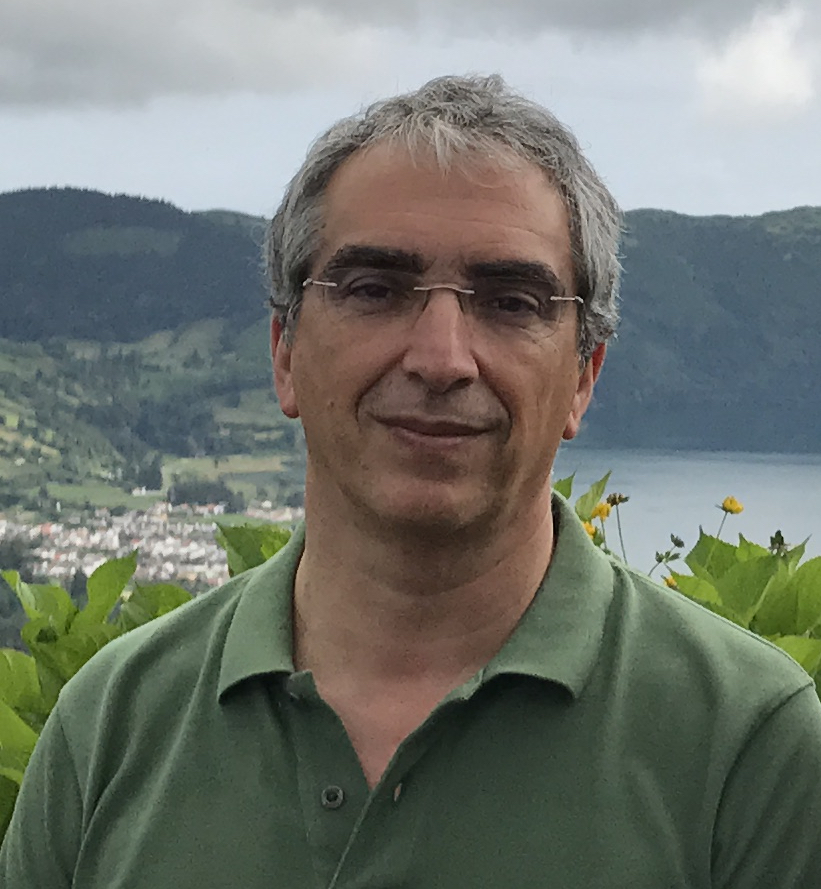
Luis Soares Barbosa is a full professor at the Computer Science Department of Universidade do Minho and a senior researcher at HASLab INESC TEC. He is also affiliated with the International Iberian Nanotechnology Laboratory (INL) as part of the Quantum and Linear Optical Computation Group. He holds a second academic role as Deputy Head of the UNU-EGOV unit at the United Nations University. Barbosa chairs IFIP Technical Committee TC1 on Foundations of Computer Science and serves on IFIP WG1.3 and WG1.11/2.17. His research focuses on program semantics, coalgebra, modal logic, and quantum computation, aiming to establish rigorous mathematical foundations for software engineering. He teaches courses on quantum logic, concurrency, and quantum computation at the master’s level. Research Interests: Barbosa’s work bridges theoretical computer science with practical applications, emphasizing formal methods, coalgebraic systems, and quantum algorithms. His quantum research explores computational advantages and privacy-preserving protocols, while his classical work addresses software verification and concurrency. Recent efforts include paraconsistent transition systems for modeling inconsistent states and quantum policy gradients in machine learning. Lab/Tech Teams: Leads the Logic and Formal Methods group and collaborates with the High Assurance Software lab (HASLab). Active in interdisciplinary teams at INL and UNU-EGOV. Grants/Advising: Supervises students/postdocs in quantum computing, formal methods, and cyber-physical systems. Coordinates projects funded by national/international bodies, including EU initiatives on quantum algorithms and digital governance.