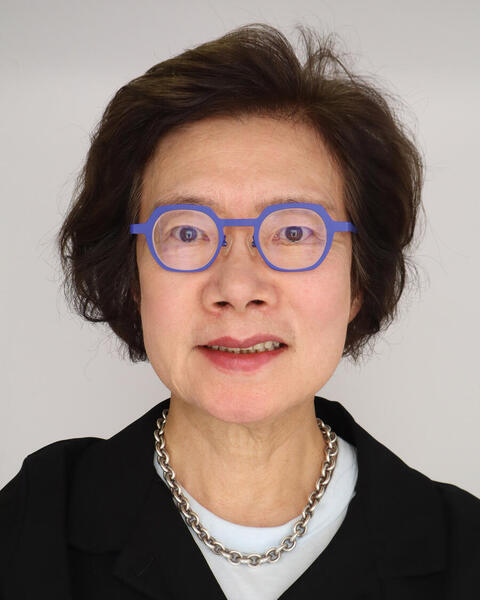
Dr. Yankee Modi is a Research Associate at the University of Sydney , affiliated with the Department of Linguistics and the Sydney Centre for Language Research . She serves as Co-Director of the Centre for Cultural-Linguistic Diversity (Eastern Himalaya) and holds membership in the Vere Gordon Childe Centre . Education: BA (Hons) from Rajiv Gandhi University MA from Jawaharlal Nehru University (JNU) MPhil from JNU PhD from University of Bern Her research focuses on documentation and description of Tibeto-Burman languages in the Eastern Himalayas, particularly those of the Milang tribe in Arunachal Pradesh, India. She specializes in community-led language projects, cultural prehistory reconstruction through proper names, and linguistic responses to geopolitical tensions. Recent projects include a 4-year community-led documentation initiative for 20 Eastern Himalayan languages in partnership with Firebird Foundation and University of North Texas. Publications span topics like applicative morphology, subject autonomy marking, and cultural linguistic diversity. Awards: Shortlisted finalist for 2019 Panini Award (Association for Linguistic Typology) She advocates for indigenous researcher sovereignty and has publicly challenged Chinese geopolitical influence in academic publishing, as seen in her 2023 commentary on retracted Himalayan research.
Markus Immitzer is a Senior Scientist at the Institute of Geomatics, University of Natural Resources and Life Sciences, Vienna (BOKU). His research focuses on land cover classification, vegetation monitoring, and biophysical parameter modeling using remote sensing data from various platforms (UAV, aircraft, satellite) and sensors (multispectral to hyperspectral, LiDAR). He teaches courses in remote sensing, geodata management, and photogrammetry. Education includes a Ph.D. (2017) on mapping tree species using satellite imagery, Diplomingenieur in Forestry Science (2013), and M.Sc. in Wildlife Ecology and Wildlife Management (2011), all from BOKU. Professional experience includes positions at Swiss Federal Research Institute WSL (2023) and Geotree Ltd./Mantle Labs Ltd. (2022). Research interests center on developing remote sensing methodologies for forestry applications, habitat modeling, and vegetation monitoring. Key focus areas include tree species classification, disturbance detection, biomass estimation, and multi-sensor data integration for environmental monitoring. Recent publications demonstrate strong emphasis on operational forest monitoring using multi-platform remote sensing data, with applications in carbon project verification, biodiversity assessment, and fire danger modeling. Research increasingly incorporates machine learning techniques and multi-temporal analysis for improved accuracy in vegetation characterization. Awards and honors include: BOKU Best Paper Award (2024) BOKU Sustainability Award nomination (2020) Multiple dissertation awards (2018-2019) Research prizes for forest remote sensing (2017-2018) Performance scholarships (2005-2009)
Victoria Mateu is an Associate Professor of Hispanic Linguistics at the University of California, Los Angeles (UCLA), Department of Spanish and Portuguese, where she joined in 2019 after completing her Ph.D. in Linguistics at UCLA and serving as Lecturer in Linguistics and Lab Manager of the UCLA Language Lab. Her educational background includes: Ph.D. in Linguistics, University of California Los Angeles (2016) M.A. in Linguistics, University of California Los Angeles (2013) B.A. in English Philology, Universidad de Granada, Spain (2011) Dr. Mateu's research employs experimental methodologies to investigate language representation across populations, with core focus on Spanish acquisition in children and adults. Her work examines morphosyntactic constraints, crosslinguistic differences between Spanish/English, language processing mechanisms, and word segmentation in monolingual/bilingual infants. She explores how developmental paths reveal underlying grammatical structures through both naturalistic and experimental paradigms. Recent publications demonstrate strong trends in intervention effects across syntactic domains (passives, sluicing, wh-questions) with expanding cross-linguistic scope (Mandarin, Italian) and methodological innovation through large-scale collaborations. Her work bridges theoretical syntax with developmental psycholinguistics, emphasizing experimental rigor in child language research. Her scientific recognition includes: UCLA Social Impact Collaborative Seed Grant ($50,000) for ‘A community-centered approach to supporting dual language learning’ Dr. Mateu actively mentors graduate students as evidenced by co-authored publications with emerging scholars. Her current grant-funded project with Megha Sundara and Laurel Perkins develops community-centered approaches to dual language support, reflecting commitment to applied linguistic research. She serves as course instructor for advanced syntax and language acquisition seminars. As former Lab Manager of the UCLA Language Lab and current contributor to the international ManyBabies Consortium, she participates in large-scale initiatives addressing methodological challenges in infant research through multi-lab collaborations.
Sebastian Fedden is Professor of General Linguistics at Sorbonne Nouvelle University, with additional teaching engagements at Ludwig-Maximilians-Universität München (2022-24). His administrative responsibilities include membership in the Conseil de Gestion (ILPGA), representation of LACITO at the Doctoral College, editorship of LACITO Publications, and coordination of research axes in the Labex-EFL project on grammatical typology. Fedden's research explores linguistic diversity through: Core frameworks: Canonical typology and language documentation Regional expertise: Papuan languages (Mian, Telefol, Tifal, Kibiri) Theoretical foci: Nominal classification systems (gender/classifiers), agreement phenomena, argument realization Interdisciplinary connections: Cognition-categorization interfaces, psycholinguistic validation His recent publications (2020-2022) demonstrate methodological diversity—combining discourse analysis, computational modeling, and diachronic approaches—to examine grammatical systems in Papuan languages, particularly agreement mechanics in Mian and grammaticalization pathways in Trans New Guinea. Fedden actively supervises doctoral candidates researching endangered languages: Moisés A. Veláquez (Kibiri grammar) and Neige Rochant (Baga Pukur grammar). He secures significant research funding including the ANR-DFG binational project Complex Predicates in Languages: Emergence, Typology, Evolution (2021-24) and ESRC UK Grant Optimal categorisation (2018-22). He coordinates research networks through LACITO and the Surrey Morphology Group, and organizes major linguistics events including DGfS workshops and the Current Trends in Papuan Linguistics conference.
Maurice Fallon is a Professor of Engineering Science at the University of Oxford and a Royal Society University Research Fellow, leading the Dynamic Robot Systems Group (Perception) at the Oxford Robotics Institute. His research focuses on robust probabilistic methods for localization and mapping in challenging environments through advanced sensor fusion. Education: Electronic Engineering, University College Dublin PhD in Acoustic Source Tracking, University of Cambridge Research Interests: Dr. Fallon specializes in probabilistic state estimation , legged robot navigation , and dynamic motion planning for autonomous systems operating in vision-denied or complex natural environments. His work emphasizes robustness through multi-sensor integration , with applications spanning disaster response, forestry, and industrial inspection. Key innovations include terrain-aware locomotion and long-term autonomy frameworks. Publication Trends: Recent work (2024-2025) demonstrates a strategic shift toward forest robotics and long-term industrial inspection , leveraging legged and aerial platforms. There is strong emphasis on vision foundation models for place recognition, scalable 3D reconstruction using neural radiance fields, and open-vocabulary scene understanding . The research consistently addresses real-world challenges like lighting variations, sensor dropout, and environmental dynamics. Scientific Awards: Royal Society University Research Fellowship 4x Best Paper Awards at ICRA Nominations at Intelligent Vehicles, AAAI, and Humanoids conferences Advising and Grants: Dr. Fallon has secured major funding as PI/Co-I for EU/UK projects including ORCA, RAIN, THING, MEMMO, and the DARPA SubT-winning CERBERUS team. Current initiatives include the Horizon Europe DigiForest project and UKAEA collaborations. He mentors PhD students and postdocs in robotics systems development, though specific advisees aren't listed in source materials. Labs and Teams: He directs the Dynamic Robot Systems Group, which achieved global recognition through DARPA Robotics Challenge participation and SubT Challenge victory. The team operates specialized facilities for legged robot testing and maintains partnerships with nuclear energy and forestry sectors for field deployment.
Brendan S. Gillon is a Professor in the Department of Linguistics at McGill University, Montreal. His research focuses on semantics, pragmatics, and formal methods in linguistics, with notable contributions to the study of classical Indian logic and Sanskrit grammar. He holds a PhD in Philosophy from MIT (1984) and has taught at MIT, University of Alberta, University of Toronto, and McGill since 1991. His work bridges linguistics and philosophy, addressing topics like the semantics of noun phrases, context sensitivity, and cross-cultural language studies. Education: PhD in Philosophy (MIT, 1984), MA in East Asian Studies (University of Michigan, 1975), MA in Sanskrit/Indian Studies (University of Toronto, 1979) Fellowships: Senior Research Fellow at American Institute of Indian Studies (1986-1987), Numata Fellow at Ryokoku University (2006) Research interests include the semantics-pragmatics distinction, mass-count noun distinctions, and formal methods applied to syntax and semantics. Collaborations include projects on lexical semantics and brain-language interactions. He has advised numerous PhD students on topics ranging from comparative linguistics to historical theories of language. Publications span over 50 articles and edited volumes, including Semantics: A Reader (Oxford UP, 2004) and works on Dharmakīrti’s logic and classical Sanskrit grammar. His lectures have been delivered globally, emphasizing interdisciplinary connections between linguistics, philosophy, and cognitive science.
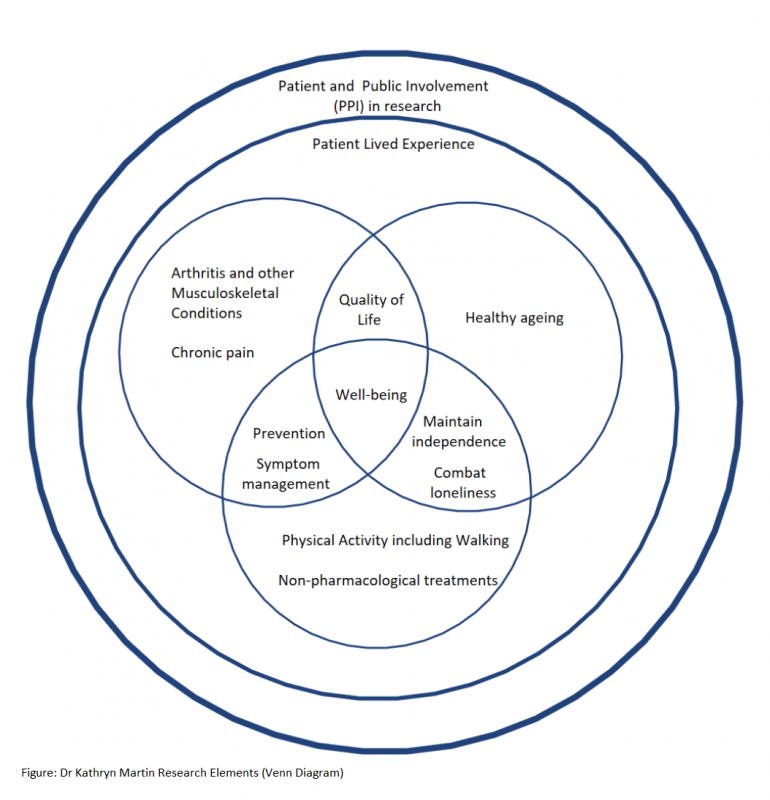
Dr. Kathryn Martin is a Senior Lecturer in Academic Primary Care at the School of Medicine, Medical Sciences and Nutrition, University of Aberdeen. She holds a PhD in Health Behavior and Health Education from the University of North Carolina at Chapel Hill, an MPH in Chronic Disease Epidemiology from Yale University, and a BA in Sociology from the College of the Holy Cross. She completed a postdoctoral fellowship at the National Institute on Aging (NIH), jointly sponsored by the Medical Research Council Unit for Lifelong Health and Ageing in London. She joined the University of Aberdeen in 2013 and is actively engaged in research, teaching, and public engagement. BA Sociology – College of the Holy Cross, Worcester (2000) MPH, Chronic Disease Epidemiology – Yale University, School of Public Health (2003) PhD, Health Behavior and Health Education – University of North Carolina at Chapel Hill, Gillings School of Global Public Health (2009) FHEA, Teaching and Learning in Higher Education – AdvanceHE (2018) Her research focuses on the interplay between social, economic, and environmental factors affecting health, particularly in older adults and individuals with arthritis and musculoskeletal conditions. She investigates how physical activity influences physical and mental health, symptom management, and functional outcomes. Her work emphasizes patient and public involvement (PPIE) and community-based interventions such as the Walk With Ease UK programme. She is also deeply interested in health inequalities and the wider determinants of health, aiming to translate research into policy and practice. The 15 most recent articles analyzed reflect a strong focus on physical activity, aging, arthritis, and public health. They span methodological work on physical activity measurement (e.g., accelerometry), social and environmental influences on health behaviors, and interventions for chronic conditions. Key themes include the impact of socioeconomic status, neighborhood environment, and chronic pain on health outcomes, as well as strategies for improving health equity and community engagement in research. Scientific Awards and Recognitions: Nominated, Principal's Excellence in Teaching Award - Best Postgraduate Taught Lecturer (2020) Santander Mobility Award for travel collaboration with University of Massachusetts Medical School (2017) Delegate, International Young Scotland Programme (2014) Dr. Martin has secured and contributed to multiple research grants as Principal or Co-Investigator, including projects funded by MRC/UKRI/Versus Arthritis, Chief Scientist Office Scotland, and Arthritis Research UK. These grants support research on neuropathic pain, fatigue in inflammatory rheumatic diseases, fibromyalgia management, and physical activity during the pandemic. She is also the academic lead for the School’s Patient and Public Involvement (PPI) initiative and actively collaborates with Aberdeen City Council, NHS Grampian, and Robert Gordon University through the NIHR-funded Health Determinants Research Collaboration (HDRC) Aberdeen. Her teaching includes coordinating the Epidemiology course and leading the on-campus Master of Public Health programme. Dr. Martin is actively involved in research networks and knowledge exchange, including the Scottish Pain Research Community (SPaRC), Osteoarthritis Action Alliance (USA), and as an external examiner for the University of Liverpool’s online MPH. She regularly engages with patient groups and the public through talks, café-style events, and community festivals, promoting arthritis awareness and physical activity.
Anthony SIMONOFSKI is an Associate Professor at the Department of Management Sciences within the Faculty of Economic, Social and Management Sciences at the University of Namur. He is actively involved in the Namur Digital Institute (NADI) and leads the Management of INformation and DIgital Transformation (MIND IT) research group. His academic background includes dual doctorates in Business Economics from KU Leuven and Computer Science from UNamur. His educational background demonstrates exceptional interdisciplinary training: Doctor in Business Economics, KU Leuven Doctor in Sciences (Computer Science), UNamur Master in Business Engineering - Information Management, UNamur Master in Handelsingenieur in de Beleidsinformatica, KU Leuven Bachelor in Business Engineering - Information Management, UNamur SIMONOFSKI's research focuses at the intersection of digital technology and public administration, with particular expertise in digital transformation, smart cities, and citizen participation. His work bridges information systems theory with practical governance challenges, developing frameworks for more responsive public services. His recent publications reveal a strong trend toward AI applications in citizen engagement, with increasing focus on ethical implementation and practical frameworks for public sector use. His scientific contributions have been recognized with several prestigious awards: Best Paper Award at the 19th IEEE Conference on Business Informatics (2017) Publica Award for Methodological Guidance of La Louvière (2019) Nomination for the De Woot Award for Master's Thesis (2018) As Principal Investigator, SIMONOFSKI leads seven major research projects with significant funding, including PARIS2 (2025-2029) on proactive digital public services and Di-Fic (2025-2030) on digital citizenship education. He has supervised numerous graduate students and contributes to the academic community through committee service, including serving on the Faculty Council of Economic, Social and Management Sciences. His work with the ALMEN Alumni Association Committee (as Member 2016-2017 and President 2017-2020) demonstrates his commitment to academic community building. He directs the MIND IT research group which focuses on practical applications of digital transformation in public administration, with particular emphasis on citizen-centered design and implementation challenges in real-world governance contexts.
Ramanathan Subramanian is an Associate Professor in the Department of Information Technology & Systems, AI and Robotics at the University of Canberra. His past affiliations include IIT Ropar and UIUC, Singapore. He has received notable awards including the IEEE Transactions on Affective Computing Best Paper Award (2019) and Multimedia Rising Star nomination (2015). His research focuses on Human-centered computing, AI systems leveraging non-verbal behavioral cues, and applications in health analytics and virtual reality. He actively supervises PhD and Master’s students in areas like Human-Computer Interaction, Data Science, and VR for healthy aging. Research interests: Human perception modeling, intelligent interfaces, health-focused VR, and applied machine learning Key projects: Driver sentiment prediction, distraction awareness campaigns, and robotics for waste management His work contributes to UN SDGs related to health and well-being, particularly through technologies improving aging care and mental health monitoring. Recent projects include developing explainable AI for emotion inference and multimodal data fusion systems. Awards: IEEE Best Paper Award, Multimedia Rising Star Grants: Lead or Co-Investigator on three major grants totaling over AUD 4M Labs/Teams: Collaborates extensively with the University's robotics and health tech groups, contributing to interdisciplinary projects in AI ethics and medical signal processing.
Jyh-Charn 'Steve' Liu is a Professor in the Department of Computer Science & Engineering at Texas A&M University, affiliated with the College of Engineering. His research focuses on real-time distributed systems, cyber-physical security, and interdisciplinary applications such as mathematical expression analysis and GNSS spoofing mitigation. Education: Ph.D., Electrical & Computer Engineering, University of Michigan (1989) M.S., Electrical Engineering, National Cheng Kung University (1981) B.S., Electrical Engineering, National Cheng Kung University (1979) Research Interests: Real-time distributed computing systems Cyber-physical systems security Behavior modeling and simulation Mathematical expression analysis and tools for STEM education GNSS spoofing detection and mitigation Blockchain-based supply chain management Key Publications Trends: Recent work emphasizes AI-driven solutions for mathematical document processing (e.g., LaTeX conversion from images), cybersecurity in navigation systems, and interdisciplinary applications like STEM education tools. Early-career contributions include real-time scheduling algorithms and embedded systems design. Awards: Senior Member, IEEE Computer Society (2014) Nominated for ACM Eugene L. Lawler Award (2013) Conference leadership roles (RTAS 2006/2007) Lab & Collaborations: Leads the Real Time Distributed Systems Lab, exploring areas such as verifiable credentials, urban navigation systems, and medical image analysis. Collaborates on projects like DIME (mathematical expression tool) and MOP (mathematical PDF labeling).
Soon Haeng KANG is an Associate Professor in the Department of Asian and North African Studies at Ca' Foscari University of Venice, where he has held a permanent position since 2018. His academic work centers on Korean and Italian linguistics, with a focus on syntax, morphology, and comparative analysis between the two languages. He is actively involved in teaching, research, and expanding Korean language education in Italy. PhD in General Linguistics, Ca' Foscari University of Venice (2007–2007) Master's Degree in Italian Linguistics, Hankuk University of Foreign Studies (2000–2003) Bachelor's Degree in Italian Studies, Hankuk University of Foreign Studies (1993–2000) Visiting Student, Ca' Foscari University of Venice (2001–2002) Dr. Kang's research focuses on the structural aspects of Korean and Italian languages, particularly in adjective syntax, genitive constructions, plural markers, and noun phrase organization. He employs comparative and contrastive methodologies to analyze grammatical phenomena across Korean and Italian, contributing to both theoretical linguistics and applied language teaching. His work bridges East Asian and European linguistic traditions. His recent publications show a strong trend in Korean linguistic theory and pedagogy, with major 2024 monographs on Korean morphology and the verbal system. He has also published extensively on the expansion of Korean language education in Italy and the adaptation of teaching methods during the pandemic. His articles span topics from syntactic movement in Italian to the educational implications of Korean grammar, reflecting a dual expertise in both languages. Dr. Kang has received research funding from the National Research Foundation of Korea for multiple projects related to Italian syntax and Korean-Italian contrastive analysis. These grants supported postdoctoral research and academic development activities in South Korea. Post-doctoral fellow, Hankuk University of Foreign Studies (2009–2010, 2012–2013) Contract Professor of Italian, Hankuk University of Foreign Studies (2007–2018) Contract Professor of Italian, Sejong University (2008–2012) Collaborator and linguistic expert, Ca' Foscari University (2003–2005) He has contributed to the development of Korean studies in Italy through curriculum design, vocabulary textbooks, and institutional leadership. His work helps shape the academic landscape for Korean language education in Europe, particularly in Italy.
Dr. Eunhee S. Yi is a distinguished Professor in the Department of Laboratory Medicine and Pathology at Mayo Clinic College of Medicine and Science in Rochester, Minnesota. With over three decades of experience in pulmonary pathology, she has established herself as a leading expert in interstitial lung diseases, lung transplant pathology, and lung cancer diagnostics. Her clinical work focuses on anatomic pathology with particular expertise in complex pulmonary cases requiring multidisciplinary approaches. Dr. Yi's educational background includes: MD from Seoul National University College of Medicine (1982) Pre-Medical from Seoul National University College of Medicine (1978) MS in Pathology from Seoul National University College of Medicine (1985) PhD coursework in Pathology from Seoul National University College of Medicine (1986) Residency in Anatomic Pathology at Seoul National University Hospital (1986) Residency in Anatomic Pathology at Washington Hospital Center (1990) Residency in Clinical Pathology at University of California, Irvine (1992) Dr. Yi's research focuses on pulmonary pathology with particular expertise in interstitial lung diseases, lung transplant pathology, and lung cancer diagnostics. Her work bridges clinical pathology with translational research, developing novel diagnostic approaches for complex pulmonary conditions. She has made significant contributions to understanding IgG4-related lung disease, pulmonary Langerhans cell histiocytosis, and the pathological features of various interstitial lung diseases. Her research often involves multidisciplinary collaborations with pulmonologists, radiologists, and thoracic surgeons to improve diagnostic accuracy and patient outcomes. Analysis of Dr. Yi's recent publications (2023-2025) reveals a strong focus on translational pathology with emphasis on direct patient-pathologist interactions, advanced diagnostic techniques including immunohistochemistry and genetic testing, and refinement of disease classification systems. Her work demonstrates a consistent trajectory toward integrating traditional pathology with modern molecular diagnostics and artificial intelligence to enhance precision medicine in pulmonary diseases. Dr. Yi has received several prestigious awards recognizing her contributions to pathology education and clinical practice: 2006 Teaching Award for Anatomic Pathology Faculty, University of California 2003 Pathology residents' teaching award for Anatomic Pathology Faculty 1989 Pathology residents' presentation award, Washington Society of Pathologists Throughout her career, Dr. Yi has been actively involved in professional societies including the United States and Canadian Academy of Pathology, American Society for Investigative Pathology, American Thoracic Society, and North American Society of Head and Neck Pathology. She has served on numerous committees including the Nominating Committee of the Pulmonary Pathology Society, Graduate Medical Education Committee at University of California, San Diego, and various quality assurance and research committees. Her mentorship has helped shape the careers of many pathology residents and fellows specializing in pulmonary pathology.
Xiangyang Li is an Associate Teaching Professor in the Department of Computer Science at Johns Hopkins University, specializing in information security, security intelligence, and human security informatics. His research focuses on computer and system security, user modeling, intelligent systems, simulation and modeling, and knowledge discovery. Education: PhD from Arizona State University Li's work integrates computational cognitive modeling to analyze user security behaviors, phishing classification decisions, and behavioral biometric vulnerabilities. He has developed high-interaction honeypots, explored adversarial techniques against spam detection models, and studied monetary incentives in phishing scenarios. His funded projects include contributions to cybersecurity from DARPA, Air Force Research Laboratory, University of Michigan, and Rensselaer Polytechnic Institute. Li has received recognition including Best Paper Nomination at HICSS-52 and First Place Award at SIG-KM International Research Symposium. At JHU, he teaches courses such as Introduction to Information Security and Computer Intrusion Detection. His research is affiliated with the Information Security Institute.
Don Daniels is an Associate Professor of Linguistics at the University of Oregon's Department of Linguistics within the College of Arts and Sciences. His research focuses on endangered languages of Papua New Guinea, including documentation, comparative reconstruction, and morphosyntactic analysis. He has conducted fieldwork since 2006 on languages such as Sgi Bara, Sirva, and Wiru, emphasizing theories that integrate synchronic and diachronic perspectives. Education: Ph.D., 2015, University of California, Santa Barbara M.A., 2011, University of California, Santa Barbara B.A., 2006, Dartmouth College Research interests span language change mechanisms, comparative methods, and fieldwork methodologies. His work bridges synchronic description and diachronic theory, particularly within the Sogeram language family. Recent publications explore clause structures, tone systems, and data management strategies in linguistic research. His fieldwork projects include long-term documentation of Sgi Bara and collaboration with linguistic communities in Papua New Guinea.
Kyoung-Don (KD) Kang is a Professor in the School of Computing at Binghamton University, State University of New York. He specializes in real-time embedded systems, cyber-physical systems, and IoT security. His research focuses on enhancing real-time data services' timeliness and power efficiency, supported by NSF grants and industry collaborations. Education: BS, MS (Kyungpook National University); MS, PhD (University of Virginia). Research Interests: Real-time embedded systems, cyber-physical systems, IoT, security, edge computing, and wireless sensor networks. His work emphasizes control-theoretic approaches, feedback mechanisms, and adaptive algorithms for real-time systems. Grants & Projects: NSF-funded projects include 'Enhancing Timeliness of Real-Time Data Services' and 'QoS-Aware Data Management.' He leads the Real-Time Embedded Systems Laboratory, developing frameworks like Chronos and RTMR. Awards: Best Paper nominations (DCOSS'19), NSF grants, and patents in surveillance systems. Over 16 MS students and 9 PhD students have graduated under his mentorship, many joining top tech firms. Labs & Teams: Director of the Real-Time Embedded Systems Lab, focusing on edge computing, real-time stream processing, and secure IoT applications. Collaborates with industry partners like Samsung and Intel.