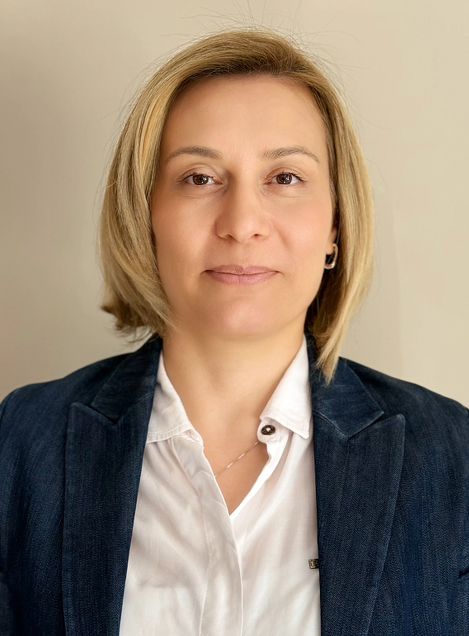
Pedro Javier García García is a Professor at the Department of Computer Systems, Universidad de Castilla-La Mancha, Spain. His work focuses on high-performance interconnection networks, congestion control, and routing algorithms for large-scale systems. Research Themes: High-Performance Computing (HPC), Congestion Management, Adaptive Routing, Fat-Tree Networks, Network Simulation, Quality of Service (QoS) Publication Trends: Recent articles address congestion control in Dragonfly/Slim Fly networks, hybrid routing strategies, energy-efficient interconnects, and scalable simulation frameworks for exascale/big-data architectures.
Holger Dell is a Lecturer in Theoretical Computer Science and Algorithms at the IT University of Copenhagen. His research focuses on computational complexity, graph theory, and algorithmic efficiency. Active in polynomial-time algorithms and oracle-based methods Contributions to edge estimation in hypergraphs and fairness in node embeddings Key collaborations with BARC (Basic Algorithms Research Copenhagen) project Research trends show expertise in causal modeling, finite field polynomial solving, and graph embedding techniques. Recent work emphasizes algorithmic fairness and abstract causal relationships. Participated in a major project funded by the Villum Foundation (2017-2024) as a collaborator.
Martin Radetzki is a full Professor at the Institute for Computer Architecture and Parallel Systems (University of Stuttgart) , specializing in Embedded Systems . His work focuses on network-on-chip (NoC) design, fault tolerance, memory optimization, and simulation frameworks. Key research areas: NoC synthesis, deadlock-free routing, performability analysis, and power-efficient memory subsystems Recent publications emphasize integer linear programming frameworks for co-designing floorplanning and routing, chiplet-based systems , and machine learning-enabled performance evaluation His methodologies address cross-layer challenges in NoC design, combining formal optimization with practical implementation for heterogeneous processing elements. Collaborative projects include fault resilience analysis, parallel simulation techniques, and memory allocation strategies for SoCs. Dr. Radetzki supervises research with students like Shuang Liu and Manuel Strobel , contributing to IEEE Transactions on Computers , ACM TECS , and conferences such as DATE and MCSoC . Current work explores optimal routing topologies for emerging chip architectures.
Xiaolong Liu serves as Assistant Professor at Southern University of Science and Technology's School of Microelectronics. His academic journey includes a Ph.D. from Hong Kong University of Science and Technology (2019), M.E. from Tsinghua University (2014), and B.E. from Beijing University of Aeronautics and Astronautics (2010). Prior to his current position, he worked as Staff Engineer at eTopus Technology in Silicon Valley (2019-2021) and completed a postdoc at HKUST. Ph.D. in Electronic and Computer Engineering, Hong Kong University of Science and Technology (2019) M.E. in Microelectronics, Tsinghua University (2014) B.E. in Electronic Engineering, Beijing University of Aeronautics and Astronautics (2010) Dr. Liu's research spans cutting-edge RF/mm-Wave/THz integrated circuit design, focusing on high-performance signal generators , ultra-wideband transceivers , and low-power frequency synthesis . His work addresses critical challenges in 5G/6G communications, terahertz spectroscopy, and high-speed wireline interfaces through innovative CMOS architectures. Technical emphases include varactor-less VCOs, harmonic enhancement techniques, and magnetic tuning mechanisms for millimeter-wave systems. His publication portfolio demonstrates consistent leadership in IEEE flagship journals/conferences (JSSC, TMTT, ISSCC, VLSI), with recent work advancing Class-F oscillators, sub-sampling PLLs, and sub-THz synthesizers. Notable trends include migration toward sub-THz frequencies (2023-2025) , multi-core oscillator architectures , and elimination of harmonic tuning for simplified design. IEEE VLSI Paper Technical Highlights (2019) IEEE CICC Invited Talk (2019) IEEE TVLSI 2023 Best Reviewer Award Top 4 Most Downloaded Paper in TCAS-II (July 2022) Dr. Liu actively mentors students through SUSTech's graduate programs, with advisees consistently earning university-level thesis awards and conference recognitions. His lab maintains strong industry ties through silicon validation and collaborates on cutting-edge tapeouts in 7nm/16nm nodes. Current projects focus on cryo-CMOS interfaces for quantum computing and ultra-wideband transceivers for 6G applications. His research group operates within SUSTech's state-of-the-art microelectronics facility, specializing in mm-Wave/THz characterization and high-speed SerDes validation. The team maintains partnerships with semiconductor foundries for advanced-node prototyping and collaborates with industry leaders on real-world implementation challenges.
İLKAY SİBEL KERVANCI serves as an Assistant Professor in the Department of Computer Engineering at Gaziantep University's Faculty of Engineering. Her academic career spans teaching and research in artificial intelligence, machine learning, and data mining with practical applications across finance and bioinformatics sectors. PhD in Computer Engineering, Çukurova University (2023) MSc in Informatics, Kahramanmaraş Sütçü İmam University (2017) BSc in Computer Engineering, Kocaeli University (2004) Her research centers on machine learning applications for cryptocurrency price forecasting using LSTM and GRU networks, neutrosophic logic implementations in regression problems, and drug-target interaction prediction. Recent work demonstrates expertise in hyperparameter optimization, time series analysis, and handling imbalanced datasets through hybrid feature reduction techniques. She actively contributes to advancing neural network architectures for financial and biomedical challenges. Publication trends reveal consistent focus on Bitcoin price prediction (6 publications since 2017), expanding into drug-target interaction modeling and neutrosophic applications. Her work bridges theoretical machine learning with industrial applications in cement manufacturing, stock markets, and pharmaceutical research through recurrent neural networks and optimization frameworks. Dr. Kervanci teaches graduate courses including Introduction to Artificial Intelligence Methods and Introduction to Data Mining Methods, alongside undergraduate courses such as Artificial Intelligence in Engineering and Discrete Mathematics, demonstrating commitment to computational education across academic levels.
Prof. Haluk Bingöl serves as a Professor at Yeditepe University's Faculty of Computer and Information Sciences, Department of Computer Science and Information Technologies since 2018. Previously, he held academic positions at Boğaziçi University from 2001 to 2018, progressing from Assistant Professor to full Professor in the Department of Computer Engineering. His educational background includes a PhD (1987) and MS (1985) in Electrical and Computer Engineering from Syracuse University, with doctoral research on Boolean Comparison by Simulation , and a BS in Electrical and Electronics Engineering from Middle East Technical University (1982). His research centers on Complex Networks and Evolutionary Game Theory , with significant contributions to understanding cooperation dynamics in the Iterated Prisoner's Dilemma, community detection algorithms, and epidemic modeling in urban networks. His work integrates computational modeling with real-world applications in social dynamics and information systems, often employing agent-based simulations to explore emergent phenomena. Recent publications demonstrate consistent focus on game-theoretic models of cooperation, network structure analysis, and applications in social media and epidemiology. He maintains strong publication output in high-impact journals including Physical Review E , Advances in Complex Systems , and Journal of Theoretical Biology , with increasing interdisciplinary reach into mental health informatics and computational linguistics. Multiple Publication Incentive Awards from Boğaziçi University and TÜBİTAK Interpro IT Award for industry-academia collaboration Best Poster Award at COST MP0801 United Nations Fellowship (1984-1985) and TEV International Scholarship National competition awards for student thesis supervision Prof. Bingöl has supervised 23 graduate students across master's and PhD programs, with research spanning community detection, evolutionary dynamics, and attention economics. His grant portfolio includes leadership of the TURKCELL m-learning Project ($130,000), participation in EU-funded initiatives (EUMedGrid, ASSYST), and COST actions (TD1210, MP0801) focusing on complex systems research infrastructure. He actively contributes to COST actions and collaborative networks, developing methodologies for complex systems analysis while mentoring next-generation researchers through structured academic programs and industry partnerships.
Ayalvadi Ganesh is a Lecturer in the Department of Mathematics at the University of Bristol's School of Mathematics, where he teaches advanced courses including Complex Networks, Stochastic Optimisation, and Queueing Networks. His academic work bridges theoretical mathematics with practical network applications. His research spans communication networks , decentralized algorithms , and stochastic modeling , with core expertise in large deviations theory , random graphs , queueing systems , and information theory . Recent work demonstrates strong focus on multi-agent bandit problems, epidemic modeling on networks, and latency optimization in distributed systems, reflecting interdisciplinary applications from cybersecurity to biological networks. Analysis of his 15 most recent publications reveals dominant trends in decentralized decision-making (38% of works), network epidemics/rumor spreading (27%), and stochastic optimization (20%), with increasing crossover into machine learning and biological applications since 2020. Best Paper award at ACM SIGMETRICS 2010 for 'Load balancing via random local search in closed and open systems' His teaching portfolio includes graduate-level courses on Complex Networks, Stochastic Optimisation, and Queueing Theory, with documented emphasis on connecting theoretical foundations to real-world network challenges. While specific grant details aren't provided in source materials, his publication pattern suggests sustained research funding in network science and stochastic systems.
Pascal Mérindol is an Associate Professor in Computer Science at the University of Strasbourg, affiliated with the ICube Lab (UMR CNRS 7357) and the Network Research Group. His academic career spans roles in routing, internet measurements, and network security. He obtained his HDR (Habilitation to Direct Research) in 2022 and leads the national ANR project NanoNet (2019-2022). He has served on the Editorial Board of Elsevier's Computer Communications Journal (2016-2020) and contributed to European projects like GN4 (2016-2018) and TRILOGY (2008-2011). Research interests include: Multipath and Loop-Free Routing: Developing algorithms for network reliability and fast rerouting in wired intra-domain networks. Internet Measurements: Tools like MERLIN and mrinfo for topology discovery, MPLS signatures, and fingerprinting. Energy-Efficient Wireless Networks: Distributed heuristics for MLST (Maximum Leaves Spanning Tree) to optimize battery usage. Fast IP Protection: Schemes for tunnel protection and restoration in IP networks. His work has been published in journals such as IEEE Transactions on Networking (TON), Computer Networks (COMNET), and conferences including INFOCOM and IMC. He mentors PhD students like François Clad and has contributed to teaching modules on networks, protocols, distributed systems, and performance evaluation at the University of Strasbourg.
Sivakumar S A is a researcher actively contributing to the fields of low-power electronics and network security. His work spans affiliations with institutions such as Dr. N.G.P. Institute of Technology, Kalaignarkarunanidhi Institute of Technology, and Karpagam College of Engineering, focusing on cutting-edge applications in digital VLSI systems and wireless sensor networks. Research interests include: Low-energy operation in wireless sensor nodes Subthreshold circuit design for biomedical applications Energy-efficient security protocols for resource-constrained networks Optimization of firewall policies in wireless environments Recent publications highlight his expertise in subthreshold level shifters and energy-aware security frameworks. Notable journals include Analog Integrated Circuits and Signal Processing and Security and Privacy .
Dr. Chen-Wei Yang is a Senior Lecturer at Luleå University of Technology specializing in Dependable Communication and Computation Systems. He works within the Department of Computer Science, Electrical and Space Engineering, focusing on the intersection of computer science and energy systems. His research interests include: Engineering Smart Energy Systems Systems engineering of cyber-physical systems Data and communication interoperability Distributed automation system design Semantic modelling Dr. Yang has developed significant expertise in substation automation systems (IEC 61850) and distributed automation systems (IEC 61499) for industrial applications. His recent publications show a strong focus on energy automation systems, smart grid technologies, and digital twin implementations for energy infrastructure. His work spans both theoretical research and practical implementation, with emphasis on maintainability, interoperability, and real-time performance. Professional affiliations include: IEEE IES TCII - Sub-TC Chair on Smart Energy and Smart Grids IEEE P2805.1 WG - Self-Management Protocols for Edge Computing Node Luleå Toastmasters - Vice-president of Education Dr. Yang actively supervises PhD students and teaches multiple undergraduate and graduate courses related to programming, software design, and real-time systems. His approach combines strong theoretical foundations with practical applications in the energy sector.
Prof. Dr. Eng. Stoyo Todorov is a distinguished Professor and Head of the Department of Railways at the Faculty of Transport Engineering, University of Architecture, Civil Engineering and Geodesy (UACEG) in Sofia, Bulgaria. With over three decades of academic and professional experience, he has served in various leadership roles including Dean of the Faculty of Transport Engineering (2008-2016) and Vice-Rector for European Integration and International Cooperation (2016-2023). His expertise spans railway infrastructure design, construction, and operation, with significant contributions to Bulgaria's railway development projects. Current Position: Professor and Head of Department of Railways Previous Leadership Roles: Dean of Faculty of Transport Engineering, Vice-Rector for European Integration Professional Recognition: Gold badge 'Prof. Asen Zlatarov', multiple 'Teacher of the Year' awards Prof. Todorov completed his Master's degree in Civil Engineer in Transport Construction – Railway Construction at the Higher Institute of Architecture and Civil Engineering (VIAS) from 1982-1987. He earned his Doctor of Science in 1999 from UACEG with a dissertation on 'Research of the Longitudinal Profile of Railway Lines at High Speeds' in specialty 02.15.11 'Design, Construction and Maintenance of Railways and Facilities'. His research focuses on railway infrastructure design and construction , with particular emphasis on railway lines, tram systems, metro construction, railway superstructure, stations, and operations. Prof. Todorov has pioneered research in high-speed railway profiles, railway safety, intermodal transport systems, and vibration analysis from urban rail transport. His work bridges theoretical engineering principles with practical applications in Bulgaria's railway infrastructure development. The recent publications reveal a strong focus on intermodal transport optimization , vibration analysis from urban rail systems , and advanced railway safety measures . His most recent work applies mathematical modeling to optimize intermodal terminal locations along railway lines, demonstrating a sophisticated integration of train dynamics with infrastructure planning. The research shows increasing attention to environmental impacts of railway systems and sustainable transport solutions. Gold badge 'Prof. Asen Zlatarov' from the Federation of NTS in Bulgaria (2009) Student award 'Shaman of the Year' from 'The Pathfinders' - CHAOS (2011) Multiple 'Teacher of the Year for FTS' awards from CHAOS (2012-2014) Prof. Todorov has supervised numerous research projects and served as expert in national and EU-funded initiatives. He has managed significant projects under Operational Programs 'Human Resources Development' and 'Transport', including the 'Career Growth and Qualification Enhancement of Academic Staff at UACEG' and 'Development of Standards and Procedures for Quality Management at UACEG'. His leadership extends to international collaborations through Socrates-Erasmus programs and dual degree programs with Vienna University of Technology. As President of Technical Committee 70 'Railway Transport' at the Bulgarian Institute for Standardization since 2010, Prof. Todorov plays a pivotal role in shaping railway standards in Bulgaria. His involvement in major infrastructure projects including the Sofia Metro development, the Plovdiv-Svilengrad railway electrification, and the Struma Motorway railway relocation demonstrates his integration of academic expertise with national infrastructure development.
Assoc. Prof. Dr. Eng. Dimitar Martinov serves at the University of Architecture, Civil Engineering and Geodesy (UACEG) in Sofia, Bulgaria, within the Faculty of Transport Engineering, Department of Roads and Transport Facilities. With academic service since 2001 and promotion to Associate Professor in 2022, Dr. Martinov has established himself as a leading educator and researcher in transportation infrastructure with particular expertise in road design, safety analysis, and urban transport systems. Dr. Martinov completed his foundational education at "Hristo Botev" Construction Technical School (1991-1995), earned his civil engineering degree from UACEG (1995-2000), and completed his doctoral studies at UACEG (2010-2015) specializing in road infrastructure design and maintenance. His academic progression reflects dedication to the field, moving from assistant to his current associate professorship. His research focuses on critical transportation engineering challenges including road and street junction design, road safety optimization, visibility analysis, drainage systems, and the integration of modern technologies like BIM in road infrastructure development. Dr. Martinov's work bridges theoretical research with practical application, addressing real-world problems in highway geometry, speed prediction models, and multi-modal transportation systems. His publications demonstrate consistent scholarly output with increasing sophistication in analyzing complex road infrastructure systems. Dr. Martinov's extensive publication record shows clear evolution from foundational road safety studies to comprehensive analyses of multi-level intersections and advanced modeling techniques. His recent work explores bicycle infrastructure integration and sophisticated 3D modeling approaches, reflecting contemporary transportation challenges and technological advancements in the field. Member of Chamber of Investment Design Engineers (CIIE) since 2004 Limited design license (2006) and full design license Member of Faculty Council of Faculty of Transport Engineering (2020-present) Dr. Martinov has supervised 63 successfully defended theses and reviewed 35 additional theses, demonstrating significant mentorship impact. His teaching portfolio includes 36 lecture courses, 219 exercise groups, and instruction for 2,247 students through 2025. He has participated in multiple research projects including Ministry of Regional Development initiatives and climate change impact studies on transportation infrastructure. His practical engineering experience complements his academic work through involvement in numerous road construction and rehabilitation projects across Bulgaria. As both an academic researcher and practicing engineer, Dr. Martinov contributes significantly to advancing transportation engineering knowledge while ensuring its practical application in Bulgaria's infrastructure development. His dual expertise makes him a valuable resource for students seeking both theoretical understanding and practical skills in road infrastructure design and management.
Gertrud Malene Hjortø is an Associate Professor at the University of Copenhagen's Faculty of Health and Medical Sciences, Department of Biomedical Sciences, specializing in Molecular and Translational Pharmacology. Her research focuses on chemokine receptors, particularly CCR7, and their role in immune cell recruitment and positioning in the body. Dr. Hjortø leads a research group of four people and teaches approximately 550 hours per year across various medical and dental programs at the university. Dr. Hjortø earned her PhD from the Department of Molecular Biology and Virology at the University of Copenhagen and Novo Nordisk in 2002. Her educational background includes a Master's degree from Novo Nordisk A/S and the Department of Molecular Biology at KU (1996-97), and undergraduate studies in Biology (1992-97) and Biochemistry (1991-92) at the University of Copenhagen. Dr. Hjortø's research centers on understanding the molecular mechanisms of chemokine receptors, with special emphasis on CCR7 and its ligands CCL19, CCL21, and CCL21Tailless. Her work investigates how these receptors control immune responses through dendritic cell and T cell recruitment to lymph nodes. A key discovery from her lab is that post-translational modifications of chemokine receptors can be targeted with externally added peptides to enhance ligand-receptor interactions. This led to a patent application for "Chemotaxis potentiating peptides and uses thereof," which aims to improve immune responses, particularly in cancer immunotherapy. Her research employs classical pharmacological methods, time-lapse microscopy for tracking immune cell migration, and analysis of receptor-mediated signaling events. The publication record of Dr. Hjortø demonstrates a strong focus on chemokine receptor pharmacology, with recent work expanding into related receptors like GPR183 and broader applications in cancer immunotherapy and inflammatory diseases. Her most recent publications (2022-2024) explore structural determinants of receptor-ligand interactions, biased signaling, and the role of glycosaminoglycans in chemokine presentation. Many of her papers involve international collaborations, particularly with researchers in the United States, reflecting the global nature of immunological research. Patent: "Chemotaxis potentiating peptides and uses thereof" Research funding from Innovation Foundation Denmark (2021, 1.385.000 DKK) Novo Nordisk BII grant (2020, 952.000 DKK) Carlsberg Foundation grants (2018, 600.000 DKK; 2013, 380.000 DKK) PoC KU grant (2018, 225.000 DKK) Gangsted Foundation grant (2015, 340.000 DKK) AP Møller Foundation grant (2014, 46.000 DKK) Dr. Hjortø actively supervises multiple graduate students across various projects related to chemokine receptor pharmacology and immune cell migration. Her supervision spans PhD, M.Sc., and B.Sc. levels, with current projects including "Immune boosting peptides for improved immune cell activation" and "Microshaping hydrogels and their chemistry in 3D for optimizing/validating DC migration." She has secured significant research funding from multiple Danish foundations and international organizations, supporting her work on chemokine receptor modulation and its therapeutic applications. Dr. Hjortø collaborates with leading researchers worldwide, including Brian F. Volkman and Christopher T. Veldkamp from Wisconsin (US), Benjamin A.H. Jensen from the University of Copenhagen, and cancer immunotherapy experts Inge Marie Svane and Pawel Kalinski. Dr. Hjortø leads the Hjortø group, which investigates how CCR7 and its ligands orchestrate immune responses through controlled recruitment of dendritic cells and T cells to lymph nodes. Current work explores the potential of C21-TP (a naturally occurring peptide) to improve dendritic cell-based anti-cancer vaccines. The group employs advanced techniques including time-lapse microscopy for tracking immune cell migration, pharmacological analysis of receptor signaling, and structural studies of receptor-ligand interactions.