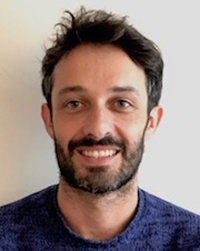
Prof. Dr. Philipp Schwab is a Professor of Philosophy at the University of Freiburg, specializing in classical German philosophy and its reception. He holds a doctorate (2009) and habilitation (2019/20), and has led major research projects like the DFG-funded 'Schelling in Munich (1811–1841)' edition. His academic career includes positions at universities in Germany, the U.S., and Denmark. Research focuses on metaphysics, existential philosophy, and the works of figures like Schelling, Hegel, Kierkegaard, and Nietzsche. He co-edits Schelling-Studien and has supervised numerous doctoral students. Key publications include monographs on Schelling-Hegel debates and Kierkegaard's indirect communication. His awards include the Eugen Fink Prize (2009). Current projects explore Schelling's legacy, Heidegger's interpretations, and dialectics in idealist systems.
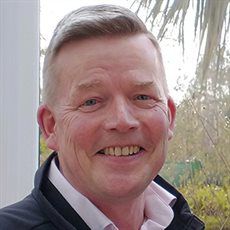
Joel Westerdale is an Associate Professor of German Studies at Smith College, where he also serves as Chair of German and Italian. He is affiliated with the Film and Media Studies and Comparative Literature programs, with courses cross-listed in Jewish Studies and the History of Science. Ph.D. and A.M. from Harvard University B.A. from University of Michigan His research focuses on 19th-21st century German literature, intellectual history, and early cinema. He examines intersections between language, technology, and cultural expression, particularly in works like Nietzsche’s Human, All Too Human and early German films such as The Cabinet of Dr. Caligari . Recent scholarly contributions include analyses of Nazi-era film historiography and Nietzschean philosophical themes in literature. He has conducted extensive research at institutions in Germany, including University of Freiburg and Center for Literary and Cultural Research (ZfL) in Berlin. Grants from the Alexander von Humboldt Foundation, U.S. Fulbright Commission, and Whiting Foundation have supported his work. He co-directed Smith’s Kahn Liberal Arts Institute Evil project (2011–12) and led the study abroad program at University of Hamburg (2015–16).
Paolo D'Iorio is an Exceptional Research Director at the Centre National de la Recherche Scientifique (CNRS) working at the École Normale Supérieure in Paris, where he heads the "Nietzsche and his time" and "Digital Humanities" research teams. He previously served as director of the Institute of Modern Texts and Manuscripts (ITEM) from 2014 to 2023 and currently serves as president of the international HyperNietzsche research group, which brings together 81 Nietzsche scholars from 16 countries as well as representatives from 10 major national scientific associations devoted to Nietzsche studies. Holding a doctorate in philosophy from the Scuola Normale Superiore in Pisa and qualified to direct research at the University of Nice, D'Iorio has built a distinguished career spanning traditional Nietzsche scholarship and digital humanities innovation. His academic journey includes leading a multidisciplinary research group at the University of Munich (2002-2005) after receiving the Sofja Kovalevskaja Prize, and affiliations with the University of Oxford (2007-2011) as a visiting fellow at the Oxford Internet Institute. His research focuses on two complementary domains: (1) the interpretation of Nietzsche's philosophy, particularly examining cosmology, the eternal return, Greek philosophy, gnoseology, and the genesis of the free spirit philosophy; and (2) scholarly publishing on the Web, where he has pioneered digital infrastructures for humanities scholarship. He is the founder and editor of Nietzsche Source, providing both facsimile and critical digital editions of Nietzsche's complete works. D'Iorio's publications reflect his dual expertise, with 120 publications including 21 books, 2 digital editions of Nietzsche's complete works, 92 articles, and 6 reviews published in 10 languages across 14 countries. His work shows a consistent trajectory from traditional Nietzsche studies toward increasingly sophisticated digital scholarly infrastructure. Among his significant honors are the Sofja Kovalevskaja Prize from the Alexander von Humboldt Foundation and the German Ministry of Research, and recognition in the European Young Investigator Award competition. He has supervised numerous doctoral students and postdoctoral researchers throughout his career. Currently leading major research initiatives including "Tristes Tropiques Numérique" and "Anatole France Source," D'Iorio continues to bridge traditional humanities scholarship with cutting-edge digital methods, maintaining an active teaching presence through seminars at École Normale Supérieure and international visiting professorships.
Professor Christopher Janaway is a Professor in Philosophy at the University of Southampton, specializing in the history of philosophy with a focus on Arthur Schopenhauer and Friedrich Nietzsche. His research examines their engagement with issues of morality, suffering, selfhood, and the philosophical reception of classical Indian philosophy, particularly Buddhist concepts of 'no-self'. Education: BA and DPhil from the University of Oxford. Previously taught at Birkbeck, University of London, and had a visiting lectureship at the University of Sydney. Currently supervising PhD students Maria Mourtou Paradeisopoulou and Dominic James Kearney. Recent research explores intersections between Schopenhauer/Nietzsche and Indian philosophy, aiming to address questions of self, suffering, and affirmation through comparative analysis. Editor-in-chief of the Cambridge Edition of Schopenhauer's Works, and active in translating and interpreting Nietzsche's texts. Publications span articles in The Monist , European Journal of Philosophy , and edited volumes, with a focus on themes like naturalism in Nietzsche, Schopenhauer's willing theory, and cross-cultural ethical comparisons. Recent talks include presentations at LSE, University of Warwick, and international Nietzsche seminars.
Yusuf Mehmet ÖRNEK is a Professor in the Department of Philosophy and Sociology of Law at Antalya University. He holds a doctorate from Johannes Gutenberg University and a Master's degree from Hacettepe University. His academic work bridges philosophy, sociology of law, and cross-cultural intellectual traditions. Doctorate: Johannes Gutenberg Universität Master's: Hacettepe Üniversitesi His research focuses on German philosophy (Kant, Heidegger, Jaspers), ethical frameworks , and university ideals . He explores intersections between ancient philosophy and modernity , political philosophy , and urban ethics . Recent publications analyze climate change as an ethical crisis and cultural reception of Nicolai Hartmann in Turkey . ÖRNEK is known for comparative studies between Turkish and German philosophical traditions, particularly examining Takiyettin Mengüşoğlu's engagement with European thinkers. His work traces historical dialogues between philosophers like Arendt-Jaspers-Heidegger and their implications for contemporary thought.
Paul C Bishop serves as an Honorary Professorial Research Fellow in the School of Modern Languages & Cultures at the University of Glasgow, specializing in the German department. His academic career spans over two decades with 142 publications to his name, demonstrating sustained scholarly engagement in German intellectual history and philosophy. Bishop maintains an active research profile with publications continuing through 2024, indicating ongoing scholarly contributions despite the 'Honorary' designation in his title. Bishop's research interests center on the intersection of German philosophical traditions, analytical psychology, and literary studies. He has developed significant expertise in Nietzsche studies, Jungian psychology, and the work of Ludwig Klages, with additional focus on the German reception of ancient thought, particularly within the George Circle. His work bridges business applications of modern languages with deep philosophical inquiry, creating a unique interdisciplinary perspective that connects commercial practice with intellectual history. Bishop's scholarship reveals a consistent exploration of how philosophical concepts from German thinkers can inform contemporary approaches to language, business, and cultural understanding. Bishop's publication record demonstrates remarkable breadth and depth across multiple scholarly formats including monographs, journal articles, book chapters, and edited volumes. His work shows a clear trajectory connecting Weimar classicism with analytical psychology, particularly through examinations of Goethe, Nietzsche, and Jung. The thematic consistency across his publications reveals a scholar deeply engaged with questions of intellectual history, the philosophy of language, and the application of German philosophical traditions to contemporary contexts. Bishop maintains an active scholarly presence through his ORCID profile (0000-0001-8489-4336) and continues to contribute to academic discourse in his fields of expertise. His work has appeared in prestigious journals including History of European Ideas, Nietzsche-Studien, and International Journal of Jungian Studies, reflecting the high regard for his scholarship within these disciplinary communities.
Edouard Marsoin is a Lecturer in American Literature at Paris Cité University since 2022. His research spans 19th Century American Literature , focusing on Pleasure and enjoyment in literature , Dietetics, literature and philosophy , and Sexuality, Gender and Literature . He has previously held roles as a PRAG (Professeur agrégé) at Paris Cité University (2016–2022) and a contractual doctoral student/ATER at Paris Diderot University (2011–2016). Marsoin’s scholarly work explores intersections of Affect Theory , Queer Studies , and Interdisciplinary Approaches to American and African American literature. His publications often analyze canonical and marginalized texts, including Melville’s works and antebellum slave narratives. His 2022–2018 publications reveal a thematic focus on pleasure economies , gendered ethics , and philosophical discourses in American literature. Notably, his 2020 article on Melville’s Typee and Omoo earned the Hennig Cohen Prize , recognizing excellence in Melville studies. Key awards : Hennig Cohen Prize 2020
Nicholas Taylor-Collins is a Senior Lecturer in English at Cardiff School of Education and Social Policy, specializing in modern and contemporary Irish literature with significant contributions to literary theory and Shakespeare studies. His research explores intertextual connections between early modern drama and Irish writing through poststructuralist frameworks. He earned his PhD from the University of Warwick (2011-2015) with the thesis "Forming the Nation: Early Modern English and Modern Ireland". His academic journey includes fellowships and editorial leadership in Irish studies. Taylor-Collins pioneered the concept of 'dismemory' to analyze Shakespearean reception in modern Irish literature, detailed in his monograph Shakespeare, Memory, and Modern Irish Literature (Manchester UP, 2023). Current research focuses on John Banville's fiction through ethical and mortality lenses, developing a theory of 'literary death-ethics' that interrogates the moral dimensions of writing, reading, and criticism. His work intersects Irish cultural identity with philosophical inquiries into memory, death, and textual ethics. Recent publications (2021-2024) reveal three dominant trajectories: 1) Banville scholarship examining virtue ethics and mortality (culminating in his contracted monograph Affirming Life and Guarding Death in John Banville's Fiction ); 2) Shakespearean reception studies analyzing memory and gender in works by O'Farrell and modern Irish authors; 3) Ethical frameworks for literary criticism, particularly regarding Eavan Boland's Nobel-recognized contributions. These strands demonstrate increasing theoretical sophistication in merging Irish literary studies with continental philosophy. His scientific recognition includes: Fellow of the Royal Historical Society (FRHistS) Fellow of the Higher Education Academy (FHEA) As a doctoral supervisor, Taylor-Collins guides research on phenomenological Shakespeare studies (including a 2024 viva completion), Charles Bukowski interpretations (2023-2027), and theories of reading pleasure (2025-2031). His professional service encompasses editorial projects like John Banville in Context (Cambridge UP, 2025) and leadership roles as Treasurer of the British Association of Irish Studies and Europe Representative for the International Association for the Study of Irish Literatures. He maintains active research collaborations through his Visiting Research Fellowship at Bath's Centre for Death and Society (2024-2027) and co-leadership of Cardiff's English Literature and the Global Research Group.
Dr. Oliver Victor is a Research Fellow at the Institute of Philosophy, Heinrich Heine University Düsseldorf (HHU), specializing in existential philosophy, cultural anthropology, and the history of 19th-20th century thought. His work focuses on Camus, Kierkegaard, Nietzsche, and their intersections with ethics, aging, and European cultural foundations. Education: B.A. and M.A. in Philosophy (2013–2016), Ph.D. (2020, summa cum laude) at HHU. Academic Roles: Research Associate (2017–2023), Project Leader for DFG-funded Camus research (since 2023), and Spokesperson for HHU's 'Cultural Foundations of Europe' focus (since 2024). His research explores existentialism's cultural impact, including Camus's Mediterranean philosophy, Kierkegaard's hermeneutics, and Nietzsche's anthropology. Recent projects include translating Camus's early works and organizing interdisciplinary workshops on existential themes. Articles highlight existentialist ethics, cultural identity, and philosophical responses to crises, with collaborations across European institutions. He teaches courses on philosophy of aging, modern individualism, and Camus's works, while co-organizing conferences on topics like 'Negative Anthropology' and 'Philosophy & Film' events.
Nicola Zambon is a researcher at the Institute for Religious Studies (WE 8), Free University of Berlin , with a focus on Phenomenology , Modern Philosophy , and Philosophy of Religion . He holds an Abilitazione Scientifica Nazionale in practical and theoretical philosophy and history of philosophy (2023) and completed his PhD at Ludwig-Maximilians-Universität München (2014). His research explores self-deception , myth theory , and phenomenological anthropology , with a particular emphasis on Kant, Nietzsche, and Blumenberg. Education PhD in Philosophy, Ludwig-Maximilians-Universität München (2014) Habilitation, Italy (2023) Studies in Bologna, Mainz, Freiburg im Breisgau (2002–2009) Research Interests : Zambon's work bridges phenomenology (Husserl, Heidegger, Merleau-Ponty, Blumenberg) with modern philosophy (Spinoza, Kant, Vico) and philosophy of religion/psychoanalysis . He investigates self-deception through Kantian moral philosophy, myth theory in contemporary culture, and anthropological concepts like tactility and the life-world. His forthcoming monograph on visibility (2025) extends these themes. Recent Publications include studies on self-deception (2024), Blumenberg's dialectics of Enlightenment (2022), and Kant's moral anthropology (2020). His edited works feature in the Zeitschrift für Kulturphilosophie and Phänomenologische Forschungen . Scientific Awards : Oskar-Karl-Forster-Preis der LMU München (2014) Grants and Fellowships : Nietzsche-Fellowship, Klassik Stiftung Weimar (2023) Fellow, Research Institute for Philosophy Hannover (2022–2023) DAAD/FMSH Research Grant, Paris (2015) DFG Research Grant, Paris (2016–2017) Academic Activities : Zambon is a member of the Käthe-Kluth-Nachwuchsgruppe (2024–2027) and the Hans Blumenberg-Gesellschaft . He teaches courses on Blumenberg's philosophy , Nietzsche , and modern religious thought at FU Berlin and international institutions like the University of Turin (visiting professor, 2025).
Dr. Alexander Duff is an Associate Professor at the School of Civic Leadership, University of Texas at Austin, specializing in the history of political philosophy . His work engages with classical, modern, and contemporary thinkers, particularly Heidegger, Machiavelli, and Strauss. He co-founded the Association for the History of Political Thought , advancing interdisciplinary scholarship. Education: M.A., Carlton College; Ph.D., University of Notre Dame Research focuses on Heidegger's political ontology , Machiavellian ethics , and the philosophical roots of radical political movements . His recent publications analyze Aristotle's rhetorical emotions and the Frankfurt School's emergence. Key article trends include: 20th-century continental philosophy , post-foundational political theory , and critical interpretations of Western heritage . Scientific Awards: Civitas Institute Fellowship, Tocqueville Program Fellowship, Boston College Western Heritage Fellowship Dr. Duff's work bridges academic rigor and public intellectualism, evidenced by publications in both scholarly and popular outlets. Contact: alexander.duff@austin.utexas.edu
Jeff Mitscherling is a Professor of Philosophy at the University of Guelph, specializing in phenomenology, hermeneutics, ancient philosophy, and aesthetics. His research explores the intersection of realist phenomenology with cognitive science, particularly through the works of Aristotle and early phenomenologists like Ingarden and Reinach. He holds degrees from the University of California, Santa Barbara (B.A.), McMaster University (M.A.), and the University of Guelph (Ph.D.). His research interests include the ontological foundations of Aristotle's philosophy, intentional being, and the historical development of cognitive concepts. He has published extensively on topics such as the nature of art, literary criticism, and Platonic dialogues. Notable works include Aesthetic Genesis (2010) and The Image of a Second Sun (2009), which critically engage with classical and modern philosophical frameworks. His scholarly contributions span hermeneutic theory, ancient philosophy, and the philosophy of art. Though no awards are explicitly listed, his prolific publication record reflects significant academic impact. His teaching and research emphasize interdisciplinary dialogue between historical philosophy and contemporary cognitive inquiry.
Prof. Dr. Ulrich Port is a faculty member at the University of Trier in the Department of Modern German Literature (Faculty II, German Studies). He specializes in interdisciplinary research connecting Literature, Philosophy, and the Visual Arts , with a focus on Tragedy Theory, Aesthetics of Affects, and Cultural Histories of Nature and Religion . His teaching spans from German literature of 1750–1830 to contemporary adaptations of classical texts. Doctorate (1995) Habilitation (2003) Chair: Modern German Literature (2006–present) Research Trends : Port’s work reveals a sustained exploration of pathos formulas and tragic affects across centuries, analyzing intersections between German literature, Catholic iconography, and revolutionary aesthetics . His recent publications examine Schiller’s political theology and Kleist’s affective dramaturgy through a Warburgian lens. Teaching : Courses include Beauty in Texts/Films , Literary Adaptation , and The Picture Book , reflecting his interest in visual-literary interrelations.
Nicholas Martin is a Reader (Associate Professor) in German at the University of Birmingham's Department of Modern Languages, specializing in modern German intellectual history and the cultural history of war and political violence in 20th-century Germany. Formerly Director of the Institute for German and European Studies (2013–2020), he has also held visiting professorships at California State University Long Beach and Loyola University Maryland. His research focuses on Nietzsche’s legacy, Weimar classicism, and the cultural memory of the First World War. Education: D.Phil., M.A., and B.A. in Philosophy and Modern Languages from the University of Oxford. Professional roles include Editor-in-Chief of *Forum for Modern Language Studies* (2013–2017) and founding Director of the Graduate Centre for Europe (2005–2015). Research interests span Nietzsche’s reception, Thomas Mann’s writings, and Nazi cultural practices. He has published extensively, including edited volumes on Nietzsche, Schiller’s legacy, and post-war cultural memory. Awards include the Theodor Heuss Fellowship (1994–1995) and the DAAD Scholarship (1983–1984). Teaches undergraduate courses on German language, Nietzsche, and cultural history. Supervised 12 PhD and 14 Master’s theses, including studies on Thomas Mann, Nietzsche, and German unification narratives. Engages in interdisciplinary work through the Institute for German and European Studies, addressing contemporary issues in German politics and culture.
Alexandra Richter is a Lecturer at the University of Rouen Normandy within the UFR Letters and Human Sciences. She serves as a Senior Fellow of the Humboldt Foundation (since 2016) and an associate researcher at the Marc Bloch Center in Berlin. Her research focuses on intersections between literature and philosophy, with particular emphasis on Goethe, Paul Celan, Walter Benjamin, and Theodor W. Adorno. Education: Agregée in German (2005), Doctorate at Paris IV Sorbonne (2003) with a thesis on La pensée en archipel. Goethe face de la philosophie . Studies in German language, literature, philosophy, and comparative literature at Zurich, Tübingen, and Paris IV. Research interests include literary studies, history of ideas, poetry-philosophy interface, translation studies, and critical editions. Her work analyzes figures like Goethe’s philosophical alchemy, Celan’s poetics, and Benjamin’s critical theory. She coordinates projects such as Goethe’s Coach and contributes to journals like Humanities and Archives de philosophie . Publications span over 20 years, including translations of Benjamin’s works and co-edited volumes. Awards include Humboldt Foundation Fellowship. Teaching focuses on German literature, philosophy, and critical theory at Master’s level.


.jpeg)