Professor Erika La Cascia is the head of the Palermo unit at the University of Palermo 's School of Medicine and Surgery. She leads the PNRR RiskMet project, a collaborative initiative funded by the European NextGenerationEU program, aimed at advancing early diagnosis of metabolic diseases. Collaborates with institutions including the University of Naples Federico II, IRCCS Fatebenefratelli (Brescia), and IRCCS Eugenio Medea (Lecco). Focuses on integrating genetic, environmental, and behavioral factors to develop predictive models for metabolic syndrome in patients undergoing antipsychotic therapy. Promotes patient-centered precision medicine through innovative technologies for lifestyle and biological parameter monitoring.
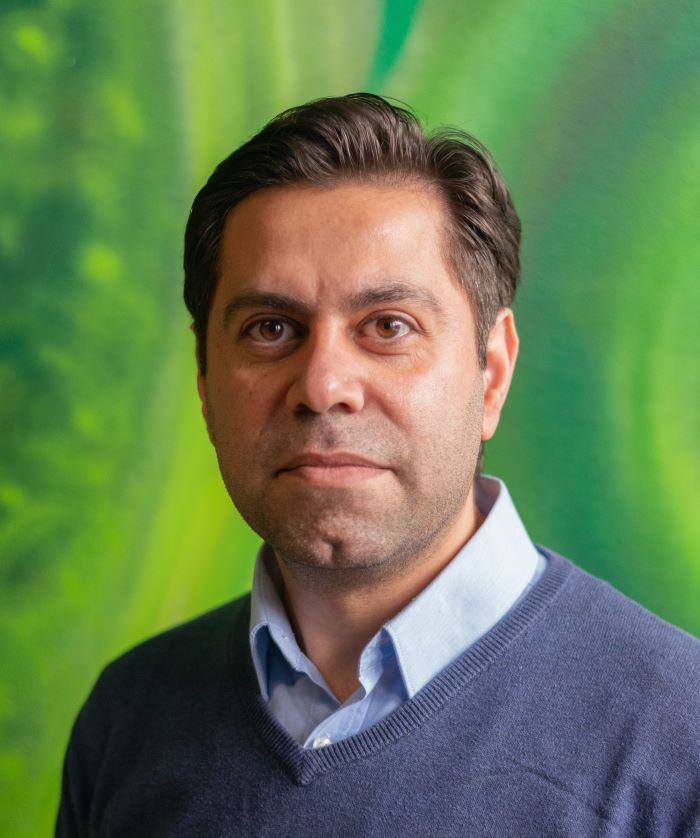
Dr. Ali Najafzadeh is a Researcher at the Joint Glass Centre (Vitrum Laugaricio – VILA), affiliated with Alexander Dubček University of Trenčín in Slovakia. His work focuses on advanced ceramic materials, composites, and high-temperature applications. He actively participates in multiple national and international research projects and has established collaborations with institutions across Europe. Dr. Najafzadeh's educational background includes: PhD in Materials Science and Engineering from Semnan University, Iran (2015) MSc in Composite Materials Engineering from MUT, Tehran, Iran (2009) His primary research interests center around layered ceramics, eutectic materials, mechanical characterization, and advanced processing techniques. Dr. Najafzadeh specializes in developing innovative ceramic composites with enhanced mechanical properties for high-temperature applications. His work bridges fundamental materials science with practical engineering solutions, particularly in the areas of gel-casting processes and nanoindentation-induced deformation analysis. He applies finite element simulation to understand complex mechanical behaviors in brittle materials. Dr. Najafzadeh's publication record demonstrates consistent contributions to the field of advanced ceramics, with a focus on transparent ceramics, eutectic systems, and refractory composites. His research shows an evolution from fundamental studies of W-ZrC composites toward more sophisticated multi-layer ceramic designs and high-temperature applications. Recent work emphasizes translucency, mechanical robustness, and novel fabrication techniques like spark plasma sintering. His scientific achievements include: JECS TRUST programme at Montanuniversität Leoben, Austria (2023) Short-term training at Universidad de Sevilla, Spain (2022) Research Fellow at Institute of Materials Research, Slovak Academy of Sciences (2019-2020) National Scholarship Program of the Slovak Republic (2019) Top Ph.D. student at Semnan University, Iran (2015) Dr. Najafzadeh serves as Principal Investigator for the NextGenerationEU project "Design, analysis and mechanical characterization of laminar ceramics" (2024-2026) and has contributed to numerous other significant grants including Horizon 2020, APVV, and VEGA projects. His teaching responsibilities include doctoral courses in colloidal chemistry and colloidal systems. He is an active member of several professional societies including the European Ceramic Society, American Ceramic Society, Slovak Silicate Society, and Slovak Glass Society. Dr. Najafzadeh collaborates with research teams across Europe through the FunGlass Centre, which includes partners from Friedrich-Alexander Universität Erlangen-Nürnberg, Friedrich-Schiller-Universität Jena, Consejo Superior de Investigaciones Científicas, and Università degli Studi di Padova. His work contributes to the Centre's mission of advancing functional and surface functionalized glass technologies.
Virginia Marano is an art historian and curator currently serving as an associate scholar in the Lise Meitner Group "Coded Objects" at the Kunsthistorisches Institut in Florenz – Max-Planck-Institut. She also holds significant affiliations with the University of Zurich, where she co-directs the research project "Rethinking Art History through Disability," and has been appointed Junior Research Fellow at the Karlsruhe Institute of Technology (KIT) starting in January 2026. Her academic journey includes a PhD in art history from the University of Zurich, supported by an ESKAS doctoral scholarship (2018-2021) and a FAN Grant (2021), followed by a SNSF Doc.Mobility fellowship at Hunter College/CUNY in 2022. She has also served as a Research Fellow at the Fondazione Giorgio Cini in Venice working on the PNRR-PEBA project for the Removal of Physical, Cognitive, and Sensory Barriers in Cultural Sites, funded by the NextGenerationEU program. Marano's research interests span multiple interdisciplinary areas: Gender and feminist theories in contemporary art Exile studies Critical disability studies and crip theory Disability aesthetics and access intimacy Decentralized exhibition making Sensory studies and embodied knowledge Her scholarly work examines how access functions as a critical space for rethinking relationships between art, science, and technology. Rather than approaching accessibility as a fixed or technical matter, she investigates it as an open process marked by uncertainty, experimentation, and care that exposes ableist structures in cultural and technological systems. Her research-based curatorial practice, grounded in intersectional feminist theory, develops methods of decentralization and shared inquiry, seeking to build connections between humanities and design practice. Her recent publications explore disability representation in art history, the intersection of medical humanities and artistic practice, and the reevaluation of artistic norms through feminist and disability perspectives. Among her notable achievements: ESKAS doctoral scholarship (2018-2021) FAN Grant (2021) SNSF Doc.Mobility fellowship (2022) Research Fellow at Fondazione Giorgio Cini (2023) Appointment as Junior Research Fellow at KIT (2025) As a curator and educator, Marano has organized numerous conferences, workshops, and symposia focused on disability, art, and access. She has taught courses at the University of Zurich on topics including exiled women artists and the intersection of care, disability, and art. Her current curatorial projects include "David Weiss. Il Sogno di Casa Aprile. Carona 1968–1978" at MASI Lugano and "Ear to the Ground" at Fondazione Centro Giacometti, demonstrating her commitment to making art accessible and inclusive.
Stefano Rozzoni, PhD, serves as a Postdoctoral Research Fellow and Lecturer at the University of Bergamo, Italy, within the Department of Foreign Languages, Literatures, and Cultures. Previously, he held a Postdoctoral University Assistant position at the University of Graz, Austria. His academic foundation includes dual PhDs: one in 'Transcultural Studies in Humanities' from the University of Bergamo and another in 'Literary and Cultural Studies' (cotutelle) from Justus-Liebig-University Giessen. Rozzoni's research spans multiple intersecting fields with a primary focus on environmental narratives in Anglophone literature and culture. His work examines 20th century literary movements including Georgian Poetry and Modernist British literature, with particular attention to the Bloomsbury Group, Virginia Woolf, and Vita Sackville-West. He investigates how environmental themes manifest across diverse media forms including movies, theatre, memes, and video games, with special interest in pastoral traditions, Franciscanism, urban/rural spaces, and ecofascism. A central pillar of his scholarship is posthumanism, which he explores through the Italian Posthuman Network (Rete Posthuman Italiana), which he co-founded. His current research intersects Environmental Humanities and Digital Humanities to study contemporary pastoral manifestations. Rozzoni's publication record demonstrates significant engagement with environmental philosophy and posthuman thought, with numerous recent articles published in 2024-2025. His work shows a clear trajectory examining human-nonhuman relationships through literary and cultural lenses, with particular emphasis on Francis of Assisi's ecological legacy, digital environments like Minecraft, and responses to the Anthropocene. His scholarship bridges theoretical frameworks with practical applications, as evidenced by his empirical study on air pollution narratives in educational contexts. As Principal Investigator of the 'NEST Research Network. Narratives in Environmental and Sustainable Transitions' funded by the European Union (NextGenerationEU) and the Italian Ministry of University and Research, Rozzoni leads significant research initiatives at the intersection of environmental studies and literary scholarship. His work on the Economy of Francesco project demonstrates his ability to connect literary analysis with economic discourse, particularly regarding Franciscan philosophy's influence on contemporary thought.