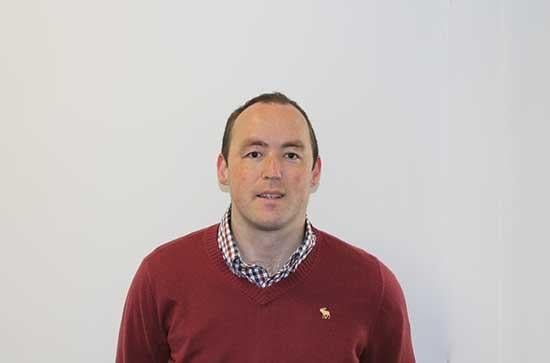
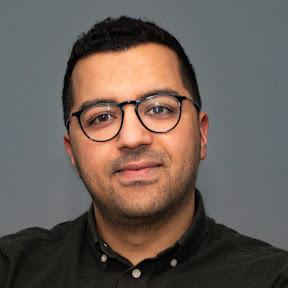
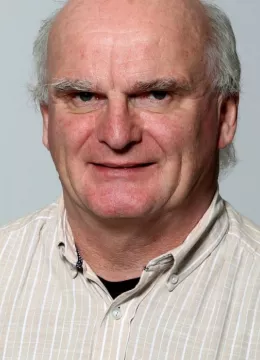
Kashif Naseer Qureshi is an Associate Professor in the Department of Electronic and Computer Engineering at the Faculty of Science and Engineering, University of Limerick, Ireland. His research focuses on the intersection of artificial intelligence, healthcare systems, blockchain technology, and wireless communication networks. His recent work explores: AI-driven healthcare architectures (tri-tier models, distributed networks) Blockchain applications in medical and smart city systems Advanced machine learning techniques for data imbalance problems Edge computing security and privacy frameworks Next-generation AI language models with ethical considerations Publications demonstrate a strong emphasis on practical implementations across IoT, cybersecurity, and smart infrastructure domains. His email contact is KashifNaseer.Qureshi@ul.ie .
Dominika Capkova is a Researcher in the Department of Chemical Sciences at the University of Limerick. Her research focuses on advanced battery technologies with particular expertise in lithium-sulfur batteries and electrochemical energy storage systems. She has established herself as a prominent researcher in the field of battery materials with numerous publications spanning from 2018 to 2025. Her research interests center around electrochemistry and materials science with specific focus on lithium-sulfur battery technology , metal-organic frameworks for energy storage , and machine learning applications for battery performance prediction . Her work addresses critical challenges in battery technology including the polysulfide shuttle effect, cathode material design, and state-of-charge/state-of-health estimation. An analysis of her recent publications reveals a strong trend toward integrating machine learning techniques with electrochemical battery research . Her work spans fundamental materials development (metal-organic frameworks, sulfur cathodes) to applied aspects (battery management systems, degradation modeling). The interdisciplinary nature of her research combines chemistry, materials science, and computational methods to advance next-generation energy storage solutions. Dr. Capkova has actively collaborated with researchers across multiple institutions, as evidenced by her co-authorship on numerous publications. Her research output shows consistent growth, with increasing publication counts from 2018 to 2022, demonstrating her active engagement in the field. While specific grant information isn't detailed in the provided text, her extensive publication record suggests successful funding acquisition to support her research activities. Her work appears to be conducted within research groups focused on advanced battery materials and electrochemical energy storage systems , with particular emphasis on solving the technical challenges associated with lithium-sulfur battery technology. The collaborative nature of her publications indicates she works within multidisciplinary teams addressing various aspects of battery technology development.
John Dooley is an Assistant Professor in the Department of Electronic Engineering at Maynooth University , Ireland. He also serves as the Programme Director for the BE/ME Electronic Engineering program. He is a Principal Investigator on the ORCHESTRA-6G project, funded by Science Foundation Ireland (SFI), and a Funded Investigator in the SFI CONNECT Centre for Telecommunications and the SFI ADVANCE Centre for Research Training . Education: Ph.D. in Electronic Engineering, University College Dublin, 2008 Research Focus: Dr. Dooley’s research spans digital signal processing , spectrally efficient modulation schemes , and applications to high-frequency circuits . His work has significantly impacted power efficiency optimization in wireless communication devices and networks, particularly in digital compensation techniques for mmWave terrestrial and satellite systems . His recent focus includes 6G wireless technologies and next-generation modulation techniques . Publications Trends: His research output reflects a strong emphasis on nonlinear system modeling , power amplifier linearization , and digital predistortion techniques . The articles span from RF circuit design to system-level optimization in wireless communications, with a clear trajectory toward 5G and 6G applications . Grants & Affiliations: Principal Investigator, ORCHESTRA-6G , SFI Frontiers for the Future Grant Funded Investigator, SFI CONNECT Centre for Telecommunications Funded Investigator, SFI ADVANCE Centre for Research Training Labs & Teams: Dr. Dooley is affiliated with the Hamilton Institute at Maynooth University, a multidisciplinary research institute focused on applied mathematics and communications systems. His work also intersects with the Radiospace research group, which explores advanced wireless technologies.
Paolo Palmieri serves as a Lecturer in Cyber Security at University College Cork (UCC) and a Funded Investigator at CONNECT, the SFI Research Centre for Future Networks and Communications. He additionally holds roles as a Funded Investigator in Insight (SFI Research Centre for Data Analytics) and Supervisor for the SFI Centres for Research Training (ADVANCE and AI), while maintaining an External Affiliate position at the University of Bologna's Smart City Lab. His academic foundation includes a PhD in Cryptography from Université catholique de Louvain (UCLouvain), Belgium (2013), preceded by lecturing positions at Bournemouth and Cranfield Universities in the UK and postdoctoral research at Delft University of Technology in the Netherlands prior to joining UCC in 2017. Dr. Palmieri's research centers on cryptographic protocols for privacy and security , with pioneering contributions in secure multi-party computation on communication delays, homomorphic encryption, and location privacy systems. His location privacy protocols are actively deployed in satellite monitoring and smart transportation applications. He chairs two major international workshops: Malicious Software and Hardware in Internet of Things (Mal-IoT) and the Location Privacy Workshop (LPW) , demonstrating leadership in specialized cryptographic communities. Analysis of his 2024-2025 publications reveals a strong trajectory toward practical cryptographic implementations addressing critical infrastructure needs. Key thematic clusters include quantum-safe authentication for industrial control systems, health data privacy frameworks (particularly for ECG data), blockchain security for e-auctions and healthcare systems, and VANET security protocols. His work consistently bridges theoretical cryptography with real-world challenges, notably through empirical evaluations of differential privacy effectiveness and privacy-preserving machine learning architectures. As a research leader, he serves as Principal Investigator and co-Investigator for multiple projects funded by Science Foundation Ireland (SFI), Enterprise Ireland, and the Disruptive Technologies Innovation Fund. His supervision extends through the SFI Centres for Research Training (ADVANCE and AI), where he mentors next-generation cybersecurity researchers in data analytics and artificial intelligence applications. He maintains extensive international collaborations spanning over 10 countries, anchored by his External Affiliate role at the University of Bologna's Smart City Lab. His work within CONNECT and Insight research centres positions him at the forefront of Ireland's national cybersecurity research infrastructure, with growing influence in European health data privacy initiatives through the European Health Data Space framework.
Mohammed Amine Togou is an Assistant Professor in the School of Computing within Dublin City University's Faculty of Engineering and Computing. His research specializes in performance optimization and protocol design for next-generation networks including 5G/6G systems, SDN/NFV architectures, and blockchain-enabled solutions. With PhD in Computer Science from University of Montreal and MSc in Computer Networks from Al Akhawayn University, he has published over 40 peer-reviewed papers. Current research develops machine learning solutions for network management challenges including: interference mitigation in O-RAN architectures, adaptive streaming for immersive media, and blockchain-based network slicing. He serves as guest editor for Electronics journal's special issue on 5G Technology and IoT, and supervises PhD students in network optimization and distributed computing. Teaching responsibilities include distributed systems and network security courses, with pedagogical research on technology-enhanced learning methods in computing education.
Elfed Lewis is a Professor in the Department of Electronic and Computer Engineering at the University of Limerick's Faculty of Science and Engineering. He serves as Director of the Optical Fibre Sensors Research Centre (OFSRC) and is a member of both the Limerick Digital Cancer Research Centre and the Optical Fibre Sensors Research Centre. With over 28 years of academic leadership since joining University of Limerick in 1996, Professor Lewis has established himself as a world-renowned researcher in optical fiber sensing technologies, with more than 200 journal papers and 150 conference contributions. Professor Lewis earned his BEng (Hons) in Electrical and Electronic Engineering from Liverpool University in 1981 and completed his PhD from the same institution in 1987. His doctoral research focused on high-speed photography and spectroscopy of electric circuit breaker arcs during the current zero phase. Prior to joining UL, he worked with BICC Telecom Cables and established a research group at Liverpool John Moores University. Professor Lewis's research spans Optoelectronics, Neural Networks, Optical Fibre Sensors, and Advanced Sensors and Instrumentation , with significant applications in medical physics (particularly radiation dosimetry for cancer treatment), environmental monitoring, and industrial sensing. His research fingerprint shows dominant activity in Fiber Optics Engineering (100%), Fiber Optic Sensor Engineering (69%), and Glass Fiber Material Science (50%). His recent publications (2024-2025) demonstrate a clear focus on applying optical fiber sensor technology to solve critical challenges in radiotherapy dosimetry, with particular attention to FLASH radiotherapy, small-field radiation measurements, and real-time dose monitoring systems. The research trajectory shows increasingly sophisticated sensor designs capable of multi-parameter measurements with high precision for clinical applications. Institute of Measurement and Control Finkelstein Award for excellence in International Research (2024) University of Limerick President's Research Excellence Impact award (2023) University of Limerick Special Achievement in Research Award (2005) Fulbright Scholar (2008) Distinguished Lecturer for IEEE Sensors Council (2013-2015) Vice President for Technical Operations for the IEEE Sensors Council (2017-2019) Vice President of International Society of Sensing Technology (2025) Fellow of Institute of Physics, IET, and Royal Society of Chemistry Senior member IEEE Professor Lewis actively supervises PhD students and has secured substantial research funding supporting his work. He has organized major international conferences including IEEE Sensors 2011, EWOFS 2016, IEEE World Forum on Internet of Things (2019), and Sensors and Applications Conference 2024. His leadership extends to editorial roles and professional society governance. As Director of OFSRC, Professor Lewis leads a multidisciplinary team focused on advancing fiber optic sensing technologies with strong collaborations with medical institutions for cancer treatment applications and industrial partners. Current projects emphasize development of next-generation sensors for precision medicine, particularly in radiation oncology, contributing to UN Sustainable Development Goals related to health, industry innovation, and clean water.
Professor Geraldine Butler is a Full Professor in the School of Biomolecular and Biomedical Science at University College Dublin and a Principal Investigator at the Conway Institute. Her research focuses on fungal pathogenesis, particularly Candida species, using next-generation sequencing, comparative genomics, and CRISPR-Cas9 gene editing to study evolution, virulence, and drug resistance mechanisms. She developed the Candida Gene Order Browser (CGOB) and contributed to antifungal resistance frameworks. Education: BA (Mod) and PhD in Genetics from Trinity College Dublin Key Roles: Section Editor, PLoS Genetics; Academic Editor, mSphere; Chair, ISAB, MRC Centre for Medical Mycology Her work spans from basic fungal genomics to clinical translational research, with significant grants from Wellcome Trust, Science Foundation Ireland, and Horizon 2020. She pioneered undergraduate research modules in yeast isolation and genome sequencing and directed the Wellcome-funded Computational Infection Biology PhD program. Scientific Recognition: Fellow of the Society of Biology (2011) Member of the Royal Irish Academy (2015) Chair, International Scientific Advisory Board (MRC Centre for Medical Mycology) Notably, her lab identified CRISPR-Cas9-induced loss of heterozygosity and novel resistance mechanisms in Candida species. The Butler group participated in the Horizon 2020 OPATHY International Training Network.
Kapal Dev is an Assistant Professor at the Department of Computer Science, Munster Technological University (MTU), Ireland, where he has been serving since 2021. He also holds the position of Funded Investigator at CONNECT, Trinity College Dublin, one of Europe's top research centers funded by Science Foundation Ireland. Previously, he was a Postdoctoral Research Fellow with the CONNECT Centre at Trinity College Dublin and worked as a 5G Junior Consultant and Engineer at Altran Italia S.p.A. in Milan, Italy. Dr. Dev's research focuses on Wireless Networks, Security and Privacy, Agentic AI, and Industry 5.0 applications. His work centers on designing effective and efficient communication network protocols for 5G and 6G networks, with emphasis on computational complexity reduction and energy efficiency improvements. His research also addresses data and model privacy preservation, which is increasingly critical with the proliferation of AI services. His recent publications demonstrate strong trends in next-generation wireless networks, particularly 6G systems, UAV communications, federated learning, quantum networking, and AI security applications. His work bridges theoretical innovation with practical implementations for industry 4.0/5.0 applications. Dr. Dev has received numerous prestigious awards including the IEEE ComSoc EMEA Outstanding Young Researcher 2022, The Tom Brazil Excellence in Research Award 2023, and membership in the Global Young Academy (GYA) 2024 (top 45 researchers worldwide). He has also been recognized with the Best workshop Paper award at IEEE WCNC 2024 and the IEEE CTSoc CCN TC Outstanding Service Award 2024. IEEE ComSoc EMEA Outstanding Young Researcher 2022 The Tom Brazil Excellence in Research Award 2023 Global Young Academy (GYA) 2024 membership Best workshop Paper award at IEEE WCNC 2024 IEEE CTSoc CCN TC Outstanding Service Award 2024 2022 Irish Research Council Research Ally Prize Dr. Dev has supervised more than 25 master's and PhD students and secured over €1.5 million in research funding as Principal Investigator for Horizon Europe MSCA Staff exchange, Erasmus+ International Credit Mobility, and Capacity Building for Higher Education projects. He actively contributes to standardization efforts as a working group member of P1954 and serves as founding chair of the IEEE ComSoc special interest group on Industrial Communication Networks. His editorial service spans numerous high-impact journals including IEEE Transactions on Communications and Nature Scientific Reports.
Bruno M. Xavier serves as an Associate Professor in the Department of Information Systems at the Federal Institute of Espirito Santo, Campus Cachoeiro de Itapemirim, Brazil, while concurrently working as a Research Assistant at Trinity College Dublin's CONNECT Centre on 4G/5G network optimization projects. He is pursuing his Ph.D. in Computer Science at the Federal University of Espirito Santo through collaboration with the Núcleo de Estudos em Redes Definidas por Software Lab. His educational background includes: Doctor of Philosophy (Ph.D.) in Computer Science (in progress), Federal University of Espirito Santo Dr. Xavier's research integrates artificial intelligence with telecommunications infrastructure, specializing in machine learning applications for software-defined networking (SDN) and programmable data planes. His work focuses on AI-Driven Network Customization techniques to enhance 4G/5G network performance, aiming to develop adaptive communication systems through algorithmic optimization of network resources and traffic management. He maintains active research affiliations with the Núcleo de Estudos em Redes Definidas por Software Lab (Software Defined Networks Research Lab) at the Federal University of Espirito Santo and the CONNECT Centre at Trinity College Dublin, contributing to next-generation network optimization initiatives. No information is available regarding scientific awards, student advising activities, or research grant funding.
Dr. Haider Al-Juboori serves as a Lecturer in the Department of Electronic Engineering and Communications at South East Technological University (SETU). With a distinguished academic background including dual PhDs in Optoelectronics Engineering Systems and Ultra-Fast Dynamics, he brings over 15 years of research experience in advanced optical technologies. His educational journey includes a BSc (1st Hons), MSc, and PhD from Nahrain University in Baghdad (1996-2005), followed by a second PhD from University College Dublin and RWTH Aachen University (2016-2020). Prior to his current position, he conducted postdoctoral research at Deutsches Elektronen-Synchrotron (DESY) and the German Aerospace Centre (DLR) in Germany. Dr. Al-Juboori's research spans multiple cutting-edge domains including optoelectronics, laser system engineering, EUV/X-ray technologies, quantum computing education, and augmented reality applications. His work significantly contributes to UN Sustainable Development Goals, particularly in education and technological advancement. His research fingerprint reveals strong expertise in plasma physics (both blood plasma and laser-produced plasma), engineering education, nanosecond technologies, plasma plume dynamics, and laser beam applications. His recent publications demonstrate a clear trend toward interdisciplinary research combining laser technologies with environmental applications, satellite communications, and quantum computing education. The 2025-2024 publications particularly highlight his focus on AI-powered environmental monitoring using Laser-Induced Breakdown Spectroscopy, atmospheric turbulence effects on satellite communications, and essential competencies for the emerging quantum industry. Dr. Al-Juboori maintains active professional engagement as Chair of multiple international networks including CA22148 (NEXT) and CA19110 (PlAgri), and as a member of The Society of Photo-Optical Instrumentation Engineers. His recent activities include participation in the 22nd IFAC Conference on Technology, Culture and International Stability (2024) and a visiting research position at Institut Supérieur d'Electronique de Paris-ISEP (April-May 2024). As an educator certified in PRINCE2 project management and Six Sigma methodologies, he integrates professional project management expertise with academic instruction, focusing on developing disruptive technologies in augmented reality applications and quantum computing education techniques.
Jai Prakash Mehta is a Lecturer in the Department of Applied Sciences at South East Technological University (SETU). He holds a PhD in Molecular and Computational Biology from Dublin City University (2010), focusing on gene expression analysis in breast cancer. His research integrates systems biology, next-generation sequencing, and machine learning to study cancer drug resistance mechanisms, particularly in HER2-positive breast cancer. Education: PhD in Molecular and Computational Biology, Dublin City University (2010) Research Interests: His work centers on biomarker discovery for personalized medicine, systems biology approaches to cancer, and machine learning applications in genomics. Key areas include miRNA regulatory networks, drug resistance pathways, and sustainable agricultural solutions using microbial products. Research Trends: Recent publications highlight his focus on miRNA-based biomarkers for targeted therapies, systems biology-driven drug discovery in neuroblastoma, and sustainable pest management strategies for crops like potatoes. His work spans oncology, computational biology, and interdisciplinary applications of AI in life sciences. Collaborations: Active collaborations include projects at Conway Institute, Systems Biology Ireland (UCD), and enviroCORE. Research networks involve global studies on cancer biology and agricultural microbiology. Labs/Teams: Associated with enviroCORE, a multidisciplinary research group addressing environmental and health challenges through technological innovation.
Prof. Gabriel-Miro Muntean is a Professor at the School of Electronic Engineering, Dublin City University (DCU), Ireland. He holds a Ph.D. (2003) from DCU and B.Eng./M.Sc. degrees in Software Engineering from Politehnica University of Timisoara, Romania. He co-directs the DCU Performance Engineering Laboratory and is a Principal Investigator with Insight and Lero National Research Centres. His research focuses on multimedia networking, wireless/energy-aware communications, and technology-enhanced learning. Education: B.Eng. Software Engineering (Politehnica University of Timisoara, 1996) M.Sc. Software Engineering (Politehnica University of Timisoara, 1997) Ph.D. Electronic Engineering (DCU, 2003) Research Interests: Quality-oriented adaptive multimedia streaming Energy-efficient networking Personalized learning technologies 5G/6G network architectures Edge computing optimization Publications & Grants: Over 450 papers, 4 books, and 26 book chapters (H-index=53) EU Horizon 2020 projects: Coordinator of NEWTON, Lead in TRACTION Awards: IEEE Fellow (202X) IEEE Broadcast Technology Society Fellow Advising & Labs: Supervised 25 PhD students and 15 postdocs Co-director of DCU Performance Engineering Lab
Professor Dirk Pesch is a faculty member at the School of Computer Science and Information Technology , University College Cork. His research focuses on Internet of Things (IoT) , Cyber-Physical Systems , and Smart Manufacturing , with applications in Smart Communities , Health & Wellbeing , and Industrial Automation . As Director of the SFI Centre for Research Training in Advanced Networks for Sustainable Societies and Co-Principal Investigator of the CONNECT Centre , he leads large-scale research initiatives. He has secured over €80M in research funding and authored 250+ scientific publications. His leadership in the Cork Smart Gateway initiative and founding of the Nimbus Research Centre highlight his industry-focused impact. His recent work explores 5G/6G integration with Time-Sensitive Networking (TSN) , machine learning for loneliness detection , and interoperability solutions for IoT ecosystems . He contributes to international conferences as Technical Programme Co-Chair (IEEE SmartComp 2024) and General Chair (IEEE SmartComp 2025).
Professor Cormac Sreenan is a full professor in the School of Computer Science and Information Technology at University College Cork (UCC), where he has been a faculty member since 1999. He served as Head of School from 2019-2021 and previously as Head of Department during 2015-2018 and 2000-2004. Prior to joining UCC, he conducted research at AT&T Labs and Bell Labs in New Jersey, USA. Ph.D. from University of Cambridge Computer Laboratory Member of Christ's College, Cambridge Academic lineage traces to computing pioneer Maurice Wilkes Professor Sreenan leads the Mobile & Internet Systems Lab (MISL), focusing on mobile and multimedia networking. His research spans wireless sensor networks, next generation computer networks, wireless mesh networks, and multimedia networking & systems, with specialist expertise in adaptive video streaming. With over 200 peer-reviewed publications and 9 patents, his work bridges theoretical research with practical applications in industry. His recent publications (2024-2025) demonstrate continued innovation in 5G networks, time-sensitive networking, and machine learning applications for network optimization. These works address critical challenges in industrial IoT, smart factories, and next-generation communication systems. Fellow of the British Computer Society (2005) Fellow of the Irish Academy of Engineering (2022) 9 granted patents Professor Sreenan has advised over 30 PhD and postdoctoral researchers through his lab, with significant industry impact through technology transfer, collaboration with Irish companies, and licensing of research outputs. He has served as an expert witness in telecoms, mobile networks, and IoT, and has extensive experience as an External Examiner for degree programs at leading international institutions. The Mobile & Internet Systems Lab under Professor Sreenan's leadership has developed innovative solutions for emergency response networks, adaptive video streaming, and IoT applications, with funding from Science Foundation Ireland, Enterprise Ireland, Horizon 2020, and other agencies. The lab's research has substantial real-world applications in smart cities, industrial automation, and next-generation communication systems.
Dr. diarmuid Ó Briain is Head of the Department of Electronic Engineering and Communications at South East Technological University (SETU), with prior academic roles at Technological University of the Shannon (TUS) and Makerere University. He is a Chartered Engineer with over 30 years of experience in telecommunications, networking, and cybersecurity, transitioning into full-time academia in 2015 while maintaining continuous lecturing roles. His leadership spans academic management and curriculum development, particularly in engineering and apprenticeship programmes. MA in Teaching and Learning, South East Technological University (2022) PhD in Telecommunications (2019) MSc by Research in Telecommunications (2011) BSc (Hons) in Computer Networking (2005) Graduateship and Membership, City and Guilds Institute National Certificate in Telecommunications Technician (1997) His research is centered on cybersecurity in industrial control systems (ICS), with a strong emphasis on testbed development, cyber-physical system security, and network virtualization technologies. He actively investigates the impact of cyberattacks on critical infrastructure, using emulated and virtual testbeds to model advanced threats. His work bridges theory and industry practice, drawing from his extensive background in multinational communications firms. The recent publications (2022–2024) reflect a consistent focus on ICS security, including the use of the MITRE ATT&CK framework, PLC vulnerability analysis, and comprehensive testbed design. These works are predominantly published in IEEE conference proceedings and peer-reviewed journals, showcasing a collaborative research approach with colleagues and students. Dr. Ó Briain supervises PhD candidates, including Andrew Ocaka and Charles Ekisa, and is involved in academic leadership and pedagogical development. His upcoming invited talk on the PhD supervisor-supervisee relationship highlights his commitment to graduate education and mentorship. While no formal awards are listed, his h-index of 33 indicates significant scholarly impact. He leads research activities within the engCORE research group at SETU, focusing on applied engineering solutions and cybersecurity innovation. His work supports the development of secure, next-generation industrial networks and contributes to national and international discourse on cyber resilience in critical systems.