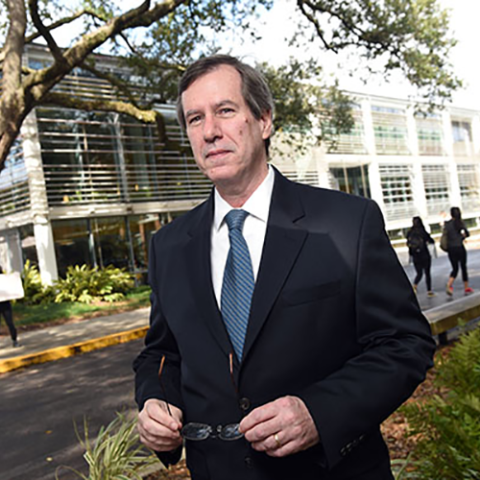
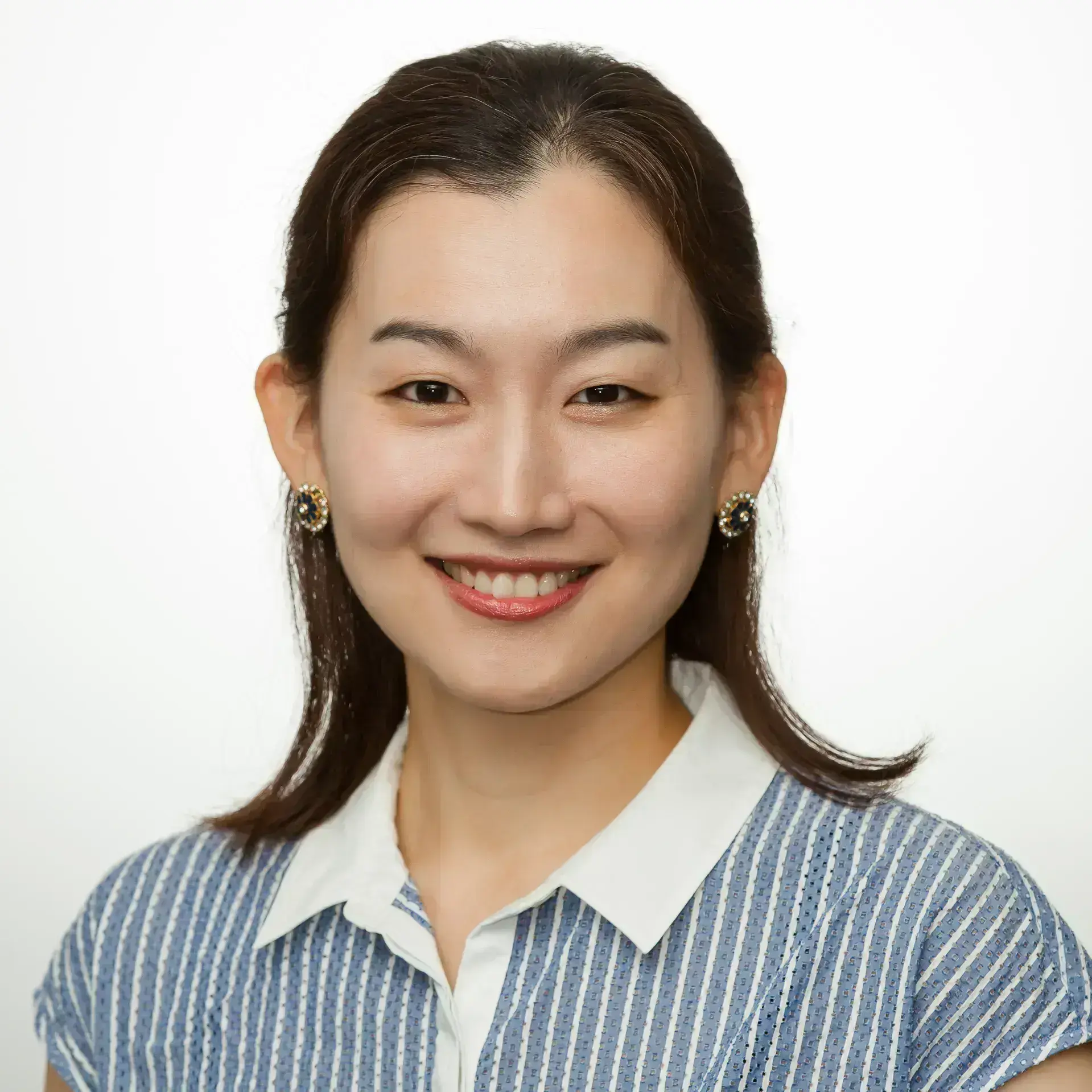
Mark CHRISTENSEN is a Professor in the Accounting and Management Control Department at ESSEC Business School, Singapore , where he has worked since 2016. His career spans academia, public sector work, and consultancy. Holding a PhD from The University of Adelaide and a BA (Hons) from Macquarie University , his research explores accounting as a socio-technical construction , with a focus on public sector accrual accounting , performance reporting , and consultancy roles in accounting change . He has held academic appointments at institutions including the University of New South Wales, Copenhagen Business School, and Hokkaido University, and has been a visiting scholar at the University of Nordland and Nanzan University. Research Interests include public sector accounting reforms , environmental sustainability in accounting , and audit as an instrument of blame . His work addresses global accounting trends , epistemic communities , and power dynamics in budget processes , often through comparative international studies . Recent publications examine animal welfare accounting , neocolonial research practices , and accountants’ portrayals in popular culture . Professional Contributions include serving on the editorial boards of the Accounting, Auditing & Accountability Journal and Financial Accountability and Management , organizing conferences like the 10th Australia-Pacific Colloquium on Qualitative Research Methods , and delivering keynotes at international events such as the 15th International Conference on Business & Management . He has reviewed for over 15 journals and participated in global research networks.
Professor Steve Simpson is a leading marine biologist and fish ecologist at the University of Exeter's Biosciences department. He serves as Professor of Marine Biology & Global Change and leads a dynamic research group focused on understanding marine ecosystems, particularly in the context of climate change and human impacts. His work has been prominently featured in Blue Planet II and he actively engages with industry, policy makers, and the public through media appearances and outreach activities. Education PhD, University of York, UK (2000-2004) MRes Marine & Coastal Ecology & Environmental Management, University of York, UK (1998-1999) BSc Marine Biology (Hons), University of Liverpool, UK (1995-1998) Professor Simpson's research centers on the behavior of coral reef fishes, bioacoustics, and the effects of climate change on marine ecosystems. His approach uniquely combines fieldwork in remote environments with laboratory experiments, data-mining, and computer modeling. He has pioneered new methods for listening to ocean soundscapes and understanding fish communication, revealing how anthropogenic noise disrupts natural behaviors and ecological processes. His work on climate change impacts examines shifting fish distributions and their implications for fisheries management and conservation. Analysis of Simpson's recent publications reveals two dominant research themes: the impacts of anthropogenic noise on marine life and climate change effects on fisheries. His work demonstrates how underwater noise from boats and industrial activities impairs fish hearing, disrupts predator-prey relationships, and affects reproductive success. Simultaneously, his climate change research tracks how warming seas are altering fish distributions, creating 'mackerel wars' and requiring fisheries adaptation. These research strands converge in his innovative work on developing solutions like bubble curtains to mitigate noise impacts. Scientific Awards FSBI Medal (2016) NERC Knowledge Exchange Fellowship (2011-2014) NERC Postdoctoral Research Fellowship (2004-2007) Royal Society International Fellow (2007-2008) EPHE Postdoctoral Fellow (2007-2008) Professor Simpson leads a thriving research group of approximately 10 postdocs, PhD, and Masters students. His grant portfolio includes major NERC funding for projects on marine noise impacts and climate change effects on fisheries. He has developed strong industry partnerships through a Knowledge Exchange Fellowship, working with Cefas, the Met Office, Sustainable Marine Energy Ltd, and HR Wallingford Ltd. His research has directly informed policy through contributions to Marine Climate Change Impacts Partnership reports and presentations to European Parliament. Simpson has also created innovative knowledge exchange initiatives including the 'Vision of Sustainable Fisheries in 2050' thinktank. Simpson has developed specialized research infrastructure including a mobile lab with Ecocean in Montpellier for assessing marine noise impacts, and has conducted large-scale acoustic experiments in dry docks. His work on underwater acoustics was prominently featured in Blue Planet II, and he maintains active engagement with media through TEDx talks, BBC appearances, and public lectures to schools and community groups. He serves on the International Quiet Ocean Experiment Science Committee, helping shape global research on ocean noise.
Stuart Carroll is an Associate Professor of Elementary Education and Co-Chair of the Department of Elementary and Early Childhood Education at The College of New Jersey's School of Education. He also serves as Faculty Director of Global Graduate Programs, demonstrating his commitment to international education experiences. Dr. Carroll earned his Ph.D. in Teaching and Curriculum from Syracuse University (1999), an MEd in Teaching ESL from Trenton State College (1995), a Bed in Elementary Education from the University of Manitoba (1987), a J.D. from the University of Manitoba (1983), and a B.A. in History from the University of Manitoba (1981). Carroll's research focuses on inclusive education, particularly for students with intellectual disabilities, teacher preparation programs, global education experiences, and ESL teaching methods. His work examines how preservice teachers develop through experiences with diverse learners, especially those with disabilities, and how these experiences shape their professional identities. He has extensively studied the impact of inclusive classroom experiences on teacher development and has developed innovative approaches to teacher education that emphasize compassion and care, particularly in the post-pandemic educational landscape. His recent publications show a clear trajectory toward examining teacher preparation in challenging contexts, including the Ukrainian refugee crisis and pandemic recovery. His work consistently emphasizes the importance of inclusive practices, compassionate teaching, and global perspectives in teacher education. Dr. Carroll has received numerous honors including The College of New Jersey School of Education's Teacher of the Year (2015) and the Northeastern Association of Graduate Schools Graduate Teaching Award (2007). The College of New Jersey School of Education's Teacher of the Year (2015) Northeastern Association of Graduate Schools Graduate Teaching Award (2007) Dissertation award, Syracuse University (1999) Berj Harootunian Award for Outstanding Dissertation Proposal (1997) Carroll has coordinated the MAT Program (2002-2008) and the Global Student Teaching Program (2001-2007), demonstrating his leadership in teacher preparation. He has secured significant grant funding including a $96,000 grant from the Developmental Disabilities Council of the State of New Jersey (2008-2009) and participation in a federal TPSID grant with Bergen Community College (2018-2019). His service includes numerous committee memberships related to faculty excellence, certification, departmental awards, and curriculum development. Through his leadership of the Career and Community Studies Program and his extensive research on inclusive education, Carroll has established TCNJ as a leader in inclusive postsecondary education for students with intellectual disabilities. His work bridges theory and practice, creating meaningful opportunities for preservice teachers to learn alongside peers with disabilities.
Christian Anderson is an Associate Professor in the Department of Geography, Earth and Environmental Sciences at the University of Washington Bothell, affiliated with the School of Interdisciplinary Arts & Sciences. He holds a Ph.D. in Geography from the CUNY Graduate Center (2012), an M.A. in Culture, Globalization, and the City from Goldsmiths College, and a B.A. in Interdepartmental Studies from the University of Minnesota. His research bridges urban studies, human geography, cultural studies, and science and technology studies, focusing on everyday urban life, gentrification, commons-based practices, and participatory methods. He teaches courses such as Urban Geography and Planning, Science, Technology, and Society, and Institutions and Social Change. Anderson’s scholarship emphasizes place-based collaborative methods, including oral histories and geo-visual practices, to explore how ordinary practices intersect with larger structural forces. His 2020 book Urbanism without Guarantees examines gentrification in New York City, while recent work addresses 'smart' urbanism and inclusive municipal processes. He co-authored a research activity book with the Seattle Black Spatial Histories Institute and collaborates on projects like Wa Na Wari. His teaching philosophy centers critical pedagogy, encouraging students to interrogate power structures and engage in transformative praxis. Courses focus on human geography, spatial justice, and interdisciplinary research methods.
Anita Varma is an Assistant Professor in the School of Journalism and Media at the University of Texas at Austin. She leads the Solidarity Journalism Initiative at the Center for Media Engagement as a senior faculty research associate. Her work emphasizes solidarity in journalism, focusing on marginalized communities and ethical reporting practices. Varma chairs the Media Ethics Division of AEJMC and serves on boards of organizations like the Society of Professional Journalists and Press On. Varma holds a PhD in Communication from Stanford University, with a dissertation on solidarity in journalism awarded the Penn State Davis Ethics Award. Her research explores media ethics, solidarity reporting, and the role of journalism in social justice. She previously served as Assistant Director of Journalism & Media Ethics at Santa Clara University and a Visiting Lecturer at UC Berkeley’s School of Journalism. Her scholarly articles address antiracist journalism, empathy limitations in reporting, and solidarity as a news value. Varma advocates for journalism that actively engages marginalized voices and challenges systemic inequities, emphasizing public service and democratic accountability in media practices. Varma’s awards include the Penn State Davis Ethics Award for her dissertation, recognizing her groundbreaking work on humanizing techniques in journalism. Her articles consistently explore intersections between media practices and social justice, offering frameworks for ethical reporting that prioritize solidarity over traditional objectivity.
Prof. Jian Zhang is a Professor in the School of Electrical and Data Engineering at the University of Technology Sydney (UTS), specializing in computer vision, pattern recognition, and multimedia signal processing. He leads the Multimedia Data Analytics Lab at the Global Big Data Technologies Centre, focusing on agri-food sector applications such as livestock monitoring and AI-driven solutions for agricultural efficiency. Education : PhD, School of Information Technology and Electrical Engineering, University of New South Wales, 1999 MSc, The Flinders University of South Australia, 1994 BSc, East China Normal University, 1982 Research Interests : His work spans 2D/3D computer vision, large-scale image/video analytics, and cross-disciplinary projects in agriculture and remote sensing. He has pioneered AI systems for livestock counting, poultry welfare monitoring, and fish quality assessment, funded by organizations like Meat & Livestock Australia and Australian Eggs. Grants & Projects : Current projects include AI-based hen health monitoring ($5M+ funding since 2011) Collaborations with industry partners like Sydney Fish Market and Fremantle Port Students & Academic Leadership : Supervised 19 PhD graduates and 5 research fellows Recruiting new PhD candidates in computer vision and data analytics Labs & Teams : Director of the Multimedia Data Analytics Lab, collaborating with global experts through UTS's Distinguished Visiting Scholars program.
Chen Zhi is an Assistant Professor in the Department of Analytics and Operations at the NUS Business School, National University of Singapore, where he has been employed since July 2020. His academic work focuses on operational challenges in innovation-driven value chains, with particular expertise in new product development, innovation sourcing, AI economics, and wisdom of crowds methodologies. Dr. Chen received his Ph.D. in Management (Decision Sciences) from INSEAD (2014-2020) and his B.E. with First Class Honors in Industrial and Systems Engineering from the National University of Singapore (2009-2013). During his academic journey, he completed an overseas exchange at the Georgia Institute of Technology and a research internship at École Polytechnique in France. Chen's research spans two primary streams. The first addresses R&D phase challenges in new products, examining how firms can optimally design supplier bases and informational policies to procure innovation from suppliers, with recent focus on policy impacts on AI-based product development such as autonomous vehicles. The second stream investigates demand forecasting for new products, exploring how to aggregate diverse expert insights into consensus forecasts and quantify underlying uncertainty through obtained forecasts. His publication record demonstrates a strong trajectory in top-tier operations and management journals, with recent work appearing in Management Science, Manufacturing & Service Operations Management, and International Journal of Forecasting. Chen's research shows increasing focus on AI development challenges, uncertainty quantification in forecasting, and strategic approaches to innovation sourcing in complex technological environments. At NUS Business School, Chen teaches Managerial Operations and Analytics for the MBA program and Decision Analytics Using Spreadsheets for undergraduate students. Previously at INSEAD, he taught tutorials for Uncertainty, Data and Judgment, and Production and Operations Management courses.
Simeon Zahl is the Professor of Christian Theology at the Faculty of Divinity , University of Cambridge, and a Fellow at Jesus College. His work bridges historical and constructive theology, focusing on the Protestant Reformation, the Holy Spirit, and the role of affect and embodiment in Christian life. Education: BA in History and Literature, Harvard; PhD in Theology and Religious Studies, Cambridge. Prior roles: Junior Research Fellow, St John’s College, Oxford; Assistant Professor of Systematic Theology, University of Nottingham. His 2020 monograph The Holy Spirit and Christian Experience reinterprets pneumatology through affect theory and embodiment. Current research explores the theology of sin and its contemporary relevance, alongside projects integrating cognitive science and theological epistemology. Recent publications span topics like soteriological individualism, biotechnological ethics, and the affective dimensions of doctrinal formulation. He served as Principal Investigator for a Templeton World Charity Foundation-funded project on affect and knowledge-production in theology (2018–2022). Advises PhD students in systematic theology and religious studies. Active in interdisciplinary collaborations, particularly at the intersection of theology, philosophy, and cognitive sciences.
Philipp K. Masur is an Assistant Professor in the Department of Communication Science at Vrije Universiteit Amsterdam and Managing Director of the Digital Media and Behavior Lab. He holds a PhD in Social Sciences from the University of Hohenheim and has previously worked at the Universities of Mainz and Hohenheim. His research focuses on digital communication, social media impacts, privacy/self-disclosure dynamics, media literacies, and well-being, with a focus on behavioral contagion and open science practices. Education: PhD in Social Sciences (University of Hohenheim, 2018) MSc in Communication Science (Johannes Gutenberg University Mainz) Studies in Economic Sciences and Philosophy (Macquarie University Sydney) Research Interests: Interdisciplinary studies on social media's societal impact, leveraging survey, experimental, and computational methods. Key areas include privacy paradox, media literacy, and the role of social norms in online behavior. Awards: ICA Top Faculty Paper Award (2020, 2019) APC Young Scholars Award (2018) VENI Innovation Grant (NWO, 2022) Grants & Labs: Leads the VENI-funded project on behavioral contagion on social media. Manages the Digital Media and Behavior Lab, fostering collaborative research on digital society challenges.
Jennifer A. Sandlin is an Associate Professor of Justice and Social Inquiry in the School of Social Transformation at Arizona State University (ASU). Her work focuses on public pedagogy, popular culture, and the intersections of education with consumption. She teaches courses on consumption and education, social justice, and cultural pedagogy. Sandlin holds a Ph.D. in Adult Education from the University of Georgia (2001), with a dissertation on educational programs for welfare recipients. She has authored/co-edited numerous books, including Paranoid Pedagogies (2018) and Critical Pedagogies of Consumption (2010), and has published widely in journals such as Journal of Consumer Culture and Adult Education Quarterly . Her research explores anti-consumerism activism, informal learning through popular culture, and the theory/practice of public pedagogy. She co-edits the Journal of Curriculum and Pedagogy and serves on editorial boards for multiple academic journals. Sandlin has received awards including the Early Career Award from the Commission of Professors of Adult Education (2005) and recognition as an Emerging Scholar by the American Association of University Women (2005). Her recent work addresses conspirituality, eco-horror, and pandemic pedagogies, reflecting her commitment to critically examining cultural and social structures. She actively engages in public scholarship through co-edited volumes and research on topics like Disney’s cultural curriculum and the political economy of consumption.
James Rice serves as the Walter S. Dickson Professor of English and American History in the Department of History at Tufts University's School of Arts and Sciences. Appointed in 2016 and serving as Department Chair from 2018-2024, he holds a prominent position in early American historical scholarship. His academic credentials include a BA in History from Colorado College (1985), followed by an MA (1989) and PhD (1994) in History from the University of Maryland, College Park. Prior to Tufts, he taught at SUNY Plattsburgh, Washington College, and Tübingen University. Rice's research dismantles traditional boundaries between American history and Native American history, colonial history and prehistory, and national histories across North America. His work bridges historical scholarship with environmental studies and interdisciplinary approaches, currently focusing on two major book projects: a comprehensive synthesis of Native American environmental history spanning from Oaxaca to the Arctic since first human habitation, and a critical reassessment of England's first permanent American colony titled Founding Massacres: Violence, Ambition, and the Birth of Virginia . His publication record reveals a sustained emphasis on Indigenous perspectives in colonial America, with recurring themes of environmental change, intercultural violence, and political diplomacy. Recent works increasingly integrate environmental history frameworks with ethnohistorical methods, particularly examining Powhatan expansionism, Bacon's Rebellion, and captivity narratives within broader Atlantic World contexts. His scholarly recognition includes: OAH Binkley-Stephenson Award for best article in the Journal of American History (2015) State University of New York Chancellor’s Award for Excellence in Scholarship (2016) Professional service demonstrates significant field leadership through editorial board membership for Environmental History journal (2025-2029), prize committee roles for the American Society for Environmental History and American Society for Ethnohistory, and advisory positions including the Commonwealth of Virginia's 2019 Commemoration Historian Council and Historic Jamestowne project. His teaching portfolio at Tufts spans advanced seminars on North American history, colonial America, and environmental humanities.
Michael Burke is a Professor and Earl P. and Ethel B. Koerner Chair in Strategy and Entrepreneurship at Tulane University’s A. B. Freeman School of Business. He holds affiliations with the Stone Center for Latin American Studies and serves as Chair of Tulane’s Social-Behavioral Institutional Review Board. His academic journey includes roles at New York University (1985–1991) and visiting professorships at the University of Sheffield (2004). Education: Ph.D. in Psychology (Illinois Institute of Technology, 1982), M.S. in Industrial Psychology (Purdue University, 1980), and B.A. in Psychology (University of Notre Dame, 1977). Burke’s research focuses on Organizational Behavior and Occupational Safety , with emphasis on teamwork effectiveness, safety training, and interrater agreement methodologies. His work spans cross-cultural studies (e.g., Peru, Colombia, Mexico) and integrates psychological principles with practical workplace applications. Key contributions include over 60 publications, including seminal articles on safety training efficacy, meta-analytic methods, and climate assessment. His awards include the 2023 Tulane Convergence Award for interdisciplinary collaboration and multiple Dean’s Excellence Awards (2014–2017). He has supervised 2 dissertations/theses in recent years and actively contributes to academic governance, serving as Editor of Personnel Psychology (2007–2010) and on editorial boards for major journals. Burke’s international experience includes collaborations in Latin America, Australia, and Europe, leveraging his fluency in French.
Lijing Wang is an Assistant Professor of Data Science at the New Jersey Institute of Technology (NJIT). She specializes in interdisciplinary research at the intersection of artificial intelligence, epidemiology, and public health. Her work emphasizes data-driven approaches to forecasting infectious disease dynamics, integrating machine learning with theoretical epidemiological models. Education: Ph.D. in Computer Science, University of Virginia (2021) M.S. in Computer Science, Chinese Academy of Sciences (2013) B.S. in Software Engineering, Dalian University of Technology (2010) Research focuses on epidemic forecasting using ensemble modeling, graph neural networks, and causal inference. Key topics include: COVID-19 and influenza prediction using mobility data AI-driven disease surveillance systems Policy impact analysis of pharmaceutical/nonpharmaceutical interventions Cross-national epidemic modeling Publications consistently address forecasting challenges through innovative methodological combinations - e.g., Bayesian ensemble techniques, causal graph approaches, and multi-scale human mobility analysis. Recent work emphasizes real-time prediction accuracy improvements for public health decision-making. No scientific awards explicitly noted in text. Active in collaborative research involving public health agencies and international institutions.
Jeongyoon Lee serves as Associate Professor and Director of Graduate Studies for the MPA and MPP programs at the University of Kentucky's Martin School of Public Policy and Administration. Her research centers on intersectoral governance networks, nonprofit organizations, organizational sustainability, and mixed methods across public administration, public policy, and political science disciplines. Dr. Lee earned her Ph.D. in Public Administration and Policy from Rockefeller College of Public Affairs and Policy at the University at Albany, State University of New York, where she received the Distinguished Doctoral Dissertation Award. Her educational background provides foundational expertise in policy analysis and organizational theory. Her research investigates trust-distrust dynamics in adversarial policy networks (particularly hydraulic fracturing contexts), nonprofit financial health during economic recessions, and organizational resilience in challenging environments. She employs mixed-method approaches to analyze governance structures, policy implementation barriers, and resource management challenges, with publications spanning Journal of Public Administration Research and Theory, Public Management Review, and Journal of Environmental Policy & Planning. Analysis of her 15 most recent publications (2019-2025) reveals three dominant research trajectories: (1) network dynamics in contentious policy areas like hydraulic fracturing, (2) nonprofit financial sustainability and dissolution patterns, and (3) strategic planning effectiveness in local governance. Her work consistently bridges theoretical frameworks with practical policy implications. Her academic recognition includes: Distinguished Doctoral Dissertation Award from Rockefeller College As Director of Graduate Studies, Dr. Lee oversees MPA/MPP program development and student mentorship. Her research agenda suggests grant activity in environmental policy networks and nonprofit resilience, though specific funding details aren't provided. She teaches Public and Nonprofit Organizational Theory, Nonprofit Management, and Public Service Organizations, connecting classroom instruction with her field research on governance challenges. No dedicated research labs or specialized teams are mentioned in available materials, though her network analysis work implies collaboration with interdisciplinary policy research groups.
Dr. Jennifer Cobb is a Professor and Chair of the Department of Biochemistry and Microbiology at the University of Victoria. She holds a BSc and PhD from the University of Tennessee. Her research focuses on genome instability mechanisms linking aging to cancer development, particularly investigating DNA double-strand break (DSB) repair pathways and their dysregulation during cellular aging using genetic, molecular, and biochemical methods. Education: BSc and PhD in Biochemistry (University of Tennessee) Research interests include understanding how age-related changes in repair pathway choice contribute to genomic instability that drives tumor formation. The COBB Laboratory emphasizes translational studies connecting fundamental biology to cancer initiation processes. Funding support includes institutional grants and collaborative initiatives. She oversees departmental academic programs and maintains an active research lab in the Petch Building. No specific awards listed, but her work contributes to major initiatives like the CIHR-funded research mentioned in departmental news.