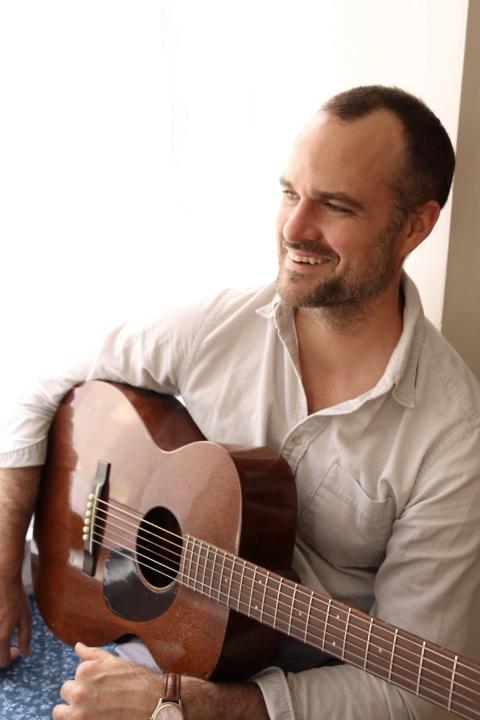
Matthew Stevens is an Associate Professor in the Guitar Department at Berklee College of Music. A two-time Grammy-nominated guitarist and producer, he is celebrated for dissolving demarcation lines between jazz, rock, and ambient music. His critically acclaimed performances and recordings have been featured in The New York Times, The Guardian, Pitchfork, and NPR across global venues including Carnegie Hall and Royal Albert Hall. Stevens' artistic research spans Jazz , Rock , and Ambient Music with innovative approaches to Guitar Performance and Music Production . His compositions advance modern jazz ideals through honest, soulful explorations of contemporary music intersections, reflecting decades of professional experience with artists like Esperanza Spalding and Terri Lyne Carrington. His major accolades include: 2023 Grammy Award for Best Instrumental Jazz Album (New Standards Vol. 1) 2022 Grammy nomination for Best Instrumental Jazz Album (Waiting Game) Downbeat Critics' Poll Top 10 Rising Star Guitar (2016-2022) As an educator, Stevens empowers students to create work that deepens self-understanding and develops artistic voices through critical thinking. He integrates over twenty years of professional experience as a musician, composer, and producer—evident in projects like Esperanza Spalding's Grammy-winning 12 Little Spells—into curriculum design that fosters individual artistry and industry readiness.
Ayşe Özlem Akdeniz is a Professor at Anadolu University State Conservatory, where she has taught since 1996. Her academic journey includes a Competence in Art degree (2016), a Master's in String Instruments Art (1999), and an undergraduate degree from Hacettepe University Ankara State Conservatory (1995). She specializes in violin performance, chamber music, and music education. Current affiliations: Anadolu University State Conservatory, Music Department Former roles: Lecturer (1996–2018), Associate Professor (2018–2024) Research interests focus on violin pedagogy, historical music analysis, and cross-cultural influences in chamber music. She has published extensively on composers like Mendelssohn, Brahms, and Stravinsky, examining technical and structural aspects of their works. Key article trends: Violin-piano sonata analysis, Baroque and Romantic period studies, Turkish-Western music synthesis Scientific awards include the Article Performance Award from Anadolu University Rectorate (2024). She has supervised two graduate theses and contributed to academic journals as an editor and peer reviewer.
Dr. Jill Reese is a Professor of Music Education at The State University of New York at Fredonia, where she teaches general music methods, early childhood music pedagogy, history and philosophy of music education, and research methods. Her work bridges academic instruction with community engagement through partnerships with local childcare programs, the Fredonia Ukulele Community Group, and a ukulele borrowing program at the local library. Ph.D. in Music Education from Temple University M.M. in Music Education from University of Michigan B.M. in Music Education from Michigan State University With research interests focused on creativity, improvisation, early childhood music development, and technology integration, Dr. Reese has presented at major conferences including NAfME, AERA, and the International Journal of Music Education Research. Her work emphasizes professional learning communities and innovative practices like ukulele-based instruction and iPad ensembles. Her recent publications and presentations highlight trends in music learning theory, LGBTQ educator experiences, and technology-enhanced pedagogy. Awards recognize her community engagement, teaching excellence, and research contributions, including the Hagan Young Scholar/Artist Award (2021) and College Council Award for Community Engagement (2017). 2021 Hagan Young Scholar/Artist Award 2017 College Council Award for Community Engagement Multiple Professional Development & Instructional Innovation Awards (2012-2021) Dr. Reese advises undergraduate and graduate students in music education and has secured grants like the SUNY-wide Innovative Instructional Technology Grant. She founded the Fredonia Ukulele program and maintains educational YouTube channels to support music educators.
Rens Bod is Professor of Digital Humanities and History of Humanities at the University of Amsterdam, where he is also Co-director of Amsterdam's Vossius Center for the History of Humanities and Sciences. His academic work bridges computational linguistics, digital humanities, and the global history of knowledge. His research focuses on pattern recognition across different knowledge domains throughout human history. Bod has pioneered the field of history of humanities through his influential books including A New History of the Humanities (2013) and the groundbreaking World of Patterns: A Global History of Knowledge (2022), which examines knowledge development across five continents over 40,000 years. Bod's recent publications show a continued focus on global perspectives in humanities, with particular attention to African intellectual traditions and questions of diversity in the field. His 2024 publications on the Classics of the Humanities in Africa represent significant contributions to decolonizing humanities scholarship. His work demonstrates consistent interdisciplinary engagement, moving fluidly between computational linguistics, musicology, history of science, and philosophy. The publication timeline shows sustained scholarly productivity from the late 1990s through the present, with increasing focus on global history of knowledge in recent years. Bod has been instrumental in establishing the history of humanities as a legitimate academic field, organizing the influential 'Making of the Humanities' conference series and editing the resulting volumes that have shaped the field's development. His research methodology combines traditional historical scholarship with digital humanities approaches, demonstrating how computational methods can reveal patterns in large-scale historical data that might otherwise remain unnoticed. This interdisciplinary approach reflects his fundamental argument that pattern-seeking unites diverse intellectual traditions across time and space.
Maya Livio is Assistant Professor of Climate, Environmental Justice, Media and Communication and Associate Director of the Center for Environmental Filmmaking at American University. Her work bridges environmental studies, media theory, and digital technology through an intersectional feminist and justice-oriented lens. Dr. Livio's research examines the contact zones between ecosystems and technological systems, with particular focus on media technologies used for biodiversity conservation. Dr. Livio's educational background includes a PhD from the University of Colorado-Boulder, an MA from the University of Amsterdam, and a residency at Caltech. Her professional experience extends beyond academia to include curatorial work at the Boulder Museum of Contemporary Art and the Media Archaeology Lab, where she developed expertise in environmental media and digital justice. Dr. Livio's research interests center on climate and sustainability, environmental equity and justice, and the intersection of media technologies with ecological systems. She examines how tools like camera traps, digital twins, and AI for conservation operate within complex social and ecological contexts, with particular attention to issues of power, access, representation, and Indigenous sovereignty in conservation efforts. Her work challenges conventional approaches to environmental technology by applying intersectional feminist perspectives that highlight the importance of community knowledge and Indigenous sovereignty in conservation efforts. Dr. Livio's recent scholarly output demonstrates consistent productivity across multiple venues, with publications spanning academic journals, conference proceedings, and art catalogs. Her work shows a clear trajectory toward examining the ethical dimensions of environmental technologies, with increasing focus on avian conservation, queer ecology, and feminist approaches to data and technology. Greenberg Faculty Fellowship (2023-2025) Airlie Research & Innovation Award (2023) Caltech-Huntington Art + Research Residency (2023) Creator Development Fund from New Music USA (2022) INSITE Fund from RedLine Contemporary Art Center and Andy Warhol Foundation (2019-2020) Dr. Livio actively mentors students through research projects and has served as co-PI on grants that support collaborative knowledge production. Her approach to supervision emphasizes interdisciplinary collaboration and justice-oriented research practices. She has been involved in organizing symposia and workshops that create spaces for feminist and critical approaches to media technology and environmental studies. Currently, Dr. Livio is leading several significant projects including a feature film and paper on AI for avian conservation through queer ecology, a multimodal research project on camera trapping in Los Angeles, and a book on digital conservation. She also serves as curator for 'Data Rich, Dirt Poor,' a museum-wide exhibition at the Boulder Museum of Contemporary Art (2025-2026).
Andrea Molinari is a Contract Professor at the University of Trento since 1990 and at the Free University of Bozen since 2002. He also serves as a Visiting Professor at Lappeenranta University of Technology (2021-2025) and holds a Docent position in Decision Making at the same institution (2024-2029). Previously, he was an Adjunct Professor at Turku University/Abo Akademi in Finland (2007-2019). Education: 2022: Doctoral Degree - Doctor of Science (Technology), Engineering Science, Software Engineering research field from LUT - Lappeenranta University of Technology. Dissertation: "Integration Between eLearning platforms and Information Systems: a New Generation of Tools for Virtual Communities" 1988: Master Degree in Economics from Università degli Studi di Trento with grade 110/110. Thesis: "P.I.R.S. Personal Information Retrieval Systems" Professor Molinari's research focuses on the intersection of education technology and information systems. His primary areas include e-learning/m-learning systems, virtual communities and social media, semantic technologies and ontologies, data management with AI applications, and Enterprise Project Management. His work bridges theoretical computer science with practical applications in educational and organizational contexts, particularly examining how technology can enhance learning experiences and organizational efficiency. His recent publications reveal a strong emphasis on the evolution of Learning Management Systems in the AI era, integration of semantic technologies with educational platforms, and applications of serious games for professional training. There's a clear trajectory toward more sophisticated, AI-enhanced educational technologies that incorporate data analytics, personalized learning, and advanced user modeling. Scientific Awards: Winner of the "S. Ciancio" scholarship (1980, 1982, 1983) Outstanding Paper Award at the Ed-Media World Conference on Educational Technology (1995) Since 1994, Professor Molinari has supervised approximately 10 thesis projects annually across multiple institutions including the University of Trento (Economics, Engineering), University of Bolzano (Computer Science, Education), and Abo Akademy in Finland. His teaching spans numerous courses related to information systems, project management, and technology applications across various academic disciplines. He has coordinated numerous research projects, particularly in the areas of e-learning platforms, virtual communities, and semantic technologies for educational applications. Professor Molinari is actively involved with several research communities and has served on program committees for numerous international conferences including IEEE-STAR, SMARTGREENS, and the International Conference on Web-based Education. His work often involves interdisciplinary collaboration between computer scientists, educators, and domain specialists to develop innovative technology-enhanced learning solutions.
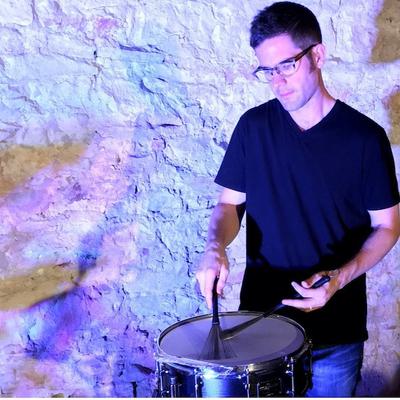
Adam Bedell serves as an Instructor of Percussion in the School of Music at Texas Lutheran University, specializing in contemporary performance practices, electronic instrument building, and new music advocacy. His educational qualifications include: Bachelor of Music in Percussion Performance from Central Michigan University Master of Music in Percussion Performance from the University of Texas at Austin Bedell is a founding member of the Austin-based ensemble line upon line percussion , having premiered over 100 new works for percussion and performed across 30 U.S. states, Europe, and Australia. His artistic practice integrates traditional percussion with electronic instrument design and microcontroller technology, reflecting deep engagement with experimental music creation. Professional recognition includes: Grammy Nomination for the album A Company of Voices, Conspirare in Concert (Harmonia Mundi) As an educator, Bedell contributes to percussion pedagogy through performance demonstrations and instrument-building workshops, emphasizing interdisciplinary approaches to music technology. His chamber music collaborations span orchestral, solo, and experimental contexts with ensembles like Conspirare.
Lance R Hulme serves as Professor at North Carolina Central University's College of Arts, Social Sciences, and Humanities, where he directs the Music Theory and Composition program and teaches Music Industry and FabLab courses. His leadership extends to developing the educational software Basic Training in Music Skills and directing the acclaimed À la carte concert series. His educational background includes a DMA and MMA from Yale University, MM from Eastman School of Music, BM from University of Minnesota, and studies at Universität für Musik in Vienna. His career spans conducting premieres, jazz fusion performance with Dreamscape band, and 17 years in Europe co-founding Ensemble Surprise. Yale University: DMA (1998), MMA (1994) Eastman School of Music: MM (1989) Universität für Musik Wien: AA (1987) University of Minnesota: BM (1983) Hulme's research spans compositional eclecticism, music technology integration, and aural skills pedagogy. Critics describe him as a 'chameleon composer' weaving diverse musical traditions into rich expressive textures. His work bridges 'serious' and vernacular music while employing advanced structural techniques, with special focus on computer-assisted composition and interactive collaborations with choreographers. His publication trends reveal sustained exploration across genres: from sacred choral works (Psalm 62) to electronic compositions (Caritas Abundat), jazz arrangements (My Favorite Things), and chamber pieces (JethroZen). The corpus demonstrates consistent engagement with cross-cultural synthesis, technological innovation, and expressive narrative forms, with recent works emphasizing digital media integration. Notable awards include: Grand Prize, International Witold Lutoslawski Composition Competition First Prize, ASCAP/Rudolf Nissim Prize 2021 Malta International Composition Competition First Prize Fulbright Grant to Austria MacDowell Colony Fellowship Hulme's advising impact manifests through his educational software used across institutions and mentorship via the À la carte concert series, which has become 'one of North Carolina's most important concert series' (Classical Voice NC). His technological contributions include sound engineering for album productions and real-time dance installations at Modern Repertory Dance Theater. He leads NCCU's FabLab music technology initiatives and continues directing Ensemble Surprise's legacy through À la carte, presenting '700 years of new music' across genres and epochs. Current projects include interactive computer compositions and expanding his educational software platform.
Howard Skempton serves as Lecturer in Composition at the Royal Birmingham Conservatoire, Birmingham City University, where he mentors emerging composers while maintaining an active creative practice. Born in Chester in 1947, he has developed a distinctive musical language of radical simplicity through over 300 compositions spanning five decades. His research interests focus on: Contemporary Classical Composition Minimalist Structural Design Chamber Music Innovation Vocal-Textual Relationships Orchestral Color Exploration Post-Cagean Aesthetics Skempton's compositional output demonstrates consistent evolution within self-imposed limitations, with recent works exploring unconventional instrumentation (church bell ringing) and literary settings (Coleridge). His approach prioritizes essential musical elements over developmental complexity, creating works that balance accessibility with avant-garde sensibilities through sparse textures and non-linear forms. His major recognitions include: Royal Philharmonic Society prize for 'best chamber-scale composition' (2005) British Composer Award in chamber music (2005) British Composer Award for vocal/orchestral work (2008) Skempton maintains active commissioning relationships with major organizations including the BBC, Birmingham Contemporary Music Group, and Cultural Olympiad projects. His works receive regular performances by ensembles such as Ensemble 10/10 and are featured at festivals including Huddersfield and Spitalfields. Current projects include concertante works for specialized soloists and explorations of traditional British musical forms through contemporary techniques, reflecting his ongoing commitment to artistic innovation within institutional frameworks.
Professor Alan Williams is a Professor of Collaborative Composition at the University of Salford, based within the School of Arts, Media and Creative Technologies and affiliated with the Creative Technology Research Centre. With an academic background from the Universities of Edinburgh and Manchester and the Liszt Academy in Budapest, Williams has established himself as a significant figure in contemporary composition and collaborative arts practices. Williams' research focuses on collaborative composition methods, participatory arts, and arts-based research, with particular interests in contemporary culture and Hungarian music traditions. His work bridges creative practice and academic inquiry, developing innovative methodologies like the 'Listening Composer' approach that emerged from his Healing Tales project with NHS workers documenting pandemic experiences. His research spans composition for various media including film, radio drama, electronic music production, and cross-cultural choral works. Analysis of his recent publications reveals a strong emphasis on collaborative and participatory approaches across diverse contexts - from healthcare settings to electronic music studios. His work demonstrates consistent exploration of how music can serve as a medium for storytelling, community engagement, and documenting significant cultural moments like the COVID-19 pandemic. Professor Williams has an extensive creative portfolio with compositions performed by prestigious ensembles including the BBC Philharmonic, BBC Singers, Philharmonia, MDR Radio Choir, and Psappha. His work has been broadcast internationally on BBC Radio 3, MDR (Germany), NEC (Brazil), and Bartók Rádió (Hungary), reflecting the global reach of his artistic contributions. His notable creative projects include the 2016 BBC Radio 4 score for Val McDermid's adaptation of The Kraken Wakens, the 2017 'world's first Northern opera' collaboration with poet Ian McMillan, and the groundbreaking 2023 Healing Tales project that led to the development of his Listening Composer methodology. Williams continues to be highly productive, with numerous publications and creative outputs spanning 2023-2025 across formats including theses, data collections, digital artifacts, and presentations.
Adelina Court is a Lecturer in the School of Arts, Media and Creative Technologies at the University of Salford, specializing in 3D design and illustration. She holds a Master's degree in Children's Book Illustration (2016-2018) and is currently pursuing her PhD (2019-2026) at the same institution. Affiliated with the Art & Design Research Centre, her work bridges academic research and creative practice through multiple institutional collaborations including Incredible Education CIC and Arts Council-funded community projects. Her research focuses on graphic facilitation as a tool for urban greening initiatives, particularly through visual methods that help communities conceptualize sustainable spaces. This work is exemplified in her involvement with Cleavley Community Forest Garden in Eccles. She also explores the intersection of animation and music through her 'Songs I Want to Play' project, which has generated significant public engagement with over 2 million YouTube views. Notable achievements include her BBC New Creatives selection (2019) and festival nominations for 'Songs of the City' (2020). Her creative outputs span animated films, digital artifacts, and academic publications that examine radical sustainability practices in urban environments. BBC New Creatives scheme selection (2019) OnArt Poland nomination (2020) Manchester Animation Festival nomination (2020) Bolton International Festival nomination (2020) Through her teaching in BA programs including Costume Design, Film TV and Stage Design, and Animation, she integrates professional practice with academic instruction. Her current research examines how visual facilitation methods can transform community engagement in urban greening projects, combining geographical analysis with creative visualization techniques to address environmental challenges in Greater Manchester.
Lou Kilger serves as Professor of composition and sound design for digital media at KreativInstitut.OWL since 2023 and holds a teaching position in sound direction at State University of Music Trossingen since 2020. An active composer with works premiering at prestigious venues including the Donaueschingen Music Festival and Munich Biennale, he bridges artistic creation with technical innovation in digital media environments. His educational background includes: Concert exam in composition from Cologne University of Music and Dance (2020-2022) Master in Sound Direction from University of Music and Performing Arts Frankfurt (2019) Master in Electronic Composition from Cologne University of Music and Dance (2017) Bachelor of Music Design from State University of Music Trossingen (2011) Professor Kilger's research centers on intermedia composition where digital media, sound design, and music informatics converge. He creates environments where 'things that are unimaginable on your own suddenly become tangible' through team-oriented approaches. His work explores states between reality and virtuality using binaural audio, mobile platforms, and glitch aesthetics, often incorporating biological metaphors and fluid dynamics. Projects like the mei-friend Editor demonstrate his commitment to advancing musicological markup standards while maintaining artistic innovation. His creative output shows clear progression from audiovisual miniatures (2013-2017) to complex intermedia systems (2021-2024), with increasing emphasis on digital space composition and audience interaction. Recent works like 'smonize' (2024) and 'nournimity' (2023) feature multichannel sound, bio-inspired design, and virtual reality elements, reflecting his focus on 'being between reality and virtuality.' While no formal awards are listed, his SWR commission for Donaueschingen Music Festival 2024 represents significant recognition. Key projects include: Musicological Markup in the mei-friend Editor (released January 2025) Internship program at KIO providing cross-disciplinary research exposure (2024) Live Coding Meetups fostering technical-artistic collaboration Professor Kilger actively supervises students through teaching positions at two institutions and integrates them into live projects. His funding includes the SWR commission and mei-friend Editor development, supporting team-oriented approaches where students collaborate with specialized colleagues. He emphasizes practical experience in 'artistic, compositional and technical production fields,' preparing students for careers at the intersection of art and technology. Though no formal lab name is specified, his work operates within KreativInstitut.OWL's research ecosystem focused on digital media production. The environment fosters collaboration across disciplines, with students and researchers contributing to intermedia projects that combine composition, sound design, and emerging technologies in team-oriented settings.
Assoc. Prof. Rositsa Becheva, PhD is a faculty member at Nov Bulgarian University's Faculty of Music, Department of Music, specializing in electronic and computer music. With a PhD in Musicology and Music Art (2004), she has been instrumental in developing electronic music education in Bulgaria since 2000. Her educational background includes: Bachelor's in Piano (1983, Plovdiv Music School); Master's in Music Theory (1990, State Music Academy 'Prof. Pancho Vladigerov'); Postgraduate Qualification in Music Pedagogy (1997, Academy for Musical and Dance Arts-Plovdiv); and PhD (2004, NBU). Becheva's research focuses on digital arts, sound design, computer music, synthesizer methodology, and music technology integration in pedagogy. She pioneered Bulgaria's first synthesizer teaching methodology and developed innovative courses including 'Electronic Music Interpretation' and 'E-sound – live electronic, sound design and music production'. Her publication portfolio spans monographs like 'In the World of Simo Lazarov's Electronic Music' (2018) to technical papers on sound production, noise emancipation, and multimedia integration. Her work demonstrates consistent exploration of electronic sound organization, timbre concepts, and performance practices. Crystal Lyre Award 2016 (Sound and Sound Design) Book of the Year 2018 Special Award New Bulgarian Music 2019 Award for Musicology Becheva actively mentors students through projects like the 'E-SOUND AND VISION' concert series and the 'Electronic Music Interpretation' seminar. She co-founded NBU's 'Stanislav Stanchiev-Stanley' Research and Practice Center for Computer Music and Sound Design, organizing annual events including the 'Universe of Computer Music' festival since 2000. Her creative work integrates electronic music with visual arts through multimedia projects and interdisciplinary happenings.
Andrey Stolyarov is a Russian-born American composer, conductor, singer, and educator currently serving as an adjunct professor of music theory at The Hartt School (University of Hartford) and Capital Community College. He holds additional positions as Director of Music at Gilead Congregational Church in Hebron, Connecticut and Co-director of The Hartford New Music Festival. His educational background includes a DMA in Composition (2018) and MM in Composition (2015) from University of Hartford, and a BA in Music (2012) from Lehigh University. Stolyarov has studied with renowned composers including Steven Sametz, Paul Salerni, Gilda Lyons, Robert Carl, and Aaron Kernis. Stolyarov's research and creative interests span composition, choral music, contemporary classical, electronic music, and piano performance. His compositional output demonstrates significant range from traditional forms like fugues to contemporary works incorporating improvisation and electronic elements. His recent album "A Sonic Tapestry" (2024) continues his exploration of emotional expression through modern compositional techniques. His compositions have been performed nationally and internationally, with recent commissions by CONCORA, the Young New Yorker's Chorus, the Bassless Trio, and the Alturas Duo. He has received national and international recognition for his works, which reflect both his Russian heritage and American training. National recognition for compositions International recognition for compositions As an active professional singer, Stolyarov performs with Voce, CONCORA, and the Composers Choir. He maintains an active online presence with music available on Bandcamp, YouTube, and Soundcloud, and serves as a private vocal instructor. His work demonstrates a commitment to both traditional musical forms and contemporary innovation.
Hamp Overton serves as a tenured Professor of Cinematography and Production within the Film and Theatre department at the University of New Orleans, bringing nearly two decades of professional cinematography experience to his academic role. His extensive industry portfolio includes over 100 commercials for major brands like Subway and Texas Roadhouse, feature films such as 'Delicate Instruments' and 'Sacrilege', and television segments for networks including AMC and CMT. Professor Overton's educational background comprises a Bachelor's degree from the University of Mississippi, an MBA from Vanderbilt University, and an MFA from the University of New Orleans, reflecting his interdisciplinary approach to film production. Bachelor's Degree, University of Mississippi Master of Business Administration (MBA), Vanderbilt University Master of Fine Arts (MFA), University of New Orleans His professional expertise centers on the technical and artistic dimensions of visual storytelling across commercial, feature film, and television contexts. Overton demonstrates exceptional proficiency in lighting design, camera operation, and the integration of cinematographic techniques across diverse media formats including music videos, corporate productions, and narrative films. This multifaceted engagement positions him at the intersection of artistic innovation and industry practice. Analysis of his cinematographic output reveals consistent evolution from early independent features to recent genre work, showcasing versatility across drama, action, and horror genres while maintaining technical excellence. His portfolio demonstrates adaptability to changing industry standards and formats over two decades of professional activity. Professional recognition includes significant industry awards: Eastman Kodak 'Most Promising Talent' award Multiple Addy Awards for commercial productions Festival accolades for feature film contributions While specific details about student mentorship and research grants are not documented in available sources, Professor Overton's extensive industry experience and academic position suggest active engagement in developing emerging filmmakers within UNO's Film and Theatre program.