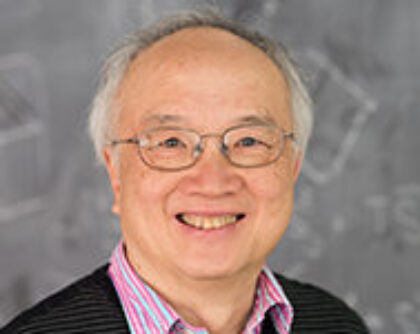
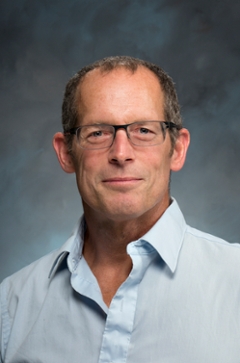
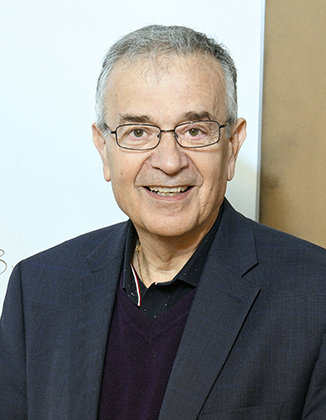
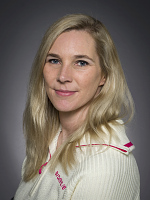
Patrick A. Lee is the William & Emma Rogers Professor of Physics at MIT, active since 1982. He specializes in condensed matter theory and mesoscopic physics, focusing on strongly correlated electronic systems and high-temperature superconductivity. His research explores quantum transport phenomena, disordered systems, and many-body field theory. Affiliations: MIT Department of Physics, Condensed Matter Theory Group at MIT Education: PhD '70 from MIT (implied by institutional credential notation). Research emphasizes novel phenomena in doped Mott insulators and quantum Hall effects. He pioneered concepts like universal conductance fluctuations in mesoscopic systems. Awards: 2022 Anatoly Larkin Senior Researcher Award 2005 Dirac Medal (ICTP) 1991 Oliver Buckley Prize (APS) APS Fellow (1986) His work bridges theory and experiment, influencing quantum computing through insights into Majorana fermions. Active in theoretical physics since joining MIT, with prior Bell Labs tenure (1972-1982).
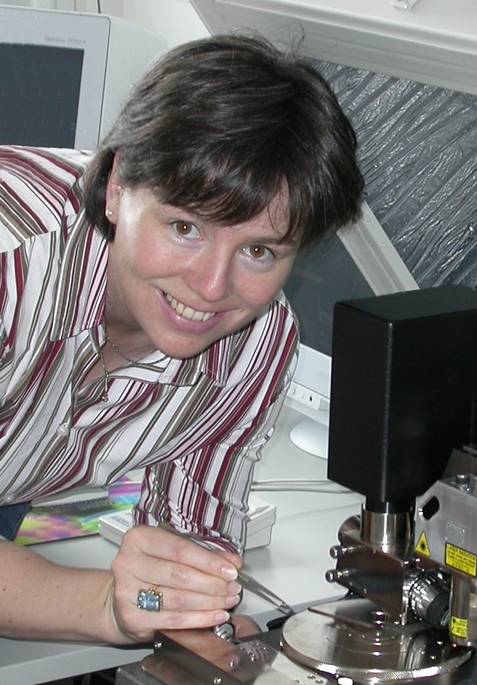
Karin Jacobs is a Professor in the Department of Physics at Saarland University, where she leads the research group for soft matter physics within the Faculty of Natural Sciences and Technology. Her work bridges experimental physics and applied materials science, focusing on interfacial phenomena, thin films, and functional materials. Research Interests: Her group investigates the stability of coatings, properties of simple and complex fluids, and the adhesion of biomolecules on surfaces. Using advanced experimental techniques such as atomic force microscopy (AFM), ellipsometry, surface plasmon resonance spectroscopy, optical microscopy, and ultra-high vacuum (UHV) methods like photoelectron spectroscopy, her team probes nanoscale and microscale interactions at solid-liquid and solid-gas interfaces. The research spans fundamental and applied domains, including the synthesis and characterization of graphene and boronitrene, production of water-in-water vesicles using hydrophobins, and bacterial adhesion studies. These investigations are often linked to industrial applications in the paint, semiconductor, and biomedical sectors. Publication Trends: Over the past 15 years, her publications reflect a consistent focus on surface physics and soft matter. Key themes include graphene synthesis via liquid precursor deposition (including unconventional sources like fingerprints), interfacial rheology, biopolymer adsorption, and quantitative imaging analysis. The interdisciplinary nature of her work is evident in the combination of physics, chemistry, and biological interfaces. Scientific Awards: No specific awards are mentioned in the provided text. Advising and Grants: As head of an active research group, Prof. Jacobs supervises graduate students and postdoctoral researchers, though specific names are not listed. Her collaborations with theoretical groups and external institutions (e.g., University of Augsburg) suggest participation in joint grants and funded projects, particularly in nanomaterials and surface science. The applied orientation of her research indicates engagement with industry partners in coatings and semiconductor technologies. Labs and Teams: The Jacobs Group operates a well-equipped experimental laboratory at Campus E2 9, Saarland University, specializing in surface analysis and soft matter characterization. The team includes researchers working on biofilms, microfluidics, and functional materials, supported by technical and administrative staff.
Dr. Bin Zhu is a Research Fellow in the School of Mechanical Engineering Sciences at the University of Surrey, affiliated with the Centre for Engineering Materials. He obtained his PhD from the same institution, focusing on multiscale residual stress evaluation and mechanical property characterization using microscopy and large-scale facilities. His research develops techniques for harsh environments to enhance material longevity by managing manufacturing-induced residual stress, with applications in nuclear fusion components. Education PhD, University of Surrey (Research focus: Multiscale residual stress evaluation and mechanical property characterization) Research Focus Dr. Zhu's research centers on three interconnected areas: 1) Multiscale residual stress evaluation using advanced techniques like plasma-focused ion beam and neutron diffraction; 2) In situ mechanical testing under extreme conditions; and 3) Computational modeling for predicting stress distributions and material behavior. His work primarily addresses nuclear fusion reactor challenges, particularly laser-welded Eurofer97 steel components, where residual stress critically impacts structural integrity. Publication Trends Dr. Zhu's recent publications (2021-2025) demonstrate three key themes: 1) Advanced residual stress analysis in nuclear materials using machine learning, neutron imaging, and synchrotron techniques; 2) High-temperature mechanical performance of welded joints for fusion reactors; and 3) Biomimetic material characterization, including bioinspired composites and biological light-diffraction mechanisms. His methodologies consistently integrate multiscale experimental approaches with computational modeling.
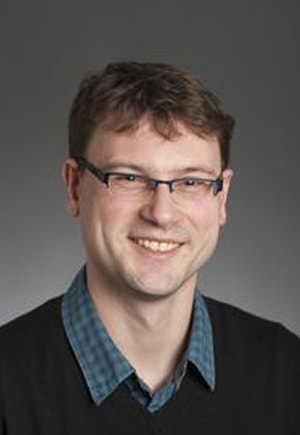
Frank Heinrich serves as an Associate Research Professor in the Department of Physics at Carnegie Mellon University's Mellon College of Science, while maintaining a significant research presence at the National Institute of Standards and Technology (NIST) Center for Neutron Research in Gaithersburg, Maryland. His dual appointment reflects his interdisciplinary work bridging academic research and national laboratory resources, focusing on advanced biophysical techniques for studying membrane-associated biological processes. Dr. Heinrich earned his Ph.D. in Nuclear Physics from the University of Leipzig, Germany in 2005, followed by postdoctoral research at Johns Hopkins University and Carnegie Mellon University. His academic trajectory shows steady progression from Research Physicist (2008-11) to Assistant Research Professor (2011-16) and finally to his current position as Associate Research Professor (2016-present), while simultaneously maintaining his role as a Staff Scientist at NIST since 2008. His research centers on the structure of disease-relevant proteins, peptides, and small molecules at lipid membranes, with particular interest in the structural foundations of cell signaling in cancer. Heinrich employs a broad range of surface-sensitive techniques including electrical impedance spectroscopy, surface plasmon resonance, and neutron reflectometry. His work contributes significantly to developing future-generation neutron scattering instrumentation for soft-matter and biological research, making these advanced techniques accessible to both academic and industrial scientists. Analysis of his 15 most recent publications reveals a consistent focus on membrane-protein interactions, particularly examining KRAS signaling in cancer, antimicrobial peptides, and membrane-associated processes in neurodegenerative diseases. His work demonstrates sophisticated integration of experimental biophysics with computational approaches, often utilizing neutron scattering techniques to provide structural insights that other methods cannot achieve. As part of the Lösche/Heinrich Group within the Supramolecular Structures Lab, he collaborates extensively with Mathias Lösche and contributes to the joint UPSM-CMU MBSB graduate program. His research has practical implications for understanding cancer mechanisms, developing new antimicrobial strategies, and advancing biophysical instrumentation.
Alexey Vorobiev is a Researcher at Uppsala University's Materials Physics department, focusing on neutron reflectometry and magnetic materials. His work spans thin films, superlattices, and nanoparticle interfaces. Education : Not explicitly mentioned in the text. Research Interests Vorobiev's research explores magnetic properties of materials, surface interactions, and neutron optics. Key areas include spintronics, nanoscale assembly, and thin film characterization. His work often integrates experimental methods like neutron scattering with materials engineering. Article Trends Recent publications emphasize neutron-based techniques for studying magnetic multilayers, graphene oxide behavior, and nanoparticle self-assembly, reflecting a strong focus on interfacial physics and advanced material synthesis.
Olivier Tougait is a Professor at the Chemistry, materials and processes for sustainable nuclear power (CIMEND) department within the Unité de Catalyse et Chimie du Solide (UCCS) at Université Lille . He specializes in solid-state chemistry, nuclear materials, and actinide-based compounds, with a focus on understanding fuel cycle processes for nuclear energy. Academic Background: PhD in Chemistry (1998, Université de Rennes1), Postdoctoral Fellow at Northwestern University (1998-2000). Career: Lecturer at Rennes1 (2000-2014), now Professor at UCCS since 2014. Collaborations include the French Alternative Energies and Atomic Energy Commission (CEA) , Orano , and Framatome . Research Interests: Actinide-based intermetallic compounds Phase diagrams of nuclear materials Magnetocaloric properties Fuel cycle process optimization Synthesis and thermodynamic behavior of uranium alloys Collaborative industrial nuclear R&D Publications since 2012 focus on: Uranium-molybdenum fuel characterization Germanium/Aluminum substitution in actinide systems Thermal stability of uranyl peroxide nanoclusters Crystallographic analysis of heavy-fermion materials Labs: Directs the joint research laboratories LR4CU and LRC PUMA, which collaborate with Orano and Framatome on nuclear fuel cycle innovations.
Ditte Hededam Welner is a Senior Researcher & Group Leader at the Novo Nordisk Foundation Center for Biosustainability, Technical University of Denmark. Her research focuses on Enzyme Engineering and Structural Biology, particularly the development of enzyme biocatalysts for sustainable industrial production of natural products like aromas, dyes, and pharmaceuticals. She leads efforts to replace petroleum-based chemical synthesis with eco-friendly bio-based processes, emphasizing glycosyltransferase (GT) engineering to enhance substrate specificity, efficiency, and stability. Education: Biochemistry, University of Copenhagen (2000–2011). Research Interests: Glycosylation mechanisms, high-throughput enzyme discovery/evolution, structural biology techniques (X-ray crystallography, NMR), and biocatalysis applications in sustainable chemistry. Her work contributes to UN SDG 9 (Industry, Innovation, and Infrastructure) and SDG 12 (Responsible Consumption and Production). Recent publications highlight advancements in alginate degradation mechanisms, sucrose synthase engineering, and glycosyltransferase applications in biocatalytic routes for indigo/indican production. She supervises multiple PhD projects on enzyme optimization, machine learning for enzyme engineering, and sustainable bioprocessing. Professional Activities: Peer review for journals like Nature Catalysis and Metabolic Engineering , conference organization, and editorial contributions. Active in promoting open-access science and sustainable biotechnology. Labs/Teams: Leads the Enzyme Engineering and Structural Biology group at DTU, collaborating with industry and academic partners globally to advance biocatalytic solutions for environmental challenges.
Professor Ian Metcalfe is a distinguished academic at Newcastle University, specializing in advanced materials for energy applications, particularly in the areas of membrane technology, chemical looping processes, and catalysis. His research spans multiple interdisciplinary fields with significant implications for carbon capture, hydrogen production, and sustainable energy systems. Professor Metcalfe's research primarily focuses on membrane technology for gas separation, particularly CO 2 capture and hydrogen production . His work extensively investigates chemical looping processes using various oxygen carrier materials, particularly perovskite-based materials . A significant portion of his recent research explores nanoparticle exsolution for creating highly stable and active catalysts. His research group has made notable contributions to understanding the thermodynamics of non-stoichiometric materials and developing novel membrane configurations for enhanced gas separation. Analysis of Professor Metcalfe's recent publications (2023-2025) reveals a strong focus on CO 2 separation technologies , particularly using molten-carbonate membranes with innovative support structures. His work on exsolution has expanded to include room-temperature processes using plasma techniques and applications in methane reforming. The research shows increasing emphasis on direct air capture technologies and ammonia synthesis via chemical looping, indicating strategic expansion into emerging energy storage and carbon utilization areas. Professor Metcalfe maintains extensive collaborations with researchers including Dr. Wenting Hu, Dr. Evangelos Papaioannou, Dr. Dragos Neagu, and Dr. Greg Mutch. His research has significant implications for decarbonization technologies and sustainable energy systems, particularly in hard-to-abate sectors where efficient CO 2 separation and clean hydrogen production are critical.
Dr. Matthias Cuntz is a Senior Researcher at the Department of Computational Hydrosystems within the Helmholtz Centre for Environmental Research (UFZ) in Leipzig, Germany. He leads the Regional Ecophysiology group and focuses on integrating stable isotopes, remote sensing, and computational modeling to study terrestrial ecosystems. Research Interests: Energy, water, and trace gas exchange in ecosystems; stable isotope applications; global water-carbon cycle modeling; eddy-covariance flux analysis; sap flow dynamics. Key Projects: Involved in TERENO (Terrestrial Environmental Observatories) and ICOS (Integrated Carbon Observation System) for long-term ecological monitoring. Recent Publications address soil freeze-thaw processes, Amazon forest carbon dynamics, hydrological model calibration, and isotopic partitioning of evapotranspiration. His work spans computational hydrology, remote sensing validation, and uncertainty quantification in environmental models. Contact: Email: matthias.cuntz@ufz.de Personal Webpage: www.macu.de
Gilbert 'Rip' Collins is the Tracy Hyde Harris Professor of Mechanical Engineering and Physics at the University of Rochester, holding dual appointments in the Hajim School of Engineering & Applied Sciences and the Laboratory for Laser Energetics (LLE). He also serves as Associate Director of Science, Technology and Academics at LLE, Distinguished Scientist at LLE, and Director of the NSF-funded Center for Matter at Atomic Pressures (CMAP). His research focuses on extreme states of matter, including planetary interiors, high-energy-density plasmas, and thermonuclear fusion processes. Collins earned his PhD in 1989 from Ohio State University. His work leverages facilities like the Omega Laser at LLE to recreate astrophysical conditions, exploring topics such as phase separation in giant planets, quantum matter at atomic pressures, and laboratory astrophysics experiments. He collaborates globally to advance understanding of exoplanet structure, stellar evolution, and fusion energy control. Key affiliations: Laboratory for Laser Energetics, Center for Matter at Atomic Pressures (CMAP), Omega Laser Facility Research highlights: Hydrogen-rich superconductors, planetary core dynamics, radiation-dominated plasmas Leadership roles: HED Experiments Group Lead at LLE, co-director of international collaborations His team includes graduate students and scientists investigating topics ranging from collisionless shocks to exoplanet mass-radius relationships. Collins’ contributions bridge fundamental physics with applied energy research, supported by grants from the NSF Physics Frontier Center and other national agencies.
Ian C. Bourg is an Associate Professor at Princeton University with dual appointments in the Department of Civil and Environmental Engineering and High Meadows Environmental Institute . He directs undergraduate studies in CEE and leads the Interfacial Water Group , focusing on atomistic-level simulations and macroscopic modeling of environmental systems. His concurrent affiliations include the Princeton Institute for the Science and Technology of Materials and Chemical and Biological Engineering department. Education Ph.D. in Civil and Environmental Engineering, University of California-Berkeley (2004) MSc in Chemical Engineering, INSA Toulouse (1999) B.Eng. in Chemical Engineering, INSA Toulouse (1999) Research Interests span clay mineral surface geochemistry, geologic CO 2 sequestration, kinetic isotope effects, water behavior at interfaces, and coupling geochemistry with geomechanics in porous media. His work integrates molecular simulations with experimental validation to study environmental phenomena like contaminant transport, soil carbon storage, and water dynamics in clays. Publications from 2023-2025 reveal expertise in molecular dynamics of clay-water systems, organic contaminant partitioning, cement hydration, and isotope fractionation. Key themes include Environmental Nanoscience , Geochemical Modeling , and Soft Matter Physics applications to environmental systems. Scientific Recognition NSF CAREER Awardee (2018) Advising includes mentoring 12 current and former PhD/postdoc researchers, with notable alumni at institutions like Cornell, University of Poitiers, and Oak Ridge National Laboratory. His group has produced 20+ undergraduate advisees now in academia and industry. Laboratory develops multiscale simulation tools like HybridBiotInterFoam and HybridPorousInterFoam, with active collaborations in nuclear waste management, soil remediation, and sustainable construction materials.
Areg Danagoulian is an Associate Professor of Nuclear Science and Engineering at the Massachusetts Institute of Technology (MIT), where he conducts research at the intersection of nuclear physics and security applications. His work focuses on developing technological solutions for nuclear nonproliferation, arms control, and cargo security. Dr. Danagoulian earned his PhD in Experimental Nuclear Physics from the University of Illinois at Urbana-Champaign, where his thesis focused on real Compton scattering on the proton at 2-6 GeV to probe the proton's internal structure. Following his PhD, he worked as a postdoctoral researcher at Los Alamos National Laboratory and then as a senior scientist at Passport Systems, Inc. (PSI), where he developed the Prompt Neutron from Photofission (PNPF) technique for detecting shielded fissionable materials in cargo traffic. His research interests span multiple critical areas in nuclear security, including arms control verification technologies, nuclear nonproliferation methods, cargo security systems, and nuclear detection techniques. Dr. Danagoulian's work on nuclear resonance phenomena for warhead verification represents groundbreaking contributions to the field of nuclear disarmament verification. Dr. Danagoulian's research has earned him significant recognition, including: Fellow of the American Physical Society, Forum on Physics and Society (2025) - "For seminal technological contributions in the field of arms control and cargo security, which significantly benefit international security" Arms Control Association's Arms Control Person(s) of the Year award (2020) - "For developing an innovative new nuclear disarmament verification process using neutron beams" American Nuclear Society Radiation Science and Technology Award (2019) - "For technology-critical contributions exploiting nuclear resonance phenomena for warhead verification in nuclear disarmament and nuclear detection techniques in cargo security" In addition to his research, Dr. Danagoulian is actively involved in teaching and mentoring. He serves as faculty co-director for MIT's MISTI Eurasia program and teaches several graduate courses including Nuclear Detection Laboratory (22.09, 22.90), Advanced Nuclear Laboratory (22.s902), and Applied Nuclear Physics (22.101). His teaching approach emphasizes hands-on laboratory experience to prepare students for real-world nuclear detection challenges. Dr. Danagoulian leads the Laboratory for Applied Nuclear Physics (LANPh) at MIT, where his team develops innovative technologies for nuclear security applications. Current research directions include nuclear resonance transmission analysis for material identification, portable detection systems for cargo security, and cryptographic approaches to nuclear warhead verification that protect sensitive information while enabling verification.
Koroush Shirvan is the Atlantic Richfield Career Development Professor in Energy Studies and a tenured faculty member in MIT's Department of Nuclear Science and Engineering within the School of Engineering. Joined in July 2017, he directs the Reactor Technology Course for Utility Executives and leads the Fission Materials in Extreme Environments Lab. His work bridges nuclear engineering with practical industrial applications for decarbonization. His research focuses on reactor design economics, materials testing under irradiation, nuclear safety, and boiling heat transfer. He accelerates innovations in nuclear fuels, small modular reactors, and space propulsion through multi-scale physics integration. Current projects include accident-tolerant fuels, high-temperature materials for microreactors, and AI-driven optimization of reactor systems. His approach combines experimental irradiation testing at MITR with advanced computational modeling. Recent publications reveal strong trends toward economic nuclear deployment via advanced fuel technologies and small modular reactors. AI/ML applications dominate optimization research, particularly for core reload and uncertainty quantification. Materials science under extreme conditions remains central, with growing emphasis on space nuclear applications and horizontal reactor configurations for cost reduction. His scientific recognition includes: Nuclear News 40 under 40 (2024) American Nuclear Society Landis Young Member Engineering Achievement Award (2023) American Nuclear Society Reactor Technology Award (2022) Teaching responsibilities span Sustainable Energy (22.811/081), Graduate Reactor Physics, and Nuclear Design courses. Research grants support experimental programs at MIT Reactor Lab and computational frameworks for reactor-to-repository analysis. He mentors students through senior design projects and graduate research in nuclear fuel cycles. He directs the Fission Materials in Extreme Environments Lab and co-leads MIT's Space Nuclear initiative with AeroAstro. The team conducts irradiation experiments using MITR's high-temperature hydrogen flow capabilities and advanced diagnostics for post-irradiation examination. Current thrusts include nuclear thermal rocket materials testing and fission surface power development for lunar/Mars missions.
Mercouri Kanatzidis is the Charles E. and Emma H. Morrison Professor of Chemistry at Northwestern University's Weinberg College of Arts and Sciences, with a joint appointment at Argonne National Laboratory. His research spans multiple cutting-edge areas of materials science and solid-state chemistry. His research interests focus on inorganic chemistry, solid state and coordination chemistry of chalcogenide and halide compounds, with emphasis on the design of new materials through exploratory synthesis. His work particularly targets thermoelectric materials, nanostructured materials, intermetallics, and applications for solar energy conversion, radiation detection, heat-to-electrical conversion, and nuclear and environmental remediation. Kanatzidis's recent publications reveal a strong focus on perovskite materials for radiation detection and solar cells, thermoelectric materials, and chalcogenide chemistry. His group has made significant advances in understanding the fundamental properties of these materials while developing practical applications. His work on CsPbBr3 perovskite detectors has demonstrated exceptional performance for X-ray and gamma-ray detection, while his thermoelectric research has led to materials with record-high efficiency. Centenary Prize, 2023, the Royal Chemical Society Elected to the American Academy of Arts and Sciences, 2023 Global Energy Prize, 2022 Clarivate Highly Cited Researcher since 2015 National Academy of Sciences election, 2024 DOE Ten at Ten Award for perovskite solar cell work, 2019 ACS Award in Inorganic Chemistry, 2016 MRS Medal, 2014 Professor Kanatzidis has mentored over 95 Ph.D. students and nearly 130 postdoctoral fellows throughout his career. His group maintains active collaborations with multiple research centers including Argonne National Laboratory, the Trienens Institute, and research groups led by Dravid, Seidman, Wessels, Wolverton, Mohite, and Chabinyc. His laboratory is equipped with extensive facilities for materials synthesis and characterization, including multiple gloveboxes, X-ray diffractometers, thermal analysis equipment, and specialized furnaces for crystal growth.
Ann-Cecilie Larsen is a Professor in Nuclear and Energy Physics at the University of Oslo, leading research in nuclear physics and astrophysics. She works with the Oslo Cyclotron Laboratory (OCL) and collaborates with institutions like Université libre de Bruxelles, Lawrence Livermore National Laboratory, and CERN's ISOLDE facility. Master of Science in Physics, University of Oslo (2002) Cand.scient. in Nuclear Physics, University of Oslo (2004) Ph.D. in Nuclear Physics, University of Oslo (2008) Her research focuses on nuclear properties at extreme temperatures, particularly level density and gamma decay functions. These studies inform astrophysical reaction rates for understanding cosmic element formation. She teaches FYS-MEK1110 - Mechanics and KJM-FYS5920 - Nuclear Measurement Methods . Recent publications analyze nuclear decay patterns in Sn isotopes, neutron interactions on 89Y, and shape coexistence in rare isotopes. Her work connects nuclear structure studies with stellar nucleosynthesis. Prize for Young Outstanding Researchers, Norwegian Research Council (2016) Fulbright Scholarship (2015) ERC Starting Grant (2015-2020) Best Poster, Zakopane Conference (2006) She holds a Research Council of Norway project (2021-2026) and has previously received personal postdoctoral funding (2011-2014). Collaborations include Facility for Rare Isotope Beams, ISOLDE@CERN, IReNA, and ChETEC-INFRA networks.