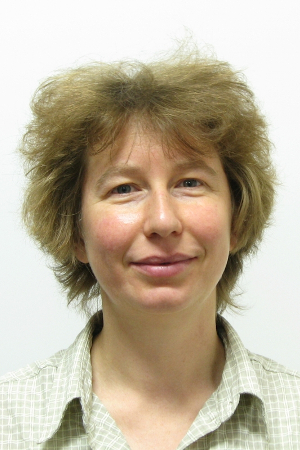
Julie Dethierمشاهده پروفایل
پژوهشگر ارشد
Julie Dethier is a Research Fellow at the University of Liège, affiliated with the Faculty of Applied Sciences and Montefiore Institute. Her research bridges cellular neuroscience and network dynamics, with focus on pathological rhythms in Parkinson's disease and brain-machine interface development. She completed her Ph.D. in 2015 under Prof. Sepulchre's supervision. Her academic journey includes: Ph.D. in Systems and Modeling (2015), University of Liège with Princeton University research stay (2014-2015) Master of Science in Bioengineering (2011), Stanford University (Brains in Silicon lab) Master of Applied Sciences in Biomedical Engineering (2010, summa cum laude), University of Liège Bachelor of Applied Sciences (2008, summa cum laude), University of Liège Dr. Dethier investigates how cellular feedback mechanisms generate pathological beta oscillations in basal ganglia circuits, disrupting motor function in Parkinson's disease. Her computational approaches model the transition from unicellular rhythms to network-level oscillations, with implications for deep-brain stimulation therapies. She integrates electrophysiological data with dynamical systems theory to explain robustness and modulation in neural circuits. Her publication record demonstrates evolving expertise from brain-machine interface hardware (2011-2012) to fundamental neural mechanism studies (2013-2015). Key themes include spiking neural network decoders, cellular feedback loops, and pathological oscillation generation. Work spans computational modeling, neuromorphic engineering, and translational neuroscience with applications in neuroprosthetics. Major recognitions include: WBI excellence grant for Princeton research (2014) LEAR Foundation Fellowship for Cambridge research (2013) Audience Award at ULg thesis competition (2013) IEEE EMBS Best Poster Award (2011) Fulbright Honorary Fellowship and Rotary International Fellowship (2010) Funded by competitive F.R.S.-FNRS and international fellowships, her research involved cross-institutional collaboration with Princeton, Cambridge, and Stanford teams. While no formal advisees are listed, her publications reflect mentorship through co-supervised projects and conference presentations. Current work extends her doctoral thesis on multiscale neural dynamics. She maintains active ties with the Systems and Modeling Research Unit at Liège, Brains in Silicon lab at Stanford, and participates in Benelux neuroscience networks through the Montefiore Institute.