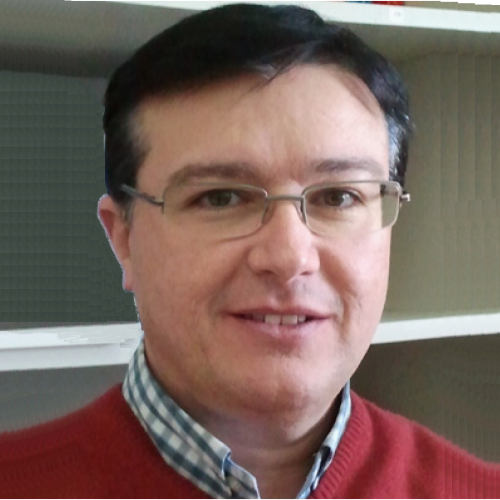
Arturo Morgado Estevez is a Professor at the University of Cadiz, working in the Department of Automation, Electronics, Architecture and Computer Networks Engineering. His primary affiliation is with the Engineering school at the University of Cadiz, where he leads research in the TEP940 Applied Robotics research group. His work spans multiple technical domains with a strong focus on neuromorphic engineering and robotics applications. His research interests encompass Neuromorphic Engineering, Robotics, Computer Architecture, Real-Time Computing, FPGA Design, Bio-inspired Computing, Address-Event-Representation Systems, and Embedded Systems. Morgado Estevez specializes in developing spike-based processing systems that mimic biological neural networks, particularly focusing on applications in robotics, computer vision, and sensor systems. His work bridges the gap between biological inspiration and practical engineering implementations, with particular emphasis on real-time performance and hardware efficiency. An analysis of his recent publications reveals a strong trend toward applied robotics and embedded systems, with increasing focus on medical applications, assistive technologies, and energy efficiency. His research has evolved from fundamental neuromorphic architectures to practical implementations in prosthetics, industrial inspection, and environmental monitoring systems. Many of his recent works combine machine learning techniques with specialized hardware implementations for specific application domains. Morgado Estevez has been actively involved in educational initiatives, particularly in computer science education and robotics teaching methodologies. His work includes developing innovative teaching approaches for programming languages and engineering education, with several publications focused on educational technology and pedagogical methods. His laboratory work centers around the TEP940 Applied Robotics research group, where he has developed multiple FPGA-based implementations of neuromorphic systems. His team has created complete spike-based architectures from Dynamic Vision Sensors to robotic motor control, demonstrating practical applications of bio-inspired computing in real-world robotic systems. The research group has made significant contributions to Address-Event-Representation processing and its implementation on parallel computing platforms.