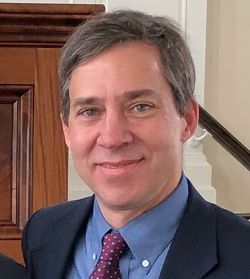
W. Todd Miller is a Professor in the Department of Physiology and Biophysics at Stony Brook University's Renaissance School of Medicine. With a PhD from Rockefeller University (1988), Dr. Miller leads an active research laboratory focused on tyrosine kinase signaling pathways and their role in cancer development and progression. Dr. Miller's educational background includes: PhD from Rockefeller University (1988) Dr. Miller's research focuses on understanding how tyrosine kinases recognize their target proteins, the regulatory mechanisms controlling tyrosine kinase activity, and developing strategies to block oncogenic tyrosine kinases. His work has significant implications for cancer treatment, building on the success of drugs like imatinib (Gleevec) for chronic myelogenous leukemia. The laboratory investigates approximately 90 human tyrosine kinases that regulate growth and differentiation in normal cells, with particular attention to their inappropriate activation in cancers. Analysis of Dr. Miller's recent publications reveals a strong focus on tyrosine kinase signaling in cancer, with particular attention to EGFR, Eph receptors, and non-receptor tyrosine kinases like Ack1 and Brk. His research spans multiple model systems including human cells, C. elegans, and Drosophila, demonstrating the evolutionary conservation of these signaling pathways. Recent work has expanded into neurodegenerative diseases like Alzheimer's, showing the broad applicability of kinase signaling research. Dr. Miller has mentored numerous students and postdoctoral fellows, with recent graduates including Sam (2025), Yunyoung (2024), and Sultan (2023). His laboratory maintains an active schedule with regular events including graduation parties, holiday celebrations, and scientific competitions like puzzle competitions. The lab appears to be well-funded, supporting research across multiple disease contexts from cancer to neurodegenerative disorders to autoimmune diseases. The Miller Lab maintains an active research program with regular group events including graduation parties, holiday celebrations, pool parties, and scientific competitions. The lab's research has evolved from fundamental studies of kinase mechanisms to translational work with implications for cancer therapy and other diseases, with recent publications appearing in high-impact journals including Nature, eLife, and FASEB Journal.