Dr. Paulius Viskaitis is a Researcher affiliated with the Rehabilitation Engineering Lab at ETH Zürich's Department of Health Sciences and Technology. His work focuses on the neurophysiological mechanisms underlying metabolic regulation, motor behavior, and neurological disorders. Key research areas include orexin neuron dynamics, hypothalamic circuitry, and their roles in movement, energy homeostasis, and epilepsy mitigation. His studies integrate experimental neuroscience with engineering approaches, exploring how neural networks encode metabolic states and behavioral outputs. Notable contributions include identifying orexin neurons' roles in blood glucose tracking and seizure suppression. Current research emphasizes translational applications in rehabilitation engineering and neurotherapeutic strategies. Dr. Viskaitis collaborates across disciplines, leveraging mouse models to investigate neural circuits governing feeding, locomotion, and decision-making. His findings bridge basic neuroscience with clinical applications, particularly in metabolic and motor disorders.
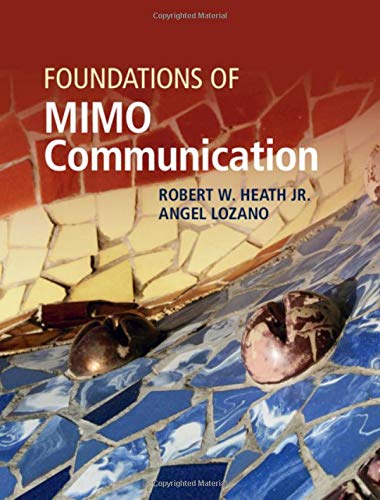
Professor Robert W. Heath Jr., a leading expert in wireless communications and MIMO systems, is currently the Charles Lee Powell Chair in Wireless Communication at the Jacobs School of Engineering, University of California, San Diego. He also holds an Adjunct Professor position at North Carolina State University's Department of Electrical and Computer Engineering. As President and CEO of MIMO Wireless Inc., he bridges academic research with industry applications. Education: Ph.D. in Electrical Engineering, Stanford University (2002) M.S. in Electrical Engineering, University of Virginia (1997) B.S. in Electrical Engineering, University of Virginia (1996) His research spans wireless communication systems, focusing on 5G/6G networks, vehicular communication, signal processing for MIMO, and mmWave technology. Recent work includes over-the-air federated learning, beam management, and energy-efficient antenna arrays for next-generation networks. Scientific Awards: IEEE Kiyo Tomiyasu Award (2019) NC State Innovator of the Year (2021) Qualcomm Faculty Award (2019) Fellow of the IEEE (2011) Fellow of the National Academy of Inventors (2017) Key publications address 6G extreme MIMO, vehicular networks, and machine learning for beamforming. His work has been recognized with multiple best paper awards, including the IEEE Stephen O. Rice Prize (2019) and EURASIP Best Paper Awards. He has authored influential books like 'Foundations of MIMO Communication' (2019) and 'Millimeter Wave Wireless Communications' (2014). Advising and Collaborations: Advised students: Ahmed Alkhateeb and Omar El Ayach Active in industry and government-funded research Current research group seeks collaborations with sponsors and top talent
Ghassan Hamarneh is a Professor in the School of Computing Science at Simon Fraser University (SFU). His research focuses on medical image analysis, with expertise in super-resolution microscopy, explainable AI, and biomedical computing. He teaches courses in biomedical computing and scientific computing, emphasizing practical applications like signal processing and health informatics. Education: Ph.D. in Signal and Systems (Chalmers University, 2001), M.Sc. in Digital Communications (Chalmers, 1997), B.Sc. in Electrical Engineering (Jordan University, 1995). Research Interests include developing AI-driven tools for medical imaging, analyzing cellular structures using super-resolution techniques, and addressing ethical challenges in AI deployment. His work bridges computational methods with clinical applications, such as lesion segmentation, PET image analysis, and bias mitigation in medical algorithms. Recent publications highlight advancements in network analysis of molecular structures, debiasing AI models, and improving diagnostic accuracy through deep learning. His lab contributes to open-source software like SuperResNET and MCS-DETECT for super-resolution microscopy analysis. No scientific awards explicitly listed, but his extensive publication record reflects recognition in the field. Advising and grants information is not detailed in the provided texts. Active in teaching, including CMPT 340 (Biomedical Computing) and special research projects.
Roman Kuc is a Professor of Electrical Engineering at Yale University, affiliated with the School of Engineering & Applied Science. He directs the Intelligent Sensors Laboratory, focusing on biomimetic sensors for robotics and bioengineering. His research explores brain-based devices (BBDs), sonar sensing, and neuromorphic processing inspired by biological systems. He holds a BSEE from Illinois Institute of Technology and a PhD from Columbia University. Dr. Kuc’s work bridges signal processing, robotics, and bioengineering, with applications in autonomous systems and clinical diagnostics. He has published over 200 papers and authored textbooks like Electrical Engineering in Context and The Digital Information Age . Notable honors include an honorary doctorate from the Glushkov Institute of Cybernetics and the Yale Sheffield Distinguished Teaching Award. His research themes include cognitive mapping via sonar echoes, neural network-based classification of environmental features, and biomimetic approaches to echolocation. Recent work emphasizes sensorimotor integration and robust performance in uncertain environments. Scientific awards highlight his contributions to robotics, signal processing, and education. His lab develops systems that emulate biological sensory mechanisms, aiming to advance robotics, medical applications, and assistive technologies.
Nicola McConkey is an Ernest Rutherford Fellow and Lecturer in Particle Physics at the School of Physical and Chemical Sciences, Queen Mary University of London. She joined the Particle Physics Research Centre in 2024 and leads experimental work in neutrino interactions and detector development. Her affiliations include the Centre for Fundamental Physics and Centre for Experimental and Applied Physics. McConkey is an active member of international collaborations including SBND, DUNE, and MicroBooNE, where she contributed to the assembly of SBND and pioneered high-statistics measurements of electron-neutrino interactions using liquid argon detectors. Her research focuses on three primary domains: neutrino physics (particularly neutrino-argon scattering cross-sections), quantum technology applications for neutrino mass measurement, and liquid argon time projection chamber (LArTPC) detector development. McConkey's investigations aim to advance fundamental particle physics through precision measurements and technological innovation, with emphasis on improving detection capabilities for next-generation neutrino experiments. Publications predominantly explore neutrino interaction dynamics, cross-section measurements, and detector performance optimizations across MicroBooNE, SBND, and DUNE collaborations. Research trends demonstrate consistent focus on refining LArTPC technologies, developing machine learning applications for particle reconstruction, and probing beyond-Standard-Model physics through neutrino interactions. Scientific Awards: Ernest Rutherford Fellowship (2022) McConkey advises two PhD students (Oscar Chow, Yoshita Dabburi) and leads significant research funding including: STFC Grant: 'Piecing together the neutrino mass puzzle' (£431,666; 2024-2027) STFC Outreach Grant: 'Quantum Technologies for Neutrino Mass' (£99,999; 2024-2025) She coordinates research within the Particle Physics Research Centre laboratory and collaborates extensively within the SBND, DUNE, and MicroBooNE international teams, alongside leading the Quantum Technologies for Neutrino Mass collaboration developing novel measurement techniques.
Peter Karsmakers serves as Associate Professor at KU Leuven's Department of Computer Science within the Faculty of Engineering Technology, based at the Geel Campus. He coordinates the Declarative Languages and Artificial Intelligence (DTAI) research group and holds leadership roles including coordinator of Research and Education for Computer Science across Geel and Diepenbeek Campuses. Karsmakers earned his PhD in Engineering Science in May 2010, focusing on kernel-based learning algorithms for sparse modeling and efficient predictions from large datasets. His doctoral work established foundations for his current research trajectory in resource-constrained machine learning systems. His research integrates machine learning with signal processing for real-time sensor data interpretation, specializing in anomaly detection from acoustic, radar, and accelerometer signals on embedded devices. Current projects address industrial condition monitoring, elderly care systems, and livestock facility monitoring through three main tracks: acoustic monitoring (e.g., SINS, WATCHDOG), radar-based systems (e.g., FARADAY, NextPerception), and smart electronics for power converters. Recent publications demonstrate strong trends in constraint-guided deep learning architectures for industrial applications, cross-environment robustness in sensor systems, and domain-knowledge integration to reduce data requirements. His work consistently bridges theoretical machine learning with practical implementations in resource-constrained environments. No scientific awards or fellowships were mentioned in the provided materials. Karsmakers supervises over 10 master's theses annually and coordinates a research team of 10 PhD students and a post-doc within DTAI-ADVISE. He has secured approximately 2.3 million euros in funding through VLAIO, EU-ECSEL, and bilateral industry contracts, including 10 active projects such as AutoEdgeML (2024-2028) and Fault Tolerant Neural Networks for Space Applications (2024-2027). He leads the DTAI-ADVISE research group focused on developing software that attaches semantics to sensor data on resource-constrained devices. The team operates across multiple campuses with specialized labs for acoustic monitoring (Geel), radar-based systems (in collaboration with ESAT-TELEMIC), and smart electronics (with Electrical Engineering department), maintaining strong industry partnerships with companies in healthcare, manufacturing, and agriculture sectors.
Jeffrey D. Schall is the E. Bronson Ingram Professor of Neuroscience at Vanderbilt University School of Medicine, where he has been a faculty member since 1989. His research focuses on the neural mechanisms underlying executive control, visual attention, and decision-making processes, particularly in relation to eye movements and cortical processing. Research Interests: Dr. Schall's work centers on cognitive neuroscience, with emphasis on how the brain controls attention, resolves conflict, and regulates speed versus accuracy in decision-making. He investigates neural correlates of error detection, distractor inhibition, and oculomotor control using electrophysiological and behavioral methods in primates and humans. His studies often involve the supplementary eye field and medial frontal cortical areas. Recent Research Trends: Analysis of his recent publications shows a strong focus on cortical mechanisms of cognitive control, including theta-band error signals, distractor positivity, and neural dynamics of speed-accuracy trade-offs. His work bridges experimental neuroscience with theoretical models of attention and executive function. Scientific Awards: E. Bronson Ingram Professor of Neuroscience Advising and Grants: While specific students and grants are not listed in the provided text, Dr. Schall leads an active research program with extensive publication output and editorial engagement. His long tenure and named professorship suggest a history of successful mentoring and external funding. Labs and Teams: Though no lab name is provided, Dr. Schall directs a neuroscience research group at Vanderbilt focused on cognitive control and visual processing. He collaborates widely with experts in attention, perception, and cognitive neuroscience across institutions.
Prof. Dr. Enkelejda Kasneci is a Distinguished Professor at the Technical University of Munich (TUM), leading the Chair of Human-Centered Technologies for Learning. She holds dual affiliations within TUM School of Social Sciences and Technology and TUM School of Computation, Information and Technology. Her research integrates AI, eye-tracking, and immersive technologies to advance educational paradigms. She directs the TUM Center for Educational Technologies and chairs the MSc program 'AI in Society.' Education: PhD in Computer Science from University of Tübingen (2013), M.Sc. from University of Stuttgart (2007). Earlier roles include Assistant Professor and Dean of Studies at University of Tübingen. Research Focus: Human-centered AI applications in education, multimodal interaction design, and privacy-preserving eye-tracking. Her work bridges technology and pedagogy through projects like AI tutor PEER, VR Classroom, and Privacy-Preserving Eye-tracking. Key Projects: Leads EU-funded projects VIVA (€1.125M), DigiProMIN (€163K), and SARA Kids (€244.8K). Active in policy initiatives like Europe’s AI Imperative. Awards: TUM Heinz Maier-Leibnitz Medal (2024), Liesel Beckmann Distinguished Professorship (2022), and Südwestmetall Research Prize (2014). Grants & Advising: Over €5M in secured funding across 12+ projects. Supervises 14+ PhD researchers and mentors postdocs in AI education and HCI. Labs & Teams: IT-Stiftung EdTech Lab houses advanced VR/eye-tracking setups. Research group includes 20+ members spanning AI, HCI, and educational technology.
Prof. Serge A. Shapiro is a Full Professor of Geophysics at Freie Universität Berlin since 1999 and Director of the PHASE consortium since 2004. He holds a Diploma in Applied Geophysics from Lomonosov Moscow State University (1982), a PhD from the Moscow Research Institute of Geosystems (1987), and a Habilitation from Karlsruhe University (1995). His research focuses on seismogenic processes, induced seismicity, rock physics, and subduction zone dynamics, with applications to geothermal energy, CO2 storage, and hydraulic fracturing. Education: Diploma in Applied Geophysics, Lomonosov Moscow State University (1982) PhD in Geophysics, Moscow Research Institute of Geosystems (1987) Habilitation, Karlsruhe University (1995) Research Interests: Induced seismicity from fluid operations CO2 storage and hydraulic fracturing risks Seismic hazard assessment Rock physics under stress Key Contributions: Developed the Seismogenic Index Model for induced earthquakes Pioneered DAS-based seismic monitoring techniques Advanced understanding of fault stability and pressure diffusion effects Awards: Virgil Kauffman Gold Medal (2013) for work in microseismic monitoring and rock physics Grants & Projects: PHASE consortium leader (2004–present) Utah FORGE EGS project advisor Labs/Teams: Seismology Group, Freie Universität Berlin PHASE university consortium
Dr. Brett J. Borghetti is a Professor of Computer Science in the Department of Electrical and Computer Engineering at the Air Force Institute of Technology (AFIT), Graduate School of Engineering and Management, Wright-Patterson AFB, OH. He was promoted to Professor in July 2022, following prior appointments as Associate Professor (2017) and Assistant Professor (2008/2013). His expertise lies in artificial intelligence, machine learning, deep learning, cybersecurity, and human-machine teaming. Education: Ph.D. in Computer Science, University of Minnesota, Twin Cities (2008) M.S. in Computer Systems, Air Force Institute of Technology (1996) B.S. in Electrical Engineering, Worcester Polytechnic Institute (1992) Dr. Borghetti's research focuses on applying machine learning to physical science sensors (hyperspectral, seismic, RF), cybersecurity, and enhancing human-machine team performance. He teaches graduate courses in machine learning, AI, data security, and algorithm design, and advises numerous MS and PhD students in areas such as sensor exploitation, cognitive workload, and cyber situational awareness. His recent publications demonstrate strong trends in deep learning for multimodal sensor fusion, nuclear security, and neuroergonomics. Scientific Awards: AETC Educator of the Year (2021, Civilian) AFIT Ezra Kotcher Teaching Award (2021) AFIT Teaching Excellence Award (2019) AF STEM Outstanding Science and Educator Award (2015) Multiple Eta Kappa Nu Outstanding Instructor Awards Air Force Meritorious Service Medal and other military honors Dr. Borghetti has advised numerous graduate students and led research projects with significant funding and applications in defense and national security. He has directed research in AI-driven sensor analysis, cyber defense systems, and adaptive automation. His work often involves collaboration with national labs and DoD agencies. He has contributed to major research initiatives in human factors, cyber intruder detection, and machine learning for operational environments. Labs and Research Teams: His work is associated with AFIT's research in cyber security, sensor exploitation, and human-machine systems. He collaborates with teams working on the Cyber Intruder Alert Testbed (CIAT), neuroergonomic modeling, and machine learning for defense applications.
Robert J.K. Jacob is a Professor of Computer Science at Tufts University, affiliated with the School of Engineering's Department of Computer Science. His research focuses on Human-Computer Interaction (HCI), particularly implicit brain-computer interfaces (BCI) using fNIRS and EEG technologies. He has held visiting positions at University College London, Université Paris-Sud, and MIT Media Lab. Education: Ph.D. in Computer Science from Johns Hopkins University. Research Interests : Jacob's work explores novel interaction techniques, adaptive interfaces, and BCI applications. Current projects emphasize real-time fNIRS-based systems for effortless user input, cognitive workload assessment, and neuroadaptive technologies. His lab investigates how brain signals can enhance user interfaces in domains like music learning, gaming, and urban design. Recent Trends in Articles : Recent publications highlight advancements in BCI design, neuroadaptive systems, and interdisciplinary applications of fNIRS. Work spans theoretical frameworks (e.g., NeuroCHI ethics) to practical tools like the Tufts fNIRS dataset. Key themes include improving BCI calibration, exploring AI's role in urban environments, and integrating affective computing into artistic interfaces. Awards : ACM Fellow (2016) ACM CHI Academy Membership (2007) Best Paper Award at CHI 2016 Advising & Grants : Supervised 15+ Ph.D. alumni in HCI and BCI. Served as Vice-President of ACM SIGCHI and co-chair of UIST/CHI conferences. Active in editorial roles for Human-Computer Interaction and ACM Transactions on Computer-Human Interaction . Labs & Teams : Directs the Tufts HCI Lab in the Joyce Cummings Center. Collaborates with interdisciplinary teams on projects like the Marble Track Audio Manipulator and Reality-Based Interaction Framework.
Vinod Vaikuntanathan is the Ford Foundation Professor of Engineering in the MIT EECS department and a principal investigator at MIT CSAIL. He holds a BTech from IIT Madras (2003), and SM/PhD degrees from MIT (2005/2009). His research focuses on cryptography, particularly fully homomorphic encryption (FHE), lattice-based cryptography, and quantum-resistant systems. He co-founded Duality Technologies as Chief Cryptographer. **Education:** BTech in Computer Science (2003), Indian Institute of Technology Madras SM in Electrical Engineering & Computer Science (2005), MIT PhD in Computer Science (2009), MIT **Research Interests:** His work spans FHE (enabling computations on encrypted data), lattice-based cryptography (post-quantum security), and intersections with quantum computing, machine learning, and privacy. He explores applications in secure computation, algorithm design, and cryptographic protocols. **Awards:** Recipient of the Gödel Prize (2022), Simons Investigator (2023), and MacVicar Faculty Fellow (2024). His work on FHE and lattice algorithms has earned widespread acclaim in cryptography and theoretical computer science. **Teaching & Mentorship:** Advanced cryptography courses at MIT (e.g., 6.5630, 6.876J) Advised PhD students (e.g., Sergey Gorbunov, Tianren Liu) and postdocs (e.g., Nir Bitansky, Mark Zhandry) now leading positions in academia and industry **Collaborations:** Organizer of the Charles River Crypto Day and MIT Cryptography Seminar Principal investigator on grants from NSF, DARPA, and Microsoft
Magdalena Szymczyk is a Lecturer in the Department of Biocybernetics and Biomedical Engineering at AGH University of Science and Technology, Faculty of Electrical Engineering, Automatics, Computer Science and Biomedical Engineering. Her work bridges embedded systems, biomedical signal processing, and geophysical data analysis. Research focuses on energy-efficient sensor networks, neural networks for GPR data classification, and mathematical transforms in signal analysis Expertise in parallel computing, real-time systems, and biomedical engineering applications Her publications (2015–2025) demonstrate a trajectory from parallel neural networks and S-transform/GPR methodologies to recent work on MicroPython in embedded systems. Key themes include energy optimization in distributed architectures and AI-driven signal processing across biomedical and geophysical domains. She has authored works on deterministic chaos in simulations, GPU image processing, and cybersecurity in microcontroller systems. Her current research emphasizes embedded systems security, medical signal diagnostics, and computational methods for geological analysis. She utilizes tools like OpenCL for GPU acceleration and MATLAB for parallel computing implementations.
Gianluca Setti is a Full Professor at the Department of Electronics and Telecommunications (DET) at Polytechnic University of Turin, where he has been serving since 2017. He previously held positions at the University of Ferrara from 1997 to 2017. His institutional roles include being the Contact Person for the Research Quality Evaluation process, Member of the Interdepartmental Center SmartData@PoliTO - Big Data and Data Science Laboratory, and Member of the University Quality Assurance Committee. He serves as Editor-in-Chief of the Proceedings of the IEEE, the first non-US editor to hold this position. Dr. Setti's research spans multiple interdisciplinary fields including machine learning, artificial intelligence, big data analytics, Internet of Things, biomedical signal processing, power electronics, and electromagnetic compatibility. His work bridges theoretical foundations with practical applications, particularly focusing on compressed sensing, neural networks, and circuit design for specialized applications. His research has significant implications for healthcare, sustainable infrastructure, and next-generation electronics. His publication record reveals a consistent trajectory from foundational work in chaotic systems and neural networks to contemporary applications in AI, IoT, and edge computing. The most recent publications demonstrate his focus on anomaly detection at the edge, neural oracles for biosignal processing, and power electronics innovations. His work shows strong integration between theoretical signal processing and practical circuit implementation. 1998 Caianiello prize (best Italian Ph.D. thesis on Neural Networks) IEEE Fellow (2006) IEEE Circuits and Systems Society Distinguished Lecturer (2004, 2015) 2004 IEEE CAS Society Darlington Award 2013 IEEE CAS Society Meritorious Service Award 2013 IEEE CAS Society Guillemin-Cauer Award 2019 IEEE Transactions on Biomedical Circuits and Systems best paper award Multiple best paper awards at major conferences including ECCTD2005, EMCZurich2005, ISCAS2011, PRIME2019, and EMCCOMPO2019 Dr. Setti has supervised numerous PhD students across various research domains including electromagnetic compatibility, signal and power integrity, communication networks, mechatronics and robotics. His research is supported by significant funding including national PRIN projects, EU-funded JTI-ECSEL initiatives, and commercial contracts. He leads the VLSILAB Group at DET, focusing on circuit architectures, embedded systems, and AI applications. His current projects include DECORI (anomaly detection), StorAIge (embedded storage for AI), PROGRESSUS (energy infrastructure), CONNECT (smart grid), and CONVERGENCE (wearable healthcare applications).
Ashley Moseman serves as an Assistant Professor of Integrative Immunobiology and Assistant Professor of Cell Biology at Duke University School of Medicine. She holds significant affiliations as a Faculty Network Member of the Duke Institute for Brain Sciences and a Member of the Duke Cancer Institute. Her pioneering research examines the delicate balance between neuronal function and immune protection at the olfactory neuroepithelial barrier, where sensory neurons directly interface with the external environment while protecting the central nervous system from pathogens. Dr. Moseman completed her Ph.D. at Harvard University in 2011, establishing the foundation for her interdisciplinary career at the intersection of immunology and neuroscience. Her research program focuses on understanding how immunological surveillance operates at the unique olfactory barrier, where neurons must contact the external environment to perform chemosensory functions while preventing pathogens from entering the CNS. The Moseman Lab employs cutting-edge multiphoton intravital imaging to visualize immune responses in vivo, revealing dynamic cellular interactions during viral infections and responses to pathogens like Naegleria fowleri. Current projects investigate olfactory barrier mechanisms, neuroimmune crosstalk, host-pathogen dynamics, and immune responses to deadly neurotropic pathogens. Analysis of Dr. Moseman's publication record demonstrates a cohesive research trajectory centered on neuroimmunology and mucosal defense mechanisms. Her work spans fundamental immunological processes, host-pathogen interactions at neural interfaces, and translational applications for understanding neurological complications of infections. A significant portion of her recent research addresses SARS-CoV-2-related olfactory dysfunction and the immunological basis of pathogen invasion through the olfactory system into the central nervous system. Dr. Moseman has secured substantial research funding including 'Using tissue-specific Naegleria opportunism to dissect olfactory immunity' (2025-2030), 'Characterizing olfactory plasma cell dynamics and survival niche within the upper airway' (2024-2029), and the 'Advanced Immunobiology Training Program for Surgeons' (2019-2029). She actively contributes to graduate education through the Medical Scientist Training Program (2022-2027) and teaches advanced immunology courses including IMMUNOL 736 and IMMUNOL 494. The Moseman Lab represents a leading center for neuroimmunology research, utilizing in vivo imaging to visualize immune responses within the central nervous system. Their work has significant implications for understanding how pathogens breach neurological barriers and how the immune system protects the brain while preserving essential sensory functions, with potential applications for treating neurological infections and inflammatory conditions.