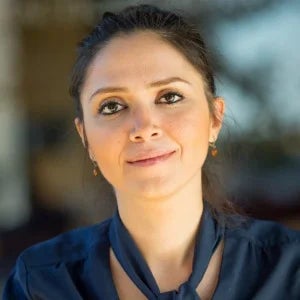
Dijana Petrovska is a Lecturer at Telecom SudParis, part of the Université Paris-Saclay. Her work focuses on biometric systems, medical diagnostics, and privacy-preserving technologies. She has contributed to projects like the EMPATHIC Virtual Coach, aimed at improving elderly health through AI-driven virtual assistants. Her research interests include facial recognition, speech processing, and cryptographic key regeneration using biometrics. Notably, she has pioneered methodologies for early-stage Parkinson's disease detection via facial action units and voice analysis. She also explores secure authentication systems combining biometrics with cryptography, emphasizing privacy preservation. Publications span over two decades, with recent work emphasizing cross-disciplinary applications of AI in healthcare and security. While no specific academic awards are listed, her impactful contributions to the field of biometric and medical AI are evident through her prolific publication record and active project leadership. Her involvement in collaborative projects like SpeechXRays and EMPATHIC demonstrates a commitment to bridging technical innovation with real-world societal needs. Though no student advisees are listed, her work likely impacts both academic and industry research ecosystems.
Prof. Dr. Alexander Mehler is a full professor of Computational Humanities and Text Technology at the Goethe University Frankfurt , where he leads the Text Technology Lab (TTLab) . He has held leadership roles in multiple academic societies including the German Society for Computational Linguistics & Language Technology and the German Society of Semiotics , and is a founding member of the German Society for Network Research (DGNet) . His research focuses on quantitative analysis of textual units in spoken/written communication, linguistic network modeling , and 4D text technologies integrating Virtual/Augmented Reality. Current projects include ENTAILab (DFG-funded infrastructure for social sciences), FACES (VR-based survey research), and C08/B05 modules in the Critical Online Reasoning (COR) framework. He has supervised numerous PhD candidates in areas spanning multilingual NLP , 3D scene generation from text , stemma analysis tools , and network-theoretic approaches to language classification . His lab's work intersects with machine learning , cognitive modeling , and digital humanities infrastructure . As principal investigator, he leads projects funded by DFG (SPP 2431, SFB 1629, FID 326061700) and LOEWE programs , with recent developments in mimodockerized NLP pipelines and VR-based learning systems . Key collaborations include ACM Conference on Hypertext and KONVENS NLP conferences . His methodological expertise spans multimodal data analysis , neural active learning , and cross-linguistic computational models . He has developed open-source infrastructures for digital humanities research and educational analytics , including the TextImager platform .
Oliver Baumann serves as Professor of Mathematics and Physics at the Department of Industrial Engineering within the Faculty of Engineering and Computer Science at Hamburg University of Applied Sciences (HAW Hamburg). His office is located in Room 0.17b at Ulmenliet 20, 21033 Hamburg, with office hours held Wednesdays 10:00–11:00 by email appointment. His academic background includes a physics diploma from CAU Kiel, a diploma thesis in applied optics at JGU Mainz, and a doctorate in astronomy from MPIA Heidelberg. Prior to his professorship, he worked as a scientific employee at Carl Zeiss AG in Oberkochen. Baumann's research spans applied and technical optics , experimental physics , and scientific image processing , with emphasis on optical measurement technology and precision mechanical-optical systems. His work bridges theoretical physics with industrial applications in aerospace, medical technology, and optical instrumentation. Key projects include radar system optimization for field mouse detection, fluorescence imaging evaluation in medical contexts, and photovoltaic-heat transport system design. His publications reveal strong focus on optical engineering (75% of works), instrumentation patents (60%), and educational methodologies (20%). Recent trends show increasing specialization in medical optics applications since 2016, alongside consistent contributions to astronomical instrumentation. Graduates' award for particularly dedicated teachers: 'Golden Duck' 2023 Graduates' award for particularly dedicated teachers: 'Golden Duck' 2019 Graduates' award for particularly dedicated teachers: 'Golden Duck' 2018 Graduates' award for particularly dedicated teachers: 'Golden Duck' 2017 Graduates' award for particularly dedicated teachers: 'Golden Duck' 2016 Baumann actively supervises graduate theses while serving as Chairman of the Examination Board for HWI bachelor's and master's programs. He holds multiple institutional roles including BAFöG representative, Deputy member of Faculty Council LS, and DAAD reviewer for Nigeria (PTDF). His professional affiliations include the European Optical Society (EOS), German Society for Applied Optics (DGaO), German Physical Society (DPG), and University Teachers' Association (hlb). His research activities center around precision mechanical-optical systems development, with emphasis on imaging technologies and measurement instrumentation. Current projects focus on optical metrology applications in aerospace and medical technology sectors.
Philipp van Kempen is a researcher at the Chair of Design Automation (Prof. Schlichtmann) at the Technical University of Munich. His work focuses on electronic design automation, specifically targeting RISC-V architecture, TinyML optimization, and LLVM compiler infrastructure for custom hardware accelerators. Key Research Areas: RISC-V ISA extensions, autovectorization, neural network accelerators, and compiler toolchain automation. Collaborations: Works with Daniel Mueller-Gritschneder, Ulf Schlichtmann, and Jefferson Parker Jones. His recent publications highlight contributions to benchmarking TinyML CNN kernels on RISC-V vector hardware, developing semi-automated LLVM support for ISA extensions, and optimizing TinyML inference through frameworks like MLonMCU and muRISCV-NN.
Maria Rosa Paterniti is a Lecturer at the University of Palermo's School of Medicine and Surgery, specializing in Speech Therapy, Rehabilitation Sciences, and Neuroscience. She actively supervises theses and provides clinical guidance at the Phoniatrics and Speech Therapy Unit. Research Interests: Her work focuses on auditory processing disorders, pediatric hearing loss interventions, augmentative communication technologies, and burnout prevention in rehabilitation professionals. She emphasizes neuroplasticity-driven therapies and multidisciplinary team strategies. Recent Trends: Over the past three years, her supervised theses have addressed clinical risk management , freelance healthcare models , and digital rehabilitation records , reflecting a blend of technological and policy-oriented approaches.
Dr. Charles Malleson is a Research Fellow in Computer Vision at the Centre for Vision, Speech and Signal Processing (CVSSP) at the University of Surrey, UK. His work focuses on computer vision, 3D reconstruction, and motion capture technologies using RGB-D sensors and multi-view video systems. Malleson's educational background includes a PhD, MSc, and BEng (Hons), though specific institutions are not mentioned in the provided text. His research interests span computer vision, 3D reconstruction, motion capture, RGB-D data processing, visual alignment, human pose estimation, graphics, and more recently, animal pose estimation with a focus on canine subjects. His recent publications reveal a strong research trajectory focused on practical applications of computer vision. Beginning with foundational work in 3D reconstruction and motion capture using RGB-D sensors and multi-view video systems, his research has evolved toward increasingly specialized applications including wearable visual correction devices, animal pose estimation, and neural network-based image processing. A notable trend is his expansion from human motion capture to animal pose estimation, developing synthetic datasets like SyDog for training deep learning models. His work often combines multiple sensor modalities and emphasizes real-time processing capabilities for practical deployment. Scientific Awards: Leverhulme Trust Early Career Fellowship Malleson has been instrumental in developing the TotalCapture dataset, which combines multi-viewpoint video, IMU sensor data, and accurate 3D skeletal joint ground truth. His research has received significant funding, including the prestigious Leverhulme Trust Early Career Fellowship. His work bridges academic research and practical applications, particularly in medical devices (visual alignment correction) and animal pose estimation technologies. As a member of CVSSP, Malleson contributes to one of the world's leading vision, speech, and signal processing research centers. His work on hybrid modeling of non-rigid scenes, real-time motion capture, and volumetric graphics demonstrates the center's commitment to pushing the boundaries of visual computing technology. His recent focus on animal pose estimation represents an innovative expansion of traditional human-centered computer vision research.
Odd Kolbjørnsen is an Associate Professor at the University of Oslo's Department of Mathematics, affiliated with the Faculty of Mathematics and Natural Sciences. His primary research focuses on geophysics, seismic inversion, Bayesian statistics, and data-driven reservoir modeling. He holds a strong academic background in mathematical geosciences, with contributions to methodologies like Bayesian inversion, Markov mesh modeling, and deep learning applications in geoscience. His work bridges traditional geophysical analysis with modern computational techniques, emphasizing uncertainty quantification and high-resolution imaging in reservoir characterization. Key research areas include seismic data reconstruction, multi-task neural networks for flow metering, and 4D seismic inversion for lithology-fluid prediction. His publications span journals like Geophysics , Mathematical Geosciences , and Neural Networks , reflecting interdisciplinary collaborations in geostatistics and energy engineering. No scientific awards are explicitly listed, though his extensive publication record underscores his research impact. His advisory role and involvement in research groups like 'Statistics and Data Science' at UiO highlight his academic leadership. Ongoing work focuses on integrating machine learning with geophysical data analysis and CO2 sequestration optimization.
Kai Guo is an academic affiliated with the School of Computer Science and Information Engineering at Hefei University of Technology, China. His research spans interdisciplinary areas including artificial intelligence, robotics, and educational technology. He has collaborated with institutions globally on projects involving AI applications in education, industrial process optimization, and computer vision. Key research interests include AI-driven educational tools, robotics systems, and data-driven industrial analysis. Notable contributions include developing prediction models for blast furnace operations, AI-enhanced language learning platforms, and visual perception techniques in virtual reality. His work often bridges theoretical computer science with practical applications in manufacturing, education, and healthcare. Publications from 2025 focus on advanced machine learning techniques such as graph-based retrieval systems, diffusion models for anomaly detection, and VR visualization methods. Collaborations with Samuel Kai-Wah Chu and David James Woo highlight his engagement in educational technology innovation. Guo has no listed scientific awards but maintains an active research agenda with over 185 publications. His work emphasizes cross-disciplinary approaches to solving complex technical and pedagogical challenges.
Sophia Shao is an Associate Professor in the Department of Electrical Engineering and Computer Sciences (EECS) at the University of California, Berkeley. She was promoted to Associate Professor with tenure in July 2024 after serving as an Assistant Professor from August 2019 to June 2024. Previously, she worked as a Senior Research Scientist at NVIDIA from October 2018 to July 2019. Her academic journey began with a Bachelor of Electrical Engineering from Zhejiang University, China (2005-2009), followed by a Master of Science (2009-2014) and Ph.D. (2009-2016) in Computer Science from Harvard University. Shao's research focuses on computer architecture, with special emphasis on domain-specific accelerators, heterogeneous architecture, and agile VLSI design methodology. Her work bridges the gap between hardware and software through systematic approaches to accelerator design and evaluation. She leads research efforts in the Agile Design of Efficient Processing Technologies (ADEPT), Berkeley Emerging Technologies Research (BETR), Berkeley Wireless Research Center (BWRC), and SpeciaLIzed Computing Ecosystems (SLICE) centers. Her recent publications reveal a strong trend toward holistic hardware-software co-design for machine learning acceleration, with particular focus on efficient neural network accelerators, multi-tenant execution environments, and automated design methodologies. Her research spans from low-level circuit design to system-level architecture, demonstrating expertise across the entire computing stack. Notably, her work on Gemmini, Stellar, and Virgo represents significant contributions to the field of domain-specific accelerator design and integration. Sloan Research Fellowship (2024) Anita Borg Early Career Award (2024) NSF CAREER Award (2023) Google Research Scholar Award (2023) IEEE TCCA Young Computer Architect Award (2022) Intel Rising Star Faculty Award (2022) ISCA Distinguished Artifact Award (2023, 2024) Best Paper Award at DAC 2021 Professor Shao actively mentors a large group of graduate and undergraduate students, with several former students now at leading technology companies including NVIDIA, Microsoft, and Apple. Her research has been supported by multiple grants from NSF, Google, Intel, and other organizations. She leads several open-source research projects including Gemmini, Stellar, Chipyard, and RoSÉ, which have gained significant traction in both academic and industrial research communities. Her lab, part of the SLICE ecosystem, focuses on creating next-generation computing platforms through vertically integrated hardware-software approaches.
Armin Lechler , holding the title of Dr.-Ing. , is a Senior Researcher at the Institute for Control Engineering of Machine Tools and Manufacturing Units (ISW) at the University of Stuttgart. He is also a key member of the Cluster of Excellence IntCDC (Integrative Computational Design and Construction for Architecture). His work focuses on control engineering, automation technology, and robotics, with a particular emphasis on data-driven manufacturing systems and cyber-physical platforms.
Szymon Barczentewicz, PhD, Eng., serves as a Lecturer at AGH University of Science and Technology within the Department of Power Electronics and Automation of Energy Conversion Systems, Faculty of Electrical Engineering, Automatics, Computer Science and Biomedical Engineering. His academic position and research activities confirm active faculty status in Poland's leading technical university. Dr. Barczentewicz's research concentrates on Power Electronics , Power Quality , and Smart Grid technologies, with particular expertise in harmonic analysis, islanding detection for distributed generation systems, and voltage fluctuation compensation. His work bridges theoretical development with experimental validation, frequently utilizing phasor measurement units (PMUs), hardware-in-the-loop simulations, and advanced signal processing techniques to address grid stability challenges in renewable-rich environments. Analysis of his 15 most recent publications reveals consistent focus on grid integration challenges: 60% address islanding detection and prevention, 40% cover power quality monitoring (including supraharmonics), and 30% explore data compression for smart grid applications. His 2025-2024 work demonstrates increasing emphasis on AI-enhanced grid management and experimental validation of control systems for renewable integration. Collaboration with industry partner Enea Operator features prominently in his research program, particularly in power quality monitoring and energy balancing projects. As an active member of AGH's Energy Quality Team ( Zespołu Jakości Energii ), he contributes to experimental developmental research and educational initiatives in electrical power delivery systems.
Yalda Shahriari is an Associate Professor in the Department of Electrical, Computer, and Biomedical Engineering at the University of Rhode Island . Her research focuses on neural engineering , biomedical signal processing , and brain-computer interfaces for assistive technology. Education Postdoctoral Research Associate, University of California, San Francisco (2016) Ph.D., Biomedical Engineering, Old Dominion University (2015) M.Sc., Biomedical Engineering, Iran University of Science and Technology (2011) B.Sc., Electrical Engineering, Ferdowsi University of Mashad (2008) Research Interests include graph-based neural dynamics modeling, multimodal neuroimaging (EEG/fNIRS), and machine learning for healthcare. She develops hybrid BCI systems to assist patients with amyotrophic lateral sclerosis (ALS) and parkinson’s disease , emphasizing personalized algorithms and nonlinear neural modeling . Publication Trends show a focus on graph theory , machine learning , and hybrid BCI systems for neurological disorders. Her work integrates fNIRS , EEG , and motion capture to study brain-body interactions. Grants include multiple National Science Foundation (NSF) projects as Principal Investigator , covering smart textile NICU monitoring , auditory processing dynamics , and personalized BCI algorithms for ALS patients.
Chitaranjan Das is a Professor in the Department of Computer Science and Engineering at Penn State University . His work aligns with the United Nations Sustainable Development Goals , particularly contributing to advanced computing infrastructure and global technological innovation. Das actively collaborates with researchers like Anand Sivasubramaniam , Mahmut Kandemir , and Vijay Narayanan on cutting-edge projects. Key Research Areas: Computer Architecture, Network-on-Chip (NoC) systems, Quality of Service (QoS), Spiking Neural Networks (SNNs), Cloud Computing, and Bioinformatics. Das leads projects funded by the National Science Foundation (NSF), including SHF: Medium: Exploring an Edge Platform Design Trajectory for Next Generation XR Applications and CNS Core: Small: Embracing cross stack heterogeneity in next-generation cloud platforms . His research outputs span over 300 publications, with recent works focusing on Edge Computing, Serverless Computing, and hardware acceleration for genomic data analysis. Recent Publications (2024-2025) highlight his interdisciplinary approach, integrating Machine Learning with FPGA-based acceleration for nanopore sequencing, optimizing VR streaming on edge devices, and enhancing serverless computing on heterogeneous hardware. His projects often bridge the gap between system design and algorithmic innovation , with a strong emphasis on real-world applications in cloud platforms and neural networks.
Professor Weizi Li serves as Professor of Informatics and Digital Health, Deputy Director of the Informatics Research Centre, and Programme Director for MSc Digital and Technology Solutions and MSc Informatics (BIT) at Henley Business School, University of Reading. She directs the EPSRC Future Blood Testing for Inclusive Monitoring and Personalised Analytics Network+, demonstrating leadership in digital health innovation. Her research integrates artificial intelligence, machine learning, and information systems to solve critical healthcare challenges. Key focus areas include digital health analytics, decision support systems for clinical pathways, and personalized medicine applications. Current work targets inflammatory arthritis detection, diabetes management through glucose monitoring, and reducing healthcare inequalities via predictive attendance systems implemented at Royal Berkshire NHS Foundation Trust. Recent publications reveal consistent application of multimodal machine learning to healthcare data, emphasizing uncertainty quantification, risk stratification, and real-world clinical implementation. Her work bridges technical AI advancements with practical healthcare delivery improvements across diverse patient populations. Professor Li has earned significant recognition for research impact including the ESRC O2RB Excellence in Impact Award (2018), Research Engagement and Impact Award (2020), and Times Higher Education STEM Award (2025). Her contributions to patient safety and digital health innovation have been acknowledged through Health Service Journal awards and British Computer Society fellowship. ESRC O2RB Excellence in Impact Award (2018) Research Engagement and Impact Award (2020) Shortlisted for 2022 Impact Award Health Service Journal Patient Safety Award Times Higher Education STEM Award (2025) Fellow of British Computer Society As Principal Investigator, she has secured major funding from EPSRC, NIHR, ESRC, The Health Foundation, NHS, and Innovate UK totaling over £3 million. Current projects include the £1.16M NIHR RMD-Health initiative for rheumatic disease detection and the £600k EPSRC grant for inflammatory arthritis prediction. Her Royal Berkshire NHS partnership has successfully implemented machine learning systems reducing outpatient non-attendance. She leads the Informatics Research Centre's digital health team, fostering collaborations between academia, NHS trusts, and industry partners to translate AI research into clinical practice through the EPSRC Future Blood Testing Network+ and multiple collaborative innovation funds.
Núria Ferran Ferrer is an Associate Professor at the Faculty of Information and Audiovisual Media at the University of Barcelona, where she has been employed since 2021. In July 2023, she was appointed as Delegate of the Rector for the direction of the Unit of Equality and as Director of the PhD Programme of Information and Communication. Her academic career spans over two decades, with previous positions including associated lecturer at the Universitat Oberta de Catalunya (2005-2021) and part-time professor at multiple Catalan universities. Her educational background includes: European PhD in Information Science from the University of Barcelona (2010) with "excellent cum laude" distinction Master's degree in Information and Knowledge Society from IN3-UOC (2005) Bachelor's degree in Information and Documentation from UOC (2003) Bachelor's degree in Journalism from Universitat Autònoma de Barcelona (1998) Núria Ferran Ferrer's research primarily focuses on gender bias in digital knowledge production systems, particularly Wikipedia, and the application of user experience (UX) design principles to information systems. Her work bridges the gap between information science, gender studies, and digital humanities, examining how knowledge organization systems perpetuate or challenge gender inequalities. She has conducted extensive research on Wikipedia's front page, category systems, and editorial processes from a gender perspective, while also exploring the application of UX methodologies to citizen science and open educational resources. Her approach combines computational analysis, content analysis, and qualitative interviews with Wikipedia editors to develop comprehensive understandings of gender representation in digital knowledge spaces. Her recent publications demonstrate a consistent focus on gender bias in Wikipedia, with particular attention to front page representation, category systems, and editorial decision-making. These works employ mixed-methods approaches combining computational analysis, content analysis, and qualitative interviews with Wikipedia editors. The research spans multiple language editions of Wikipedia, with particular focus on Spanish, English, and Catalan editions, and often involves interdisciplinary collaboration with computer scientists, information scientists, and gender studies scholars. Her work has significantly advanced understanding of how gender biases manifest in digital knowledge systems and has provided evidence-based recommendations for addressing these systemic issues. She has received significant research funding for her work on gender and Wikipedia: Principal Investigator for the HerStory project (Spain's National R&D&I Plan, Ref. PID2023-147673OB-I00) Principal Investigator for the Women and Wikipedia (W&W) project (Spain's National R&D&I Plan, Ref. PID2020-116936RA-I00) Principal Investigator for the Cover Women project (Wikimedia Foundation Research Grants) Participation in European projects including Euryka (H2020-SC6-REV-INEQUAL-2016) and STEM4Youth (H2020-710577) Núria Ferran Ferrer serves as co-director of academic journal BiD and has been actively involved in supervising PhD students, particularly in the context of her research projects on Wikipedia and gender. She has collaborated with international research teams and has conducted research stays at the University of Sheffield (2009) and the University of Tallin (2015). Her work with the Espais Crítics research group (2017 SGR 843 SCG) demonstrates her commitment to critical approaches to information systems. She has also been instrumental in developing practical resources like the "Guia de la Xarxa Vives per a la Incorporació de la perspectiva de gènere a la docència de Ciències de la Informació i la Biblioteconomia" to translate research findings into educational applications. She is a member of the Centre de Recerca Informació, Comunicació i Cultura and has been instrumental in developing collaborative projects between academia and cultural institutions, particularly libraries. Her approach emphasizes the societal impact of research and the importance of translating academic findings into practical applications that promote social change, particularly through her work with the Cover Women and HerStory projects which directly address gender disparities in Wikipedia.