معرفی
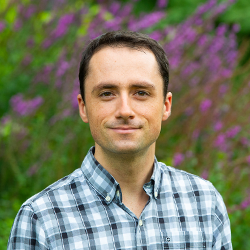
Dr. Charles Malleson is a Research Fellow in Computer Vision at the Centre for Vision, Speech and Signal Processing (CVSSP) at the University of Surrey, UK. His work focuses on computer vision, 3D reconstruction, and motion capture technologies using RGB-D sensors and multi-view video systems.
Malleson's educational background includes a PhD, MSc, and BEng (Hons), though specific institutions are not mentioned in the provided text. His research interests span computer vision, 3D reconstruction, motion capture, RGB-D data processing, visual alignment, human pose estimation, graphics, and more recently, animal pose estimation with a focus on canine subjects.
His recent publications reveal a strong research trajectory focused on practical applications of computer vision. Beginning with foundational work in 3D reconstruction and motion capture using RGB-D sensors and multi-view video systems, his research has evolved toward increasingly specialized applications including wearable visual correction devices, animal pose estimation, and neural network-based image processing. A notable trend is his expansion from human motion capture to animal pose estimation, developing synthetic datasets like SyDog for training deep learning models. His work often combines multiple sensor modalities and emphasizes real-time processing capabilities for practical deployment.
Scientific Awards:
- Leverhulme Trust Early Career Fellowship
Malleson has been instrumental in developing the TotalCapture dataset, which combines multi-viewpoint video, IMU sensor data, and accurate 3D skeletal joint ground truth. His research has received significant funding, including the prestigious Leverhulme Trust Early Career Fellowship. His work bridges academic research and practical applications, particularly in medical devices (visual alignment correction) and animal pose estimation technologies.
As a member of CVSSP, Malleson contributes to one of the world's leading vision, speech, and signal processing research centers. His work on hybrid modeling of non-rigid scenes, real-time motion capture, and volumetric graphics demonstrates the center's commitment to pushing the boundaries of visual computing technology. His recent focus on animal pose estimation represents an innovative expansion of traditional human-centered computer vision research.