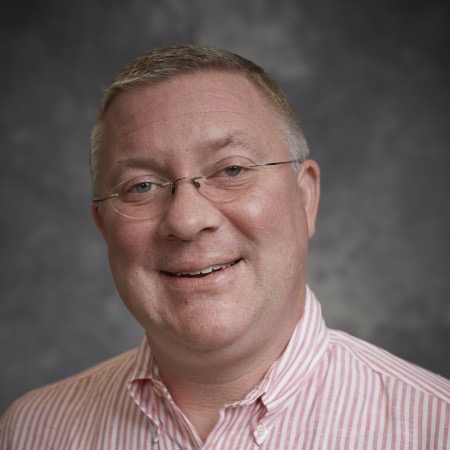
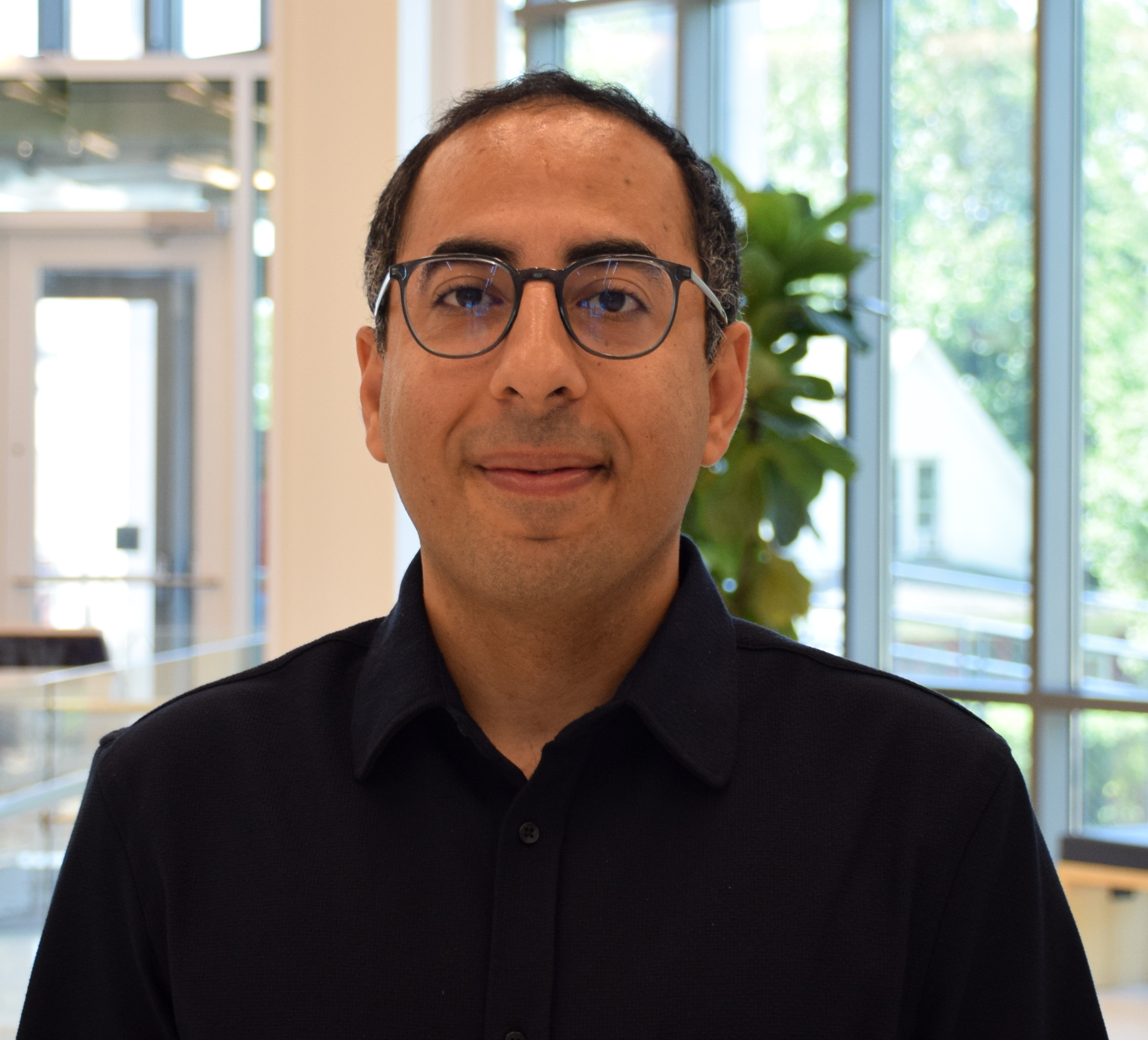
Soufiene Djahel is a Professor at the Centre for Future Transport and Cities (CFTC) at Coventry University, UK. His research focuses on connected and autonomous vehicles (CAVs), unmanned aerial vehicles (UAVs), cyber security, and smart cities. He holds a PhD in Secure Routing and Medium Access Protocols from Université des Sciences et Technologies de Lille (2010), and has held academic positions including Senior Lecturer at the University of Huddersfield and Manchester Metropolitan University. His research interests include CAV coordination protocols, cyber-physical security solutions, and intelligent transportation systems. Djahel leads projects such as the £1.2M AeroPharma Logistics initiative and has secured funding from the Newton Fund and JSPS. He is a recipient of the 2021 JSPS Invitational Fellowship and has published extensively in IEEE journals and conferences. Current projects explore UAVs-as-a-service, digital twins for CAVs, and B5G/6G for smart infrastructure. He advises PhD students on topics like AI-based threat mitigation and transport electrification. Djahel also serves as an external examiner and editorial board member for journals like IEEE Transactions on Intelligent Transportation Systems.
Ramana Vinjamuri is an Associate Professor in the Department of Computer Science and Electrical Engineering at the University of Maryland, Baltimore County (UMBC). He holds a secondary appointment as Visiting Professor at the Indian Institute of Technology, Hyderabad, India. His academic journey includes a Ph.D. in Electrical Engineering from the University of Pittsburgh (2008), M.S. in Bioinstrumentation from Villanova University (2004), and B.Tech. in Electrical and Electronics Engineering from Kakatiya University (2002). Dr. Vinjamuri's research focuses on Brain-Machine Interfaces (BMIs) for upper-limb prostheses control , neuroprosthetics and exoskeletons , machine learning in motor control , and neurophysiological signal processing . His work extends synergy-based models to control 37-dimensional hand movements, addresses human-robot interaction through emotionally intelligent systems, and develops neurotechnologies for substance use disorder using wearable sensors and AI. NSF CAREER Award (2019) NSF IUCRC BRAIN Center Planning Grant (2020) Harvey N Davis Distinguished Teaching Assistant Professor Award (2018) His publications demonstrate expertise in EEG and EMG signal analysis , deep learning for motor decoding , synergy modeling , and humanoid robot control . The Vinjamuri Lab at UMBC involves graduate, undergraduate, and high school researchers, with international collaborations in India and the US.
Dr. Lionel Jayaraj is a Lecturer in Games (Visual Effects and Animation) at the University of Bedfordshire's School of Computer Science and Technology. An independent Oculus Game developer with industry experience (2011-2014) and engineering background, he holds a PhD and MRes in Virtual Reality Games from University of Bedfordshire, PGCHPE from Staffordshire University, and a Bachelors of Engineering and Technology from Pondicherry University. His research focuses on Serious Games using Extended Reality (AR, VR, MR), aiming to inspire the next generation of game developers and advance VR through innovative pedagogy. His work bridges gaming technology with practical applications in training and education. Dr. Jayaraj's recent publications explore immersive sports simulations, AI in game development, and performance capture technologies, demonstrating a consistent focus on enhancing user experience through technological innovation.
Simon Masnou is a Full Professor at Université Claude Bernard Lyon 1, affiliated with the Institut Camille Jordan (CNRS UMR 5208). He holds leadership roles as Head of the 'Applied Mathematics, Statistics' Master's degree and Head of the 'M2 Maths in Action' program. Previously, he served as Director of the Camille Jordan Institute (2018-2022). His research focuses on applied mathematics, image processing, shape optimization, and geometric measure theory, with contributions to variational models, geometric flows, and applications in computer vision and materials science. Education: PhD in Mathematics (1998, Paris Dauphine) and HDR (2008, Paris 6). Research projects include ANR STOIQUES (2024-2028), PEPR PDE-AI (2023-2028), and collaborations with industry on topics like defect prediction in aluminum production and high-dimensional data analysis. Teaching includes courses on linear algebra, optimization, and machine learning at undergraduate and graduate levels. Key contributions span phase field models, varifold-based surface approximation, and image inpainting. He supervises PhD students in geometric variational problems and computational methods. His work bridges theoretical mathematics with industrial challenges, addressing issues in materials science, medical imaging, and cultural heritage preservation.
Jean-Louis Scartezzini is an Honorary Professor at École Polytechnique Fédérale de Lausanne (EPFL), affiliated with the School of Architecture, Civil and Environmental Engineering (ENAC) and the Solar Energy and Building Physics Laboratory (LESO-PB). His research focuses on natural/artificial lighting, solar energy systems, and building technology, with a strong emphasis on energy efficiency and sustainability. Director of LESO-PB since 1994 Founded and led several institutes, including the Institute for Infrastructure, Resources, and Environment (2002–2009) Doctorat in Physics from EPFL (1986) Extensive international collaborations, including visiting roles at NUS (2009) and LBNL/UCLA (1988) Research interests include: - Daylighting and lighting control systems - Passive/active solar technologies - Urban microclimate and energy systems - Stochastic simulation and predictive control Recent work addresses climate change impacts on energy systems, urban sustainability, and machine learning applications in energy optimization. Key publications span lighting health impacts, renewable integration, and microclimate modeling Awards include the European Solar Prize (2001/2002) and Walsh-Weston Bronze Medal (1998) Mentored over 20 PhD students, many leading in academia and industry (e.g., Marilyne Andersen at EPFL, Flavio Foradini at E4Tech).
Patrick T. Brandt is a Professor of Political Science, Public Policy, and Political Economy at the University of Texas at Dallas , affiliated with the School of Economic, Political and Policy Sciences . His work integrates advanced statistical methods with political science, focusing on time series analysis, machine learning, and Bayesian modeling to study political dynamics. His research spans international relations , political economy , terrorist targeting , and conflict forecasting . He specializes in developing novel models for event count time series, including the Bayesian Poisson Vector Autoregression and MS-BVAR packages for R. His NSF-funded projects focus on event data generation and real-time conflict forecasting. Recent publications emphasize domain-specific language models (ConfliBERT variants), graph neural networks for conflict prediction, and machine translation challenges in political text analysis. He maintains the OpenEvent Data Repository and develops software like MSBVAR and PESTS for academic use. Scientific Awards : Robert H. Durr Award for Best Methodology Paper, Midwest Political Science Association (2006)
Kailiang Wu is an Associate Professor at the Department of Mathematics, Southern University of Science and Technology (SUSTech), and holds concurrent roles at the Shenzhen International Center for Mathematics and National Center for Applied Mathematics Shenzhen. His research bridges Machine Learning and Computational Fluid Dynamics , focusing on High-Order Numerical Methods for Hyperbolic Conservation Laws and Relativistic Astrophysics . Education: Ph.D. in Mathematics (Peking University, 2016), B.Sc. in Mathematics and Statistics (Huazhong University of Science and Technology, 2011) His work develops Structure-Preserving Schemes for multidimensional PDEs, including Oscillation-Eliminating Discontinuous Galerkin (OEDG) and Geometric Quasilinearization (GQL) frameworks. These methods ensure positivity , divergence-free , and bound-preservation in simulations of relativistic flows and MHD systems. Recent publications emphasize Deep Learning applications in operator learning (e.g., DUE framework) and Data-Driven Modeling of unknown PDEs. His group has produced 20+ peer-reviewed articles in top journals (Math. Comp., SIAM J. Numer. Anal., JCP) since 2014. Honors: SUSTech President's Research Award (2025) World's Top 2% Scientist (2024) NSFC Major Program (2023, 0.7M CNY) Shenzhen Distinguished Young Scholar (2023, 4M CNY) National Excellent Young Scholar Program (2020, 2M CNY) Zhong Jiaqing Mathematics Award (2019) He advises 10+ graduate students and postdocs, with alumni securing academic positions at Sun Yat-sen University and HKUST. His lab collaborates on relativistic hydrodynamics , traffic models , and uncertainty quantification , supported by competitive funding.
Edward Kim is an Associate Professor in the Department of Computer Science at Drexel University's College of Computing & Informatics. His research spans computer vision, sparse coding, neuromorphic computing, and AI, with a focus on neuro-inspired machine learning and robust, interpretable models. Research Interests: Computer Vision Sparse Coding and Dictionary Learning Neuromorphic and Spiking Neural Networks Explainable and Adversarially Robust AI Multimodal Learning Medical Image Processing His recent publications highlight a strong trend in developing biologically inspired, robust, and interpretable machine learning models, particularly using sparse coding and spiking neural networks. Themes include adversarial robustness, model confidence calibration, and cross-modal integration. His work often bridges neuroscience and AI, aiming to create more human-like and trustworthy systems. Scientific Awards: NSF CAREER Award (2019) Longsview Fellow (collaborative project, 2021) Dr. Kim advises several graduate students in the SPARSE Lab and has secured significant research funding from the NSF, DARPA, and the Bill & Melinda Gates Foundation. His grants focus on ethical AI, racial bias in ML, and digital health platforms. He also contributes to academic leadership as a Provost Fellow at the Drexel Solutions Institute and co-chair of computer vision tracks at major conferences. Labs and Teams: He leads the SPARSE (SPiking And Recurrent SOFTwarE) Coding Lab, which investigates biologically inspired learning models beyond traditional deep learning. The lab integrates neuroscience principles to improve stability, interpretability, and robustness in AI systems.
Sofie Haesaert is an Assistant Professor in the Control Systems group at the Department of Electrical Engineering, Eindhoven University of Technology. Her work focuses on formal verification and control synthesis methods for cyber-physical systems, particularly through stochastic simulation relations and temporal logic specifications. Education: BSc (cum laude) and MSc (cum laude) in Mechanical Engineering and Systems & Control from Delft University of Technology; PhD from Eindhoven University of Technology (2017) Experience: Postdoctoral researcher at Caltech (2017-2018), then returned to TU/e as Assistant Professor Her research interests include: Cyber-physical systems verification Stochastic control methods Temporal logic specification Markov decision processes Formal methods in control engineering Model abstractions and simulation relations Recent publications show strong focus on: Stochastic temporal logic control Robust and risk-aware control Multi-agent system verification Formal synthesis via simulation relations AI integration in control systems Software tools for formal control Scientific achievements: Veni Grant recipient (2020) Co-developer of the SySCoRe toolset for stochastic control synthesis Contributor to formal verification benchmarks through ARCH-COMP reports She contributes to education through courses on: Control principles for engineered systems Control challenges in autonomous racing Supervisory control of cyber-physical systems Haesaert collaborates across disciplines including computer science, applied mathematics, and robotics, with over 750 citations and significant contributions to formal control theory for stochastic systems. Her work bridges theoretical developments with practical applications in autonomous systems and complex control architectures.
Adrien Depeursinge is a Professor at HES-SO Valais-Wallis - Haute Ecole de Gestion, affiliated with the School of Economics and Services and the Management Information Systems department. His research focuses on radiomics, personalized medicine via image-based analysis, and clinical workflow optimization. He leads the development of the QuantImage platform, a physician-centered web-based tool for radiomics research, and contributes to radiomics standardization efforts through initiatives like the Image Biomarker Standardization Initiative (IBSI). His work emphasizes machine learning applications in healthcare, including tumor segmentation, biomarker extraction, and improving diagnostic accuracy through computational models. Key research themes include: 1) Radiomics – developing quantitative imaging features for cancer diagnosis/prognosis; 2) Medical Imaging Analysis – advancing texture-based models, multi-modal fusion, and automated lesion detection; 3) Physician-AI Collaboration – designing user-centric tools for clinical integration. His contributions span neuro-oncology (brain metastases), head-and-neck cancer, and multiple sclerosis imaging. Publications emphasize methodological advancements (e.g., kernel optimization in CNNs, steerable detectors) and clinical validation (e.g., reproducibility of radiomics features across imaging protocols). He collaborates with institutions like the University Hospital of Lausanne (CHUV) and international teams on projects like the HECKTOR challenge for PET/CT tumor segmentation. His work bridges technical innovation with clinical impact, aiming to translate radiomics into actionable clinical tools. QuantImage v2, his flagship tool, enables no-code development of machine learning models using clinical imaging data. Research also includes phantom-based validation of radiomics features and addressing challenges in feature stability across imaging modalities. Current projects explore improving contour quality for radiomics studies and optimizing AI explainability in medical decision-making.
Assoc. Prof. Dr. Ayhan Gün is an Associate Professor in the Department of Electrical and Electronics Engineering at Kütahya Dumlupınar University's Faculty of Engineering. With a career spanning over two decades, he has held various academic positions including Research Assistant, Assistant Professor, and currently Associate Professor since 2024. His extensive administrative experience includes serving as Head of the Control and Command Systems Department (2007-2021) and various leadership roles in university-industry collaboration initiatives. Dr. Gün completed his Bachelor's degree at Near East University (1991-1996), Master's at Dumlupınar University (1998-2001), and PhD at Eskişehir Osmangazi University (2001-2007). His research focuses on control systems, mathematical modeling, artificial neural networks, robotics, SCADA, PLC programming, electromechanical systems, nonlinear control, fuzzy logic, optimization techniques, automation, biomechanics, and mechatronics. His recent publications demonstrate a consistent research trajectory in control engineering, with particular emphasis on optimization algorithms applied to quadrotor control, inverted pendulum systems, and electrical motor design. His work bridges theoretical control concepts with practical implementations in robotics and power systems. A significant portion of his research involves applying swarm intelligence and evolutionary algorithms to solve complex control problems. Bilim, Sanayi ve Teknoloji Bakanlığı Kurumsal Kapasitenin Arttırılması (2016) BİLİM SANAYİ VE TEKNOLOJİ BAKANLIĞI Çift Beslemeli İndüksiyon Generatörü Tasarımı ve İmalatı (2016) Dr. Gün has supervised multiple graduate students and managed numerous research projects, including the current 'Robotic Arm Design and Implementation for Patients with Hemiparetic Arms' project. His external roles include serving as an expert witness for judicial institutions, project referee for TÜBİTAK, and publication reviewer for IEEE Transactions. He has also contributed to regional development through his work with Kütahya Governorship's Planning and Development Board.
Tayfun Günel is a Professor in the Department of Electronics and Communication Engineering at Istanbul Technical University (ITU) , Faculty of Electrical and Electronics Engineering. He holds a PhD (1993), MSc (1988), and BSc (1986), all from ITU. His research spans microwave circuits, radar systems, antennas, and optimization using genetic algorithms and soft computing. His research interests include Microwave Circuits , Radar and Antennas , Optimization , and Genetic Algorithms . His work focuses on impedance matching, microstrip antennas, noise modeling, and metamaterial-based microwave components. He has taught courses such as Electromagnetic Fields, Radar Systems, and Satellite Communication Systems. The recent publications reflect a strong trend in microwave circuit design , antenna miniaturization , and the application of evolutionary algorithms (genetic algorithms, PSO) and machine learning (neural networks, SVR) in electromagnetic design and optimization. There is a consistent focus on practical microwave components like transmission lines, patches, and amplifiers, often using nanomaterials (e.g., carbon nanotubes) and metamaterials . His work bridges theoretical modeling with computational optimization for real-world RF and radar applications. Email: gunelmur@itu.edu.tr Professor Günel has supervised 2 completed PhD theses, 2 ongoing PhD theses, 23 completed master's theses, and 1 ongoing master's thesis, demonstrating a significant contribution to student mentoring. There are no specific grants or funding sources mentioned in the provided text. He is affiliated with research in microwave systems and antenna design , likely operating within the broader research ecosystem of the Electronics and Communication Engineering Department at ITU, which includes labs such as the Microwave Systems and Antennas Laboratory and the Radar and Microwave Technologies Research Laboratory.
Rainald Loehner is a Distinguished Professor of Fluid Dynamics at George Mason University's Center for Computational Fluid Dynamics. Since 2003, he has led the Center for Computational Fluid Dynamics at George Mason University. He is currently a Hans Fischer Senior Fellow at the Technical University of Munich's Institute for Advanced Study (TUM-IAS) for 2023, hosted by Professors Kai-Uwe Bletzinger and Roland Wüchner in the 'Adjoint-Based System Identification of Large-Scale Structures' Focus Group. Loehner received his Diplom Ingenieur (Maschinenbau) degree from the Technical University of Braunschweig, and his PhD and a DSc in civil engineering from the University College of Swansea, Wales. After teaching at Swansea for a year, he worked at the Naval Research Laboratory in Washington, DC, followed by a research professorship at George Washington University. He joined George Mason University as an associate professor and was promoted to full professor in 1995 and distinguished professor in 2004. With over 35 years of experience, Professor Loehner's research spans the complete pipeline of numerical solvers and simulation tools. His expertise includes pre-processing, grid generation, numerical methods, field solvers, parallel computing, adaptive mesh refinement, fluid-structure interaction, shape optimization, system identification, and computational crowd dynamics. His current work focuses on developing advanced field solvers for compressible and incompressible flows, acoustics, electromagnetic wave propagation, heat and mass transfer, structural mechanics, and fluid-structure interaction. Key application areas include blast mitigation, ship hydrodynamics, blood flow, contaminant transport, and pedestrian safety. Loehner's recent research output (2020-2024) shows a strong trend toward digital twin technology and adjoint-based methods for structural analysis and optimization. His publications focus on high-fidelity digital twins for detecting structural weaknesses, risk assessment in engineering systems, and optimization of sensor placement. His work bridges computational mechanics with machine learning approaches, particularly in system identification and inverse problems, demonstrating how computational methods can solve complex real-world engineering challenges. 2020: Ranked #15119 in the Stanford List of Most Influential Scientists of the World; #8 in Aerospace and Aeronautics 2010: Distinguished International Career Award, Argentine Association of Computational Mechanics 2008: Fellow, International Association for Computational Mechanics 2006: Associate Fellow, AIAA 2005: Honorary Professor, University of Wales Swansea 2005: Advisory Professor, Shanghai Jiao Tong University 2004: Distinguished Professor of Fluid Dynamics, George Mason University 1999: Computational Mechanics Achievements Award, Japan Society of Mechanical Engineering 1993: Doctor of Science in Civil Engineering, University College of Swansea 1979-1983: Studienstiftung des Deutschen Volkes (Top 1% of German Students) Professor Loehner has mentored numerous students through his work at George Mason University and has supervised research in computational fluid dynamics, structural mechanics, and related fields. His research has been supported by various grants from government agencies and industry partners, enabling the development of advanced simulation tools applied in aerodynamics, hydrodynamics, shock-structure interaction, and medical applications. His codes and methods have been widely adopted in industry and academia for applications ranging from aircraft and ship design to medical simulations and urban pathogen transmission modeling. Loehner leads the Center for Computational Fluid Dynamics at George Mason University, which focuses on developing cutting-edge computational methods for fluid dynamics and related multiphysics problems. The center works on strategic application areas including blast mitigation, ship hydrodynamics, blood flow simulation, and pedestrian movement modeling. As a TUM-IAS Fellow, he collaborates with the Chair of Computational Modeling and Simulation at TUM on adjoint-based system identification of large-scale structures, bringing together expertise in computational mechanics and digital twin technology to address complex engineering challenges.
Dr. Scott L. Nykl is a Professor in the Department of Computer Science at the Air Force Institute of Technology (AFIT), part of the Graduate School of Engineering & Management. He is a leading researcher in computer vision, real-time 3D graphics, and autonomous aerial systems, with a focus on automated aerial refueling and navigation in GPS-denied environments. Education: Ph.D. in Computer Science, Ohio University (2008–2013), Summa Cum Laude, GPA: 4.0/4.0 M.S. in Computer Science, Ohio University (2011–2012), Summa Cum Laude, GPA: 4.0/4.0 B.S. in Software Engineering, University of Wisconsin–Platteville (2002–2006), Summa Cum Laude, GPA: 3.94/4.0 Dr. Nykl's research interests include computer vision, sensor fusion, interactive virtual worlds, and real-time 3D graphics, with applications in aerospace and defense. His work bridges simulation and real-world deployment, particularly in autonomous aerial refueling using stereo and monocular vision. He has pioneered techniques in pose estimation, occlusion mitigation, and sim-to-real transfer learning. His recent publications and projects show a strong trend toward robust, vision-based navigation systems for unmanned and manned aircraft, with emphasis on reliability, accuracy, and real-time performance. His work frequently appears in IEEE, AIAA, and ION venues, reflecting its high technical and operational relevance. Scientific Awards and Recognitions: 2024 Harold Brown Award – Highest U.S. Air Force scientific honor 2024 General Bernard A. Schreiver Award 2025 AETC Airmen of the Year Multiple Air Force Outstanding Scientist/Engineer Awards (2017–2023) Best Paper Award, ACM SIGGRAPH i3D 2013 Forbes' The Greatest Young Inventors in America (2012) NSF GK-12 Fellow (2006) Dr. Nykl has advised numerous graduate students and collaborated extensively on projects involving automated aerial refueling, 3D reconstruction, and cyber education. He has secured significant research funding, including a $100,000 Ohio Third Frontier grant. His work has led to multiple patents and technology transfers. He leads research integrating virtual worlds, digital twins, and augmented reality for both research and pedagogy. Laboratories and Research Teams: His work is conducted within AFIT’s research ecosystem, involving collaborations with the Air Force Research Laboratory (AFRL), Boeing, and academic partners. He leads projects under the Aerial Refueling Systems Advisory Group (ARSAG) and presents regularly at ION, AIAA, and IEEE conferences.
Mohsen Heidari is an Assistant Professor in the Department of Computer Science at Indiana University, Bloomington. He is affiliated with the IU Quantum Science and Engineering Center (QSEc) and the NSF Center for Science of Information (CSoI). He previously held positions as a Visiting Assistant Professor at Purdue University and as a Postdoctoral Research Associate at CSoI. Ph.D. in Electrical Engineering (2019) and M.Sc. in Applied Mathematics (2017) from the University of Michigan His research focuses span quantum computing, theoretical machine learning, and information theory. Key themes include: Quantum algorithm design and sample complexity Fourier-based learning frameworks Quantum-classical duality in learning problems Information-theoretic approaches to biological systems Article trends show a strong emphasis on quantum-classical learning intersections (6/15 papers), Fourier analysis applications (5/15), and information-theoretic foundations (12/15). Notable venues include NeurIPS, IEEE Transactions, and ISIT. He directs research involving: Quantum Neural Network development Quantum measurement simulation Quantum data compression techniques Quantum algorithm implementation constraints