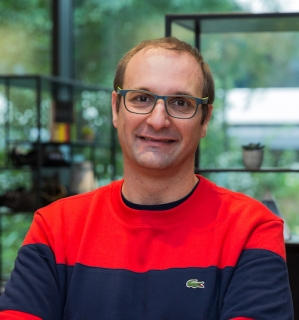
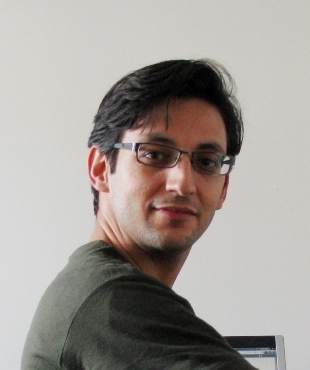
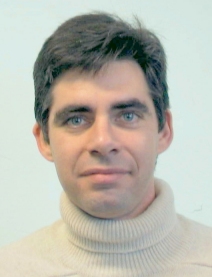
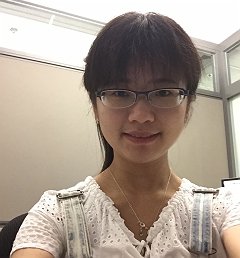
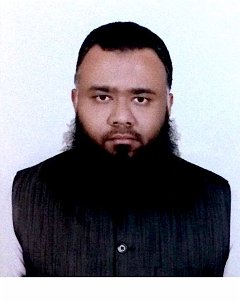
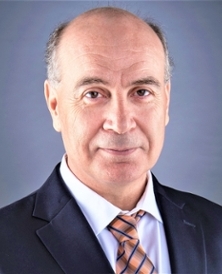
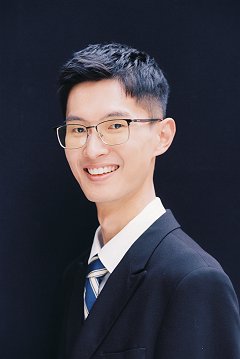
Fabrizio Silvestri is a Full Professor at Sapienza University of Rome's Department of Computer, Automatic and Management Engineering (DIAG), where he coordinates the Ph.D. program in Data Science. He leads the RSTLess research group focusing on Robust, Safe, and Transparent Deep Learning. Research interests: Artificial Intelligence, Machine Learning, Web Search, Natural Language Processing, Information Retrieval, Graph Neural Networks Research Trends from recent publications reveal: Advancements in sequential recommendation systems using topological and sheaf-based neural networks Focus on sustainable AI through eco-aware graph neural networks Counterfactual explanations for graph models and machine unlearning Security applications in dense retrieval and data poisoning defense Time series analysis for 5G network monitoring Integration of attention mechanisms and positional encoding in Transformers Scientific Achievements : ECIR 2018 Test of Time Award 3 Best Paper Awards (ECIR 2007, IEEE WI 2004, WSDM 2011 Runner-Up) Yahoo! Patent Milestone Award Recipient of Yahoo! Labs Excellence Program (LEAP) and Faculty Research Engagement Program (FREP) Finalist for ERCIM Cor Baayen Award (2005) Academic Leadership : Holds 9 industrial patents from Yahoo! and Facebook AI. Directed Facebook AI research groups combating malicious content. Ph.D. in Computer Science from University of Pisa with thesis on High-Performance Issues in Web Search Engines . Supervises thesis projects through the RSTLess group website .
Gitta Astrid Hildegard Kutyniok is a Professor in the Department of Physics and Technology at UiT The Arctic University of Norway. Her research spans machine learning, applied mathematics, and signal processing, with a focus on theoretical foundations and practical applications.
Litao Yu is a Part-Time Lecturer and Visiting Scholar at the Faculty of Engineering and Information Technology, University of Technology Sydney. Concurrently, he serves as a Senior Data Analyst at Australia's Department of Agriculture, Fishery and Forestry. His academic appointments include Research Fellow at UTS (2019-2024) and post-doctoral positions at Griffith University and Queensland University of Technology. Education: PhD from The University of Queensland (2013-2016) MPhil from Dalian University of Technology (2009-2012) BSc from Dalian Maritime University (2003-2007) Dr. Yu's research focuses on computer vision and machine learning with applications in agriculture, multimedia systems, and multimodal learning. His work spans few-shot learning, semantic segmentation, fine-grained recognition, and multimodal fusion techniques. Key application domains include animal welfare monitoring, aquaculture quality control, and travel information enhancement. His publications demonstrate strong thematic convergence around efficient visual recognition systems , with recurring focus on few-shot learning paradigms and attention mechanisms. Recent work shows increasing emphasis on agricultural applications of computer vision, including poultry monitoring, fish processing automation, and sheep tracking. Blockchain integration for supply chain transparency represents another emerging theme. No scientific awards are mentioned in available records. Teaching responsibilities at UTS include courses on Real-time Operating Systems and Shell Programming . No information is available regarding research grants, supervised students, or laboratory affiliations.
Marc Geilen is an Associate Professor at the Electronic Systems group of Eindhoven University of Technology (TU/e) . He leads the Model-Based Design Lab within the CompSOC Lab and High Tech Systems Center .
Mahdi Vasighi is currently serving as an Assistant Professor at the Department of Computer Science and Information Technology, Institute for Advanced Studies in Basic Sciences (IASBS) in Zanjan, Iran, a position he has held since February 2012. Prior to this, he was a Post-doc Researcher at the same institution from February 2011 to February 2012. He has also served as a Visiting Researcher at the Milano Chemometrics and QSAR Research Group, University of Milano - Bicocca, Milan, Italy from September to October 2009, and as a Guest Lecturer at the Pasteur Institute, Tehran, Iran since September 2016. Dr. Vasighi earned his educational qualifications from the Institute for Advanced Studies in Basic Sciences (IASBS) in Zanjan, Iran, where he completed his Ph.D. in Chemometrics in May 2010 and his M.Sc. in Analytical Chemistry between 2002 and 2005. His undergraduate education was in Pure Chemistry at Imam Khomeini International University, Qazvin, Iran, from 1998 to 2002. Dr. Vasighi's primary research interests lie at the intersection of bioinformatics, machine learning, and data analysis. His work focuses on structural bioinformatics, particularly on modeling relationships between biological sequences and their corresponding structure or function. He has made significant contributions to the field of self-organizing maps with dynamic structure, developing innovative approaches like the Directed Batch Growing Self-Organizing Map (DBGSOM) that enhance topology preservation and visualization of high-dimensional data. His research spans multiple domains including protein structural classification, cancer diagnostics using fluorescence spectroscopy, and drug discovery for diseases like COVID-19. Dr. Vasighi's publication record demonstrates a strong trajectory in applying machine learning techniques to solve complex problems in bioinformatics and medical diagnostics. His recent work shows an increasing focus on applying computational approaches to healthcare challenges, including cancer detection, protein analysis, and drug discovery for viral diseases. He has successfully bridged the gap between theoretical machine learning advancements and practical applications in biology and medicine, with a particular emphasis on developing interpretable models that can be used by domain experts. Dr. Vasighi has actively contributed to the academic community through teaching and conference organization. He has served as Local Chair for the International Conference on Contemporary Issues in Data Science 2019 (CiDaS 19) and as Scientific Committee Member and Organizing Chair for previous CICIS conferences. His teaching portfolio includes graduate courses in Artificial Neural Networks, Computational Data Mining, Bioinformatics, Statistical Pattern Recognition, and Multimedia Systems. Dr. Vasighi has supervised numerous MSc students, with over twenty graduated students and nine current students listed in his profile. His research has been supported through collaborations with institutions like the Pasteur Institute, where he worked on projects related to nuclear magnetic resonance-based screening of thalassemia and determination of coronary heart disease risk using NMR spectra of plasma lipoproteins. Through his Directed Batch Growing Self-Organizing Map (DBGSOM) package and other software contributions, Dr. Vasighi has made his research tools accessible to the broader scientific community. His work continues to push the boundaries of how machine learning can be applied to solve challenging problems in bioinformatics and medical diagnostics.
Philippe Delachartre is a Professor at INSA Lyon (University of Lyon) in the Department of Electrical Engineering and researcher at CREATIS (Center for Research and Applications in Image and Signal Processing). He obtained his MS (1990) and PhD (1994) in Signal and Image Processing from INSA Lyon, joining the faculty in 1995 as Associate Professor before being promoted to Professor. His research focuses on medical image processing including: Advanced signal processing for ultrasound and MRI Motion estimation and segmentation algorithms Hypercomplex signal theory applications Deep learning for medical image analysis Real-time data acquisition systems With 30+ years of experience, he's contributed to over 100 publications. Recent publications (2018-2025) show strong focus on: Deep learning applications in medical signal classification Advanced segmentation methods (phase-field, CNN) Mathematical frameworks using hyperquaternions 3D ultrasound analysis for neurology and dermatology Cardiac motion estimation algorithms Research grants include: Regional project on emboli classification with deep learning (€170k) ANR LabCom project on Doppler ultrasound (€300k) Dermis characterization contract with Institut Pierre Fabre (€45k) Prostate segmentation project (€21k) Image denoising research (€100k) He has supervised 9 PhD students and leads research activities at CREATIS laboratory focusing on innovative medical imaging solutions.
Yufei Ding is an Associate Professor in the Computer Science & Engineering Department at the University of California, San Diego (UCSD), where she leads the PICASSO Lab. Her research spans domain-specific language design, architecture and compiler optimization, and hardware acceleration, with current focus on developing high-performance, energy-efficient, and high-fidelity programming frameworks for quantum computing and machine learning. Dr. Ding received her Ph.D. in Computer Science from North Carolina State University and a B.S. in Physics from the University of Science and Technology of China. Her interdisciplinary background bridges physics and computer science, enabling her to tackle challenges in emerging computing paradigms. Her research interests focus on Compiler Technology, Machine Learning, and Quantum Computing , with specific expertise in domain-specific language design, architecture and compiler optimization, and hardware acceleration. Dr. Ding's work addresses critical challenges in programming frameworks for emerging technologies, particularly in making quantum computing more accessible and efficient through innovative compiler techniques and runtime systems. Dr. Ding's scientific contributions have been recognized with prestigious awards including the NSF CAREER Award (2020) and the IEEE Computer Society TCHPC Early Career Researchers Award for Excellence in High-Performance Computing (2019) . As an active researcher and educator, Dr. Ding serves on program committees for major conferences including PLDI, PPoPP, and SPLASH. She currently has Ph.D. openings in quantum computing and machine learning systems research, as well as a postdoc position in quantum computing for physics Ph.D. candidates with relevant background. Dr. Ding founded and leads the PICASSO Lab at UCSD, which focuses on developing innovative solutions for programming emerging computing technologies. The lab's work bridges theoretical foundations with practical implementations to address real-world challenges in high-performance computing.
Syed Asad Alam is a Post-Doctoral Research Fellow at the School of Computer Science and Statistics, Trinity College Dublin, The University of Dublin, Ireland, specializing in optimization and efficient implementation of digital systems for signal processing and communication algorithms. Education: Bachelors in Computer and Information Systems Engineering, N.E.D. University of Engineering and Technology, Karachi, Pakistan M.Sc. in Electrical Engineering (System-on-Chip Design), Linköping University, Sweden PhD in Electrical Engineering (Computer Engineering/Electronics Systems), Linköping University, Sweden His research integrates Machine Learning with Embedded Systems through novel approaches to Quantization and Logarithmic Number Systems , targeting efficient Neural Networks implementation on FPGAs and ASICs . This work builds on extensive industry experience with multimedia processors, communication devices, and SOC bus design, including specialized projects on filters, wireless systems, frequency multipliers, and DSP processors. His 2020 LCTES publication on non-base-2 logarithmic systems exemplifies his focus on numerical representation efficiency for resource-constrained embedded applications, reflecting broader trends in hardware-aware machine learning optimization. No scientific awards or grant information was documented in the source material. He has collaborated with multiple industry teams on FPGA-based design and Integrated Circuit Development across startup environments, though specific advising roles or student supervision were not indicated.
Baishakhi Ray is an Associate Professor of Computer Science at Columbia University's School of Engineering and Applied Science. Her work focuses on the intersection of AI, Software Engineering, and Security. She received her Ph.D. from the University of Texas, Austin and has established herself as a leading researcher in software engineering with AI applications. Dr. Ray's educational background includes a Ph.D. from the University of Texas, Austin. Her academic journey has led to a prominent position at Columbia University where she continues to advance research in software engineering. Dr. Ray's research spans several critical areas at the intersection of software engineering and artificial intelligence. Her work explores how machine learning techniques can improve software development processes, enhance security practices, and address challenges in program analysis. She has made significant contributions to understanding how large language models can be effectively applied to code generation, vulnerability detection, and software testing. Her research has practical implications for improving software reliability and security in real-world applications, particularly in safety-critical domains like autonomous systems. Analysis of Dr. Ray's recent publications reveals a clear trajectory toward leveraging AI for practical software engineering challenges. Her work has evolved from foundational program analysis techniques to cutting-edge applications of large language models in code understanding and generation. A notable trend is her focus on making AI-assisted software development more reliable, secure, and energy-efficient. Her research increasingly addresses the practical limitations of current AI approaches while developing novel methodologies to overcome them. IEEE TCSE Rising Star Award NSF CAREER Award IBM Faculty Award VMWare Faculty Award ICSME Most Influential Paper Award (2023) FSE'17 Distinguished Paper ASE'22 Distinguished Paper ISSTA'23 Distinguished Paper CACM Research Highlights Dr. Ray actively mentors graduate students and has built a productive research group focused on AI-driven software engineering solutions. Her research has been supported by prestigious grants including the NSF CAREER award. She has successfully guided numerous students through their research projects, with several of her advisees making significant contributions to publications in top-tier conferences. Dr. Ray also serves as an Amazon Visiting Academic, bridging academia and industry to address real-world software engineering challenges. Through her leadership in various research projects and collaborations, Dr. Ray has established a dynamic research environment that combines theoretical rigor with practical applications. Her work often involves interdisciplinary collaboration across computer science subfields, particularly connecting software engineering with security and AI research communities.
Dr. Mairo Leier is a Senior Research Fellow at Tallinn University of Technology's School of Information Technologies, Department of Computer Systems, where he leads the Internet of Things Development Centre. His career spans industry roles at Ericsson Estonia and Elisa Estonia, alongside academic positions since 2010. He holds a PhD in Computer Systems (2016) and MSc (2010) from Tallinn Tech. Research interests center on embedded systems , IoT , and edge AI , with applications in smart infrastructure, autonomous vehicles, and biomedical sensing. Key focus areas include: Machine learning optimization for resource-constrained devices Real-time sensor data processing Hardware-software co-design Industrial IoT solutions His publications emphasize embedded AI efficiency, with recent work exploring model compression, hardware-aware neural networks, and edge deployment for computer vision. Awards and recognitions include: Tallinn Entrepreneurship Award (2017, 2018) 1st Prize in TTÜ Applied Research Competition (2017) Industry collaboration awards with Bosch Sensortec He actively advises students, with 14+ bachelor supervisees in embedded systems/IoT projects. Grants include applied research funding for industrial sensor algorithms and smart wearables. He directs the IoT Development Centre, fostering industry-academia partnerships and embedded systems innovation.
Mansour Karkoub serves as Associate Dean of Accreditation & Assessment at Lamar University's College of Engineering, holding the Michael E. and Patricia P. Aldredge Endowed Chair while serving as Professor of Mechanical Engineering. His academic career spans leadership roles at Texas A&M University, the Petroleum Institute (Abu Dhabi), and INRIA (France), with expertise rooted in robotics and control systems. Education: Ph.D. Mechanical Engineering, University of Minnesota M.S. Mechanical Engineering, University of Minnesota B.S. Mechanical Engineering, University of Minnesota Habilitation to Direct Research (HDR), University of Versailles, France Research Focus: Dr. Karkoub pioneers Robust Control methodologies (H-infinity, adaptive, AI-based), Vibration Control for flexible structures, and Robotics applications spanning medical, inspection, and manufacturing systems. His work on Ground/Underwater Autonomous Vehicles addresses self-driving technologies and mobile robotics, while his Engineering Education research integrates ABET accreditation standards with technology-enhanced learning. Publication Trends: Recent articles (2021-2024) reveal concentrated advancements in neural network-integrated motion cueing algorithms, adaptive fuzzy control for underwater manipulators, and sustainable energy harvesting from vehicle suspensions. His work consistently bridges theoretical control frameworks with real-world applications in autonomous systems, emphasizing uncertainty handling and disturbance rejection. Scientific Recognition: Outstanding Researcher Award (2019, Texas A&M Qatar) Distinguished Achievement Award (2012, Dwight Look College) Best Teacher Award (2012, Texas A&M Qatar) Fellow of ASME, IET, and IMechE IEEE Senior Member Research Leadership: Secured over $12M in funding including a $1.2M 2022 grant for smart vehicle research. Founded and directs the Smart Systems Laboratory at Texas A&M Qatar, mentoring teams focused on autonomous vehicle innovation while leading ABET accreditation initiatives as a commissioner. Laboratory Impact: The Smart Systems Laboratory drives advancements in underwater vehicle manipulators, medical robotics, and energy-efficient transportation through cross-disciplinary collaboration, directly translating control theory into deployable autonomous systems for industrial and medical applications.
Daniel W. C. HO is a Chair Professor of Applied Mathematics and Associate Dean (Undergraduate Education) at the College of Science, City University of Hong Kong. He has been with City University of Hong Kong since 1989, having previously served as a Research Fellow at the University of Strathclyde, Glasgow, UK from 1985 to 1988. Prof. Ho received first class honours in BSc, MSc, and PhD degrees in mathematics from the University of Salford, Greater Manchester, UK in 1980, 1982, and 1986, respectively. His academic journey began with foundational work in control theory and has evolved into a distinguished career spanning over three decades. Prof. Ho's research interests span multiple domains in control theory and systems engineering. His primary focus areas include Control Theory , Estimation and filtering theory , Complex dynamical distributed networks , Multi-agent networks , Nonlinear singular systems , and Stochastic systems . His work bridges theoretical advances with practical applications, particularly in networked control systems, cybersecurity for cyber-physical systems, and distributed optimization. Prof. Ho has made significant contributions to the understanding of synchronization phenomena in complex networks, resilient control under cyber attacks, and quantized control systems with communication constraints. His research has evolved from classical control theory to address contemporary challenges in networked and distributed systems, reflecting the changing landscape of control engineering. Prof. Ho's publication record shows a strong emphasis on secure control systems under cyber attacks, distributed optimization with communication constraints, event-triggered control schemes, quantized control systems, and synchronization of complex networks. His work demonstrates a consistent progression from theoretical foundations to addressing practical implementation challenges in cyber-physical systems, with increasing focus on security aspects in recent years. Prof. Ho has received numerous prestigious awards and honors throughout his career. He was named a Fellow of the Institute of Electrical and Electronics Engineers (IEEE) in 2017 and elevated to IEEE Life Fellow status in 2024. He was awarded the Chang Jiang Chair Professorship by the Ministry of Education, China in 2012. Prof. Ho has been recognized as a Highly Cited Researcher for eleven consecutive years from 2014 to 2024, and is among the Top 2% of most highly cited scientists globally from 2020 to 2024. He received the Best Paper Award from The 8th Asian Control Conference in 2011 and the Teaching Excellence Award from City University of Hong Kong in 2020 for his innovative teaching approaches. Prof. Ho has held significant editorial responsibilities, serving as Subject Editor of the Journal of Franklin Institute, Co-Editor in Chief of Franklin Open, Associate Editor of IEEE Transactions on Neural Networks and Learning Systems, Asian Journal of Control, and Action Editor of Neural Networks. He has also served on the editorial boards of several other prestigious journals, contributing to the advancement of his field through scholarly communication. His leadership extends beyond research and teaching as Associate Dean (Undergraduate Education) of the College of Science at City University of Hong Kong, where he plays a key role in shaping the educational experience for science students.
Shangwen Wang is an Assistant Professor in the School of Computer Science at National University of Defense Technology (NUDT) in Changsha, China. He earned his Bachelor's degree in June 2017, Master's degree in December 2019, and Ph.D. in December 2023, all from NUDT. During his graduate studies, he was supervised by Professor Xiaoguang Mao. From May 2022 to July 2023, he was a visiting student at Southern University of Science and Technology under Professor Yepang Liu. His educational background includes: Ph.D. in Software Engineering, NUDT (2020.3-2023.12), supervised by Prof. Xiaoguang Mao Visiting Scholar, SUSTech (2022.5-2023.7), supervised by Prof. Yepang Liu M.A. in Software Engineering, NUDT (2017.9-2019.12), supervised by Prof. Xiaoguang Mao B.A. in Software Engineering, NUDT (2013.9-2017.6) Wang's research focuses on program repair, program comprehension, mining software repositories, software maintenance and evolution, software testing, and AI for Software Engineering. His work bridges traditional software engineering techniques with modern AI approaches, particularly leveraging large language models for various software engineering tasks. He has made significant contributions to automated program repair, fault localization, vulnerability detection, and code generation. His research demonstrates a strong emphasis on empirical validation and practical applicability to real-world software development challenges. His recent publications show a clear trend toward integrating large language models with traditional software engineering tasks. The 15 most recent articles reveal a focus on applying LLMs to program repair, fault localization, vulnerability detection, and code generation, while maintaining strong empirical foundations. His work spans both theoretical advancements and practical tool development, with applications in software security, testing, and maintenance. His notable achievements include: CCF Outstanding Doctoral Dissertation (CCF优博) 2024 Outstanding Doctoral Graduates, NUDT, 2023 Multiple distinguished paper awards including ACM SIGSOFT Distinguished Paper Award (ISSTA'24) and IEEE TCSE Distinguished Paper Awards (ICSME'22, SANER'22) Prestigious scholarships from NUDT throughout his academic career As an active member of the software engineering community, Wang serves on numerous program committees for top conferences including ICSE, ASE, ESEC/FSE, and ISSTA. He has also contributed to teaching as a teaching assistant for courses such as Compiler, Python Programming, Discrete Mathematics, and C++ Programming. His research group appears to be actively mentoring students, as evidenced by his role as corresponding author on multiple student-led publications. Wang maintains an active research presence with collaborations across multiple institutions in China. His work demonstrates a clear trajectory from traditional program analysis techniques toward integrating cutting-edge AI approaches, particularly large language models, into software engineering practices.