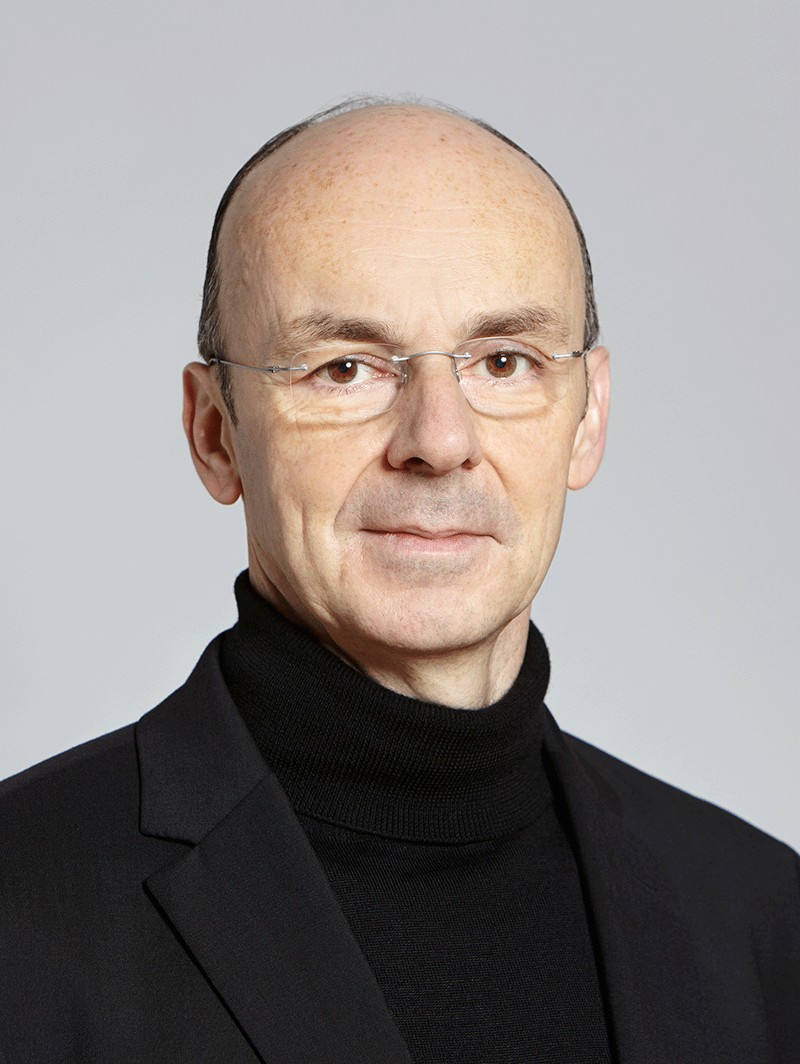
Kai Salomaa is a Professor and Graduate Chair in the School of Computing at Queen’s University, Canada. He holds a Ph.D. from the University of Turku (1989). His research focuses on theoretical computer science, particularly automata theory, formal languages, and their applications. Key areas include descriptional complexity, cellular automata, and quantum computing innovations. Affiliations: Queen’s University, School of Computing. Education: Ph.D. in Computer Science from the University of Turku (1989). Research Interests: Prof. Salomaa explores foundational topics like automata state complexity, nondeterminism measures, and computational models. His work bridges classical theory with modern applications in quantum computing, vehicular networks, and algorithmic resource optimization. Notable contributions include studies on input-driven pushdown automata and the integration of quantum algorithms into practical systems. Publications: His recent work spans quantum-enhanced optimization (e.g., vehicle platooning), fair matching algorithms, and complexity analysis of automata. These studies emphasize innovative solutions for computational challenges in dynamic systems and distributed networks. Grants & Labs: Leads the Formal Languages and Automata Theory Research Group, actively organizing conferences like CIAA and DCFS. His work often addresses practical applications of theoretical computer science in areas like sensor networks and metaverse resource management.
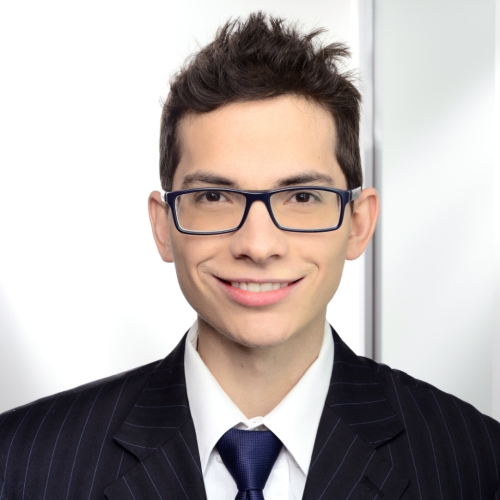
Michael Zurel is a NSERC Postdoctoral Fellow in the Department of Mathematics at Simon Fraser University, working under Dr. Nadish de Silva, Canada Research Chair in the Mathematics of Quantum Computation. His research focuses on foundational aspects of quantum computation, quantum information, and nonclassical physics. Key interests include quantum contextuality, negativity in quasiprobability representations, and classical simulation algorithms for quantum systems. He holds a PhD, MSc, and BSc in Physics and Mathematics from the University of British Columbia (2024, 2020, 2019), all supervised by Dr. Robert Raussendorf. His doctoral work explored classical descriptions of quantum computations via hidden variable models and quasiprobability representations. His master’s thesis addressed hidden variable models and classical simulation algorithms for quantum computation with magic states on qubits. Research interests emphasize bridging quantum foundations with computational efficiency, particularly how nonclassical features like contextuality enable quantum advantage. Collaborators include prominent figures such as Robert Raussendorf, Juani Bermejo-Vega, and Cihan Okay. His scientific achievements include the NSERC Postdoctoral Fellowship. Advising and grants are not explicitly detailed, but his work is supported by foundational research grants. He collaborates actively within quantum information theory and computational physics communities.
Professor Franz Berto holds the position of Professor of Logic and Metaphysics at the University of St Andrews, where he also serves as Director of the Arché Philosophical Research Centre for Logic, Language, Metaphysics and Epistemology. Additionally, he maintains an affiliation with the Institute for Logic, Language and Computation (ILLC) at the University of Amsterdam, where he has taught in the Master in Science of Logic program. His academic journey includes previous appointments at the University of Aberdeen, the Institute for Advanced Study at the University of Notre Dame, the Sorbonne-Ecole Normale Supérieure in Paris, and several Italian universities including Padua, Venice, and Milan-San Raffaele. Professor Berto's research spans multiple areas of philosophical inquiry with particular focus on non-classical logics, impossible worlds, and the philosophical implications of computation. His work demonstrates a distinctive approach that bridges analytic and continental traditions, with special interest in logical paradoxes and their metaphysical implications. He has made significant contributions to understanding how imagination functions in epistemic contexts and how counterfactual reasoning operates across different domains of inquiry. His recent publications reveal a consistent trajectory examining the intersection of logic, epistemology, and metaphysics, with increasing attention to hyperintensional approaches that go beyond traditional possible worlds semantics. The trend shows growing sophistication in modeling cognitive processes related to imagination, belief revision, and counterfactual reasoning, often incorporating insights from computer science and cognitive psychology. Fellow of the Royal Society of Edinburgh (FRSE, 2022) Honorary Chaire Mercier, Institut Supérieur de Philosophie, Université Catholique de Louvain (2020) José Gaos Honorary Chair, National Autonomous University of Mexico (UNAM, 2023) Professor Berto has successfully secured substantial research funding including an ERC Consolidator grant of €2,000,000 for 'The Logic of Conceivability' project (2016-2022), a Leverhulme Trust grant of £500,000 for 'What If? Knowing By Imagining [WIKI]' (2025-2028), and an AHRC Early Career Researcher grant of £240,000 for 'The Metaphysical Basis of Logic' (2013-2015). His supervision portfolio includes doctoral students working on diverse topics ranging from modal epistemology to the philosophy of computation, with several securing prestigious fellowships. As Editor-in-Chief of The Philosophical Quarterly since 2020, he plays a significant role in shaping contemporary philosophical discourse. Professor Berto leads research within the Arché Philosophical Research Centre at St Andrews, a world-renowned hub for work in metaphysics, epistemology, and philosophical logic. His current projects involve collaborations with researchers across Europe and North America, particularly focusing on the logical structure of imagination and counterfactual reasoning. The 'What If?' project brings together philosophers, cognitive scientists, and computer scientists to develop a comprehensive framework for understanding how imagination serves as a tool for knowledge acquisition.
Ioannis Andreadis is a Professor in the Department of Electrical and Computer Engineering at the School of Engineering, Democritus University of Thrace. He has been a faculty member since 1993, following his appointment as a Visiting Professor at the School of Technological Applications of TEI Kavala (1991-1992). His academic journey began with a Diploma in Electrical Engineering from Democritus University of Thrace (1983), followed by an M.Sc. in Electrical Engineering & Electronics (1985) and a Ph.D. in Instrumentation & Analytical Science (1989), both from the University of Manchester. Professor Andreadis's research spans the Design and Implementation of Electronic Systems with particular emphasis on Intelligent Systems and Machine Vision . His work has resulted in over 230 publications in international journals, book chapters, and conference proceedings. He has made significant contributions to image processing, particularly in mathematical morphology, color image processing, and real-time implementation of image processing algorithms. His research has practical applications in seismic signal processing, crowd management systems, and 3D reconstruction technologies. The analysis of his recent publications reveals a strong focus on advanced image processing techniques, with increasing integration of deep learning approaches. His work spans both theoretical foundations (such as entropy estimation and moment calculations) and practical applications (including image stabilization, multi-focus image fusion, and crowd management systems). The interdisciplinary nature of his research connects electrical engineering, computer vision, and signal processing with applications in safety engineering, structural analysis, and robotics. Among his notable achievements are the IET Image Processing Premium Award (2009) , Best Paper Award at PSVIT 2007 , and Best Paper Award at EUREKA 2009 . He was elected Fellow of the Institute of Engineering & Technology (IET) in 2006 and Fellow of the Institute of Measurement & Control (InstMC) in 2021. He has also served as Subject Editor of the IET Electronics Letters and as Guest Editor for special issues of Pattern Recognition journal. Professor Andreadis has supervised 14 PhD theses , 21 Master's theses , and 88 Diploma works , demonstrating his commitment to academic mentoring. His research has been supported by significant grants including the EDUnet project (€280,000), wireless network implementation (€37,000), laboratory infrastructure development (€120,000), school information systems support (€478,000), the RESCUER project (€350,000 as Deputy P.I.), and the EDUSAFE project (Marie Curie Actions). He leads the Electronics Laboratory at Democritus University of Thrace, which has undergone significant infrastructure development through multiple funding sources. His work on the RESCUER project demonstrates collaboration with European partners on emergency risk management systems, while his EDUSAFE involvement shows commitment to advanced AR/VR safety systems development. His research group applies computational intelligence techniques to diverse challenges from seismic analysis to pedestrian evacuation modeling.
Kevin John Painter is a Full Professor (L.240) at the Interuniversity Department of Territorial Sciences, Planning and Policies (DIST) of Politecnico di Torino. His research focuses on mathematical and computational modeling of spatial-temporal dynamics in natural systems, spanning embryonic development, cancer progression, animal migration, and environmental landscape structuring. Position: Full Professor Institution: Politecnico di Torino Department: DIST (Interuniversity Department of Territorial Sciences, Planning and Policies) Key research interests include agent-based modeling, mathematical biology, differential equations, and pattern formation. His work addresses cancer invasion dynamics, turtle navigation to Ascension Island, whale migration under noise pollution, and environmental change modeling. Recent publications emphasize nonlocal interaction models, phenotypic switching in biological systems, and coupled Turing reaction-diffusion-chemotaxis frameworks. Since 2020, he has taught Calculus, Probability and Statistics, and Linear Algebra at the Architecture and Automotive Engineering programs. He supervises doctoral research in the Urban and Regional Development PhD program. Scientific contributions are reflected in editorial board memberships across six journals, including Mathematical Models and Methods in Applied Sciences and the Royal Society Open Science. Awards: Editorial board member of leading journals. His modeling strategies bridge individual and population-level dynamics, with applications spanning from neural crest cell chemotaxis to glioma tumor invasion. Skills align with ERC sectors PE1_20 (Mathematical Applications) and LS3_9 (Developmental Biology), supporting UN SDGs 3 (Health), 13 (Climate Action), and 14 (Life Below Water).
Jarosław Wąs is a Professor and Head of the Department of Applied Informatics at the Faculty of Electrical Engineering, Automatics, Computer Science and Biomedical Engineering, AGH University of Science and Technology in Kraków, Poland. His academic leadership extends to governance roles including the Senate, Faculty College, and Disciplinary Council for Technical Information Technology and Telecommunications. His research spans Artificial Intelligence, Machine Learning, and Data Mining with core expertise in Rough Sets theory. He develops computational models for crowd simulation and pedestrian dynamics critical for evacuation planning, and applies deep learning to renewable energy forecasting and health trajectory prediction. His work bridges theoretical computer science with practical applications in energy systems, healthcare analytics, and cosmic physics. Analysis of his 2023-2025 publications reveals interdisciplinary convergence: Rough Sets combined with cellular automata for crowd modeling, transformer networks for electronic medical records, and hybrid deep learning approaches for renewable energy forecasting. Key trends include zero-shot learning in healthcare, anomaly detection in cosmic data, and data-driven evacuation simulation with social group dynamics. No scientific awards are mentioned in available sources. Information regarding student advising and research grants is not provided in the source material. No laboratory or research team affiliations are specified in the available documentation.
Prof. Dr. Helmut Bölcskei is a Full Professor of Mathematical Information Science at ETH Zurich's Department of Information Technology and Electrical Engineering. He holds a joint affiliation with the Department of Mathematics. His academic journey includes a Dipl.-Ing. and Dr. techn. from Vienna University of Technology, followed by postdoctoral research at Stanford University and industry roles at Iospan Wireless and Celestrius AG. He has been at ETH Zurich since 2002, contributing to applied mathematics, machine learning theory, signal processing, and statistics. Education : 1994: Dipl.-Ing., Vienna University of Technology 1997: Dr. techn., Vienna University of Technology Industry Experience : Co-founder of Iospan Wireless (acquired by Intel) and Celestrius AG His research focuses on applied mathematics , machine learning theory , and data science , with emphasis on neural network approximation, metric entropy, and signal processing. Recent work explores theoretical limits of deep learning and nonlinear system identification. His publications highlight advancements in quantization, compression, and system complexity analysis. Prof. Bölcskei has received numerous accolades, including IEEE Fellow status, the 2010 Vodafone Innovations Award, and the ETH 'Golden Owl' Teaching Award. He served as Editor-in-Chief of the IEEE Transactions on Information Theory (2010–2013) and has held editorial roles in multiple journals. His leadership includes roles on the Board of Governors of the IEEE Information Theory Society and as a delegate for faculty appointments at ETH Zurich. Labs/Teams : Mathematical Information Science Group at ETH Zurich's Department of Information Technology and Electrical Engineering
Dr. Mohammed Niamat is a Professor in the Department of Electrical Engineering and Computer Science at the University of Toledo, part of the College of Engineering. His research focuses on hardware security, FPGA design, quantum-dot cellular automata (QCA), cryptography, and smart grid infrastructure. He holds a primary appointment at the University of Toledo, with contact details at 2008 Nitschke Hall. Research interests include Built-in-Self Test (BIST), fault-tolerant hardware, secure FPGA supply chains, and role-based access control. His work emphasizes securing advanced metering infrastructure (AMI) and IoT systems through hardware-oriented authentication and PUF (Physical Unclonable Function) techniques. Key publication trends highlight advancements in FPGA security, machine learning countermeasures against PUF attacks, and blockchain-integrated frameworks for hardware trustworthiness. Recent projects address vulnerabilities in ring oscillator PUFs and lightweight cryptographic solutions for IoT. Dr. Niamat has contributed to over 40 publications since 1986, spanning topics from power system stabilizers to nanoscale QCA logic synthesis. His work bridges theoretical computing and practical applications in high-performance systems.
Arend Hintze is a Professor of Microdata Analysis at Dalarna University's Department of Information and Technology. His research bridges artificial intelligence, evolutionary biology, and computational psychiatry, focusing on neuroevolution, cellular automata, and digital health applications for bipolar disorder. Key research themes include: Evolutionary dynamics in computational models AI for mental health prediction Cellular automata and self-replication Large language model behavior analysis Recent publications demonstrate interdisciplinary work across computer science, genetics, and psychiatry, with emphasis on: Neuroevolution and information transfer Fitness landscape navigation Bipolar disorder early warning systems Evolutionary game theory applications His work frequently employs agent-based modeling, digital evolution, and deep learning techniques.
Dr. James Stovold is an Assistant Professor at the Data Science Institute, Lancaster University. His research focuses on emergent behavior, cognitive robotics, and unconventional computing methods, particularly leveraging neural cellular automata and swarm robotics for innovative applications in AI and computational systems. His recent work explores topics such as human-AI symbiosis, reaction-diffusion chemistry for neural networks, and mixed-initiative design tools. Publications span disciplines including artificial intelligence, computational biology, and human-AI interaction. His research has been featured in numerous conference contributions and journal articles, emphasizing interdisciplinary approaches to solving complex computational and robotic challenges. He can be reached via email at j.stovold@lancaster.ac.uk.
Stefano Nichele is a Professor at Oslo Metropolitan University's Faculty of Technology, Art and Design, where he leads research in the Department of Computer Science with a focus on Artificial Intelligence. His laboratory investigates the intersection of biological and artificial intelligence through neural networks and cellular automata. Research Focus: Nichele's work bridges computational neuroscience, complex systems, and machine learning. Key themes include: Developing AI tools for neuroscience applications like dementia prediction Modeling neural network dynamics using biological and computational approaches Evolutionary algorithms and quantum computing hybrids Cellular automata frameworks for emergent intelligence Research Projects: AI-Mind: Developing AI-based dementia diagnostic tools FeLT: Human-machine-environment interactions in ecological contexts DeepCA: Biological-artificial intelligence integration SOCRATES: Efficient distributed data analysis Publications: His recent works (2024-2025) primarily explore neural network dynamics, cellular automata applications, and computational neuroscience models. The research demonstrates consistent focus on emergent behavior in complex systems and biological computation.
Oğuz Gülseren is a Professor at the Department of Physics, Bilkent University. His research spans Theoretical Solid State Physics , Nanoscience , and Electronic Structure of Materials , focusing on computational studies of metal nanowires , carbon nanotubes , and first-principles calculations . He leads the Computational Nanoscience and Materials Research Group, offering PhD and postdoctoral positions. University: Bilkent University Department: Physics Contact: gulseren@fen.bilkent.edu.tr His research interests include plasmonics , dye-sensitized solar cells , and graphene , with significant work on vibrational properties , quantum structures , and nanoenergetic materials . Publications highlight ab initio and DFT methods applied to 2D heterostructures , self-assembly , and nano-biosensors . Recent articles emphasize data-driven inverse design , phonon resonance , and nanocarbon applications in energy and biotechnology. His group’s work integrates computational nanoscience with experimental validation , addressing challenges in thermal conductivity , optoelectronics , and chemical reactivity at the nanoscale.
Felix Simon Reimers is a Doctoral Research Fellow at the Faculty of Information Technology, Engineering and Economics, Oslo and Akershus University College of Applied Sciences. His PhD program focuses on Digitalization and Society under the supervision of Stefano Nichele and Solve Sæbø. He teaches the course 'ITI42622 - Complex Systems Modelling and Optimization' at HiØ. Reimers holds a Bachelor's and Master's in Mathematics from TU Braunschweig, Germany. His research interests span Artificial Life, Artificial Intelligence, and Complex Systems, with a focus on algorithm design, emergent behavior, and computational substrates. He is part of the Machine Learning research group and contributes to initiatives like the AI Hub. His recent publications explore computational performance of biological neural networks and pathfinding algorithms using neural cellular automata with self-attention mechanisms.
Sidney Pontes-Filho is a Postdoctoral Fellow at Simula Research Laboratory in Oslo, Norway, with a strong academic affiliation to the Norwegian University of Science and Technology (NTNU) where he completed his PhD in Computer Science. His primary departmental affiliation is with the Department of Computer Science at Oslo Metropolitan University (OsloMet). His research spans multiple institutions including Simula Research Laboratory where he works in the Numerical Analysis and Scientific Computing department. His educational background includes a B.Sc. in Computer Science from Federal University of Paraíba, Brazil (2013), an M.Sc. in Computer Science from Technical University of Kaiserslautern, Germany (2018), and a Ph.D. in Computer Science from NTNU. His research focuses on the intersection of complex systems, unconventional computing, computational neuroscience, and artificial general intelligence, with particular emphasis on neural cellular automata and criticality phenomena. Pontes-Filho's publication record reveals a consistent trajectory in exploring how critical systems can serve as substrates for intelligent behavior. His work demonstrates how neural cellular automata operating near critical points exhibit emergent properties relevant to artificial intelligence, including attention mechanisms, scalability, and robust control systems. His research spans theoretical frameworks like EvoDynamic, practical applications in soft robotics control, and medical imaging tools for brain extraction from fMRI data. His scientific contributions show an interdisciplinary approach merging concepts from statistical physics, neuroscience, and computer science to develop novel computational paradigms. The evolution of his work demonstrates increasing sophistication in connecting theoretical criticality concepts with practical AI applications, particularly in embodied systems and neuromorphic computing.
Yukio Gunji is a Professor at Waseda University's School of Fundamental Science and Engineering since 2014, with prior 27-year tenure at Kobe University. Holding a Ph.D. in Science from Tohoku University, he bridges Cognitive Science Quantum Logic Bio-inspired Computing Swarm Dynamics through interdisciplinary research. His work reveals quantum-like cognitive structures via Orthomodular lattices from rough set analysis Inverse Bayesian inference systems Asynchronous cellular automata models explaining phenomena like free will paradoxes , virtual agent persuasion , and Physarum plasmodium decision-making . Analysis of 15 recent articles shows strong focus on Lévy walk patterns in ants and fish schools, self-avoiding walk algorithms , and nonlocal cognitive models . Key contributions include Developing Extended Bayesian Inference frameworks Formalizing trilemma structures in consciousness studies Creating heterarchical market models with critical behavior while his Virtual Hand experiments challenge ownership perception boundaries through squeeze machine studies.