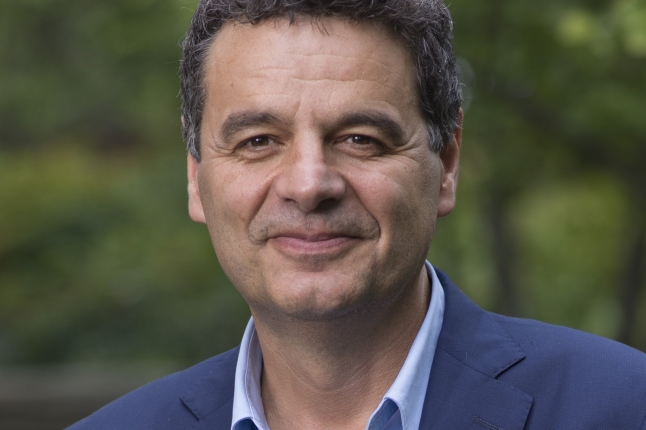
Petros Koumoutsakos is the Herbert S. Winokur, Jr. Professor of Computing in Science and Engineering at Harvard University's School of Engineering and Applied Sciences (SEAS), where he also serves as Area Chair for Applied Mathematics. His research integrates machine learning with computational science to advance understanding of complex systems, including fluid dynamics, turbulence modeling, and biomedical applications. He leads the CSE Lab, focusing on high-performance computing and interdisciplinary collaborations such as a recent study with Citadel Securities and Google Cloud to simulate heart disease in cloud environments. Key research interests include reinforcement learning for turbulence closures, generative models for PDE solutions, and physics-informed AI for biomedical imaging and wildfire prediction. He was awarded the PRACE HPC Excellence Award (2023) for contributions to high-performance computing. His work bridges computational methods with real-world applications, emphasizing interpretability and scalability in multiscale systems. Grants & Collaborations: Leadership in multi-institutional projects, including turbulence modeling via reinforcement learning and cloud-based HPC studies. Labs/Teams: Director of the CSE Lab, advancing AI, computational fluid dynamics, and biomedical simulations.
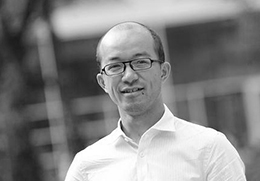
Changxi Zheng is an Associate Professor in the Department of Computer Science at Columbia University's School of Engineering and Applied Science (SEAS). He directs Columbia's Computer Graphics Group (C2G2) within the Columbia Vision and Graphics Center (CVGC). After receiving his PhD from Cornell University, he joined the faculty of Computer Science Department at Columbia, where he has established himself as a leading researcher in computer graphics and scientific computing. Dr. Zheng's research spans multiple areas of applied computer science with a particular focus on computer graphics and scientific computing. His work centers around developing numerical models for simulating physical phenomena involving complex motions such as fluids, bubbles, and thin rods, along with their resulting acoustic waves. Leveraging computational insights from these models, he devises methods for improving tangible object creation, enabling novel human-computer interactions, and developing software tools for acoustic and photonic devices. His research has attracted significant public interest and media coverage, including projects like FontCode, AirCode, and Computational Metallophone Design. His recent publications reveal a strong interdisciplinary approach, bridging computer graphics, physics simulation, machine learning, and hardware design. His work demonstrates consistent innovation in computational methods for simulating physical phenomena and applying these techniques to practical problems in 3D printing, acoustic modeling, and interactive systems. The breadth of his research spans from fundamental physics-based simulations to practical applications in industry. Columbia SEAS Dean's Fellow (for advised students) NSF Graduate Research Fellow (for Ruilin Xu) Snap Research Fellow (for Rundi Wu) CKGSB Fellow (for Yun Fei) Adobe Research Fellow (for Gabriel Cirio) Marie Sklodowska-Curie Individual Fellow (for Rundi Wu) Best Paper Award at ACM International Conference on Multimedia (ACMMM), 2019 Dr. Zheng actively mentors a diverse group of students, including current PhD candidates and postdoctoral researchers. His research group has received support from various sources that enable their innovative work in computational graphics and physics-based simulation. He has supervised numerous successful students who have gone on to positions at leading technology companies including Adobe, Tencent, Facebook, and academic institutions. As director of Columbia's Computer Graphics Group (C2G2) within the Columbia Vision and Graphics Center (CVGC), Dr. Zheng leads a vibrant research team focused on advancing the state of the art in computer graphics, physics-based simulation, and their applications. The group maintains strong collaborations with industry partners and academic institutions worldwide, fostering an environment of innovation and practical application of theoretical concepts.
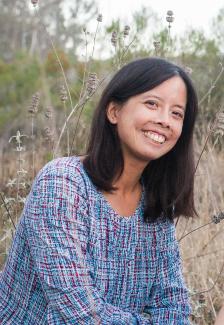
Alanson Sample is an Associate Professor in the Department of Electrical Engineering and Computer Science at the University of Michigan (since 2018), leading the Interactive Sensing and Computing Lab. His research focuses on Human-Computer Interaction, Cyber-Physical Systems, and wireless technology innovations. He holds a PhD in Electrical Engineering from the University of Washington (2011), with prior postdoctoral work there developing implantable medical devices. Before academia, Sample held senior roles at Disney Research (2013-2018) as Executive Lab Director and Principal Research Scientist, leading teams in Robotics, AI, Computer Vision, and HCI. Earlier, he worked at Intel Labs (2008-2013) on energy harvesting for wearables and IoT. Key research themes include wireless power systems, embedded sensing, and privacy-aware technologies. Over 150+ publications span topics like magnetic sensing (MagDesk), acoustic gesture recognition (HandSAW), and privacy-preserving activity tracking (PrivacyMic). His work bridges academic and industry innovation, particularly in scalable interactive systems and medical technology. Notable projects include the Quasistatic Cavity Resonance wireless charging system, RFID-based sensing platforms (WISP), and wearable health monitoring devices. His lab develops hardware-software co-design frameworks for energy-efficient embedded systems. Current research emphasizes medical applications, smart infrastructure, and ubiquitous computing interfaces.
Michele Zorzi is a Professor of Telecommunications at the School of Engineering, University of Padova, Italy, where he has held a faculty position since 2003. He leads the SIGNET (Signal processing and Networking) Research Group, focusing on cutting-edge wireless networking challenges including mmWave communications and underwater networks. His extensive publication record exceeds 600 papers in top-tier journals and conferences, reflecting significant contributions to the field through both theoretical and experimental work. He received his Laurea Degree (1990) and Ph.D. (1994) in Electrical Engineering from the University of Padova. Prior academic appointments include Politecnico di Milano (1993-1996), University of California San Diego (1995-1998), and University of Ferrara (1998-2003), where he progressed from Associate Professor to full Professor. His educational trajectory demonstrates deep roots in Italian academia with international exposure. Professor Zorzi's research spans wireless communications and networking, with current emphases on mmWave networking for vehicular systems, underwater acoustic/optical communications, non-terrestrial networks, and AI-driven networking solutions. His group conducts experimental validations including at-sea trials for underwater systems and testbeds for vehicular networks. Key projects include PRATA for predictive QoS in autonomous driving and IoT-based environmental monitoring of the Venice Lagoon, demonstrating practical applications of theoretical work. Analysis of his 2022-2025 publications reveals strong trends in applying artificial intelligence to networking challenges across diverse environments. There is significant emphasis on vehicular networks (predictive QoS, teleoperated driving), underwater systems (acoustic/optical communications, AUV swarms), and satellite networks (Starlink integration, NTN security). Experimental validation in real-world scenarios like the Venice Lagoon monitoring project and underwater sea trials characterizes his applied research approach. His scientific accolades include: IEEE Fellow (2007) IEEE Communications Society Best Tutorial Paper Award (2008, 2019) Stephen O. Rice Best Paper Award (2018) Multiple best paper awards at IEEE conferences (2005-2020) As principal investigator for numerous European and US research projects plus 20+ industry-funded initiatives, Professor Zorzi has mentored over 35 PhD students and post-docs. Graduates now hold prominent positions at institutions including Stanford, UCSD, CTTC, and Huawei. His SIGNET group maintains active international collaborations and contributes to open-source networking tools via GitHub, demonstrating commitment to community engagement. The SIGNET Research Group, housed within the Department of Information Engineering, operates specialized experimental facilities for mmWave and underwater communications. Current initiatives include AI-based predictive QoS frameworks for vehicular networks, underwater optical communication systems using ultraviolet light, and large-scale IoT deployments for environmental monitoring. The group's GitHub presence indicates strong open-science practices, while recent sea trials confirm hands-on experimental capabilities beyond theoretical work.
Alenda Y. Chang serves as an Assistant Professor in Film and Media Studies at the University of California, Santa Barbara. With a multidisciplinary background spanning biology, literature, and film, she integrates ecocritical theory with contemporary media analysis. Her scholarly work appears in journals including Interdisciplinary Studies in Literature and Environment , Qui Parle , and electronic book review , focusing on sustainable media practices and ecological frameworks for digital engagement. Her educational background includes: M.A. and Ph.D. in Rhetoric from the University of California, Berkeley M.A. in English Language and Literature from the University of Maryland Chang specializes in environmental media and game studies, developing theoretical frameworks for ecological game design. Her research examines how digital games model environmental systems and foster player engagement with climate change through concepts like "slow violence" and "rambunctious play." She advocates for sustainable design patterns that address gaming's carbon footprint while creating immersive ecological narratives. Analysis of her 15 most recent publications reveals a consistent trajectory from foundational ecological game theory (2013-2018) to current work on thermal contexts of play and sustainable infrastructure (2022-2024). Her scholarship increasingly bridges data-driven activism with critical game design, emphasizing multispecies entanglements and infrastructural play as tools for environmental awareness. As co-founder of Wireframe—a collaborative media studio at UCSB—Chang cultivates critical game design practices through initiatives like growinggames.net . The studio supports data-driven global media art, environmental activism, and experimental pedagogy, serving as a hub for translating ecological theory into tangible digital interventions that challenge anthropocentric perspectives in gaming.
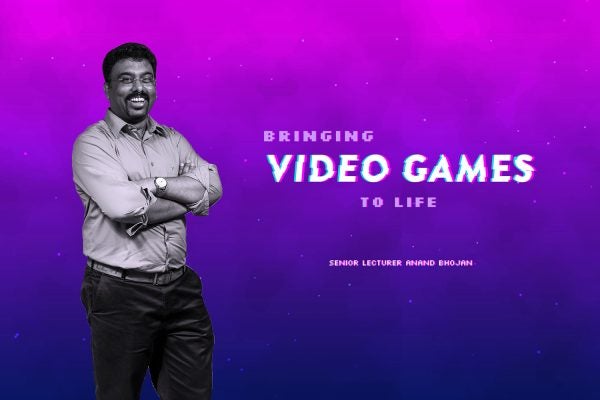
Anand Bhojan is an Associate Professor (Educator Track) at the Department of Computer Science, School of Computing, National University of Singapore (NUS). He is a member of the Communication and Internet Research Lab and serves on the Graduate Studies Committee. Dr. Bhojan is also the founder of Anuflora Systems and Virtual and Augmented Reality Labs (www.varlabs.org), and serves as Associate Editor of Computers and Electrical Engineering Journal, Elsevier, and Vice President of International Researchers Club, Singapore. Dr. Bhojan earned his Ph.D. in Computer Science & Engineering from NUS in 2011, where his thesis was nominated for the Best PhD Thesis Award. He also holds a Professional Master's in Computer Applications from Bharathidasan University (1999), a Bachelor's degree in Computing with Gold Medal (University topper) from Bharathiar University (1994), and a Postgraduate Certificate in Teaching Higher Education from University of Sheffield, UK (2003). His research spans multiple domains including Distributed Computing and Wireless Networks (IoT, Security, Blockchain), Artificial Intelligence (Generative AI, FinTech), and Entertainment Computing with focus on Games, VR/AR/Metaverse technologies. Dr. Bhojan leads the Metaverse Foundry research group which focuses on content generation for games & XR simulations across multiple domains including entertainment, healthcare, and architecture, while also experimenting with innovative teaching methods for entertainment media technologies. Dr. Bhojan's recent research has pioneered hybrid rendering techniques that strategically combine ray tracing and rasterization to create more realistic video game graphics without compromising performance. His work addresses critical challenges in real-time rendering, particularly in depth of field and motion blur effects, with the goal of making Hollywood-quality graphics accessible on a wider range of hardware. Earlier work focused on energy efficiency in mobile gaming, including power management techniques and latency optimization for cloud gaming. Among his notable achievements: 2012 Nominated for Best PhD Thesis Award (Wang Gungwu Medal & Prize), NUS 2011 Dean's Graduate Research Achievement Award (PhD), SoC, NUS 2006 Best R&D Project award from TOTE Board, Singapore 1995 Gold medal for first Rank (out of 4000) in Computing, Bharathiar University Dr. Bhojan has served as Organizing Chair and Program Chair for multiple international conferences and has delivered keynote talks at IEEE/ACM International Conferences. He teaches courses including Computer Networks Practice, Game Development, Interaction Design for Virtual and Augmented Reality, and Game Development Project. He leads the Metaverse Foundry research group and the Virtual and Augmented Reality Labs, where undergraduate and graduate students have won multiple research and innovation awards. His research bridges entertainment, education, and emerging technologies with practical applications in making immersive experiences more accessible across different hardware capabilities while maintaining energy efficiency.
Professor Andrew Hudson-Smith is the Director of the Bartlett Centre for Advanced Spatial Analysis (CASA) at University College London (UCL), where he holds the title of Professor of Digital Urban Systems. He leads UCL's academic and applied research in smart cities, digital twins, and urban informatics. His roles include Editor-in-Chief of the Future Internet Journal and academic lead for the Smart Queen Elizabeth Park project. He contributes to strategic initiatives such as the Greater London Authority Smart London Board and EPSRC Digital Economy Programme Advisory Board. Education: PhD (2003), MSc (1996) from UCL; BSc in Geography from the University of Plymouth (1992). Research focuses on digital urban systems, IoT applications, sustainable urban planning, and cyberphysical systems. Notable projects include urban heat island monitoring, participatory planning platforms, and metaverse-driven urban design. His work bridges technology, art, and public engagement, exemplified by initiatives like Tales of Things and the Haggle-O-Tron. Recent publications emphasize digital twins, metaverse urbanism, and IoT integration in urban environments. Awards include a Fellowship of the Royal Society of Arts. His work addresses SDGs 3 (Good Health) and 11 (Sustainable Cities), with a focus on equitable smart city development and public space innovation.
Benjamin Yelle serves as a Teaching Professor in the Department of Philosophy and Religion at Northeastern University's College of Social Sciences and Humanities, specializing in ethical theory and practical moral dilemmas. He earned his PhD in Applied Ethics from the University of Miami in 2014, establishing his scholarly foundation in value theory and practical ethics. Yelle's research program integrates normative ethics —where he pioneers a subjectivist theory of well-being reconciling personal valuation with objective constraints—and applied ethics with focus on bioethical challenges in neurological degeneration. His scholarship extends to philosophy of technology , examining ethical implications of biotechnology, information systems, and virtual reality through courses like PHIL 1145. He also investigates happiness's normative role in conceptions of the good life, creating interdisciplinary connections between ancient eudaimonism and contemporary ethical frameworks. As an active member of Northeastern's Ethics Institute, Yelle contributes to collaborative research initiatives while maintaining teaching responsibilities in undergraduate ethics education. His professional network includes departmental colleagues across philosophy and religious studies, supporting a robust academic environment for ethical inquiry.
Dr. Kelsey Onderdijk is a Post-doctoral Researcher at Tilburg University in the Department of Communication and Cognition within the Tilburg School of Humanities and Digital Sciences. Her research focuses on the intersection of music cognition, virtual reality, and social connectedness, with publications spanning neuroscience, psychology, and human-computer interaction domains. Dr. Onderdijk completed her doctoral studies at Ghent University with a dissertation titled "Come together: Exploring unity in music interaction through agency and social connectedness." Her academic journey reflects a strong commitment to understanding human interaction through musical experiences, particularly examining how technological mediation affects social bonding. Her research interests include: Music cognition and embodied music interaction Virtual reality applications in musical contexts Social connectedness in digital music environments Effects of technological constraints on musical collaboration Physiological measures of emotional engagement in music Impact of external constraints on creative expression Dr. Onderdijk's publication record demonstrates a clear trajectory examining how people connect through music in both physical and virtual spaces. Her work bridges psychology, musicology, and human-computer interaction, with particular attention to the impact of the COVID-19 pandemic on musical collaboration. Recent publications have focused on concert experiences in virtual reality environments and the physiological correlates of emotional engagement during musical performance. Her research has garnered significant attention, with multiple publications receiving citations and mentions in news outlets, policy sources, and social media platforms. The "Impact of Lockdown Measures on Joint Music Making" paper has been particularly influential, accumulating 39 citation indexes and 50 Mendeley readers. Dr. Onderdijk actively collaborates with researchers across institutions, particularly with scholars from Ghent University including Marc Leman and Pieter-Jan Maes, indicating a strong network within the music cognition research community. Her work contributes to UN Sustainable Development Goals, particularly those related to well-being and innovation.
Theo Damoulas is a Professor of Machine Learning at the University of Warwick with a joint appointment in the Department of Computer Science and Statistics. He is a Turing AI Fellow (2021-2026) through UK Research and Innovation, an ELLIS member, and a Visiting Professor at New York University's Center for Urban Science and Progress (CUSP). He founded and leads the Warwick Machine Learning Group and has directed major projects at The Alan Turing Institute including Project Odysseus and the London Air Quality project. Education includes: PhD in Probabilistic Multiple Kernel Learning (University of Glasgow, 2009) MSc in Informatics (Distinction, University of Edinburgh, 2004) MEng in Mechanical Engineering (1st Class, University of Manchester, 2003) His research focuses on probabilistic machine learning and Bayesian statistics, emphasizing the integration of structural priors, spatiotemporal dependencies, physical laws, and causal relationships. Key applications include Digital Twins, urban science, and computational sustainability. His work advances robust and scalable inference methodologies for complex real-world systems. Publications demonstrate strong emphasis on Bayesian methods, spatiotemporal modeling, and uncertainty quantification, with applications spanning battery modeling, urban mobility, federated learning, and causal inference. Recent work shows increased focus on physics-informed models, federated learning frameworks, and causal abstraction techniques. Major scientific awards: Turing AI Acceleration Fellowship (2021-2026) Best Paper Awards (Wilkes 2024, AISTATS 2022, IEEE ICMLA 2010) ACM SIGMOD Most Reproducible Paper (2017) Dissertation Award (Classification Society 2012) Teaching Excellence nominations (Warwick 2015-2017) He actively advises PhD students and secured significant grants including the £multi-million Turing AI Fellowship. Current doctoral researchers investigate federated learning, causal inference, and spatiotemporal modeling. He leads the Warwick Machine Learning Group, a cross-departmental team developing foundational ML methods for scientific and societal challenges.
Dr. Wim Biemans is an Associate Professor at the Faculty of Economics and Business of the University of Groningen, specializing in Innovation Management and Marketing. He holds a PhD from Eindhoven University of Technology (1989) and has over 25 years of experience in research, teaching, and consulting. His work focuses on service innovation, B2B marketing, customer involvement in innovation, and the marketing-sales interface. He has authored over 100 peer-reviewed articles and books, including the best-selling Dutch B2B marketing textbook. His research has been recognized with awards like the Thomas P. Hustad Best Paper Award. He serves as Triage Editor for the Journal of Product Innovation Management and editorial board member for Industrial Marketing Management and Journal of Business & Industrial Marketing. Biemans teaches at the University of Groningen and multiple international institutions, including guest professor roles in Europe, Asia, and the U.S. He also designs executive programs for managerial training in innovation management and customer value creation. His recent research explores humor’s impact on creativity, digital tools in sales-marketing integration, and bridging technology-to-product development gaps. He emphasizes end-to-end value creation through intra-organizational collaboration and has published on the Valley of Death ecosystem challenges in innovation commercialization.
Navid Azizan is the Alfred H. (1929) and Jean M. Hayes Career Development Assistant Professor at Massachusetts Institute of Technology (MIT), holding dual appointments in the Department of Mechanical Engineering (in Control, Instrumentation & Robotics) and the Schwarzman College of Computing's Institute for Data, Systems & Society (IDSS). He is also a Principal Investigator in the Laboratory for Information & Decision Systems (LIDS), and a faculty member of the MIT Statistics and Data Science Center, the Center for Computational Science and Engineering, and the Operations Research Center. Dr. Azizan received his PhD in Computing and Mathematical Sciences from the California Institute of Technology (Caltech) in 2020, his MSc in Electrical Engineering from the University of Southern California in 2015, and his BSc in Electrical Engineering with a minor in Physics from Sharif University of Technology in 2013. Prior to joining MIT, he completed a postdoc at Stanford University's Autonomous Systems Laboratory and was a research scientist intern at Google DeepMind. His research spans the intersection of machine learning, systems and control, mathematical optimization, and network science. Dr. Azizan's work focuses on developing principled learning and optimization algorithms for reliable intelligent systems, with applications to autonomy and sociotechnical systems. His research has significant implications for creating trustworthy AI systems that can operate effectively in complex, uncertain environments. Dr. Azizan's recent publications demonstrate a strong focus on uncertainty quantification, reliable AI systems, constrained optimization, and control-oriented learning. His work bridges theoretical foundations with practical applications, particularly in autonomous systems where safety and reliability are paramount. His research group has made notable contributions to areas including neural network verification, multi-agent reinforcement learning, and adaptive inference techniques for large language models, with several papers featured on MIT News and selected for oral presentations at top conferences. Alfred H. (1929) and Jean M. Hayes Career Development Professorship (2025-present) Frank E. Perkins Award for Excellence in Graduate Advising (2025) List of Outstanding Academic Leaders in Data from the CDO Magazine (2024, 2023) Amazon Science Hub Research Award (2023) Outstanding UROP Faculty Mentor (2023) Esther and Harold E. Edgerton (1927) Career Development Chair (2022-2025) Information Theory and Applications (ITA) Gold Graduation Award (2020) Dr. Azizan has been recognized for his excellence in graduate advising, receiving the Frank E. Perkins Award for Excellence in Graduate Advising in 2025. During the pandemic, he founded and co-organized the 'Control meets Learning' virtual seminar series, connecting researchers across disciplines. His work has attracted significant research funding from industry partners including Google, Amazon, and MathWorks, supporting both fundamental research and practical applications in reliable intelligent systems. The Azizan Lab at MIT brings together researchers from mechanical engineering, computer science, and applied mathematics to tackle challenges at the intersection of learning and control. The lab emphasizes both theoretical foundations and practical implementations, with a particular focus on developing algorithms that provide guarantees of performance and safety. Current research directions include uncertainty quantification in AI systems, constrained optimization for neural networks, and control-oriented learning for autonomous systems, with applications spanning robotics, transportation, and complex sociotechnical systems.
Professor Gabriel Brostow is a faculty member in the Department of Computer Science at University College London (UCL), where he leads research in Computer Vision and Human-Computer Interaction. He also serves as Chief Research Scientist and Senior Director of the R&D Team at Niantic, the company behind Pokémon GO. His work bridges academic research and industry applications, focusing on developing AI systems that enhance human capabilities through what he terms 'Human in the Loop AI'—now commonly referred to as Human-Centered AI. Brostow completed his BS in Electrical Engineering at UT Austin, followed by a PhD with Irfan Essa at Georgia Tech. He then pursued postdoctoral research with Roberto Cipolla's Computer Vision & Robotics Group at Cambridge University as a Marshall Sherfield Fellow, and with Marc Pollefeys in ETH Zurich's CVG Group. His research explores how AI, particularly Computer Vision, can serve as 'super-tools' for professionals across various domains including filmmaking, architecture, robotics, and scientific research. Specific interests include assistive technology for everyday life, authoring systems that maximize user effort, 3D reconstruction, depth estimation, and vision-language models. His work often involves creating systems that are validated through real-world human interaction to ensure practical utility. Analysis of his recent publications reveals a strong focus on practical applications of Computer Vision that directly interact with humans. His research spans 3D scene understanding, depth estimation, sketch-based interfaces, and multimodal AI systems. There's a clear emphasis on creating benchmarks and tools that facilitate human-AI collaboration, with applications in assistive technology, urban planning, filmmaking, and biodiversity monitoring. His work frequently appears at top conferences including CVPR, NeurIPS, ECCV, and CHI. Marshall Sherfield Fellowship Brostow actively mentors PhD students, with current advisees including Ross Murphy, Skanda Koppula, Gizem Unlu, Omiros Pantazis, and Jamie Watson. His alumni include numerous PhD graduates and MSc students who have gone on to successful careers in academia and industry. He emphasizes selecting students based on passion and potential rather than just academic credentials, valuing traits like helpfulness, drive, and hunger to learn. His research is supported through collaborations with major institutions and companies including DeepMind, MIT, and the University of Edinburgh. He leads a research group at UCL that collaborates closely with Niantic's R&D team, creating a unique bridge between academic research and industry application. His team's work frequently involves developing novel Computer Vision techniques that are validated through real-world human interaction, ensuring practical utility alongside technical innovation. The group explores blue-sky research problems with applications ranging from assistive technology to professional tools for filmmakers, architects, and scientists studying diverse environments.
Hossam Hassanein is a Professor and Director of the School of Computing at Queen's University. He received his B.Sc. in Electrical Engineering from Kuwait University in 1984, M.Sc. in Computer Engineering from the University of Toronto in 1986, and Ph.D. in Computing Science from the University of Alberta in 1990. He joined Queen's University School of Computing in 1999 and has established himself as a leading researcher in telecommunications and networking. Dr. Hassanein's research interests span wireless sensor networks, mobile ad hoc networks, edge computing, Internet of Things (IoT), radio resource management, and data-centric networks. His seminal contributions include pioneering work on WSN planning, load-balanced routing protocols, and energy-efficient network designs. He has championed research in IoT, developing frameworks for smart spaces that use contextual information to enhance IoT applications in healthcare, transportation, and infrastructure. His recent publications (2023-2025) demonstrate a strong focus on cutting-edge areas including extreme edge computing, vehicular networks, and AI/ML integration in networking. Research trends show increasing emphasis on practical applications in telesurgery, digital twins, and industrial IoT, addressing challenges in resource allocation, task offloading, and real-time processing in constrained environments. Dr. Hassanein has received numerous recognitions for his work: Fellow of the IEEE Queen's University School of Graduate Studies Award for Excellence in Graduate Student Supervision (2015) Multiple best paper awards from top international conferences As founder and director of the Telecommunications Research Lab (TRL), Dr. Hassanein has supervised over 75 students who have made substantial contributions in academia and industry. The TRL is one of Queen's largest research groups with extensive international collaborations. Dr. Hassanein has successfully attracted significant research funding from government and industry sources in the competitive telecommunications field. The Telecommunications Research Lab has developed innovative platforms including SPROUTS, a rugged sensor platform used in mining, steel manufacturing, and smart-grid monitoring. TRL's work has had significant impact in WSN planning, data dissemination, and resource reuse in wireless networks, with contributions featured in IEEE Wireless Communications Magazine.
Thomas Hacker is a Professor in the Department of Computer and Information Technology at Purdue Polytechnic Institute, Purdue University. His research focuses on cloud computing, high-performance computing, operating systems, computer networking, and cyber infrastructure . He holds a Ph.D. and M.S. in Computer Science & Engineering from the University of Michigan, along with dual B.S. degrees in Computer Science and Physics from Oakland University. Education: PhD (Computer Science & Engineering), University of Michigan (2004) MS (Computer Science & Engineering), University of Michigan (1993) BS (Computer Science, Mathematics Minor), Oakland University (1989) BS (Physics), Oakland University (1989) Dr. Hacker's research spans cloud and grid computing, operating systems, and distributed systems , with applications in earthquake engineering data systems and AI-driven infrastructure analysis. His recent work explores extended layer 2 networking for bare-metal provisioning ( 2023 IEEE Cloud Summit ) and machine-supported bridge inspection using artificial intelligence ( Transportation Research Record, 2023 ). Notable scientific contributions include 15+ publications on topics like cyberinfrastructure for earthquake engineering, container-based virtualization, and data-intensive systems. His work has been recognized with awards such as the NSF CAREER Award (2010) and multiple Purdue Seed for Success Awards . Key Scientific Awards: NSF CAREER Award (2010) Purdue Seed for Success Awards (2008-2013) ASEE Information Systems Division Best Paper Award (2012) College of Technology Outstanding Faculty in Discovery Award (2010) He has held leadership roles at Purdue, including Department Head (2018-2021) and Interim Department Head (2011-2016) . His career spans academic positions at Indiana University, University of Michigan, and industry roles at Storage Technology Corporation.