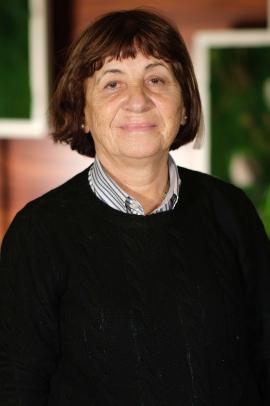
Dr. Lecturer Cengiz GÜNDÜZALP is a Turkish academic at Kafkas University's Kazım Karabekir Technical Sciences Vocational School , Department of Computer Technologies since 2012. Promoted to Assistant Professor in 2022, their work focuses on educational technology integration in STEM fields, particularly through Web 2.0 tools , interactive video , and artificial intelligence applications. Current roles: Assistant Professor (2022-), Lecturer (2012-2022) Institutional committees: Education and Ethics Commission (2023-), Academic Unit Quality Committee (2020-2021) Research interests include metacognitive skill development , digital game-based learning , and technology proficiency in teacher training. Their 15 most recent articles (2015-2025) examine: Augmented reality gamification in science education AI adoption frameworks for STEM teachers Interactive video effectiveness in web-based courses Project/resource-based teaching methods Robotics integration in education Collaboration network includes: Hüseyin Ateş (Kırşehir Ahi Evran University) Yüksel Göktaş (Atatürk University) Ezgi Pelin Yıldız (Kafkas University) Academic metrics: 36 publications, 89 citations, h-index 5 (YÖKSIS); Google Scholar: 162 citations, h-index 7.
Çağlar Akkaya is an Associate Professor at the Disaster Management Institute of Istanbul Technical University , focusing on seismic risk assessment, disaster management, and earthquake resilience. Their work bridges structural engineering with urban planning, addressing housing affordability post-disasters and impact chain analysis. Research Themes : Seismic risk modeling in megacities, remote sensing for damage assessment, post-earthquake housing affordability, and systemic effect analysis. Recent Projects : Leading a 2024-2027 TUBITAK-funded project on multi-scale recycling techniques for concrete waste after earthquakes. Collaborations : Frequently collaborates with institutions like Springer Science and researchers such as Kundak, Arslanlı, and Asıcı on disaster preparedness and urban resilience. Key publications highlight Istanbul's seismic vulnerabilities, the 2023 Türkiye earthquakes' economic impacts, and advancements in earthquake-resistant construction. Current research emphasizes integrating field and remote sensing data for rapid post-disaster assessments.
Serkan KESER is an Associate Professor in the Department of Electrical and Electronics Engineering at the Faculty of Engineering and Architecture, Ahi Evran University, Turkey. He has been serving as a full-time faculty member since 2018 and previously served as Head of Department from 2018-2021. His educational background includes a PhD in Electrical and Electronics Engineering from Eskişehir Osmangazi University (2009-2018), a Master's degree in the same field from the same institution (2005-2008), and a Bachelor's degree in Electrical and Electronics Engineering from Mustafa Kemal University (1999-2005). Dr. KESER's research focuses on three main areas: Audio and Speech Processing : Including speaker identification, isolated word recognition, and speech coding techniques Signal Processing : With applications in fiber optic sensor systems and acoustic positioning Image Processing : Covering face recognition, image compression, and denoising techniques His recent publications demonstrate a strong trend toward integrating machine learning and deep learning approaches with traditional signal processing methods. He has made significant contributions in applying subspace methods to various domains including speech recognition, image processing, and sensor technologies. His work often bridges theoretical signal processing concepts with practical applications in areas like smart home systems, medical imaging, and environmental monitoring. Dr. KESER has successfully supervised five Master's students to completion, with thesis topics spanning deep learning applications for class attendance systems, photovoltaic systems, speaker identification, brain tumor classification, and speech-controlled robotic arms. He has led four research projects, including development of fiber optic motion sensors, smart home models using Arduino microcontrollers, and science outreach initiatives. His teaching portfolio includes advanced courses in digital image processing, artificial neural networks, digital signal processing, and machine learning at both undergraduate and graduate levels. Dr. KESER's research impact is reflected in his publication metrics: 30 total publications with 117 citations (h-index 5) through the UNIS system, 25 publications with 180 citations (h-index 6) on Google Scholar, and strong representation in Scopus and Web of Science databases.
Murat Uysal is a Professor and Founding Chair of Electrical and Electronics Engineering at Özyeğin University, Istanbul, Turkey. He serves as Founding Director of the Center of Excellence in Optical Wireless Communication Technologies (OKATEM) and leads the CT&T Research Group. Previously, he was a tenured Associate Professor at University of Waterloo, Canada. B.Sc., M.Sc., and Ph.D. in Electrical/Electronics Engineering from Istanbul Technical University and Texas A&M Specializes in wireless and optical communication theory, with 400+ publications and 17,000+ citations Holds 3 US patents in vehicular and visible light communication Research focuses on physical layer aspects of wireless systems across radio and optical bands, including: Underwater and vehicular visible light communication Free space optical systems with UAV support Cooperative communication and diversity techniques Channel modeling for Li-Fi and industrial environments Recent publications show strong emphasis on: Underwater optical communication optimization UAV-assisted FSO systems LED response modeling for VLC Multi-hop relay systems Key scientific awards include: IEEE Fellow (2019) NSERC Discovery Accelerator Award Turkish Academy of Sciences Distinguished Young Scientist Award Multiple IEEE Best Paper Awards Advises 14 graduate students across M.Sc. and Ph.D. programs. His research group maintains collaborations with: IEEE Transactions on Communications (Area Editor) IEEE standards development (802.11bb, 802.15.7r1) Hyperion Technologies (co-founder)
Hakan Yaman is a Professor at the Department of Architecture , Faculty of Architecture , Istanbul Technical University . With over 35 years of experience, he specializes in Project and Construction Management with a focus on Building Information Modeling (BIM) , Multi-agent Systems , and Sustainable Construction . PhD in Building Science from Istanbul Technical University (1996) Current academic roles: Graduate Program Coordinator, Faculty Board Member His research bridges Construction Economics , Urban Transformation , and Digital Compliance through innovative models like the BIM-Based Building Regulation Compliance Control and Multi-agent Contractor Prequalification systems. Recent works examine Multifamily Residential Design Optimization and Construction Sector Dynamics in Turkey. Notable awards include: 2022 ITU Academic Performance Award 2022 ITU Publication Encouragement Award 2016 Anadolu University Most Successful Paper Award
Murat Üçüncü is an Associate Professor in the Department of Electrical and Electronics Engineering at Başkent University . He holds a PhD (1989), MSc (1985), and BSc (1983) from Boğaziçi University, and an additional BSc from Kara Harp Okulu (1980). His academic career spans over 35 years, with a focus on RF systems, control theory, and defense technologies. PhD, Boğaziçi University (1989) MSc, Boğaziçi University (1985) BSc, Boğaziçi University (1983) BSc, Kara Harp Okulu (1980) His research interests include RF power amplifier design, MEMS-IMU systems, underwater communication, and graph signal processing for automotive RADAR. Recent work emphasizes adaptive Kalman filtering, avionics network simulations, and autonomous systems for UAVs. Key article trends show expertise in RF circuit optimization , Kalman filter adaptation , and graph-based classification algorithms . No scientific awards are mentioned in the provided data. Advised 21+ students in areas spanning control systems, avionics, and defense technologies Led projects on shaped charges, underwater communication systems, and avionics networks
Dr. Muhammed Akif YENİKAYA is an Assistant Professor (Dr. Öğretim Üyesi) at Kafkas University's Faculty of Economics and Administrative Sciences, Department of Management Information Systems. Since 2020, he has held roles including Research Assistant (2020-present), Assistant Director of the Research and Application Center (2022-2024), and Director of the Research and Application Center (2024-present). He advises the Kafkas University Techno Informatics Club. Education PhD in Computer Engineering, Maltepe University (2019-2022) MSc in Computer Engineering, İzmir University of Economics (2016-2018) MSc in Occupational Health and Safety, Kafkas University (2024) Bachelor's in Management Information Systems, Anadolu University (2019-2022) Bachelor's in Western Languages and Literatures, Kafkas University (2022) Associate Degree in Graphic Design, Istanbul University (2022) Research Focus Yenikaya's research integrates artificial intelligence with practical applications across healthcare, agriculture, energy, and management. His work emphasizes deep learning models for medical diagnostics (e.g., retinal and X-ray analysis), sustainable agriculture via IoT-based hydroponic systems, and AI-driven waste management. He also explores organizational digital transformation, technology adoption, and digital leadership strategies in business contexts. Publications Overview His 24 publications demonstrate a strong focus on AI/ML applications in healthcare (e.g., diabetic retinopathy detection, skin cancer diagnosis), sustainable technology (hydroponics, energy efficiency), and digital leadership. Recent work shows increased emphasis on convolutional neural networks and cross-disciplinary solutions for environmental and industrial challenges. Awards and Grants UBYT-2024 Award from TÜBİTAK (2024) Project: Hydroponic Home Agricultural Production System (2023-2025, Project Lead) Project: Digital Content and AR Applications for Climate Change Education (2024, Trainer) Teaching and Advising Teaches courses including Artificial Intelligence , Database Systems , and Mobile Programming at undergraduate/graduate levels. Advises MSc student Rafet Doğrukartal on a QR-code-based inventory management system (2025).
Murat Serilmez serves as Assistant Professor in the Department of Basic Oncology at Istanbul University's Oncology Institute, where he has conducted cancer biomarker research since 2009. His clinical and laboratory work focuses on molecular mechanisms in lung, breast, and gastrointestinal malignancies with emphasis on translational applications. Education Doctorate (2011-2016): Cancer Biochemistry, Department of Basic Oncology, Oncology Institute, Istanbul University Postgraduate (2008-2011): Cancer Biochemistry, Department of Basic Oncology, Istanbul University Undergraduate (2004-2008): Biochemistry, Faculty of Science, Ege University His research centers on cancer biomarker discovery , particularly diagnostic and prognostic applications of proteins (EGFR, cMET, cytokines), adhesion molecules, and non-coding RNAs. Current work investigates microRNA expression in lung cancer and computational drug design against viral targets. His laboratory employs molecular techniques including NGS and protein quantification assays. Analysis of his 75+ WoS publications reveals consistent focus on biomarker validation across cancer types, with recent emphasis on lung cancer pathways (2025-2021) and expanding into computational approaches. Key trends include translational applications of circulating biomarkers and molecular pathway analysis for therapeutic targeting. Awards Uask 2020 award from Turkish Thoracic Society for lung cancer biomarker research TÜBİTAK 2218 Domestic Postdoctoral Scholarship (2021-2022) As principal investigator, he leads the 2020-2025 TÜBİTAK project on microRNAs in non-small cell lung cancer. Previous grants include head/neck cancer DCLK1 studies (2017-2018) and PTEN/BRAF research in lung cancer (2016-2017). His 12 funded projects demonstrate sustained research productivity. He directs the Chemical Spill Intervention Unit at the Oncology Institute and previously coordinated medical biochemistry training (2019-2022). As active ESMO and Basic Oncology Society member, he contributes to national cancer research initiatives through conference organization and peer review.
Prof. Dr. Hıdır İlyas GÖZ serves as the Head of Department for the Psychology Doctoral Program at Üsküdar Üniversitesi's Faculty of Humanities and Social Sciences (FHSS). He holds a PhD in Education Sciences from Selçuk Üniversitesi (1992) and advanced academic titles including Professor at Acıbadem Mehmet Ali Aydınlar Üniversitesi (2017) and Associate Professor at Maltepe Üniversitesi (2007). His research focuses on memory mechanisms, false memory syndromes, evolutionary psychology, and experimental methodologies. Education: BSc in Psychology (İstanbul Üniversitesi, 1975), MSc in Sociology (Selçuk Üniversitesi, 1976), PhD in Education Sciences (Selçuk Üniversitesi, 1992) Current Roles: Head of Psychology Doctoral Program (2021–present), teaches courses like Cognitive Psychology and Research Ethics Research Projects: Investigates neural correlates of memory using EEG, focusing on word frequency effects and Fuzzy Trace Theory He has authored/co-authored over 15 peer-reviewed articles and a book chapter on topics ranging from false memory in OCD patients to urban-rural differences in childhood memory formation.
Ali Emre Pusane is a Professor of Electrical and Electronics Engineering at Bogazici University, Turkey. He holds a PhD in Electrical Engineering from the University of Notre Dame (2008) and has been faculty since 2009. His research focuses on digital communications, information theory, and coding theory, with particular emphasis on molecular communication, radar signal processing, and low-complexity embedded designs. He leads the Bogazici University Signal Analysis Research Group (BUSARG), addressing challenges in communication signal analysis and prototyping. Education: B.Sc. and M.Sc. in Electronics and Communications Engineering, Istanbul Technical University (1999, 2002) M.Sc. in Electrical Engineering and Applied Mathematics, University of Notre Dame (2004, 2006) Ph.D. in Electrical Engineering, University of Notre Dame (2008) Research Interests: His work spans waveform design, machine learning-aided signal analysis, and nanoscale communication systems. Recent projects include molecular beamforming, RIS-assisted wireless systems, and LDPC-coded molecular communications. He also advises on R&D for national and international organizations. Teaching: He teaches courses like EE 242 (Numerical Methods for EE), EE 644 (Error Control Coding), and advanced communication engineering topics at Bogazici University. Feedback from students highlights his dedication to sophomore/junior-level education. Affiliations: Senior Member of IEEE, former associate editor for IEEE Transactions on Communications. Engaged with BUSARG in developing prototypes for physical layer security and molecular communication systems.
Esin YAVUZ is a Lecturer at the Department of Electrical and Electronics Engineering, Faculty of Engineering and Natural Sciences, Suleyman Demirel University. Her research focuses on network systems, smart classrooms, and telecommunication infrastructure, with notable contributions in cognitive radio, control systems optimization, and medical monitoring systems. She holds a PhD in Physics (2018) and has authored multiple peer-reviewed publications since 2004. Education: Bachelor of Electronics and Communications Engineering, Suleyman Demirel University (2000) Master of Electronics and Communications Engineering (with thesis), Suleyman Demirel University (2004) Doctorate in Physics, Suleyman Demirel University (2018) Research Interests: Development of efficient spectrum management techniques using cognitive radio technologies Optimization of real-time communication protocols in control systems via artificial neural networks Design of cost-effective telemedicine systems for elderly and disabled populations Analysis of RF energy effects on human tissue using phantom models Implementation of secure metro Ethernet networks with firewall applications Quality-of-service parameters in videoconferencing systems for smart classrooms Publication Trends: Recent work emphasizes IoT-enabled healthcare systems (2016-2024), cognitive radio networks (2024), and control system optimization (2018). Earlier contributions (2004-2006) focused on VoIP quality and videoconferencing infrastructure. All publications demonstrate strong alignment with telecommunication and biomedical engineering domains. Labs/Teams: Active in university's Network Systems Lab and Cisco Network Academy initiatives, though specific team names aren't explicitly mentioned in the provided materials.
Ayşe Tosun Kühn is an Associate Professor in the Department of Computer Engineering at Istanbul Technical University (ITU), where she also serves in administrative roles such as Deputy Dean and Management Board Member of the ITU Artificial Intelligence and Data Science Application and Research Center. She earned her Ph.D. in Computer Engineering from Boğaziçi University and has held academic positions at Sabancı University and the University of Oulu. Her research lies at the intersection of software engineering, empirical methods, and data science, with a focus on software quality, defect prediction, technical debt, vulnerability analysis, and test-driven development. She leads numerous funded research projects, including those supported by TÜBİTAK and industry collaborations, applying machine learning and reinforcement learning to software engineering challenges. Her recent publications reflect a strong trend in applying advanced machine learning techniques—particularly deep learning and reinforcement learning—to problems in software analytics, developer behavior modeling, and delivery optimization. She has made significant contributions to empirical studies on test-driven development, defect prediction models, and vulnerability detection in code. Her work is frequently published in high-impact journals such as IEEE Transactions on Software Engineering, Empirical Software Engineering, and Journal of Systems and Software. She has served as a guest editor and editorial board member for the Turkish Journal of Electrical Engineering and Computer Sciences , and has contributed book chapters on data science in software engineering. Her research has been cited over 1,700 times, with an h-index of 23. Scientific Awards: None explicitly mentioned. She advises several graduate students and has collaborated extensively with researchers in Turkey and internationally. She has also contributed to industry applications through projects on software measurement, defect prediction, and AI-based analytics. She is actively involved in organizing and contributing to major software engineering conferences and workshops. She is a key member of ITU’s AI and Data Science initiatives, contributing to both academic research and practical implementations in software engineering.
Ibrahim Altunbas is a Professor in the Department of Electronics and Communication Engineering at Istanbul Technical University (ITU), College of Engineering. He is actively involved in research on next-generation wireless communication systems, with a strong focus on satellite networks, terahertz and millimeter-wave communications, non-orthogonal multiple access (NOMA), spatial modulation, and hybrid RF/FSO systems. His work integrates theoretical modeling with practical design for high-efficiency and reliable wireless links. His research interests span a wide range of advanced topics in telecommunications, including antenna selection, full-duplex communication, index modulation for drone networks, and error performance analysis in fading environments. The fingerprint of his research highlights key areas such as Error Performance , Fading Channels , Antenna Selection , Outage Probability , and Transmit Antenna Selection , reflecting his deep expertise in physical layer communication design. The recent trend in his publications shows a strong emphasis on satellite-based communication using emerging technologies like Rate-Splitting Multiple Access (RSMA), NOMA, and HAPS-assisted networks. His work frequently addresses challenges in power allocation, decoding order optimization, I/Q imbalance, and pointing errors in high-frequency systems. These contributions demonstrate a consistent effort toward enhancing spectral efficiency, energy efficiency, and reliability in future wireless networks. Episode-Based Broadcast Performance Award (2021) ITU BAP International Scientific Cooperation Development Support (2015) ITU Rectorate Scholarship Program (2001) Project Performance Award (2017) Vehbi Koç Foundation Scholarship (1997) As Principal Investigator (PI), he has led multiple BAP-funded research projects at ITU, including studies on turbo and LDPC coding in THz channels, NOMA for satellite networks, index modulation for drone communications, and multi-hop spatial modulation systems. These projects highlight his leadership in driving innovation in wireless technologies. While specific grant amounts are not listed, the volume and continuity of funded projects indicate sustained research support. He is currently supervising 29 theses, reflecting his active role in mentoring graduate students in cutting-edge communication research. His research is conducted within the framework of ITU’s Department of Electronics and Communication Engineering, where he collaborates with students and researchers on projects involving simulation, performance analysis, and system design for future wireless networks. His lab focuses on physical layer innovations, particularly in multi-antenna systems, satellite-HAPS integration, and novel modulation techniques.
Prof. Dr. Ümit Güz serves as a full-time Professor in the Department of Electrical and Electronics Engineering at Işık University's Faculty of Engineering and Natural Sciences. With over two decades of academic experience, his expertise spans biomedical signal processing, speech technology, and machine learning applications. Education: Post-Doc (2006-2007): SRI International, Menlo Park, CA - Speech Technology and Research Laboratory Post-Doc (2007-2008): UC Berkeley, International Computer Science Institute PhD (1997-2002): Istanbul University, Electronics Engineering MSc (1995-1997): Istanbul University, Electronics Engineering BSc (1990-1994): Istanbul University, Electrical-Electronics Engineering Associate Degree (1988-1990): Yıldız Technical University, Computer Programming His research centers on multimodal biometric systems using ECG and speech signals, medical image compression techniques, and Turkish language processing. Key innovations include SYMPES speech modeling framework and quadtree-based energy pattern blocks for biomedical image compression. His work bridges theoretical signal processing with practical healthcare and security applications. Publication trends reveal consistent focus on biometric identification (fingertip ECG/speech fusion), efficient compression algorithms for medical data (ECG/EEG/images), and semi-supervised learning for Turkish sentence segmentation. Recent work emphasizes multi-view learning strategies and deep neural network integration in compression systems. Scientific Awards: J. William Fulbright International Fellow (Postdoc Scholar Program, USA) Overseas Postdoctoral Research Award (TÜBİTAK BİDEB, Turkey) Prof. Güz has supervised 9 master's theses and 2 PhD dissertations on biometric recognition, speech compression, and medical image processing. His research is supported by TÜBİTAK grants including Project No 107E182 (Turkish spoken language processing) and Project No 10A301 (ECG-based biometric recognition). He actively contributes to IEEE and IEICE as a longstanding member.
Handan Diker is a Lecturer at Yildiz Technical University, specializing in Atatürk's Principles and Revolution History. She earned her PhD in 1995 and has been teaching courses like "Atatürk's Principles and History of Turkish Revolution 1" and "2" since at least 2015. PhD in Atatürk's Principles and Revolutionary History (1995, Yildiz Technical University) Master's in Atatürk's Principles and Revolutionary History (1990, Yildiz Technical University) Licence in Philosophy (1980, Istanbul University) Her research focuses on the history of the Turkish Revolution, Atatürkist thought, media development in the early Republic, and language reforms. She has extensively published on these topics in journals and newspapers like Cumhuriyet, with a notable 2016 book on Turkey's transition from empire to nation-state. The 15 most recent publications highlight her expertise in Turkish Republicanism, military campaigns (e.g., Great Offensive), educational policies, and revolutionary laws. Her work often explores Atatürk's strategic leadership, media's role in nation-building, and the sociopolitical impact of reforms. "Turkish Revolution History from Empire to Nation State" (2016) – comprehensive analysis of republican transition 2012-2010 articles on Misak-ı Milli, Great Offensive, and educational policies 2009-2000 works on post-war reforms, media history, and language revolution She previously served as Deputy Head (1997-2005) in her department and has presented at conferences analyzing Atatürk's principles, secularism, and historical milestones from 2000-2008.