Emmanuel Vander Poorten is an Associate Professor at the Faculty of Engineering Technology , KU Leuven, specializing in Surgical Robotics , Medical Device Design , and Biomedical Engineering . He leads the Robotics, Automation and Mechatronics (RAM) unit and is involved in interdisciplinary research through institutes like the Leuven Centre for Affordable Health Technology and iSi Health . Research Focus : Surgical Robotics, Haptics, Teleoperation, and Virtual Reality Training Key Projects : MIRACLE, RIVUS, AR-Spine, and ARTISTE (Autonomous Robotic Suturing for fetal surgery) Technical Expertise : 3D Ultrasound Shape Completion, Endovascular Navigation, and Reinforcement Learning for Surgical Planning His recent publications highlight advancements in 3D augmented reality for image-guided surgery , deep reinforcement learning for pedicle screw placement , and novel sensing methods for bone drilling . He collaborates extensively on medical robotics and autonomous catheter navigation in deformable environments.
Friederike Nastold is an Assistant Professor of Art History with a focus on Gender Studies at the Institute for Art and Visual Culture within Faculty III - Linguistics and Cultural Studies at Carl von Ossietzky University Oldenburg. She also serves as Deputy Head of the Institute and Deputy Director of the Center for Interdisciplinary Women's and Gender Studies (ZFG) at the same university. Since 2024, she has been a board member of the Fachgesellschaft Geschlechterstudien. Her research interests span multiple intersecting fields including: Gender Studies in art and cultural studies, Art History and theories from the 19th to 21st centuries, Visual Culture Studies, Queer Ecologies, New Materialism, Class issues in art and visual culture, Affect Theories, Queer Theory, Porn Studies, and Film Theory. Her work often focuses on artistic-educational and curatorial project work that challenges traditional boundaries. Nastold's recent publications (2024-2025) reveal several key trends: a strong focus on queer ecologies and garden studies, with multiple works examining postcolonial and violent dimensions of gardening practices; continued development of affective-performative aesthetics, particularly around submergence and visibility; and innovative approaches to class analysis in visual culture, especially through graphic novels and film. Her work consistently bridges art theory with political activism, particularly around care practices, visibility politics, and more-than-human relations. Nastold has organized numerous significant academic events including the international Summer School 'Multiperspectivity in Gender Studies' (2025), the symposium 'Debt. Unsettling Matter of Interest' (2025), and the 'Re-Lektüre des Gartens' workshop (2024). She has also co-organized scoping workshops on critical pornography research funded by the Volkswagen Foundation. Her collaborative approach is evident in her frequent co-authorship with scholars like Thari Jungen and Barbara Paul. Her academic trajectory shows steady progression from her PhD completion in 2021 ('Zwischen I see you und Eye Sea You. Blick, Repräsentation, Affekt') through various research assistant positions to her current professorship. She is also active in the TOYTOYTOY collective for art, visual cultures and gender/queer theory since 2015, demonstrating her commitment to collective knowledge production beyond traditional academic boundaries.
Prof. Dr. Wolfgang Gaißmaier is a full-time faculty member at the Department of Psychology, University of Konstanz, specializing in Social Psychology and Decision Sciences. His research explores judgment and decision-making processes under uncertainty, with particular focus on individual differences in decision strategies, risk perception and communication, medical decision-making, ecological rationality, and heuristic modeling. Current research projects include "Political Elites and Inequality: Information, Heuristics and Policy" Co-developer of the riskyrApp and FFTrees R packages for risk literacy and decision modeling Key contributor to the Collective Behaviour Cluster of Excellence at University of Konstanz His recent publications examine cognitive biases in statistical information processing, the effectiveness of visual risk communication tools, and the psychological foundations of collective behavior. He collaborates extensively with researchers across psychology, economics, and computer science, particularly with Dr. Hansjörg Neth and Dr. Helge Giese. Major contributions include: Developing computational models of decision heuristics Investigating social learning mechanisms in risk perception Advancing tools for transparent risk communication Exploring the narrative bias in health decision-making Studying group dynamics in knowledge diffusion
Prof. Dr.-Ing. Dipl.-Wirt. Ing. Diethelm Bienhaus is a faculty member at the Faculty of Information Technology (MNI) at Technische Hochschule Mittelhessen . His academic focus spans Cyber-Physical Systems , Industry 4.0 , and Assistive Technologies , with long-term projects in building automation and age-appropriate assistance systems. Research Interests: Cybersecurity for industrial systems, robotics, embedded systems, and human-computer interaction. Committee Roles: Member of the MNI Department Council, Head of Curriculum Development for Computer Engineering, and Chair of multiple appointment committees. Funded Projects: Led initiatives in secure digitalized healthcare production, dendrochronological analysis automation, and industrial connectivity platforms. Email: diethelm.bienhaus@mni.thm.de
Prof. Dr. Stefanie Arend holds the Professorship for Modern German Literature at the Institute of German Studies , University of Rostock. She serves as project leader in DFG Research Group 5138: 'Spiritual Intermediality in the Early Modern Period' since 2022 and co-editor of the DFG-funded Literary Authors' Lexicon (VL 17) since 2017. University of Cologne (German/Latin, 1st State Exam 1996, Doctorate 2000) Habilitation 2008, Friedrich-Alexander University Erlangen-Nürnberg Max Kade Distinguished Visiting Professor 2011/12, University of Virginia Visiting Professor 2018/19, University of Hamburg Her research focuses on Early Modern Literature and Klassische Moderne , with particular emphasis on intermedial transformations , emblematics , and spiritual aesthetics . Publications analyze love discourse in Baroque poetry, mythological symbolism, and Enlightenment conceptual history. Scientific Awards: DAAD Research Scholarship (2001) Max Kade Distinguished Visiting Professor (2011/12) DFG Project Leadership (2022–) She currently advises doctoral students Anne-Katrin Schülke-Witte and Laura Zech within DFG-funded projects, and collaborates with Dr. Mareike Woortmann in Research Group 5138. Her editorial work includes the comprehensive Early Modern Germany encyclopedia series.
Julia Thibaut is a Senior Lecturer at the Chair of General Educational Science within the Faculty of Cultural Studies , University of Bayreuth. Her academic career spans theoretical and empirical research in sociology of knowledge, network theory, and ethnography, focusing on volunteering in migration, NGOs, and photography's role in social research. Education : Master of Arts in Educational Sciences (Free University of Berlin), DAAD-funded study in India, Summer Schools in Social Network Analysis and Philosophy. Research Priorities : Sociology of knowledge, relational sociology, ethnographic methods, visual communication in migration contexts, organizational studies in non-profits, and photography as research tool. Publication Trends : Network structures between theory and practice, tensions in orientation frameworks, refugee volunteering, digital learning during crises, and transdisciplinary approaches to knowledge transmission. Scientific Awards : Zenith Photo Prize (Audience Award) for "Islam in Europe" (2017) DAAD New Passage to India Scholarship (2009) DAAD Passage to India Program (2009) Research Projects : Photography exhibitions like "Your Picture – My Picture" (2018), co-organization of conferences on Networks & Culture, and leadership in working groups related to digital anthropology and futures education.
Claudia de Witt is a Professor of Educational Theory and Media Education at FernUniversität in Hagen. As Vice President of the university and a member of CATALPA’s Executive Board, she leads projects like AI.EDU and IMPACT, focusing on artificial intelligence in higher education. She represents educational science perspectives on personalized learning and digitalization within CATALPA. Research Interests: Her work explores the intersection of higher education and AI, innovations with educational technologies, success conditions for digitalization in self-study, formative assessments, study success/dropout in digital formats, didactic mentoring in distance learning, and pragmatist educational theory in data ethics. Projects like AI.EDU investigate AI’s role in enhancing educational outcomes. Networks and Collaborations: She collaborates with institutions like the German Research Center for Artificial Intelligence (DFKI), Leibniz Institute for Human Development and Educational Information (DIPF), University of Bremen, and KI-Campus. Her leadership in CATALPA and digitale_kultur research focus highlights her commitment to digital educational design.
Bernhard Dietz is a Senior Academic Councillor at the Department of History, Johannes Gutenberg University Mainz, with a focus on economic and cultural history. His work explores value change processes in postwar West Germany, radical conservatism, and transnational European intellectual movements. Senior Academic Councillor, JGU Mainz (2023–present) Research Fellow at Georgetown University and German Historical Institute Washington (2016–2017) Research Interests: Dietz’s studies bridge economic elites, corporate culture, and ideological shifts. He examines how managerial values evolved in postwar Germany and comparative conservative movements in Britain and Europe. His current project on Edzard Reuter analyzes intersections of corporate leadership, Cold War dynamics, and globalization. Scientific Awards Volkswagen Foundation Postdoctoral Fellowship (2016) Hoechst Foundation Scholarship (2012) DAAD Doctoral and Research Grants (2005, 2007, 2008) Academic Contributions: Over 15 publications dissecting 20th-century Europe’s political economy, including monographs on Neo-Tories and The Rise of the Manager , with a focus on corporate elites, anti-modernist ideologies, and postwar value systems.
PD Dr. Ilka Brasch is a Lecturer and Acting Professor for American Studies at Leibniz University Hannover and the University of Hamburg (2024-2025). Her research focuses on American literature and film , particularly the early American Republic (18th-19th centuries) and film history before 1950 . She co-leads the DFG-funded research network Voice & Agencies: America and the Atlantic, 1600-1865 (2021-2024). Education Habilitation (2024): "H.H. Brackenridge's Modern Chivalry: Materiality, Archival History, Nation & Empire" PhD (2017): "Operational Detection: Film Serials and the American Cinema, 1910-1940" MA (2011): "Instrument-Mediation and the Melodramatic Experience" BA (2009): "Daisy Miller between Literary Text and Filmic Adaptation" Research Interests : Archival theory and early American literature Media archaeology and technological narratives Serialization in film and literature Democracy and cultural production Political discourses in pre-1865 America Academic Trends : Her publications span film serials , media modernity , archival practices , and early American literature . She explores intersections between technological innovation and narrative structure . Scientific Awards : Fulbright American Studies Award (2018) Doctoral scholarship (Evangelisches Studienwerk Villigst, 2013) Tuition Fee Scholarship (Friends of Leibniz University, 2010-2011) Collaborative Academic Work : She has co-organized conferences like Managing Mass Culture: Serialization, Standardization, and Modernity (2015) and contributed to edited volumes such as Modernities and Modernization in North America (2018).
Prof. Dr. Andrea Rössler is a leading academic at Leibniz University Hannover, serving in the Romanesque Seminar under the Faculty of Philosophy . With a focus on Spanish and Latin American youth literature , her work spans vocabulary didactics , intercultural competence , and language mediation in foreign language education. She has contributed extensively to audiovisual media and foreign language policy , emphasizing the professionalization of foreign language teachers . Her research projects include the development of intercultural competence standards for teachers, exploration of language mediation as an innovative skill , and leadership in the Leibniz Principle initiative to enhance practical teaching phases. She co-edits the series Romance Foreign Language Research and Teaching Development and has published widely in journals like Der fremdsprachliche Unterricht Spanisch and FLuL . Recent publications highlight trends in digital vocabulary learning , audiovisual text comprehension , and social media-based literary genres . Her editorial work includes anthologies on contemporary women's literature and multimedia teaching resources . She actively participates in academic networks, including the German Society for Foreign Language Research and the Hispanists Association .
Andreas Gollenstede is a researcher at Jade University's IAPG Institute (Oldenburg campus). He contributes to projects focused on digitization, geospatial analysis, and visualization, including the DiViAS research network (2023-2026) funded by *zukunft.niedersachsen* and the WorldPop project (2023-2025) supported by the Bill & Melinda Gates Foundation. His work addresses challenges in optical 3D metrology, GIS workflows for disaster management, and augmented reality applications in tourism. Research interests include: Digitization of collection items from colonial contexts Geospatial data infrastructure (e.g., Lower Saxony's GDI-NI evaluation, 2007-2008) Automated GIS raster data processing Augmented reality map development using OpenCV and .NET He collaborates with institutions like the Federal Office for Cartography and Geodesy and supervises student theses in geoinformatics and related fields. Contact details include phone +49 441 7708-3370 and room G 109.
Nina Schneider is an Assistant Professor in the History Department at the University of Duisburg-Essen, specializing in global-local perspectives on human and social rights. She leads the DFG-funded project "Child Labour Opponents in the Americas and their Campaigns in Global Perspective, 1888-1938" and serves as a Research Group Leader at the Centre for Global Cooperation Research (GCR21). Her work bridges Global History, Cultural History, and Public History, with a focus on child labor, dictatorship legacies, and racism. 2021–Present: Assistant Professor, University of Duisburg-Essen 2018–2024: Research Group Leader, Käte Hamburger Kolleg/GCR21 2023–: Scientific Committee Member, Swiss Network for International Studies Her research examines: Critical history of child labor legislation across the Americas Propaganda and violence in Cold War Latin America Visual regimes of migration and racism Transnational memory politics and truth commissions Methodological integration of oral and media histories Key scientific contributions include: Marie Curie Postdoc Fellowship (2013–2015) DFG-funded research on child labor campaigns DAAD Stipendium for Columbia University research (2012–2013) She collaborates with interdisciplinary teams at the Global South Studies Center (2015–2018) and contributes to public history initiatives, including exhibitions like Normaliminalities: Artefacts from Various Souths and Norths (2017).
Bastian Goldlücke serves as an Associate Professor in the Department of Computer Science at the University of Konstanz since 2014. His academic journey includes postdoctoral positions at the University of Heidelberg (2011), TU Munich (2010), and the University of Bonn (2009), following a Ph.D. from the Max Planck Institute for Computer Science in Saarbrücken (2006). His research centers on variational methods and their applications in computer vision, with specialized focus on light field analysis and inverse problems . Key contributions include novel frameworks for light field decomposition, real-time 3D reconstruction, and attention-based neural representations. His work bridges mathematical optimization with practical computer vision challenges in autonomous systems and 3D imaging. Notable scientific recognition includes: ERC Starting Grant 'Light Field Imaging and Analysis' (2013) Funding through SFB Transregio 'Quantitative Methods for Visual Computing' Prof. Goldlücke actively contributes to the academic community as a reviewer for major conferences and journals, co-organizer of the 'Light Fields for Computer Vision' workshops at ECCV 2014 and CVPR 2017, and area chair for ACCV 2014 and 3DV 2016. His current research is supported by significant European and German research grants focusing on computational imaging and visual analysis.
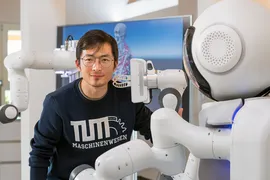
Hao Xing is a scientific researcher and post-doctoral fellow at the Institute for Cognitive Systems (ICS), Technical University of Munich (TUM), working with Prof. Gordon Cheng since May 2024. Previously, he served as a research assistant at the Munich Institute of Robotics and Machine Intelligence (MIRMI) and completed his PhD under Prof. Darius Burschka from 2019. His educational background includes: Master of Science in Mechanical Engineering from Technical University of Munich Bachelor of Engineering in Mechanical Engineering from Hefei University of Technology, China Xing's research focuses on Robot Vision , Human Action Recognition , and Graph Convolutional Networks , with significant contributions to Human-Object Interaction Recognition , Scene Understanding , and Visual Depth Estimation . His work leverages machine learning to develop robust algorithms for human activity analysis and robotic perception, emphasizing spatio-temporal modeling and uncertainty handling in real-world scenarios. Analysis of his 13 recent publications (2019-2025) reveals a dominant focus on graph-based approaches for action recognition and segmentation, with increasing emphasis on open-world applications, uncertainty modeling, and healthcare integration. His research spans computer vision, robotics, and medical applications, demonstrating strong interdisciplinary impact through collaborations in surgical robotics and patient monitoring systems. Xing actively mentors students through master's thesis projects in Stereo Matching, Human Activity Segmentation, and Monocular Depth Estimation, requiring expertise in deep learning frameworks and computer vision algorithms. While no major grants are explicitly mentioned, his thesis topics indicate active research funding in geometric vision and human activity analysis. He operates within the Institute for Cognitive Systems (ICS) at TUM, a key unit in MIRMI's robotics ecosystem focused on advancing human-robot interaction through vision-based scene understanding and motion generation capabilities.
Harald Luksch is Professor and Chair of Zoology at the Department of Animal Sciences, Technical University of Munich (TUM). He serves on the MCN advisory Board and holds full membership and Scientific Board positions within the Graduate School of Systemic Neurosciences (GSN). His research centers on sensory integration in the vertebrate midbrain, using chicken as a primary model. The midbrain functions as a central hub for sensorimotor integration, constructing multimodal sensory maps that enable rapid behavioral responses. Key investigations include bottom-up attention control, stimulus competition mechanisms, target detection processes, and network dynamics during self-movement, with specific emphasis on the tecto-isthmic circuitry. Analysis of his 2013-2018 publications reveals consistent focus on avian midbrain circuitry, particularly optic tectum organization and cross-modal sensory processing. The work integrates neuroanatomical mapping, electrophysiological recordings, and behavioral analysis to dissect how neural networks encode spatial information and mediate attentional selection in vertebrates. Professor Luksch has mentored doctoral researchers including: Hamed Yeganegi Maximilian Bothe His laboratory at TUM's Freising-Weihenstephan campus maintains active research programs investigating midbrain function in avian species, with particular expertise in tectal network dynamics and multisensory integration mechanisms.