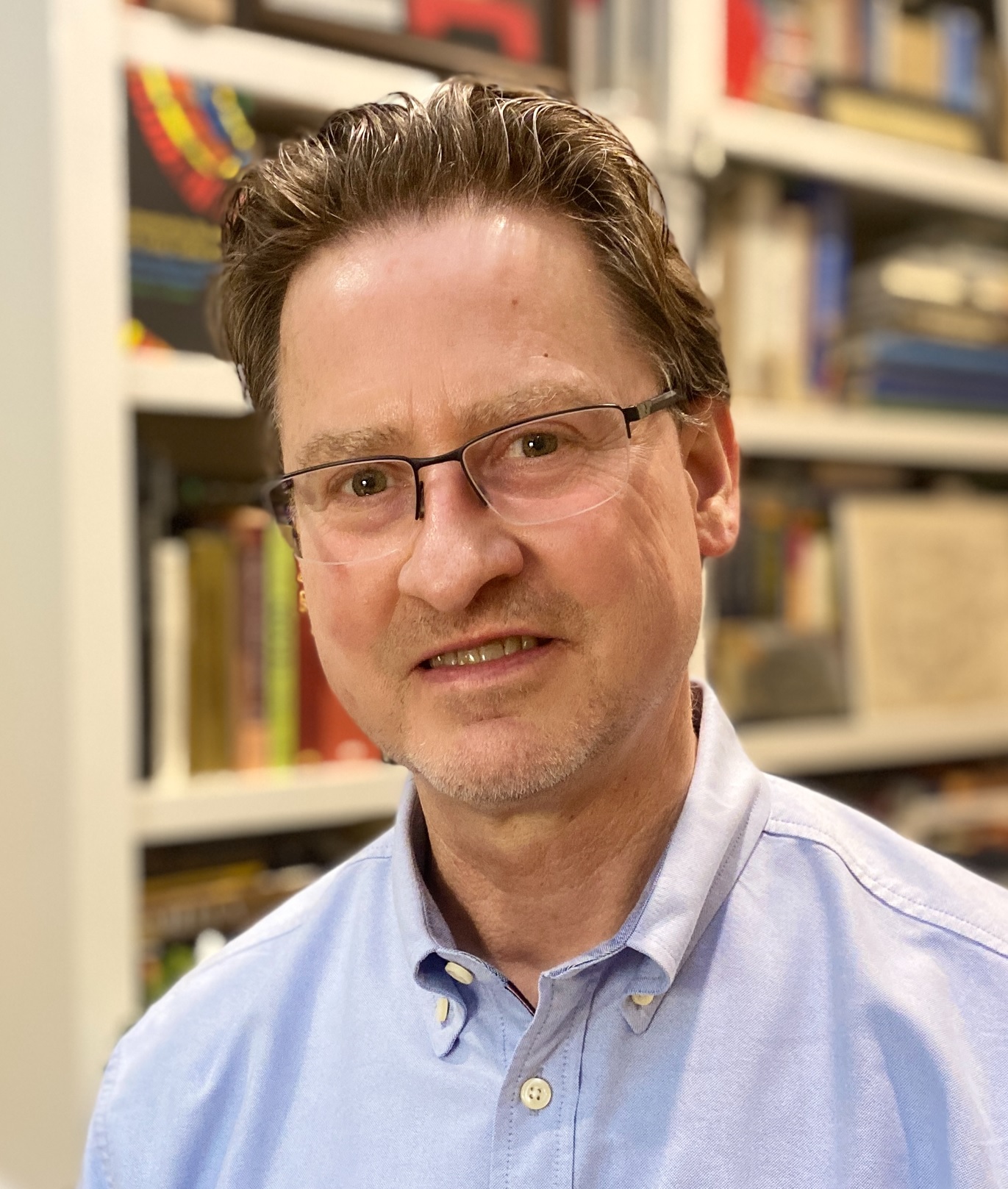
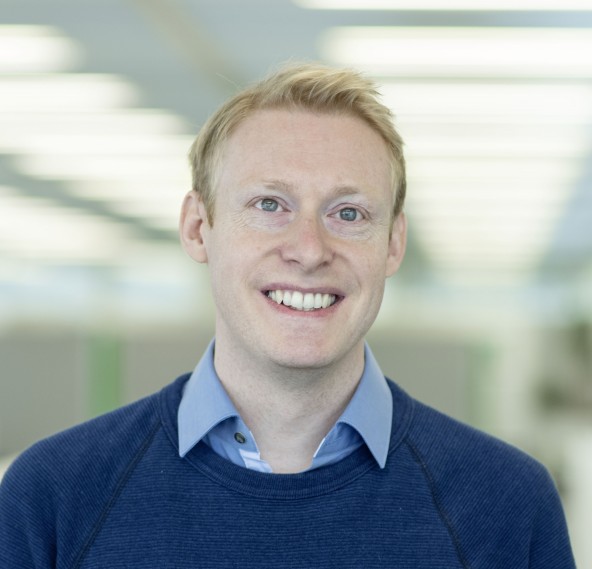
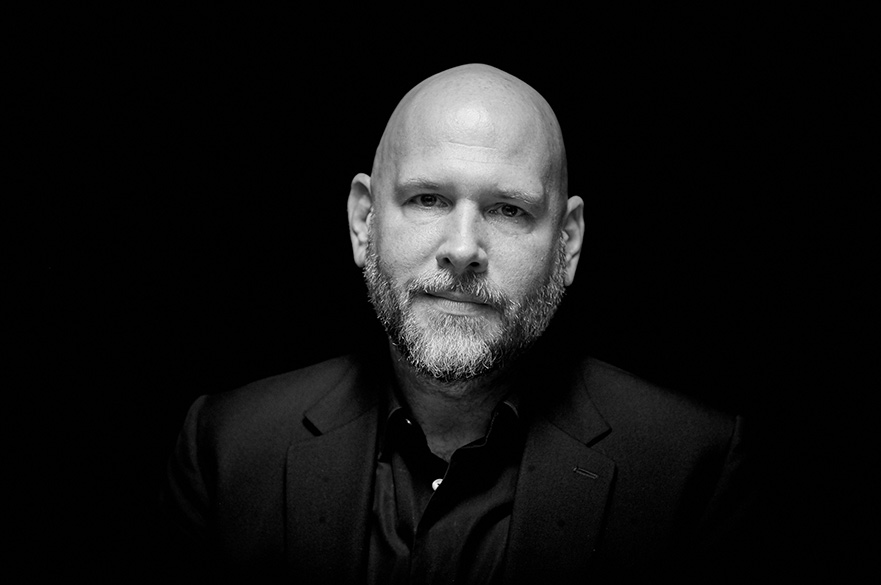
Jiri Srba is a Professor at Aalborg University's Department of Computer Science, part of the Technical Faculty of IT and Design. He leads research in the Distributed, Embedded and Intelligent Systems group and contributes to projects like "ControLing wAter In an uRban Environment" and "Collective Adaptive System SynThesIs using Non-zero-sum Games". His office is located at Selma Lagerløfs Vej 300, 9220 Aalborg Øst, Denmark. Contact him at +4599409851 or srba@cs.aau.dk. His core research focuses on formal methods and applied computer science: Model checking and verification of concurrent systems Petri nets and their applications Network protocol verification and synthesis Distributed system correctness Automated reasoning for industrial systems His publication record shows strong emphasis on network verification, model checking optimization, and applying formal methods to environmental systems. Recent work integrates computer science with sustainable engineering, particularly in water management systems and energy control.
Christopher Bates is an Associate Professor in the Department of Chemistry & Biochemistry at the University of California, Santa Barbara (UCSB), with a joint appointment in the Division of Chemistry and Biochemistry (DCB). He leads the Bates Research Group, focusing on the design, synthesis, and application of soft materials. His lab develops advanced polymers and copolymers with tailored properties for applications in electronics, energy storage, and sustainable materials. Contact information includes cbates@ucsb.edu and an office in Engineering II Building. Research interests emphasize polymer architecture design, including block copolymers, bottlebrush networks, and degradable materials. Key areas include molecular cross-linking for photovoltaic stability, slide-ring gels for mechanical performance, and physics-informed machine learning for phase identification. The group also explores recyclable materials and sustainable synthesis methods. Recent work highlights advancements in α-lipoic acid-based materials, dynamic covalent networks, and electrochemical degradation strategies. The Bates Lab collaborates on projects such as tunable polyborosiloxane networks and self-healing elastomers. Advising includes Dr. Elizabeth Murphy (PhD 2025). No scientific awards are explicitly listed in the provided texts. The lab’s work is supported by grants such as the NSF CAREER award (2019) for block copolymer research. Labs and teams: The Bates Group operates within the UCSB Materials Department, leveraging interdisciplinary approaches to materials science challenges.
Sharad Malik is the George Van Ness Lothrop Professor of Engineering at Princeton University's Department of Electrical and Computer Engineering. His research focuses on designing functionally correct and secure computing systems, combining system design with mathematical modeling for verification. He pioneered the Instruction-Level Abstraction (ILA) model for SoC verification and has contributed extensively to Boolean satisfiability (SAT) solvers. Education: PhD (1990), M.S. (1987) in Computer Science from UC Berkeley; B.Tech. (1985) in Electrical Engineering from IIT Delhi. Research Interests: Formal Verification of Digital Systems Hardware Security and Trust Boolean Satisfiability Solvers System-on-Chip (SoC) Design Accelerator-rich Platform Architectures Notable Achievements: IEEE CEDA A. Richard Newton Technical Impact Award (2017) 2013 IEEE/ACM DAC Most Cited Paper Award Princeton President’s Distinguished Teaching Award (2009) Advising & Labs: Leads the Malik Group, advising over 50 graduate students and postdocs. Active in postdoc recruitment and mentorship programs.
Sara Vinco is an Associate Professor at the Department of Control and Computer Engineering (DAUIN), Politecnico di Torino, Italy. She specializes in battery simulation, digital twins, and energy-efficient design automation for heterogeneous embedded systems, aligning with Industrial and Information Engineering (Area 0009) and ERC sectors including Computer Architecture and Machine Learning . Her research focuses on advancing cyber-physical systems through simulation frameworks like SystemC-AMS, enabling holistic modeling of analog, digital, and thermal domains. Key projects include data-driven digital twins for EV batteries and low-area digital circuits in industrial/medical applications, supported by commercial contracts such as C-based virtual prototyping. Her recent publications (2022-2023) emphasize machine learning for battery SOH/SOC estimation , energy monitoring in production lines , and multi-domain fault modeling . These works span journals like IEEE Transactions and conferences including DATE and ISLPED. Awarded the FFABR 2017 grant and IEEE FDL Best Paper Award 2011 , she also chairs editorial boards for IEEE Transactions on CAD and DATE Conference. She supervises PhD students Giovanni Pollo (Digital Circuits) and Khaled Alamin (EV Battery Twins), reflecting her leadership in smart systems design.
Kunihiko Kaneko is a Professor at the Niels Bohr Institute, University of Copenhagen, with a distinguished career in theoretical biophysics and complex systems. He received his PhD and MSc in Physics from the University of Tokyo, and has held leadership roles at the Universal Biology Institute and Center for Complex Systems Biology. PhD Physics, 1984 - University of Tokyo MSc Physics, 1981 - University of Tokyo His research spans five primary areas: Universal Biology, Evolutionary Constraints, Ecosystem Dynamics, Neural Cognition, and Universal Anthropology. He has published extensively on multi-level consistency principles, dimensional reduction in biological systems, and reciprocity between robustness and plasticity across scales. Recent publications show strong focus on microbial ecosystems (2025), evolutionary game theory (2025), neural modular architectures (2024), and dimensional reduction in cellular systems (2024). His work bridges physics and biology through dynamical systems theory applied to diverse phenomena from protocells to human societies.
Dr. Andrzej Nowak is a Professor of Psychology at the Charles E. Schmidt College of Science, Florida Atlantic University , where he has created a unique interdisciplinary research program since 1991. His work bridges social psychology, computational modeling, and complex systems theory. University of Warsaw, Psychology Stanford University, 1974-1975 M.A. and Ph.D. in Psychology from University of Warsaw (1978, 1987) Nowak's research focuses on applying dynamical systems theory to understand social processes through computational modeling. He investigates: Emergent properties of social systems Self-organization in group dynamics Conflict and radicalization mechanisms Synchronization of psychological states Behavioral economics and social dilemmas Technology-mediated social transitions His publications demonstrate interdisciplinary breadth across psychology, computational science, and socioeconomic modeling. While many articles (1990-2010) focus on social impact theory and neural network applications, recent work (2008-2010) expands to intractable conflict modeling, social entrepreneurship, and cross-scale systemic dynamics. Dr. Nowak has co-edited multiple volumes on: Complex human dynamics Computer modeling of social processes Non-equilibrium social science He has developed simulation platforms like Attractor for multi-stakeholder negotiation training and contributed to understanding: Warsaw as an emergent structure Polish political cleavage stability Behavioral economics foundations
Hakan Aydin is a Professor and Director of the PhD Program in the Department of Computer Science at George Mason University's Volgenau School of Engineering. He has been teaching at George Mason University since 2001 and has established himself as a leading researcher in real-time embedded systems and energy-aware computing. Education: PhD in Computer Science from the University of Pittsburgh (2001) Hakan Aydin's research primarily focuses on sustainable computing, real-time embedded systems, fault tolerance, Internet-of-Things, and cyber-physical systems. His work bridges theoretical foundations with practical implementations, particularly in energy management for real-time systems. He has developed innovative techniques for reliability-aware power management, dynamic voltage scaling, and energy harvesting in wireless sensor networks. His research has significant implications for extending battery life in mobile devices, improving reliability in safety-critical applications, and enabling sustainable computing practices. Aydin's publications reveal a consistent research trajectory centered around energy efficiency and reliability in real-time systems. His work spans theoretical algorithm development, system-level implementation, and experimental validation. A notable trend is the evolution from single-processor systems to multicore and heterogeneous architectures, reflecting industry trends. His recent work increasingly addresses security aspects of real-time systems and the integration of IoT technologies. Scientific Awards: National Science Foundation CAREER Award (2006) George Mason University Computer Science Department Teaching Award (2006, 2009) Best Paper Award at IEEE Green and Sustainable Computing Conference (IGSC'20) Best Student Paper Award at IEEE International Conference on Embedded Software and Systems (ICESS'15) Best Paper Award at IEEE International Conference on Embedded Computing (EmbeddedCom'14) Best Paper Award at International Workshop on Highly-Reliable Power-Efficient Embedded Designs (HARSH'13) Best Paper Award at ACM International Conference on Modeling, Analysis and Simulation of Wireless and Mobile Systems (MSWIM'11) Hakan Aydin has advised seven PhD students to completion, including Vinay Devadas (2011), Baoxian Zhao (2012), Bo Zhang (2012), Mohammad Atiqul Haque (2016), Maryam Bandari (2016), Arda Gumusalan (2019), and Abhishek Roy (2021). His research has been generously supported by the National Science Foundation through multiple grants, including CSR: Small: Collaborative Research: Towards Reliability-Centric Real-time Computing on Heterogeneous Chip Multiprocessor Systems (2014-2017), CSR: Small: Energy Harvesting for Performance Sensitive Wireless Sensor Networks (2011-2015), and CSR: Small: Collaborative Research: Generalized Reliability-Aware Power Management for Real-Time Embedded Systems (2010-2014). Prof. Aydin has held significant leadership roles in the academic community, serving as the Technical Program Committee Chair of the IEEE RTAS 2011 and General Chair of IEEE RTAS 2012. He is also a member of the Editorial Board of Journal of Real-Time Systems (Springer). His work has established foundational principles in reliability-aware energy management for real-time systems, influencing both academic research and industrial practices in embedded computing.
Vincent Dufour-Décieux is a researcher at the Professorship for Energy and Process Systems Engineering at ETH Zürich , focusing on developing computational methods for material screening in separation processes and global net-zero transitions. He earned his Master's in Materials Chemistry from Ecole Polytechnique (France) and a PhD in Materials Science from Stanford University , where he pioneered statistical methods combining Kinetic Monte Carlo and random graph theory to study planetary diamond formation. Research Highlights: Application of Classical Density Functional Theory (cDFT) for 100x faster adsorption property predictions in porous materials Development of science-based definitions for "hard-to-abate" emissions to guide climate action prioritization Integration of Coulombic interactions in cDFT for CO2 adsorption accuracy Article Trends : His work spans computational materials science (cDFT, random graph theory) and climate policy analysis, with recent publications in Joule , AIChE Journal , and Physical Review E . These studies emphasize scalable solutions for carbon capture, material screening efficiency, and accurate thermodynamic modeling. Collaborations : Active in international conferences (FOA15, MolMod, Gordon Research Conference) and cross-institutional projects with teams at Stanford, ETH Zürich, and industry partners.
Salem Lahlou is an Assistant Professor in the Machine Learning Department at the Mohamed bin Zayed University of Artificial Intelligence (MBZUAI), having joined in September 2024. He previously served as a Senior Researcher at the Technology Innovation Institute (TII) in 2024. His academic background includes a PhD from Mila and Université de Montréal (UdeM) under Yoshua Bengio (2023), with prior studies in applied mathematics at École Polytechnique and statistical learning at École Normale Supérieure Paris-Saclay. His research focuses on developing more capable and reliable AI systems through three interconnected pillars: Novel Method Development : Core contributions to Generative Flow Networks (GFlowNets), uncertainty estimation techniques (DEUP), and curriculum learning frameworks Large Language Model Advancement : Enhancing reasoning capabilities and alignment through preference optimization and trace-based learning Community Tooling : Creation of torchgfn library for GFlowNets and benchmarks including BabyAI, FinChain, and LLM-BabyBench Core research areas span Machine Learning, GFlowNets, Uncertainty Estimation, LLM Reasoning, Reinforcement Learning, and AI for Science. Recent publications (2023-2025) demonstrate strong emphasis on GFlowNet theory/improvements (8+ papers), LLM reasoning evaluation (FinChain, LLM-BabyBench), uncertainty quantification, and societal AI impacts. Key application domains include mathematical reasoning, financial systems, privacy preservation, and cognitive science. He currently advises graduate students including Junyi (privacy risks in SNNs) and Abhijith (LLM reasoning). His group collaborates with MBZUAI faculty (Nils Lukas, Alham Fikri, Mingming Gong, Martin Takac) and industry partners on projects involving Conversational AI, Personalization, and Affective AI.
Vinod M. Vokkarane is a Professor in the Department of Electrical and Computer Engineering at the University of Massachusetts Lowell, where he serves as Director of the Center for Smart Cyber-Physical Systems (SCyPS) and Director of Advanced Computer Network Labs. Previously, he was an Associate Professor at University of Massachusetts Dartmouth from 2004 to 2013 and a Visiting Scientist at MIT's Research Laboratory of Electronics from 2011 to 2014. His extensive research portfolio spans multiple domains of advanced networking and cyber-physical systems. Dr. Vokkarane earned his educational foundation with a B.S. from University of Mysore, India (1999), followed by an M.S. (2001) and Ph.D. (2004) in Computer Science from the University of Texas at Dallas. His dissertation focused on optical burst-switched networks, establishing the foundation for his future research trajectory. His research interests center on Cyber-Physical Systems, Network Optimization, Reliability, Smart Grids, and Cyber-Security, with particular expertise in the design, analysis, and modeling of architectures, protocols, and algorithms for ultra-high speed networks including Optical networks, Grid/Cloud networks, and Big-data networks. His work bridges theoretical foundations with practical implementations, often addressing critical challenges in network reliability, security, and efficiency. His research has received significant recognition through numerous best paper awards and substantial external funding. Analysis of his recent publications reveals a clear evolution toward increasingly sophisticated integration of cyber-physical systems with power infrastructure, particularly in the areas of grid resilience and observability. His work has expanded from fundamental optical networking research to address critical infrastructure challenges, with a growing emphasis on machine learning applications for network optimization and power system monitoring. The recent focus on PMU networks, disaster resilience, and cyber restoration demonstrates his strategic pivot toward addressing national security and critical infrastructure protection challenges. UMass Dartmouth Scholar of the Year Award (2011) UMass Dartmouth Chancellor's Innovation in Teaching Award (2010-11) University of Texas at Dallas Computer Science Dissertation of the Year Award (2003-04) Multiple Best Paper Awards including IEEE GLOBECOM 2005, IEEE ANTS 2010, ONDM 2015, ONDM 2016, and IEEE ANTS 2016 Texas Telecommunications Engineering Consortium Fellowship (2002-03) Dr. Vokkarane has successfully mentored numerous graduate students who have contributed significantly to his research projects, with several going on to successful careers in academia and industry. His research has been consistently supported by major funding agencies including NSF, DOE, and USMC, with recent projects totaling over $5 million in funding. Current projects include Unified Post-Disaster Restoration Planning for Cyber-Physical Power Distribution Systems (ONR, $550K), CyberCARE: Northeast University Cybersecurity Center (DOE, $3.5M), and Flexible Spectrum Allocation in Next-Generation Optical Networks (NSF, $350K). He leads the Center for Smart Cyber-Physical Systems (SCyPS) and Advanced Computer Network Labs at UMass Lowell, where his research teams work on cutting-edge problems in network architecture, cyber-physical security, and infrastructure resilience. His labs collaborate extensively with national laboratories and industry partners to translate theoretical advances into practical solutions for real-world infrastructure challenges.
Professor John D. Cressler is a tenured faculty member at the Georgia Institute of Technology, holding a position within the School of Electrical and Computer Engineering in the College of Engineering. His research focuses on cutting-edge semiconductor technologies, particularly silicon-germanium heterojunction bipolar transistors (SiGe HBTs) for mixed-signal applications spanning RF, microwave, mm-wave, analog, and digital domains. His research interests center on atomic-scale bandgap engineering for next-generation semiconductor devices, with emphasis on SiGe HBT technology development, radiation-hardened circuits for space applications, cryogenic electronics, and device-circuit interactions. His team explores fundamental device theory, broadband noise analysis, profile optimization, 2-D/3-D simulation, compact modeling, and radiation effects. Current projects include Europa-surface mission electronics, D-band/sub-THz systems, and radiation-tolerant receiver designs. Analysis of his 15 most recent publications (2024-2025) reveals a dominant focus on radiation-hardened electronics for space applications (40% of works), millimeter-wave circuit design (30%), and SiGe HBT reliability optimization (30%). Key trends include Europa mission electronics development, D-band/sub-THz circuit innovation, and advanced radiation mitigation techniques using SiGe BiCMOS technology. Professor Cressler teaches multiple courses including ECE 3040 (Microelectronic Circuits), ECE 3450 (Semiconductor Devices), ECE 6444 (Silicon-Based Heterostructure Devices and Circuits), and the interdisciplinary IAC 2002 course on Science, Engineering and Religion. His research is supported by industrial collaborations and Georgia Tech facilities including the Georgia Electronic Design Center (GEDC), NanoTECH, and C-STAR.
Esa Ollila serves as Associate Professor in the Department of Signal Processing and Acoustics at Aalto University, Finland, and holds an adjunct professorship in Statistics at the University of Oulu. His academic appointments include Academy of Finland Research Fellow (2010-2015) and prior senior research/lecturing roles at both institutions. His educational background features: M.Sc. in Mathematics, University of Oulu (1998) Ph.D. in Statistics (with honors), University of Jyväskylä (2002) D.Sc.(Tech) in Signal Processing (with honors), Aalto University (2010) Professor Ollila's research centers on statistical signal processing and robust statistical methodologies , with significant contributions to array processing, high-dimensional data analysis, and covariance matrix estimation. His work bridges theoretical statistics with practical applications in radar systems, wireless communications, and big data analytics, emphasizing robustness against outliers and computational efficiency in modern data-intensive environments. Current focus areas include compressed sensing, sparse approximation, and blind source separation techniques. Analysis of his 15 most recent publications (2024-2025) reveals three dominant trends: (1) robust covariance learning for massive random access systems, (2) integrated sensing and communications (ISAC) for 6G networks using advanced beamforming, and (3) geometric approaches to elliptical distributions in statistical inference. His work increasingly incorporates deep learning (GANs, graph neural networks) while maintaining strong foundations in classical signal processing theory. Key recognitions include: Academy of Finland Postdoctoral Fellowship (2004-2007) Academy of Finland Research Fellowship (2010-2015) His research has been supported through prestigious Academy of Finland grants totaling over a decade of continuous funding. Professor Ollila currently leads an active research group at Aalto University, supervising doctoral candidates and collaborating internationally with institutions including Princeton University (where he served as Visiting Post-doctoral Research Associate during 2010-2011). He maintains strong ties with the University of Oulu through his adjunct professorship and has contributed to EURASIP's Special Area Team on Theoretical and Methodological Trends in Signal Processing. The Esa Ollila Research Group focuses on cutting-edge challenges in statistical signal processing, with current projects spanning robust DOA estimation under non-Gaussian noise, covariance matrix learning for massive MIMO systems, and machine learning-enhanced radar-communication integration. The group actively develops open-source tools like the fitHeavyTail R package for heavy-tailed distribution modeling and maintains collaborations with industry partners in wireless communications.
Kwantae Kim is an Assistant Professor at the Department of Electronics and Nanoengineering within Aalto University's School of Electrical Engineering . He leads the Tiny Systems and Circuits (TSirc) Group , focusing on power-efficient analog/mixed-signal ICs for biomedical and neuromorphic sensor systems. IEEE Senior Member (2025) Collaborates with institutions across Europe, Asia, and America Specializes in ultra-low-power AI-embedded IoT platforms His research emphasizes Tiny, Sensory, Intelligent, and Wireless IoT systems through: Development of energy-efficient IC architectures Democratizing access to advanced chip design Hardware-software co-design for edge computing Recent publications highlight innovations in: Spoken-language-understanding SoCs Temporal-sparsity-aware keyword spotting Open-source silicon frameworks Awards include: 2025 IEEE Senior Member 2023 Best Poster Award (AICAS) 2019 Samsung HumanTech Silver Award Research partnerships span: Prof. Tobi Delbruck (UZH/ETH Zurich) Prof. Hoi-Jun Yoo (KAIST) Prof. Shih-Chii Liu (UZH) Prof. Sohmyung Ha (NYU Abu Dhabi)
Prof. Dr. Soeren Lienkamp is an Assistant Professor at the Institute of Anatomy , Faculty of Medicine , University of Zurich . His work bridges digital education and genetic research , focusing on enhancing medical teaching through innovative formats. Research Interests : Genetics, developmental biology, kidney disease modeling, CRISPR applications, digital medical education, and advanced microscopy. Methodologies : Combines Xenopus tropicalis models, deep learning , and bioengineering to study genetic kidney disorders and improve diagnostic tools. Publication Trends : His recent articles highlight predictable genome editing , 3D imaging technologies , and mechanistic insights into kidney and eye development. Earlier works focus on ciliary function , Wnt signaling , and metabolic stress in renal cells.
Thorsten Chmura is a Professor in the Department of Economics at Nottingham Business School, Nottingham Trent University. His work focuses on experimental and behavioral economics, utilizing laboratory and field experiments to address real-world challenges. He maintains collaborations within NTU’s Applied Economics and Policy Research Group, Public Service Management Research Group, and international partnerships across Europe, China, and the US. Chair of Industrial Economics at University of Nottingham (previous) Director, Centre for Research in the Behavioural Sciences (previous) PhD in Economics and Physics from University of Bonn Research interests span behavioral economics, experimental economics, game theory, and traffic modeling. His work examines decision-making under risk, wage discrimination, and behavioral responses in complex systems. Recent publications explore AVOD streaming economics (2024), social trading herding (2022), and toll road choice dynamics (2014). Key article trends include: Behavioral responses in financial markets Risk attitudes across 30 countries Cultural value impacts on loyalty programs Traffic flow simulations Game theory applications in coordination problems Experimental validation of economic theories