Håkan Nilsson is a Full Professor in Fluid Dynamics at Chalmers University of Technology. His research focuses on computational fluid dynamics (CFD) with applications in hydropower systems, particularly turbine flow analysis, cavitation modeling, and generator cooling air dynamics. He utilizes OpenFOAM for numerical simulations and develops advanced algorithms for mesh deformation and flow control. Academic Rank: Full Professor Institution: Chalmers University of Technology Primary Research: Hydropower Turbines, Cavitation, CFD, Machine Learning, Multiphase Flow His recent work integrates machine learning with CFD for optimizing turbine operations and predictive maintenance in hydropower plants. Key projects include ALPHEUS and investigations into contra-rotating pump-turbine systems for low-head energy storage. Collaborations span experimental validation with experts in PIV, laser Doppler velocimetry, and industrial partners in renewable energy. Research trends highlight 15+ years of publications on turbulence modeling, vortex dynamics, and fluid-structure interaction in hydraulic systems. Sub-fields include Francis turbine transients, Kaplan turbine rotor-stator interactions, and applications in biomedical fluid dynamics and welding processes. Scientific awards are not explicitly mentioned.
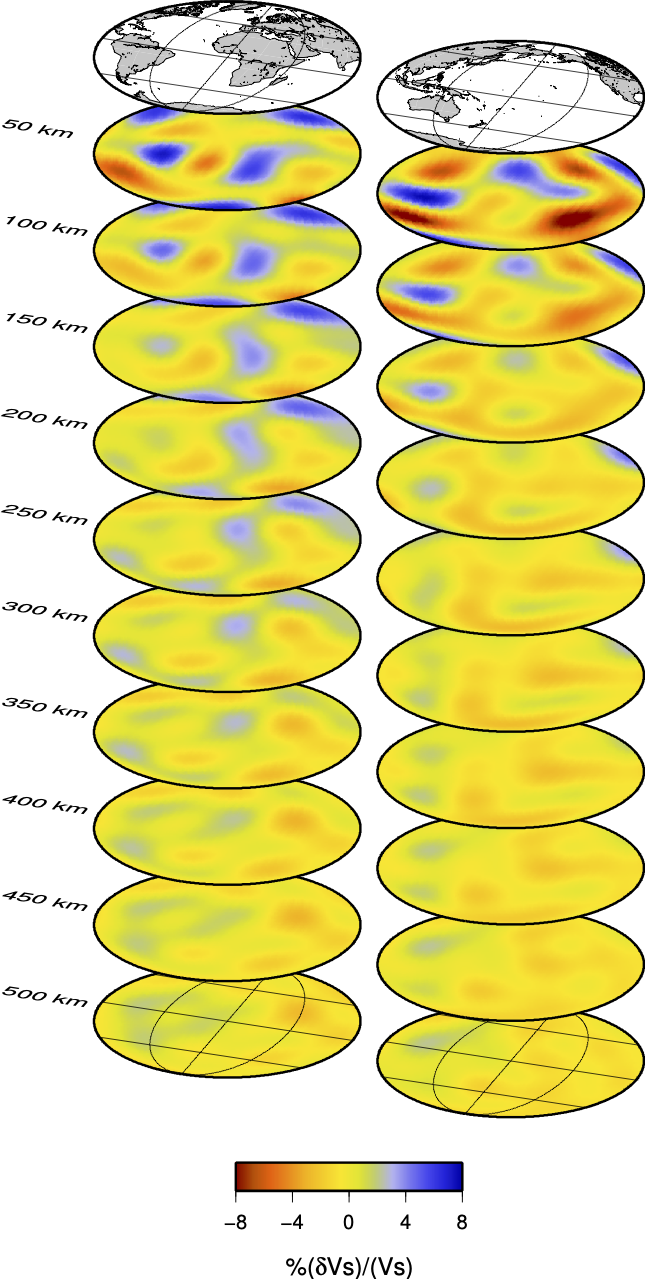
Dr Andrew Valentine is currently an Associate Professor in the Department of Earth Sciences at Durham University, a position he has held since 2023. Previously, he served as Assistant Professor at Durham (2021-2023), Fellow at the Research School of Earth Sciences at The Australian National University (2016-2021), and Postdoctoral Researcher at Utrecht University (2011-2016). He holds significant leadership roles including Director of Education for the Department of Earth Sciences (2025-present) and Secretary of the IUGG Commission on Mathematical Geophysics (2023-present). DPhil in Earth Sciences, University of Oxford (2006-2010), supervised by Prof. J.H. Woodhouse BA/MSci in Natural Sciences (Physics), University of Cambridge (2002-2006) Valentine's research focuses on mathematical and statistical tools for extracting information from observational data, with expertise in geophysical inverse theory, global seismology, and machine learning applications in Earth Sciences. His work bridges theoretical mathematics with practical geophysical problems, developing novel approaches to data analysis and interpretation. He has made significant contributions to probabilistic inversion methods, seismic tomography, and the application of deep learning to geoscience problems. Analysis of his recent publications reveals a strong trend toward integrating machine learning with traditional geophysical methods. His work spans from theoretical developments in Bayesian inference and optimal transport to practical applications in seismic modeling, mantle dynamics, and volcanic processes. A notable pattern is his focus on uncertainty quantification in geophysical models and the development of efficient computational frameworks for complex inverse problems. His research increasingly incorporates neural networks and other AI techniques to address longstanding challenges in Earth Sciences. Harold Jeffreys Lectureship, Royal Astronomical Society (2025) ARC DECRA Fellowship (2018-2021) Multiple Geophysical Journal International Outstanding Reviewer citations Geophysical Journal International Student Author Award (2010) Valentine has supervised numerous PhD students including Buse Turunçtur, Matthias Scheiter, Suzanne Atkins, Paul Käufl, and Ralph de Wit, with thesis topics spanning sparsity-constrained inversion, Monte Carlo methods, mantle convection patterns, and probabilistic source inversion. His supervision extends to current students Arijit Chakraborty, Charlotte Aulton, Hanna-Riia Allas, Isaac Abbott, and Ugurcan Cetiner. He has served on various editorial boards including as Editor for Geophysical Journal International (2020-2025) and has been involved in major collaborative projects through organizations like CIG. As Director of InLab since 2018, Valentine leads a research group focused on developing innovative computational approaches to geophysical problems. His team has produced influential open-source software like pyprop8 for seismic modeling and has pioneered applications of deep learning to problems ranging from glacial isostatic adjustment to volcanic glass properties. The group maintains strong international collaborations, particularly with researchers at The Australian National University where Valentine holds an Honorary Senior Lecturer position (2021-2025).
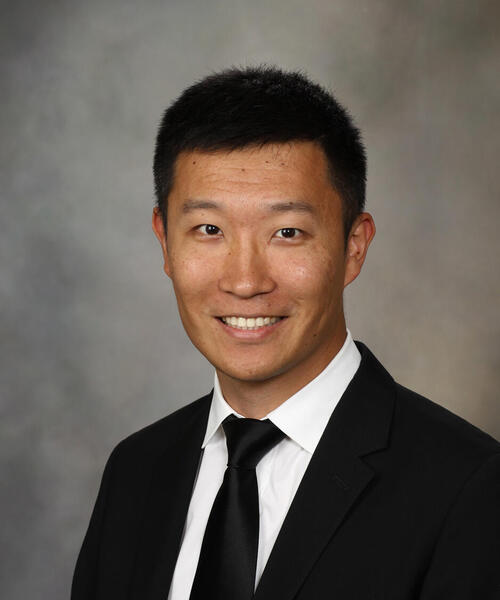
Dr. Yu Shi, M.D., M.P.H., is a Physician Scientist at Mayo Clinic College of Medicine specializing in pediatric anesthesiology and outcomes research. Currently affiliated with the Department of Anesthesiology and Perioperative Medicine and Pediatrics, Dr. Shi leads investigations into anesthesia neurotoxicity, health disparities, and tobacco control. Research interests center on: Pediatric anesthesia safety and neurodevelopmental outcomes (MASK Study) Racial/ethnic disparities in surgical care and ADHD diagnosis Perioperative tobacco cessation interventions Epidemiology of anesthesia complications in children Recent publications span high-impact journals including Circulation , Science , and JAMA Network Open , with 2025 work focusing on vascular biology mechanisms and AI-driven protein modeling. Scientific recognition includes: Full Tuition Scholarship from Johns Hopkins (2007) Board Certification in Anesthesiology and Pediatric Anesthesiology (2016) Dr. Shi directs multiple institutional committees including the Pediatric Research Committee and AI Advisory Committee, with active grants supporting population-based outcomes research and tobacco control program implementation.
Dr. Alessio Celi serves as Associate Professor at the Autonomous University of Barcelona (UAB) and Visiting Professor at ICFO. His internationally recognized research bridges theoretical physics, quantum simulation, and experimental atomic systems. His primary research domains include: Quantum simulation of many-body phenomena Gauge theories emulation using atomic platforms Quantum magnetism and topological order High-energy physics phenomena in condensed matter systems Professor Celi's work has yielded publications in premier journals including Nature , Nature Photonics , and Physical Review Letters . His research trajectory shows consistent focus on developing experimental pathways for quantum simulation since 2009, with increasing emphasis on gauge theories since joining UAB. His current research program is supported by active national and international grants. Students benefit from his extensive collaboration network spanning ICFO, University of Innsbruck, and University of Barcelona. Professor Celi has built an independent research line at UAB focusing on quantum simulation using Rydberg atoms and Raman-dressed gases, positioning his group at the forefront of quantum emulation techniques.
Dariusz Palmowski is an Assistant lecturer and Chief engineering and technical specialist at the Department of Metrology and Optoelectronics, Faculty of Electronics Telecommunications and Informatics, Gdańsk University of Technology. His work focuses on the intersection of electrical engineering, metrology, and energy systems, with particular expertise in micro-energy measurement techniques. Dr. Palmowski's primary research interests include: Micro-energy measurement for low-power devices Energy harvesting systems evaluation Real-time operating systems performance analysis Impedance measurement techniques Sensor technology development Automated student assessment methodologies His publication record demonstrates a consistent focus on developing and testing methods for measuring extremely small energy consumption, which is critical for the advancement of energy harvesting technologies. Over the past decade, his research has evolved from fundamental measurement techniques to more complex applications in sensor networks and medical diagnostics. A notable trend in his work is the development of specialized test equipment, particularly microcontroller-based systems that can simulate various energy consumption profiles for validation purposes. Dr. Palmowski has made significant contributions to the field of dynamic electrochemical impedance spectroscopy, developing programmable models and testing methodologies that have advanced measurement capabilities in this specialized area. His interdisciplinary work bridges electrical engineering with applications in medical diagnostics through breath analysis technologies. His teaching activities include the Metrology course taught during the third semester of studies at three different programs: Electronics and Telecommunications, Biomedical Engineering, and Automation, Cybernetics and Robotics. His research on automated verification of student work reflects his engagement with educational technology and assessment methodologies.
Juan Manuel Vozmediano Torres is a Full Professor in the Department of Telematics Engineering at the University of Seville. His research spans telecommunications, VoIP systems, network design, and educational technology. He leads the TIC-154 Research Group and has secured numerous grants, including the ongoing PID2023-149683OB-I00 project on aerial robotics and IoT. Research interests include: Telematics and network protocol optimization VoIP traffic characterization and QoS enhancement Cost-effective infrastructure design (e.g., fiber optics) Virtualized learning environments for engineering His publications focus on VoIP efficiency, network modeling, and educational innovations. Recent works analyze hospital network reliability (2019) and smartphone codec selection (2014). He has supervised four doctoral theses and holds a patent for an ISDN access server prototype. Industry collaborations include projects with Alcatel, telecommunications infrastructure planning, and IoT systems for commercial platforms.
Ahmed Ezzeldin Khaled is an Associate Professor in the Department of Computer Science at Northeastern Illinois University (NEIU) in Chicago, USA, and a Visiting Associate Professor in the Masters Program in Computer Science at The University of Chicago since March 2024. He joined NEIU in August 2018 after completing his Ph.D. in Computer Engineering from the University of Florida. His educational background includes: Ph.D. in Computer Engineering from University of Florida (2018) M.S. in Computer Engineering from Cairo University (2013) B.S. from Cairo University Dr. Khaled's research focuses on designing systems and applications for distributed systems with the Internet of Things (IoT) as a primary use case. His work spans three main areas: smart healthcare systems and e-Health applications, location-aware services for smart spaces, and utilizing data management techniques for descriptive and predictive analytics. He has developed the Atlas IoT Framework, which includes IoT Device Description Language (IoT-DDL), Atlas Thing Architecture, and Inter-Thing Relationship Framework. His research involves software and hardware platforms from different vendors with various operating environments, focusing on creating interoperable systems for smart spaces. Analysis of Dr. Khaled's recent publications shows a strong trend toward practical implementations of IoT frameworks, particularly in healthcare applications. His work bridges theoretical concepts with real-world deployments, emphasizing context-aware systems, data pipelines, and location-based services. The research demonstrates expertise in creating frameworks that can work across different hardware platforms and communication protocols while addressing specific challenges in healthcare monitoring and smart space development. Dr. Khaled actively mentors students across multiple research domains including IoT applications, healthcare systems, and cloud architecture. His advising approach emphasizes connecting research with teaching, believing that "through the teaching process, we gain a deeper perspective of the subjects we teach and a better view on how the various concepts are linked into a 'bigger picture'." He has developed courses related to operating systems, computer networks, parallel computing, database systems, and the Internet of Things, bringing his research expertise directly into the classroom. Dr. Khaled leads the IoT & Systems Lab at NEIU, which focuses on developing practical IoT solutions for real-world applications. Current active projects include the Atlas IoT Framework for smart spaces, IoMT and Digital Healthcare systems, IoT Emulator (E-IoT) for application development and testing, and Location Based Services for smart tourism. The lab works with various hardware and software platforms to develop and test IoT applications before deployment in real environments, with a particular emphasis on healthcare applications and location-aware services.
Dr. Naoto Tanibata is an Assistant Professor at Nagoya Institute of Technology, affiliated with the Department of Life and Applied Chemistry in the Graduate School of Engineering. He also holds a concurrent position at Kyoto University's Catalyst & Battery Elemental Strategy Unit. His research focuses on developing advanced materials for next-generation energy storage systems, particularly solid-state batteries. Dr. Tanibata received his academic training at Osaka Prefecture University: PhD in Engineering (2014-2017) Master of Engineering in Material & Chemical Engineering (2012-2014) Bachelor of Engineering in Applied Chemistry (2008-2012) Dr. Tanibata's research centers on advanced battery materials , with particular expertise in all-solid-state batteries using chloride and other novel electrolytes. His work combines computational materials science with experimental electrochemistry to develop high-energy-density storage solutions. Recent projects have focused on: Design principles for high-voltage chloride-based electrodes using HSAB theory Amorphization strategies for enhancing anion redox reactions Machine learning approaches for battery material discovery and optimization Deformability properties of solid electrolytes to prevent lithium dendrite formation His publication record demonstrates a strong focus on overcoming key challenges in solid-state battery technology, particularly addressing issues of ionic conductivity, interfacial stability, and high-voltage operation. Recent work has increasingly incorporated advanced simulation techniques and machine learning to accelerate materials discovery. Dr. Tanibata has received numerous awards for his contributions to battery research: Battery Technology Committee Award (2024) for 'Redox-level tuning for high-potential chloride electrodes' Best Oral Presentation Award (2024) from the Ceramic Society of Japan ECS Japan Branch Young Researcher Special Award (2024) Multiple Young Research Innovator Encouragement Awards Dr. Tanibata leads multiple research projects funded by prestigious organizations including the Japan Society for the Promotion of Science (JSPS), Fujikura Foundation, and Naito Science and Technology Promotion Foundation. His current research focuses on: Redox-level design for high-energy-density chloride electrodes (JSPS Grant 24K17755, 2024-2029) Establishing design guidelines for high-deformability materials for all-solid-state batteries Verification of amorphization-based anion redox utilization for microgrid applications At Nagoya Institute of Technology, Dr. Tanibata leads research within the Department of Life and Applied Chemistry, focusing on the rational design of solid-state battery materials based on solid-state chemistry principles. His work bridges fundamental materials science with practical battery applications for electric vehicles and grid-scale storage.