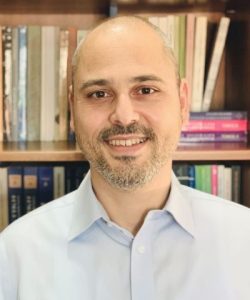
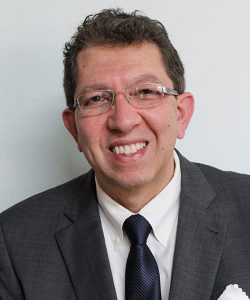
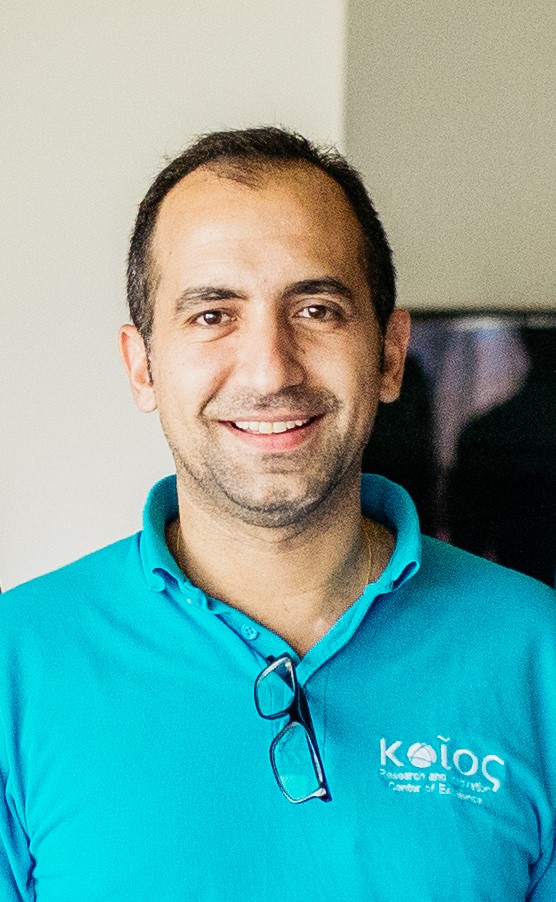
Stelios Timotheou is an Associate Professor at the Department of Electrical and Computer Engineering and faculty member at the KIOS Research and Innovation Center of Excellence, University of Cyprus. He holds a Dipl-Ing from National Technical University of Athens, and MSc/PhD from Imperial College London. His research focuses on developing real-time distributed methodologies using mathematical optimization, machine learning, and computational intelligence to enhance efficiency in critical infrastructure systems. Research interests center on data-driven decision making for urban mobility management, traffic control systems, and energy optimization. Key areas include: Intelligent UAV-based sensing for traffic monitoring Cooperative control algorithms for multi-agent systems Optimization of renewable energy integration Robust infrastructure protection strategies Recent publications demonstrate strong focus on traffic state estimation (76%), energy system optimization (16%), and UAV applications (8%). Awarded the Cyprus Research Award (2017) and ERC Consolidator Grant for URANUS project. Secured multiple research grants focusing on real-time control systems.
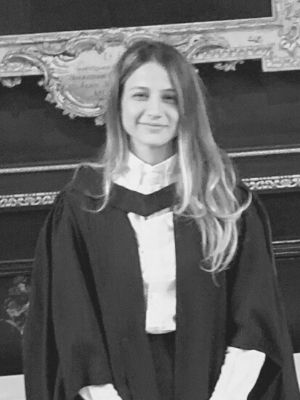
Prof. Bahire Efe Özad is a Professor in the Department of Television and Film Studies at Eastern Mediterranean University's Faculty of Communication and Media Studies. She holds a PhD and multiple master's degrees in education and English language teaching. Her research focuses on media studies, social media impact, communication theory, environmental sociology, cinema analysis, and intercultural communication. She has supervised over 80 PhD and Master's theses, reflecting her extensive academic mentorship. Her notable works include analyses of sacred defense cinema, pandemic governance in Northern Cyprus, and systematic reviews on fake news scholarship. She has conducted impactful studies on marital sustainability during the pandemic, Nigerian election media framing, and digital natives' social media use. Her research spans diverse areas including ICT's environmental impact, romantic relationship dynamics, and blog reader engagement. Prof. Özad has led projects like analyzing communication barriers for African students and exploring original scores in film. She maintains an active academic presence through Google Scholar and has contributed to numerous peer-reviewed journals. Her teaching and research activities emphasize interdisciplinary approaches to media, communication, and social dynamics.
Marios Polycarpou is a Professor of Electrical and Computer Engineering and Director of the KIOS Research and Innovation Center of Excellence at the University of Cyprus. He holds honorary positions at Imperial College London and is a member of Academia Europaea. His expertise spans intelligent systems, adaptive control, machine learning, and critical infrastructure. Education: B.A. Computer Science (Rice University, 1987) B.Sc. Electrical Engineering (Rice University, 1987) M.S. Electrical Engineering (University of Southern California, 1989) Ph.D. Electrical Engineering (University of Southern California, 1992) Research Focus: Polycarpou’s work emphasizes fault diagnosis in cyber-physical systems, water distribution networks, and adaptive control. He pioneers digital twin technologies for infrastructure resilience and develops algorithms for real-time anomaly detection and system optimization. Article Trends: His recent publications address adaptive control strategies, cybersecurity in networked systems, and AI-driven solutions for water management. Key themes include distributed control, event-triggered mechanisms, and transformer-based anomaly localization. Awards: 2023 IEEE Frank Rosenblatt Technical Field Award 2016 IEEE Neural Networks Pioneer Award Fellow of IEEE and IFAC Grants & Leadership: He secured prestigious grants including ERC Advanced and Synergy Grants. He led KIOS CoE’s Horizon 2020 projects and served as IEEE Computational Intelligence Society President (2012–2013). Labs & Teams: Directs the KIOS CoE, a hub for AI in critical infrastructure. Collaborates on projects like ERC Water-Futures, focusing on long-term water system transitions and contamination mitigation.
Panayiotis Kolios is an Assistant Professor at the Department of Computer Science, University of Cyprus (UCY). Previously, he served as a Research Assistant Professor at the KIOS Research and Innovation Centre of Excellence (2013–2024) and a Visiting Lecturer at UCY. He holds a BEng and PhD in Telecommunications Engineering from King’s College London (2008 and 2012, respectively). His research focuses on networked intelligent systems, emergency management using AI and UAV technologies, and cyber-physical systems. Education: BEng in Telecommunications Engineering, King’s College London, 2008 PhD in Telecommunications Engineering, King’s College London, 2012 Research Interests: His work centers on autonomous systems, intelligent transportation, and emergency management. Key areas include AI-driven disaster response, UAV-based surveillance, and algorithmic optimization for critical infrastructure. He develops solutions for real-time situational awareness and decision-support in emergencies. Recent work trends show a focus on multi-UAV coordination, disaster management platforms (like AIDERS), and AI applications in emergency response. His team’s 2023 win in the Cooperative Aerial Robots Inspection Challenge highlights advancements in UAV inspection algorithms. Scientific Awards: First Prize in Cooperative Aerial Robots Inspection Challenge (CDC 2023) Grants and Advising: He has secured over €40 million in EU and industrial grants, leading projects like PREDICATE, SWIFTERS, and AIDERS. His team advises on emergency response strategies and has trained first responders through EU-funded programs such as the Exchange of Experts training. Labs and Teams: He leads the Security and Emergency Response Group at KIOS CoE and established the Cyprus Civil Defence Aerial Observation Unit. His team collaborates with institutions like the Cyprus Police and Fire Service to operationalize UAV technologies in disaster scenarios.
Ali Akdoğan is an Assistant Professor in the Department of Educational Sciences at Final University. His academic career spans over two decades with doctoral studies completed in 2014, following a Master's degree in 1995 and Bachelor's degree in 1992. Educational Background: Doctoral Degree: 2014 Master's Degree: 1995 Bachelor's Degree: 1992 Research Interests: Dr. Akdoğan's work explores educational psychology, teacher development, and the impact of global educational frameworks like the International Baccalaureate program. His research analyzes school culture, emotional intelligence in educational settings, and pandemic-induced distance learning challenges. Publication Trends: Recent work (2021-2022) focuses on psychological impacts of the pandemic on students, effectiveness of international educational programs, and teacher emotional intelligence. Earlier research (2002, 1995) examines social capital and personnel selection in educational institutions.
Petros A. Ioannou is a Professor in the Department of Electrical Engineering-Systems at the University of Southern California (USC), where he has been since 1982. He concurrently serves as Director of the Center of Advanced Transportation Technologies. His research focuses on adaptive control, neural networks, nonlinear systems, and intelligent transportation systems. Education: B.Sc. (First Class Honors) from University College London (1978), M.S. and Ph.D. from the University of Illinois (1980, 1982). Awards include the IEEE Outstanding Transactions Paper Award (1984) and the Presidential Young Investigator Award (1985). He is an IEEE Fellow. Roles: Associate Editor for IEEE Transactions on Intelligent Transportation Systems and IEEE Transactions on Automatic Control. Served as Dean of the School of Pure and Applied Science at the University of Cyprus (1995). Visiting Professorships at the University of Newcastle (Australia), Australian National University, and Technical University of Crete. Research Themes: Dominant areas include control system applications, transportation systems, and nonlinear dynamics. His work bridges theoretical advancements with practical implementations in vehicle dynamics and intelligent transportation infrastructure.
Zenonas Tziarras is a Lecturer in the Department of Turkish and Middle Eastern Studies at the University of Cyprus. His academic work focuses on Turkish foreign policy, contemporary Turkish politics, and the international politics and security dynamics of the Middle East and Eastern Mediterranean region. He holds a PhD in Politics and International Studies from the University of Warwick, UK, with a specialization in Turkish Foreign Policy under the Justice and Development Party (AKP). Dr. Tziarras earned his BA in Mediterranean Studies from the University of the Aegean, Greece, and his MA in International Relations and Strategic Studies from the University of Birmingham, UK. He has also attended specialization seminars in International Security at the University of Delhi, India, and in Leadership and Conflict Resolution at Koç University, Turkey, along with obtaining a certificate in Conflict Resolution and Mediation Skills from the Northern Ireland Open College Network. His research interests span Turkish foreign policy, contemporary Turkish politics, international politics and security of the Middle East and Eastern Mediterranean, political Islam, and more recently, political theology, apocalypticism, and the relationship between religion, ideology and politics. Dr. Tziarras employs Neoclassical Realist theoretical frameworks in his analysis of foreign policy behavior, with particular attention to ideational factors. His scholarly output demonstrates a clear evolution from analyzing Turkish foreign policy in the Middle East toward examining broader regional dynamics in the Eastern Mediterranean, with increasing focus on Cyprus's foreign policy and strategic position. The publications reveal a methodological consistency in applying international relations theory to concrete regional cases, particularly examining how systemic pressures interact with domestic factors to shape foreign policy outcomes. Dr. Tziarras is the co-founder of the platform Geopolitical Cyprus and serves as a member of the editorial board of the New Middle Eastern Studies Journal. He has previously worked as a Post-Doctoral Fellow in the Department of Social and Political Sciences of the University of Cyprus and as an Associate Lecturer in Security & Diplomacy Studies between 2015 and 2017.
Theodoros Zachariadis is a Professor and Interim Director of the Energy, Environment and Water Research Center (EEWRC) and the Science and Technology Driven Policy and Innovation Research Centre (STeDI-RC) at The Cyprus Institute. He previously served as Dean of the Faculty of Geotechnical Sciences and Environmental Management at the Cyprus University of Technology (2015–2020), and as Assistant/Associate Professor there (2009–2020). His expertise spans energy and environmental policy, climate change mitigation, and environmental taxation. He holds a Doctorate in Mechanical Engineering from Aristotle University of Thessaloniki. **Research Interests:** Techno-economic analysis of energy, environmental, and transport policies; environmental taxation; climate policy integration with Sustainable Development Goals (SDGs); decarbonization strategies; and green tax reforms. His work emphasizes cost-effective climate policies and equitable transitions. **Awards:** 2009 Research Prize of Cyprus (Republic of Cyprus) and 2019 Environmental Prize (President of Cyprus). He has been ranked in the top 2% of globally cited academics in Energy (2020s). **Affiliations:** Vice Chair of the Scientific Committee of the European Environment Agency, Manager of SDSN Europe, Leadership Council member of SDSN Cyprus, and former Visiting Professor at Aarhus University. He advises on EU climate policies and sustainable development. **Grants & Projects:** Extensive research on Cyprus’ energy policies, EU climate frameworks, and decarbonization pathways. Key outputs include analyses of the EU’s 'Fit for 55' package, green recovery strategies post-pandemic, and cross-border energy cooperation in the Eastern Mediterranean. **Labs/Teams:** Leads research teams at EEWRC and STeDI-RC focusing on policy design, climate adaptation, and techno-economic modeling. Collaborates with international networks like Green Budget Europe and the Journal *Energy Economics* (associate editor).
Sophia Hadjipapa is an Associate Professor and Chairperson of Fine Arts at the European University Cyprus (EUC), affiliated with the School of Humanities, Social and Education Sciences and the Department of Arts. She holds a PhD in Art History and Fine Arts from the National Academy of Fine Arts, Sofia (2003), alongside earlier degrees in Painting and Art Education. Her research focuses on intersections of art, nationalism, urban spaces, and cultural heritage. Research Interests: Hadjipapa explores how art reflects and constructs national identities, particularly through Byzantine iconography and 20th-century Balkan movements. She also investigates urban emptiness and public art interventions in cities like Nicosia. Her work bridges historical analysis with contemporary socio-political issues, emphasizing art’s role in education and community engagement. Awards & Recognition: Young Artist of the Year (Irida Gallery, 2003) Multiple residencies in Europe (SVA NYC, Ostrale Dresden) Coordinator of international exhibitions (e.g., Urban Emptiness in Nicosia) Grants & Projects: Coordinator of Urban Emptiness Network (Ministry of Culture, 2017) Partner in EDUCLAB: Education and Digital Culture Laboratory (Erasmus+, 2018-2020) Contributor to Interfaces (Creative Europe, 2017-2018) Labs/Teams: Leads the Education and Digital Culture Laboratory, focusing on innovative art pedagogy. Active in curatorial initiatives and biennials, including the Nicosia Bicommunal Art Exhibition.
Christos Nicolaides is an Assistant Professor at the Department of Business and Public Administration within the School of Economics and Management at the University of Cyprus (UCY), holding a secondary appointment as a Digital Fellow at MIT's Initiative on the Digital Economy. Previously, he spent three years as a James McDonnell Foundation-funded Postdoctoral Fellow at MIT Sloan School of Management. His educational background includes a PhD in Engineering from Massachusetts Institute of Technology (2014), SM from MIT (2011), MSc in Applied Mathematics from Imperial College London (2009), and BSc in Physics from University of Thessaloniki (2008). Nicolaides' research applies mathematical, statistical, and computational tools to large-scale empirical questions in social influence mediated by digital technologies. His work spans Data Science , Machine Learning , Social Networks , and Computational Social Science , with significant contributions to understanding human mobility patterns, disease transmission dynamics, and social contagion effects. His research has established novel methodologies for analyzing complex network structures in mobility data and social interactions. Analysis of his 15 most recent publications reveals a consistent focus on applying network science to real-world problems, particularly in pandemic response (12 publications), human mobility analytics (9 publications), and social contagion dynamics (7 publications). His work demonstrates increasing interdisciplinary integration, combining computer science, epidemiology, and organizational behavior since 2020. Marie S. Curie Fellow Two Highly Cited Papers by Web of Science (2017, 2020) Best Paper Award by Risk Analysis Society (2019) Professor of The Week by Poets & Quants (2020) As principal institutional investigator, Nicolaides has secured over €1 million in research funding from the European Commission, industry partners, Cyprus Innovation and Research Foundation, and Cyprus Ministry of Health. His current teaching includes Social Networks and Entrepreneurship, Introduction to Operations Management, and Quantitative Methods in Management. Media coverage of his work spans major outlets including The New York Times, CNN, Nature, and Science, with significant impact on public health policy discussions during the COVID-19 pandemic.
Dr. Evelina Charidemou is an Assistant Professor at the Department of Life Sciences, School of Life and Health Sciences, University of Cyprus. She holds a PhD in Biochemistry from the University of Cambridge and a Bachelor's degree (Honors) from Imperial College London, where she earned the Royal College of Science Associateship (ARCS). Her research focuses on developing metabolomics and lipidomics tools to investigate metabolic syndrome, particularly Type II diabetes and non-alcoholic fatty liver disease, using high-performance liquid chromatography and multivariate bioinformatics. Specialties: Nutritional Biochemistry, Metabolism, Histone Acetylation Collaborations: University of Oxford, University of Aarhus, Imperial College London Leadership: President of Cyprus Metabolomic Network Key Awards: Marie Skłodowska-Curie Individual Fellowship, Best Presentation (Metabolomics Sardinian Scientific School) Her work has been published in high-impact journals including Trends in Biochemical Sciences , EMBO Journal , and Hepatology , with a focus on the interplay between epigenetic mechanisms and metabolic diseases. She actively presents at international conferences such as the Metabolomics Society meetings and contributes to the International Journal of Biochemistry and Cell Biology.
Professor Mohammed Salamah is a distinguished faculty member in the Computer Engineering Department at Eastern Mediterranean University's Faculty of Engineering. He maintains an office in room 114 and can be contacted at +90 392 630 1149/1334 or via email at muhammed.salamah@emu.edu.tr. His academic website provides additional resources for students and colleagues. Dr. Salamah earned his BS, MS, and PhD degrees in Electrical and Electronics Engineering from Middle East Technical University in 1988, 1990, and 1996 respectively, establishing a strong foundation for his career in network communications and wireless systems. His research interests span multiple critical areas in modern networking, with particular expertise in Wireless Sensor Networks, Internet of Things (IoT) security, Mobile Communications, and Energy Efficiency in network protocols. Professor Salamah has made significant contributions to the understanding of network security mechanisms, trust management systems, and optimization of wireless communication protocols. An analysis of his recent scholarly output reveals a strong focus on security challenges in IoT communication systems, controller placement optimization in software-defined wireless sensor networks, and trust-based malicious node detection schemes. His work demonstrates consistent attention to practical network performance issues while addressing emerging challenges in next-generation communication technologies. Throughout his academic career, Professor Salamah has demonstrated exceptional commitment to student mentorship, supervising numerous graduate students through their research journey. His administrative contributions include service as an associate editor, reviewer, and session chair for academic conferences. His laboratory work focuses on practical implementations of wireless communication protocols, with emphasis on energy efficiency, security mechanisms, and performance optimization for various network architectures including cellular networks, cognitive radio systems, and wireless sensor networks.
George N. Papageorgiou is a Professor of Management & Information Systems at the Gregoriou School of Business Administration, European University Cyprus. He serves in leadership roles including Deputy Dean (2012–2017) and PhD Programme Coordinator (2015–2017). He holds a PhD in Systems Modelling and Simulation from City University, London (1997), along with an MBA (1994) and First Class Honours in Engineering (1992). His research focuses on digital marketing competencies, smart urban mobility systems, entrepreneurship education, and system dynamics modeling for healthcare and sustainability. Notable projects include the SPN (Smart Pedestrian Network) system, funded by Horizon 2020, and the DIMAS project addressing digital marketing frameworks. Awarded the IEEE Best Paper Award (2017) and Innovation Distinction (SPARKS 2019), his work spans over 50 publications in journals like IEEE and Emerald. He actively reviews for IEEE, Emerald, and the System Dynamics Society. His consulting roles include EU research proposal evaluation and editorial work for Emerald. Key achievements include developing frameworks for sustainable urban mobility and green entrepreneurship education. He has led EU-funded projects totaling millions in grants, emphasizing interdisciplinary approaches to innovation and education.
Despo Ktoridou serves as Professor and Head of the Department of Management at the University of Nicosia's School of Business in Cyprus. She has held academic positions since 1999, advancing from Assistant Professor of Educational Technologies to Associate Professor in 2007 and full Professor in 2019. A Certified Engineer by the Cyprus Scientific and Technical Chamber (ETEK), she maintains active memberships in IEEE and ACM while bridging engineering, management, and educational disciplines through her scholarly contributions. Her educational background includes: Bachelor of Science in Engineering (Computer Systems & Networks) from Saint Petersburg Electrotechnical University (awarded 1991) Master of Science in Engineering (Computer Systems & Networks) from Saint Petersburg Electrotechnical University (awarded 1993) Doctor of Philosophy in 'Expert Systems in Education' from Saint Petersburg Electrotechnical University (awarded 1999) Professor Ktoridou's research centers on ICT integration in educational practice, technology and innovation management pedagogies, and open and online distance learning. Her work examines how technological advancements can be effectively incorporated into teaching methodologies and management education, with publications spanning theoretical frameworks to practical applications in higher education settings. Analysis of her recent publications (2024-2025) reveals a pronounced focus on emerging technologies including artificial intelligence and the metaverse within educational contexts. These studies consistently investigate student perspectives, acceptance patterns, and specialized course development (e.g., intellectual property management for technology students), demonstrating interdisciplinary approaches that merge computer science, business management, and educational theory. Scientific Awards: No scientific awards, prizes, or fellowships documented in provided information Professor Ktoridou has supervised numerous graduate students throughout her academic career and participated in multiple EU-funded and locally sponsored research programs. Her academic service includes guest lecturing at foreign universities, conference session chairing, program committee membership, and editorial review activities. As Department Head since 2012, she demonstrates sustained commitment to academic administration and program development. While specific laboratory facilities are not detailed, her research trajectory indicates leadership in interdisciplinary teams focused on educational technology innovation. Current work explores cutting-edge topics including AI ethics in education and metaverse applications, positioning her contributions at the forefront of technology-enhanced learning research.
Andreas Athenodorou is an associate research scientist at the Computation-based Science & Technology Research Center (CaSToRC) of The Cyprus Institute. He holds a PhD in Theoretical Particle Physics from the University of Oxford (2004–2008) and has held postdoctoral positions at DESY Zeuthen, Swansea University, and the University of Cyprus. Prior to his current role, he was a Marie Sklodowska Curie Individual Fellow at the University of Pisa (2019–2021). He currently leads a work package in the NI4OS-Europe project. His research focuses on theoretical and computational aspects of particle physics, including lattice gauge theories, large-Nc limits, hadron structure, and beyond Standard Model physics. He specializes in applying high performance computing (HPC), data science, and machine learning to solve complex problems in quantum field theory. Notable areas include confinement dynamics via effective string theory, glueball spectroscopy, and topological susceptibility studies in QCD. His computational work spans lattice QCD simulations, development of reproducible open science workflows, and application of machine learning to phase transition analysis. He has contributed to understanding mass hierarchies in strongly-coupled systems and the neutron electric dipole moment using advanced simulation techniques. Key contributions include advancing effective string theory descriptions of flux tubes, analyzing Z_N gauge theories, and exploring β-function behaviors in SU(2) adjoint fermion systems. His work bridges fundamental theory with computational innovation, addressing both particle physics questions and methodological challenges in large-scale simulations.