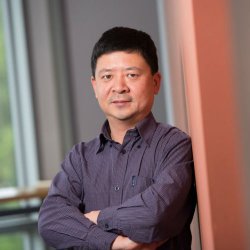
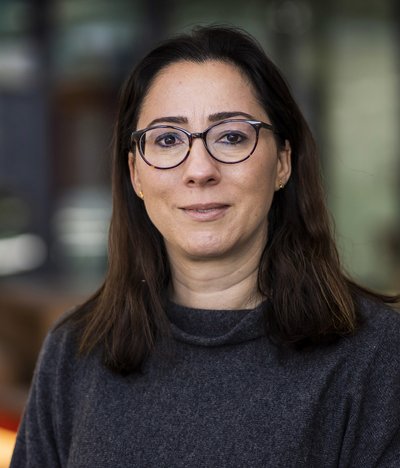
Dr. Zhijun Wang is an Associate Professor of Research in the Department of Computer Science and Engineering at The University of Texas at Arlington. His work focuses on cloud and edge computing, resource management, task scheduling, and network traffic control. He holds a PhD in Computer Science from UTA (2005), an MS in Electrical Engineering from Penn State (2001), and a BS in Physics from Huazhong University of Science & Technology (1992). His research explores internet traffic control mechanisms , cloud resource allocation , and microservices architecture . Recent projects include NSF-funded work on tail latency guarantees for microservices ($600k grant, 2022-2026) and industry collaborations with Alibaba on datacenter transport protocols ($148k grant, 2018-2021). Publications highlight innovations like CurTail (tail latency scheduling) and Tailguard (data-intensive task scheduling). His work often combines price-aware protocols with distributed scheduling algorithms . Teaching focuses on foundational topics: discrete math, computer networks, and cloud computing. Grants: NSF (2022), Alibaba (2018) Key Patents: Tail Latency Scheduling (2023), Database Target Enforcement (2024) Recent Publications: 15+ papers since 2020 in top-tier venues
Sharon M Weiss is the Cornelius Vanderbilt Professor of Engineering and holds joint appointments in Electrical Engineering, Materials Science & Engineering, and Physics at Vanderbilt University's School of Engineering. She directs the Vanderbilt Institute of Nanoscale Science and Engineering. Her research focuses on light-matter interaction, silicon photonics, porous silicon biosensors, and nanotechnology. She earned a B.S., M.S., and Ph.D. in Optics from the University of Rochester. Her work spans advanced photonic crystal designs, ultra-sensitive biosensors, and radiation-tolerant optical components for aerospace applications. Recent projects include photonic metacrystals for high-Q cavities and porous silicon sensors for rapid diagnostics. She has pioneered integration of phase-change materials like VO₂ in silicon photonics for ultrafast optical switching. Publications emphasize subwavelength photonics, biosensing innovations, and space-qualified optoelectronics. Her lab develops hybrid waveguides, nanobeam cavities, and AI-enhanced sensing systems. Collaborations include NASA and industry partners for biomedical and defense applications.
Professor Ning Wang is a leading academic in communication systems at the University of Surrey's Institute for Communication Systems (ICS), School of Computer Science and Electronic Engineering. He holds a PhD from the University of Surrey (2004) and has expertise in 5G/6G networks, edge computing, and space-terrestrial integration. As a coordinator for the EuroMaster Programme and Communication Networks and Software (CNS) pathway, he leads research in network management, mobile video delivery, and IoT applications. His work has been featured in IEEE ComSoc Technology News three times since 2012. Current leadership roles include 5GIC Work Area 1 leader for content and network context. Research collaborations span global institutions like UCL, ETH Zurich, and industry partners like BT and InterDigital. Notable contributions include SDN-based space-terrestrial network integration (VDPA scheme) and O-RAN automation via federated DRL. Over 130 publications and active participation in standards bodies (IETF, 3GPP) reflect his impact on future network architectures. Educations: BEng in Computing (Changchun University of Science and Technology, 1996) MEng in Electronic Engineering (Nanyang Technological University, 2000) PhD in Electronic Engineering (University of Surrey, 2004) Research Focus: Future Internet design, network intelligence, content-centric networking, and satellite integration. Key projects include EU Horizon Europe SPIRIT (immersive telepresence), ESA TINA (satellite 5G functions), and EPSRC NG-CDI (converged digital infrastructures). His research emphasizes practical solutions like edge-AI for VNF splitting and holographic frame synchronisation. Grants & Projects: Over £20M in grants from EPSRC, EU Horizon, InnovateUK, and Royal Society. Active in EU-funded SAT5G (satellite-terrestrial 5G) and C-DAX (smart grid cybersecurity).
Tuğçe Bilen is an Assistant Professor at Istanbul Technical University's Department of Artificial Intelligence and Data Engineering, within the School of Computer and Informatics. Her research focuses on Artificial Intelligence and Computer and Communication Networks, particularly Digital Twin technologies, 6G wireless systems, and smart IoT applications. PhD in Computer Engineering (2017-2022), Istanbul Technical University Master's in Computer Engineering (2016-2017), Istanbul Technical University Licence in Computer Engineering (2010-2015), Istanbul Technical University Her research explores Digital Twin middleware for smart farms, energy-aware task scheduling in 6G edge networks, aeronautical ad-hoc network optimization, and cloud-based protocol enhancements. Recent work addresses metaverse-driven supply chain optimization and secure routing for aircraft networks. Key publication trends show strong focus on: Digital Twin integration across domains 6G wireless network architectures Adaptive routing algorithms Energy-efficient IoT systems Security in airborne communication Machine Learning for network management Scientific recognition includes: Serhat Özyar Young Scientist of the Year Honorary Award (2023) Doctoral Thesis Award from Istanbul Technical University (2023) TÜBA Doctoral Science Awards-Teknofest (2023) She serves as Principal Investigator for the Unsupervised Learning-Based Management of Ad Hoc Airborne Network Topology project (2024-2026) and holds a patent for Parametric Parsing Based Routing System in Content Delivery Networks (2021). As IEEE member since 2015, she contributes to telecommunications standards.
Yves Blaquière is a Professor in the Department of Electrical Engineering at École de Technologie Supérieure. He is affiliated with the Communications and Microelectronic Integration Laboratory (LaCIME), focusing on microelectronics, integrated circuit design, and power integrity in advanced electronic systems. His research spans VLSI/ASIC design, FPGA-based reconfigurable computing, MEMS for avionics, and radiation effects on electronics. Aeronautics and Aerospace Intelligent and Autonomous Systems Microelectronics and VLSI Power Integrity Modeling MEMS Switch Design Radiation-Resilient Circuits His recent publications highlight innovations in GHz-range power integrity for SiP, FPGA-based SHEPWM inverters, and MEMS switches for avionic power systems. Collaborations with researchers like Frédéric Nabki and Nicolas Constantin reflect his focus on industrial applications and technology transfer. Professor Blaquière co-supervises PhD candidates including Hachem Bensalem, Gabriel Nobert, and Abdurrashid Hassan Shuaibu, covering topics such as heterogeneous optimization, power converter modeling, and MEMS switch development. His work contributes to wafer-scale prototyping platforms like WaferBoard and advanced tools for radiation testing in FPGAs. LaCIME, under his involvement, emphasizes equity, diversity, and inclusion, offering students opportunities to engage in cutting-edge projects from materials to communication protocols. The lab's expertise includes micro/nanofabrication, photonic microsystems, and signal processing.
Dr. José Luis Calvo Rolle serves as a Professor in the Department of Industrial Engineering at the School of Engineering, Universidade da Coruña (UDC), specializing in Systems Engineering and Automation. His research focuses on intelligent control systems, fault detection, and virtual instrumentation within the Cybernetic Science and Technology Research Group. Teaches across multiple programs including Master's in Industrial Computing and Robotics, Textile Technology, and Occupational Risk Prevention Coordinates thesis supervision across Industrial Engineering and related disciplines His research spans intelligent control systems and optimization, with significant contributions in virtual sensors, fault detection, and AI-driven modeling for industrial applications. Current projects integrate machine learning with industrial processes for naval construction, wastewater treatment, and precision livestock farming, demonstrating cross-disciplinary impact from energy systems to agricultural technology. Recent publications reveal strong trends in applying deep learning to industrial metaverse frameworks, wastewater optimization, and livestock monitoring systems. His work bridges theoretical control engineering with practical implementations in energy management, naval manufacturing, and sustainable agriculture, frequently utilizing dimensionality reduction and one-class classification techniques. Dr. Calvo Rolle actively mentors students through thesis supervision across multiple engineering disciplines and coordinates research projects with diverse funding sources including the European Commission, Spanish National Research Agency, and industrial partners like Navantia and Telefónica. His laboratory work centers on the Cybernetic Science and Technology Research Group, developing testbeds for industrial automation, virtual instrumentation, and AI-driven monitoring systems. Current initiatives include digital twin implementations for naval manufacturing and smart energy management systems.
Klajd Zyla is a PhD student and scientific assistant at the Chair of Integrated Systems, TUM School of Computation, Information and Technology, Technical University of Munich. His research focuses on architectures for flexible data packet processing in high-performance network cards, including NoC optimization, priority-aware scheduling, and RDMA acceleration. PhD Student at LIS (Chair of Integrated Systems), Technical University of Munich (since Jan 2022) Teaching: SystemC Laboratory (since SS 2022) His research investigates on-chip interconnects, packet scheduling with multiple priorities, and acceleration of transport protocols like RDMA for FPGA-based SmartNICs. Publications demonstrate expertise in crossbar architectures, deadlock avoidance, and resource management for MPSoCs. Supervised students include: Nour Abouelkheir (2D Mesh NoC design) Aleksa Stojkovic (HiPerNoC enhancement) Antra Pramanik (Packet-processing FPGA implementation) Arathi Anitha (Deadlock-avoidance algorithms) Johannes Ecker (Hardware schedulers comparison)
Associate Professor Sylvia Perez-Hardy is affiliated with the School of Information at the Golisano College of Computing and Information Sciences, Rochester Institute of Technology (RIT). Her expertise spans information security, database systems, health informatics, and networking. She holds a BS and MBA from Cornell University. Education: BS and MBA from Cornell University Her research focuses on cybersecurity threats such as IMSI catchers, database security, and clinical information systems. She teaches courses on database design, information assurance, health informatics, and routing/switching technologies. No scientific awards are listed, but her work addresses critical areas like electronic health records and network security protocols. Teaching responsibilities include ISTE-230 (Database Modeling), ISTE-608 (Database Design), ISTE-721 (Information Assurance), and MEDI-701 (Health Informatics). No specific labs or teams are mentioned in the provided materials.
Dr. Chunming Qiao is a SUNY Distinguished Professor and Chair of the Department of Computer Science and Engineering at the University at Buffalo (SUNY) , leading the Lab for Advanced Network Design, Evaluation and Research (LANDR) since 1993. His work spans cyber-physical systems , optical networks , and Internet of Things (IoT) , with a focus on safety, reliability, and protocol design. Education: PhD in Computer Science from the University of Pittsburgh (1993) BS in Computer Science and Engineering from the University of Science and Technology of China (1985) Dr. Qiao’s research interests combine theoretical and applied network design, including autonomous vehicles , quantum computing , and cloud services . He pioneered optical burst switching (OBS) and iCAR systems for wireless convergence, cited in BusinessWeek and Wireless Europe . His recent publications emphasize quantum networking , federated learning , and autonomous driving security , with projects on entanglement routing , edge inference optimization , and LiDAR adversarial attacks . Articles span IEEE and ACM venues , and include best paper awards . Scientific Awards: TC-CSR Distinguished Technical Achievement Award (2015) SUNY Chancellor's Award for Excellence (2013) IEEE Fellow (2009) UB Exceptional Scholar-Sustained Achievement Award (2005) Dr. Qiao has secured over two dozen NSF grants and collaborations with Google , Cisco , and NEC Labs . His 7 US patents and consulting experience highlight his industry impact, while his editorial roles and conference leadership underscore academic influence. He actively contributes to multi-disciplinary research through the New York State Center of Excellence in Bioinformatics and Life Sciences and CEDAR , advancing high-performance computing and document analysis .
Dwight Makaroff is a Professor in the Department of Computer Science at the University of Saskatchewan . He leads the DISCUS research group , focusing on distributed systems, networking, and performance analysis. Makaroff holds a Ph.D. from the University of British Columbia (1998), an M.Sc. (1988), and a B.Comm. (1985) from the University of Saskatchewan. Research Interests: Distributed Data Processing & Hadoop Network Support for Multiplayer Games Information-Centric Networking Energy Efficiency in Mobile Devices Multicore Architectures Wireless Network Security Sensor Networks & Data Aggregation Teaching: Courses include Operating Systems Principles , Topics in Parallel & Distributed Systems , and advanced systems courses. He coordinated the ACM ICPC programming contest teams for over a decade. Committees: Graduate Committee Chair (2013-2015) University Council Member (2006-2014) Program Committee roles at IEEE/ACM conferences (IPCCC, CASCON, etc.) Recent Research Highlights: IoT security via blockchain Wearable device communication challenges Caching strategies for information-centric networks
Patty Stabile is an Associate Professor in the Department of Electrical Engineering at Eindhoven University of Technology (TU/e), specializing in Indium Phosphide (InP) photonic integrated circuits for next-generation optical networks and computing systems. She is affiliated with the Electro-Optical Communication group and EAISI High Tech Systems. MSc in Electrical Engineering (2004) from Politecnico di Bari PhD in Nanoscience (2008) from National Nanotechnology Laboratory, Lecce Her research focuses on integrating electronics and photonics for ultra-high-speed data routing, leveraging optical parallelism inspired by brain architecture. She also explores low-cost passive coupling concepts and novel materials like 2D materials to enhance photonic platforms. Key contributions include pioneering work on InP-based switch matrices and high-speed transceiver modules, with publications in Microsystems & Nanoengineering , IEEE Photonics Technology Letters , and Journal of Optical Communications and Networking . She received the Early Career Women in Photonics – Special Recognition in 2016. Active in academic communities, Patty serves on the IEEE Photonics Benelux Chapter board, is a member of the TU/e Young Academy of Engineering, and contributes to educational programs in automotive dynamics and brain-inspired optical computation.
Joachim Arts is a Full Professor at the University of Luxembourg in the Faculty of Law, Economics and Finance , Department of Economics and Management. He is affiliated with the Luxembourg Centre for Logistics and Supply Chain Management (LCL) and holds visiting positions at MIT Sloan School of Management and Eindhoven University of Technology. His research focuses on operations research applications in supply chain management, logistics, maintenance optimization, and business analytics, often collaborating with companies like ASML and Philips. He has published extensively in top journals such as Operations Research and European Journal of Operational Research . Dr. Arts holds a European Doctoral Dissertation Award (EURO) and a Veni Career Grant from the Netherlands. His work emphasizes practical applications, including inventory systems, maintenance scheduling, and sustainability in supply chains. He previously served as an Assistant Professor at TU Eindhoven and a visiting scholar at MIT. His research bridges theoretical models with real-world industry challenges. Awards : European Doctoral Dissertation Award (201?), Veni Career Grant (201?) Visiting Appointments : MIT Sloan, TU Eindhoven Key Focus Areas : Lost sales inventory systems, condition-based maintenance, green logistics, and service parts optimization His recent work explores profitability-sustainability trade-offs in chemical value chains and dynamic supply mode selection for emission reduction. He leads initiatives in data-driven maintenance strategies and multi-echelon inventory systems.
Minseok Kwon is a Professor and Associate Chair in the Department of Computer Science at Rochester Institute of Technology (RIT), part of the Golisano College of Computing and Information Sciences. He holds a Ph.D. and M.S. from Purdue University and a B.S. from Seoul National University. His research focuses on network systems and protocols (including programmable networks, P4 software testing, SDN, and in-network security) as well as machine learning systems (especially workload prediction). He is a member of the RIT Center for Cybersecurity. Professional Contributions Technical committee member for Computer Communications Journal and multiple IEEE conference program committees (e.g., HPCC 2021, ICC 2021-2021). Publicity Chair for ICNP 2008 and NPSec 2005. Research Highlights Recent work emphasizes programmable data planes for green data centers, security in wireless server networks, and efficient packet processing using P4. Notable projects include P4Kube (in-network Kubernetes load balancing) and CuVPP (filter-based routing optimization). His publications span topics from network latency measurement tutorials to cutting-edge SDN implementations. Awards & Recognition Recipient of the Best Paper Award at IEEE Cluster 2020 for CuVPP . Teaching & Advising Current courses include CSCI-261 (Algorithms), CSCI-788 (MS Project), and supervising graduate co-op placements. His advising focuses on advanced network systems and cloud computing.
Paolo Monti is a Professor and Head of the Optical Networks Unit at Chalmers University of Technology's Department of Communications, Antennas and Optical Networks. With extensive expertise in optical communication infrastructures, he leads research focusing on energy efficiency, network resiliency, programmability, automation, and techno-economics of optical networks. His work spans multiple international collaborations with funding from major research bodies across EU, USA, and Asia. Professor Monti's research interests center around next-generation optical networking technologies. His work explores the integration of artificial intelligence and machine learning with optical networks, quantum-classical network convergence, 6G infrastructure development, and network automation. His research addresses critical challenges in network energy consumption, reliability under failure conditions, and cost-effective deployment strategies for emerging communication technologies. The research group under his leadership develops frameworks for optical network monitoring, security, and resource optimization using advanced computational techniques. Analysis of his recent publications reveals a strong trend toward AI/ML integration with optical networking, with significant focus on quality of transmission estimation, network automation, and 6G readiness. His work increasingly combines quantum technologies with classical optical networks while addressing practical implementation challenges in multi-band elastic optical networks. The publications demonstrate a progression from theoretical network design to practical implementations with real-world validation. Professor Monti has received recognition as a Senior Member of IEEE, highlighting his contributions to the field of communications and networking. As an academic leader, Professor Monti has been involved as Principal Investigator, co-PI, and main technical leader in numerous national and international projects. His educational contributions include teaching courses at undergraduate, Master's, and PhD levels, as well as developing ICT-focused education programs. His research has been supported by major funding bodies including the European Commission, VINNOVA, and Wallenberg Centre for Quantum Technology. The Optical Networks Unit under Professor Monti's leadership operates as a vibrant research environment focusing on both theoretical and experimental aspects of next-generation optical communications. The unit maintains strong collaborations with industry partners and academic institutions worldwide, participating in multiple EU-funded projects and national initiatives focused on quantum communications and 6G infrastructure.
Chris J. GauthierDickey is an Associate Professor and Chair of the Department of Computer Science at the University of Denver's Ritchie School of Engineering and Computer Science. He also serves as Director of Game Development Programs and is a member of the Colorado Research Institute for Security and Privacy. His research focuses on peer-to-peer networking, secure consistency, and multiplayer game systems. He holds a PhD (2007) and B.S. (2001) in Computer Science from the University of Oregon, supported by an NSF Graduate Research Fellowship (2002-2005). Key research areas include: Peer-to-peer architecture for games and voice communication Networked virtual environments Distributed simulation systems Game development pedagogy He has received grants totaling over $700k, including leadership in IA workforce development initiatives. Courses taught span graduate/undergraduate levels in networking, security, and game programming. Notable publications include work on multiplayer game measurement (NetGames 2010), peer-to-peer voice protocols (VRST 2009), and distributed stream processing frameworks (NPC 2010).