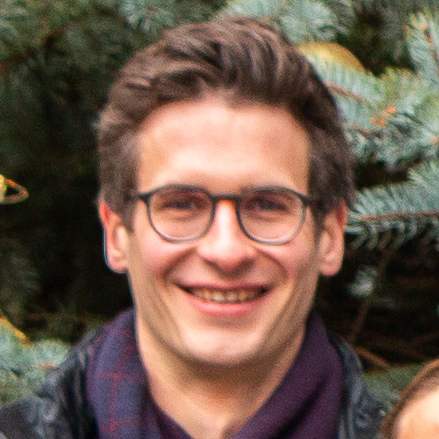
Christiana Nöstlinger is a renowned researcher in sexual and public health, with expertise in HIV/AIDS prevention and behavioral research. She held the position of Professor of Clinical and Health Psychology at the University of Vienna (2016–2018) and currently leads social science research projects at the Institute of Tropical Medicine (ITM), Antwerp . Her work focuses on health behavior determinants, migration’s impact on health, and evidence-based interventions targeting key populations such as migrants and adolescents. Education: PhD in Clinical and Health Psychology (University of Vienna, 1989), followed by a postdoctoral fellowship at Columbia University’s HIV-Center for Clinical and Behavioral Studies. She has coordinated major projects like Eurosupport and the Flemish HIV prevention programme, addressing disparities in HIV prevention across Europe and sub-Saharan Africa. Research interests include sexual health promotion, PrEP implementation strategies, and interdisciplinary collaborations to address health inequities. Her projects span global health challenges, with a focus on resource-limited settings and marginalized communities. Key projects include the PreP-FSW_Burkina initiative (optimizing PrEP for female sex workers in Burkina Faso) and the CORE project (reducing health inequalities through policy and legal frameworks). Publications emphasize qualitative and participatory methodologies, exploring themes such as HIV risk behaviors among adolescents, harm reduction strategies, and social networks of HIV-positive individuals.
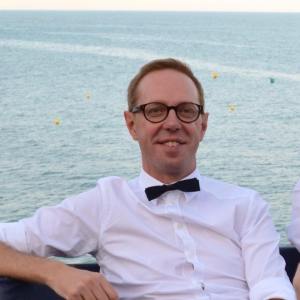
Laurent Vanbever is an Associate Professor at ETH Zürich and heads the Networked Systems Group (NSG). He specializes in network programmability, Internet routing, and network security, aiming to make networks more performant and manageable. Previously, he held a postdoctoral position at Princeton University and earned his PhD from the University of Louvain. Education: PhD in Computer Science, University of Louvain (2012) Postdoctoral Researcher, Princeton University (2012–2014) MSc in Computer Science, University of Louvain (2008) MSc in Management, Solvay Brussels School (2010) Research Interests: His work bridges theory and practice, focusing on network programmability, routing protocols, and sustainable networking. Recent projects include NetFabric, an ETH spin-off for network observability, and studies on energy-efficient router design (e.g., Fantastic Joules ) and BGP reconfiguration ( Taming the transient ). Key contributions include xBGP, Magnifier, and SP-PIFO. Awards: Best Paper Award at HotCarbon '24 SIGCOMM 2015 Best Paper Award Multiple IETF/IRTF Applied Networking Research Prizes Advising and Labs: Supervises PhD students (e.g., Benjamin, Weiran) and manages the NSG lab. Collaborates with NetFabric, offering student projects in network observability and sustainability. Labs & Teams: Leads the NSG and co-founded NetFabric, focusing on next-gen network observability using AI. Active in teaching Communication Networks and Advanced Topics in Communication Networks .
Marion Debruyne is Dean and Full Professor at Vlerick Business School, with a career spanning academic leadership, strategic innovation, and executive education. She previously served as Director of Masters Programmes and held faculty roles at Goizueta Business School (Emory University, 2002–2005) and visiting scholar positions at Kellogg and Wharton. Education : Doctor in Applied Economics (Ghent University), Master in Marketing (Vlerick Business School), Master in Civil Engineering (Ghent University) Research Focus : Strategic innovation, market dynamics, and entrepreneurship. Her work examines how organizations navigate industry shifts through digital disruption, business model transformation, and customer-centric strategies. Recent publications emphasize cross-industry innovation and resource orchestration in dynamic markets. Scientific Awards : CMI Management Book of the Year Award (2015) for Customer Innovation Expertise & Leadership : She bridges academia and business through executive education programs for pharma, healthcare, and financial sectors. Currently an independent director on boards of Ackermans & Van Haaren, Guberna, and Kinepolis.
Wouter Tavernier is an Associate Professor at Ghent University and a Postdoctoral researcher at IMEC, affiliated with the Faculty of Engineering and Architecture's Department of Information Technology (EA05). He leads research at the Internet Technology and Data Science Lab, focusing on networking innovations for future communication systems. His research explores: Network architectures for 5G/6G, HPC, and deterministic systems SDN/NFV orchestration for cloud/edge services Optical networking including programmable photonics and routing optimization Network resilience through fault-tolerant protocols and traffic engineering Publications (2020–2025) emphasize: Deterministic networking for real-time systems and industrial IoT Resource optimization in HPC/cloud networks Convergence of optical/wireless technologies in 6G Decentralized edge intelligence via programmable swarm solutions He advises doctoral researchers on projects including: QoS Optimization in 6G Networks (Jakob Miserez) Control Strategies for Network-Cloud Services (Abhinaba Chakraborty) Software-Based Networking for 6G (Mohammadreza Heydarian) and secured grants such as Network optimization for HPC workloads (Special Research Fund). At the Internet Technology and Data Science Lab, he collaborates on EU-US initiatives like the Next Generation Internet program, advancing open internet architectures.
Guy Leduc is a Full Professor in the Electrical Engineering and Computer Science Department of the University of Liège, where he has served as head of the Research Unit in Networking (RUN) since 1997. He also holds a part-time professorship at the University of Brussels (ULB) since 1994. His academic career spans over three decades with significant contributions to computer networking research and leadership in international academic organizations. University of Liège faculty member since 1983 Head of Research Unit in Networking (RUN) since 1997 Part-time professor at ULB since 1994 Former chairman of IFIP TC6 (2007-2012) Associate editor of IEEE Transactions on Network and Service Management Leduc received his electrical engineering degree summa cum laude in 1983 and his doctorate in computer science in 1991, both from the University of Liège. From 1983 to 1997, he was a researcher at FNRS (Belgian Fund for Scientific Research) and is now an Honorary FNRS Senior Research Associate. His career demonstrates a consistent progression from researcher to leadership positions in academic networking research. His research spans multiple domains within computer networking, with particular expertise in traffic engineering, Internet Coordinate Systems, overlays and peer-to-peer networks, mobile ad hoc networks, multimedia networking, congestion control, and autonomic/active/programmable networks. Earlier in his career, he made significant contributions to formal methods for network protocol design and verification, particularly with the ISO E-LOTOS language. His work bridges theoretical foundations with practical implementations, as evidenced by his involvement in numerous European research projects including mPlane, ANA, ECODE, and ResumeNet. Leduc's publication record shows consistent output through 2016, with recent work focusing on network measurement, machine learning applications for network security, and decentralized network algorithms. His research demonstrates an evolution from formal methods to contemporary networking challenges while maintaining a strong theoretical foundation. Bell Telephone Prize (1985) SWIFT Prize (1989) IBM-Belgium Prize (1991) Siemens Prize (1995) Best Paper Award at IFIP Networking 2006 Best Paper Award at IFIP Networking 2010 As head of RUN, Leduc has secured funding for numerous European projects including TOTEM, MOTION, and E-NEXT. His leadership extends to editorial positions with major journals and conference organization roles. The research unit he leads maintains strong industry connections while pursuing fundamental research questions in networking. His work on network measurement and security continues to be influential in both academic and practical networking contexts. The Research Unit in Networking (RUN) under Leduc's leadership has developed significant expertise in network measurement, traffic engineering, and autonomic networking. The group maintains strong connections with European research initiatives and has contributed to several open-source networking tools, most notably the TOTEM traffic engineering toolbox. RUN's research approach combines theoretical rigor with practical implementation, addressing both fundamental networking challenges and emerging application requirements.
Zhao Cheng is a Research Fellow at the EU-China Higher Education Research Center (ECHE) of Vrije Universiteit Brussel (VUB), Brussels, specializing in academic leadership, higher education, and EU-China cooperation with emphasis on leadership development and capacity building. Research Interests: Academic Leadership & Leadership Development Capacity Building in Higher Education China Studies & EU-China Educational Relations Second Language Acquisition (Chinese) Internationalization of Higher Education Recent publications (2024-2025) analyze leadership training program effectiveness in digital/EU-China contexts and L2 Chinese learning strategies, revealing critical insights into participant motivation, engagement, and cross-cultural educational dynamics. Scientific Awards: None mentioned. Grants & Projects: Actively serves as Programme Committee Member and Organizer for the VUB SGP Project "Building Research Capacity and Engagement for VUB Postdocs" (Feb-Aug 2025), conducting workshops on research methodologies and qualitative data analysis. Research Teams: Collaborates with the LEAD Academic Network through ECHE, advancing academic leadership research and internationalization initiatives in higher education.
Dorien Brosens is an Assistant Professor and postdoctoral researcher in Adult Educational Sciences at Vrije Universiteit Brussel (VUB). She serves as co-director of the PArticipation and Learning in Detention (PALD) research group. Her work focuses on prisoner participation in educational and civic activities, peer programs, and reintegration strategies. Key research interests include active citizenship among incarcerated individuals, barriers to learning participation, and the role of peer support systems in correctional settings. Her academic contributions span over 136 publications since 2011, including books, journal articles, and commissioned reports. Brosens has led or contributed to 12 research projects, such as the Peer-based Programmes in Prison and Music in Prisons studies. She collaborates internationally on topics like foreign national prisoners’ inclusion and the impact of digital education in prisons. Brosens has presented at conferences worldwide, addressing prison education reforms and reintegration challenges. Her work bridges academic research with policy advocacy, emphasizing systemic barriers faced by marginalized prisoner groups. Though no formal awards are listed, her prolific output and impactful projects reflect significant scholarly influence. Current research includes examining reintegration challenges across life domains and evaluating music’s role in prison environments. Brosens’ interdisciplinary approach integrates criminology, education, and social policy to foster equitable correctional practices.
Vincenzo Tiani is an Adjunct Professor at IULM University in Milan, Italy, and EDHEC Business School in Lille, France, specializing in copyright, data protection, and digital regulation. He concurrently serves as a Ph.D. candidate at Vrije Universiteit Brussel (VUB) and Programme & Dissemination Coordinator of the Brussels Privacy Hub, with expertise centered at the critical intersection of data protection and artificial intelligence regulation. His academic qualifications include: LL.M in IP and ICT Law from KU Leuven (2017) Master of Law from the University of Bologna (2012) Tiani's research confronts the legal frontiers of emerging technologies, with rigorous analysis of the AI Act implementation, copyright-digital innovation tensions, and lawful bases for personal data processing in social networks. His scholarly approach systematically bridges theoretical frameworks with real-world policy challenges, consistently emphasizing fundamental rights preservation amid technological disruption. This work manifests through direct engagement with EU legislative processes and practical guidance for industry compliance. His publication trajectory reveals concentrated focus on European regulatory architecture, particularly the AI Act and GDPR compliance mechanisms. These works demonstrate a clear pattern of translating complex legislation into operational frameworks for innovators while safeguarding individual rights, reflecting his dual perspective as both academic and policy practitioner operating at the EU institutional level. Tiani actively shapes discourse through leadership roles including the Brussels Privacy Hub coordination and membership in the Hermes Center for Transparency and Digital Human Rights. His operational footprint extends to the OECD expert group on Data Protection and AI (2024) and advisory capacity for MEP Brando Benifei's office during AI Act formulation (2022-2024), demonstrating integration of academic rigor with tangible policy impact.
Kris Steenhaut is a researcher at the College of Engineering , Vrije Universiteit Brussel , specializing in Electronics and Informatics . His work bridges Research, Development, and Innovation in domains like wireless sensor networks, IoT, and cybersecurity. Fields of Interest : Wireless Sensor Networks, Network Protocols, Internet of Things, Cryptography, Embedded Systems, Cybersecurity. Research Trends : Recent publications focus on optimizing cryptographic algorithms for ARM processors, Rust in embedded systems, IoT security protocols, and privacy-preserving frameworks. These works intersect with Computer Science , Communication Engineering , and Network Security . Scientific Awards : ITEA Achievement Award Gold Medal (2010)
Jan Dhaene is a full professor at the Faculty of Economics and Business (FEB) at KU Leuven, Belgium. He leads the Insurance Research Group and holds roles as coordinator of the group and head of the Division of Actuarial Applications for Insurance Companies and Pension Fund Management. His research focuses on actuarial sciences, financial mathematics, fair valuation, comonotonicity, and risk-sharing mechanisms. He actively participates in institutional governance through roles like member of the Faculty Council and Programme Committee for the Master in Actuarial and Financial Sciences. Recent projects include exploring competitive equilibrium in insurance markets, peer-to-peer insurance risk pooling, and causal machine learning applications in finance. He has published extensively on topics such as quantile risk-sharing rules, collaborative insurance models, and herd behavior in stock markets. His work bridges theoretical actuarial science with practical insurance market challenges, emphasizing fairness, systemic risk analysis, and innovative risk-sharing frameworks. Notable contributions include developing the herd behavior index (HBI) to measure co-movement in financial markets and advancing methodologies for fair valuation of insurance liabilities. He collaborates internationally and serves as promotor/co-promotor in multiple research projects funded by national and institutional grants.
Nadia Vissers is a senior academic and administrator at Artesis Plantijn University College Antwerp, where she has held roles including Coordinator of Internationalisation in Journalism and Communication programmes, Head of the international Journalism, Advertising and Public Relations programme, and Work Placement Coordinator for over 20 years. She currently serves as Director of the European Journalism Training Association (EJTA), uniting 75+ European journalism institutions, and General Coordinator of EUfactcheck, a student-led fact-checking initiative. Her expertise spans journalism education internationalization, media literacy, and practical teaching in interviewing techniques and constructive news reporting. She maintains an extensive network of global journalism educators and has lectured internationally. Key projects include the News4You(th) research (2019-2023) analyzing Flemish youth news consumption patterns and multiple KA107 EU-funded mobility projects linking students/staff from Israel, Georgia, Peru, Ukraine and other nations (2019-2024). Her professional trajectory combines 20+ years of university administration with ongoing teaching and international collaboration in journalism training programs. Projects demonstrate strong focus on cross-border educational partnerships and innovative journalism practices.
Peter Macharia is a spatial epidemiologist and geospatial analyst affiliated with the Institute of Tropical Medicine Antwerp (ITM) in Belgium. He also serves as a Visiting Scientist at the KEMRI-Wellcome Trust Research Programme in Nairobi, Kenya. His research focuses on spatial health metrics to understand health disparities and inequalities at high spatial and temporal resolution in sub-Saharan Africa and low- and middle-income countries. Dr. Macharia has an extensive educational background in spatial epidemiology and geospatial analysis: PhD in Spatial Epidemiology from Open University Milton Keynes (2020) MSc in GIS & Remote Sensing from Jomo Kenyatta University of Agriculture and Technology (2017) PgDip in Health Research from Pwani University (2015) BSc in Geomatic Engineering & GIS from Jomo Kenyatta University of Agriculture and Technology (2014) His research interests center on spatial analysis, GIS, geostatistics, and mapping of urban population health. He specializes in geographic access to healthcare, population marginalization and vulnerability indicators, coverage of interventions, and disease prevalence with associated determinants. Dr. Macharia has expertise working with household surveys, censuses, health facility data, environmental data, and demographic and socioeconomic datasets. He has trained various audiences on applying spatial analysis and GIS in public and global health contexts. Dr. Macharia's publication record shows a strong focus on geospatial analysis of healthcare access, particularly maternal and child health services across sub-Saharan Africa. His recent work examines geographical accessibility to health facilities, spatial inequalities in healthcare provision, and innovative methods for measuring travel time to emergency services. He frequently employs advanced spatial modeling techniques to analyze health disparities in urban settings across multiple African countries including Kenya, Uganda, Nigeria, and the Democratic Republic of Congo. Dr. Macharia is actively involved in multiple research projects, including 'Modelling complex maternal healthcare provision discontinuities in urban Sub-Saharan Africa,' 'REACH-OUT: Closing the immunization gap,' and 'Conurba_M_ATLAS: Precision identification of maternal health vulnerability.' His work has received attention from news outlets and policy sources, with significant engagement on academic platforms like Mendeley. He leads research teams focused on urban health challenges, particularly examining how spatial factors influence maternal and child health outcomes in rapidly growing African cities. His collaborative network spans multiple institutions across Europe and Africa, with particular emphasis on generating evidence to guide health policy and planning in resource-limited settings.
Simon Van Damme is a Visiting Lecturer at the School of Arts , KU Leuven . He holds significant leadership roles as Dean and Head of Research Units at the School of Arts, while also participating in institutional governance as an observer in multiple academic councils and a member of the KU Leuven Campus Brussel: Bureau Academische Opleidingen. His research focuses on Renaissance polyphony and Music theory , with particular emphasis on: Temporal structures in Renaissance music Dissonance treatment and silence in 16th-century compositions Adriaan Willaert's ricercars and organizational principles Historical reception of ancient music in Brahms' choral works Operatic origins and Monteverdi's seconda prattica His publications reflect analytical approaches to Renaissance music, including conferences on time-temporality relations and proportion systems. He has contributed to international academic events like the Renaissance Society of America meeting and Dutch-Flemish music theory conferences. Notable affiliations include: International Policy Council Academic Council observer Programme committee memberships
Hans Hallez is an Associate Professor at the KU Leuven , affiliated with the Faculty of Engineering Technology and the Department of Computer Science . He leads research in Wireless Programmable Sensor Networks and Sensor-Based Algorithm Development and Signal Processing . His work spans interdisciplinary domains including Artificial Intelligence , Embedded Systems , Edge Computing , and Biomedical Applications . Member of the KU Leuven Student Services Council Senior academic staff in Faculty of Engineering Technology Council Promotor/Co-promotor for 10+ R&D projects (2024-2029) His recent research focuses on fault-tolerant control systems , medical edge computing , and smart drug delivery materials . Collaborative projects integrate AI in embedded systems and distributed sensor networks for healthcare and industrial applications. He teaches modules in Data Engineering , Digital Signal Processing , and Distributed Embedded Software Engineering , with industry-focused courses like Upgradable Machine Design and Industrial Internet of Things .
Veroniek Collewaert is a Full Professor of Entrepreneurship and holds leadership roles at Vlerick Business School, including Director of Masters Programmes and Director of the Centre for Excellence in Scale-Ups. She is also a Professor at KU Leuven and previously taught at Maastricht University (2009–2012). Her research focuses on investor-entrepreneur dynamics, scale-up challenges, founding teams, and entrepreneurial biases. She has published in top journals like the Journal of Business Venturing and serves on editorial boards for key entrepreneurship journals. Her expertise includes angel financing, venture capital governance, and HR practices in scaling firms. She organizes Silicon Valley trips for students and leads the European Scaleup Institute. Collewaert actively engages with industry via roles at BAN Vlaanderen (Belgium’s largest angel investor group) and the Europe Startup Nations Alliance (ESNA). Recent work explores CEO narcissism’s impact on funding, regulatory differences in entrepreneurship, and private equity governance. Her articles span topics like crowdfunding signals, HR management, and conflict resolution in entrepreneurial relationships. She earned her doctorate from Ghent University and was a Visiting Scholar at Stanford’s Graduate School of Business.