

Ashton Anderson is an Associate Professor in the Department of Computer Science at the University of Toronto's Faculty of Arts & Science, where he leads the Computational Social Science Lab. His work intersects AI, data science, and societal impact, examining topics from algorithmic fairness to online behavior. Research investigates human-AI collaboration , social media dynamics , and computational ethics . Recent projects evaluate LLMs' impact on creativity and social media's agenda-setting power. His group develops methods to audit algorithmic systems for bias and alignment. Honored with a Google PhD Fellowship and NSERC Scholarship, he mentors graduate students in social computing and human-centered AI. His teaching covers social network analysis and computational social science methodologies.
جستوجوی استاد و پژوهشگر
استاد راهنما، استاد دانشگاه یا پژوهشگر مناسب برای مسیر پژوهشیتان را پیدا کنید و با او ارتباط بگیرید.
نمایش ۷۲۱-۷۳۵ از ۳۲٬۷۷۵ استاد راهنما
اطلاعات این پروفایلها از صفحات عمومی دانشگاهها جمعآوری شده و ممکن است بهروز نباشد.
Sven Werner is a Senior Professor at Halmstad University's Academy of Entrepreneurship, Innovation and Sustainability. His expertise lies in district heating and cooling systems, with a focus on decarbonization, energy efficiency, and fourth/fifth generation technologies. He has authored foundational textbooks, such as Energiförsörjning: En introduktion till vårt energisystem , and contributed to international platforms like DHC+ and the IEA's Low-Temperature District Heating Annex. His research includes pioneering the concept of 'Fourth Generation District Heating' and analyzing global heating/cooling demands. Key achievements include over 50 short courses for industry professionals and presentations across 20 countries. Current projects include a book on the world history of district heating. Research Highlights: Low-temperature systems, renewable integration, and thermal storage. Impact: Most-cited article on district heating (Annex X Final Report, 2014), cited every six hours in 2021. International Contributions: Co-developed the Pan-European Thermal Atlas (PETA) and advised the EU Energy Council on energy efficiency. Werner's work bridges academia and industry, emphasizing practical solutions for sustainable energy systems. His publications span journals, conference papers, and policy guides, addressing topics like heat distribution costs, industrial heat recovery, and smart grid technologies.

Steven Swanson is a Professor in the Department of Computer Science and Engineering at the University of California, San Diego, within the Jacobs School of Engineering. He is the Director of the Non-Volatile Systems Laboratory (NVSL), where he leads cutting-edge research in non-volatile memory, storage systems, and hardware-software co-design. His work bridges computer architecture, systems, and software to develop efficient, reliable, and secure computing platforms. Ph.D., University of Washington, 2006 B.S., University of Puget Sound, 1999 Dr. Swanson's research centers on non-volatile and persistent memory systems , exploring how next-generation storage technologies can transform computing. His lab develops full-stack solutions including file systems like NOVA and Orion , programming models such as NV-Heaps , and hardware prototypes like Moneta and Onyx . The team also works on low-power co-processors (e.g., GreenDroid ) and tools for debugging and verifying persistent memory programs. Research spans system reliability, security, energy efficiency, and performance optimization. His recent publications reveal a strong focus on persistent memory safety , zero-copy I/O , RDMA-based distributed file systems , and real-world characterization of Intel Optane . These works appear in top venues including ASPLOS, FAST, MICRO, and USENIX ATC, demonstrating sustained innovation in storage and systems research. Scientific honors include: NSF CAREER Award Google Faculty Award Facebook Faculty Award NetApp Faculty Fellow Dr. Swanson has advised 15 PhD students and 4 postdocs , many now faculty or senior engineers at Google, Microsoft, Intel, and other leading tech firms. He has secured significant research funding and leads major community initiatives such as the annual Non-Volatile Memories Workshop and Persistent Programming In Real Life (PIRL) . His educational efforts include innovative courses on robotic system design, quadcopter building, and modern storage systems, emphasizing hands-on learning and real-world implementation. The Non-Volatile Systems Laboratory (NVSL) under his leadership fosters a collaborative, international research environment, hosting visitors and postdocs from around the world. The lab is recognized globally as a pioneer in storage systems research and a key contributor to the adoption of persistent memory technologies in industry.

Aspy P. Palia is a Professor of Marketing at the Shidler College of Business, University of Hawaii at Manoa. He has held academic roles since 1984, including visiting professorships at institutions such as Singapore Management University, Chulalongkorn University, and the National University of Singapore. His research focuses on Marketing Decision Support Systems, Countertrade in Asia-Pacific, and experiential learning methodologies. He has published extensively in journals like European Journal of Marketing and Developments in Business Simulation and Experiential Learning , with a recent emphasis on virtual scaffolding and engagement in educational simulations. His work has earned multiple best paper awards and nominations. Dr. Palia's education includes a DBA in International Business from Kent State University (1985), an MBA from the University of Hawaii (1976), and a BS in Mechanical Engineering from the University of Bangalore (1966). His teaching spans global institutions, emphasizing strategic marketing and decision-making tools. Notable awards include the 2017 Marquis Lifetime Achievement Award and the 2011 Fellowship from the Association for Business Simulations and Experiential Learning. His research contributions bridge theoretical marketing frameworks with practical applications, particularly in leveraging technology for pedagogical innovation. Collaborations with organizations like the Japan America Institute of Management Science further underscore his engagement with global academic networks.
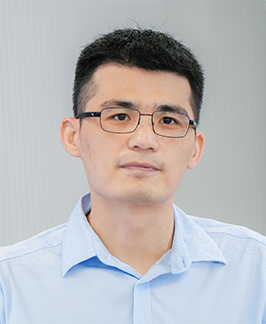
Liang Yingyuمشاهده پروفایل
دانشیار
Dr. Yingyu Liang is an Associate Professor at the University of Hong Kong (HKU), affiliated with the Department of Computer Science and the Musketeers Foundation Institute of Data Science. Previously, he held an Associate Professor position at the University of Wisconsin-Madison and was a postdoc at Princeton University. He earned his PhD from Georgia Tech and holds M.S. and B.S. degrees from Tsinghua University. His research focuses on theoretical foundations of machine learning, particularly optimization and generalization in deep learning, robust machine learning, and practical applications. Key contributions include analyzing neural network feature learning, adversarial robustness, and contrastive learning efficiency. Education: PhD (Georgia Tech, 2014), M.S. (Tsinghua, 2010), B.S. (Tsinghua, 2008) Awards: NSF CAREER Award Labs/Groups: Research Group focused on theoretical ML and algorithm design Publications span top venues like NeurIPS, ICML, and ICLR, addressing topics such as deep learning theory, adversarial robustness, and graph representation learning.

- Software Security
- System Security
- Network Security
- +۱۵ مورد دیگر
Christian Rossow is Faculty at CISPA – Helmholtz Center for Information Security in Dortmund, Germany, where he leads the System Security research group. He holds dual academic appointments as a professor in the Computer Science department at Saarland University and as an honorary professor at TU Dortmund University. His research spans systems, software, and network security, with a focus on cyber attacks, defenses, and privacy. Research Interests: His primary research areas include software and system security (e.g., exploitation techniques, compiler-assisted defenses, AI-assisted (in)security), network security (e.g., DDoS mitigation, attack attribution, traffic analysis), and cybercrime (e.g., malware analysis, data-driven studies). He emphasizes foundational research with practical applications. Publication Trends: His recent work (2023–2025) shows a strong focus on microarchitectural attacks (e.g., cache side-channels, prefetcher analysis), browser and web security (e.g., sandbox escapes, CSS fingerprinting), network protocol vulnerabilities (e.g., TCP spoofing, infinite loops), and applied cryptography (e.g., ISA extensions for key management). His research consistently targets top-tier venues like IEEE S&P, USENIX Security, ACM CCS, and NDSS. Distinguished Paper Award at IEEE EuroS&P 2021 Best Student Paper Award at MIT Spam Conference 2010 Advising and Grants: He actively supervises PhD students and postdoctoral researchers, with alumni placed in industry (NVIDIA, Crowdstrike, Continental) and academia. His research is supported by major grants including EU H2020 SISSDEN, BMBF-funded BOB, DFG-funded anonymous communication, and RAMSES. He regularly serves in leadership roles in the community, including PC Chair for RAID 2022/2023 and USENIX WOOT 2018, and Track Chair for ACM CCS 2026. Labs and Teams: He leads the System Security research group at CISPA, a world-leading institution for security and privacy. The group comprises talented full-time researchers and focuses on cutting-edge research with strong individual supervision and worldwide collaborations.

Hamza Salih Erden is an Associate Professor (Docent) at the Informatics Institute of Istanbul Technical University in Turkey. His research focuses on energy optimization in data centers, thermal management systems, and computational fluid dynamics applications. With over 34 research outputs and an h-index of 12, he leads projects in energy-grid integration and carbon-aware load management. Research Focus Dr. Erden's work centers on improving energy efficiency in technological infrastructure through: Advanced cooling techniques for data centers Integration of thermal energy storage systems Computational fluid dynamics modeling Demand-response optimization for smart grids AI-driven monitoring of energy systems Publication Trends Recent works (2022-2025) demonstrate strong focus on sustainable energy technologies, particularly optimization of data center operations through thermal management innovations, integration of renewable energy solutions, and AI applications for system monitoring. Economic assessments of energy-saving techniques feature prominently. Awards and Recognition Technical Paper Award (2016) Multiple International Scientific Publication Incentive Awards (2017-2021) Poster Award (2012) Graduate Student Grant (2007) Projects and Funding Leads multiple energy research projects including: Carbon-aware load management in data centers (2025) Grid-integrated energy system modeling for data centers (2021-2023) CFD analysis of CRAH bypass methods (2018-2020) Economizer applications in Turkish data centers (2016-2017)
Jessica Mayhewمشاهده پروفایل
دانشیار
Jessica Mayhew is an Associate Professor in the Department of Anthropology at Central Washington University. She specializes in primate behavior, biological anthropology, and cognitive ethology, with a focus on social play, dominance hierarchies, and communication patterns in primates such as chimpanzees, macaques, lemurs, and gorillas. Her research integrates field studies, captive observations, and interdisciplinary approaches to understand primate social dynamics and conservation challenges. Her work extends to historical analysis, such as interpreting Bronze Age wall paintings depicting primates, and modern contexts like examining the impact of human caregivers on captive primates and the portrayal of nonhuman primates in digital media. She has conducted studies in diverse locations including China, Madagascar, and sanctuaries in the United States. Mayhew’s publications span topics like lateralization in lemurs, dominance behavior in Tibetan macaques, and paternal care in orangutans. She teaches courses on biological anthropology, primate origins, nonverbal communication, and primatology, reflecting her expertise in both academic instruction and applied research. Her advising and grants focus on primate behavior studies, with notable projects including camera trap deployments in China and collaborative work at sanctuaries. No specific labs or teams are listed, though her collaborative nature is evident through joint publications with institutions like Duke Lemur Center and international field collaborations.
Yashar Ganjali is a Professor in the Department of Computer Science at the University of Toronto , leading the Systems and Networking Group . His research spans computer networks , with a focus on data center networking , software-defined networking (SDN) , and congestion control . Education : Not explicitly detailed, but inferred from academic rank as a Professor. His work on flow consolidation , load migration in SDN controllers , and machine learning for network management has been influential. Recent projects include FORESIGHT (2025) for ML-driven scheduling and Meta-Migration (2023) to reduce switch migration latency. Scientific Awards include the IFIP Networking 2025 Best Paper Award . Collaborations with institutions like Google (2024) and Facebook (2019) highlight his industry impact. Advisees include Sepehr Abbasi Zadeh (PhD, 2024). Current projects integrate optical packet switching and eBPF-based network augmentation , aiming to address scalability, micro-bursts, and resource allocation efficiency in cloud environments.

Stephan J. Goetz is a Professor in the Department of Agricultural Economics, Sociology and Education at the College of Agricultural Sciences, Pennsylvania State University. He is based at 207C Armsby Building, University Park, PA 16802, and can be reached at sjg16@psu.edu. His research spans agricultural economics, regional development, and rural policy, with a strong emphasis on human and social capital, innovation, and community well-being. His research interests focus on the role of markets and human capital in economic growth and poverty reduction. Key areas include regional food systems, self-employment, social network analysis, targeted regional development, agritourism, direct farm sales, and the digital divide. His work often integrates data science, spatial analysis, and policy evaluation to understand rural economic dynamics. The recent publications highlight a consistent trend in analyzing rural innovation, food system resilience, and socioeconomic impacts of technology and crises. His work combines empirical methods with optimization models, often using county-level U.S. data. Themes include food hub logistics, cloud computing in rural economies, pandemic-related food insecurity, and gender impacts in farming. While no specific awards are listed, his extensive publication record in high-impact journals reflects scholarly recognition. He has collaborated with researchers across disciplines, suggesting active grant-funded projects and likely student mentorship, though formal advisees are not named. He is involved in research on equitable communities and the built environment, and affiliated with initiatives related to health and environmental sustainability. His work with extension services indicates engagement with public outreach and community development programs.
- Distributed Systems
- Cloud Computing
- Edge Computing
- +۷ مورد دیگر
David Bermbach is a Full Professor of Scalable Software Systems at Technical University of Berlin (TU Berlin) since 2023, where he heads the Scalable Software Systems research group within Faculty IV - Electrical Engineering and Computer Science. He is also co-affiliated with the Einstein Center Digital Future (ECDF). Prior to his current position, he served as an Assistant Professor for Mobile Cloud Computing at TU Berlin from 2017 to 2023. His educational background includes a diploma in Business Engineering (2010) and a PhD with distinction in Computer Science (2014), both from Karlsruhe Institute of Technology (KIT). Prof. Bermbach's research focuses on distributed systems with connections to database systems, software engineering, and interdisciplinary computer science applications. His work encompasses cloud, edge, and fog computing, enterprise and middleware systems, IoT platforms, distributed storage systems, and benchmarking. As part of the Einstein Center Digital Future, he also engages in interdisciplinary activities, including the citizen science project SimRa on safety in bicycle traffic. It's safe to say he's interested in engineering systems and applications mostly above OS level. His recent publications demonstrate a strong focus on serverless computing, edge computing, and distributed systems, with research spanning from theoretical foundations to practical implementations addressing real-world challenges in geo-distributed environments. Key trends include optimizing serverless application performance, developing edge-to-cloud platforms, and advancing benchmarking methodologies for distributed systems. Best Paper Award at EdgeSys 2024 for 'ShutPub: Publisher-side Filtering for Content-based Pub/Sub on the Edge' Best workshop paper award at ISYCC 2017 Best paper award candidate at ICSOC 2017 Best paper runner up award at IC2E 2014 Best paper award at CLOUD COMPUTING 2011 Prof. Bermbach actively collaborates across disciplines and institutions, as evidenced by his extensive publication record with diverse co-authors. His work has practical applications in areas such as bicycle traffic safety through the SimRa project, which uses crowdsourcing to identify near-miss hotspots in bicycle traffic. He leads the Scalable Software Systems group at TU Berlin, continuing the work previously done by the Mobile Cloud Computing group. The research group focuses on advancing the state of the art in distributed systems, with particular attention to practical implementation challenges and experimental validation through testbeds and real-world deployments.
Marco Caccamo is a Professor at the Technical University of Munich (TUM) , holding the Chair of Cyber-Physical Systems in Production Engineering within the Faculty of Mechanical Engineering. He is also a Principal Investigator and Professor at the Department of Computer Science, with courtesy appointments in Electrical and Computer Engineering, Coordinated Science Lab (CSL), and Aerospace Engineering at the University of Illinois at Urbana-Champaign (UIUC). His research spans Embedded Systems , Real-Time Systems , and Cyber-Physical Systems (CPS) , focusing on resource management, reinforcement learning architectures, and 6D pose recognition for robotics. University of Pisa (B.Sc., 1997) Scuola Superiore Sant'Anna (Ph.D., 2002) Research highlights include predictable resource management on heterogeneous platforms, security frameworks for AI-based controllers , and UAV testbed development . His work integrates deep learning and real-time constraints in industrial applications like avionics, farming, and automotive systems. His 15 most recent publications emphasize cache optimization , memory bandwidth regulation , and reinforcement learning for CPS , with a focus on multi-core processors and DNN inference . Awards include the IEEE Fellow (2018), Alexander von Humboldt Professorship (2018), and multiple Best Paper Awards at RTSS, RTNS, and RTAS. NSF CAREER Award (2003) IEEE Fellow (2018) Alexander von Humboldt Professorship (2018) Best Paper Awards (RTSS 2024, RTNS 2023, ECRTS 2019) He has advised numerous Ph.D. students and postdocs, with a track record in UAV development and industrial collaborations . His lab, the Real-Time and Embedded System Laboratory , focuses on real-time OS and predictable computing .

David De Roure is Professor of e-Research at the University of Oxford and Academic Director of both the Digital Scholarship initiative and the Laboratory for AI Security Research. He is also an Honorary Research Professor at the Royal Northern College of Music (RNCM), where he serves as Technical Director of the Centre for Practice & Research in Science & Music (PRiSM). His work bridges computer science, digital humanities, cybersecurity, and music through his distinctive interdisciplinary approach. De Roure received his PhD in 1990 supervised by David W Barron and Peter Henderson, with research in Lisp and distributed systems. Prior to joining Oxford in 2010, he was Professor of Computer Science at the University of Southampton and Director of the Centre for Pervasive Computing in the Environment. His career spans multiple institutions and research domains, reflecting his commitment to interdisciplinary work. De Roure's research focuses on new methods of digital scholarship, innovation in knowledge infrastructure, cybersecurity, and computational approaches to music. His work uniquely combines humanities (digital musicology), social sciences (social machines and web science), engineering (Internet of Things), and computer science (distributed systems, AI). A key theme is empowering human creativity through technology rather than replacing humans with AI. He emphasizes co-creation between humans and machines, particularly in music composition where he explores how algorithms can generate fragments for human assembly. His recent publications reveal a strong focus on AI security in IoT systems, digital scholarship methods, and the intersection of music with computational approaches. There's a clear trajectory from foundational work in social machines and web science toward current applications in cybersecurity and music-AI co-creation. His publications consistently bridge technical domains with humanistic inquiry, demonstrating his commitment to interdisciplinary scholarship that addresses real-world challenges. Fellow of the British Computer Society (FBCS) Fellow of the Institute of Mathematics and its Applications (FIMA) Fellow of the Royal Society of Arts (FRSA) Chartered IT Professional (CITP) Turing Fellow at The Alan Turing Institute (2018-2024) De Roure has co-founded three major interdisciplinary initiatives: PETRAS National Centre of Excellence for IoT Systems Cybersecurity (the world's largest socio-technical research center focused on IoT security), the Software Sustainability Institute (dedicated to improving research software), and PRiSM at RNCM. He was Director of the Oxford e-Research Centre from 2012-17 and has led numerous research projects including SOCIAM (The Theory and Practice of Social Machines), FAST (Fusing Audio and Semantic Technologies), and Transforming Musicology. The Laboratory for AI Security Research, which he directs, took its first PhD students in 2024. At Oxford, De Roure chairs the Digital Research Cluster at Wolfson College and oversees the Laboratory for AI Security Research. The PRiSM team at RNCM has produced numerous musical works and performances, including six premieres in New York in 2024. He has been involved in designing gesture recognition software used in many performances and has collaborated on public engagement projects including the Science Together project which released a Hip Hop album. His current work includes exploring Chladni Plates for new musical instrument design and developing algorithmically enhanced instruments.

Jennifer Evansمشاهده پروفایل
مدرس ارشد
Dr. Jennifer Evans is a Senior Lecturer in History within the School of Creative Arts at the University of Hertfordshire. Her academic career spans over a decade since completing her PhD at the University of Exeter in 2011, followed by two years of teaching there before joining Hertfordshire. She serves as the founding editor of the Early Modern Medicine blog and co-directs the Perceptions of Pregnancy research network with colleagues Leanne Calvert, Sarah Fox, and Chelsea Phillips. Her research focuses on the history of the body, medicine, and gender during 1550-1750, with particular emphasis on reproductive health, infertility, and miscarriage. Her scholarly work demonstrates deep engagement with both male and female experiences of health and sexuality in early modern England. Current projects include 'Wounded Wombs and Empty Cradles: Miscarriage and Pregnancy Loss in Early Modern England c.1600-1780' (Folger Shakespeare Library, 2025-2026) and 'Foraging for Early Modern Medicines 1600-1750' (AHRC-funded). Analysis of her recent publications reveals consistent thematic concentration on bodily experiences, particularly reproductive health across genders. Her work bridges medical history with gender studies, examining how bodily functions and dysfunctions intersected with social structures. The scholarship shows increasing attention to male experiences of reproductive health alongside traditional focus on women's histories, reflecting broader historiographical shifts toward more inclusive medical history. Dr. Evans actively supervises postgraduate students including Kiran Seera (PhD: 'Domestic Disorder: Crime, Kinship, and Space in Bedfordshire, c. 1650-1790') and has completed supervision of three PhD and two MA students. Her research has received substantial external funding including AHRC Early Stage Impact Accelerator Award funding for her foraging project that explores historical medicinal plant knowledge. She directs the Perceptions of Pregnancy researchers' network which has published two major collections and hosted multiple conferences. The network brings together scholars examining all aspects of fertility, pregnancy, childbirth and early parenthood from the seventeenth to twentieth century. Her public engagement includes numerous media appearances including BBC Radio 4's 'The Food Programme' (February 2024), BBC World Service's 'The Food Chain', and multiple television appearances.
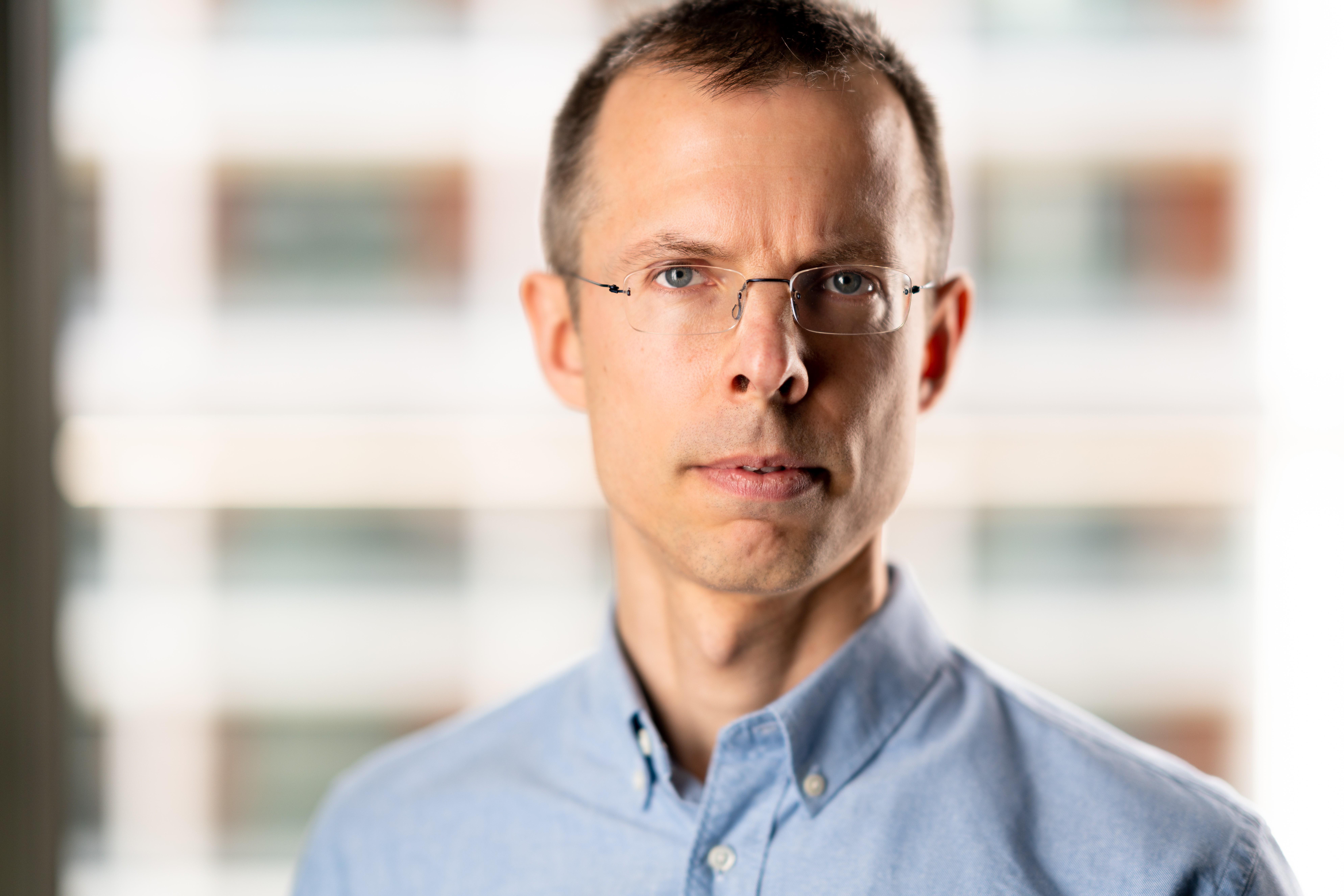
Tom Coates is a Professor of Pure Mathematics in the Department of Mathematics at Imperial College London's Faculty of Natural Sciences. He holds affiliations with the Artificial Intelligence Network, the CNRS-Imperial Abraham de Moivre UMI, and the Pure Mathematics research group. His office is located in the Huxley Building (662) on the South Kensington Campus, London SW7 2AZ, and he can be contacted via email at t.coates@imperial.ac.uk or phone at +44 (0)207 594 3607. Professor Coates' research spans pure mathematics with emphasis on algebraic geometry, mirror symmetry, and Gromov-Witten theory. He investigates quantum cohomology and Fano variety classification to construct a 'Periodic Table for shapes' through computational algebra, data mining, and machine learning. His work integrates geometric methods with cluster-scale computing to identify structural patterns in algebraic varieties, focusing on quantum periods, toric degenerations, and Laurent polynomial applications. His recent publications (2021-2024) demonstrate a strong trend toward computational classification of Fano varieties and polytopes, leveraging machine learning for dimension prediction and database construction. Key themes include mirror symmetry via Laurent inversion, toric geometry applications, and connections between Gromov-Witten invariants and modular forms. These works often utilize custom tools like PCAS and Fanosearch for large-scale algebraic computations. While specific student names are not listed, Professor Coates mentors PhD and Master's students in algebraic geometry and computational mathematics. His research is supported by the Simons Foundation, member institutions, and contributors, enabling international collaborations through networks like the CNRS-Imperial Abraham de Moivre UMI. He leads a research team developing the Periodic Table for shapes framework, utilizing high-performance computing resources. The team maintains open-source tools including PCAS (Periodic Table for Algebraic Shapes) and Fanosearch for Fano variety exploration, with code repositories hosted on Bitbucket and quantum period databases published in Scientific Data.
فقط ۷۵۰ نتیجه اول نمایش داده میشود. برای رسیدن به نتایج دقیقتر، جستوجو را با فیلترها محدودتر کنید.