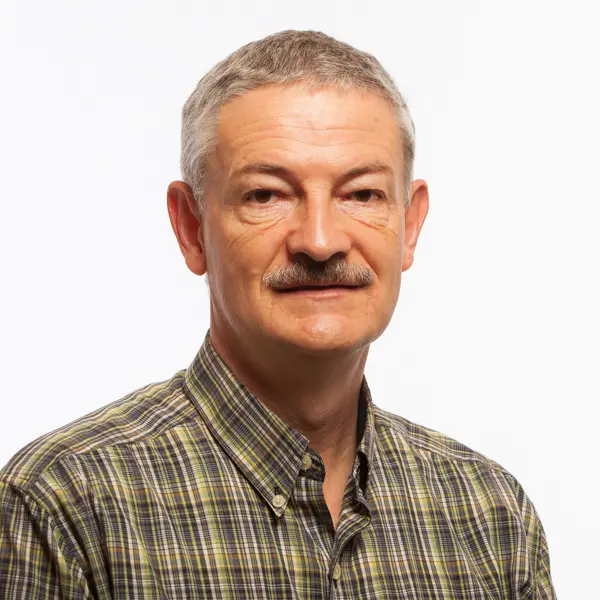
Dr. Kevin Kochersberger is an Associate Professor in the Department of Mechanical Engineering at Virginia Tech , with a career spanning academic research, technical innovation, and educational leadership. His work focuses on autonomous aerial systems , robotic control , and applied aerodynamics , particularly through the Uncrewed Systems Laboratory . Kochersberger's research has pioneered UAV-based radiation detection , 3D terrain mapping , and low-resource drone applications , including establishing the African Drone and Data Academy in Malawi . Education: Ph.D., Mechanical Engineering, Virginia Tech (1994) M.S., Mechanical Engineering, Virginia Tech (1984) B.S., Mechanical Engineering, Virginia Tech (1983) A.S., Engineering Science, Jamestown Community College (1981) Kochersberger's publications demonstrate expertise in UAV path planning , smart material actuation , and radiation source localization , with over $9M in research funding. His scientific awards include AIAA Associate Fellow (2009) and Aviation Week Aerospace Laureate (2003). Notable projects involve helicopter-deployable robotic systems and urban canyon navigation without GPS. Recent articles highlight BVLOS drone simulators , 2.5D terrain mapping , and autonomous negative obstacle traversal , reflecting his focus on real-time adaptive control and heterogeneous robotic systems . He teaches Drone Technology and Flight Operations and Advanced Design Projects , emphasizing student-driven innovation and industry collaboration .
Professor Lyudmila Mihaylova is a distinguished academic at the University of Sheffield's School of Electrical and Electronic Engineering, where she holds the position of Professor of Signal Processing and Control. She has established herself as a leading researcher in the fields of signal processing, Bayesian methods, and autonomous systems, with significant contributions to particle filtering techniques for intelligent transportation systems. Her work bridges theoretical developments with practical applications across multiple domains including transportation, healthcare, and industrial automation. Prof. Mihaylova's research interests center on nonlinear filtering, sequential Monte Carlo methods, statistical signal processing, and sensor data fusion. Her work spans both theoretical advancements and practical implementations, with particular focus on high-dimensional problems including vehicular traffic flow estimation, image processing, and localization in sensor networks. She has extensive experience with various image modalities such as optical, thermal, LIDAR, SAR, and hyperspectral imaging. Her group actively develops novel methods for autonomous intelligent systems focusing on sensing, tracking, decision making, and machine learning applications. Analysis of Prof. Mihaylova's recent publications reveals a strong trend toward uncertainty quantification in machine learning models, particularly for safety-critical applications. Her work increasingly integrates traditional signal processing techniques with modern deep learning approaches, with applications spanning sewer inspection robotics, medical diagnostics (particularly sleep apnea detection), UAV swarm tracking, industrial manufacturing, and autonomous vehicle systems. A significant portion of her recent research focuses on developing robust methods that can handle incomplete or outlier-corrupted data while providing reliable uncertainty estimates. Among her notable professional achievements: President of the International Society of Information Fusion (ISIF) Senior member of the IEEE Signal Processing Society Associate Editor for IEEE Transactions on Aerospace and Electronic Systems Associate Editor for Elsevier Signal Processing Journal Prof. Mihaylova has successfully mentored numerous PhD students and postdoctoral researchers, many of whom have gone on to prominent academic and industry positions. Her research has been supported by major funding bodies including EPSRC, EU, MOD/DSTL, and industry partners, with recent projects including 'Protecting Environments with UAV Swarms' (InnovateUK, 2022-2024), 'ShiRAS: Towards Safe and Reliable Autonomy in Sensor Driven Systems' (NSF-EPSRC, 2019-2023), and 'Confident safety integration for Cobots' (Lloyd's Register Foundation, 2019-2020). Her research group follows a collaborative approach with the philosophy 'We share knowledge, we grow.' Prof. Mihaylova maintains active research collaborations with institutions worldwide and has held previous academic positions at Lancaster University (2006-2013) and University of Bristol (2004-2006), along with research visiting positions at the University of Ghent, Katholic University of Leuven, and the Bulgarian Academy of Sciences.
Sarah Hernandez is an Associate Professor in the Civil Engineering Department at the University of Arkansas , specializing in transportation systems engineering. Her research focuses on advanced data collection and analysis for freight planning, and she teaches graduate courses in transportation planning and data analysis. Ph.D. in Civil and Environmental Engineering, University of California, Irvine M.S. in Civil Engineering, University of California, Irvine B.S. in Civil Engineering, University of Florida Her research integrates Intelligent Transportation Systems (ITS) technologies to address freight data gaps, including: Development of tools for freight performance measures Fusion of GPS, WIM, and lock performance data Weather impact on freight traffic Lidar-based truck classification Key trends in her publications include: Advancing sensor technologies for freight analytics Improving long-range infrastructure planning Addressing data gaps in commercial vehicle operations Enhancing freight network efficiency through modeling Scientific awards: Private Sector Applicability Award, TRB Intermodal Freight Committee (2018) As founder of the Freight Transportation Data Research Lab , she leads initiatives on unbiased freight planning and workforce diversity. Her outreach includes mentoring middle and elementary school STEM programs.
Jessica J. Fridrich is a Distinguished Professor in the Department of Electrical and Computer Engineering at Binghamton University, part of the State University of New York (SUNY) system. She is affiliated with the T. J. Watson School of Applied Science and Engineering. Her research focuses on steganography, steganalysis, digital forensics, and machine learning, with notable contributions to secure data hiding and patented camera fingerprinting techniques approved for legal evidence. Education: PhD in Electrical and Computer Engineering from Binghamton University Her research interests include steganography and steganalysis of digital images, digital forensics for linking photos to cameras via sensor fingerprints, signal estimation and detection, and applications of machine learning. Earlier work explored chaotic nonlinear dynamical systems and encryption. Her methods have led to over 150 refereed publications and seven successfully commercialized patents. Her articles emphasize advancements in batch steganography, JPEG compatibility, and adaptive embedding strategies. Recent work leverages machine learning for steganalysis and explores security trade-offs in high-dimensional feature spaces. 2006-2007 Chancellor's Award for Excellence in Scholarship and Creative Activities 2002 Chancellor's Award for Outstanding Inventor Narrative on advising and grants: She mentors graduate students and leads projects funded by AFOSR, NSF, and AFRL. Her research addresses challenges in data hiding security, forensic analysis, and optimizing steganographic algorithms. The Digital Data Embedding Lab, which she directs, focuses on algorithmic innovation and empirical validation in steganography and forensics. Labs/Teams: Digital Data Embedding Lab
Dr. Paulo Santos is a Senior Lecturer at Flinders University's College of Science and Engineering, specializing in Artificial Intelligence with a focus on explainable AI systems. He holds a PhD from Imperial College London (2003) and has over 20 years of research experience in spatial reasoning, machine learning, and robotics. His work bridges knowledge representation with deep learning to enhance transparency in AI decision-making. Dr. Santos has led research groups in Brazil, collaborated internationally, and secured funding from organizations like the British Council and EU. His expertise spans robotics, computer vision, and cognitive science. Notable achievements include the British Computer Science Machine Intelligence Prize (2004) and the Santander Prize for Science and Innovation (2006). Research interests include reinforcement learning for autonomous underwater vehicles (AUVs), scene graph generation in computer vision, and spatial reasoning for multi-robot systems. Recent work emphasizes sim-to-real transfer learning and fault recovery in underwater robotics.
Emran Ali is a Graduate Researcher (Ph.D. candidate) and Part-Time Lecturer at Deakin University's School of Information Technology within the Faculty of Science, Engineering and Built Environment. He holds concurrent faculty appointments at Hajee Mohammad Danesh Science & Technology University (HSTU) in Bangladesh where he teaches computer science courses while on study leave. His academic journey includes a Master of Science (Research) in Information Technology from Deakin University (2022) and a Bachelor of Science in Computer Science and Engineering from HSTU. Doctor of Philosophy (Ph.D.) in Information Technology, Deakin University (2023–present) Doctor of Philosophy (Ph.D.) in Machine Learning, Coventry University (Cotutelle program, 2023–present) Master of Science (Research) in Information Technology, Deakin University (2020–2022) Bachelor of Science in Computer Science and Engineering, HSTU Bangladesh (2007–2012) Ali's research focuses on algorithm development and applied machine learning in health informatics, specializing in biosignal processing for neurological and sleep disorder detection. His work integrates time-series data analysis with explainable AI techniques to develop clinical decision support systems. Current projects include ML/DL modeling of sleep-stage transitions in aging populations and causal relationship analysis in sleep disorders using EEG data. Analysis of his 10 recent publications reveals strong concentration in biomedical ML applications (60%), particularly EEG-based neurological disorder detection and mental health diagnostics. Secondary focus areas include environmental monitoring systems (20%) and foundational computer science (20%). His work consistently employs ensemble methods and feature optimization techniques across diverse datasets, with increasing emphasis on real-world clinical applicability in recent publications. Deakin University Post-graduate Research Scholarship (DUPRS) through Cotutelle program with Coventry University National Fellowship from Bangladesh Ministry of Science and Technology (2020) Best Presentation Award at Deakin School of IT Conference (2021) AWS AI/ML Scholarships (2023, 2024) Next Generation Tech Booster Scholarship (2024) Ali provides research supervision at HSTU while serving as a Graduate Research Teaching Fellow at Deakin University for Machine Learning and Data Analytics units. His industry collaborations include projects with Monash University, Alfred Health, and AETMOS Australia focused on health informatics applications. Current funding includes AWS-sponsored nanodegrees and Deakin University research scholarships supporting his sleep disorder research. His technical work integrates cloud-based AI/ML platforms (AWS, Azure) with biosignal processing pipelines, utilizing collaborations across Australian healthcare institutions to validate clinical applications. Recent projects emphasize explainability in deep learning models for medical diagnostics, particularly in resource-constrained environments relevant to Bangladesh healthcare contexts.
Alireza Mohammadinodooshan is a Postdoctoral Fellow at Linköping University's Department of Computer Science (IDA), Sweden, working within the Database and Information Technology (ADIT) research group. He contributes to the Wallenberg AI, Autonomous Systems and Software Program (WASP) – Sweden's largest individual research initiative – focusing on data-driven analysis of social media engagement dynamics across Twitter, Facebook, and Instagram platforms. His research centers on quantifying how political bias, news reliability, and content-agnostic factors shape temporal user engagement patterns. Key interests include social media analysis, user engagement dynamics, data mining, information systems, network science, and artificial intelligence, with emphasis on cross-platform comparative studies and algorithmic amplification effects in news consumption. Analysis of his 15 most recent publications reveals consistent focus on temporal modeling of engagement decay, multi-format content interaction (photos/videos/albums), and the interplay between news source characteristics and user behavior. His methodological approach combines large-scale dataset analysis with network theory to identify virality predictors and platform-specific engagement mechanics. No scientific awards were documented in available sources. No advising roles or research grants were referenced in the provided materials. He operates within the ADIT research group at Linköping University, which specializes in advanced database and information systems for the digital society. This group forms part of IDA's broader WASP-affiliated ecosystem focused on AI-driven autonomous systems, enabling interdisciplinary collaboration on large-scale data challenges in social computing.
Professor Jonathan Paxman is a faculty member in the School of Civil and Mechanical Engineering at Curtin University, affiliated with the Faculty of Science and Engineering and the Office of the Provost. He holds a PhD (Cantab.) and is a Fellow of the Institute of Engineers Australia (FIEAust) and the Society for Higher Education in Australia (SFHEA). His research focuses on space systems engineering, meteor detection, planetary crater analysis, assistive technologies, and autonomous robotics control. Education: PhD in Engineering from the University of Cambridge (Cantab.), MPhil, and professional certifications in engineering and higher education. Teaching: Courses include Microcontroller Project and Linear Systems and Control . His research innovations include the Desert Fireball Network (DFN), a continental-scale meteor tracking system, and the Fireballs in the Sky citizen science app. He has pioneered automatic crater detection algorithms for Mars surface dating and developed control systems for autonomous spacecraft and robots. Key awards include the 2021 Research Team of the Year (Binar Space Program), 2016 Eureka Prize for Innovation in Citizen Science, and multiple teaching excellence citations. His work bridges academia and industry through projects like the Binar lunar mission series and assistive technologies for disability support. Grants and collaborations: Extensive funding for space exploration and planetary science projects. His team’s work has led to meteorite recoveries (e.g., Murrili) and contributed to Mars surface age mapping. Active in STEM outreach and curriculum innovation, including transforming pedagogy in science and engineering education. Labs/Teams: Leads the Desert Fireball Network and collaborates with NASA, ESA, and industry partners on space systems and planetary research initiatives.
Guoyuan Li is a Professor at the Department of Ocean Operations and Civil Engineering, Faculty of Engineering, Norwegian University of Science and Technology (NTNU), Ålesund Campus. His work bridges digitalization , artificial intelligence , and maritime engineering , focusing on ship maneuvering, robotics, and human-machine interaction. Ph.D. in Computer Science, University of Hamburg (2013) M.S. & B.S. in Computer Science, Chongqing University (2009 & 2006) Research Interests: Digital twin systems for ships, adaptive locomotion control in bio-inspired robotics, trajectory prediction for marine vessels, and human visual attention analysis in maritime operations. He integrates machine learning and physics-based models to enhance safety and efficiency in marine environments. Publications highlight trends in ship motion prediction , collision avoidance , and environmental disturbance modeling , with applications in digital twin technology and remote control centers . His work spans IEEE and Springer journals. Awards include multiple Best Paper Awards at IEEE conferences (2024-2014). He serves as Associate Editor for IEEE Journal of Oceanic Engineering and IEEE Transactions on Intelligent Transportation Systems . Projects include EU’s RoboSapiens (robot adaptation), Digital Twin for Green Ship Operations (Norway), and AuReCo (remote control systems). He collaborates with the Intelligent Systems Lab at NTNU.
Stefan Brandle is a Professor of Computer Science & Engineering at Taylor University, serving as cybersecurity researcher and point of contact for Lockheed Martin Advanced Technology (9+ years, $1M+ funding) and satellite communications architect for NearSpace Launch (10+ years). His international experience includes teaching in Mauritius, Ecuador, and South Korea. His educational background includes: PhD in Computer Science, Illinois Institute of Technology MS in Computer Science, Illinois Institute of Technology BA in Philosophy, Wheaton College Brandle's research spans Satellite Communications (CubeSats, GPS tracking, debris mitigation), Cybersecurity , Artificial Intelligence (malware classification), and Software Engineering Education . His work integrates practical satellite deployments with educational innovations in programming pedagogy. Publication trends (2024-2003) reveal dual expertise: satellite technology dominates recent work (constellations, flight results, beacon systems), while earlier research focuses on software engineering education (automated grading, data structures labs, team-based studios). His scientific recognition includes: Fulbright Scholar at University of Mauritius Brandle secured over $1 million in Lockheed Martin funding for cybersecurity research and mentors students through programming teams and software studio projects, as evidenced by publications on team preparation and professional software engineering pedagogy. He leads satellite initiatives at Taylor University with international collaborations across Africa and Asia, emphasizing real-world applications for church and missions communities.
Ruitao Feng is a Lecturer in IT (Cybersecurity) at the Faculty of Science and Engineering, Southern Cross University. He holds an adjunct role as a Research Fellow at Nanyang Technological University (Singapore). His expertise spans cybersecurity, software engineering, and AI-driven security solutions. He earned his Ph.D. in Computer Science from NTU (2016–2021) and a Bachelor’s degree from Tianjin University (2010–2014). His research focuses on security and quality assurance in software systems, particularly leveraging AI4Sec & SE for intrusion detection, malware analysis, and vulnerability detection. He actively collaborates with students and researchers to advance these fields. He teaches courses like DATA2001 Database Systems and INFO6002 Cybersecurity Essentials . Ruitao is recruiting self-motivated Ph.D. candidates with strong programming skills and seeks honors/minor thesis students from SCU. His work has been published in top-tier conferences/journals (CORE A/A*, CCF A) in computer security and software engineering.
Vladimir Vantsevich is a Professor in the Department of Mechanical and Materials Engineering at Worcester Polytechnic Institute (WPI), where he serves as co-Director and Principal Investigator of the Autonomous Vehicle Mobility Institute (AVMI). Prior to joining WPI in 2022, he was a professor at the University of Alabama at Birmingham and Lawrence Technological University in Michigan. Before that, he was a professor at Belarusian National Technical University. Dr. Vantsevich earned his Sc.D. and Ph.D. in Automobile and Tractor Engineering from Belarusian National Technical University, and his Dip.-Eng. Summa Cum Laude in Mechanical Engineering with a major in Automobile and Tractor Engineering from Belarusian Polytechnic Institute. His research focuses on vehicle mechanical and intelligent mechatronic multi-physics systems, system modeling, design and control. He specializes in autonomous ground vehicles, with emphasis on wheel power distribution optimization to enhance terrain mobility, maneuverability, and energy efficiency. His work has applications across land, sea, air, and space autonomous vehicle technologies. His recent publications demonstrate expertise in tire-terrain interaction modeling, single-wheel module control systems, and virtual driveline control design for electric vehicles. ASME Fellow AVT Panel Excellence Award (2020) Forest R. McFarland Award (2020) Thar Energy Design Award (2017) Hyundai Distinguished Lecturer Award (2016) Dr. Vantsevich serves as the Founding Editor-in-Chief of the ASME Journal of Autonomous Vehicles and Systems, and Editor-in-Chief of the Journal of Terramechanics. He is the IFToMM TC Chair for Transportation Machinery Tech Committee and previously served as Chair of the ASME Vehicle Design Committee. His research has been funded by the U.S. Army, NASA, Department of Energy, and industry partners. At WPI, Dr. Vantsevich co-directs the Autonomous Vehicle Mobility Institute (AVMI), which focuses on off-road autonomous vehicles for rough terrain applications. The institute has secured significant funding, including a $2 million award from the Massachusetts Technology Collaborative to build a specialized research lab.
Raquel Dosil Lago is an Assistant Professor at the University of Santiago de Compostela, affiliated with the Department of Electronics and Computing within the Higher Technical School of Engineering. Her research focuses on Artificial Vision, Computer Vision, and Robotics, with applications in environmental monitoring and medical imaging. She holds a PhD in Computer Science from the University of Santiago de Compostela (2005), supervised by Dr. José Ramón Fernández Vidal and Dr. José Manuel Pardo López. Her research interests emphasize multisensory systems, drone-based environmental surveillance, visual attention models, and feature detection in 3D medical imaging. Recent work includes drone payloads for maritime pollution detection and biologically inspired vision systems. Earlier contributions span saliency detection, photogrammetry, and composite feature integration for motion analysis. Publications reflect a progression from early medical imaging and 3D pattern partitioning (2000s) to modern drone and environmental applications (2020s). Key themes include sensor fusion, CNN-based detection, and human-like visual attention mechanisms. She is part of the Artificial Vision research group, collaborating on projects like BIVSEE and AVSS challenges. No scientific awards are explicitly mentioned. Her academic advising includes her doctoral thesis committee. Research grants and future work details are not provided in the source text.
Juan Carlos Merlano Duncan is a Research Scientist at the University of Luxembourg's Interdisciplinary Centre for Security, Reliability and Trust (SnT), specializing in the SigCom department. He contributes to the SATSENT project with Prof. Ottersten and Dr. Symeon Chatzinotas, focusing on satellite sensor networks for spectrum monitoring. His roles include advancing technologies in wireless communications, remote sensing, and embedded systems. **Education:** Bachelor's in Engineering from Universidad del Norte (2004) M.Sc. and Ph.D. in Telecommunications from Universitat Politècnica de Catalunya (2009 and 2012) **Research Interests:** Wireless communications, remote sensing, distributed systems, Software Defined Radios (SDR), embedded systems, and AI-driven satellite technologies. His work emphasizes FPGA design, radar systems (e.g., SABRINA project), and cognitive radio networks. **Publications:** Recent work spans AI in satellite communications, digital beamforming, and energy-efficient MIMO systems. Notable themes include STAR-RIS networks, onboard image classification, and THz reconfigurable surfaces. **Grants & Advising:** No explicit grants or advisees listed, though his projects imply collaborative research funding. He has led FPGA implementations for radar and cognitive radio systems. **Labs & Teams:** Core member of SnT’s SigCom group, contributing to satellite telecommunication testbeds using COTS devices and onboard processing architectures.
Dr. Charlie Obimbo is a Professor at the University of Guelph specializing in Computer Systems Security . His research focuses on Intrusion Detection & Prevention Systems, leveraging advanced AI methods like Support Vector Machines Deep Learning k-nearest Neighbors for network payload classification. He also investigates Data Encryption , Cryptanalysis , and Differential Privacy to address modern cybersecurity challenges involving mobile device security and privacy preservation in large datasets. Recent research trends highlight his work in Enhancing classifier accuracy-interpretability trade-offs Developing privacy-preserving algorithms for medical data Securing web applications against XSS attacks His publications span top conferences like IEEE Canada International Humanitarian Technology Conference and journals such as International Journal of Advanced Computer Science and Applications . Dr. Obimbo's work bridges critical cybersecurity issues including: Malicious payload detection Backdoor prevention Statistical privacy mechanisms Economic impacts of cyber threats