Liang Xue is an Assistant Professor in the School of Information Technology at York University. She holds a PhD in Electrical and Computer Engineering from the University of Waterloo (2022) and completed a postdoctoral fellowship at the University of Guelph’s School of Computer Science (2022–2024). Her research focuses on applied cryptography, blockchain security, privacy-preserving AI, and cybersecurity in cloud and IoT systems. She has published in top-tier journals like IEEE Transactions on Dependable and Secure Computing, and conferences such as IEEE International Conference on Communications. Her work addresses challenges in data privacy, secure authentication, and regulatory compliance in decentralized systems. Recent projects include privacy-enhancing technologies for access control, blockchain-based data trading frameworks, and federated learning with privacy guarantees. She actively contributes to standards for cybersecurity in smart cities and next-generation wireless networks.
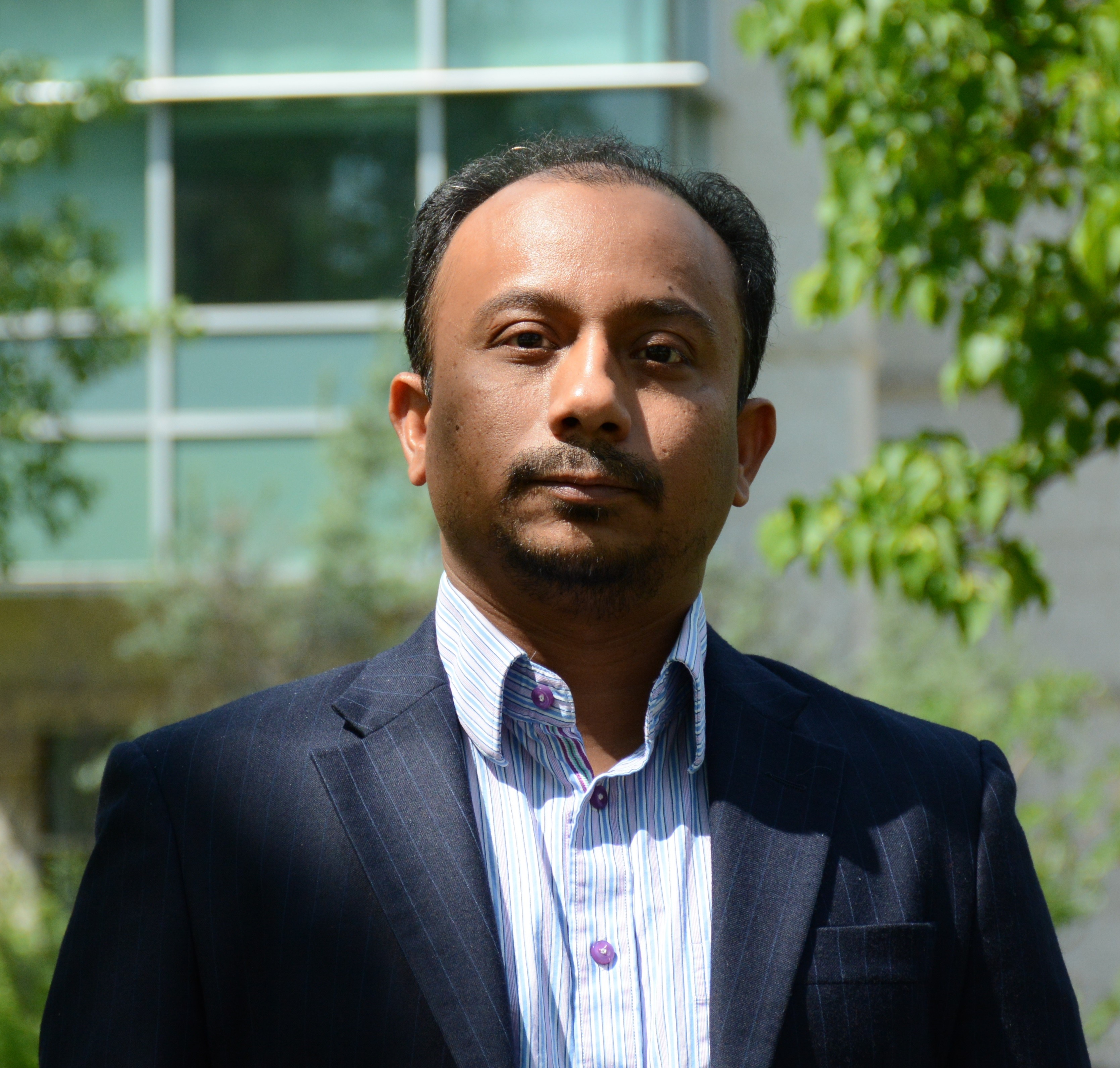
Mohammad Ali Salahuddin is a Research Assistant Professor at the David R. Cheriton School of Computer Science, University of Waterloo , specializing in networking and machine learning. He holds a Ph.D. in Computer Science from Western Michigan University (2014), with prior academic roles at Université du Québec à Montréal and Concordia University. His research spans 5G network slicing, vehicular networks, and secure content delivery systems. Education: Ph.D. (2014, Western Michigan University); M.S. (2003, Western Michigan University); M.S. (2001, SZABIST); B.S. (1999, FAST-NUCES) Dr. Salahuddin's research focuses on 5G/6G network softwarization , autonomous threat mitigation , and machine learning for network management . His work integrates reinforcement learning and federated learning for scalable solutions in SDN/NFV , IoT , and edge computing . Recent studies address data drift in encrypted traffic classification and DDoS detection using outlier exposure-based federated learning . He has received multiple best paper awards at IEEE/IFIP NOMS (2023, 2022), IEEE CNOM (2021), and Kenneth C. Sevcik Outstanding Student Paper Award (ACM SIGMETRICS, 2021). His NSF-funded projects include vehicular cloud resource management and localization techniques. Dr. Salahuddin actively contributes to academic service as Vice-Chair of IEEE KW Section's Communications Society and TPC member for top conferences.
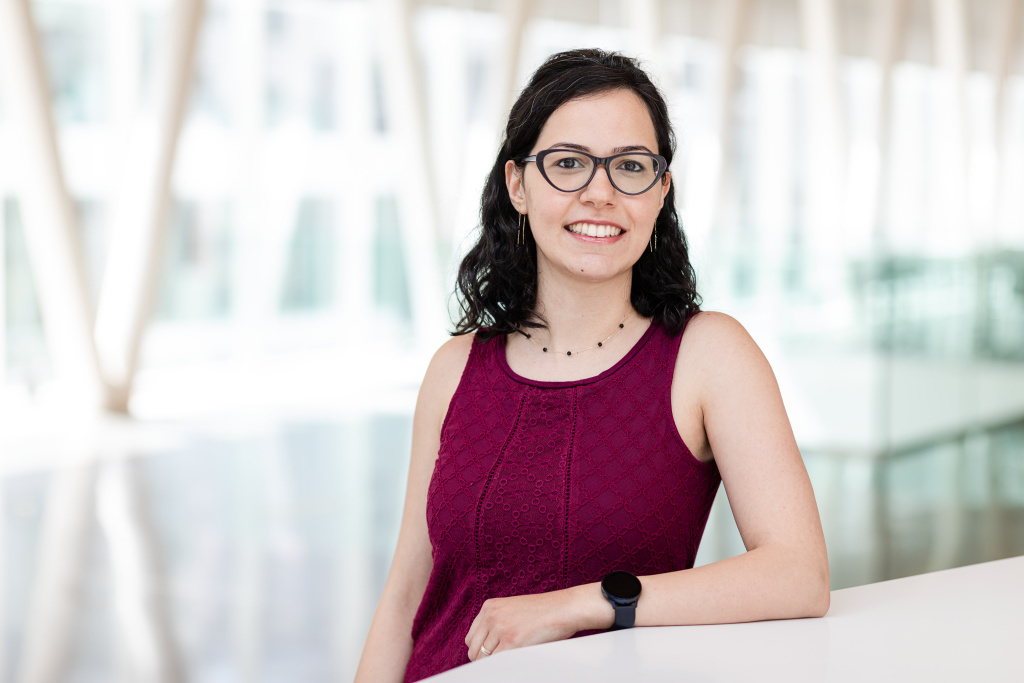
Nashid Shahriar is an Assistant Professor in the Department of Computer Science at the University of Regina, Faculty of Science. His research addresses resource allocation challenges in next-generation networks including 5G, elastic optical networks, cloud infrastructures, and IoT systems. He holds a Ph.D. in Computer Science from the University of Waterloo, an M.Sc. from Bangladesh University of Engineering and Technology (BUET), and a B.Sc. from BUET. His work leverages optimization, machine learning, and AI for network management. Recent publications focus on 5G network slicing, intrusion detection, and NFV security. Research emphasizes practical AI-driven solutions for telecommunications and cloud systems.
Diala Naboulsi is a Professor at the École de technologie supérieure (ÉTS) in the Department of Software Engineering and IT. Her research focuses on mobile networks, wireless systems, and cybersecurity, with a strong emphasis on machine learning applications in network optimization. She holds an M.Eng. from the Lebanese University and M.Sc. and Ph.D. degrees from INSA Lyon. Research Units: Summit Tech Research Chair, LASI Lab, Imagin Lab Expertise: Network virtualization, resource allocation, mobility management, UAV-based computing Her work spans resilience in wireless backhaul networks, energy-efficient frameworks in RAN slicing, and federated learning for privacy-aware traffic forecasting. She has advised numerous doctoral students, including Ahmed Abdelmoaty, Hnin Pann Phyu, and Philippe Lavoie. Key contributions include deep reinforcement learning approaches for network topology optimization and UAV-assisted MEC systems for Industry 5.0. Recent publications highlight advancements in 6G networks, network slicing, and edge computing. Her research aligns with strategic initiatives in sustainable and secure communication systems.
Marco Polverini is an active computer networking researcher with a prolific publication record spanning over a decade, with 59 publications documented from 2012 to 2025. His work primarily focuses on advanced networking technologies including Segment Routing, Software Defined Networking, and Network Function Virtualization. His research interests center around network routing optimization, traffic engineering, and network monitoring. He has made significant contributions to Segment Routing technology, developing novel behaviors for low-latency communication, black hole detection mechanisms, and traffic matrix assessment techniques. His recent work integrates artificial intelligence approaches, particularly reinforcement learning, with traditional networking protocols to create more adaptive and efficient network systems. He has also been exploring the application of Digital Twin technology for network management and optimization. Analysis of his publication trends shows a clear evolution from foundational work on energy-efficient networking and traffic engineering to more recent innovations in Segment Routing, in-band network telemetry, and AI-driven network optimization. His publications consistently appear in top networking venues including IEEE JSAC, IEEE Transactions on Network and Service Management, INFOCOM, and NOMS, demonstrating his standing within the networking research community. Throughout his career, Polverini has maintained strong collaborative relationships, particularly with Antonio Cianfrani (54 joint publications), Marco Listanti (33 publications), and Francesco Giacinto Lavacca (16 publications), suggesting he works within a well-established research group focused on next-generation networking technologies.
Hongxin Hu is a Professor and Associate Chair in the Department of Computer Science and Engineering at the University at Buffalo, State University of New York (SUNY). His research spans security, networking, and machine learning, with publications across top conferences including security (S&P, CCS, USENIX Security, and NDSS), networking (SIGCOMM and NSDI), machine learning (NeurIPS, ICML, and EMNLP), and human-computer interaction (CHI and CSCW). His work has been funded by NSF (SaTC, CNS, IIS, OAC, SOC), USDOT, VMware, Amazon, Google, and Dell. Dr. Hu earned his PhD in Computer Science and Engineering from Arizona State University in 2012. His academic journey has led him to become a prominent researcher in cybersecurity with a strong publication record and significant research impact. Dr. Hu's research interests encompass a wide range of topics at the intersection of security, networking, and artificial intelligence. His work focuses on Emerging Network Technologies and Security (5G/Future-G, NFV, SDN, Edge computing), Machine Learning for Security and Privacy , Security and Privacy in IoT and Cyber-Physical Systems , and AI for Social Good (addressing online abuse, unsafe children's games, and cyberbullying). His interdisciplinary approach has enabled him to tackle complex security challenges through innovative solutions that combine networking expertise with machine learning techniques. His recent publications demonstrate a strong trend toward applying large language models and advanced machine learning techniques to security challenges, particularly in content moderation, vulnerability detection, and privacy protection. The research spans multiple domains including voice assistant security, IoT security, network security, and social media safety, showing a consistent pattern of addressing real-world security problems with cutting-edge technical approaches. IEEE Big Data Security Senior Research Award (2025) ACM SACMAT Test-of-Time Award (2024) NSF CAREER Award (2019) Multiple Best Paper Awards from ACM ASIACCS (2022), ACSAC (2020), IEEE ICC (2020), and ACM SIGCSE (2018) Amazon Faculty Research Award (2022) First Place Award in ACM SIGCOMM 2018 Student Research Competition Dr. Hu has successfully advised multiple PhD students, including Nishant Vishwamitra who joined UT San Antonio as a tenure-track Assistant Professor. His research has been generously funded by major agencies and industry partners. As an active member of the academic community, he serves as Associate Editor for IEEE Transactions on Dependable and Secure Computing and Computers & Security, and has held numerous leadership roles in major security conferences including TPC Co-Chair for ASONAM 2025 and IWSPA 2024/2025. Dr. Hu leads a vibrant research group that has produced significant contributions in network security function virtualization, intrusion detection systems, and privacy-preserving technologies. Current projects include developing LLM-assisted vulnerability detection systems, defenses against jailbreak attacks on large language models, and security mechanisms for emerging networking technologies. His team's work on IoT security, voice assistant applications, and online content moderation has received wide recognition and press coverage.
Lars Dittmann is a Professor at the Department of Electrical and Photonics Engineering at the Technical University of Denmark (DTU), leading the Networks Technology and Service Platforms section. His work bridges advanced networking technologies with real-world applications in healthcare and transportation. Academic Role: Professor, Head of Section University: Technical University of Denmark (DTU) Department: Networks Technology and Service Platforms Research Interests: Professor Dittmann specializes in Software-Defined Networking (SDN) , 5G and IoT technologies , and energy-efficient network design , with a focus on applications in telemedicine and transportation systems . His work integrates machine learning for privacy-preserving traffic analysis and explores optical networks for high-bandwidth scenarios. Scientific Contributions: His recent publications emphasize green cellular networks using SDN/NFV/C-RAN, IoT benchmarking for coverage and mobility, and secure edge architectures for railways. Collaborative projects like the Future Patient telerehabilitation program highlight his interdisciplinary impact. Supervision: He supervises PhD candidates such as Radheshyam Singh, focusing on SDN-based IoT security and 5G network optimization. Labs & Projects: Leads initiatives like EXplorative network PLAnnINg and Broadband Trial Integration , addressing challenges in network reliability , emergency communication , and optical data center scaling .
Dr. Dongmei Zhao is a Professor in the Department of Electrical & Computer Engineering at McMaster University, part of the Faculty of Engineering. She specializes in wireless networking, network resource management, mobile edge computing, mobile computation offloading, and digital twins. Her research clusters focus on Digital & Smart Systems. Dr. Zhao holds a Ph.D. from the University of Waterloo. She teaches courses such as COMPENG 4DK4 (Computer Communication Networks), COMPENG 4DN4 (Advanced Internet Communications), and graduate-level courses like ECE 729 (Resource Management in Wireless Networks). Her research interests span cutting-edge topics including UAV-enabled edge computing, digital twin migration, vehicular networks, and reinforcement learning applications in resource allocation. She actively contributes to advancing 6G networks, security redundancy in autonomous systems, and decentralized manufacturing platforms. Dr. Zhao's recent publications emphasize optimization techniques for dynamic networks, platooning systems, and multi-agent learning frameworks. She has been recognized for her work in vehicular edge computing and digital twin integration, though explicit awards are not listed here. She advises on graduate studies in networking and edge computing, though no specific student names are provided in the text. Her work often intersects with practical challenges in smart infrastructure and autonomous vehicle systems.
Adlen KSENTINI is a Professor at EURECOM's Communication Systems department, specializing in advanced networking technologies. His research focuses on Mobile and Wireless Networks, Software Defined Networking (SDN), Mobile Edge Computing (MEC), Network Function Virtualization (NFV), and Content Delivery Networks (CDN), with an emphasis on performance evaluation and network virtualization. He has contributed to projects like AC3 and 6G-BRICKS, exploring cloud-edge continuum integration and 6G infrastructure. Key research interests include virtualized mobile core networks, carrier cloud systems, and AI-driven network management. He has received Best Paper Awards at IEEE WCNC 2018 and IWCMC 2016 for works on network slicing and LTE modeling accuracy. His work often integrates machine learning for optimization, sustainability, and security in 5G/6G networks. Distinctions: Two Best Paper Awards Labs/Teams: Involved in EU-funded projects like AC3 and 6G-BRICKS Grants: Not explicitly listed, but active in collaborative research initiatives
Professor Ning Wang is a leading academic in communication systems at the University of Surrey's Institute for Communication Systems (ICS), School of Computer Science and Electronic Engineering. He holds a PhD from the University of Surrey (2004) and has expertise in 5G/6G networks, edge computing, and space-terrestrial integration. As a coordinator for the EuroMaster Programme and Communication Networks and Software (CNS) pathway, he leads research in network management, mobile video delivery, and IoT applications. His work has been featured in IEEE ComSoc Technology News three times since 2012. Current leadership roles include 5GIC Work Area 1 leader for content and network context. Research collaborations span global institutions like UCL, ETH Zurich, and industry partners like BT and InterDigital. Notable contributions include SDN-based space-terrestrial network integration (VDPA scheme) and O-RAN automation via federated DRL. Over 130 publications and active participation in standards bodies (IETF, 3GPP) reflect his impact on future network architectures. Educations: BEng in Computing (Changchun University of Science and Technology, 1996) MEng in Electronic Engineering (Nanyang Technological University, 2000) PhD in Electronic Engineering (University of Surrey, 2004) Research Focus: Future Internet design, network intelligence, content-centric networking, and satellite integration. Key projects include EU Horizon Europe SPIRIT (immersive telepresence), ESA TINA (satellite 5G functions), and EPSRC NG-CDI (converged digital infrastructures). His research emphasizes practical solutions like edge-AI for VNF splitting and holographic frame synchronisation. Grants & Projects: Over £20M in grants from EPSRC, EU Horizon, InnovateUK, and Royal Society. Active in EU-funded SAT5G (satellite-terrestrial 5G) and C-DAX (smart grid cybersecurity).
Pablo Serrano Yáñez-Mingot is an Associate Professor at the Telematics Department of Universidad Carlos III de Madrid (UC3M), where he has been since 2002. He holds a Telecommunication Engineering degree and PhD from UC3M (2002 and 2006, respectively). Currently, he serves as Deputy Director of Infrastructure, Sustainability, and Digitalization at the Higher Polytechnic School (EPS). His research focuses on wireless networks, network protocols, and experimental performance evaluation, with over 100 peer-reviewed publications in top journals/conferences like IEEE/ACM Transactions on Networking and IEEE INFOCOM. He has led major projects such as the Hexa-X 6G flagship and Flex5Gware. He is an IEEE Senior Member and has received awards like the UC3M Excellence Award (2021) and Distinguished Member of the INFOCOM TPC (2022). Education: Telecommunication Engineering (UC3M, 2002), PhD in Telematics (UC3M, 2006). Research Interests: Wireless networks, 5G/6G systems, network protocols, energy efficiency, and experimental evaluation of communication systems. Recent Articles Trends : Focus on 5G/6G architectures, network automation, serverless computing, and energy-efficient solutions. Publications highlight advancements in NFV scaling, network slicing, and AI-driven orchestration. Awards : UC3M Excellence Award 2021 (Young Research Excellence) ACM WiNTECH 2016 Best Paper Award Elevated to IEEE Senior Member (2015) Advising & Grants : Supervised over 30 PhD/MSc students. Principal Investigator of projects like AMAZING-6G and iTrust6G. Actively involved in editorial and organizational roles in IEEE conferences (e.g., INFOCOM, WCNC). Labs & Teams : Leads research groups in network protocols, 5G/6G systems, and experimental evaluation. Collaborates with institutions like the University of Rome Tor Vergata and Trinity College Dublin through visiting positions.
Antonio Corradi is a Full Professor of Computer Networks and Infrastructures supporting Cloud and Big Data at the University of Bologna's School of Engineering, within the Department of Computer Science - Science and Engineering. His roles include President of the regional CLUSTER RER for service innovation, President of the Alma Mater FAM Foundation, and Director of the UNIBO High Studies Center in Buenos Aires. He previously served as Director of the DISI department (2018–2021) and International Delegate for Latin America (2014–2018). His research focuses on distributed systems, middleware for pervasive computing, cloud solutions, mobile systems, smart cities, Industry 4.0/5.0, and 5G communication standards. Education: Laurea cum laude in Electrical Engineering (University of Bologna, 1979) and a Master's in Computer Engineering from Cornell University (1981, supported by a Fulbright-Hayes grant). He joined the University of Bologna as a Researcher in 1983 and became Full Professor in 2000. Research interests span distributed/parallel systems, middleware for mobile agent systems, cloud computing, smart city monitoring, and Industry 4.0 protocols. He emphasizes QoS-aware solutions, edge computing, and IoT integration. His work includes designing frameworks for big geospatial data and novel architectures for serverless and fog computing environments. Selected scientific awards include the 1980 'Cavalieri del Lavoro' prize for his thesis. He actively contributes to institutional duties, including the CCIB (Computer Services Centre of the Engineering School) and CINI Bologna University Section (Italian Interuniversity Consortium). In advising and grants: He coordinates PhD programs and has led projects funded by MIUR, CNR, and European initiatives. Notable collaborations include industry grants with Jakala, OTConsulting, ENAV-Sicta, and the Zefiro Consortium. His projects address challenges in energy efficiency, smart manufacturing, and healthcare management during crises. Labs/Teams: Developed platforms like SOMA and REDMAN middleware. Involved in initiatives such as ParticipAct (mobile crowdsensing), COLOMBO (vehicular traffic monitoring), and the Audit4Cloud platform for cloud performance auditing.
Jorge Bernal Bernabe is an Associate Professor at the University of Murcia , affiliated with the Faculty of Informatics and the Department of Information and Communication Engineering . He holds a PhD in Computer Science from the University of Murcia (2015), focusing on 'Authorization and Trust Management in Distributed Systems Based on the Semantic Web.' His research group, Intelligent Systems and Telematics , explores cutting-edge cybersecurity solutions for IoT, 5G/6G networks, and privacy-preserving technologies. He is a key contributor to frameworks like OLYMPUS (privacy-aware identity management) and ARIES (European identity ecosystem). Education : PhD in Computer Science, University of Murcia (2015) Research Interests : His work centers on securing next-generation networks (e.g., 5G/6G), IoT privacy, federated learning applications for intrusion detection, blockchain-based identity systems, and policy-driven security enforcement. He emphasizes privacy-by-design principles and explores challenges in digital sovereignty and decentralized governance. Notable Projects : OLYMPUS: Oblivious identity management system ARIES: Pan-European identity framework ANASTACIA: Security agents for CPS/IoT INSPIRE-5Gplus: Cognitive security for 5G networks Labs/Teams : Active in the Intelligent Systems and Telematics Group , collaborating with industry partners on secure IoT deployments and 5G cybersecurity solutions.
Fahad Ahmad is a Lecturer in the School of Computing within the Faculty of Technology at the University of Portsmouth. He holds affiliations with the Portsmouth AI and Data Science Centre, Centre for Cybercrime and Economic Crime, and Portsmouth Centre for Advanced Materials and Manufacturing. His research focuses on machine learning applications in healthcare, cybersecurity, and quantum computing. He supervises PhD students in topics like quantum machine learning for securing IoT medical devices. Key research areas include: Medical imaging diagnostics using deep learning (e.g., echocardiograms, X-rays) Cybersecurity for financial systems and SDN-NFV networks Quantum key distribution for post-quantum security AI-driven health management systems Recent work emphasizes: Human activity recognition through machine learning Cancer subtype classification using RNA expression data Emotional empathy modeling in intelligent agents His articles span healthcare technology, cybersecurity frameworks, and hybrid AI architectures. He actively contributes to international conferences and journals, with over 60 peer-reviewed publications. Research collaborations include institutions in Pakistan and the UK.
Prof. Georg Carle is a full Professor in Network Architectures and Network Services at the Technical University of Munich (TUM), affiliated with the TUM School of Computation, Information and Technology. He leads research in Internet technology, focusing on future network architectures, security, and real-time communication. Prior roles include positions at the University of Tübingen and Fraunhofer Institute for Open Communication Systems (FOKUS). Education: Electrical Engineering diploma from University of Stuttgart (1992), Master of Science in Digital Systems (Brunel University, London), and PhD in Telematics from University of Karlsruhe (1996). He held scholarships in complex systems and European Union-funded research at Institut Eurécom. Research Interests: Prof. Carle's work spans network security, sensor networks, autonomous systems, and future Internet protocols. His group develops tools like MoonGen (packet generator) and pos (experiment workflow system). Recent focus includes QUIC protocol analysis, network slicing, and reproducible experimentation frameworks. Key Contributions: Award-winning research includes Applied Networking Research Prizes (2017-2018), Best Paper Awards in IMC/PAM, and innovations in network measurement, security, and programmable data planes. His lab explores cutting-edge topics like post-quantum cryptography, low-latency networking, and 6G automation. Recognition: Honors include ACM SIGCOMM Community Contribution Award, IRTF ANRP, and multiple conference best paper accolades. He advises on network infrastructure for industrial IoT, automotive systems, and secure multiparty computation.