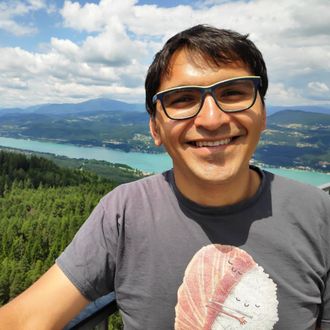
Hamid Eghbal-zadeh is a Postdoctoral Researcher at the Institute of Computational Perception at Johannes Kepler University Linz (JKU). Previously, he worked as a Research Scientist at Meta and held roles at the Institute for Machine Learning at JKU. His research focuses on adversarial machine learning, representation learning, and robust deep learning models. He has made significant contributions to acoustic scene analysis, generative models, and reinforcement learning. Education : PhD in Machine Learning from JKU (2019), defended with distinction. BSc/MSc details not explicitly stated in text. Research Highlights : Developed Mixture Density GANs to address mode collapse in GANs Pioneered receptive-field regularization techniques for audio classification Contributed to top-performing systems in DCASE challenges (2016-2019) Active in reinforcement learning and domain adaptation research Awards/Competitions : Multiple top placements in international challenges (DCASE, MediaEval), outstanding reviewer recognitions (ICML 2022, ICLR 2022). Advising : Supervised 6+ students in topics like acoustic scene classification, generative retrieval, and sound event detection.
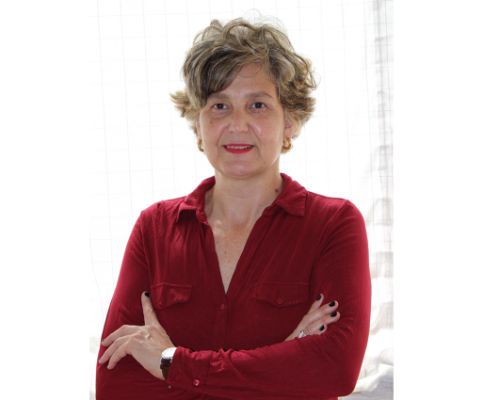
Prof. Ender BULGUN is a Full Professor and Dean of the Faculty of Fine Arts and Design at Izmir University of Economics, leading the Textile and Fashion Design department. She holds a PhD in Textile Engineering from Ege University, with academic roles spanning Assistant Professor (1997), Associate Professor (2004), and Full Professor (2009). Her research focuses on smart textiles, wearable technology, CAD systems, and fashion design innovations. Key projects include developing smart firefighter garments, thermo-controlled clothing, and software for textile production optimization. She has managed national and international projects funded by TÜBİTAK, NATO, and EU initiatives. Her work spans over 50 conference papers and peer-reviewed articles in journals like International Journal of Clothing Science and Technology and Textile Research Journal . As an educator, she teaches courses such as 'Smart Clothing Design and Technologies' and 'Recent Advances in Smart Design Applications'. She has advised numerous graduate theses, including studies on smart glove design for disabled individuals and thermal performance evaluations of firefighter apparel. Her contributions extend to editorial roles in textile journals and jury memberships in international design competitions.
Philipp Erler is a PreDoc Researcher at the Computer Graphics department of Vienna University of Technology . His work focuses on surface reconstruction from point clouds, geometry processing, and deep learning applications in computer graphics. Research Highlights : LidarScout (2025): Direct out-of-core rendering of massive point clouds PPSurf (2024): Patch-based deep learning for surface reconstruction Points2Surf (2020): Implicit surface learning from raw point clouds without normals His research extends into virtual reality, physical simulations, and natural language processing. He has supervised four theses on topics including surface reconstruction optimization and differentiable rendering.
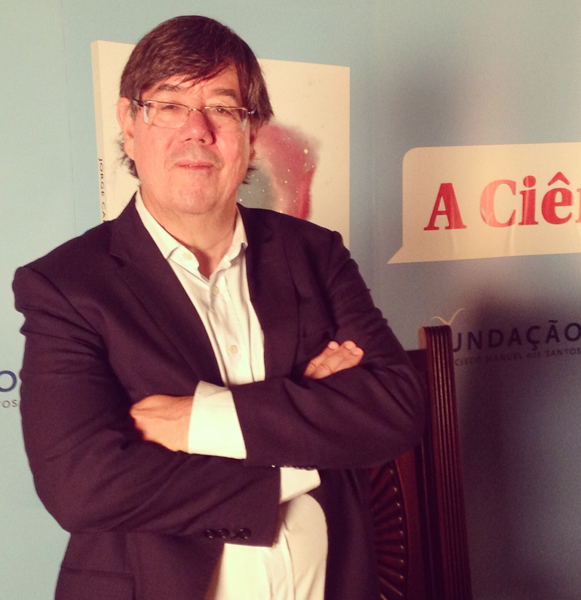
Carlos Fiolhais is a distinguished Full Professor of Physics at the Department of Physics, University of Coimbra, where he has served since achieving this rank in 2000 after progressing through Associate and Assistant Professor positions at the same institution. Born in Lisbon in 1956, he graduated in Physics from the University of Coimbra in 1978 and earned his PhD in Theoretical Physics from Goethe University in Frankfurt/Main, Germany in 1982. His academic career includes sabbatical leaves at Tulane University in New Orleans (1991 and 1997) and professorships in the United States and Brazil. Fiolhais's research interests span three primary areas: Computational Condensed Matter Physics, History of Science, and Physics Education. As founder and director of the Center for Computational Physics at the University of Coimbra, he championed the installation of Portugal's largest computer for scientific computing. His work extends to science communication and public engagement through his direction of the 'Rómulo - Ciência Viva Center of the University of Coimbra' and regular contributions to the national newspaper 'Público.' Analysis of his publication record reveals a diverse scholarly output with significant contributions across multiple domains. His work demonstrates a consistent pattern of bridging theoretical physics with historical context and educational applications. The articles reflect strong interdisciplinary connections between computational methods, historical analysis, and pedagogical innovation, with increasing emphasis on digital approaches to physics education in recent years. Major Awards and Honors: Latin Union Prize for scientific translation (1994) União Latina - JNICT Prize for scientific translation (2005) Gold Globe of Merit and Excellence in Science (SIC TV channel) (2005) Order of Henry the Navigator (2005) Rómulo de Carvalho Prize (University of Évora) (2006) Innovation Prize by Third Millennium Forum (2006) BBVA Prize for the best article in teaching Physics in the Ibero-American space (2012) Innovation Prize Manuel Pinto de Azevedo Júnior (2012) Throughout his career, Fiolhais has demonstrated exceptional leadership in academic administration, having served as Director of the Computer Center of the University of Coimbra, Chairman of the Interdisciplinary Research Institute, Director of the General Library, and member of the Scientific Board of the Foundation for Science and Technology. His supervisory work includes mentoring numerous M.Sc. and Ph.D. students, though specific names aren't documented in the available sources. He has also coordinated multiple research projects and contributed significantly to science policy through his involvement with the Francisco Manuel dos Santos Foundation, where he created the GPS - Global Portuguese Scientists network. Fiolhais has established several notable institutional structures including the Center for Computational Physics, the Rómulo - Ciência Viva Center, and the Integrated Library Service of the University of Coimbra (SIBUC), along with digital repositories 'Estudo Geral' and 'Almamater.' His entrepreneurial spirit is evident in co-founding Coimbra Genomics and maintaining the blog 'De Rerum Natura.'
Dr. Silvia Kober is an Associate Professor at the Institute of Psychology within the Faculty of Natural Sciences at Karl-Franzens-University Graz, Austria. She maintains an active research program focused on neurofeedback, brain-computer interfaces, and cognitive neuroscience applications, with significant contributions to understanding how brain signals can be modulated for cognitive enhancement and rehabilitation purposes. As a member of the university's "Complexity of Life" profile area and the "Brain and behavior" research network, Dr. Kober's research spans multiple interdisciplinary domains: Neurofeedback training methodologies and efficacy assessment EEG and fNIRS applications in cognitive neuroscience Virtual reality integration with neurophysiological monitoring systems Cognitive rehabilitation applications for stroke, dementia, and multiple sclerosis Neural efficiency during cognitive and motor tasks Placebo effects and psychological factors in neurofeedback training Her recent publication trends reveal a strong emphasis on virtual reality applications in neurofeedback, with particular attention to cybersickness mitigation, user experience optimization, and multimodal approaches combining EEG, eye-tracking, and physiological measures. She has made significant methodological contributions to the field through participation in consensus initiatives like the CRED-nf checklist for neurofeedback studies. Dr. Kober has received several prestigious awards recognizing her research contributions: INGE St. Research Prize 2019 (Publication Category) Research funding program "International Communication" of the Austrian Research Foundation (2016, 2017) Top Paper Award at ISPR 2014 (15th International Conference on Presence) 1st Place Women's Advancement Award from NAWI Graz (2014) INGE St. Research Prize 2009 Her research program has secured multiple grants supporting international collaboration and innovative approaches to studying brain function. Dr. Kober's work has significant clinical implications, particularly for neurological rehabilitation, and she has contributed to establishing methodological standards in neurofeedback research that enhance the field's scientific rigor and clinical applicability.
Johannes Kirchmair is a Professor in the Department of Pharmaceutical Sciences at the Faculty of Life Sciences. His research focuses on computational methods in drug discovery, particularly virtual screening, machine learning applications, and understanding drug metabolism. He is actively involved in projects such as the Anti-Infectives Drug Discovery initiative and the AIDD: Advanced Machine Learning for Innovative Drug Discovery program. His work addresses challenges in toxicity prediction, enzyme inhibition, and assay interference detection. Key areas include cytochrome P450 metabolism, small molecule drug design, and natural product analysis. Research interests span virtual screening methodologies, metabolite identification, and computational toxicology. He has contributed to the development of tools like E-GuARD for detecting assay interference and aweSOM for predicting metabolic sites. His collaborations emphasize cross-disciplinary approaches to advance drug discovery and chemical safety. He has delivered talks on computational methods for early drug discovery and assay interference prediction, reflecting his commitment to both academic research and practical applications. Current projects aim to leverage machine learning to tackle antimicrobial resistance and enhance drug development efficiency.
Dr. David Willinger, MSc, is a PostDoc Research Associate at the Department of Psychological Methodology, Karl Landsteiner Private University of Health Sciences. His work bridges cognitive neuroscience, psychological methodology, and digital health technologies. He holds interdisciplinary training in Cognitive Science (University of Vienna) and Medical Informatics (Vienna University of Technology), with formative research experience at the MRI Center of the Medical University of Vienna and the Clinic for Child and Adolescent Psychiatry in Zurich. His research focuses on understanding the neural and cognitive mechanisms underlying psychological processes, particularly in clinical contexts. He specializes in using neuroimaging (fMRI), computational modeling, and digital phenotyping via smartphones and wearables to study mental health, emotion regulation, reading development, and social interaction dynamics. His work aims to translate basic and methodological research into clinically relevant tools for diagnosis and intervention. David Willinger’s recent publications reveal a strong trend in leveraging technology for psychological assessment—such as Bluetooth sensing for social presence, real-time fMRI neurofeedback for emotion regulation, and global biogeophysical datasets for ecological analysis. His research spans developmental neuroscience (reading difficulties in children), affective science (body image and nature exposure), and digital mental health (stress and mood monitoring). Bluetooth-sensed social presence and emotional dynamics (2025) Mechanisms of reading difficulties using fMRI and reinforcement learning models (2025) Real-time fMRI neurofeedback for amygdala modulation (2024) Simulated nature exposure and body image (2024) Resting-state connectivity in adolescent depression (2024) He has collaborated extensively with researchers like Stefan Stieger, Silvia Brem, and Viren Swami. His work has been featured in journals such as iScience , Journal of Neuroscience , Frontiers in Neuroscience , and Body Image , and has received media and academic attention. Dr. Willinger is actively involved in advancing research methodology and teaching, contributing to the development of the Neuroscience and Mental Health PhD program. He emphasizes interdisciplinary perspectives, clinical translation, and methodological rigor in psychological science.
Covadonga Rodrigo San Juan is an Associate Professor in the Department of Languages and Computer Systems at Universidad Nacional de Educación a Distancia (UNED), Spain's National University of Distance Education. She serves as Co-director of the DineLLL (Digital Innovation for iNclusive and Experiential Life Long Learning) research group, leading interdisciplinary work that bridges computer science, psychology, art, and economics. Dr. Rodrigo's research focuses on digital innovation for inclusive education , with particular emphasis on life-long learning technologies, digital accessibility, and the application of emerging technologies to educational contexts. Her work spans digital humanities, accessibility solutions for diverse learners, and the development of innovative educational platforms including the AVIP system for synchronous remote learning and virtual laboratories for scientific education. Her publication record demonstrates consistent contributions to educational technology since 1999, with recent work (2020) on accessible museums using mixed reality and gamification in the MUSACCES project. Her research shows a clear trajectory from technical telecommunications engineering toward interdisciplinary educational innovation, reflecting her stated concern for human wellbeing and bias in AI-based technologies. Dr. Rodrigo has contributed significantly to UNED's adaptation to the European Higher Education Area, developing tools and methodologies that support blended learning approaches while maintaining the university's distance education mission. Her work addresses technological, content, and pedagogical accessibility dimensions to promote equal participation in educational experiences.
Wulf Haubensak is a researcher affiliated with the Dr. Max Perutz Labs and the Department of Biochemistry and Cell Biology . His work spans neuroscience, focusing on the amygdala, behavioral mechanisms, and social interaction dynamics. Research Interests : Amygdala function, active inference modeling, decision-making, self-regulation, neuroimaging, and virtual reality applications in behavioral studies. Scientific Contributions : His recent publications highlight interdisciplinary approaches to understanding brain networks and innovative VR tools for studying animal behavior. In 2023, he received a Best Poster Award for collaborative work.
Prof. Daniel Watzenig is a Full Professor at Graz University of Technology's Faculty of Electrical Engineering and Information Technology, affiliated with the Institute of Visual Computing and the Institute of Electrical Measurement and Sensor Technology. He serves as Dean of Studies for Digital Engineering (DE), overseeing academic programs in this field. His research focuses on autonomous systems, sensor fusion, and advanced control strategies for vehicles, with a strong emphasis on LiDAR technology, path planning algorithms, and real-time environmental perception systems. He holds academic qualifications including Dipl.-Ing. (FH) and Dr.techn. degrees. Research interests span robotics, computer vision, and machine learning applications in transportation systems. His work addresses challenges in autonomous vehicle navigation, sensor reliability under adverse conditions, and safety-critical system validation. Recent publications highlight innovations in thermal-LiDAR fusion, trajectory optimization, and radar-based occupancy grids. He actively contributes to interdisciplinary projects involving co-simulation frameworks and virtual validation methodologies for automated driving functions. Professional roles include leading academic programs in digital engineering and managing research collaborations at TU Graz. His technical expertise is reflected in over 100 publications (2020-2025) covering sensor technology, path planning algorithms, and autonomous system validation. Key labs/teams associated include the Institute of Visual Computing's autonomous systems group and the Electrical Measurement Institute's sensor innovation team.
Misrahi Micheline is a Professor Exceptional Class at the University Paris Saclay, leading the Genetics of Metabolic and Reproductive Diseases Unit at Bicêtre Hospital. She serves as a National Referent for Genetic Infertility and Primary Ovarian Insufficiency (POI) under the French Ministry of Health. Her roles include heading research units focused on reproductive and metabolic diseases, and she has held directorships in INSERM (French NIH) and university research programs. Education: She earned her PhD in Biochemistry and Molecular Biology from Paris VI (1989) and a medical degree from Paris V (1985). Her research focuses on sex steroid receptors, thyroid endocrinology, and genetic defects underlying infertility and POI. She pioneered studies on the human progesterone receptor and TSH receptor, contributing foundational knowledge in reproductive endocrinology. Research Interests: Her work spans molecular genetics of reproductive disorders, personalized medicine, and translational applications of genetic findings. Key areas include identifying genetic causes of POI and infertility, with emphasis on receptor dysfunction and therapeutic targets. She leads international collaborations, such as a European Network on POI (9 countries). Publications: Her work highlights genetic insights into POI, BRCA2’s role in fertility, and LH receptor mutations. These studies emphasize personalized medicine and genetic counseling implications. Recent trends focus on NGS applications in clinical practice and cancer-risk correlations in genetic infertility. Awards: Elected to European Academy of Sciences (2022), Jean Marie Lehn Prize (2022), INSERM Scientific Council Member (2008–2012), and multiple doctoral supervision awards. Leadership: Editor-in-Chief of International Journal of Molecular Science (2018–2021), Head of ESHRE POI Guideline Group (2022), and advisory roles at global institutions like the Virtual Academy of Genetics. Labs & Teams: Leads the Molecular Genetics Unit at Bicêtre Hospital and coordinates a multidisciplinary European initiative on POI. Her lab integrates clinical genetics, endocrinology, and bioinformatics to advance fertility treatments and diagnostic strategies.
Matthias Neumann is an Assistant Professor at the Institute of Statistics, Graz University of Technology . He completed his PhD in 2020 at Ulm University under Prof. Volker Schmidt, earning the PhD prize of Ulm University . His research focuses on stochastic 3D modeling and statistical analysis of micro- and nanostructures for functional materials, including battery electrodes , fuel cells , and paper-based materials . He has received start-up funding from ProTrainU (2020-2022) and served as principal investigator in the POLiS Cluster of Excellence (2022-2023). Research Interests: His work integrates mathematical morphology , machine learning , and spatial statistics to develop methods for microstructure quantification , estimation of geometrical descriptors (e.g., tortuosity, constrictivity), and data-driven models linking morphology to effective physical properties . He utilizes random fields , point processes , and copulas for virtual microstructure generation and parameter estimation. Teaching: He lectures on Applied Statistics , Statistical Modeling , and Mathematical Statistics at Graz University of Technology, with prior teaching experience at Ulm University in Multivariate Stochastic Modeling , Point Processes , and Spatial Statistics . Scientific Achievements: PhD prize of Ulm University (2020) ProTrainU start-up funding (2020-2022) POLiS Cluster of Excellence grant (2022-2023) Publications: His 15 most recent articles (2023-2025) emphasize machine learning techniques for microstructure segmentation , stochastic 3D modeling of nanoporous materials , and data-driven quantification of transport-property relationships . Key topics include random forests , neural networks , and R-vine copulas applied to fuel cells , sodium-ion batteries , and polymer electrolytes .