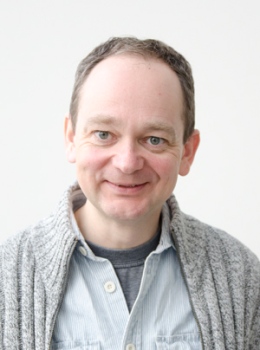
Pär Strand is a Professor at Chalmers University of Technology, affiliated with the Department of Astronomy and Plasma Physics. His research focuses on transport in fusion plasmas , particularly through analysis of experiments at JET and development of simulation tools for ITER and other tokamak facilities. A key contributor to EU projects, he directs the Chalmers e-Science Centre, emphasizing data-driven methodologies and large-scale simulation technologies. Expertise: Fusion plasma dynamics, electromagnetic field theory, integrated modeling frameworks Projects: Code development for ITER/JET, FAIR data principles in fusion research, turbulence transport simulations Research Trends: Recent publications highlight advancements in: Tokamak power exhaust solutions (divertor shaping, neutral baffling) Machine learning applications for pedestal dynamics and disruption prediction High-order solvers for plasma transport equations Validation of D-T fusion power predictions against JET experiments
Simone Ferlin is an Adjunct Senior Lecturer at Karlstad University and a Senior Performance Engineer. She holds a PhD in Computer Science from Simula Research Lab and Universitetet i Oslo (2017), focusing on robustness in multipath transport protocols like MPTCP. Her research spans network performance, security, and congestion control in mobile/5G networks and the Internet. She collaborates actively with academia and industry, co-supervising students in areas such as edge computing, container orchestration, and distributed systems. Affiliations: Department of Informatics, Karlstad University; Red Hat Research; Ericsson R&D. Education: PhD (2017), Simula/UiO; Master’s and Undergraduate studies emphasized networking and electronics. Her work includes projects like AIDA (AI-driven edge networking) and DRIVE (latency-sensitive mobile services). She has published over 50 papers on topics like QUIC, eBPF, and containerized microservices. Awards include the Best Paper at IEEE ICIN 2021 and ANRP 2025 Prize. Teaching responsibilities include Future Internet Design and Service Quality . Advising spans 15+ students across institutions like TU Berlin, KTH, and Unifesp. She chairs conferences (e.g., ACM SIGCOMM 2025) and serves on editorial boards (IEEE Communications Magazine). Key interests: network observability, low-latency protocols, and sustainability in networking.
Mathias Ekstedt is a Professor of Industrial Information and Control Systems at KTH Royal Institute of Technology in Stockholm, Sweden. Affiliated with the Software Systems Architecture and Security (SSAS) research group under the Division of Network and Systems Engineering in the Department of Computer Science, School of Electrical Engineering and Computer Science (EECS). He holds a Ph.D. (2004) and M.Sc. (1999) from KTH. Co-founder of foreseeti (acquired by Google in 2022) Director of KTH's Master Programme in Cybersecurity Member of the Digital Futures research center's Trust Working Group Affiliated with Center for Cyber Defense and Information Security (CDIS) Ekstedt's research focuses on information security and cybersecurity integrated with software/systems architecture modeling and analysis . His work emphasizes probabilistic attack/defense graphs for system-of-systems security evaluation, particularly in SCADA and Industrial Control Systems within power infrastructure. He has developed the Meta Attack Language (MAL) and collaborated extensively with the power industry. Recent research trends (2022-2025) include: Threat modeling languages for ICT and power systems Probabilistic attack graph applications in energy flexibility markets and smart cities Software Bill of Materials (SBOM) challenges in Java ecosystems Dynamic attack graph generation and lazy evaluation techniques Cyber-physical security for low-voltage grids and substation automation Ekstedt supervises 17 Ph.D. students (11 as main supervisor, 6 as co-supervisor) and has mentored numerous postdocs. He leads major projects like the SSF project CHAINS (software supply chain security) and coordinates initiatives within SweGRIDS , HONOR , and SOCCRATES .
Seyedsaeed Razavikia is a Ph.D. candidate at the KTH Royal Institute of Technology , affiliated with the School of Electrical Engineering and Computer Science and the Division of Network and Systems Engineering . His work is supervised by Carlo Fischione , with co-supervision by Mairton Barros , and funded by the WASP project . B.Sc. and M.Sc. in Electrical Engineering from Iran University of Science and Technology and Sharif University of Technology , respectively. Visiting researcher at Imperial College London with Deniz Gündüz in the Information Processing and Communications Lab . Research interests span machine learning over networks , optimization , statistical signal processing , and communication theory . His work focuses on over-the-air computation , federated learning , and low-rank matrix recovery . Publications highlight advancements in digital communication , networked machine learning , and signal processing , with applications in massive connectivity and blind demixing . Awards : IEEE Sweden VT-COM-IT Best Student Journal Paper Award 2024 IEEE Sweden VT-COM-IT Top-5 Student Conference Paper Award 2024 Hans Werthén Foundation Visiting Abroad Scholarship Wallenberg AI, Autonomous Systems and Software Program Ph.D. Admission Collaborations include institutions like Imperial College London and Ericsson Research , with contributions to patents on digital channel computation .
Luis Velez Quintero is an Assistant Professor at Stockholm University within the Department of Computer and Systems Sciences (DSV) . He is affiliated with the Data Science Research Group and the Stockholm Technology & Interaction Research (STIR) group, focusing on Human–Computer Interaction. His research spans adaptive immersive systems, affective computing, and physiological signal analysis in extended reality (XR) environments. Education & Background : Holds a PhD in Computer and Systems Sciences from Stockholm University (2023), MSc in Health Informatics from Karolinska Institutet (2019), and BSc in Electronics Engineering from the National University of Colombia (2015). He has led the startup PortalSense since 2018, developing VR solutions for real estate visualization. Research Interests : Combines data science and ML with XR technologies to create context-aware systems for healthcare, education, and professional training. Key themes include: Adaptive VR/AR systems using real-time physiological and behavioral signals Biosignal integration for personalized user experiences Immersive technologies for cognitive assessment and skill development Publications : Over 20 peer-reviewed articles, including work on affective databases (AVDOS-VR), biosignal frameworks (Excite-O-Meter), and XR applications in cybersecurity education. Recent efforts explore third-person locomotion in VR and early-stage Alzheimer’s detection via spatial navigation tasks. Awards & Grants : Wallenberg Foundation Grant (2023-2025): Analyzing non-verbal communication in psychotherapy Swedish Institute Scholarship (2017-2019): Fully funded Master’s and PhD studies Seed funding for PortalSense from Fondo Emprender SENA Colombia (2022-2023) Advising & Projects : Lead researcher in projects like AVDOS-VR and CS:NO . Co-designed the Excite-O-Meter open-source plugin for real-time physiological analysis in VR. Active in industry collaborations for scalable health interventions and immersive training systems. Labs & Teams : Collaborates with multidisciplinary teams at STIR and DSV, advancing human-centered AI and adaptive XR technologies.
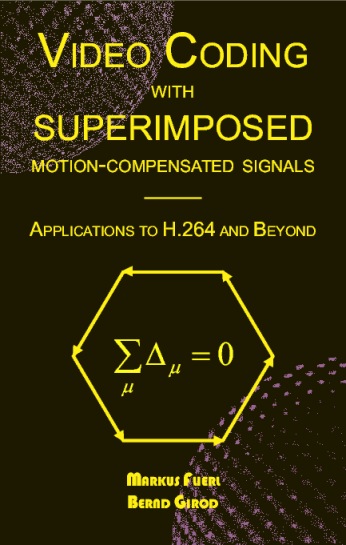
Markus H. Flierl is an Associate Professor at the School of Electrical Engineering and Computer Science, KTH Royal Institute of Technology in Stockholm. He holds a PhD in Engineering from Friedrich Alexander University (2003). His career includes senior research roles at École Polytechnique Fédérale de Lausanne (2003-2005), leadership of the Max Planck Center for Visual Computing and Communication (2005-2008), and a Visiting Assistant Professorship at Stanford University (2000-2002). He has served as Program Director of the EIT Digital Master School’s 'Visual Computing and Communication' program and as Associate Editor for the IEEE Transactions on Circuits and Systems for Video Technology. Education: PhD in Engineering, Friedrich Alexander University, 2003 Studies at Friedrich Alexander University (1999-2002), EPF Lausanne (2003-2005), and Stanford University (2005-2008) Research Interests: Focused on visual computing, machine learning, and information theory. Key areas include distributed coding of dynamic scenes, multiview video coding, motion-compensated transforms, and applications in video compression and multimedia systems. His work explores efficient signal processing techniques for video and 3D visual search, with recent contributions in drone-based environmental monitoring and adversarial training methods. Awards: SPIE VCIP Young Investigator Award (2007) Teaching & Grants: Teaches courses on image/video processing, information theory, and multimedia systems. His research is supported by Ericsson, the Swedish Research Council, the European Commission, and KTH’s Digitalization Platform. He advises PhD and master’s students in visual computing and communication. Labs & Teams: Leads the Visual Computing and Communication research group at KTH, collaborating with industry partners like Ericsson and Qamcom. Former members include researchers now at Tobii AB and the University of Iceland.
James Gross is a Professor at the School of Electrical Engineering and Computer Science at KTH Royal Institute of Technology, Stockholm. He leads research in mobile systems and networks, with a focus on 5G/6G, edge computing, and performance evaluation. He is Associate Director of KTH's Digital Futures center and a board member of the Innovative Centre for Embedded Systems. Previously, he directed the ACCESS Linnaeus Centre (2016–2019) and was Assistant Professor at RWTH Aachen University. PhD, TU Berlin (2006) Studies: TU Berlin, UC San Diego His research lies at the intersection of wireless networking, edge computing, and mathematical performance modeling. Key areas include ultra-reliable low-latency communications (URLLC), age-of-information, network calculus, and resource allocation. He applies these to 5G/6G, cyber-physical systems, and industrial IoT. His work combines theoretical modeling with real-world implementation and standardization impact. The recent publications highlight a strong focus on deterministic and reliable communications for future networks. Topics include hierarchical inference at the edge, age-of-information optimization, finite blocklength coding, and integration of TSN with wireless systems. There is a clear trend towards AI/ML for resource management and semantic communications, reflecting the evolution of intelligent edge networks. Best Paper Award, ACM MSWiM 2015 Best Demo Paper Award, IEEE WoWMoM 2015 Best Paper Award, IEEE WoWMoM 2009 Best Paper Award, European Wireless 2009 ITG/KuVS Dissertation Award, 2007 James Gross has supervised PhD students such as Samie Mostafavi and advises numerous master's projects. His research has been funded by national science foundations in Germany and Sweden, the ICT TNG SRA, Linnaeus ACCESS Centre, DFG-funded UMIC Centre, German Ministry of Science, and various industry partners. His work has led to patents and influenced wireless standards. He is involved in initiatives like the TECoSA project on trustworthy edge computing and organizes summer schools on Edge AI and 6G. His lab conducts experimental research on edge computing testbeds (e.g., Ainur, ExPECA) and wireless performance evaluation.
Anna Lukina is an Assistant Professor in the Department of Intelligent Systems at Delft University of Technology's Faculty of Electrical Engineering, Mathematics and Computer Science. She leads the Sequential Uncertainty Monitoring and Interpretability (SUMI) Lab, focusing on improving safety and interpretability of artificial intelligence through formal methods with applications in engineering, transportation, health, and finance. Her research spans the critical intersection of formal verification and machine learning, particularly in developing techniques for runtime monitoring of neural networks, safety verification of decision-tree policies, and creating verifiable reinforcement learning systems. She has established strong international collaborations with researchers across the US, Europe, Japan, and Australia. Lukina's recent publications (2021-2025) demonstrate consistent output in top AI venues including AAAI, NeurIPS, and IJCAI, with a clear trajectory toward increasingly sophisticated verification techniques for complex AI systems. Her work shows strong emphasis on practical applications while maintaining theoretical rigor, particularly in creating methods that provide formal guarantees for black-box AI systems. As part of her service commitment, she leads initiatives promoting junior computer scientists from underrepresented communities, reflecting her dedication to diversity in the field as highlighted in her DerStandard interview "Warum so wenige Frauen Den Code knacken wollen" and university magazine Delta. She currently supervises multiple PhD researchers including Sterre Lutz, Daniël Vos, Aaron Berger, and Johannes Koch, along with numerous successful MSc graduates who have completed theses on topics ranging from anomaly detection to genetic programming for explainable AI.
Saghi Hajisharif is a Researcher at Linköping University's Department of Science and Technology (ITN), affiliated with the Media and Information Technology (MIT) group. She holds a PhD in Visualization and Media Technology from Linköping University (2020), an MSc in Advanced Computer Graphics (2013), and a BSc in Computer Science from Amirkabir University (2009). Her work focuses on computational imaging, visual machine learning, HDR imaging, and light field technologies. She is a core member of the Computer Graphics and Image Processing research group. Research interests include sparse representation learning for computational imaging, synthetic data ethics, BRDF material modeling, and algorithmic fairness in AI. Her contributions span interdisciplinary projects recognized in IVA’s 100 List (2024), highlighting societal impact potential. She has co-authored influential studies on topics such as FROST-BRDF sampling techniques and metadata standards for GenAI synthetic data. Her articles reflect expertise in computer vision, graphics, and AI ethics, with key contributions to light field imaging, GAN fairness, and material modeling surveys. The IVA’s 100 List recognition underscores her innovative work’s societal relevance. She collaborates across disciplines to advance imaging technologies and ethical AI practices.
Christoph Kessler is a Professor and Head of the Software and Systems (SAS) division at the Department of Computer and Information Science (IDA), Linköping University, Sweden. He leads the Programming Environment Laboratory’s research group focusing on compiler technology, parallel computing, and heterogeneous systems. His work includes the development of tools like OPTIMIST, PARAMAT, and SkePU, and he has contributed over 100 publications in journals and conferences. He holds a PhD from the University of Saarbrücken and a Habilitation from the University of Trier. Research interests span parallel programming, compiler optimization, and energy-efficient scheduling for heterogeneous systems. He has secured a 30M SEK grant from SSF for the ASTECC project, advancing adaptive software for edge-cloud computing. Notable contributions include frameworks for GPU-based systems and methodologies for optimizing resource allocation on many-core architectures. His team’s work emphasizes practical applications in high-performance computing, including tools for course management (StASy) and energy-aware scheduling algorithms. The SAS division, under his leadership, focuses on software engineering and computer systems research with strong industry collaboration.
Martin Garwicz is a Professor of Neurophysiology and Course Director at Lund University, serving as Centre Director of the Neuronano Research Center (NRC) and the Birgit Rausing Centre for Medical Humanities (BRCMH). His research focuses on cerebellar information processing, human evolution, and medical education. He has contributed to understanding developmental milestones like walking onset in mammals and the impact of carnivory on human evolution. His work intersects neuroscience, evolutionary biology, and healthcare education, emphasizing evidence-based practices. Key affiliations include the NRC and BRCMH, where he leads interdisciplinary projects on topics like existential resilience and healthscapes. Garwicz has organized major events like Neuroscience Day 2025 and contributed to initiatives promoting STEM education. His research spans over 65 publications, with recent work addressing medical student training in evidence-based medicine and cerebellar microcircuit dynamics. He coordinates projects such as 'Evolutionary Roots of Human Development' (2008–present) and 'ERiCi: Existential Resilience,' blending scientific and humanities perspectives. Garwicz’s activities include invited lectures on medical humanities and public talks on topics like digital immortality.
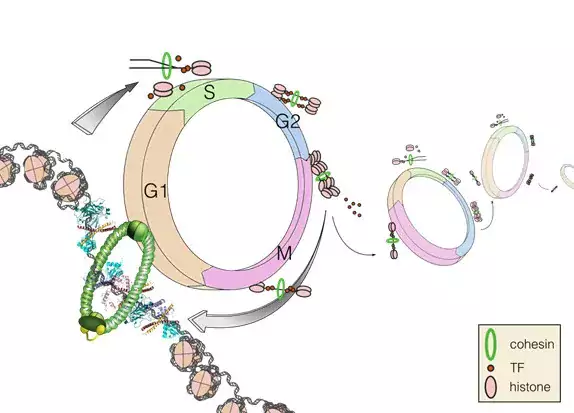
Jussi Taipale is a Professor of Medical Systems Biology at Karolinska Institutet and holds professorships at University of Helsinki. His research focuses on transcription factor binding mechanisms , cancer genomics , and gene regulatory networks . The interdisciplinary Taipale Lab operates across three international locations: Wellcome Sanger Institute (UK), Karolinska Institutet (Sweden), and University of Helsinki (Finland), with over 20 members including senior scientists, postdoctoral fellows, and graduate students. Ph.D., University of Helsinki (1996) Postdoctoral training: University of Helsinki, Johns Hopkins University Research spans transcription factor cooperativity , epigenetic regulation , chromatin accessibility , and noncoding mutation analysis . Key methodologies include HT-SELEX , CUT&RUN , ATI assays , and CRISPR-based functional genomics . The lab has significantly advanced understanding of Myc-driven oncogenesis , TF-nucleosome interactions , and dinucleotide specificity mechanisms . Notable discoveries include chromatin context-dependent enhancers , water-mediated DNA recognition , and novel composite transcription factor motifs . The group maintains active collaborations across Europe and has trained numerous alumni now leading academic and industry positions worldwide.
Garrelt Mellema is a Professor in the Department of Astronomy at Stockholm University, specializing in computational astrophysics and cosmology. His research focuses on the Epoch of Reionization, the period when the first stars and galaxies formed approximately 13 billion years ago. He leads work in developing computational tools for astrophysical research across various domains from solar physics to cosmology. Professor Mellema's primary research interest centers on the Epoch of Reionization and Cosmic Dawn, particularly studying the 21-cm signal from neutral hydrogen. His work employs advanced computational methods including radiative transfer simulations (C2-Ray, pyC2Ray), machine learning techniques, and analysis of observational data from radio telescopes like LOFAR and the future SKA. His research group develops computational tools for studying cosmic reionization, the formation of the first structures, and the evolution of the intergalactic medium. The analysis of his recent publications reveals a strong focus on extracting the faint 21-cm signal from observational data using innovative techniques including neural networks and advanced statistical methods. His work bridges theoretical modeling with observational constraints, particularly from LOFAR observations, to understand the physical conditions during the cosmic dawn and epoch of reionization. Current research trends show increasing integration of machine learning with traditional astrophysical methods to overcome systematic challenges in 21-cm cosmology. As leader of the Computational Astrophysics Group at Stockholm University, Professor Mellema oversees development of simulation tools used by the international community studying cosmic reionization. His work on the C2-Ray radiative transfer code has become a standard tool in the field, with GPU-accelerated versions enabling more detailed simulations of the complex processes during the formation of the first luminous objects in the universe.
Yuan Yao serves as an Assistant Professor in the Department of Information Technology at Uppsala University, Sweden. His academic role spans teaching and research within the Computer Systems division, focusing on cutting-edge computer architecture and parallel computing systems. He maintains active collaborations across international institutions, particularly in energy-efficient hardware design and emerging computing paradigms. His educational journey includes: B.S. in Micro-electronics from Northwestern Polytechnical University, China (2009) M.S. in System-on-Chip Design from KTH Royal Institute of Technology, Sweden (2014) Ph.D. in Electrical Engineering and Computer Science from KTH Royal Institute of Technology (2019) Yao's research centers on power and thermal management for chip multi-processors, Network-on-Chips (NoCs), and GPUs. He pioneers hardware/software co-design for high-performance computing, coherency mechanisms for emerging memory technologies, and performance analysis of on-chip networks. Recent work expands into neural network acceleration and battery-less Internet of Things architectures, reflecting a trajectory toward energy-constrained specialized systems. His methodology integrates formal modeling with practical implementation for real-world impact. Publication trends reveal consistent innovation in energy efficiency across parallel architectures. From foundational DVFS techniques for NoCs (2016-2018) to recent breakthroughs in battery-less IoT (2023-2024), his work demonstrates evolutionary progression toward novel computing domains. Key thematic threads include thermal-aware optimization, memory consistency protocols, and hardware acceleration for AI workloads, with applications spanning data centers to embedded systems. Scientific recognition includes: Best paper candidate at IEEE International Symposium on High Performance Computer Architecture (HPCA) 2018 for in-network packet generation research Yao actively supervises graduate researchers and leads collaborative projects in computer architecture. His grant portfolio supports work on battery-less IoT systems and neural network accelerators, though specific funding details aren't publicly enumerated. Current projects emphasize sustainable computing through novel architectures for energy-harvesting environments. He operates within Uppsala University's Computer Systems division, contributing to research groups focused on hardware acceleration, embedded systems, and networked architectures. His lab environment fosters interdisciplinary work bridging computer architecture, energy harvesting, and machine learning for next-generation computing platforms.
Professor Palle Dahlstedt is affiliated with the University of Gothenburg's Interaction Design department. His work bridges music technology, live coding, and interdisciplinary performance. He specializes in gestural interactions, algorithmic creativity, and systems for collaborative improvisation. Key projects include the Bucket System, OtoKin, and research on live coding frameworks. Research interests focus on creative technologies in music and performance, with emphasis on real-time systems, human-computer interaction, and artistic collaboration. Dahlstedt has published extensively in venues like NIME, ICLC, and Evolutionary Intelligence, addressing topics ranging from hybrid piano design to generative storytelling. Notable contributions include the Biosphere Code Manifesto (2015), exploring algorithms in environmental contexts, and the Electroacoustic Modular Ecosystem (2020). His work often involves cross-disciplinary collaborations with dancers, musicians, and technologists. Performance highlights include jury-selected NIME performances (2015) and collaborations with artists like Gino Robair and Tim Perkis. Dahlstedt actively participates in international festivals and conferences, advancing the field of computational creativity and artistic research.