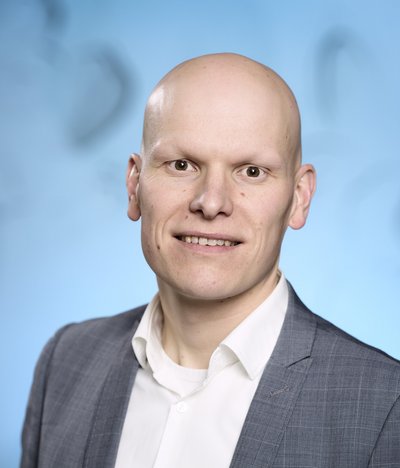
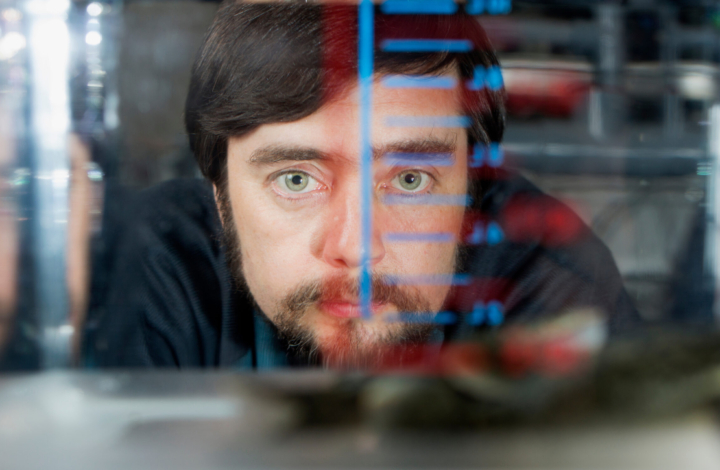
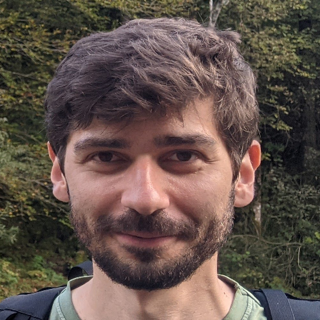
Massimo Mischi is a Full Professor at the Faculty of Electrical Engineering of the Eindhoven University of Technology (TU/e) and chairs the Signal Processing Systems (SPS) Division , the largest division at TU/e with over 250 researchers. He founded the Biomedical Diagnostics (BM/d) Lab in 2012, which now includes 180 researchers and clinical/industrial advisors, focusing on biomedical signal processing for diagnostics and monitoring.
Thomas Bäck is a Professor at the Leiden Institute of Advanced Computer Science (LIACS) , Leiden University , Netherlands, and a member of the interdisciplinary programme Society, Artificial Intelligence and Life Sciences (SAILS) . His academic career spans roles at Leiden University (1996–present) and leadership positions at the Center for Applied Systems Analysis in Dortmund (1994–2000). Education : Diplom-Informatiker (Computer Science), Technische Universität Dortmund (1990) Dr. rer. nat. (Computer Science), Technische Universität Dortmund (1994) Research Interests : Dr. Bäck specializes in evolutionary computation , machine learning , and their applications in sustainable smart industry and healthcare . Recent work focuses on integrating large language models (LLMs) and quantum computing into optimization frameworks, with projects like CIMPLO (predictive maintenance), ECOLE (experience-based optimization), and SAPPAO (airline operations optimization). Scientific Contributions : His 526+ publications cover evolutionary algorithms, quantum optimization, and LLM-driven design, with recent trends including: Quantum computing (e.g., quantum approximate optimization, quantum advantage challenges) LLM integration (e.g., hyperparameter tuning, mutation control, code evolution graphs) Healthcare and industry (e.g., predictive maintenance, anomaly detection, melt quality prediction) Algorithm benchmarking (e.g., IOHprofiler, MA-BBOB, explainable benchmarking) Scientific Awards : IEEE Fellow (2022) Royal Netherlands Academy of Arts and Sciences (KNAW) member (2021) Academia Europaea member (2022) IEEE Computational Intelligence Society Evolutionary Computation Pioneer Award (2015) Fellow, International Society of Genetic and Evolutionary Computation (2003) Best Ph.D. thesis award, German Society of Computer Science (GI) (1995) Advising and Grants : He supervises Ph.D. candidates in evolutionary computation and machine learning and has secured 7 major grants from organizations like the Dutch Research Council , European Commission , and The Research Council of Norway . His editorial roles include Editor-in-Chief of the Evolutionary Computation Journal and associate editorships in leading AI journals.
Maarten Hornikx is a Full Professor in Building Acoustics at the Department of the Built Environment , Eindhoven University of Technology. He serves as Vice-Dean of the department, leads the Building Acoustics Chair of Unit Building Physics and Services (BPS), and coordinates the Science of Sound and Music course series since 2013. His research focuses on computational modeling of sound propagation in built environments, with applications in mixed reality platforms and numerical analysis of outdoor/indoor propagation effects like vegetation and meteorological influences. Education : PhD in Applied Acoustics (Chalmers University of Technology, 2009); MSc in Architecture, Building and Planning (2004) Hornikx promotes open research software in acoustics and has received multiple grants, including Marie Curie Individual and Career Integration Grants. His recent publications explore AI-driven diffusion equation modeling, acoustic absorber optimization, and advanced numerical methods like the discontinuous Galerkin technique. He has held international leadership roles, including chairing the Computational Acoustics Technical Committee of the European Acoustics Association and serving as Associate Editor for Acta Acustica . Scientific Awards : Marie Curie Fellowship (2009-2011); Marie Curie Career Integration Grant (2012); 4TU.Built Environment Center Scientific Director (2020-2021); eScience Center Fellow (2022) As a research leader, Hornikx guided the H2020-ITN Acoutect project and conducted sabbaticals at Aalto University, Stockholm University (2018), and Politecnico Torino (2022). His group emphasizes computational acoustics and open-source tools to enhance reproducibility and collaboration.
Lisandra (Lia) Costiner is an Assistant Professor in the History of Art (Digital Art History) at Utrecht University's Faculty of Humanities. She specializes in late-medieval and early-modern visual culture through digital methodologies. Trained at University of Oxford (MSt, PhD), Harvard University (BA), and MIT Postdoctoral experience at Villa I Tatti (Florence) and EPFL (Switzerland) Founded international (En)coding Heritage Network and co-leads Oxford X-Reality Hub Her research combines computational analysis of paintings, manuscripts, and artifacts with mixed reality applications. Current projects include two Netherlands eScience Center-funded initiatives. Scientific Awards & Grants: Swiss Government Excellence Scholarship Delmas Foundation Grant Renaissance Society of America Support NWO Open Competition XS Funding
National Research Institute for Mathematics and Computer ScienceNetherlands
Prof. Sander Bohte is a part-time full professor of Computational Neuroscience at the University of Amsterdam (Swammerdam Institute of Life Sciences) and an honorary full professor of Bio-inspired Neural Networks at the University of Groningen. He serves as a Scientific Staff Member and Group Leader in the Machine Learning department at CWI, Amsterdam. His work bridges computational neuroscience and machine learning with a focus on continuous-time information processing. Key research interests include: Spiking Neural Networks with predictive coding and multi-compartment models Biologically Plausible Learning in recurrent and deep architectures Working Memory modeling via reinforcement learning Neuromorphic Computing for real-time systems and GPU acceleration His recent publications highlight trends in neural adaptation , predictive coding , and SNN hardware-software co-design . Awards include the Veni Innovational Research Grant (2004) and ERCIM grant (2013) . He actively supervises MSc theses and leads grants like the NWO KIC project 'Selfhealing Neuromorphic Systems' (2024).
Ivana Nikoloska is an Assistant Professor at the Department of Electrical Engineering, Eindhoven University of Technology (TU/e). She is affiliated with the Center for Quantum Materials and Technology Eindhoven and BIASlab (Bayesian Intelligence and Stochastic Agents Lab). Her academic career includes prior roles as a Research Associate at King’s College London and a Visiting Researcher at Aalborg University. PhD: Monash University, Australia (2023) MSc & Dipl.-Ing.: University of Ss. Cyril and Methodius, North Macedonia Research Interests span foundational and applied machine learning, quantum computing, and information/communication engineering. Her work focuses on integrating Bayesian inference, variational methods, and quantum technologies for tasks like signal processing, channel estimation, and power control optimization. Quantum Machine Learning Bayesian Simulation-Based Inference Meta-learning for Wireless Systems Hybrid Quantum-Classical Architectures Stochastic Signal Processing Quantum Sensing & Metrology Notable Trends in Publications include quantum recurrent neural networks with adaptive gating, Bayesian frameworks for quantum sensing, and meta-learning applications in communication systems. She explores variational inference for planning and robust algorithms for channel estimation under non-ideal conditions.
Andrea Continella is an Associate Professor at the Faculty of Electrical Engineering, Mathematics and Computer Science of the University of Twente, where he contributes to the International Secure Systems Lab (iSecLab). His research focuses on systems security, particularly embedded firmware security, Android app security, malware detection, and program analysis techniques for vulnerability discovery. Ph.D. in Computer Science and Engineering, Politecnico di Milano (cum laude) Postdoctoral Researcher, Computer Science Department, UC Santa Barbara Visiting Researcher, School of Computer Science, University of Sydney Key research contributions include: Developing automated analysis techniques for embedded firmware (KARONTE, ShieldFS) Creating privacy leak detection mechanisms for mobile applications Designing ransomware defense systems using self-healing filesystems Advancing IoT security through misconfiguration detection (S3 buckets) and protocol analysis Pioneering semi-supervised methods for network traffic fingerprinting (FlowPrint) Scientific awards: Dutch Cyber Security Best Research Paper Award 2024 Runner-up USENIX Security Distinguished Reviewer Award 2024 Professional activities: Keynote speaker on firmware security (2024) Member of IPN Cyber Security Special Interest Group Oral presentations on automated vulnerability research (2023)
Michael Levin is a Distinguished Professor at Tufts University in the Department of Biology within the School of Arts and Sciences. He serves as Director of both the Allen Discovery Center at Tufts University and the Tufts Center for Regenerative and Developmental Biology. His laboratory investigates the intersection of developmental biology, artificial life, bioengineering, synthetic morphology, and cognitive science. Allen Discovery Center at Tufts Tufts Center for Regenerative and Developmental Biology Tufts/UVM: ICDO Harvard Wyss Institute Stibel Dennett Consortium for Brain and Cognitive Science The Proteus Institute MIT Science and Technology Center EBICS Levin's research focuses on understanding diverse intelligence in evolved, designed, and hybrid complex systems. His lab combines developmental biophysics, computer science, and behavioral science to study how cognition scales up from cellular competencies to organism-level behaviors. A key specialty is developmental bioelectricity—the study of how somatic electrical networks store, process, and act on information to control large-scale body structure. His team creates tools to read and edit the bioelectric code guiding proto-cognitive computations in the body. Levin's publications reveal a strong focus on bioelectricity, morphogenesis, and non-neural cognition across multiple model systems including Xenopus, planarians, and synthetic living constructs. His recent work explores collective intelligence as a unifying concept across biological scales, the development of microfluidic devices for measuring electrical connectivity, and optical estimation of bioelectric patterns in living embryos. His research spans fundamental developmental mechanisms to potential biomedical applications in regeneration and disease treatment. As an editor, Levin serves as Co-Editor-in-Chief of Bioelectricity and Founding Associate Editor of Collective Intelligence. He has mentored numerous post-doctoral fellows and graduate students who have gone on to establish their own research programs. His lab has received significant attention for creating novel biological machines (xenobots) and demonstrating that cells can store and transmit behavioral memory outside the brain. The Levin Lab maintains several significant research initiatives including the Allen Discovery Center at Tufts, the Tufts Center for Regenerative and Developmental Biology, and collaborations with the Wyss Institute at Harvard. The lab employs a multidisciplinary approach combining wet lab experiments with computational modeling to investigate how living systems achieve goal-directed behavior and pattern formation.
Marcus Gerhold is an Assistant Professor in the Formal Methods and Tools group at the University of Twente's Faculty of Electrical Engineering, Mathematics and Computer Science. His research focuses on model-based testing for software reliability in critical infrastructures, particularly railway systems, alongside significant contributions to game design and programming language analysis. His educational background includes: PhD in Computer Science from University of Twente (2018): Choice and Chance: Model-based Testing of Stochastic Behaviour MSc in Mathematics from Friedrich Schiller Universität Jena (2013): Embeddings of Weighted Morrey Spaces BSc in Mathematics from Friedrich Schiller Universität Jena (2011): Entropy-, Approximation- and Kolmogorov Numbers on Quasi-Banach Spaces Gerhold's research integrates theoretical model-based testing with practical critical infrastructure applications . His work on railway conformance testing addresses EULYNX controller validation, while his game design research explores affective mirroring in NPCs and procedural dungeon generation. The code modernity analysis stream leverages static analysis to quantify legacy code evolution across languages like Python and PHP, revealing version identification challenges through deep learning. Publication trends show consistent focus on model-based testing methodologies (40%), railway safety applications (25%), and innovative game design/code analysis (35%). Recent work increasingly incorporates AI/ML techniques for UML assessment and Python version identification, while maintaining rigorous formal methods foundations. He actively mentors 63 students across all academic levels and contributes to major research initiatives: STORM_SAFE (ERDF, 2024): Daily Supervisor for WP1/WP2 on software reliability for critical infrastructures ZORRO (KIC grant, 2023): Daily Supervisor for WP4 on zero downtime in cyber-physical systems MISSION (MSCA RISE, 2021-2025): Interim coordinator (early 2024) for space systems modeling As part of the Formal Methods and Tools research group, Gerhold participates in European collaborations while serving on SAC-SVT 2024 and FormaliSE 2023 program committees.
Dr. Abdessamad Bouabid is an Assistant Professor of Criminology at the Erasmus School of Law, Erasmus University of Rotterdam. His research focuses on the criminology of the Other , exploring how marginalized groups are criminalized through processes of othering, structural racism, ethnic profiling, and mass stigmatization. He employs qualitative methods, including ethnography, discourse analysis, and participant observation, to study youth crime and criminalization in multicultural urban contexts. University: Erasmus University of Rotterdam School: Erasmus School of Law Department: Criminology Academic Rank: Assistant Professor Email: bouabid@law.eur.nl Research Interests: The interplay between structural violence , moral panics , and youth criminalization in multicultural cities is central to his work. His studies examine: Everyday racism and ethnic profiling Social exclusion and stigmatization Media representation of Moroccan-Dutch communities Symbolic interactionist perspectives on identity Cultural criminology of marginalized groups Reflexive ethnographic methods Publications highlight themes like the criminalization of Moroccan-Dutch youth , airport profiling , and institutional violence in refugee shelters . His methodological contributions critique confirmation bias in qualitative analysis and emphasize thick jottings in ethnography. Recent peer-reviewed article analyzes societal reactions to riots in disadvantaged neighborhoods. Scientific Awards: Recipient of the Dutch Sociological Association award for best article (2023) for work on Moroccan-Dutch inclusion/exclusion dynamics.
Prof. P. (Paris) Avgeriou is a full professor of Software Engineering at the Faculty of Science and Engineering , University of Groningen (RUG). His research focuses on software architecture , technical debt management , and self-adaptive systems through empirical studies and industrial collaborations. His work explores architectural decision-making using financial investment models, machine learning for debt detection, and dependency analysis in software systems. Recent projects include SDK4ED for energy-efficient embedded systems and DebtViz for debt visualization. Key article trends include technical debt lifecycle analysis (2023-2025), self-adaptive systems (2025), and modular architecture challenges (2024). Keywords span Computer Science , Machine Learning , and Software Systems . As an ancillary academic activity , he serves as editor for the Journal of Systems and Software (Elsevier). His collaborations extend to institutions in the Netherlands, Brazil, and Italy, with research outputs appearing in IEEE and ACM venues.
Gabriele Liga is an Assistant Professor at the Department of Electrical Engineering, Eindhoven University of Technology (TU/e), affiliated with the Signal Processing Systems (SPS) Group. He holds a Marie Curie Eurotech Fellowship focusing on signal shaping techniques for nonlinear optical fiber channels. His academic journey includes a Ph.D. in optical communications from University College London, followed by postdoctoral research in digital signal processing and nonlinearity compensation. Education: B.Sc. in Telecommunications Engineering from Università degli Studi di Palermo (2005), M.Sc. in Telecommunications Engineering from Politecnico di Milano (2011), and a Ph.D. in Optical Communications from University College London (2017). Research Interests: Digital communications, information theory, fiber-optic systems, nonlinearity compensation, channel coding, and multi-user optical communication theory. His work emphasizes achieving transmission limits through signal shaping and advanced signal processing techniques. Projects: Active roles in NESTOR (Next-gen optical networks), QuNEST (quantum communication security), Fun-NOTCH (nonlinear optical channel fundamentals), and SSTOC (signal shaping tailored to optical channels). Collaborations span institutions globally, focusing on optical fiber communication challenges. Awards: 2023 ACP/POEM Best Student Paper Award and 2019 OECC Best Paper Award. Serves as a reviewer for IEEE journals and OSA publications. Labs/Teams: Core member of the SPS Group and involved in interdisciplinary projects blending theory and experimental validation.
Robert Prey is an Assistant Professor at the University of Groningen's Faculty of Arts, affiliated with the Center for Media and Journalism Studies. He holds a PhD from Simon Fraser University (2015) focusing on the political economy of music streaming. His research examines technology's intersection with culture, emphasizing platformization, datafication, and the music industry's transformation through streaming platforms. Prey leads the ERC-funded 'PlatforMuse' project (2023–2028), exploring global platform impacts on artists. He also investigates South Korean music ecosystems via the 'Platform Performances' project (2020–2022). Education: PhD in Communication (Simon Fraser University, 2015) Key Research Areas: Cultural Industries, Digital Platforms, Music Streaming, Political Economy Teaching focuses on media theory, digital society, and cultural industries. Awards include the ERC Starting Grant (2022) and Dean of Graduate Studies Medal (2016). His work appears in International Journal of Cultural Studies , Big Data and Society , and Information Society .
Prof. Peter van der Heijden is a Professor of Statistics for the Social and Behavioural Sciences at Utrecht University's Department of Methodology and Statistics. He also holds a professorship in Social Statistics at the University of Southampton. His roles include chairing the Ethical Review Board and the Committee for Policy on Integrity at Utrecht's Faculty of Social and Behavioural Sciences. He chairs the Advisory Council on Methodology and Quality of Statistics Netherlands and serves on the Executive Board of the European Statistical Advisory Committee (ESAC). Since 2017, he has led Utrecht's Applied Data Science focus area, focusing on human-centered AI and data-driven solutions. His research emphasizes population size estimation, fraud detection, and categorical data analysis, with applications for Dutch ministries and international bodies like the UN. He has pioneered methods for estimating human trafficking victims and optimizing healthcare treatments using multilevel models and neural networks. Key projects include the AI for Health initiative with Utrecht Medical Center and Wageningen University. His work bridges statistical rigor with societal impact, addressing challenges in criminal justice, public health, and policy-making through innovative methodologies. Universities: Utrecht University (Primary), University of Southampton Key Committees: European Statistical Advisory Committee, UN Human Trafficking Monitoring Research Themes: Multiple Systems Estimation, Data Science for Social Issues Research interests span statistical methods for complex societal problems, including: Register linkage and fraud detection Machine learning applications in healthcare Human trafficking prevalence estimation His publications (2019-2023) highlight advancements in multilevel modeling, randomized response techniques, and AI-driven clinical data classification. He has advised on policy frameworks for official statistics and contributed to global initiatives like the UN Sustainable Development Goals (Target 16.2). Grants and collaborations include projects with Dutch ministries, the EU, and international organizations. Current initiatives involve optimizing Hepatitis C treatment networks and improving criminal recidivism prediction models. His leadership in interdisciplinary teams ensures methodological innovation addresses real-world challenges.
Netherlands Institute for the Study of Crime and Law EnforcementNetherlands
Virginia Pallante is a Postdoctoral Researcher at the Netherlands Institute for the Study of Crime and Law Enforcement (NSCR) since 2020, specializing in ethological analysis of human behavior within criminological contexts. Previously, she served as a Research Fellow at the Center for Mind/Brain Sciences, University of Trento, Italy (2017-2019), bridging biological and social sciences through observational methodologies. Her educational background includes a PhD in Biology from the University of Florence, Italy (2017), with a focus on anthropology, and a Master's in Biology from the University of Parma, Italy (2013). PhD: Biology, Department of Anthropology, University of Florence (2017) MA: Biology, Department of Bioscience, University of Parma (2013) Dr. Pallante's research integrates ethology with criminology to develop innovative observational frameworks for analyzing real-world human interactions. Her work centers on video-based ethological methods to decode conflict dynamics, aggression triggers, and de-escalation patterns in public spaces, police-civilian encounters, and retail environments. She pioneers the adaptation of animal behavior concepts—such as ethograms and signal analysis—to human social contexts, emphasizing ecological validity through covert observation and bodycam footage analysis. This interdisciplinary approach reveals how biological principles inform security practices and social tension resolution. Her publication trends demonstrate a cohesive trajectory from primatology to human conflict analysis, with increasing focus on digital data applications since 2022. Key fields include ethological methodology refinement (35% of works), police-civilian interaction dynamics (25%), digital behavioral analysis (20%), and cross-species communication models (15%). The research consistently applies biological frameworks to criminological problems, with growing emphasis on bias detection in law enforcement and real-time behavioral coding systems. Dr. Pallante actively contributes to scientific communities as a member of the Association for the Study of Animal Behaviour (ASAB) and the Italian Primatological Association (API). Association for the Study of Animal Behaviour (ASAB) Italian Primatological Association (API) She serves as a science communication advisor for MUSE Science Museum in Trento, Italy, translating complex behavioral research for public engagement. Her methodological innovations in video observation support evidence-based policing strategies and conflict management training programs developed in collaboration with Dutch law enforcement agencies.