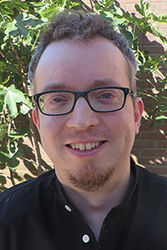
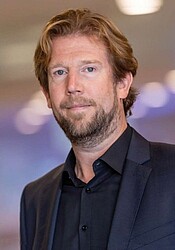
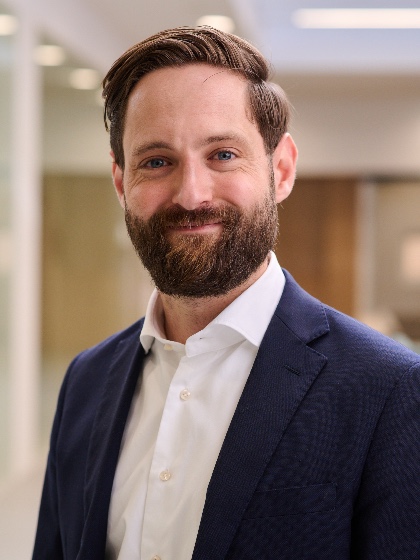
Cornelis (Kees) Huizing is an Assistant Professor in the Department of Mathematics and Computer Science at Eindhoven University of Technology. His work focuses on software engineering , concurrent programming , and dependency safety in Java , with a strong emphasis on model-to-code transformations and educational tools. Research Interests : Concurrency, code transformation, Java programming, failbox mechanisms, and structured design methodologies. Collaboration Networks : Active in interdisciplinary research related to concurrent systems, state machines, and software engineering practices, as evidenced by his fingerprint metrics. Teaching Contributions : Involved in courses such as Capstone and Computer Science Teaching, emphasizing interactive and independent learning strategies for software-intensive systems.
Dr. Hüseyin Küçükali is a Researcher at the Institute for Risk Assessment Sciences (IRAS) within the Department of Population Health Sciences, Faculty of Veterinary Medicine, Utrecht University. His work integrates epidemiology, artificial intelligence, and systems thinking to innovate non-communicable disease prevention in urban environments, with emphasis on exposome research and healthy aging initiatives. Education PhD in Public Health, Istanbul University - Cerrahpasa MD (Medicine), Istanbul University - Cerrahpasa Research Focus Dr. Küçükali's expertise spans causal inference , exposome analysis , and AI-driven health behavior modeling , particularly examining urban environmental impacts on cognitive decline and tobacco use patterns. His methodology combines accelerometry , GPS tracking , and molecular data to map mechanistic pathways in aging populations, while leveraging large language models for public health surveillance in digital spaces. Publication Trends His 15 most recent publications reveal three dominant threads: (1) urban exposome effects on cognitive health using multi-sensor data integration, (2) AI applications for tobacco control through social media content analysis, and (3) Bayesian modeling of socioeconomic disease patterns. These works consistently bridge environmental epidemiology, data science, and policy-relevant public health interventions across international contexts including Türkiye, UK, and Ireland. Professional Engagement He actively contributes to the International Human Exposome Network (IHEN) and STAGE (Stay Healthy Through Ageing) projects while leading the Utrecht Exposome Hub. Previous roles include postdoctoral research at Queen's University Belfast on urban green spaces (GroundsWell project) and health promotion leadership in Istanbul's municipal health administration. He also created educational resources like the Turkish-language Video Glossary of Public Health Concepts.
Max Hinne is an assistant professor at the Department of Artificial Intelligence, Radboud University, Nijmegen, The Netherlands, where he leads the Uncertainty in Complex Systems research group. His work bridges artificial intelligence, neuroscience, and statistics through advanced Bayesian methodologies. Dr. Hinne's research focuses on Bayesian modeling of brain networks using neuroimaging data. His primary interests include: Bayesian nonparametric models, particularly Gaussian processes Structural and functional brain connectivity analysis Predictive modeling of neural systems Causal inference frameworks Uncertainty quantification in complex systems Development of computational tools for neuroscience His approach emphasizes how probabilistic methods can address uncertainty in complex biological systems while providing interpretable models of brain function. Analysis of Dr. Hinne's publication trajectory reveals a consistent focus on Bayesian methods applied to increasingly diverse domains. Starting with foundational work in brain connectomics, his research has expanded to include applications in developmental psychology, medical genetics, and educational technology. His most recent work demonstrates sophisticated integration of nonparametric Bayesian methods with domain-specific challenges, particularly in handling uncertainty in complex, high-dimensional data across multiple scientific fields. Dr. Hinne actively mentors students and invites master's thesis projects focused on Bayesian nonparametric methods for neuroimaging data. He has developed several software tools including the Bayesian Connectomics Toolbox (BaCon), latent space modeling code, and GP CaKe for causal inference. His research group maintains strong connections with the Donders Institute for Brain, Cognition and Behaviour, facilitating interdisciplinary collaborations between statisticians, neuroscientists, and domain experts.
Josje Verhagen is a researcher at the Faculty of Humanities, University of Amsterdam, specializing in Dutch Language Studies. Her work focuses on bilingualism, multilingualism, and language acquisition in early childhood, with a particular emphasis on cognitive development, statistical learning, and the use of social robots in second language education. She collaborates with institutions on projects like the Netherlands Urban Field Station and contributes to understanding how language exposure and input quality affect vocabulary growth and executive functions. Research Themes: Bilingualism, Cognitive Control, Social Robotics, Statistical Learning, Early Childhood Education Contact: j.verhagen@uva.nl Her recent publications explore topics such as family language strategies, teacher impacts on executive function, and the cognitive benefits of multilingualism. She also investigates technological interventions like robot-assisted language learning to support immigrant children’s education. No scientific awards or student advisement details are explicitly mentioned in the available data.
Professor Jaap Denissen is a faculty member at Utrecht University's Faculty of Social and Behavioural Sciences , serving as Head of the Developmental Psychology department. His research focuses on transactional personality development, social relationships, and adolescent psychology. Research Interests: Developmental Psychology Personality-environment transactions Emotional and psychological development Adolescent psychopathology Psychometrics and personality assessment Scientific Contributions: 246+ publications Chair in Social and Personality Development Active in Google Scholar research validation Expert commentary in Die Welt (2021)
Indika Kumara is a Researcher at Tilburg University with expertise in Data Analytics , Data Governance , and Cloud Computing . His work focuses on decentralized data architectures, privacy engineering, and machine learning applications in infrastructure-as-code analysis.
Christiaan Behrens is an Assistant Professor at the Department of Spatial Economics, Vrije Universiteit (since 2015) and a Visiting Fellow at the School of Business and Economics. He holds a PhD from Vrije Universiteit (2013) and has been a researcher at SEO Economic Research since 2017. His research focuses on Industrial Organization, Networks, Regional and Urban Economics, and Transport Economics, with a strong emphasis on airline markets, frequent flier programs, and public sector efficiency. His work examines topics such as airline pricing strategies, market power dynamics, and the impact of information technology on public service delivery. Behrens has contributed expert commentary on airline ticket pricing for media outlets, addressing topics like frequent flier program effects and consumer behavior in air travel. Behrens has supervised one PhD thesis and maintains active collaborations in transport economics research. His research outputs include peer-reviewed journal articles and working papers, reflecting his interdisciplinary approach to spatial economics and policy analysis.
Marianne Hirsch Ballin is a Full Professor of Criminal Law and Criminal Procedure at the Faculty of Law, Vrije Universiteit Amsterdam, and head of the Department of Criminal Law and Criminology. She holds dual roles as a professor and practicing attorney at Pels Rijcken law firm since 2021. Her expertise bridges academic research and legal practice, focusing on modernizing criminal procedure law and addressing digital privacy challenges in criminal investigations. Education: She earned her Master of Laws (cum laude, 2007) and PhD (2012) from Utrecht University, with a thesis on anticipative criminal investigation practices in counterterrorism. Her 2014 PhD work received the prestigious Syracusa Prize. Research Interests: Her work examines intersections of criminal law with privacy, digital evidence, intelligence services' legal frameworks, and European/international human rights contexts. She leads research on responsive criminal procedure theory, as articulated in her 2018 inaugural lecture and 2022 advisory report. Professional Activities: She serves on the Letschert Commission for modernizing the Dutch Criminal Procedure Code (Wetboek van Strafvordering), and holds leadership roles in organizations like the Nationaal Comité 4 en 5 mei and the SDU Wettenbundel editorial board. Her recent publications focus on automated data analysis in criminal procedures and Outlaw Motorcycle Gang legal dynamics. Grants & Awards: Recipient of the Syracusa Prize (2014). Active in research grants including the Digitale Burgeropspoorders project (2020-2023). Advising: Supervised one PhD thesis (details not specified here). Engaged in editorial and peer review roles for legal journals like Boom Strafblad . Labs/Teams: Leads the Kooijmans Institute's Empirical and Normative Studies research group, focusing on applied legal research and policy development.
Prof. Serge Dumoulin is an Endowed Professor in Cognitive Psychology at Vrije Universiteit Amsterdam's Faculty of Behavioural and Movement Sciences. He holds concurrent roles: Professor at Utrecht University (2008–present), Directeur of Spinoza Centre for Neuroimaging (2016–present), Group leader at Netherlands Institute for Neuroscience (2023–present), and Adviseur at Dutch Research Council (2024–2025). His research focuses on the neurophysiological basis of visual perception, integrating computational neuroimaging, functional MRI, and cognitive neuroscience. Key interests include visual cortex organization, neural computations underlying perception, and cross-disciplinary approaches to brain function. Recent work explores cortical depth effects in hemodynamic responses, neuronal tuning in V1, and symbolic number perception. Publications emphasize advanced neuroimaging techniques and computational models. He supervises PhD students and actively contributes to interdisciplinary neuroscience initiatives.
Maarten Boksem is an Associate Professor at Rotterdam School of Management, Erasmus University Rotterdam. His research investigates neural underpinnings of human behavior, including cheating, decision-making, and consumer responses using EEG/fMRI. Key interests: neural decoding of psychological states, movie/advertisement neural predictors, and cognitive control in ethical decisions. He directs studies on dishonesty modulation and neural reward signatures. Publications focus on neuromarketing, neural connectivity, and individual differences in behavior. Recent work predicts stock performance from investor brain activity. Awards include ERIM Early Career Fellowship (2010). He mentors PhD candidates in consumer neuroscience and decision modeling.
Marco Busscher is a researcher at BIOS Plant Development Systems , part of Wageningen University & Research . His work focuses on molecular plant development and host-pathogen interactions, particularly in dandelion and Arabidopsis systems. Research Interests: Transcriptional regulation, phytoplasma infections, gene diversification, transposable elements, and environmental temperature responses in plants. Key Collaborations: University of East Anglia, Max Planck Institute for Plant Breeding Research, Keygene, and Wageningen University & Research. His recent publications highlight protein interaction networks, ubiquitin-independent degradation mechanisms, and genomic insights into floral development. Notable work includes the discovery of a PARTHENOGENESIS allele in dandelion with implications for plant biotechnology. Research output spans peer-reviewed journals and datasets in plant transcriptomics.
Hugh Greatorex serves as a Researcher at the University of Groningen within the Faculty of Science and Engineering, affiliated with the Bio-inspired Circuits & Systems research group. His work centers on neuromorphic hardware design, specializing in spiking neural networks and event-based processing systems that prioritize energy efficiency and real-world applicability in robotics and embedded AI. His research spans critical areas in neuromorphic engineering: Neuromorphic Engineering Spiking Neural Networks CMOS Circuit Design Memristive Computing Event-based Vision and Audio Processing Symbolic Computation in Neural Hardware Greatorex integrates circuit design with neural algorithms to solve power efficiency challenges, frequently exploring beyond-CMOS technologies like memristors and multi-timescale neural dynamics for practical implementations. Analysis of his 14 recent publications (2022-2025) reveals a cohesive trajectory toward hybrid neuromorphic processors combining CMOS with emerging devices. Key contributions include the TEXEL and Fused-MemBrain architectures for beyond-CMOS integration, alongside advancements in event-based sensory processing and symbolic operations within spiking hardware. This work consistently bridges neural computation with symbolic AI paradigms while emphasizing scalability and robustness. No scientific awards were documented in available sources. Information regarding student advisement and research grants was not provided in the source materials. As a core member of Groningen's Bio-inspired Circuits & Systems group, Greatorex contributes to internationally collaborative projects focused on biologically inspired electronic systems for intelligent processing, with applications spanning edge AI and neural computation modeling.
Dr. Katia Verhamme is an Associate Professor in Medical Informatics at Erasmus University Medical Center. Her research focuses on pharmacovigilance, drug safety, epidemiological methods, and healthcare data analysis. She leads projects involving large-scale observational studies, distributed analytics frameworks (e.g., DARWIN EU), and electronic health record (EHR) data refinement. Her work addresses medication errors, anti-dementia drug utilization, and respiratory disease treatment trajectories. Recent research highlights include: Development of standardized phenotyping tools for multinational health data Analysis of sex/age disparities in medication error reporting Evaluation of asthma/COPD treatment patterns across international cohorts Improving EHR coding accuracy through NLP techniques She has supervised 14 academic works and contributes to collaborative networks analyzing drug safety and public health outcomes.
Silvia Mella is an Assistant Professor in the Digital Security (DiS) group at Radboud University, Netherlands, and a member of the Cryptographic Engineering & Side-Channel Analysis (CESCA) Lab. Her research focuses on cryptographic hardware for embedded devices, including secure implementations of cryptographic algorithms and analysis of side-channel and fault attacks. She holds a PhD from the University of Milan (2018) and previously worked at STMicroelectronics (2015–2022), developing hardware accelerators for public-key cryptography. She has supervised numerous PhD and Master’s students, co-authored over 30 publications, and contributed to cryptographic standards like ASCON and Xoodoo. Her work emphasizes bridging theoretical cryptography with practical hardware security solutions. Education: Bachelor and M.Sc. in Mathematics, University of Milan, Italy PhD in Cryptography (2018), University of Milan, Italy Research Interests: Design/analysis of symmetric cryptographic schemes Hardware implementation security Side-channel and fault attack countermeasures Post-quantum cryptography Lightweight cryptographic primitives Recent Research Trends: Recent work focuses on novel code-based cryptographic constructions (ChiLow/ChiChi), low-latency pseudorandom functions (Koala), and SCA-resistant implementations of algorithms like Xoodoo and Xoodyak. Her research bridges theoretical cryptographic analysis with practical hardware vulnerabilities, often leveraging machine learning techniques for attack detection. Advising & Collaboration: Co-supervised 10+ PhD/Master students on topics like cryptographic permutations and post-quantum schemes Active in industry-academia collaborations through STMicroelectronics and PROACT projects Involved in open-source cryptographic library development Labs & Teams: Leading research in the CESCA Lab at Radboud University, focusing on cryptographic engineering and embedded system security. Collaborates with the Politecnico di Milano and STMicroelectronics on hardware security projects.
Mr. Jasper Verstappen is an Assistant Professor at the Faculty of Law of the University of Groningen. His research focuses on contract law, property law, European law, consumer law, comparative law, and technology law. He holds a Master's in Dutch Private Law and a cum laude Master's in European Law from Maastricht University, where he also conducted external PhD research on smart contracts across French, German, English, and Dutch legal systems. Prior to academia, he worked as a senior consultant in financial services and served as a Blue Book Trainee with the European Commission. Research Interests: Professor Verstappen specializes in the intersection of technology and law, particularly blockchain, smart contracts, and tokenization. His work addresses legal risks in digital agreements, sustainability applications of LegalTech, and consumer protection in crypto environments. Notable contributions include developing a taxonomy for smart contracts and analyzing tokenization's role in property rights transfer. Teaching & Awards: He coordinates courses on e-commerce, IT law, and legal research skills. In 2024, he was nominated for the Best Practice in Teaching & Learning Award alongside colleagues. His pedagogical focus combines traditional legal education with modern digital literacy challenges. Grants & Projects: Engaged in interdisciplinary projects linking legal frameworks to emerging technologies, including sustainability-focused LegalTech initiatives. His work often bridges private law principles with EU regulatory developments in financial innovation and digital markets. Labs/Teams: Collaborates with the Transboundary Legal Studies group at Groningen and maintains ties with Maastricht University's legal research networks. Active in EU-funded legal-tech innovation projects focusing on automated contract enforcement systems.