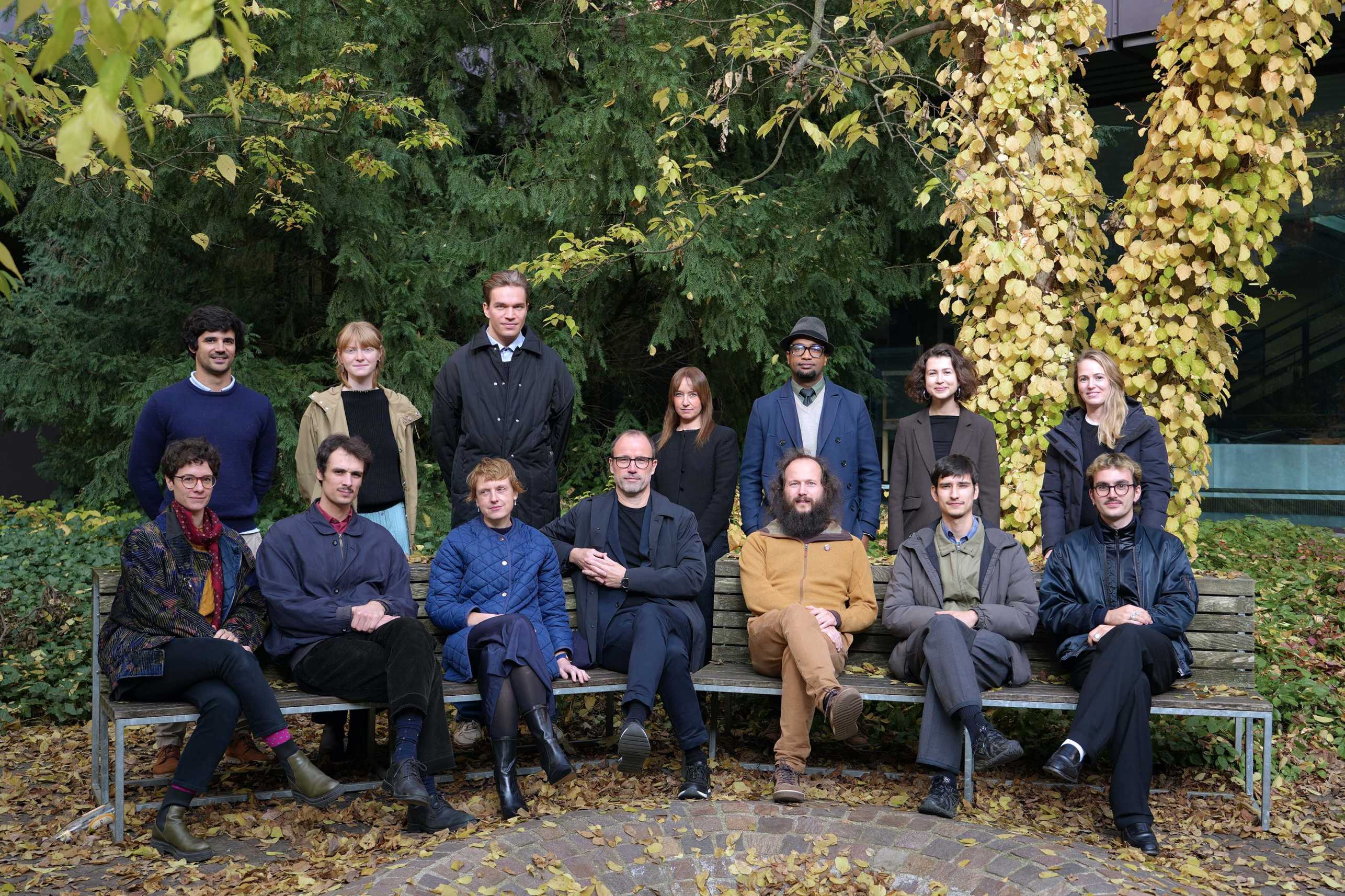
Prof. Angelika Steger is a Full Professor in the Department of Computer Science at ETH Zurich, leading research in theoretical computer science since 2003. She holds a Master's in Applied Mathematics from Stony Brook University (1985) and a PhD from the University of Bonn (1990). Her career includes roles at Kiel, Duisburg, and TU München before joining ETH. She is a Leopoldina member (2007), ICM speaker (2014), and Collegium Helveticum Fellow (2009+). Research focuses on probabilistic methods, randomized algorithms, graph theory, and combinatorial optimization. She has contributed to understanding discrete structures, neural networks, and algorithmic resilience. Awards include recognition in both computer science and mathematics circles. Her work bridges theoretical foundations with applications in AI, neuroscience, and distributed systems.
Dr. Erwin Riegler is a Lecturer at the Department of Information Technology and Electrical Engineering (D-ITET) at ETH Zurich. His research focuses on information theory, signal processing, and their applications in communication systems, with particular expertise in analog compression, matrix completion, and uncertainty principles. He has contributed to theoretical frameworks for rate-distortion analysis, lossless compression techniques, and the design of efficient algorithms for MIMO systems. Key research areas include: Information-theoretic limits of data compression Signal processing in analog systems Algorithmic approaches for sparse signal recovery Optimization techniques in MIMO communication channels Recent work emphasizes interdisciplinary applications, such as neural networks for measure theory and probabilistic methods for signal separation. No scientific awards are explicitly mentioned in the provided texts. His academic contributions span over 30 peer-reviewed articles since 2001, covering topics from string theory to modern communication systems.
Prof. Amos Lapidoth is a Full Professor at ETH Zürich's Department of Information Technology and Electrical Engineering, leading the Signal and Information Processing Lab. He holds a B.A. (summa cum laude) in Mathematics and B.Sc. (summa cum laude) in Electrical Engineering from the Technion, along with an M.Sc. from Technion and Ph.D. from Stanford University. Previously, he was an Associate Professor at MIT and held the KDD Career Development Chair in Communications and Technology. His research focuses on Digital Communications and Information Theory , with contributions to coding theory, channel modeling, and signal processing. He has conducted R&D in wireless communications at the IDF Signal Corps Labs, earning two Creative Thinking Awards. His awards include the NSF CAREER Award and Rothschild Fellowship. Recent work explores state-dependent channels with helpers, feedback-assisted communication, and identification over noisy channels. His lab develops theoretical frameworks for reliable communication in complex systems, with applications in coding, modulation, and network design. Labs/Teams: Head of Signal and Information Processing Lab at ETH Zurich Key Contributions: Pioneering work on helper channels, zero-error capacity, and Rényi entropy applications
Prof. Christoph Studer is a Full Professor of Integrated Information Processing at ETH Zurich's Department of Information Technology and Electrical Engineering. He leads the Integrated Systems Laboratory and directs SwissChips. His research focuses on wireless communication, machine learning, signal processing, and hardware-efficient algorithms, with applications in B5G systems, sensing-communication integration, and low-power signal processing. He holds a Ph.D. and M.S. from ETH Zurich (2009 and 2006) and has held academic positions at Cornell University before returning to ETH in 2020. Notable honors include the NSF CAREER Award (2017), ETH Medal for Doctoral Dissertation (2011), and multiple teaching awards. Education: M.S. and Ph.D. in Information Technology and Electrical Engineering, ETH Zurich (2006, 2009) Visiting Researcher, Stanford University (2005) Research Interests: Develops algorithms and hardware for high-throughput, low-power wireless systems. Key areas include: B5G multi-antenna systems and simultaneous sensing-communication (SISCO) Analog-to-feature (A2F) conversion for low-power signal classification Hardware-software co-design for efficient microchip integration Publications: Focus on channel charting, jammer mitigation, and deep learning for communication. Recent work includes CSI2Vec, jammer-resilient synchronization, and distributed MIMO systems. Awards: US NSF CAREER Award (2017) Michael Tien Teaching Award (2016) ETH Medal for Doctoral Thesis (2011) Labs/Teams: Leads the Integrated Systems Laboratory at ETH and directs SwissChips, a national initiative for integrated circuit development.
Markus Püschel is a Professor of Computer Science at ETH Zurich, leading the Advanced Computing Laboratory. He previously served as Head of the Department of Computer Science at ETH from 2013 to 2016. Before joining ETH in 2010, he was a Professor at Carnegie Mellon University (CMU) and retains adjunct status there. He holds a PhD in Computer Science (1998) and a Mathematics Diploma (1995) from the University of Karlsruhe. His research focuses on program generation for performance, Fourier analysis, signal processing, machine learning, and compiler optimization. He pioneered the SPIRAL system for generating optimized signal processing libraries and has contributed to algebraic signal processing theory. His work bridges mathematical foundations with practical high-performance computing, emphasizing automated code generation and domain-specific languages. Research trends in his articles include causal inference on directed acyclic graphs, quantized neural network inference, and efficient compiler techniques. His work on graph signal processing and causal analysis has led to novel methods in time-series data and DAG learning. Awards: IEEE Fellow (2020), Golden Owl Teaching Award (2015), NSF Discovery Grant (2008), and multiple best paper awards. Grants/Projects: Co-PI for Making Program Analysis Fast (SNF), SPIRAL GPU projects, and collaborations with industry partners like Intel and AMD. He advises over 40 PhD and master’s students, many of whom contribute to impactful projects in compilers, machine learning, and signal processing. His lab also co-founded the Swiss Data Science Center.
Charalampos Anastasiou is a Full Professor of Theoretical Particle Physics at ETH Zurich's Department of Physics. He leads research in quantum field theory and its applications to particle physics phenomenology, particularly in predicting Higgs boson signals at the Large Hadron Collider (LHC). His work includes developing mathematical methods for Feynman diagrams and precision calculations for collider experiments. He has held academic positions at ETH Zurich since 2007, including Associate Professor (2010–2013) and Full Professor (2013–present). His career includes research roles at CERN and Stanford Linear Accelerator Center. Education: Ph.D. in Particle Theory, Durham University, UK (2001) Research Interests: Anastasiou's research focuses on advancing theoretical frameworks for particle physics, with emphasis on perturbative quantum field theory, collider phenomenology, and precision calculations for Higgs boson interactions. His work bridges mathematical rigor and experimental validation, contributing to the understanding of fundamental forces and particle interactions. Publications: His recent publications span superconducting magnet design for future colliders, quantum-resistant cryptographic methods, and material science studies. These reflect his interdisciplinary approach to addressing challenges in high-energy physics and technology. Awards & Grants: ERC Advanced Grant: PertQCD (2016) ERC Advanced Grant: IterQCD (2010) University Latsis Prize (2009) Advising & Labs: Anastasiou collaborates on projects like the Muon Collider and LHC upgrades. His lab develops novel superconducting magnet technologies and computational tools for high-energy physics experiments. He actively contributes to international initiatives like the Future Circular Collider (FCC) and European Strategy for Particle Physics.
Raj Chetty is the William A. Ackman Professor of Economics at Harvard University and Director of Opportunity Insights, a research organization leveraging big data to study economic opportunity and mobility. His work spans public economics, social capital, and income inequality, with a focus on geographic and demographic disparities. Chetty's research explores causal mechanisms in economic mobility, including neighborhood effects, educational access, and health disparities. Key projects include the Opportunity Atlas mapping intergenerational outcomes and analyses of social capital's role in mobility. His methodological contributions address bias correction in observational data and real-time economic tracking during crises. Recent publications examine pandemic impacts on equity, neighborhood choice barriers, and innovation incentives. Collaborations leverage Facebook's social network data and Danish wealth records to understand structural drivers of mobility. Chetty's work bridges economics, sociology, and policy design to improve socioeconomic outcomes.
Prof. Daniel Huber is a leading neuroscientist at the University of Geneva , focusing on understanding sensorimotor integration and cortical dynamics. His work bridges motor cortex research , optical imaging , and computational modeling to decode how neural circuits govern voluntary movements and tactile perception. Research spans rodent models and primate evolution through projects like the eLemur 3D brain atlas Key methodologies: in vivo two-photon microscopy , optogenetic manipulation , and biomechanical simulations Lab members include graduate students and collaborators studying Pacinian corpuscle physiology and forelimb motor control Recent publications reveal groundbreaking insights on lamellar Schwann cells' role in vibration perception , tonotopic mapping in the brainstem , and cross-species neural circuit comparisons . His team's 2025 Science Advances paper demonstrates Schwann cell contributions to mechanosensitivity using optogenetic inactivation. Current projects focus on neuronal network dynamics in decision-making and 3D anatomical frameworks for comparative studies. The lab's Swiss National Science Foundation grants and European Research Council funding enable these interdisciplinary approaches.
Eleanor Chodroff is an SNF Assistant Professor in the Department of Computational Linguistics at the University of Zürich . She leads the Phonetics and Cognitive Science Lab (PaCSci Lab) within the broader Phonetics & Speech Sciences Group . Her research spans the phonetics–phonology interface , cross-talker and cross-linguistic phonetic variation , speech prosody , and morphophonology . A central theme involves leveraging large spoken corpora to advance linguistic theory, with applications in speech recognition and phonetic analysis . Former roles include Lecturer in Phonetics and Phonology at the University of York and postdoctoral researcher in the Prosody & Speech Dynamics Lab at Northwestern University . She holds a PhD in Cognitive Science from Johns Hopkins University and a BA in German and Linguistics from New York University . Recent collaborative projects include the CorpusPhon workshop (co-organized with Morgan Sonderegger), computational studies on temporal anticipation in speech , and methodological investigations of speaker heterogeneity in datasets like Common Voice. Her work intersects acoustic phonetics with machine learning frameworks, particularly in low-resource language contexts.
Zurich University of Applied Sciences (ZHAW)Switzerland
Marc Kuhn serves as Deputy Head of the Institute of Signal Processing and Wireless Communications (ISC) at Zurich University of Applied Sciences' School of Engineering. He holds dual roles as Lecturer for Wireless Communication/Communications Engineering and Digital Signal Processing while leading applied research in next-generation wireless systems. His educational credentials include: Doctoral degree (Dr.-Ing.) in Communications Engineering from Saarland University (2002) Diplom-Ingenieur (Dipl.-Ing.) in Electrical Engineering from Saarland University (1998) Certificate of Advanced Studies (CAS) in Higher & Professional Education from ZHAW (2022) Marc Kuhn's research focuses on wireless signal processing challenges across multiple domains. His work addresses critical gaps in: Indoor positioning systems using UWB/WiFi/Bluetooth MIMO-OFDM for mobile networks Cooperative communication in MANETs under mobility Timing synchronization for distributed radar QoS optimization in vehicular networks Powerline communication resilience His publication trajectory (2022-2024) reveals concentrated innovation in cooperative MANET techniques, with 60% of recent work tackling synchronization imperfections through SDR implementations. Key patterns include distributed MIMO architectures for aerial systems and UWB-based localization frameworks that bypass traditional infrastructure constraints. At ZHAW's ISC institute, Kuhn leads the Communication Technology Lab's wireless group while managing the collision avoidance system project for UAVs using embedded SDR technology. His industry experience includes mobile network benchmarking at Wittneben Consult and foundational research at ETH Zurich's Communication Technology Lab spanning 12 years.
Virginia Marano is an art historian and curator currently serving as an associate scholar in the Lise Meitner Group "Coded Objects" at the Kunsthistorisches Institut in Florenz – Max-Planck-Institut. She also holds significant affiliations with the University of Zurich, where she co-directs the research project "Rethinking Art History through Disability," and has been appointed Junior Research Fellow at the Karlsruhe Institute of Technology (KIT) starting in January 2026. Her academic journey includes a PhD in art history from the University of Zurich, supported by an ESKAS doctoral scholarship (2018-2021) and a FAN Grant (2021), followed by a SNSF Doc.Mobility fellowship at Hunter College/CUNY in 2022. She has also served as a Research Fellow at the Fondazione Giorgio Cini in Venice working on the PNRR-PEBA project for the Removal of Physical, Cognitive, and Sensory Barriers in Cultural Sites, funded by the NextGenerationEU program. Marano's research interests span multiple interdisciplinary areas: Gender and feminist theories in contemporary art Exile studies Critical disability studies and crip theory Disability aesthetics and access intimacy Decentralized exhibition making Sensory studies and embodied knowledge Her scholarly work examines how access functions as a critical space for rethinking relationships between art, science, and technology. Rather than approaching accessibility as a fixed or technical matter, she investigates it as an open process marked by uncertainty, experimentation, and care that exposes ableist structures in cultural and technological systems. Her research-based curatorial practice, grounded in intersectional feminist theory, develops methods of decentralization and shared inquiry, seeking to build connections between humanities and design practice. Her recent publications explore disability representation in art history, the intersection of medical humanities and artistic practice, and the reevaluation of artistic norms through feminist and disability perspectives. Among her notable achievements: ESKAS doctoral scholarship (2018-2021) FAN Grant (2021) SNSF Doc.Mobility fellowship (2022) Research Fellow at Fondazione Giorgio Cini (2023) Appointment as Junior Research Fellow at KIT (2025) As a curator and educator, Marano has organized numerous conferences, workshops, and symposia focused on disability, art, and access. She has taught courses at the University of Zurich on topics including exiled women artists and the intersection of care, disability, and art. Her current curatorial projects include "David Weiss. Il Sogno di Casa Aprile. Carona 1968–1978" at MASI Lugano and "Ear to the Ground" at Fondazione Centro Giacometti, demonstrating her commitment to making art accessible and inclusive.
Tom Avermaete serves as Professor of the History and Theory of Urban Design at ETH Zurich's Department of Architecture since 2018. His research investigates urban design through three interconnected lenses: cities as material culture, cross-cultural knowledge exchange beyond Euro-American paradigms, and urban development as a shared civic responsibility. His scholarly work centers on intercultural urbanism, examining how architects and planners operate across geographical and cultural boundaries. Key research strands include the historical development of urban commons, postcolonial urban histories (particularly in Africa), pandemic-era spatial adaptations, and alternative historiographic methods for global architectural history. His approach emphasizes the material dimensions of urban design while challenging Western-centric narratives. Avermaete's recent publications reveal consistent thematic clusters: pandemic urbanism (notably balcony studies), cross-cultural architectural exchanges (especially in postcolonial contexts), and reconceptualizing urban commons. His work frequently employs 'contact zone' theory to analyze knowledge transfer in global urban development, with significant focus on African and European case studies. As chair leader, he supervises research projects including 'Codes and Conventions for Future Zurich,' 'Exploring the Contact Zone,' and 'Building the Commons.' His team investigates qualitative densification strategies, historical urban models, and communal land use patterns across temporal and geographical contexts. Co-organized 'Transects through Alpine Water Landscapes' summer school (2020) Coordinated research studio on Zurich's land/water/green commons Developed 'Swiss Coloniality' research program examining knowledge circulation The chair functions as an international hub for critical urban studies, with members conducting fieldwork across Africa, Asia, and Europe while developing new methodologies for writing inclusive architectural histories that center non-Western perspectives and collective spatial practices.