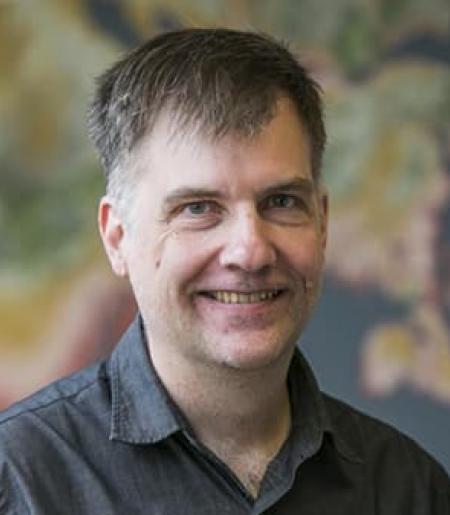
Sudhir Gaiمشاهده پروفایل
دانشیار
Associate Professor Sudhir Gai serves as an Honorary Associate Professor at UNSW Canberra within the School of Engineering & Technology. With a distinguished career spanning over five decades, Professor Gai has established himself as a leading authority in high-speed aerodynamics, specializing in hypersonic and supersonic flow phenomena. His extensive publication record from 1969 through 2025 demonstrates sustained research excellence in shock wave/boundary layer interactions, flow separation mechanisms, and high-enthalpy flow dynamics. Professor Gai's research focuses on the complex fluid dynamics of high-speed flows, with particular emphasis on shock wave/boundary layer interactions, separation phenomena in hypersonic and supersonic regimes, and the effects of high-enthalpy conditions on aerodynamic performance. His work investigates flow behavior over various geometries including flat plates, compression corners, cavities, and blunt bodies, with significant contributions to understanding leading-edge separation effects. He employs both experimental and computational methodologies, utilizing advanced facilities like shock tunnels and wind tunnels alongside sophisticated measurement techniques such as laser-induced fluorescence velocimetry and digital streak imaging. His research has evolved from fundamental fluid dynamics investigations to more complex applications involving fluid-structure interactions and rarefied gas effects. Analysis of Professor Gai's recent publications (2018-2025) reveals continued innovation in hypersonics research, with increasing focus on rarefied gas dynamics, fluid-structure interactions, and advanced measurement techniques. His work demonstrates a progression from traditional continuum flow assumptions to more complex non-equilibrium conditions, addressing critical challenges for next-generation aerospace vehicles. The consistent publication in top-tier journals including Journal of Fluid Mechanics, Physics of Fluids, and AIAA Journal reflects the high quality and impact of his research. Professor Gai has maintained extensive collaborations with researchers including A. Khraibut, D. Exposito, A.J. Neely, S. O'Byrne, V. Sridhar, and H. Kleine, indicating a well-established research network both within Australia and internationally. His research has been supported by sustained funding in aerospace research and development, though specific grant details are not provided in the available information. Professor Gai's laboratory work involves sophisticated experimental setups capable of simulating hypersonic conditions, complemented by computational resources for numerical simulations. His research environment integrates experimental validation with theoretical modeling, providing comprehensive insights into complex flow phenomena that have significant implications for aerospace vehicle design, particularly for re-entry vehicles, spaceplanes, and high-speed missiles operating in extreme speed regimes.



.jpg)