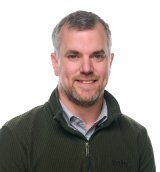
Dr. Scott Banks is a Lecturer in Chemical Engineering & Applied Chemistry at Aston University's College of Engineering and Physical Sciences. He is affiliated with the Energy and Bioproducts Research Institute (EBRI), where he researches thermochemical conversion technologies with a focus on sustainable bioenergy solutions. Education: PhD in Ash control methods to limit biomass inorganic content and its effect on fast pyrolysis bio-oil stability, Aston University (2014) Aston University Modular Award – Introduction to Learning and Teaching Practice (2020-2021) Research Focus: His work centers on catalytic pyrolysis, biomass ash control, bio-oil stabilization, and gasification char utilization. He develops advanced thermal conversion methods to create circular economy solutions and supports greenhouse gas reduction through renewable energy systems. Current work explores hydrogen production pathways from biomass derivatives. Publication Trends: Recent articles demonstrate a strong focus on biomass pyrolysis optimization, renewable policy frameworks, and sustainable feedstock development. His research employs experimental thermochemical analysis and reactor design to advance bioenergy conversion efficiency. Teaching: Module leader for Life Cycle Analysis, Renewable Energy, and Research Methods in the MSc Sustainable Engineering program.
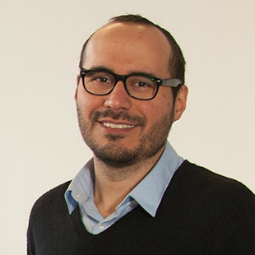
Dr. Christian Calvillo Munoz is a Senior Research Fellow at the Centre for Energy Policy, University of Strathclyde. His work focuses on energy transition challenges, including energy system modelling, decarbonisation scenarios, and policy analysis. He holds a PhD from the Erasmus Mundus Joint Doctorate in Sustainable Energies Technologies and Strategies (SETS), with studies at Comillas Pontifical University (Spain), Delft University of Technology (Netherlands), and KTH Royal Institute of Technology (Sweden). His research interests span energy efficiency, industrial decarbonisation, carbon capture and storage (CCUS), and the socio-economic impacts of energy transitions. He leads projects such as the UK Energy Research Centre Phase 5 and a collaborative initiative on low-carbon heat transitions in Scotland. Dr. Calvillo collaborates internationally, contributing to UN Sustainable Development Goals related to affordable energy and climate action. Recent publications (2023–2025) highlight his expertise in CO2 transport infrastructure, heat pump economics, and workforce planning for decarbonisation. He actively engages in policy outreach, advising on energy affordability, tidal energy viability, and just transitions. His work bridges technical analysis with policy implications, emphasizing equitable and economically viable pathways to net-zero targets. Key projects include: UK Energy Research Centre Phase 5 (EPSRC-funded, 2024–2028) Mixed Methods Approach for Low-Carbon Heat Transition in Scotland (Energy Action Scotland, 2024–2027) Labs/Teams: Centre for Energy Policy. Current focus areas include CCUS sector impacts, regional employment dynamics, and policy coherence for energy affordability.
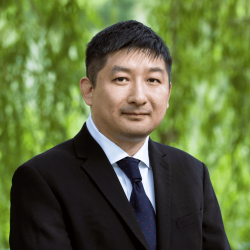
Tim Foxon is a Professor of Sustainability Transitions at the Science Policy Research Unit (SPRU) within the University of Sussex Business School. His research focuses on technological and social aspects of energy transitions, including low-carbon economy pathways, energy-use and economic growth interdependencies, and digital society impacts. He has held academic roles at institutions such as the University of Leeds and Imperial College London. Education & Career: Current: Professor (2015–present), SPRU, University of Sussex Past roles include Reader at the University of Leeds (2007–2015) and Research Associate at Imperial College London (1996–2005). Research Interests: Energy demand reduction, low-carbon transitions, digital society impacts, economic growth frameworks. Current projects include the EDRC Governance Theme and Local Green New Deals initiatives. Grants & Collaborations: Leading EPSRC/ESRC-funded projects on energy demand, digital services, and transition pathways. Co-investigator on the Energy Demand Research Centre (EDRC). Publications: Over 120+ articles and books, including Energy and Economic Growth (2018), focusing on systemic approaches to sustainability transitions. Recent work explores teleworking's energy impacts, 5G energy use, and net-zero community strategies. Labs & Affiliations: SPRU PhD Programme Coordinator. Board member of the European Society for Ecological Economics.
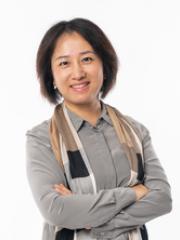
Professor Jin Xuan is the Associate Dean (Research and Innovation) at the University of Surrey's Faculty of Engineering and Physical Sciences, and holds a Chair in Sustainable Processes. He is also a Turing Fellow at the Alan Turing Institute. Previously, he led the Department of Chemical Engineering at Loughborough University. His research focuses on net-zero energy, circular economy, and sustainable development through AI and engineering innovations. He has pioneered Energy and AI as an interdisciplinary field, leading advancements in multiscale predictive models for energy systems and low-carbon solutions. Roles: Associate Dean, Professor of Sustainable Processes, Turing Fellow Affiliations: University of Surrey, Alan Turing Institute Prior Position: Head of Chemical Engineering, Loughborough University His research interests span AI-driven energy systems, CO2 capture/utilization, and renewable energy devices like fuel cells and electrolysers. He has developed novel models for complex systems and co-founded journals such as Energy and AI. He leads the UKRI CircularChem Centre, recognized with the IChemE Global Sustainability Award (2023). Awards: Philip Leverhulme Prize (2022), Beilby Medal (2020) Professor Xuan’s work bridges academia and industry, emphasizing ethical and policy frameworks in energy systems. He advises on grants and collaborates globally, fostering innovation in digital twins and sustainable technologies.
Liu Ye is a Professor at The University of Queensland (UQ) within the School of Chemical Engineering. She leads the Greenhouse Gas (GHG) research program at UQ Urban Water Engineering and has secured over AU$10M in competitive research funding. Her work focuses on achieving net-zero emissions through innovations in urban wastewater systems, with collaborations spanning 15+ water utilities, governments, and technology firms like Suez and Veolia. Research Areas: Greenhouse gas mitigation, sludge minimization, biogas production, advanced biological nutrient removal, online process control, and resource recovery from wastes. Key Awards: Research Innovation Award (Australia Water Association), UQ Foundation Research Excellence Award, EAIT Faculty Teaching Excellence Award, and Fellow of the Royal Society of Chemistry (RSC). Teaching: Courses include CHEE2020 (Process Equipment and Control), CHEE2501 (Environmental Systems Engineering I), CHEE4012 (Industrial Wastewater Management), and thesis supervision. Leadership: Associate Editor for Environmental Science: Water Research and Technology , member of IWA Strategic Council, and contributor to industry peak bodies like WSAA and WaterRA. Recent Articles: Her 2025 publications highlight strategies for balancing energy recovery with GHG emissions, systematic frameworks for N2O quantification, and advancements in phosphorus removal. Earlier works (2024–2022) explore electrochemical iron applications, ferric salt enhancements, and hybrid modeling techniques combining mechanistic and deep learning approaches. Scientific Impact: Her research has driven a 35% reduction in N2O emissions at an Adelaide treatment plant, saving $50M annually, and pioneered free nitrous acid (FNA) technology for biofilm control and sludge reduction.
Frank Jotzo is a Professor at the ANU Crawford School of Public Policy and holds leadership roles as Head of Energy at the ANU Institute for Climate, Energy and Disaster Solutions (ICEDS) and Director of the Centre for Climate and Energy Policy. His research focuses on climate change economics, energy transition policies, decarbonisation strategies, and international climate policy. He has contributed to major policy initiatives, including the NSW Net Zero Commission and Australia's Carbon Leakage Review, and served as a Lead Author for the IPCC. His work emphasizes economic instruments for climate change mitigation, regional transition policies, and the analysis of hydrogen and coal sector dynamics. He teaches climate policy and economics at ANU and engages in executive education programs. Research interests include the economics of decarbonisation, zero-emissions industries, and structural economic changes in Australia, Europe, China, and Indonesia. He has advised governments on climate policy design, energy transitions, and the socio-economic impacts of coal phase-outs. Key projects include studies on green hydrogen cost competitiveness, China's coal import reduction strategies, and regional recovery post-coal plant closures. He holds a Dipl-VWL from Berlin and advanced degrees from ANU (MEcDev and PhD). Frank Jotzo’s contributions span over 80 publications, focusing on energy economics, climate policy frameworks, and the interplay between environmental and economic development. His work bridges academic research with policy implementation, particularly in Asia-Pacific contexts. He leads ANU's engagement in global climate policy dialogues and is a sought-after advisor on sustainable development strategies.
Katja Bühler is a Professor at the Technical University of Dresden and Co-Head of the Department of Microbial Biotechnology at the Helmholtz Centre for Environmental Research (UFZ) in Leipzig, Germany. She leads the Working Group on Catalytic Biofilms and holds a joint professorship focused on the 'Technology of Productive Biofilms'. Her research spans microbial biotechnology, cyanobacterial systems, and sustainable bioprocess engineering. She is actively involved in national scientific councils, including the Saxon Academy of Sciences and the German National Hydrogen Council (2021–2023), and chaired the UFZ Scientific and Technical Council from 2019 to 2025. Her research interests center on developing alternative biotechnological reactor concepts using in vitro and in vivo approaches, particularly involving cyanobacteria and catalytic biofilms. She investigates biofilm physiology, photobioreactor design, and metabolic engineering for sustainable chemical and hydrogen production. Her work integrates systems biology, biocatalysis, and environmental biotechnology to advance green industrial processes. The recent publications highlight a strong focus on cyanobacterial biofilms, capillary photobioreactors, and net-zero biotechnologies. Key themes include hydrogen production, biofilm scaling, metabolic engineering of Synechocystis , and sustainable feedstock utilization. These works reflect a trajectory toward environmentally sustainable bioprocesses and carbon-neutral technologies. Katja Bühler has no listed scientific awards in the provided text, but her editorial roles and leadership positions indicate significant recognition in her field. She mentors students through PhD programs such as FATE and CLEANER and collaborates extensively with researchers like Bruno Bühler, Andreas Schmid, and Falk Harnisch. Her projects often involve interdisciplinary teams and joint publications across institutions. She leads the Working Group Catalytic Biofilms at UFZ, which focuses on developing high-performance biofilm-based biocatalytic systems for industrial applications. The group explores reactor design, microbial physiology, and metabolic engineering to optimize productivity and sustainability.
Prof. Dr.-Ing. Daniela Thrän serves as Professor of Bioenergy Systems at the University of Leipzig's Faculty of Economics and Head of the Department of Bioenergy at the Helmholtz Centre for Environmental Research (UFZ), positions she has held since 2011. She concurrently leads Germany's delegation in IEA Bioenergy Task 44 on Flexible Bioenergy and System Integration and chairs the Social Sustainability Transformations group at UFZ, bridging academic research with national climate policy through roles in the Federal Bioeconomy Council (2012-2023) and Thuringia's Climate Advisory Board. Her academic background includes: Engineering studies in Technical Environmental Protection at Technical University of Berlin (1989-1995) Doctorate at Bauhaus University Weimar (1998-2001) on material flow management in rural regional development Thrän's research centers on bioenergy's role in climate neutrality, specializing in carbon dioxide removal (CDR) via bio-based methods including BECCS, life cycle sustainability assessment, and spatial modeling of renewable energy systems. She analyzes biomass resource potentials within circular bioeconomy frameworks and investigates socio-economic drivers of energy transitions, with recent work focusing on urban-rural biomass integration and flexible bioenergy services for grid stability. Her 2023-2025 publications reveal intensifying focus on bio-CDR implementation challenges and policy frameworks, alongside systematic assessments of biomass allocation in Germany's net-zero pathways. Key trends include AI-enhanced literature mapping for climate research, municipal-scale renewable integration dynamics, and cross-national comparisons (e.g., Germany/Canada biogas systems), with growing emphasis on socio-technical trade-offs in land use and stakeholder acceptance. No scientific awards, prizes, or fellowships were documented in the provided text. Thrän actively mentors doctoral candidates as DBFZ's representative for bioenergy colloquia and leads major initiatives: IEA Bioenergy Task 44: National Team Leader for Germany (2019-present) Helmholtz Climate Initiative (HI-CAM): Co-author of spatial energy transition reports Editor-in-Chief of Springer's "energy, sustainability and society" (2017-present) She directs UFZ's Department of Bioenergy (BEN) and Models team, developing spatially resolved energy system tools like BENOPTex. Her groups focus on techno-economic analysis of biogenic resources, smart bioenergy system services, and socio-ecological impacts of renewable energy expansion, with strong links to European standardization bodies (ISO/TC 238, CEN TC 335) and Germany's aviation biofuels advisory board (aireg).
Daniel Kerr is a Research Fellow at the School of Engineering and Sustainable Development, De Montfort University (DMU), affiliated with the Institute of Energy and Sustainable Development (IESD). He leads the governance work package for the Leicestershire Collaborate to Accelerate Net Zero (LCAN) project and brings over 10 years of sustainability academia experience from UCL-Energy Institute and the University of Surrey's Centre for Environment and Sustainability. His educational qualifications include: PhD in Agent-based Modelling of Electricity Access in Sub-Saharan African Informal Settlements from De Montfort University (2018-2023) MSc in Energy and Sustainable Development from De Montfort University (2017-2018) BEng in Mechanical Engineering from the University of Warwick (2006-2009) Kerr's research centers on sustainable development with emphasis on local governance frameworks, sustainable energy business models, and Sub-Saharan African informal settlement electrification. His expertise spans South African electricity regulation, mini-grid deployment, clean cooking solutions, and agent-based modeling of complex adaptive systems, particularly examining municipal roles in sustainability transitions and equitable decarbonization pathways. His 2022-2023 publications demonstrate a cohesive research trajectory applying computational methods to Global South energy challenges, with strong thematic links between Indian transportation decarbonization, South African electricity access modeling, and cross-cutting governance analysis. These works bridge human geography, energy policy, and sustainability science through corpus linguistics and agent-based simulation approaches. Scientific Awards No awards mentioned in source text Advising and Grants No formal advisees listed. Grant leadership includes: Principal governance lead for LCAN (Leicestershire Collaborate to Accelerate Net Zero) Research Fellow on SIGMA (Sustainability, Inclusiveness & Governance of Mini-Grids in Africa) Multiple UKRI-funded projects at UCL and University of Surrey Open University consultancy on Sub-Saharan African mini-grid regulation (currently unavailable for new projects) Labs and Teams Core member of DMU's Institute of Energy and Sustainable Development (IESD), collaborating with principal investigator Andrew Reeves and research fellow John Rowlatt on net-zero transition projects.
Professor Daniel Rosenbloom is a leading academic in climate policy and sustainability transitions at Carleton University's School of Public Policy and Administration (SPPA). His research focuses on accelerating low-carbon transitions, net-zero strategies, and the governance of decarbonization pathways. He has organized high-profile events like the 2025 'Net Zero Meets Trade Disruption' workshop and engages actively in policy debates, notably critiquing carbon pricing mechanisms and advocating for integrated sustainability policies. His work bridges academic research and policy practice, addressing topics such as phase-out strategies for fossil fuels, smart grid innovations, and the political dynamics of climate action. He has secured research funding, including a $26,218 grant from the Climate Social Science Network, and collaborates with institutions like CBC News on public discourse about climate policy. Rosenbloom’s scholarship emphasizes bridging science and policy, with contributions to frameworks for accelerating pathways to net-zero emissions. Key themes include the role of policy mixes, interpretive flexibility in technology adoption, and the governance challenges of multi-system interactions in decarbonization. His research highlights the need for adaptive strategies that address both technological and socio-political dimensions of sustainability transitions.
Dr. Souran Chatterjee is a Lecturer in Energy Transitions - Environmental Management & Sustainability at the School of Geography, Earth and Environmental Sciences, University of Plymouth. His work contributes to UN Sustainable Development Goals (SDGs) 7 (Affordable and Clean Energy), 11 (Sustainable Cities), and 13 (Climate Action). He focuses on energy transitions, climate policy modeling, and socio-technical systems analysis. Research interests include energy demand modeling, renewable energy integration, climate emergency responses, and SDG-climate synergies. He has advised undergraduate and postgraduate dissertations in energy economics, air pollution assessment, and health-environmental impact analysis. His recent work emphasizes net-zero building sectors, decarbonization pathways, and demand-side solutions for energy efficiency. He collaborates on projects like the Sustainable Energy Transitions Laboratory (SENTINEL) and EU initiatives like the Solar Rooftop Program. Teaching focuses on energy sustainability, social science research methods, and health economics. Key geographic interests include Europe (especially Italy's urban policies), South Asia (India's air quality challenges), and global south development dynamics. His toolkit expertise includes geospatial modeling, building energy simulation, and socio-technical transition analysis.
Dr Sara Giarola is an Honorary Research Fellow at Imperial College London's Department of Chemical Engineering, part of the Faculty of Engineering. Her work focuses on large-scale energy systems modeling, climate change mitigation strategies, and the integration of technological innovations into global energy frameworks. She is affiliated with the Sustainable Gas Institute (SGI), Energy Futures Lab, Grantham Institute, and MUSE energy systems model project. Dr Giarola holds a PhD in Chemical Engineering from the University of Padova and has extensive experience in mathematical programming, supply chain optimization, and advanced biorefining processes. Her research spans interdisciplinary areas including renewable energy systems, bioenergy production, and policy analysis for decarbonization pathways. Key affiliations include the Network of Excellence in Air Quality and SGI's Modelling gas futures initiative. She contributes to the development of agent-based models and geospatial analytics to address complex energy transition challenges, particularly in regions like Ecuador, Mexico, and China. Publications highlight her expertise in modeling energy trade dynamics, hydrogen infrastructure, and the socio-technical dimensions of net-zero pathways. Her work emphasizes real-world applications of integrated assessment models to evaluate climate policies and technological feasibility.
Wim Carton serves as a Senior Lecturer at the Lund University Centre for Sustainability Studies (LUCSUS) and is a researcher with BECC (Biodiversity and Ecosystem services in a Changing Climate). He is also a member of Lund University's Profile Area: Nature-based future solutions. With a background in Human Geography, Development Studies, International Relations, and History, Dr. Carton focuses on understanding society-nature relations through the lens of sustainability challenges. His research interests center on the political economy of climate change mitigation, with particular emphasis on negative emissions and carbon removal technologies. Carton examines the politics of modeling negative emissions in integrated assessment models, the assumptions underpinning large-scale carbon removal projections, and how these approaches are adopted by policymakers globally. His work spans technologies from perennial agriculture and tree planting to bioenergy with carbon capture and storage (BECCS) and direct air capture (DAC), always with a focus on climate justice implications. Carton's recent publications reveal a strong focus on critical analysis of carbon removal technologies and their integration into climate policy frameworks. His work investigates the political and economic conditions for implementing carbon removal projects across different geographies, challenging the assumptions behind mainstream climate science approaches to carbon removal. His research consistently addresses questions of environmental justice and the political economy dimensions of climate mitigation strategies. Dr. Carton actively participates in multiple research projects including GeoSPAS (Integrated Geological and SocioPolitical Assessment of Storage solutions for carbon dioxide removal), PERENNIAL (Is there a PERENNIAL future of agriculture?), and LU Land. He regularly engages with policymakers and the public through workshops, seminars, and media appearances, contributing to climate policy discussions through organizations like CO2ol - Climate Market Watch.
Professor Jan Godsell serves as Dean of Loughborough Business School and holds the title of Professor of Operations and Supply Chain Strategy. Her dual career spans academia and industry, combining academic rigor with executive experience in global firms like Dyson and ICI/Zeneca Pharmaceuticals. She focuses on strategic supply chain alignment, circular economy transitions, and Industry 4.0 applications. Her research bridges operational excellence and strategic business goals, emphasizing sustainability, deglobalization risks, and innovation ecosystems. Advisory roles include the Made Smarter Expert Panel and Industrial Strategy Challenge Fund Advisory Group, reflecting her industry influence. Key research themes include circular economy frameworks, supply chain resilience, and the interplay between technology and sustainable practices. Recent work explores net-zero supply chains, food waste prevention, and geopolitical sourcing strategies. Awards and grants are not explicitly listed in the provided text, but her extensive advisory roles and leadership positions underscore her recognized expertise. Her career trajectory highlights a commitment to transforming academic insights into actionable industry strategies.
Sonja Wogrin is a University Professor (Univ.-Prof.) at Graz University of Technology (TU Graz), where she has been heading the Institute for Electricity Economics and Energy Innovation since August 2021. She holds a Dipl.-Ing. in Technical Mathematics from TU Graz (2008), a Master of Science in Computation for Design and Optimization from MIT (2008), and a doctorate in Electricity Systems from Universidad Pontificia Comillas (2013). Her educational background includes: Doctorate in Electricity Systems, Universidad Pontificia de Comillas (June 2013) Dipl.-Ing. in Technical Mathematics, Graz University of Technology (October 2008) Master of Science in Computation for Design and Optimization, MIT (June 2008) Professor Wogrin's research focuses on decision support systems in the energy sector, optimization methodologies, and particularly the problem of generation capacity expansion. Her work spans several key areas including bilevel programming, capacity expansion planning, energy storage systems, and time series aggregation for energy system optimization. She has made significant contributions to understanding how to integrate renewable energy sources into power systems while maintaining economic efficiency and grid stability. Her research often addresses the challenges of decarbonizing electricity systems through advanced mathematical modeling and optimization techniques. Her recent publications demonstrate a strong focus on improving the computational efficiency of energy system models while maintaining accuracy, with particular attention to the integration of renewable energy sources, energy storage systems, and the development of resilient energy communities. She has pioneered work on time series aggregation methods that balance computational tractability with model accuracy, which is crucial for long-term energy planning under uncertainty. Professor Wogrin has received several prestigious awards and fellowships including: 4th EASE Student Award for "Co-Optimisation of energy storage technologies in tactical and strategic planning models" (2019) Beca de movilidad para investigadores "NILS Ciencia y Sostenibilidad" (2015) Beca Erasmus "Personal Docente/Investigador" de formación (2016) Beca Iberdrola de ayuda a la investigación en energía y medio ambiente (2020) She leads multiple significant research projects including EU - NetZero-Opt, RINGs, iKlimET, V2G-QUESTS, and CIDEAL, which focus on optimizing energy systems for net-zero emissions, resilient energy networks, climate and energy system modeling, vehicle-to-grid integration, and industrial decarbonization. Her work has substantial practical implications for energy policy and grid operations in Austria and beyond. Professor Wogrin collaborates extensively with industry partners including Austrian Power Grid AG, KELAG, and Netz Niederösterreich, ensuring her research addresses real-world energy challenges. Professor Wogrin leads the research group at the Institute for Electricity Economics and Energy Innovation, which develops advanced optimization models for energy systems. Her team has created the LEGO (Low-carbon Expansion Generation Optimization) model, an open-source tool for energy system optimization that has gained international recognition. The group's work spans from fundamental optimization methods to practical applications in energy system planning and operation, with a strong emphasis on computational efficiency and model accuracy.