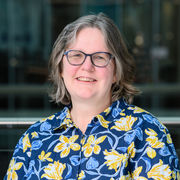
Wojciech Z. Misiolek is the Loewy Professor and Director of The Loewy Institute at Lehigh University, where he also chairs the Department of Materials Science and Engineering. His research focuses on materials processing, microstructure evolution, and advanced manufacturing techniques. He has over 300 publications and two patents, and is a Fellow of the American Society for Materials International. Education: Sc.D., Metallurgy, AGH-University of Science and Technology, Kraków, Poland M.S., Metallurgy, AGH-University of Science and Technology, Kraków, Poland Research Interests: Dr. Misiolek investigates structural materials, metal forming, biomaterials, and additive manufacturing. He employs advanced numerical modeling and physical characterization techniques to study microstructure evolution during material processing. Key areas include aluminum extrusion, titanium alloy welding, and mechanical behavior of aerospace materials. Awards: Lehigh’s Hillman Faculty Award Fellow, American Society for Materials International Laboratories/Teams: Director of The Loewy Institute, which focuses on metal forming and advanced materials research. Previously co-directed the RPI Aluminum Processing Program.
Dr. David Mitchell is an Associate Professor and Master of Public Administration Program Coordinator at the University of Central Florida (UCF) School of Public Administration, part of the College of Community Innovation and Education. He holds a Ph.D. in Political Science from Northern Illinois University, an MPA and a BA from the University of Kansas. His professional experience includes seven years in local government, serving as a city manager’s office administrator in Kansas City and Highland Park, where he managed organizational consolidation, budget analysis, and citizen engagement initiatives. His work has been nationally recognized by the ICMA and National League of Cities. Research interests focus on public strategic management, public budgeting, and local government operations. He has contributed to studies on organizational performance management, employee engagement programs, and 311 call center implementations. Mitchell’s interdisciplinary approach bridges academic research with practical governance challenges. His articles span advanced materials engineering and public administration, reflecting a dual expertise in technical innovation and policy implementation. Notable themes include ceramic matrix composites, thermal protection systems, and additive manufacturing processes. While no formal awards are explicitly listed, his practitioner work has garnered national acclaim. Mitchell coordinates UCF’s MPA program and advises on public sector leadership. His community involvement includes roles in local governance and alumni engagement. He resides in Lake Mary with his family.
Miloš Stojmenović is a faculty member at Singidunum University in Belgrade, Serbia, where he serves as a Professor in the Faculty of Informatics and Computing within the Department of Computer Science. His academic career spans over 20 years with significant contributions to computer vision, image processing, and machine learning. Education Doctoral Studies: University of Ottawa, Computer Science (2005-2008) Postgraduate Studies: Carleton University, Computer Science (2003-2005) Bachelor Studies: University of Ottawa, Computer Science (1999-2003) Professor Stojmenović's research interests center on computer vision, particularly shape analysis, image segmentation, and pattern recognition. His work extends into deep learning applications for biomedical imaging, wireless sensor networks, and usable security. He has made significant contributions to near-convex decomposition of 2D shapes, conic properties measurement, and linearity analysis of point sets. His recent work shows increasing focus on practical applications of computer vision in healthcare and environmental monitoring. Analysis of his 15 most recent publications reveals a strong trend toward interdisciplinary research, particularly in biomedical applications of computer vision. Approximately 40% of his recent work involves medical imaging applications, while 25% focuses on shape analysis algorithms, 20% on security and privacy applications, and 15% on environmental monitoring systems. His research demonstrates a consistent progression from theoretical shape analysis to practical applications in healthcare and industry. Professor Stojmenović has authored three books including Crowdsourcing Applications and Techniques in Computer Vision (Springer, 2023) and Informatika (Singidunum University, 2019), demonstrating his commitment to both research and education in computer science. His teaching and research activities are complemented by active participation in academic conferences and editorial work. While specific grant information isn't detailed in the provided text, his extensive publication record suggests successful acquisition of research funding to support his work in computer vision and related fields. Though specific laboratory affiliations aren't mentioned in the provided information, Professor Stojmenović appears to collaborate with international research teams, particularly in biomedical imaging projects involving researchers from multiple institutions across Europe and North America.
Professor Valerie Pinfield is a distinguished academic at Loughborough University, where she serves as Professor of Ultrasonics and Complex Materials and Associate Pro-Vice-Chancellor for the Doctoral College. She has held several leadership positions including Head of the Department of Chemical Engineering (2017-2020), Director of Student Experience for the School of Aeronautical, Automotive, Chemical and Materials Engineering (2023-2024), and Acting Dean for the School (Sept 2024-Aug 2025). Her academic journey began with postdoctoral research at the Universities of Leeds and Nottingham before joining Loughborough University as a Lecturer in 2012, where she was awarded a personal chair in 2023. Professor Pinfield's educational background includes: MA in Natural Sciences from the University of Cambridge PhD in Food Science from the University of Leeds With a mathematical physics background, Professor Pinfield has developed a broad spectrum of research interests focused on the intersection of physical acoustics, materials science, and digital technologies. Her work spans from fundamental investigations of wave propagation through complex media to applied research in sustainable energy systems. She is particularly known for her contributions to understanding multiple wave scattering in soft complex materials, which has applications in material characterization and metamaterial design. Her recent research has expanded into machine learning and digitalization for material design and process optimization, with a strong emphasis on electrochemical technologies for sustainable energy. Professor Pinfield leads significant infrastructure and facilities projects in hydrogen technologies, spanning from sustainable propulsion for transport through materials development and testing to production and storage technologies. This work positions her at the forefront of research addressing global challenges in energy transition and sustainability. An analysis of Professor Pinfield's recent publications reveals a clear trajectory toward integrating advanced computational methods with traditional physics-based approaches. Her work increasingly combines machine learning with multi-physics modeling to address complex problems in energy systems and materials science. The focus on CO2 reduction and capture technologies demonstrates her commitment to addressing pressing environmental challenges through innovative engineering solutions. Her research bridges fundamental physics with practical applications in sustainable technologies. Professor Pinfield has received significant recognition for her contributions to academia and science: Fellow of the Institute of Physics (FInstP) Chartered Physicist (CPhys) Fellow of the Higher Education Academy (FHEA) As Associate Pro-Vice-Chancellor for the Doctoral College, Professor Pinfield plays a pivotal role in shaping the doctoral education experience at Loughborough University. She is deeply committed to developing future professionals in engineering and beyond through teaching, research mentorship, and academic leadership. Her industry experience at the Welding Institute and Cadbury Ltd provides valuable practical perspective to her academic work and student development initiatives. Professor Pinfield's research group contributes significantly to the university's strategic focus areas including Net Zero, Digital Engineering, and Sustainable Manufacturing and Circular Economy. Professor Pinfield leads research groups focused on ultrasonics, complex materials, and sustainable energy technologies. Her work connects with several research centers at Loughborough University that focus on hydrogen technologies, sustainable manufacturing, and digital engineering. These interdisciplinary teams bring together expertise from physics, engineering, computer science, and materials science to tackle complex challenges in energy and sustainability.
Calvin Ralph is a Senior Lecturer in Mechanical Engineering at the School of Engineering, Ulster University, Belfast campus. His research focuses on composite materials and their mechanical behavior under impact loading, with a particular emphasis on novel 3D woven structures and natural/synthetic fibre hybrids. Key research areas include: 3D Woven Composite Architecture Basalt and Carbon Fibre Reinforcement Impact Resistance and Energy Absorption Sustainable Textile Supply Chains Smart Composite Manufacturing Recent work explores biomimetic design principles for composite optimization and green manufacturing initiatives in Northern Ireland. His projects often involve collaboration with industry partners and government agencies.
Ramazan Uctu serves as Associate Professor in the Department of Business Administration at the American University of Iraq, Sulaimani (AUIS), specializing in innovation systems, biotechnology commercialization, and entrepreneurial ecosystems with regional focus on South Africa and the Middle East. Education Ph.D. in Economics, Stellenbosch University, South Africa M.Comm., Selcuk University Research Interests Dr. Uctu's work centers on innovation ecosystem dynamics in developing economies, examining university-industry linkages, technology transfer mechanisms, and biotechnology commercialization pathways. His research addresses critical gaps in regional economic development through industrial cluster formation and entrepreneurial policy design, with empirical focus on South Africa's biotech sector and Middle Eastern entrepreneurial intentions. Publications Analysis of his 15 most recent publications (2020-2025) reveals three dominant thematic clusters: (1) innovation ecosystem frameworks applied to biotechnology in South Africa, (2) entrepreneurial intention drivers in Middle Eastern university contexts, and (3) pandemic-era biotech financing challenges . His methodological approach combines policy analysis, econometric modeling, and case studies across 12 countries. Scientific Awards Best Ph.D. Student Award in South Africa (2013) Academic Contributions Dr. Uctu actively shapes scholarly discourse as external examiner for UKH Business School theses and reviewer for journals including Industry and Higher Education and African Journal of Science, Technology, Innovation and Development . His service bridges theoretical research with practical policy implementation in emerging economies. Research Infrastructure No dedicated laboratory or formal research team affiliations were documented in the source materials, though his collaborative publications indicate extensive international research networks.
Dr. Carolina Tallon is an Associate Professor in the Department of Materials Science and Engineering at Virginia Polytechnic Institute and State University (Virginia Tech). She leads the Tallon Research Group, focusing on advanced ceramic materials for extreme environments. Her work emphasizes colloidal processing techniques, near-net-shaping methods, and modeling of materials properties. Education: B.E. in Chemical Engineering, Universidad de Granada, Spain Ph.D. in Chemistry (joint program), Universidad Autonoma de Madrid & Institute of Ceramics and Glass (CSIC) Research Interests: Ceramics Processing Ultra-High Temperature Ceramics (UHTCs) Multi-Scale Porous Materials Near-Net-Shaping Techniques Surface Science & Rheology Materials Properties Modeling Recent Research Trends: Dr. Tallon's work highlights innovative methods to fabricate complex ceramic geometries with controlled microstructures. Key areas include optimizing solvent systems for UHTC shaping, developing HERO coatings for refractory alloys, and simulating thermomechanical behavior of porous ceramics under extreme conditions. Awards: Jubilee Global Diversity Award (ACerS Engineering Ceramics Division, 2020) Advising & Grants: Supervises graduate students like Sydney Hulse and Hui-Chun (June) Yu. Active in securing grants, including a 2021 award for additive manufacturing infrastructure. Collaborates on projects involving cellulose nanomaterials and laser powder bed fusion. Labs & Facilities: Leads the Tallon Research Lab at Virginia Tech, equipped for advanced ceramic processing, thermal analysis, and microstructural characterization. Engages in outreach to promote STEM education and sustainable manufacturing practices.
Viktor Werner is an Assistant Professor at Linköping University (LiU), affiliated with the Department of Management and Engineering (IEI) and the Project, Innovations and Entrepreneurship (PIE) division. His research focuses on sustainability transitions, innovation management, and socio-technical systems, particularly in electrified transportation and corporate sustainability strategies. He holds an MSc in Public Administration (University of Twente) and a PhD analyzing firm-system interactions in electrified goods transportation. Teaching responsibilities include master-level courses on Innovative Entrepreneurship , Corporate Social Responsibility , and Innovation Management . His research emphasizes holistic approaches to sustainability challenges, including how established firms navigate net-zero pledges and socio-technical barriers. Notable achievements include the ScAIEM Award for Best Thesis in Industrial Management (2024) , recognizing his work on electrified transportation systems. He contributes to LiU’s PIE division, which integrates research, education, and innovation in project management and entrepreneurship.
Robert Varin is a Professor in the Department of Materials Science and Engineering at the University of Waterloo, Canada. His research focuses on nanomaterials for solid-state hydrogen storage, intermetallics, composites, and energy-related nanotechnology. He holds a Doctorate and Master's in Mechanical Engineering from Warsaw University of Technology (1976 and 1972, respectively). His work emphasizes the development of novel materials for hydrogen storage systems, including magnesium-based hydrides and intermetallic alloys. Recent studies involve mechano-chemical synthesis, additive manufacturing via laser techniques (LENS), and the optimization of material properties for automotive and nuclear applications. His research also addresses CO2 sequestration through mineral carbonation and the environmental stability of hydride materials. Varin's publications highlight advancements in hydrogen storage efficiency, neutron-absorbing composites, and the mechanical properties of intermetallic alloys. His work spans interdisciplinary applications, including energy systems, nuclear safety, and environmental engineering. Despite prolific output, no scientific awards are explicitly mentioned in the provided texts. His research teams focus on projects such as TiB2-reinforced composites for neutron absorption, Fe3Al intermetallic foams, and Mg-based hydride nanocomposites. Collaborations involve institutions worldwide, leveraging additive manufacturing and advanced characterization techniques like TEM and XRD.
Xue Gao is an Assistant Professor at the Askew School of Public Administration and Policy at Florida State University. Her research focuses on the interplay between policy, politics, technology, and society in the energy transition process. She examines how policies influence energy innovation, equity, and governance, with a focus on renewable energy adoption, energy justice, and regulatory frameworks. Education: Ph.D. in Public Policy (LBJ School of Public Affairs, The University of Texas at Austin) M.S. in Statistics and Data Science (The University of Texas at Austin) M.A. in Public Administration (Tsinghua University, China) B.A. in Economics (Southeast University, China) Research Interests: Dr. Gao’s work spans energy policy evaluation, renewable energy innovation ecosystems, energy equity, and the socio-technical dynamics of energy transitions. She analyzes how policies shape firm behavior, technology diffusion, and community resilience, with a focus on marginalized populations. Her interdisciplinary approach integrates quantitative methods and policy analysis to address real-world challenges. Funding & Grants: Her research has been supported by the National Science Foundation (NSF) and the U.S. Department of Energy, funding studies on energy equity, renewable energy deployment, and policy design. Advising: While specific advisee names are not listed, Dr. Gao mentors graduate students in public policy, energy studies, and interdisciplinary sustainability research. Policy Contributions: She collaborates with policymakers and institutions to inform energy transition strategies, emphasizing equitable and efficient pathways. Her work bridges academic insights with actionable policy solutions.
Robyn Owen is a Professor of Entrepreneurship and Sustainable Finance at Middlesex University, affiliated with the Faculty of Business and Law and the Centre for Enterprise, Environment and Development Research (CEEDR). She holds roles as Deputy Director of CEEDR and Founding Director of the Green Research Cluster. Her work focuses on sustainable finance mechanisms for SMEs, green innovation ecosystems, and policy-driven funding solutions for environmental and economic challenges. Robyn leads major grants including the NERC-funded SME Nature Positive Finance project (2022-26) and collaborates with UK agencies like the British Business Bank. Her research spans government venture capital policies, blockchain in creative finance, and rural social enterprise viability. Notable contributions include policy briefings on green SME finance and evaluations of equity/debt fund effectiveness. Research interests emphasize bridging finance gaps for cleantech startups, biodiversity financing frameworks, and institutional logics shaping sustainable entrepreneurship. She has advised public bodies such as the Greater London Authority and South African sovereign funds, integrating practical insights into academic work. Current teaching: MSc Sustainable Prosperity, Financial Management, and Entrepreneurship modules PhD supervision: 3 ongoing students focusing on green finance and SME innovation Awards: CUSP Research Fellow (2016–present) Her interdisciplinary approach spans policy, finance, and environmental science, with outputs published in Venture Capital, IEEE Transactions on Engineering Management, and Routledge books. Key projects include assessing energy costs' impact on Sub-Saharan SMEs and exploring blockchain's role in music venture monetization.
Ryan Dehoff is a leading researcher at Oak Ridge National Laboratory (ORNL) , where he serves as the Director of the Manufacturing Demonstration Facility and Technical Area Lead for Advanced Manufacturing under the Nuclear Energy AMMT Program. His work focuses on additive manufacturing (3D printing) of metals and alloys, integrating digital thread for certification of advanced components. Education: Ph.D., Materials Science & Engineering, The Ohio State University (2008) M.S., Materials Science & Engineering, The Ohio State University (2005) B.S., Materials Science & Engineering, The Ohio State University (2002) Ryan's research spans process development in electron beam melting, laser metal deposition, and ultrasonic additive manufacturing. He explores material performance to enhance energy efficiency, reduce waste, and improve scalability. His projects include near-net-shape titanium fabrication and laser processing of nanocomposite coatings . His 15 most recent publications address topics such as irradiation capsule design , phase stability in intermetallic compounds , and deep learning-based defect detection . These works reflect trends in nuclear engineering , materials characterization , and data-driven manufacturing platforms . Scientific Awards: 2013 UT Battelle Early Career Award for Engineering 2012 R&D 100 Awards for NanoSHIELD Coating and Low-Cost Robotic Hand 1997–2007 Scholarships and Fellowships from The Ohio State University and NASA/DoD URETI
Professor Joan Cordiner serves as Head of the School of Chemical, Materials and Biological Engineering at the University of Sheffield, a position she assumed in 2021 after joining the department as Professor of Process Engineering and External Engagement in 2020. With a distinguished career at Syngenta spanning global and senior management roles, she brings extensive expertise in leadership, process design, complex modeling, and industry-academia collaboration to her academic leadership. Her research focuses on revolutionizing process efficiency and safety through cutting-edge modeling technologies. The Cordiner Group develops innovative mechanistic and data-driven models to address critical challenges in predictive maintenance, mRNA vaccine production, decarbonization strategies, hydrogen safety, and process resilience. Their work bridges academia and industry, exemplified by the spin-out company Kausalyze which transforms research into practical predictive maintenance solutions for manufacturers. Professor Cordiner's publications reveal a strategic research evolution toward integrating artificial intelligence with chemical engineering fundamentals to solve emerging industrial challenges. Recent work demonstrates increasing focus on hydrogen safety infrastructure, mRNA production technologies, and resilience assessment methodologies - all critical areas for the global transition to net-zero industrial processes. Her exceptional contributions have earned recognition through prestigious fellowships: Fellow of the Royal Academy of Engineering (FREng) Fellow of the Royal Society of Edinburgh (FRSE) Fellow of the Institute of Chemical Engineers (FIChemE) Fellow of the American Institute of Chemical Engineers (FAIChE) Chartered Engineer (CEng) Professor Cordiner has secured substantial research funding including current grants from Wellcome Leap for RNA production technology and EPSRC for sustainable microwave manufacturing. She actively serves on influential committees including the Royal Academy Policy committee and National Engineering Policy Centre, where she shapes national engineering policy. Her group maintains strategic partnerships with the UK HyRES Hub for Hydrogen research, the Vax Hub for vaccine development, and critical materials initiatives supporting net-zero technologies. The Cordiner Group operates at the vital intersection of academia and industry, with their 'Breaking down barriers' initiative featured in Nature highlighting their commitment to strengthening collaborative research models. Their work directly addresses industrial challenges while advancing fundamental engineering knowledge, creating a powerful feedback loop between theoretical innovation and practical application.
Teunis Cornelis Bor is an Associate Professor in Production Technology with a focus on advanced manufacturing techniques. His research spans materials science and mechanical engineering, particularly in additive manufacturing, friction stir welding, and microstructural characterization of alloys. Recent research highlights include: Advancements in Friction Screw Extrusion Additive Manufacturing for high-strength aluminum alloys In-situ characterization of laser powder-bed fusion (PBF-LB) processed specimens Multiscale analysis of elastomer composites and residual stress in friction surface cladding His work has been featured in media coverage for innovative 3D printing applications, including microscale gold structures and thermoplastic composite damage healing.
Miroslav Yosifov is an active researcher at the University of Applied Sciences Wels, specializing in X-ray Computed Tomography (X-CT), deep learning, and materials science. His work bridges industrial applications with advanced AI techniques to improve nondestructive testing and process optimization. Key projects: xCTing (MSCA-funded, 2021–2025) and PSSP (COMET-funded, 2018–2022). Research areas: X-CT, defect detection, fatigue life prediction, and AI-driven industrial automation. His recent publications focus on integrating machine learning with XCT for aerospace and aluminum components, with emerging trends in probabilistic fatigue assessment and unsupervised segmentation. Collaborations span European institutions, emphasizing Industry 4.0 process chains.