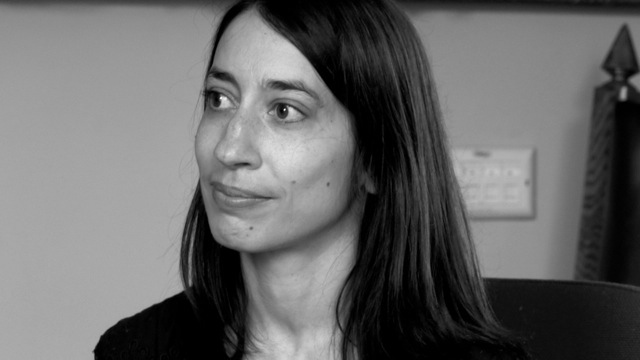
Dr Rehana Ahmed is a Reader in Postcolonial and Contemporary Literature at Queen Mary University of London's School of English and Drama. She holds a BA from Oxford, MA from Sussex, and PhD from Nottingham Trent. Previously, she worked at Teesside University and contributed to the AHRC-funded 'Making Britain' project at The Open University. She co-leads the AHRC-funded 'Remaking Britain' project with Bristol University, exploring South Asian connections from the 1830s. Her research focuses on British Muslim/Asian literature, multiculturalism, and diaspora history. She co-edits Wasafiri , Journal of Commonwealth Literature , and the Multicultural Textualities book series. Her teaching includes courses on postcolonial and global literatures, such as ESH285 and ESH6086. Current research explores solidarity in British South Asian writing and the historical South Asian diaspora. She supervises PhD projects on topics like the Wasafiri archive and race in post-millennial fiction. Public engagement includes curation of literary festivals, database projects on South Asian history, and decolonizing cultural initiatives.
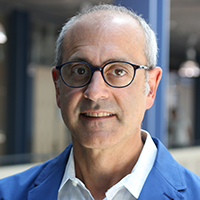
Professor Paul Apostolidis holds the rank of Professor in the Department of Government at the London School of Economics (LSE). His research integrates critical theory with empirical studies of migrant labor, precarity, and racial capitalism. He leads civic engagement initiatives including CIVICA and advises the Mellon-funded 'Latinx Futures' project in California. His academic leadership spans roles as Director of the Radical Critical Theory Circle and co-editor of the 'Studies in Subaltern Latina/o Politics' series. Key publications include *The Fight for Time* (2019) and *Breaks in the Chain* (2010), analyzing Latinx migrant workers' struggles. He teaches GV262 (Contemporary Political Theory) and GV498 (Multiculturalism), emphasizing public-oriented research. His doctoral work at Cornell University and undergraduate studies at Princeton inform his interdisciplinary approach. Research focuses on precarity's political dimensions, night labor's sociopolitical implications, and transnational migrant solidarity. He critiques neoliberalism's temporal structures and advocates for emancipatory education. Recent work examines digital labor platforms and climate change impacts on labor. His articles bridge Marx, Foucault, and Freire to address contemporary struggles over time, labor, and freedom.
Fabio Petito is Professor of Religion and International Affairs (International Relations) in the School of Global Studies at the University of Sussex. He is also the founding Director of the Religion & Foreign Policy Initiative at the University of Sussex, Non-resident Senior Fellow at the Atlantic Council’s Freedom and Prosperity Center, and Head of the Religions & International Relations Programme at the Italian Institute for International Political Studies (ISPI), supported by the Italian Ministry of Foreign Affairs and International Cooperation. His academic background includes a PhD in International Relations from the London School of Economics and Political Science, an MSc in International Politics from Aberystwyth University, and a Laurea in Economic and Social Disciplines from Bocconi University, Milan. He has taught at SOAS, ESCP-EAP, and L’Orientale University. Petito’s research centers on the role of religion and civilizations in International Relations. He has pioneered work on religious engagement in foreign policy, the postsecular in global politics, and interreligious dialogue as a strategy for promoting Freedom of Religion or Belief (FoRB). His influential publications include Religion in International Relations (2003), Towards a Postsecular International Politics (2014), and Human Fraternity & Inclusive Citizenship (2021). He has also contributed to civilizational dialogue theory and the political theology of Carl Schmitt. His recent publications reflect a strong policy orientation, focusing on FoRB, sustainable development (SDGs), interreligious peacebuilding, and the integration of religious actors into foreign policy. These works demonstrate a shift from theoretical critique to actionable policy frameworks, emphasizing dialogue, inclusion, and integral human development. Non-resident Senior Fellow, Atlantic Council’s Freedom and Prosperity Center Member, OSCE/ODIHR Panel of Experts on FoRB (2019–2022) Expert Adviser, German Federal Ministry for Economic Cooperation and Development (2019–2020) Expert Adviser, EU Special Envoy for FoRB (2019–2019) Petito has supervised numerous PhD students in International Relations, Law, and Philosophy, including topics on Chinese international thought, Islamic eschatology, and Christian-Buddhist dual belonging. His research has been funded by the ESRC, British Council, Luce Foundation, and Italian Ministry of Foreign Affairs. He is currently working on projects linking religious engagement to the 2030 SDGs, human fraternity in the Mediterranean, and the theoretical implications of religious engagement for IR. He leads the Religion & Foreign Policy Initiative at Sussex and has collaborated with institutions such as the Community of Sant’Egidio, Wilton Park, and OSCE/ODIHR. His work bridges academia and policy, creating platforms for transatlantic and multilateral dialogue on FoRB and religious engagement.
Ingvil Bjordal is an Associate Professor at the Department of Teacher Education, Norwegian University of Science and Technology (NTNU). Her research focuses on educational policy, multicultural pedagogy, and social justice theory. She has been actively involved in analyzing the privatization and marketization of public education systems in Norway, particularly examining issues of segregation, equity, and policy implementation. Education Policy Educational History Multicultural Pedagogy Social Justice Theory Policy Analysis Curriculum Analysis Her work reveals increasing privatization trends in Norwegian education, highlighting how market-oriented reforms affect social equity and democratic principles. Research spans from critical analyses of public-private partnerships in failing schools to longitudinal studies on parental choice patterns and systemic segregation. Bjordal's publications include empirical studies on school avoidance behaviors, theoretical contributions on structural racism in education, and historical policy analyses tracing Norway's shift from collective schooling models to competitive educational landscapes. She actively participates in public debates through media appearances and academic presentations, advocating for equitable education systems. Her research group affiliations include the Educational Policy, Diversity and Inequality (UMU) group and the Critical Perspectives in Teacher Education (CritTEd) group. She contributes to the Gemini Center and OppInk center, focusing on inclusive education practices.
Adnan Mahmutovic is a Professor at the Department of English, Faculty of Humanities, Stockholm University. He has been lecturing at the department since 2007 and holds a PhD in English Literature from Stockholm University, as well as an MFA in Creative Writing from City University of Hong Kong. His academic expertise spans multiple areas: World Literature and Transnational Writing Postcolonial and Diasporic Literature Comics and Graphic Narrative Studies Creative Writing and Literary Editing Muslim and Islamic Cultural Studies Professor Mahmutovic's research focuses on the intersections of literature, space, and identity, particularly examining how writers navigate cultural and linguistic borders. His work explores how literary works claim space through dynamic relations between locations and orientations, as seen in his book "Claiming Space: Locations and Orientations in World Literatures" (2021). He has also made significant contributions to comics studies with "Visions of the Future in Comics" (2017) and "The Craft of Editing" (2018), which explores editorial practices in contemporary literature. His academic publications demonstrate a consistent engagement with postcolonial theory, particularly examining works by authors like Michael Ondaatje, Salman Rushdie, and Ben Okri. His early scholarly work "Ways of Being Free" (2012) established his interest in how migrant writers articulate existential conditions through their fictional worlds. More recent publications show an expansion into contemporary topics like Muslim-American writing, transnational superhero narratives, and Bosnian refugee experiences. Professor Mahmutovic has received numerous awards for his fiction writing and has served as a judge for prestigious literary prizes including the Neustadt Prize for Literature. He has also acted as fiction editor for "Two Thirds North," a journal of transnational writing, since 2010. His creative work complements his academic pursuits, with publications including "Thinner than a Hair" (2010), "How to Fare Well and Stay Fair" (2012), and "At the Feet of Mothers" (2020). His essay "Comics, War and Ordinary Miracles" has been adapted for BBC Radio, demonstrating the broader cultural impact of his work.
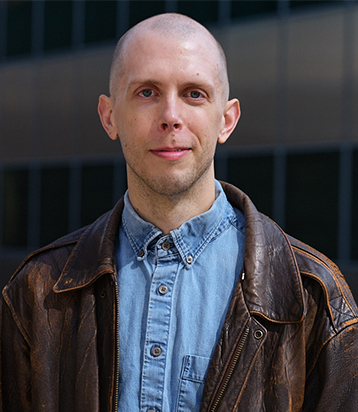
Tobias Harding is a Senior Lecturer at the University of South-Eastern Norway, specializing in Cultural Policy, Heritage Studies, and Civil Society . His research explores the intersection of Swedish cultural policy, secularization, and national identity , particularly focusing on the heritagization of religious architecture and the role of faith-based organizations in secular states. He teaches at the International Master’s Program on Cultural Policy at the University of Jyväskylä and has contributed to critical analyses of Sweden’s cultural canon and the politicization of heritage. Research Interests : Cultural policy, secularization, civil society, religious heritage, and democratic cultural practices. Key Publications : His work includes studies on the Church of Sweden’s transformation , cultural canon debates , and the impact of populism on Nordic cultural policies . Academic Roles : Senior Lecturer at University of South-Eastern Norway, with a docentship in Cultural Policy from the University of Jyväskylä (2017). Contact: tobias.harding@usn.no
Ji-Hyun Ahn is an Associate Professor of Communication at the University of Washington Tacoma, where she is affiliated with the School of Interdisciplinary Arts & Sciences and the Global Honors program. She specializes in media globalization, Korean television and popular culture, Asian multiculturalism, and critical mixed-race studies. Her research examines how media practices facilitate the re-imagination of national identity from global perspectives. Dr. Ahn received her educational training from prestigious institutions across two continents: Ph.D. in Media Studies from University of Texas at Austin (2013) M.A. in Visual Communication from Yonsei University (2007) B.A. in British & American Culture from Sogang University (2005, Summa Cum Laude) Her research interests focus on three interconnected agendas: race and nation in South Korean media, anti-Korean sentiment in postcolonial East Asia, and transnational K-culture. She approaches race as a fundamental principle shaping global social order, particularly examining how racial globalization interacts with transnational media flows in East Asia. Her work bridges media/cultural studies with critical race studies to situate Korean media racialization within global contexts. Dr. Ahn's publications reveal a consistent trajectory examining racial politics in East Asian media, with increasing attention to transnational dynamics of anti-Korean sentiment. Her work spans book publications, journal articles in top communication and cultural studies journals, and book chapters addressing mixed-race politics, multiculturalism, and regional tensions in East Asia. Her significant scholarly recognition includes: Distinguished Speaker of Korean Studies (2020-2023) for the Northeast Asia Council of the Association for Asian Studies Multiple Top Paper Awards for her research Royalty Research Fund grant (2016-2017) from the University of Washington Academy of Korean Studies grant (2017-2018) Beyond research, Dr. Ahn is dedicated to building globally-engaged learning environments. As an affiliated faculty in the Global Honors program and member of the Honors Executive Committee of the Institute for Innovation & Global Engagement, she develops globally focused curricula. She previously served as a visiting professor at Yonsei University and continues to foster scholarly communities of Asian Studies in North America through her distinguished speaker engagements.
Emily Johansen is an Associate Professor of English at Texas A&M University , specializing in 20th/21st-century transnational literatures and cultural theory. Her research explores intersections of cosmopolitanism, neoliberalism, postcolonialism, and global precarity through literary and cultural analysis. Education: Ph.D., McMaster University (2008) M.A., University of Guelph (2004) B.A., University of Alberta (2003) Research Interests include: Cosmopolitanism and global citizenship Neoliberal cultural economies Risk and precarity in contemporary fiction Postcolonial spatial theory Empathy in literature Publication Trends show focus on: 21st-century Anglophone fiction Neoliberalism’s impact on narrative form Risk ethics in global crises Urban/rural cosmopolitan intersections Postcolonial responses to trauma Email: ejohansen@tamu.edu
David K. Seitz is Assistant Professor in the Department of Humanities, Social Sciences, and the Arts (HSA) at Harvey Mudd College. He is affiliated faculty in the Cultural Studies Department at Claremont Graduate University and core faculty in the American Studies Program at The Claremont Colleges. His research bridges cultural geography, queer theory, critical race theory, and psychoanalysis, with a focus on affect, citizenship, and popular culture. His scholarly work explores the affective dimensions of political life, particularly through ethnographic and textual analysis. Key themes include queer citizenship, migrant justice, gentrification, and the politics of emotion. His two major books— A Different Trek: Radical Geographies of Deep Space Nine and A House of Prayer for All People: Contesting Citizenship in a Queer Church —exemplify his innovative use of cultural texts and ethnographic fieldwork to interrogate power, identity, and belonging. His recent publications span journals such as Environment and Planning D , ACME , Transactions of the Institute of British Geographers , and Antipode . He frequently draws on psychoanalytic theory, especially the work of Melanie Klein, to analyze collective affects like guilt, hope, and disappointment in social movements and urban politics. His work on Paddington Bear and Star Trek reveals how popular culture both reflects and challenges colonial and neoliberal ideologies. He teaches courses in critical and emotional geographies, urban studies, political ecology, and queer theory. In 2023, he joined the editorial collective of ACME: An International Journal for Critical Geographies , underscoring his active role in shaping critical geographic scholarship. Assistant Professor, HSA, Harvey Mudd College Affiliated Faculty, Cultural Studies, Claremont Graduate University Core Faculty, American Studies Program, The Claremont Colleges Seitz has not received any explicitly mentioned scientific awards in the provided text. He advises no named students in the materials. His research is supported through academic affiliation and publication rather than listed grants. He is involved in editorial and academic community work, particularly in critical geography and queer studies. He leads and participates in courses and seminars on topics including political ecologies, the city as a structure of feeling, queer pedagogy, and the geographies of education, reflecting his interdisciplinary and affect-sensitive approach to teaching and scholarship.
Professor Paweł Kubicki is a member of the Department of Society and Cultural Heritage of Europe at the Jagiellonian University 's Institute of European Studies. His work bridges urban sociology, social movements , and the Europeanization of identities . He holds a higher doctorate ( habilitacja ) and serves as a permanent faculty member. Key Research Areas : Urban anthropology, migration studies, European cultural heritage, post-totalitarian societies. International Collaborations : Humboldt University (Berlin), University of Belgrade, Lund University, Università di Trieste, Universitat de Barcelona, and others. Recent Publications focus on: Urban resilience during migration crises (Kraków case studies) Backlash movements against progressive urban policies Migration transition in Poland (2016 onwards) Reinterpreting European cultural heritage through urban studies Comparative analysis of globalizing cities (Kraków vs. Poznań) New European Bauhaus initiatives post-pandemic Significant Projects include: 2022-2023: Strategic Program "Excellence Initiative" (principal investigator) 2018-2021: Erasmus+ curriculum development for European urban heritage 2007-2011: FP6 RECON project on urban democratization
Professor David Nally is a University Professor of Historical Geography and Director of Studies in Geography at Jesus College, University of Cambridge. His academic career spans roles at the University of British Columbia and University College Cork before joining Cambridge. He holds a BA in History and Geography from University College Cork and a PhD in Geography from the University of British Columbia. His research focuses on American philanthropy, political ecology, global agriculture, and the historical geography of empire. Key projects include studies on subsistence crises, food security, colonial governance, and the role of philanthropy in shaping global agrarian systems. Nally’s work intersects with social theory, the history of ideas, and biopolitical frameworks. He has received significant recognition including the Philip Leverhulme Prize (2013), Rockefeller Foundation Grant-in-Aid (2014), and CRASSH Fellowship (2009). His publications include Human Encumbrances (2011) and co-authored Key Concepts in Historical Geography (2014). Nally advises PhD students like Troy Fielder and contributes to interdisciplinary initiatives such as the Cambridge Global Food Security programme. His teaching spans historical geography, development theories, and political appetites in food systems. He serves on editorial boards for Irish Geography and the Rowman & Littlefield ‘Global Epistemic’ series, and is affiliated with institutions like the Laureate Centre for History and Population (UNSW Sydney).
Synnøve Kristine Nepstad Bendixsen is a Professor and Head of Department at the Department of Social Anthropology, University of Bergen (UiB), Faculty of Social Sciences. She is a leading scholar in migration, bordering, and welfare state dynamics, with extensive research on irregular migration, humanitarianism, and belonging in Nordic and European contexts. Her research interests include: Migration and bordering practices Welfare state exclusion and inclusion Irregular migrants' access to healthcare Humanitarian governance and encampment Transnational kinship and mobility Gender, religion, and identity among migrants Digitalization of welfare and borders Her recent publications (2022–2024) reflect a strong focus on the Nordic welfare model’s role in controlling migration through bordering practices, the moral economies of healthcare for irregular migrants, and the lived experiences of displacement. Themes across her work include precarity, slow violence, deservingness, and the paradoxes of egalitarian societies producing hierarchical belonging. Scientific contributions and outreach include: Keynote speaker at international conferences (e.g., University of Iceland, EASA) Invited lectures at Princeton, Oxford (COMPAS), Humboldt University, and others Public engagement through op-eds (Bergens Tidende, Morgenbladet), podcasts, and media interviews Documentary film co-creation: Birthdayparents (2018) She has advised PhD candidates such as Elina Niinivaara and Signe Aarvik and has led major research projects including: PrecaNord (2022–2025): Tackling Precarious and Informal Work in the Nordic Countries EQUALPART (2021–2025): Migrant Women’s Participation in Labour Supercamp (2019–2022): Genealogies of Humanitarian Containment Energethics (2015–2019): Norwegian Energy Companies Abroad She has organized academic events such as the Bergen Summer Research School and participates in public discourse on deep sea mining, inclusion, and migration policy. Her work bridges academic research, policy critique, and public anthropology.
Associate Professor Rachel Burke is an Applied Linguist and TESOL educator in the School of Education at the University of Newcastle, affiliated with the College of Human and Social Futures. Her research focuses on linguistically and culturally diverse educational contexts, critical examination of policy impacts, and praxis-driven approaches to language education. She holds a PhD and has extensive experience in refugee education, forced migration studies, and equity in higher education. Research Interests: Dr. Burke’s work spans sociolinguistics, TESOL curriculum development, and educational equity for marginalized groups. Her recent projects explore the linguistic experiences of refugee/asylum seeker students, ethics in fragile research contexts, and digital empowerment for displaced learners. She employs critical discourse analysis to examine structural inclusion/exclusion mechanisms in education systems. Key Contributions: Her 2023 co-authored book Questioning Care in Higher Education challenges conventional definitions of academic service. Over 26 peer-reviewed articles and 12 book chapters address topics like EMI in Vietnam, mental health in teacher education, and policy barriers for asylum seekers. She has secured $418k in grants including the Scanlon Foundation’s Unity Works initiative supporting refugee employment. Grants & Impact: Leads projects like Refugee Mothers & Children Toolkit (Perpetual Limited, 2021) and co-leads the Co-designing Legal Literacy Resources grant (2024). Her work informs institutional policies on linguistic equity and asylum seeker access to education. Supervision: Supervises 12 current PhD students researching topics from EFL pedagogy in Vietnam to wellbeing in primary education. Her mentorship focuses on ethical research practices in sensitive contexts.
Professor Vikki Boliver is a distinguished academic in the Department of Sociology at Durham University, specializing in educational inequalities and social mobility. Her research focuses on how social class and ethnic background influence access to higher status universities, with particular attention to quantitative methodologies and policy-relevant applications. Professor Boliver's research interests center on educational inequalities, with special emphasis on social class and ethnic disparities in access to prestigious universities. Her work examines social stratification and mobility across multiple generations, investigating how family background influences educational trajectories. She is particularly known for her expertise in quantitative research methods applied to large-scale educational datasets, producing policy-relevant findings that inform university admissions practices and widening participation initiatives. Analysis of Professor Boliver's recent publications reveals a consistent focus on educational stratification, with particular attention to contextual admissions, social mobility across generations, and ethnic disparities in higher education access. Her work spans methodological innovations in measuring educational inequality, critical examinations of meritocracy in university admissions, and cross-national comparisons of educational systems. The research demonstrates increasing attention to intersectional approaches examining how class, ethnicity, and other identity markers interact in shaping educational opportunities. Editorial Board member of Higher Education Policy British Journal of Sociology of Education editorial board member BSA Sociology journal editorial board member Professor Boliver actively supervises numerous PhD students, primarily focusing on educational inequalities, social mobility, and higher education policy. Her supervision portfolio includes both current and completed doctoral projects examining topics such as educational tracking, grammar school effects, ethnic disparities in university access, and contextual admissions practices. She frequently collaborates with other faculty members on supervision teams, contributing her expertise in quantitative methods and educational policy analysis to interdisciplinary research projects.
Dr Daniel Nilsson DeHanas is a Reader in Politics and Religion at King’s College London, based in the Department of Theology & Religious Studies within the Faculty of Arts & Humanities. He joined King’s in 2014 after completing his PhD in Sociology at the University of North Carolina at Chapel Hill, with affiliations to the School of Oriental and African Studies (SOAS) in London. His career includes research roles at the Universities of Bristol and Kent, and a Fulbright fellowship at the University of Tampere, Finland. His research focuses on Muslims in British and transnational politics, populism’s religious dimensions, and London as a global migration hub. He argues that populism inherently relies on a ‘sacred’ people concept, necessitating religious studies perspectives. His work spans the ‘Muslim Atlantic’ cultural space, Gen Z Muslim engagement, and the interplay between religion and secularity. DeHanas teaches undergraduate and postgraduate modules in global comparative politics, religion in international relations, and religion-media intersections. He co-edits the journal Religion, State and Society , fostering global scholarship on religion-politics intersections. His recent publications explore sacred dimensions of populism, Eastern Orthodoxy in Ukraine, and religious infrastructure dynamics. While no scientific awards are noted, his academic leadership includes organizing events like the 2023 ‘Neoliberal Religion’ roundtable. He actively supervises PhD students in areas aligning with his research interests, though specific advisee names are not listed. His work contributes to debates on migration, secularism, and the evolving role of religion in global politics.