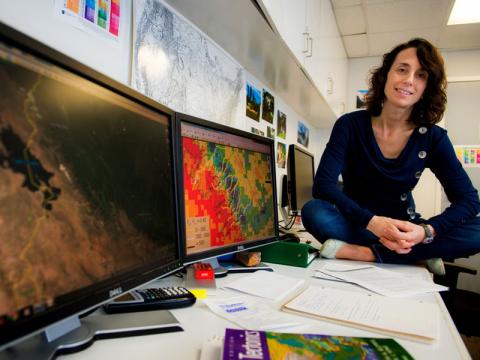
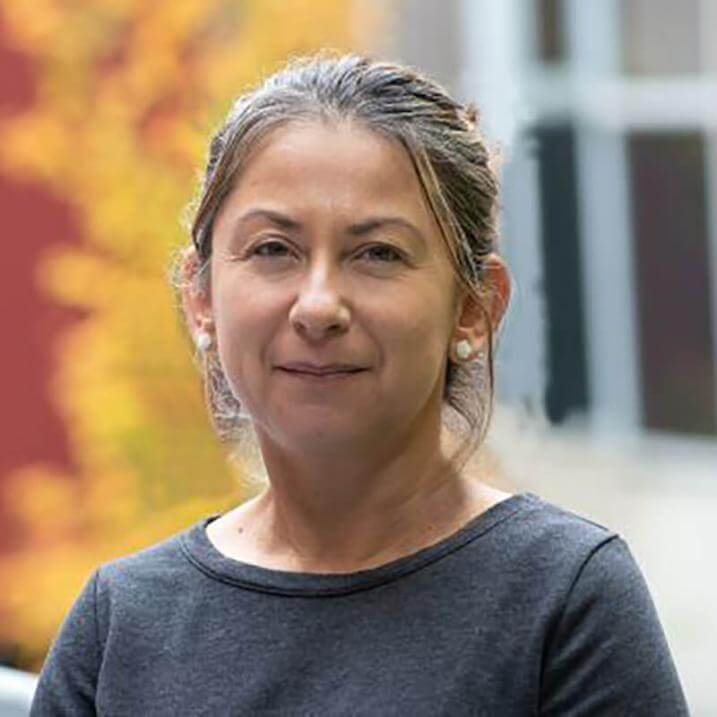
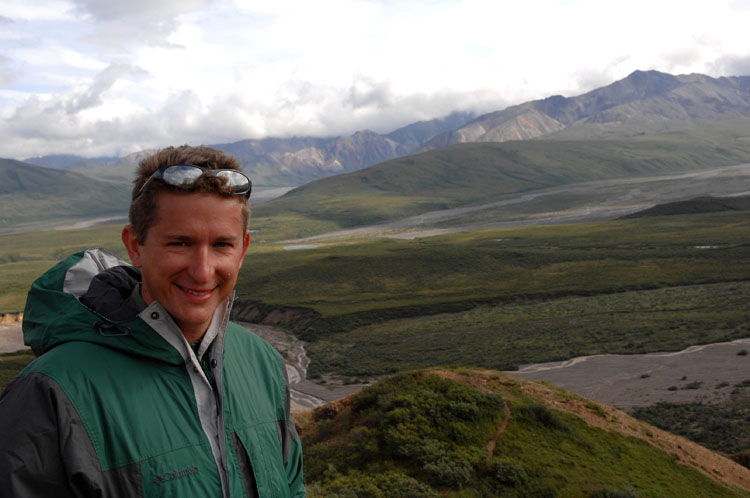
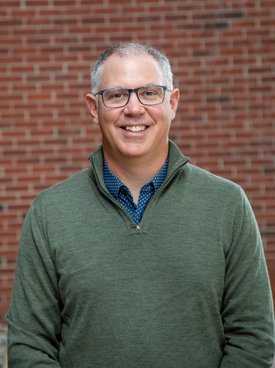
Nicole M. Gasparini is an Associate Professor in Tulane University's Department of Earth and Environmental Sciences, School of Science & Engineering. She holds a Ph.D. from MIT (2003) and researches fluvial/tectonic geomorphology, landscape evolution modeling, and climate-erosion interactions using tools like Landlab. Her work investigates sediment transport, river network evolution, and human impacts on landscapes. Research integrates field data with numerical models to quantify erosion processes across diverse environments. Publications demonstrate expertise in geomorphic model development, particularly through contributions to the Landlab toolkit. Recent articles focus on climatic controls on erosion, fault geomorphology, and uncertainty quantification in earth-surface models. Awards: Marguerite T. Williams Award for contributions to geosciences and advocacy against harassment in STEM Leads collaborative projects on landscape response to climate change and mentors students/postdocs in geomorphology and computational modeling.
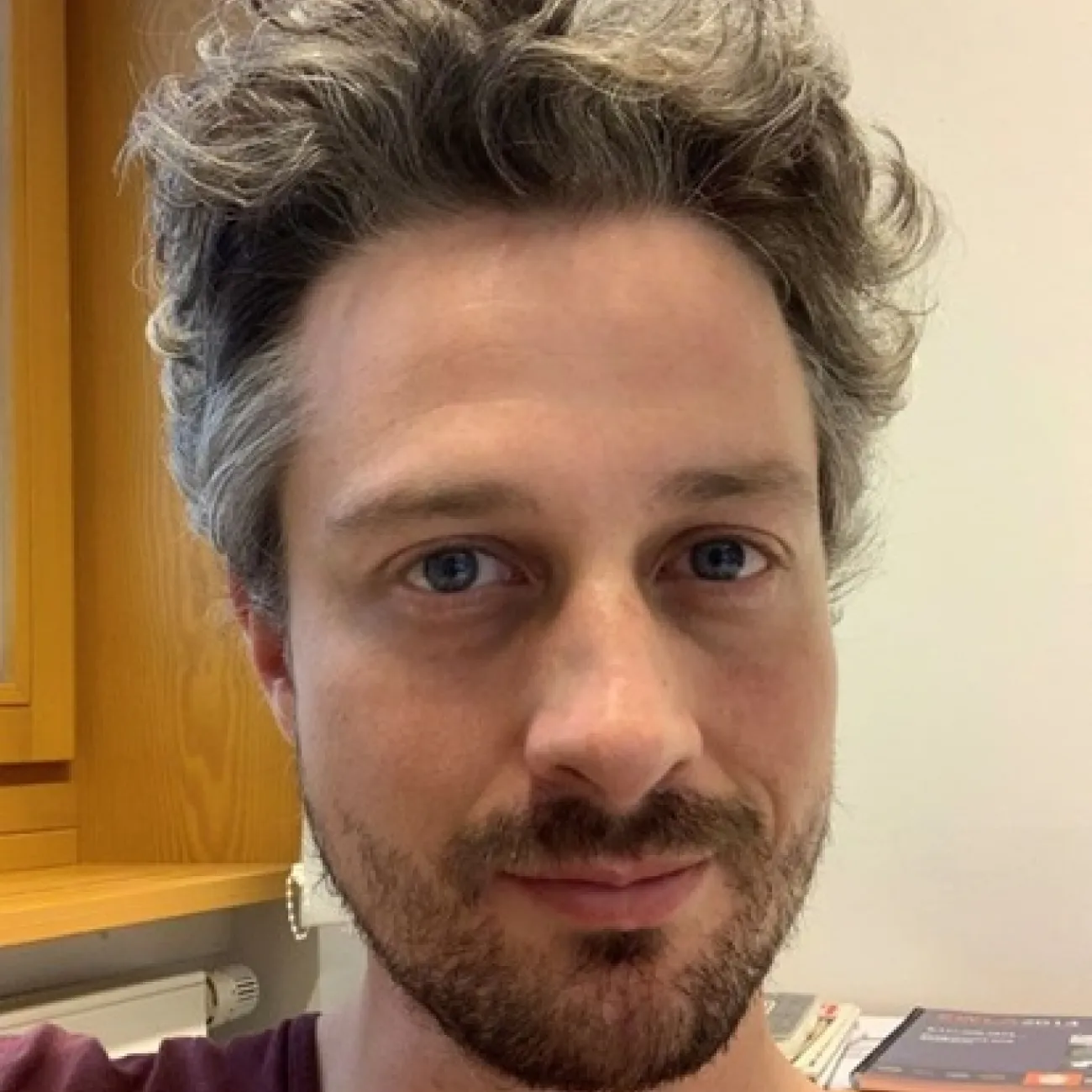
Seth Finnegan is a Professor in the Department of Integrative Biology at the University of California, Berkeley, and affiliated with the University of California Museum of Paleontology. His research focuses on understanding the processes shaping marine ecosystems and biota from the late Neoproterozoic to the present, with a particular emphasis on the Ordovician Period and mass extinctions. He integrates field observations, laboratory data, and literature databases to study extinction selectivity, environmental proxies (e.g., stable isotopes, biomarkers), and ecosystem reconstructions. His lab, the Finnegan Lab, explores themes such as organism-environment interactions and the drivers of biodiversity changes. Finnegan’s work has been widely published in journals like Proceedings of the National Academy of Sciences and Geology , and he collaborates with institutions globally. Despite no listed awards here, his contributions to paleontology are significant.
Dr. John Warren Huntley is an Associate Professor in the Department of Geological Sciences at the University of Missouri. His research examines the fossil record of biotic interactions including parasitism, predation, and competition, with additional focus on conservation paleobiology and morphological disparity evolution. Dr. Huntley investigates host-parasite dynamics in marine bivalves, human impacts on mollusk populations, and Phanerozoic predation patterns. His work integrates stratigraphic paleobiology with ecological and evolutionary analyses to reconstruct historical ecosystem dynamics. His recent publications demonstrate expertise in paleoparasitology, taphonomy, and conservation paleobiology, applying novel analytical methods to questions about parasite-host coevolution, preservation biases, and extinction events. This research provides critical insights into long-term ecological patterns and biological responses to environmental change. Dr. Huntley has received significant recognition including an NSF CAREER Award and Humboldt Research Fellowship, and he co-edited the comprehensive volumes 'The Evolution and Fossil Record of Parasitism'.
Natalia Rybczynski is an Adjunct Research Professor in the Department of Biology at Carleton University, affiliated with the Faculty of Science. Her primary research focuses on Paleobiology and Paleoenvironments of the Cenozoic High Arctic and functional morphology of vertebrate feeding and locomotion systems. She holds offices at the Canadian Museum of Nature in Gatineau and coordinates interdisciplinary projects on Arctic paleoenvironments, pinniped evolution, and vertebrate herbivore feeding mechanisms. Education: B.Sc. in Biology, Carleton University M.Sc. in Zoology, University of Toronto Ph.D. in Evolutionary Anthropology, Duke University Research Interests: Reconstructing Arctic paleoenvironments during the Neogene Evolutionary transitions in marine mammals (e.g., pinnipeds) Feeding kinematics in herbivorous vertebrates like hadrosaurs Integration of field-based paleontology with biomechanical and anatomical analyses Her publications span paleoclimatology, fossil analysis, and evolutionary studies, emphasizing Arctic ecosystems and vertebrate adaptations. Collaborative work includes geoscientists to reconstruct ancient Arctic climates and anatomists to model feeding systems in extinct species. Active in field expeditions and lab-based experimental studies. Labs/Teams: Collaborates with Canadian Museum of Nature researchers and international teams in Arctic paleontology projects. Engages in interdisciplinary initiatives like the PoLAR-FIT project studying Pliocene Arctic ecosystems.
Katrina Campbell is a Professor at the School of Biological Sciences , Queen's University Belfast , where she leads the Biosensors Strand within the Centre for ASsured, SafE and Traceable food (ASSET) . She holds dual Fellowships from the Royal Society of Biology and Royal Society of Chemistry , and is affiliated with the Irish Toxicology Society , SFET , and International Society for the study of harmful algae . Education: BSc (Hons) in Biochemistry (1995), Queen's University Belfast MMedSc in Ultrastructural Anatomy and Pathology (1996), Queen's University Belfast PhD in Pharmacy (transdermal drug delivery), Queen's University Belfast Katrina's research focuses on rapid biosensor-based detection of toxins, chemical contaminants, and pathogens throughout the "environment to farm to fork" food supply chain. She develops antibodies, phage, and aptamers for bioanalytical methods on platforms like Biacore AB, SAW Instruments, and Neogen Lateral Flow , aiming to enhance food safety , sustainability , and traceability . Her work aligns with UN Sustainable Development Goals including Zero Hunger ( SDG 2 ), Climate Action ( SDG 13 ), Life Below Water ( SDG 14 ), and Life on Land ( SDG 15 ). Recent publications address plant-based milk contaminant detection , marine biotoxin monitoring , and PFAS regulation impacts on food sustainability. She leads projects like Seafoodtomorrow , Eurobiotox , and Mychif , collaborating with the Food and Drug Administration (USA) and through Safefood funded initiatives. Scientific Awards: Fellow of the Royal Society of Biology (2023) Fellow of the Royal Society of Chemistry (2023) Katrina supervises PhD students and contributes to technology transfer workshops . She serves as EITFOOD Education Programmes Co-ordinator at Queen's University Belfast. Labs & Collaborations: She leads the Biosensors Strand in ASSET, collaborating with multi-centre EU projects (BioCop, Conffidence, Midtal, Atlantox), industrial partners , and international institutions to create state-of-the-art biosensor tools for food safety.
Laura J. May-Collado is an Associate Professor in the Department of Biology at the University of Vermont, affiliated with the College of Arts and Sciences. Her research focuses on integrative marine biology, particularly the use of sound to study marine communities and the evolution of marine mammal communication. She holds additional roles as a Research Associate at CIMAR (Costa Rica), Affiliate Professor at Universidad Maritima Internacional de Panama, and member of the Committee of Scientific Advisors for the Marine Mammal Commission. Dr. May-Collado's education includes a B.Sc. and M.Sc. in Biology from the University of Costa Rica (1995–2001) and a Ph.D. in Biology from Florida International University (2003–2007). Her research interests span animal communication, soundscapes, marine conservation, and the behavioral ecology of marine vertebrates. She employs phylogenetic analyses, autonomous recording systems, and drones to study evolutionary and ecological factors shaping marine communities. Key projects include the ONDAS Initiative, deploying acoustic recorders in Central American waters to study humpback whales and dolphin communication. She collaborates internationally, co-founding Panacetacea.org and advising organizations like MI AMBIENTE in Panama. Her work emphasizes conservation, including studies on manatee feeding behavior in Belize and dolphin population dynamics in the Gulf of Chiriqui. Dr. May-Collado is also active in education, leading the CURE Lab and teaching courses on marine biology and mammalogy. She advocates for inclusive science through initiatives like the IRES-Costa Rica program and outreach via social media (@maycolladolab). Her research bridges ecology, evolution, and conservation, with a focus on leveraging soundscapes for biodiversity monitoring.
Dr. David Evans is a Royal Society University Research Fellow at the University of Southampton with expertise in paleoclimate reconstruction and marine geochemistry. His research focuses on understanding climate-Earth surface interactions through geochemical proxies, experimental culturing of marine organisms, and numerical modeling. He leads several major projects funded by the Royal Society and UKRI aimed at refining paleoclimate reconstructions. Dr. Evans investigates Cenozoic warm periods (particularly the early Eocene) to evaluate climate model performance and understand climate-biosphere interactions. His work centers on: 1) Reconstructing boundary conditions affecting geochemical proxies, especially seawater composition; and 2) Understanding biomineralization processes in key archives like foraminifera to ensure accurate proxy applications through geologic time. His publications (2024-2025) predominantly focus on marine biomineralization, paleoclimate proxies, and carbonate geochemistry, with frequent applications of isotope techniques and experimental approaches. Research consistently emphasizes methodological improvements in geochemical analyses and proxy validation. He currently supervises four PhD students across biological sciences and oceanography. His research group is part of the Geochemistry unit and Southampton Marine and Maritime Institute. Major active projects include Horizon Europe's AMOEBA initiative and a correlative cryo-analytical center development.
Catherine Badgley is a Professor in the Department of Ecology and Evolutionary Biology at the University of Michigan. She serves as a Research Scientist at the Museum of Paleontology and the Residential College, with a career spanning over four decades since joining as a Michigan Fellow in 1982. Her work bridges paleoecology, biogeography, and sustainable agriculture, focusing on biodiversity responses to global change across deep time scales. Ph.D. in Geology from Yale (1982) MFS from Yale School of Forestry and Environmental Studies (1974) B.A. in Geology from Radcliffe College (Harvard) Her research integrates four major themes: Paleoecology: Quantitative analysis of fossil assemblages, taphonomy, and Cenozoic mammal community dynamics Climate Change: Using mammal databases to link modern ecological patterns with paleoclimatic inference Spatiotemporal Biodiversity: Tracking mammal-plant co-evolution since the Last Glacial Maximum using isotopic and morphological proxies Agricultural Sustainability: Pioneering studies demonstrating organic agriculture's capacity to meet global food demands Recent publications reveal trends combining 4D geodynamic modeling , C3/C4 vegetation transitions , and functional morphology across Neogene records in Pakistan, Spain, and North America. Her fieldwork spans the Siwalik sequence, Mojave Desert, and Great Basin regions. She leads the NSF-funded NARLEE (North American Rodent Landscapes Evolution & Ecology) Research Coordination Network and teaches courses like EEB 318/319 on Food Systems and EEB 445 Biogeography, featuring immersive fieldwork and interdisciplinary analysis of agricultural impacts on biodiversity.
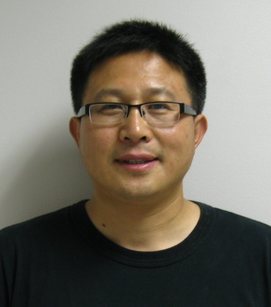
Dr. Shundong Bi is a Professor in the Biology Department at Indiana University of Pennsylvania (IUP), with a joint appointment as a professor at the Centre for Vertebrate Evolutionary Biology, Yunnan University. His research focuses on three major themes: the origins and early evolution of mammals, biodiversity of mammals through time, and Neogene climate changes and their impacts on mammalian evolution. He holds a PhD in Anatomy from Howard University and a BS in Paleontology from Beijing University. Dr. Bi has published over 50 papers in prestigious journals like Nature , Geology , and Evolution , including groundbreaking discoveries of eight new mammalian species (e.g., Ambolestes , Shenshou , and Anebodon ). His work has received widespread media coverage in outlets such as the Post-Gazette and National Geographic . His research integrates paleontological and anatomical approaches to address evolutionary questions. He collaborates internationally, exemplified by his joint professorship in China. His recent publications span the Early Cretaceous eutherian mammals, Jurassic euharamiyidans, and Oligocene rodent evolution, reflecting a deep engagement with both macroevolutionary patterns and taxonomic discovery.
Tom Arne Rydningen is an Associate Professor in the Department of Geosciences at UiT The Arctic University of Norway, specializing in Arctic marine geology. His research focuses on Cenozoic continental margin development, glacial history, and source-to-sink sedimentary systems in high-latitude environments. He actively contributes to understanding the evolution of the Arctic Ocean and its connections to global ocean circulation. Dr. Rydningen's research interests center on high-latitude continental margin development, particularly examining the large-scale evolution of ocean circulation in the Norwegian-Greenland Sea and Arctic Ocean during the Miocene. He investigates the buildup and retreat of marine-based ice sheets through the Quaternary in Fennoscandia, the Barents Sea, Svalbard, and northeastern Greenland. His work employs diverse methodologies including contourite studies , glacigenic deposits analysis , source-to-sink system modeling , and seismic stratigraphy using 2D/3D seismic data and multibeam echosounder data. Analysis of his 15 most recent publications reveals a strong focus on Arctic geological processes, particularly concerning the Barents Sea region. His work spans multiple disciplines including glaciology, paleoceanography, and sedimentology, with significant contributions to understanding Pleistocene glaciations, Cenozoic tectonic influences on sediment transfer, and microplastic pollution in Arctic marine sediments. Recent publications demonstrate increasing interdisciplinary approaches, connecting geological processes with contemporary environmental concerns. Dr. Rydningen is actively involved in several major research projects including DYPOLE (Dynamics of polar confined basins), Arven etter Nansen, TUNU, Euro-arctic marine fishes, iEarth, and GoNorth. He is a member of the Sedimentary Systems, Paleoclimates and Environments research group and contributes to science didactics in higher education. His teaching portfolio includes courses in marine geology, geological interpretation, and Arctic marine geology fieldwork. His research combines fieldwork, seismic data interpretation, and sediment core analysis to reconstruct past environmental conditions and ice sheet dynamics in the Arctic. This work has significant implications for understanding current climate change impacts on polar regions and provides crucial context for interpreting modern Arctic environmental changes.
Dr. Jenny Gales is an Associate Professor in Hydrography and Ocean Exploration at the University of Plymouth's School of Biological and Marine Sciences. She leads the BSc Ocean Exploration and Surveying program and serves as Deputy Lead for the MSc Hydrography program. Her research focuses on Antarctic continental margin processes, submarine landslides, glacial dynamics, and marine robotics applications. She has participated in major expeditions including IODP Expedition 374 to the Ross Sea and the Coordinated Canyon Experiment in collaboration with MBARI. Education includes a PhD at the British Antarctic Survey, postdoctoral work at the National Oceanography Centre, and academic exchanges at the Arctic University of Norway and Statoil ASA. Her technical expertise spans marine geophysics, bathymetry, and the use of ROVs/AUVs for seafloor mapping. Research interests emphasize ice-sheet stability, submarine canyon geomorphology, and sediment transport mechanisms. Recent work integrates seismic data, core samples, and oceanographic models to understand Antarctic margin evolution. Over 50 peer-reviewed articles address topics like turbidity currents, contourite drifts, and climate-driven sediment processes. Teaching responsibilities include modules on marine mapping, coastal surveying, and energy exploration. Supervised PhD student Maxine King completed a study on Ross Sea continental margin dynamics. Active in international collaborations, she contributes to the International Bathymetric Chart of the Southern Ocean (IBCSO) and has advised on offshore glacial reconstructions in Scotland. Her lab work involves advanced sensor networks and autonomous systems for deep-sea monitoring. Current projects include analyzing Antarctic submarine landslide triggers and preparing for upcoming expeditions to study ice-sheet margin interactions.
Dr. Daniel I. Hembree is a Professor in the Department of Earth, Environmental, and Planetary Sciences at the University of Tennessee Knoxville. He holds a B.S. in Geology from the University of New Orleans (1999) and M.S./Ph.D. in Geology from the University of Kansas (2005). His research integrates paleopedology and ichnology to investigate interactions between biological, sedimentological, and climatic processes in terrestrial ecosystems across deep time. Research Focus: Dr. Hembree examines the evolution of soils, landscapes, and soil ecosystems through geologic history, emphasizing the impacts of climate change. His work combines field studies of paleosols and ichnofossils with experimental neoichnology using modern soil organisms (e.g., arthropods, amphibians, reptiles) to develop analogs for interpreting fossil records. Key projects analyze Pennsylvanian-Permian strata in the Appalachian Basin and Cenozoic deposits in the Americas. Publication Trends: His recent articles (2017–2025) demonstrate a focus on neoichnological experiments, paleosol geochemistry, and fluvial ichnofossil responses to climate shifts. Studies frequently employ multidisciplinary approaches linking trace fossils, sedimentology, and paleoclimatology to reconstruct terrestrial paleoenvironments. Student Advising: Dr. Hembree actively mentors graduate and undergraduate researchers. Current advisees include Conner Bennett (MS) and Andrew Oligmueller (PhD). He has supervised 18 thesis students, including projects on arthropod neoichnology, paleosol analysis, and Dunkard Group stratigraphy. Laboratory Leadership: He directs the Continental Ichnology and Paleopedology Research Lab, which conducts experimental studies of burrowing behaviors and maintains a neoichnology database funded by the National Science Foundation.
Jane Kathryn Willenbring is an Associate Professor in the Department of Earth & Planetary Sciences at Stanford University, with a courtesy appointment in Earth System Science. She joined Stanford in 2020 after previous roles as an Associate Professor at Scripps Institution of Oceanography, UC San Diego, and the University of Pennsylvania. Her research focuses on Earth surface processes, integrating geochemistry, field observations, and numerical modeling to understand landscape evolution driven by tectonics, climate, and vegetation interactions. She is a leading expert in cosmogenic nuclide techniques and advocates for citizen science to address environmental challenges like urban pollution and agricultural contamination. Education: B.Sc. (North Dakota State University), M.Sc. (Boston University), Ph.D. (Dalhousie University) Postdoc: Saint Anthony Falls Lab, University of Minnesota; GFZ Potsdam, Germany Research interests include: Quantifying erosion and weathering rates using cosmogenic isotopes Vegetation-topography feedbacks in tropical montane regions Environmental justice through geoscience education and community engagement Bioremediation of asbestos-contaminated sites Publications highlight her work on coastal cliff retreat, soil soundscapes, and Andean tectonics. Awards include the Marguerite T. Williams Award (AGU) and Gabilan Faculty Fellow (Stanford). She advises graduate students and postdocs on topics ranging from landscape evolution to anti-racism in academia. Her lab previously directed the Scripps Cosmogenic Isotope Lab and now contributes to Stanford’s geoscience initiatives.
Gregory Hoke is the Jessie Page Heroy Professor and Department Chair of Earth and Environmental Sciences at Syracuse University's College of Arts and Sciences. His work bridges tectonic geomorphology, climate-landscape interactions, and isotopic geochemistry, with particular focus on the Andes and Tibet. Education Ph.D., Geological Sciences, Cornell University (2006) B.S., Geology and Geological Oceanography, University of Rhode Island (1998) High School Diploma, George Stevens Academy (1994) Research Interests Dr. Hoke investigates how tectonic forces and climatic changes shape Earth's surface through erosion and sediment transport. His isotopic studies of soil carbonates reveal paleoclimate conditions, while his fieldwork in the Andes examines river incision, landslide impacts, and landscape response to slab geometry changes. Recent work combines cosmogenic nuclide dating with numerical modeling to quantify erosion rates and mountain-building processes. Scientific Contributions His publications show strong emphasis on tectonic controls in the Andes, climate change impacts on erosion, and innovative isotope applications. Key trends include: 1) Tectonic uplift-erosion coupling in Colombia's Northern Andes; 2) Quantifying glacial vs non-glacial erosion in Carpathians and Tibet; 3) Developing new isotopic proxies for paleoclimate reconstruction. Grants & Awards 2019-2020: Fulbright research/teaching fellowship at University of Wrocław 2020-2023: National Science Center (Poland) grant for cave cosmogenic dating 2019-2022: CUSE I2R Grant for Green Lakes temperature proxy studies 2018-2023: Interdisciplinary seminar grant for Environment, Sustainability and Policy 2021: Acquisition of Milli-Q water purification system 2020: Fulbright extension for 2-month research Academic Service He serves on Syracuse's Environment Sustainability and Policy steering committee (2017-present) and acts as Faculty Liaison for SU Project Advance's teacher training (2013-present). As Associate Department Chair (2020-2021), he helped shape geosciences education at Syracuse. Laboratory Facilities Dr. Hoke directs a comprehensive Earth Surface Processes lab with mineral separation equipment (Frantz magnetic separator, carbonator), cosmogenic nuclide preparation tools, and field systems for erosion monitoring. His lab supports both undergraduate and graduate research through advanced analytical capabilities.
Dr. Lyla Taylor is a Research Fellow at the School of Biosciences, University of Sheffield, specializing in climate change mitigation through enhanced rock weathering. She is a key contributor to the Leverhulme Centre for Climate Change Mitigation (LC3M), where her work focuses on developing scientifically sound approaches to using crushed silicate rocks in agricultural settings for atmospheric CO 2 removal while improving soil health and crop productivity. Dr. Taylor's research interests span multiple dimensions of climate change mitigation and environmental science. Her work primarily focuses on enhanced rock weathering as a carbon dioxide removal strategy, examining how silicate minerals interact with agricultural systems to sequester carbon. She investigates the biogeochemical processes involved in rock weathering, the impacts on soil chemistry and fertility, and the potential co-benefits for crop production. Her research also explores the historical context of weathering processes and their role in Earth's climate system over geological timescales, connecting past climate changes with potential future mitigation strategies. Analysis of Dr. Taylor's publication record reveals a strong emphasis on practical applications of enhanced weathering for carbon sequestration. Her work spans from fundamental laboratory studies to field trials examining real-world efficacy of rock dust application in agricultural settings. A recurring theme is how weathering processes can be optimized for maximum carbon removal while providing agricultural co-benefits such as improved soil fertility and crop yields. Her research addresses challenges related to scaling up these techniques and understanding their long-term environmental impacts across diverse ecosystems. Dr. Taylor has contributed to numerous collaborative research projects investigating enhanced weathering as a climate change mitigation strategy. Her work forms part of a broader effort at the University of Sheffield to develop scientifically sound approaches to carbon dioxide removal that can complement emissions reduction efforts in achieving climate goals. She has collaborated extensively with Professor David Beerling, Director of the LC3M, and other leading researchers in the field of climate change mitigation.