Summary Clotilde Coron is a Full Professor of Management Sciences at the Faculté Jean Monnet, Université Paris-Saclay. She previously held an Associate Professor position at IAE Paris (2017–2022). Her research focuses on gender equality, gender stereotypes, and the role of quantification in HR management. She earned a PhD in Management Sciences (Université Paris-Est, 2015) and a HDR (Université de Poitiers, 2021). She is also a graduate of ENSAE (2012) and Sciences Po (2013). Academic Roles: Full Professor, Université Paris-Saclay Vice-President for Equality, Diversity, and Inclusion (since 2024) Elected member of the Research Committee (since 2024) Co-responsible for the M1 Master in Management (since 2023) Research Interests: Dr. Coron’s work critically examines gender equality policies, the societal impact of gender stereotypes, and the ethical implications of algorithmic HR practices. She emphasizes the need for organizations to adopt intersectional frameworks to address systemic inequalities. Grants and Projects: ANR funding for lesbian workplace inclusion (2024–2025) Research on gender in health innovation (2023–2024) Studies on chatGPT in education and LGBTQ+ mental health (2023–2024) Awards: EFMD-FNEGE Best Research Book Award (2023, 2019) FNEGE Label for multiple academic contributions Teaching: She teaches advanced courses in quantitative methods, HR analytics, and gender studies at undergraduate and graduate levels. Recent courses include Data Analysis Tools (M1), Quantitative Methods (M2), and distance-learning modules on HR management.
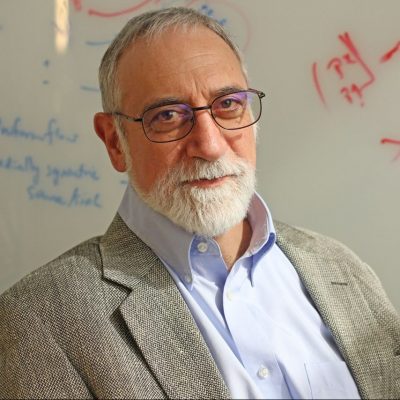
Scott Kemp is an Associate Professor at the Massachusetts Institute of Technology (MIT) within the Department of Nuclear Science and Engineering , where he also directs the Laboratory for Nuclear Security and Policy . His interdisciplinary research bridges physics, political science, and history to address challenges in nuclear security, energy policy, and critical infrastructure protection . Education: B.Sc. in Physics from University of California, Santa Barbara; Ph.D. in Public and International Affairs from Princeton University Research focuses on: Strategic implications of hypersonic and advanced conventional weapons Securing vulnerabilities in energy/water/gas infrastructure Technological tools for nuclear disarmament verification Decarbonization policy frameworks Scientific recognition includes: Fellow of the American Physical Society (2017) Sloan Research Fellowship in Physics (2016) NEC Corporation Award in Computation (2015) Fulbright Fellow (2003) As an academic advisor in MIT's Energy Studies Program , he mentors students in policy-science intersections while serving on the International Policy Lab and President’s Committee for Distinguished Fellowships .
Daniel E. Koditschek is the Alfred Fitler Moore Professor in the Department of Computer and Information Science at the University of Pennsylvania’s School of Engineering and Applied Science. He also holds primary appointments in the Department of Electrical and Systems Engineering and a research affiliation with the Department of Mechanical Engineering and Applied Mechanics. He is a leading figure in the GRASP Lab, where he leads the Kod*lab, a specialized group focused on physical interaction and locomotion in autonomous robots. His research lies at the intersection of dynamical systems theory and robotics, emphasizing legged locomotion, hybrid control systems, and bio-inspired design. Koditschek's work integrates formal mathematical modeling with empirical testing of physical robots that run, jump, climb, and manipulate objects. He actively explores how biological insights into animal mobility can inform robotic autonomy and control. His group maintains strong collaborations with biologists and emphasizes embodied intelligence in machine behavior. The recent publications reflect a strong trend in applying theoretical control frameworks—such as hybrid dynamical systems, averaging methods, and navigation functions—to practical robotic challenges in unstructured environments. Topics include terrain adaptation, energy-efficient locomotion, reactive planning, and affordance-based interaction. There is a clear focus on bridging abstract mathematical models with real-world robotic performance, particularly in legged and mobile manipulation systems. IEEE RAS Pioneer Award Heilmeier Research Award AFOSR MURI Award (2010) Daniel Koditschek has advised numerous PhD students and postdoctoral researchers, many of whom now hold faculty positions or leadership roles in robotics companies like Ghost Robotics and Boston Dynamics. His research is supported by major grants from the NSF and AFOSR, including the MURI award and REU/RET programs that engage K-12 and undergraduate educators. He has also been involved in international outreach, including activities at the Penn Wharton China Center. Koditschek leads the Kod*lab within the GRASP Lab’s PERCH facility, which houses advanced legged robots such as the Ghost Minitaur, XRHhex, Inu, Delta Hopper, and Jerboa platforms. The lab emphasizes experimental validation of control theories using custom hardware and real-world terrain challenges.
Stephen Leider is the Dale L. Dykema Professor of Business Administration and Professor of Technology and Operations at the Ross School of Business, University of Michigan. His research focuses on behavioral economics and operations, exploring contracts, bargaining in supply chains, dynamic decision-making, and technology’s role in productivity. He holds a BA from Case Western Reserve University, and MA and PhD from Harvard University. Leider’s research spans behavioral operations management, including studies on symbolic awards in buyer-supplier relations, innovation sharing in product development, and the impact of decision rights. His work integrates experimental, theoretical, and empirical methods to address operational challenges influenced by human behavior. His recent articles highlight trends in algorithmic decision-making, replication studies in operations research, and the design of enterprise social media platforms. Education: BA in Economics, Case Western Reserve University (2003) MA and PhD in Business Economics, Harvard University (2006, 2009) Leider’s research has been published in top journals like Management Science and Manufacturing & Service Operations Management . He co-authored The Handbook of Behavioral Operations (2018), emphasizing interdisciplinary approaches to operational challenges. His work often bridges theory and practice, offering insights into how behavioral factors shape organizational and supply chain dynamics. Leider’s advising and grants focus on behavioral operations and entrepreneurship. He has collaborated on studies involving field experiments in the Philippines, exploring vote-selling and its implications for institutional trust. His lab focuses on behavioral analysis of strategic interactions and dynamic resource allocation, with ongoing projects on algorithm reliance and human decision-making under uncertainty.
LING Chun Kai is an Assistant Professor in the Department of Computer Science at the National University of Singapore (NUS), School of Computing. His research focuses on multiagent systems, computational game theory, and machine learning applications in adversarial real-world domains like cybersecurity and logistics. Educational background includes a PhD in Computer Science (2017-2023) from Carnegie Mellon University and a First Class BEng in Computer Engineering (2015) from NUS. Previously, he was a Postdoctoral Research Scientist at Columbia University. Current research interests span computational game theory, machine learning for multi-agent systems, equilibrium characterization in imperfect information settings, and applications in network security, logistics, and recreational games. Key methodological contributions include scalable algorithms for game solving, differentiable game solvers, and copula-based statistical modeling. Recent publications focus on attacker-defender graph games, language negotiation agents, and modeling games with incomplete information. Collaborations include researchers from Columbia University, Carnegie Mellon, and institutions working on GameSec, AAAI, Neurips, and ICML venues. Scientific Awards: IJCAI 2018 Distinguished Paper Award GameSec 2023 Best Paper Award GameSec 2024 Best Paper Award Singapore Teaching and Academic Research Talent Scheme (2024) Teaching includes courses on AI Planning and Decision Making (CS4246, CS5446) and Advanced Topics in Artificial Intelligence (CS6208).
Jing Zeng is an Assistant Professor of Computational Communication Science at the University of Zurich, Switzerland. She holds a PhD in Media and Communication from Queensland University of Technology (2017), an MSc in Social Science of the Internet from the Oxford Internet Institute (2013), and a BA in International Communications from the University of Nottingham (2012). Her research focuses on digital platforms, computational social science, AI governance, and misinformation dynamics. She has held academic appointments at Utrecht University (2022–2024) and fellowships at institutions including the Max Planck Institute for the History of Science and the Weizenbaum Institute. Zeng is a leader in digital media research, serving on editorial boards for journals such as Big Data & Society and Convergence , and co-editing the Technology, Power & Society book series. Her work bridges critical platform studies with empirical analyses of conspiracy theories, climate communication, and TikTok culture. Zeng’s research has been recognized through awards including the ICA Computational Methods Interest Group Top Paper (2020) and the Utrecht University Teaching Award (2023). She actively engages in public discourse through media commentaries in The Guardian , The Atlantic , and Science|Business , addressing topics like AI ethics, platform governance, and disinformation. Her current projects explore AI imaginaries, visibility moderation on TikTok, and cross-cultural digital activism. Education: PhD (QUT), MSc (Oxford), BA (Nottingham) Affiliations: Association of Internet Researchers (AoIR Executive Board), IPIE Scientific Network
Norman Sadeh is a Professor in the School of Computer Science at Carnegie Mellon University (CMU), where he has made significant contributions to cybersecurity, privacy, and AI research. He has co-founded and co-directed several groundbreaking graduate programs at CMU, including the Privacy Engineering Program (2012-present), the Ph.D. Program in Societal Computing (2003-2013), and the MBA track in Technology Strategy and Product Management (2005-2017). Carnegie Mellon University, School of Computer Science Software and Societal Systems Department CyLab Security and Privacy Institute Manufacturing Futures Institute Dr. Sadeh received his Ph.D. in Computer Science at CMU with a major in Artificial Intelligence and a minor in Operations Research. He holds an M.Sc. in computer science from the University of Southern California and a BS/MS degree in electrical engineering and applied physics from the Free University of Brussels (Belgium) as 'Ingénieur Civil Physicien.' Professor Sadeh's research spans cybersecurity, online privacy, Human-AI Interaction, AI governance, mobile computing, the Internet of Things, user-oriented machine learning, and language technologies. He is particularly known for his pioneering work on AI-based privacy enhancing technologies, including privacy assistants, automated privacy compliance tools, and NLP-based privacy solutions. His work has influenced the design of privacy features at major technology companies including Apple, Google, and Facebook/Meta, as well as privacy policies at regulatory agencies like the Federal Trade Commission and the California Office of the Attorney General. Analysis of his recent publications shows a strong focus on practical privacy solutions, particularly in mobile and IoT contexts, with an emphasis on making privacy more usable and understandable for end users. His work bridges technical innovation with policy implications, addressing both the technological and human aspects of privacy protection. 2018 Outstanding Entrepreneur of the Year award from the Pittsburgh Venture Capital Association Test of time award by the AAAI Conference on Web and Social Media (ICWSM) Gartner Group's Magic Quadrant leader in Security Awareness Computer-Based Training for 4 consecutive years Deloitte's Technology Fast 500 recognition for 3 consecutive years Professor Sadeh has advised numerous students, including PhD candidates like Aerin (Shikhun) Zhang, whose dissertation focused on understanding diverse privacy attitudes. His research has been funded through various grants, including NSF SaTC projects, and has resulted in technologies that protect tens of millions of users worldwide. He also founded Wombat Security Technologies, which was acquired by Proofpoint in 2018 and whose technologies are used by over 75% of Fortune 100 companies. Professor Sadeh leads several research initiatives including the Privacy Engineering Program, the Usable Privacy Policy Project, the Personalized Privacy Assistant Project, and CMU's Privacy Infrastructure for the Internet of Things. His Mobile Commerce Lab and E-Supply Chain Management Lab have produced influential research that has been commercialized by major organizations including IBM, Raytheon, Boeing, and the U.S. Army.
Tim Baarslag is a Senior Researcher and group leader of the Intelligent and Autonomous Systems group at CWI (The Dutch research institute for Mathematics and Computer Science). He holds the title of Professor of Mathematics of Cooperative AI at Eindhoven University of Technology and serves as a Visiting Associate Professor at Nagoya University of Technology, Visiting Fellow at the University of Southampton, and Visiting Scholar at MIT. His research focuses on automated negotiation systems for collaborative decision-making in smart energy trading, IoT, autonomous vehicles, and digital privacy. Education : MSc (cum laude) and BSc (cum laude) from Utrecht University; PhD (cum laude) from Delft University of Technology Tim pioneered the COMBINE project (NWO Vidi grant) for coordinating multi-deal negotiations and developed the widely-used Genius negotiation environment. His work appears in prestigious venues like Science Magazine , Artificial Intelligence , and MIT Technology Review . He also leads the International Automated Negotiating Agent Competition and contributes to policy through memberships in The Young Academy and Netherlands Academy of Engineering . Recent research trends emphasize multi-deal negotiation protocols (2024), preference uncertainty modeling in privacy negotiations (2022), and scalable algorithms for handling outcome spaces as large as 10²⁵⁰ possibilities. His 2023 work on search algorithms for large negotiation domains has applications in energy trading and supply chain management. Scientific Awards : Cor Baayen Young Researcher Award (2017), Springer Theses Award (2016), multiple Best Paper Awards (AAMAS 2022, WI-IAT 2015, IJCAI 2014), and recognitions as Science Talent (2018), Academic Pioneer (2020), and Young Talent (2019) As a grant recipient , Tim leads NWO Vidi project COMBINE and previously held a Veni grant for preference uncertainty research. He mentors through organizing competitions, serving on conference PCs (AAAI, IJCAI), and reviewing in top journals like Artificial Intelligence . His work bridges theory and practice through the Genius framework and real-world implementations in smart grid and vehicular platooning.
Associate Professor Elaine Jing Zhao is based at the School of the Arts and Media , University of New South Wales , with expertise in digital media economies, cultural production, and platform governance in transitional China and the Asia-Pacific region. She authored the monograph Digital China's Informal Circuits: Platforms, Labour and Governance and publishes in journals like New Media and Society and Global Media and Communication . Research Focus: Cultural implications of digital platforms, media globalization, and creative labor dynamics Editorial Roles: Board member, Communication Research and Practice ; reviewer for ARC grants and international journals Her research portfolio emphasizes platform governance , digital media policy , and cultural innovation in China's digital economy. Recent projects examine China's platform internationalization and informal media economies. She supervises PhD candidates in these areas and has secured funding from both Australian Research Council and National Social Science Foundation of China . Scientific Awards: 2020 Faculty of Arts & Social Sciences Dean's Research Award for Best Monograph 2018 ARC Kathleen Fitzpatrick Laureate Fellowship Mentoring Scheme Award 2012 Australia-China Youth Dialogue Delegate 2010 Oxford Internet Institute Summer Doctoral Programme Participant She contributes to digital China scholarship through the Anthem book series and previously worked in the telecom and mobile internet industry before her academic career. Her work bridges sociocultural analysis and platform economy research.
Randolph Cooper is a Professor in the Department of Decision and Information Sciences at the Bauer College of Business, University of Houston. He joined the faculty in 1990 after teaching at the University of Michigan, Ann Arbor. His research focuses on information systems' impact on decision-making, media richness theory, and technology diffusion. Education: Ph.D., MBA, and BA in Economics from UCLA Prior Experience: Programmer and Systems Analyst at Motel 6 and Computer Sciences Corporation Research Interests: Diffusion of Information Technology Innovations Management of Systems Design Creativity Impact of Information Systems on Effective Decision Making Effect of Information Systems on Bargaining Behavior His publications over the past two decades highlight a sustained focus on computer-mediated negotiations, media richness theory, and organizational technology adoption. Key themes include emotional dynamics in digital communication, power structures in bargaining, and creativity in systems design.
Professor Nir Oren is a faculty member at the School of Natural and Computing Sciences , University of Aberdeen. His research focuses on multi-agent systems , formal argumentation , computational trust theory , and norm-based reasoning . He currently supervises PhD students in Computing Science and serves as Dean for Research Performance. Research Specialisms: Artificial Intelligence, Operational Research Contact: n.oren@abdn.ac.uk Research Trends (2022–2025): Nir Oren's publications span argumentation theory , BDI agent modeling , resilience in autonomous systems , and human-machine collaboration . His recent work addresses responsibility-aware AI , medical explainability , and environmental sensor networks . Key methods include probabilistic reasoning , game theory , and logical formalisms .
Michael Hoechsmann is a Professor in the Faculty of Education at Lakehead University, serving in dual capacities for Graduate Studies and Research in Education and Undergraduate Education Programs at the Orillia campus. His work centers on critical media literacy, digital citizenship, and cultural studies within educational contexts, with a strong emphasis on democratic engagement and social justice. Education PhD in Education from the Ontario Institute for Studies in Education (OISE) at the University of Toronto (1998) Dr. Hoechsmann's research traverses Media Education , Digital Literacy , and Cultural Studies , with particular expertise in critical media literacy's role in democracy. His scholarship critically examines power dynamics in digital spaces, global media education frameworks, and intersections with social studies curriculum. He maintains active international collaborations, especially across Latin America, as reflected in multilingual publications addressing regional contexts. Analysis of his 2022-2024 publications reveals intense focus on contemporary crises—particularly conspiracy theories (anti-vaxxer movements, Capitol Riots), disinformation ecosystems, and digital citizenship under threat. His work consistently bridges theoretical critique with transformative pedagogical practice, emphasizing decolonization and radical democracy while addressing emerging challenges in online radicalization and algorithmic manipulation. Dr. Hoechsmann has contributed to award-winning publications including UNESCO-recognized educational volumes, though specific individual awards aren't documented. His recent co-edited handbook The Handbook of Media Education Research (2021) represents significant field contribution. Professional engagement includes participation in UNESCO initiatives on global citizenship and climate communication (October 2023), plus contributions to award-winning educational texts (October 2022). While graduate student advisement details aren't public, his editorial leadership in Transformative Practice in Critical Media Literacy (March 2024) demonstrates active mentorship in the field.
Prof Corneliu Bjola is a Professor of Digital Diplomacy at the University of Oxford and Head of the Oxford Digital Diplomacy Research Group . His work examines how digital technology transforms diplomacy, focusing on public diplomacy, international negotiations, and AI-driven diplomatic functions. Education : MA from KU Leuven, PhD from the University of Toronto. Research Interests include AI’s role in crisis management, ethical challenges in algorithmic diplomacy, and digital disruptions in global governance. Recent projects analyze international responses to digital propaganda and multilateral policy adaptations. Publications span edited volumes like The Oxford Handbook of Digital Diplomacy (2024) and foundational works on digital diplomatic theory. His research bridges technological innovation with diplomatic practice. Organizational Engagement : He has led training for foreign ministries in the UK, EU, Germany, Greece, and international bodies like the United Nations and Commonwealth.
Henrique O'Neill is an Associate Professor (with Habilitation) in the Department of Marketing, Operations and General Management at ISCTE - University Institute of Lisbon, Portugal. He is an Integrated Researcher at ISTAR-Iscte - Research Center in Information Sciences, Technologies and Architecture. His research focuses on information systems adoption, organizational strategy, and process optimization in healthcare, finance, and public administration. Education: PhD in Business Organization and Management - University of Cranfield (1995) Master's in Electrical and Computer Engineering - Higher Technical Institute (1987) Bachelor's in Electrical Engineering - Higher Technical Institute (1983) Research Interests: His work spans business/IT strategy, systems modeling, process analysis, and technology implementation. Key domains include healthcare informatics, banking systems, and Industry 4.0 applications. He emphasizes practical solutions for organizational performance through technology integration. Publication Trends: Recent articles explore intelligent business systems, telemedicine, design science methodologies, and supply chain innovation. His work consistently bridges theoretical frameworks with sector-specific applications in healthcare, education, and logistics. Professional Engagement: Member: Portuguese Telemedicine Association, Order of Engineers Commissioner: INEM (National Institute of Medical Emergency) reform study Director: Center for IT Development (2010-2014) Advising & Projects: Supervises 7 graduate students (1 PhD, 6 Master's). Leads EU-funded projects including: Atlantic Crossing (2024-2025): US-Portugal academic collaboration in AI/cybersecurity AAL4ALL (2011-2015): Ambient Assisted Living ecosystem UNITE (2000-2002): Ubiquitous teamwork platforms
Toshiharu Sugawara is a Professor in the Department of Computer Science and Engineering at Waseda University's Faculty of Science and Engineering, School of Fundamental Science and Engineering, a position he has held since April 2007. With a Ph.D. in Engineering from Waseda University, his research spans multiple domains in artificial intelligence and multi-agent systems, maintaining active collaborations across international institutions and contributing significantly to the field through numerous publications and awards. Dr. Sugawara received his BS and MS degrees in Mathematics from Waseda University in 1980 and 1982, respectively, followed by his Ph.D. in 1992. Before joining Waseda University as faculty, he worked as a Research Scientist at NTT Laboratories from 1982 to 2007, with a visiting researcher position at the University of Massachusetts at Amherst in 1992-1993. He also held part-time lecturer positions at University of Electro-Communications (2003-2007), Waseda University (2004-2006), and Tokyo University of Agriculture and Technology (1990-1991). His research interests focus on artificial intelligence with particular expertise in multi-agent systems, machine learning, cooperation and coordination mechanisms, soft computing, computational social science, and social informatics. His work bridges theoretical foundations with practical applications in network management and information systems. Recent publications demonstrate a strong trajectory toward interpretable multi-agent reinforcement learning, efficient path planning algorithms, and modeling social behaviors in complex networks. His research group has made significant contributions to multi-agent path finding, cooperative task execution, and understanding virtual economies in social media platforms. Dr. Sugawara has received numerous prestigious awards including multiple Best Paper Awards at JAWS conferences (2014, 2015, 2018), ACM SAC 2015, and various research paper awards from Japanese academic societies. His work on multi-agent systems has been consistently recognized for its theoretical rigor and practical impact. As an advisor, Dr. Sugawara has mentored numerous students who have become prominent researchers in their own right, with many co-authoring papers that have received awards. His laboratory maintains strong collaborations with industry partners, particularly in the areas of network management and intelligent systems. Current research directions include developing interpretable multi-agent reinforcement learning frameworks, optimizing multi-agent coordination in constrained environments, and analyzing social dynamics in virtual economies.