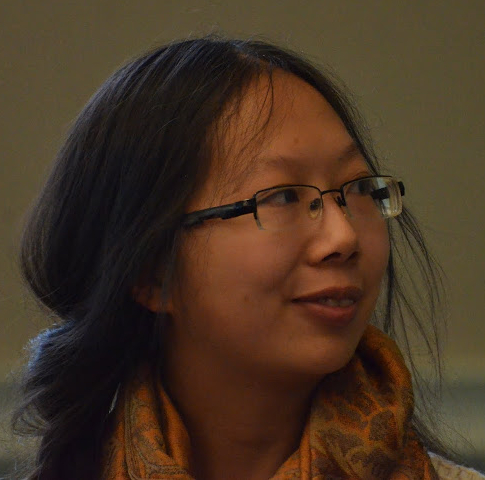
Mai Ha Vu is an Assistant Professor at the University of Toronto Mississauga , split between the Department of Language Studies and the Department of Mathematics, Computer Science, and Statistics . Her work bridges theoretical linguistics, computational methods, and biological data modeling. Ph.D. in Linguistics, University of Delaware (2020) M.A. in Linguistics, University of Delaware (2014) B.A. in Psychology and Linguistics, Grinnell College (2013) Research focuses on applying formal language theory to understand human language patterns and train biologically reliable language models . Recent work includes antibody language modeling (Nature Computational Sciences 2022) and syntax-prosody mapping via logical transductions (SIGMORPHON 2022). Key research trends in publications: interdisciplinary applications of computational linguistics to immunology, psycholinguistic modeling of neural language models, and formal syntactic analysis of negation and wh-questions across languages.
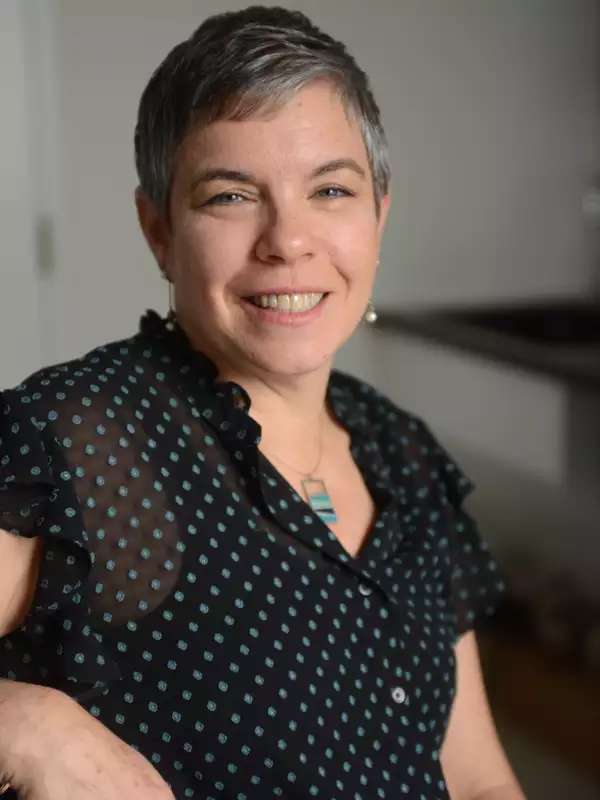
Tovah Klein is an Adjunct Associate Professor of Psychology and Director of the Toddler Center at Barnard College, Columbia University. She specializes in child development, parenting strategies, and trauma resilience. Her research focuses on children’s social-emotional growth, parental influences, and family dynamics, including pandemic parenting challenges. Dr. Klein authored two books: Raising Resilience (2024) and How Toddlers Thrive (2014). She advises global children’s programs and media outlets like National Geographic and Apple TV+. Her work emphasizes play as a tool for emotional processing and has been featured widely in media, including The New York Times and CNBC.
Glen Bates is a Professor in the School of Health Sciences at Swinburne University of Technology , Australia. His research focuses on trauma, mental health, and psychological well-being, with a particular emphasis on social anxiety, complex PTSD, self-compassion, and resilience. He has a strong publication record and actively supervises PhD students across diverse topics in clinical and health psychology. His research interests span several interconnected domains: Clinical and health psychology, especially trauma-related disorders and mood disorders Social and personality psychology, focusing on stigma, resilience, and identity Applied and developmental psychology, including educational and workplace mental health Digital mental health interventions and telehealth applications Mechanisms of therapy such as emotion regulation, mindfulness, and nonattachment His recent publications reveal a consistent focus on understanding psychological mechanisms in anxiety, trauma, and resilience. The articles show strong use of advanced statistical methods (meta-analysis, structural equation modelling) and qualitative approaches (thematic analysis, phenomenological inquiry). Key themes include the measurement and treatment of complex PTSD, the role of self-compassion and emotion regulation in social anxiety, resilience among marginalized populations, and the impact of societal challenges like the pandemic and food insecurity on mental health. Scientific contributions include: Over 100 publications including high-impact journal articles Systematic reviews and meta-analyses advancing methodological rigor in trauma and anxiety research Development and validation of digital interventions for mental health Exploration of novel constructs such as nonattachment and their role in psychological development He has supervised numerous Doctoral (PhD) candidates, with projects covering areas such as EMDR therapy, digital mental health, intergenerational trauma, HIV resilience, and workplace stress. His grant funding includes projects on monitoring anxiety and depression nationally and on raising teacher status through social innovation. He leads a research program that bridges clinical psychology with public health and educational innovation. He is actively involved in research teams and collaborations, particularly in projects related to trauma, mental health interventions, and social innovation in education. His work often involves interdisciplinary collaboration across psychology, public health, and digital technology.
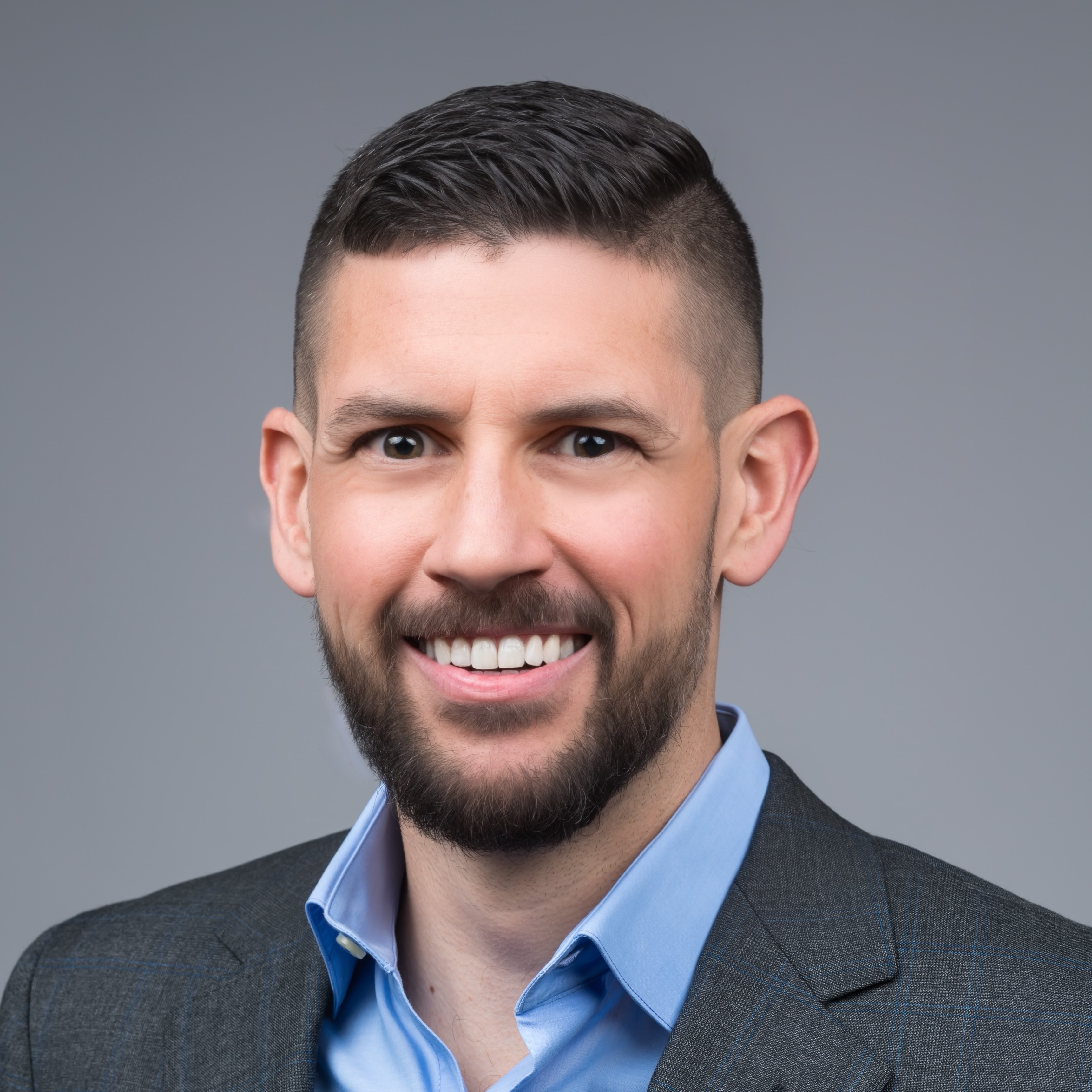
Dr. Julie Kang, MD, PhD is an Assistant Professor of Therapeutic Radiology at Yale School of Medicine and a board-certified radiation oncologist specializing in head and neck, prostate, bladder, and skin cancers. She practices at Smilow Cancer Hospital Care Center at Trumbull and is affiliated with Yale Cancer Center and Yale Medicine. Her educational background includes a BS from Yale University (2002), PhD from University of Southern California (2008), MD from University of Southern California (2010), and residency at UCLA (2015). Dr. Kang's research focuses on optimizing cancer treatment outcomes while minimizing toxicity through advanced radiation techniques including intensity-modulated radiation therapy, image-guided radiation therapy, stereotactic body radiation therapy, and adaptive radiation therapy. She has extensive experience conducting clinical trials utilizing immunotherapy and personalized medicine approaches for head and neck and prostate cancers. Her work emphasizes analyzing factors that influence cancer outcomes to enhance healthcare quality, with particular interest in addressing cancer disparities and reducing barriers to care. Analysis of Dr. Kang's recent publications (2022-2025) reveals a strong focus on treatment de-escalation strategies for HPV-associated oropharyngeal cancer, radiation dosing optimization for head and neck malignancies, and innovative applications of artificial intelligence in cancer care. Her research spans clinical trials, retrospective analyses, and systematic reviews addressing critical questions in radiation oncology with emphasis on improving patient outcomes while reducing treatment-related toxicity. Kaiser Permanente Everyday Hero Award Recipient (July 7, 2017) Kaiser Permanente Physician Merit Award (July 11, 2016) Dr. Kang is actively involved in clinical trials and cooperative groups, with a focus on mentoring the next generation of medical professionals in research related to head and neck and prostate cancers. Her clinical approach is deeply informed by personal experience as "the daughter of a cancer patient," emphasizing compassion, patient education, and personalized treatment planning. She is dedicated to not only delivering the highest standards of care but also raising them through continuous research and innovation in radiation oncology. As part of Yale's Therapeutic Radiology department, Dr. Kang contributes to a comprehensive cancer care program that includes state-of-the-art facilities such as the Yale Gamma Knife Center and Smilow Cancer Hospital, working within multidisciplinary teams to provide integrated cancer care across multiple locations including Hamden, Greenwich, and Lawrence and Memorial Cancer Center.
Pauline Jacobson is a Professor of Linguistics at Brown University, where she has served since 1975. Her research focuses on formal semantics, particularly the syntax-semantics interface, advocating for direct compositionality and variable-free semantics. She has held visiting positions at Ohio State, Harvard, and other institutions, and has contributed to summer institutes in linguistics worldwide. She earned her BA in Anthropology (1968) and PhD in Linguistics (1977) from UC Berkeley. Her work emphasizes eliminating intermediate levels like 'Logical Form' and explores phenomena such as negation, ellipsis, and binding within a variable-free framework. Prof. Jacobson has served as editor-in-chief of Linguistics and Philosophy , chaired panels for NSF and Fulbright, and participates in editorial boards. Her research trends reflect a sustained engagement with syntactic and semantic compositionality, challenging traditional assumptions about linguistic structure. Her advising and grants include teaching both undergraduate and graduate courses on syntax, semantics, and pragmatics. She is affiliated with Brown’s Department of Linguistics and has contributed to interdisciplinary initiatives in formal linguistics and cognitive science.
Suzanne Miller is an Associate Professor in the Department of Communication Sciences and Disorders at St. John's University, part of the College of Liberal Arts and Sciences. She serves as Program Director for the New York AuD Consortium, collaborating with Adelphi, Hofstra, and St. John’s Universities. Dr. Miller is a licensed audiologist in New York and a member of the American Speech-Language-Hearing Association (ASHA). Her education includes a Ph.D. in Speech-Language-Hearing Sciences from the CUNY Graduate Center, an M.A. in Audiology from St. John’s University, and a B.A. from Boston College. Her research focuses on objective hearing assessments, electrophysiological measures of auditory processing, and understanding speech-in-noise deficits in clinical populations. Dr. Miller’s publications explore topics such as hearing aid efficacy in pediatric populations, noise-induced hearing loss prevention, and the effects of middle ear pressure on auditory measurements. Her work bridges clinical practice with cutting-edge research in audiological diagnostics, emphasizing translational applications for patient care. She is actively involved in interprofessional education initiatives, particularly training pharmacy students to address hearing loss in aging populations. Her academic contributions include advancing methodologies for detecting middle ear muscle activation and refining wideband acoustic immittance techniques. Dr. Miller also advocates for public health initiatives to raise awareness about noise-induced hearing loss among commuters and occupational groups.
Dylan Bumford is an Associate Professor in the Department of Linguistics at the University of California, Los Angeles (UCLA). His research focuses on formal semantics and pragmatics, with a particular emphasis on their interfaces with theoretical computer science. He has developed techniques integrating functional programming and type theory into linguistic analysis, particularly leveraging algebraic structures like monads and functors to model natural language composition. His work addresses phenomena such as split-scope definites, distributivity, superlative adjectives, and the dynamics of quantification. Key contributions include analyses of definiteness and its interactions with presupposition, as well as pragmatic models incorporating rational inference over dynamic denotations. Bumford has also contributed to computational linguistics through semantic parsers and calculators, including collaborative work on a type-driven parser using Haskell and Purescript. His teaching spans advanced graduate courses (e.g., Mathematical Structures in Language , Semantic Theory ) and undergraduate courses in semantics and computational linguistics. Education: NYU Dissertation (2017) on split-scope definites Key Projects: Collaborative work with Simon Charlow on 'Effect-driven interpretation' and dynamic semantics frameworks His presentations include invited talks at institutions like Stanford, Penn, and USC, addressing topics ranging from monadic semantics to cross-linguistic studies of exhaustive inferences. Bumford has also participated in experimental research, including a grammar learning project exploring expectation-based learning mechanisms.
Prof. Aaron White is a Professor of Linguistics at the University of Rochester since 2017. He holds a PhD in Linguistics from the University of Maryland, College Park (2015), advised by Valentine Hacquard and Jeffrey Lidz. Prior to Rochester, he was a postdoctoral fellow at Johns Hopkins University's Science of Learning Institute, affiliated with the Department of Cognitive Science and the Center for Language and Speech Processing. His research focuses on computational linguistics, syntax, semantics, and natural language processing, particularly in syntactic bootstrapping, propositional attitude verbs, and event structure decomposition. Key research projects include leadership of the MegaAttitude Project and contributions to the JHU Decompositional Semantics Initiative. He teaches courses on statistical methods in linguistics, computational linguistics, and deep learning applications. His work bridges formal semantics, syntax, and computational models, emphasizing cross-linguistic analysis and parser development. Publications span document-level information extraction, neg-raising inferences, and semantic typology. He has developed tools like the Decomp Toolkit for decompositional semantics. Current research explores lexicalization processes in parsers and temporal reasoning in NLI tasks. Labs/Teams: JHU Decompositional Semantics Initiative, MegaAttitude Project.
Dr. Justin Ball is a Staff Scientist at the Swiss Plasma Center (SPC-TH) within the School of Basic Sciences at the Swiss Federal Institute of Technology in Lausanne (EPFL). His office is located in Building PPB, Room 117, Station 13, 1015 Lausanne, Switzerland. He serves as the Principal Investigator for the EUROfusion Theory, Simulation, Verification, and Validation project focused on negative triangularity. Dr. Ball received his Bachelor's degree in Nuclear Engineering from the University of Michigan and his Master's degree in Nuclear Engineering from MIT. At MIT, he was a leading designer of the original ARC reactor, which later became the foundation for Commonwealth Fusion Systems. He completed his PhD in Theoretical Physics at the University of Oxford in 2016, where he received the European Physical Society Plasma Physics PhD Research Award. His research primarily focuses on theoretical plasma physics and nuclear fusion energy, with special emphasis on the effect of plasma shaping on turbulence in tokamaks. Dr. Ball has made significant contributions to understanding negative triangularity plasmas, gyrokinetic simulations, and plasma transport phenomena. His work bridges fundamental plasma physics with practical fusion energy applications, contributing to the development of more efficient fusion reactor designs. Analysis of his 15 most recent publications (2019-2024) reveals a strong focus on negative triangularity effects in tokamaks, gyrokinetic modeling of plasma turbulence, and optimization of plasma confinement. His research increasingly incorporates experimental validation with TCV tokamak data while advancing theoretical understanding of plasma transport mechanisms. European Physical Society Plasma Physics PhD Research Award Dr. Ball actively supervises PhD students including Anuaruly Oraz, Balestri Alessandro, and Sun Haomin, with past student Volcokas Arnas. His research is supported by EUROfusion funding and contributes to major fusion energy initiatives. He has also secured significant research funding through his involvement with projects that have attracted substantial investment, including the Commonwealth Fusion Systems initiative which has raised $2 billion. As part of the Swiss Plasma Center at EPFL, Dr. Ball collaborates with a multidisciplinary team working on various aspects of fusion energy research. His work connects with experimental groups operating the TCV tokamak and contributes to the broader European fusion research community through EUROfusion. He is also an active science communicator, having co-authored the popular science book 'The Future of Fusion Energy' with Jason Parisi in 2019.
Jeffrey T. LaFrance is a Professor in the Department of Economics at Monash Business School. Raised on a ranch in Montana, he holds BS and MS degrees in Economics from Montana State University and a PhD in Agricultural and Resource Economics from UC Berkeley. A Senior Fulbright Scholar and recipient of distinguished fellowships from agricultural economics associations, his research spans econometrics, sustainable agriculture, natural resource management, and nutrition economics. His current projects investigate climate adaptation strategies in agriculture, demand systems modeling, and policy impacts on food consumption. Recent publications analyze retail pricing dynamics, Vietnamese farming practices, and nutritional policy effectiveness. His methodological contributions include advanced demand estimation techniques with applications to agricultural and consumer markets. Dr. LaFrance's work bridges economic theory and environmental sustainability, particularly in developing adaptive responses to climate stress in agricultural systems.
Jon Gajewski is an Associate Professor of Linguistics at the University of Connecticut's Department of Linguistics, within the College of Liberal Arts and Sciences. He holds a Ph.D. from the Massachusetts Institute of Technology (MIT). His research focuses on semantics, syntax-semantics interface, and formal linguistic analysis, with particular emphasis on negation, negative polarity items (NPIs), and evidentiality. His work explores topics such as propositional anaphora, neg-raising phenomena, and the syntactic and semantic licensing of NPIs. He has contributed to experimental approaches to semantics and cross-linguistic studies of sign languages. Gajewski is affiliated with UConn's Logic Group, Cognitive Science Program, and the Institute of Brain and Cognitive Science. His publications span foundational formal semantics, polarity-sensitive constructions, and linguistic typology. He maintains an active presence in academic discourse, engaging with theoretical frameworks and empirical methodologies in syntax, semantics, and pragmatics.
Wataru Uegaki is a Reader (Associate Professor) and UKRI Future Leaders Fellow at the University of Edinburgh's Department of Linguistics and English Language , within the School of Philosophy, Psychology and Language Sciences . He leads two major projects: the UKRI-funded Logic in Semantic Universals (2022-2025) and the AHRC/DFG-funded MECORE (2021-2024). His research focuses on formal semantics and pragmatics, exploring how word meanings interact with grammatical structures and cross-linguistic patterns in logical vocabularies. He teaches semantics and pragmatics at undergraduate and postgraduate levels. Education : PhD in Linguistics (MIT, 2015), previously at Leiden University. His work integrates formal linguistic theory with experimental and evolutionary approaches. Current research emphasizes clause-embedding predicates, combinatorial restrictions, and the cognitive foundations of semantic universals. Research Interests : Cross-linguistic generalizations in lexical semantics Syntax-semantics interface Formal semantics and experimental validation Evolutionary linguistics and learnability Recent Publications focus on empirical and theoretical exploration of clause-embedding predicates, modal elements, and cross-linguistic datasets. Notable contributions include automated clausal embedding detection algorithms and experimental studies on focus sensitivity. Awards : UKRI Future Leaders Fellowship (2022-2025) AHRC/DFG MECORE Project (2021-2024) Supervision : Advised over 20 students at Edinburgh and Leiden, including PhD graduates Esther Lam, Thomas Stephen, and Takanobu Nakamura. Current advisees include James Engels and Fred Whibley. He also mentors research assistants in MECORE and UKRI projects. Labs/Teams : Core member of the Logic in Semantic Universals team (Edinburgh, Potsdam, Trento), and the cross-institutional MECORE collaboration (Edinburgh, Konstanz, Amsterdam).
Man Ki Theodora Lee is a Researcher at the Department of English Language and Communication within the School of Creative Arts at the University of Hertfordshire. Her academic journey includes a PhD in Linguistics from the University of York (2015), an MA in Psycholinguistics from the same institution (2010), and a BA in Linguistics and Language Technology from City University of Hong Kong (2008). Education: PhD (Linguistics, York, 2015), MA (Psycholinguistics, York, 2010), BA (City University Hong Kong, 2008) Her research focuses on syntax-semantics interface in Cantonese, second language acquisition, bilingualism, and phonetic perception. Her work explores topics like neg-wh quantifiers, comparative grammar of Chinese dialects, and multilingualism in early childhood. She has published extensively on Cantonese syntax, L2 acquisition barriers, and cross-linguistic interference effects. Her articles analyze morphological structures in Hakka and Cantonese, investigate OPC sensitivity in Spanish learners, and examine multilingual vocabulary development. Despite no explicitly listed awards, her prolific output since 2011 demonstrates significant academic contribution to formal linguistics and applied language studies. She has advised no listed students but has conducted research on adult interlanguage in Cantonese-English bilinguals and Korean-Spanish learners. Her work intersects with language policy through studies on multicultural education's impact on multilingualism.
Dr. Marloes Oomen is a researcher at the University of Amsterdam's Faculty of Humanities, affiliated with the Linguistics Department (Capaciteitsgroep Taalwetenschap). She specializes in sign language research with a focus on non-manual elements in visual communication, including facial expressions, head movements, and torso gestures. Primary affiliation: University of Amsterdam Department: Linguistics Research focus: Non-manual marker annotation, sign language corpora, machine learning applications Her research explores the intersection of human categorical judgments and continuous measurement techniques in facial expression analysis. She advocates for standardized annotation practices through the ANM (Annotation standard for Non-Manual elements) framework, aiming to create reusable datasets for machine learning training in automated annotation systems. Marloes Oomen's work addresses fundamental questions about the role of human annotations versus quantitative measurements in linguistic research. She investigates how categorical human judgments about non-manual elements relate to continuous measurements from depth sensing cameras, focusing on their complementary roles in understanding visual communication. The 15 most recent publications demonstrate expertise in sign language corpus development, annotation reliability, and facial expression measurement. Key research areas include negation patterns, polar question analysis, hesitation markers, and computational methods for standardizing visual communication data. Current projects focus on establishing standardized annotation guidelines, developing machine learning models for automated analysis, and creating international collaborative frameworks for visual communication research. She emphasizes inter-rater agreement assessment and the development of computational tools to support annotation reliability.
Chris Barker is a Professor of Linguistics at New York University, specializing in formal semantics, syntax-semantics interfaces, and quantifier scope phenomena. His work integrates type-logical grammar with empirical linguistic analysis. Research focuses on scope islands, anaphora resolution, and syntactic discontinuity, with notable contributions to quantifier raising and polarity sensitivity theories. Key research interests include the formal analysis of possessive constructions, evaluation order effects in syntax, and the logical structure of linguistic meaning. He has extensively explored issues like crossover constraints, reconstruction, and the role of continuations in natural language semantics. His publications span over three decades, addressing topics from dynamic semantics to syntactic constraints on scope ambiguity. Barker’s work bridges theoretical linguistics with computational models, emphasizing the interplay between syntax, semantics, and pragmatics.