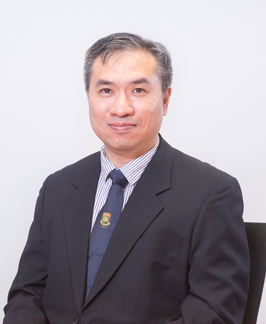
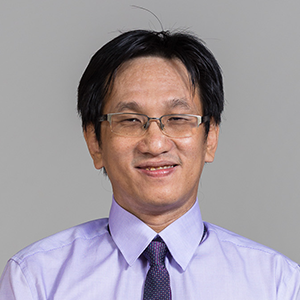
Professor Reynold Cheng is a faculty member at the University of Hong Kong (HKU), specifically within the Department of Computer Science in the School of Computing and Data Science (CDS). He currently serves as the Division Head of the AI & Data Science Division at CDS and is part of the Steering Committee of the Musketers Foundation Institute of Data Science. His academic journey includes a BEng and MPhil from HKU (1998–2000) and an MSc and PhD from Purdue University (2003–2005). Prior to HKU, he was an Assistant Professor at the Hong Kong Polytechnic University (HKPU) from 2005 to 2008. Cheng’s research focuses on data science, big graph analytics, and uncertain data management. He has received numerous awards, including the SIGMOD Research Highlights Reward 2020, HKICT Awards 2021, and HKU Knowledge Exchange Award (Engineering) 2021. His work has been recognized through grants such as the HKU-TCL Joint Research Centre for AI-funded project (HKD 1M, 2020–2022) and a CRF-funded project for real-time monitoring of infectious diseases (HKD 6.5M, 2021–2022). Cheng actively contributes to academic service, including serving as PC co-chair for IEEE ICDE 2021 and editorial roles in journals like IS and DAPD. His publications span top venues like SIGMOD, VLDB, and KDD, emphasizing algorithm design for large graphs and probabilistic data systems.
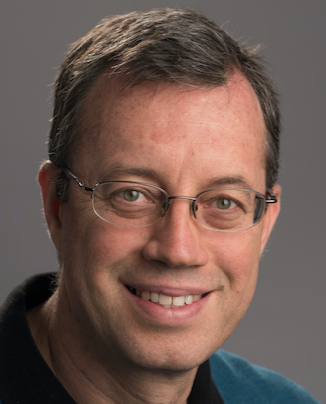
M. Tamer Özsu is a University Professor of Computer Science at the David R. Cheriton School of Computer Science, University of Waterloo, where he holds a Cheriton Faculty Fellowship. He also serves as a Distinguished Visiting Professor at Tsinghua University and is the Founding Director of Waterloo-Huawei Joint Innovation Laboratory since 2018. His extensive contributions to computing have earned him numerous prestigious awards including the 2024 ACM Presidential Award for long-standing and significant contributions to the computing field. Professor Özsu's research focuses on data engineering aspects of data science, particularly addressing data management issues with two main foci: management of non-traditional data and large-scale distributed data management. He is renowned for his seminal book "Principles of Distributed Database Systems" (co-authored with Patrick Valduriez), now in its fourth edition, and the "Encyclopedia of Database Systems" (co-edited with Ling Liu), in its second edition. His work bridges theoretical foundations with practical system implementations, targeting grand societal challenges through computational approaches. His recent publications reveal a strong trend toward graph analytics, streaming data processing, and the integration of large language models with vector data management. The research shows increasing focus on GPU-accelerated graph processing, RDF query optimization, and multimodal data analysis, reflecting the evolution of data management challenges in the era of big data and AI. His work continues to address fundamental challenges in distributed data systems while adapting to emerging technologies and application domains. Scientific Awards and Fellowships ACM Presidential Award (2024) IEEE TCDE Education Award (2024) IEEE Innovation in Societal Infrastructure Award (2022) CS Can | Info Can Lifetime Achievement Award (2018/2019) ACM SIGMOD Test-of-Time Award (2015) ACM SIGMOD Contributions Award (2006) The Ohio State University College of Engineering Distinguished Alumnus Award (2008) Fellow of the Royal Society of Canada Fellow of the American Association for the Advancement of Science (AAAS) Life Fellow of the Association for Computing Machinery (ACM) Life Fellow of the Institute of Electrical and Electronics Engineers (IEEE) Fellow of the Asia-Pacific Artificial Intelligence Association (AAIA) Elected member of the Science Academy, Türkiye Professor Özsu has been deeply involved in academic leadership and community building. As Founding Editor-in-Chief of ACM Books (2013-2019), he launched a series that by 2019 had published 28 major books with another 30 under contract. His service to ACM, particularly through SIGMOD, has been exemplary and widely recognized. He directs the Waterloo-Huawei Joint Innovation Laboratory, which focuses on cutting-edge research in data management and distributed systems, fostering strong industry-academia collaboration.
Ion Stoica is a Professor in the Electrical Engineering and Computer Sciences Department at the University of California, Berkeley, where he holds the Xu Bao Chancellor Chair. He serves as Director of the Sky Computing Lab and is Executive Chairman of both Databricks and Anyscale. His research spans distributed systems, cloud computing, and AI systems, with significant contributions to large-scale data processing frameworks. Stoica's research interests focus on the intersection of AI and systems, with emphasis on developing practical implementations that bridge theoretical foundations with real-world deployability. His work addresses fundamental challenges in distributed computing, resource management, and large-scale machine learning systems. Current projects include Ray (a distributed execution framework), vLLM (a high-throughput inference engine for LLMs), Chatbot Arena (an open platform for human preference evaluations), and SkyPilot (a framework for running AI workloads across clouds). His research output demonstrates a consistent trajectory toward more efficient, scalable systems for modern AI workloads, particularly focusing on optimizing inference performance, resource utilization, and cross-cloud deployment. Recent publications reflect growing interest in large language model serving, video generation optimization, and agent-based systems. ACM Fellow SIGOPS Hall of Fame Award (2015) SIGCOMM Test of Time Award (2011) ACM Doctoral Dissertation Award (2001) Member of National Academy of Engineering Honorary Member of the Romanian Academy Stoica has advised an extensive number of doctoral students who have gone on to prominent positions in academia and industry, including assistant professorships at Stanford, MIT, Carnegie Mellon, and other top institutions. He has received significant research funding through his lab activities and startup ventures. His research group has been particularly successful in translating academic research into widely adopted open-source technologies and commercial products. Stoica leads the Sky Computing Lab at UC Berkeley, which focuses on developing systems for AI workloads across multiple clouds. His research group has produced numerous influential open-source projects including Apache Spark, Apache Mesos, and Alluxio, which have become industry standards for large-scale data processing. The lab maintains strong industry partnerships while pursuing fundamental research in distributed systems and AI infrastructure.
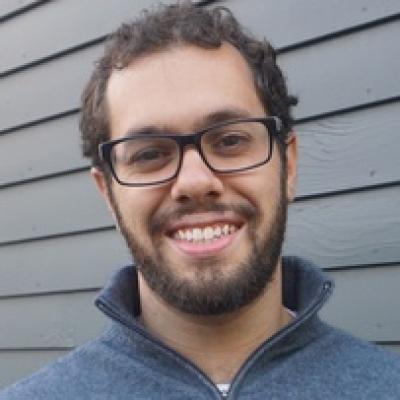
Dr. Ameer Abdelhadi is an Assistant Professor in the Department of Electrical and Computer Engineering at McMaster University. His research focuses on application-specific custom-tailored computer architectures, hardware-efficient deep learning, neurotechnology, and reconfigurable computing. He holds a PhD from the University of British Columbia and has held academic positions at the University of Toronto, Imperial College London, and Simon Fraser University, alongside industry experience in semiconductor design. Education: PhD in Computer Engineering (University of British Columbia, 2016). Research Interests: Hardware acceleration for machine learning and neurotechnology Reconfigurable computing and FPGAs/ASICs Asynchronous circuits and synchronization protocols VLSI physical design and CAD algorithms Publications span high-impact venues such as IEEE Journal of Solid-State Circuits, IEEE Hot Chips, and IEEE Micro. Notable achievements include the 2017 Best Paper Award at ASYNC for work on synchronization FIFOs. Teaching includes COMPENG 4DV4 (VLSI System Design) and ELECENG 4OI6B (Engineering Design). His lab focuses on advancing hardware systems for next-generation applications in AI and biomedical engineering.
Cameron Musco is an Assistant Professor in the Manning College of Information and Computer Sciences at the University of Massachusetts Amherst. He is affiliated with the Theory Group and conducts research at the intersection of theoretical computer science, numerical linear algebra, and machine learning. His work focuses on randomized algorithms, streaming, and distributed computation, with applications in data science. Education: PhD in Computer Science, MIT (2019) BS in Computer Science and Applied Mathematics, Yale University Research Interests: Musco's research emphasizes algorithm design for large-scale data analysis, including fast randomized methods for linear algebraic problems. He explores topics such as low-memory computation, matrix approximations, and graph algorithms, driven by applications in machine learning and distributed systems. Publications: His recent work spans advancements in hierarchical matrix approximation, graph-based nearest neighbor search, and fair resource allocation, reflecting expertise in both theoretical foundations and practical algorithmic innovation. Awards: He has received an NSF Career Award, Google Research Scholar Award, and recognition for anti-racism leadership. He actively reviews for top conferences in theoretical computer science and machine learning. Advising & Grants: Musco advises multiple PhD students and has grants from NSF and Google. His lab collaborates on projects like low-rank matrix approximation and causal discovery. Labs/Teams: He is part of the Theoretical Computer Science Group and the Center for Data Science at UMass.
Phil Bernstein is a Distinguished Scientist in the Data Systems Group at Microsoft Research Redmond and an Affiliate Professor at the University of Washington where he occasionally teaches CSEP 545 Transaction Processing. With over four decades of pioneering work in database systems, he has made significant contributions across transaction processing, data integration, and distributed systems. His research interests focus on database systems, transaction processing, and data integration, with recent work on approximate nearest neighbor search over vector databases, improving database servers using disaggregated cloud resources, and the Orleans distributed systems programming framework. Bernstein's work on Orleans (2012-2019) resulted in an open-source framework widely used inside and outside Microsoft, with components addressing indexing, geo-distribution, and transactions. Bernstein has received numerous prestigious awards including being named a Fellow of the ACM and AAAS, receiving the SIGMOD Edgar F. Codd Innovations Award, and election to the National Academy of Engineering and Washington State Academy of Sciences. Fellow of the ACM Fellow of the AAAS SIGMOD Edgar F. Codd Innovations Award Member of the National Academy of Engineering Member of the Washington State Academy of Sciences As an active researcher and academic, Bernstein serves on numerous conference program committees including SIGMOD 2024 (keynotes), VLDB 2024 (Industry), and has held editorial positions for Information Systems and Springer Data-Centric Systems and Applications. His influential books, Principles of Transaction Processing (2009) and Concurrency Control and Recovery in Database Systems, remain foundational texts in the field.
Elaine Shi is a Professor with a joint appointment in the Computer Science Department (CSD) and Electrical and Computer Engineering (ECE) at Carnegie Mellon University. She is also an Adjunct Professor of Computer Science at the University of Maryland. Her research focuses on cryptography, security, mechanism design, algorithms, blockchains, and programming languages. She co-founded Oblivious Labs, Inc., and her work on Oblivious RAM and differential privacy has been adopted by Signal, Meta, and Google. Education: Not explicitly listed, but her academic roles imply advanced degrees in computer science. Research Interests: Shi's work spans foundational areas such as secure computation, privacy-preserving algorithms, and blockchain protocols. She emphasizes practical implementations, such as Oblivious RAM and cryptographic compilers like Viaduct. Her research also explores game-theoretic mechanisms for decentralized systems and explores the intersection of theory and practice in secure distributed systems. Publications: Over 150+ articles in top venues like Eurocrypt, S&P, and CCS, covering topics like oblivious algorithms, blockchain security, and differential privacy. Recent work includes optimizing obfuscation, secure aggregation, and transaction fee mechanisms. Packard Fellow, Sloan Fellow, ACM Fellow, IACR Fellow Co-founder of CMU's Crypto Group and Crypto Seminar Series Advising & Grants: Supervises a large group of students and postdocs, with notable alumni holding academic and industry roles. Active in securing grants for research in secure computation and blockchain technologies. Labs & Teams: Leads research in Oblivious Labs and collaborates on projects like the Viaduct compiler and secure enclaves for privacy-preserving computation.
Santiago Segarra is the W. M. Rice Trustee Associate Professor in the Department of Electrical and Computer Engineering at Rice University, with courtesy appointments in Computer Science and Statistics. He joined Rice in 2018 and collaborates with Microsoft Research since 2022. His expertise spans network theory, machine learning, graph signal processing, and optimization. Segarra earned his B.Sc. in Industrial Engineering from ITBA (2011), and M.S. and Ph.D. in Electrical and Systems Engineering from the University of Pennsylvania (2014-2016), followed by a postdoc at MIT (2016-2018). Research Focus: His work integrates algebraic topology, signal processing, and machine learning to analyze networked systems. Key areas include social/technological network clustering, graph-based data analysis, and applications in neuroscience and communication networks. Recent projects address fair graph learning, distributed GNN training, and network topology inference. Awards: Penn’s Wolf Award for Best Dissertation (2017), Argentine National Engineering Honors (2011), and ITBA’s Best Thesis Award (2011). Grants/Sponsors: Supported by NSF, ONR, and industry collaborations. Labs/Groups: Leads the Rice Wireless group and collaborates with Microsoft Research on applied network science. Advises students in interdisciplinary research combining theory and real-world applications.
Vatsal Sharan is an Assistant Professor in the Thomas Lord Department of Computer Science at the University of Southern California's Viterbi School of Engineering. He maintains affiliations with the Theory Group, Machine Learning Center, and the Center for AI in Society at USC. Education: Ph.D. in Computer Science from Stanford University, advised by Greg Valiant Postdoctoral research at MIT, hosted by Ankur Moitra Vatsal Sharan's research centers on the theoretical foundations of machine learning, positioned at the intersection of machine learning, theoretical computer science, and statistics. His work investigates fundamental limits for solving learning and estimation tasks under computational and information-theoretic constraints, with the goal of developing practical algorithms that are efficient, fair, and robust. His research spans memory-efficient learning, algorithmic fairness, robustness in deep learning, and the theoretical underpinnings of transformers and large language models. A significant portion of his work explores how memory constraints affect learning algorithms and whether memory can serve as a distinguishing factor between 'efficient' and 'expensive' techniques in machine learning. His recent publications demonstrate a strong focus on multicalibration, transformer interpretability, and trustworthy AI systems. Scientific Awards: Amazon Research Award (2021 and 2023) SoCal NLP Symposium 2023 Best Paper Award COLT 2022 Best Paper Award Vatsal Sharan advises a diverse group of Ph.D. students including Siddartha Devic, Bhavya Vasudeva, Julian Asilis, Deqing Fu, Devansh Gupta, Spandan Senapati, and Tianyi Zhou. His research is supported by multiple prestigious grants from the NSF, Amazon Research, Google Research, and the Okawa Foundation. He is an active participant in the Learning Theory Alliance (LeT-All), a community-building and mentorship initiative for the learning theory community. His teaching portfolio includes advanced courses on machine learning theory and trustworthy machine learning at USC, where he shapes the next generation of researchers in theoretical aspects of artificial intelligence.
Hassan Z. Ashtiani is an Associate Professor in the Department of Computing and Software within the Faculty of Engineering at McMaster University. His academic profile shows consistent engagement in both teaching and research activities, with evidence of active participation in major machine learning conferences and journals through 2025. Dr. Ashtiani's research focuses on the theoretical foundations of machine learning, with particular expertise in privacy-preserving algorithms, Gaussian mixture models, and adversarial robustness. His work bridges statistical learning theory with practical algorithm design, often addressing fundamental questions about sample complexity and computational efficiency in learning systems. A significant portion of his recent work explores the intersection of differential privacy with statistical learning, developing methods for private density estimation and distribution learning. Analysis of his publication record reveals a strong trend toward increasingly sophisticated theoretical frameworks for private and robust learning. His work consistently appears in top-tier venues including NeurIPS, ICML, COLT, and ALT, with recent contributions extending into agnostic private density estimation and robust learning with tolerance. The research demonstrates progression from foundational work on nearest neighbor search and clustering algorithms toward more complex problems in private learning of high-dimensional distributions. Dr. Ashtiani teaches across multiple levels of computer science education, including undergraduate courses in Automata and Computability (COMPSCI 2AC3) and Principles of Programming (COMPSCI 2S03), as well as graduate-level courses such as Fundamentals of Machine Learning (COMPSCI 4ML3) and Theoretical Foundations of Unsupervised Learning (CAS 775). His teaching portfolio shows consistent involvement in machine learning education since at least 2019, with evidence of teaching multiple sections each academic year. His scholarly impact is reflected in mentions across 3 news outlets, reference in 1 policy source, engagement from 7 X users, and 90 readers on Mendeley, suggesting growing recognition of his contributions to theoretical machine learning.
Abolfazl Asudeh is an Associate Professor in the Department of Computer Science at the University of Illinois Chicago and director of the Innovative Data Exploration Laboratory (InDeX Lab) . He is a Senior Member of ACM and IEEE , serving as Associate Editor for IEEE Transactions on Knowledge and Data Engineering , VLDB Ambassador , and VLDB Endowment Liaison to NSF . His research focuses on Algorithm Design for Data and AI problems , emphasizing efficient, accurate, and responsible solutions through Approximation Algorithms , Randomized Methods , and Computational Geometry . Recent work explores LLM optimization ( Needle ), fair data structures ( FairHash ), and responsible AI frameworks ( Chameleon ). Scientific awards include Communications of the ACM Research Highlight Google Research Scholar Award SIGMOD 2019 Research Highlight Best of VLDB 2020 SIGMOD 2017 Reproducibility Award Grants: NSF IIS-2348919 (2024-2027): Fairness-aware Data Structures NSF IIS-2107290 (2021-2024): Collaborative Fairness Research The InDeX Lab develops systems like Needle (image retrieval) and RSR (matrix multiplication). His work integrates fairness , reliability , and computational efficiency across data structures , LLMs , and responsible AI implementations.
Ke Li is an Assistant Professor at Simon Fraser University (SFU) in Vancouver, Canada. He previously worked at Google and the Institute for Advanced Study (IAS) in Princeton. He holds a Ph.D. from UC Berkeley, advised by Jitendra Malik, and a B.Sc. in Computer Science from the University of Toronto. His research focuses on machine learning, computer vision, and algorithms, with contributions to generative modeling, neural rendering, fast nearest neighbor search, and meta-learning. Education: Ph.D. in Computer Science, UC Berkeley (2016) B.Sc. in Computer Science, University of Toronto (2008) Research Interests: Dr. Li explores foundational challenges in machine learning, including: - Generative Modeling : Developing methods like Implicit Maximum Likelihood Estimation (IMLE) to improve generative model training. - Neural Rendering : Innovating techniques like Proximity Attention Point Rendering (PAPR) for dynamic 3D scene representation. - Fast Nearest Neighbor Search : Pioneering algorithms to overcome dimensionality curses. - Learning to Optimize : Automating algorithm design through reinforcement learning. Professional Activities: Organized the IAS Seminar Series on Theoretical Machine Learning with Sanjeev Arora Lead organizer of the BIRS Workshop on 3D Generative Models Reviewer for NeurIPS, ICML, CVPR, and other top conferences Teaching: Recently taught CMPT 726: Machine Learning and CMPT 983: Generative Models at SFU.
Anthony TUNG Kum Hoe is a Professor in the Department of Computer Science at the National University of Singapore (NUS), where he has established himself as a leading researcher in database systems and data mining. He is also affiliated with the NUS Graduate School for Integrative Sciences and Engineering and serves as a SINGA supervisor. His educational background includes a Ph.D. in Computer Science from Simon Fraser University (2001), an M.Sc. in Information Systems & Computer Science from NUS (1998), and a B.Sc. with 2nd Class Upper Honours in Information Systems & Computer Science from NUS (1997). Professor Tung's research spans several interconnected areas within database systems and data mining. His primary focus is on developing efficient methods for indexing and searching complex data structures including time series, trajectories, trees, graphs, and high-dimensional objects. He has pioneered work in visual query processing, keyword search, and ranking systems. His GENIE (Generic Inverted Index) and LAMP (semi-Lazy Mining Paradigm) projects represent significant contributions to big data analytics, particularly in handling the 'variety' aspect of big data by providing unified frameworks for processing diverse data structures while preserving semantic meaning. His research bridges theoretical database concepts with practical applications in visual data mining, collaborative analytics, and just-in-time model construction. His recent publications reveal a clear evolution from traditional database research toward more complex analytics on diverse data types. While maintaining his core expertise in database indexing and query processing, his work has expanded to incorporate machine learning techniques, particularly in areas like nearest neighbor search, anomaly detection, and predictive analytics. There's a noticeable trend toward interdisciplinary applications, with publications spanning computer vision, natural language processing, transportation systems, and social computing. His research group consistently publishes in top-tier venues including SIGMOD, VLDB, ICDE, and KDD, demonstrating both theoretical rigor and practical relevance. 2005 Best Paper Award for 'Indexing DNA Sequences Using q-grams' 2007 Invited panel speaker on 'Advice for a successful database researcher career in Asia' at SIGMOD 2010 Guest Lecturer for VLDB Database School 2012 VLDB 2012 Research PC Co-chairs 2015 10 Years Best Paper Award, DASFAA 2015 Invited to SIGMOD 2008 and SIGKDD 2008 Program Committees Professor Tung has supervised numerous PhD students and research associates throughout his career, including notable researchers like Zhang Zhenjie (recipient of the 2007 President Graduate Fellowship) and Wang Nan (published in SIGMOD'08). His research group has been consistently productive, with students publishing in top conferences including SIGMOD, ICDE, and VLDB. His professional service is extensive, having served as PC Chair for COMAD'06, Research PC Co-chair for VLDB 2012, and on program committees for virtually all major database and data mining conferences over the past two decades. His research has been supported by various grants that have enabled significant contributions to database technology. His GENIE and LAMP projects represent a cohesive research direction focused on developing systematic approaches to big data analytics. GENIE provides a unified platform for storage and retrieval of big data with various structures, while LAMP introduces a novel paradigm for predictive analytics that combines the strengths of lazy and eager learning approaches. These projects have evolved to incorporate GPU acceleration and parallel processing capabilities, reflecting his commitment to addressing real-world scalability challenges in data-intensive applications.
Brian Kulis is an Associate Professor at Boston University with appointments in the Department of Electrical and Computer Engineering, Computer Science, Systems Engineering, and the Faculty of Computing and Data Sciences. He holds the Peter J. Levine Career Development Professorship and has previously been an Amazon Scholar at Alexa AI (2019–2023) and an assistant professor at Ohio State University (2012–2015). His research focuses on machine learning, including large-scale optimization, metric learning, deep learning, Bayesian methods, and applications in audio and visual data analysis. He earned his PhD in Computer Science from the University of Texas at Austin (2008) and a BS in Computer Science and Mathematics from Cornell University. Key awards include the NSF CAREER Award (2015), CVPR Best Student Paper (2008), and ICML Best Student Paper (2007, 2005). His work spans publications in top venues like CVPR, NeurIPS, ICML, and ECCV, emphasizing scalable algorithms and domain adaptation. Current research explores metric learning, adversarial audio augmentation, and HPC anomaly detection. He advises multiple PhD students and collaborates on grants such as the NSF Traineeship for Sustainable Energy Solutions (2024). He teaches advanced courses in machine learning, deep learning, and data structures. His lab focuses on foundational and applied ML challenges, with affiliations in the Intelligent, Autonomous & Secure Systems group. Recent service includes senior area chair roles at AAAI, NeurIPS, and ICML.
Dr. Alexander Mantzaris is an Associate Professor in the Department of Statistics & Data Science at the University of Central Florida, College of Sciences. His research bridges physics and sociology through Social Physics frameworks, focusing on statistical mechanics and thermodynamic analogies to model social phenomena. Current research explores criticality points in social systems Developing computational tools for NLP and big data Former work on Graph Convolutional Networks in social analysis Specializes in entropy-based modeling of polarization and segregation His publications emphasize interdisciplinary approaches combining network science, computational modeling, and sociological dynamics. Recent articles address thermodynamic formulations of political cycles, energy states in Schelling models, and memory-efficient data processing algorithms. Dr. Mantzaris teaches graduate courses in big data analytics and statistical learning theory. He maintains active research in computational social science with applications to political dynamics, media influence, and complex systems analysis.